

Category: ICT

  • US-Based Nigerian Media Expert Establishes Media and Digital Centre at IMT Enugu

    US-Based Nigerian Media Expert Establishes Media and Digital Centre at IMT Enugu

    Enugu, Nigeria – Dr. Uchenna Ekwo, a US-based Nigerian media expert and alumnus of the Institute of Management and Technology (IMT), Enugu, has established a Media and Digital Centre at the Mass Communication Department of the institute.

    The initiative was aimed at equipping staff and students with essential digital and media literacy skills.

    The News Agency of Nigeria (NAN) reports that Ekwo, who is also the President of the Consortium for International Education and Development (CIED), New York, presented certificates to staff members who completed a training on media and literacy.

    He urged participants to embrace digital skills to adapt to the rapidly changing global landscape and to combat misinformation.

    “As an alumnus, I felt compelled to give back to my alma mater by establishing this centre. Digital and media literacy is no longer optional; it is a civic skill, a professional competency, and increasingly, a survival skill,” Ekwo said.

    He emphasized that citizens must learn to critically evaluate information, question content, and use media responsibly for empowerment rather than manipulation.

    Ekwo explained that the certificates awarded represented commitment, responsibility, and relevance in a digital era. Of the 13 staff enrolled, five successfully completed the rigorous training, marking the first cohort of graduates.

    Prof. Gozie Ogbodo, Rector of IMT, lauded the initiative as aligning with the institution’s goal of ensuring students acquire practical skills alongside academic qualifications. “We expect our students to take advantage of these opportunities to graduate not only with a diploma but also with life-sustaining skills,” he stated.

    A beneficiary of the programme, Mr. Jonah Mamah, described the training as “life-changing” and noted that the digital skills gained would be valuable in their professional and personal lives.

    Ekwo commended CIED for its vision in bridging education, local realities, and global opportunities, and thanked IMT for its intellectual partnership and support in nurturing digitally empowered citizens.

  • FCCPC to META: Quiting Nigeria does not absolve you of liability

    The Federal Competion and Consumer Protection Council (FCCPC) has cautioned META not to contemplate running away from Nigeria as the option does not offer it relief from culpability.

    The regulatory body profferred the advise following WhatsApp’s claim that it may be forced to exit Nigeria due to FCCPC’s recent order.

    FCCPC insists that it appears that the tech giant could also be contemplating the option as a calculated move aimed at inducing negative public reaction and potentially pressuring the FCCPC to reconsider its decision.

    The FCCPC investigated Meta Platforms and WhatsApp (jointly referred to as “Meta Parties”) for allegedly violating the Federal Competition and Consumer Protection Act (FCCPA) and the Nigeria Data Protection Regulation (NDPR).

    The Commission found that Meta Parties engaged in multiple and repeated infringements of the FCCPA (2018) and the NDPR.

    In a statement by FCCPC Director of Corporate Affairs, Ondaje Ijagwu, the antitrust czar affirms that the infringements included denying Nigerians the right to control their personal data, transferring and sharing Nigerian user data without authorisation.

    Others include discriminating against Nigerian users compared to users in other jurisdictions and abusing their dominant market position by forcing unfair privacy policies.

    Interestingly, Meta had been fined for similar breaches in Texas ($1.5b) and only recently was asked to pay $1.3 Billion for violating E.U. Data Privacy Rules.

    Elsewhere in India, South Korea, France and Australia, Meta had faced varying penalties for similar breaches.

    Mr. Ondaje argued that interestingly, Meta never resorted to the blackmail of threatening to exit those countries, but obeyed the judgement.

    The recent affirmation of FCCPC’s final order by the Competition and Consumer Protection Tribunal requires Meta Parties to take steps to comply with Nigerian law and stop exploiting Nigerian consumers.

    It also urged META to change their practices to meet Nigerian standards and respect consumer rights, consistent with international best practices.

    Ondaje cautioned in the statement that hreatening to leave Nigeria does not absolve Meta of liabilities for the outcome of a judicial process.

    For the avoidance of doubt, the FCCPC remains committed in its pursuit of consumer protection and data privacy towards ensuring a fairer digital market in Nigeria.

  • FG to complete digitisation of 774 LG headquarters by 2027

    FG to complete digitisation of 774 LG headquarters by 2027

    While still unable to provide stable electricity nationwide, the Federal Government has promised to digitize the nation’s 774 LG headquarters by 2027. As of 2023, about 60.5% of Nigeria is connected to the national power supply infrastructure, even as actual supply of electricity remains unstable or epileptic most times.

    Not minding this inadequacy, the Minister of Communications, Innovation, and Digital Economy, Dr. Bosun Tijani, disclosed on Thursday the Ministry aims to complete the digitisation of all the LG headquarters.

    He disclosed this at a stakeholders’ retreat on Project 774 Connectivity, Thursday in Abuja.

    Tijani explained that the project would be executed in collaboration with other agencies under the ministry’s purview.

    He stated that the government aimed to digitalise all the remaining LGAs in the country by 2027.

    “If you are asking about the timeline for reaching all 774 LGs, the goal is that by 2027, we will have achieved this,” he said. “We have outlined this in the blueprint that was presented.”

    The minister highlighted that one of the key objectives of the project was to foster inclusive development and provide access to digital public infrastructure in government offices throughout Nigeria, including the most remote areas that may have previously been underserved or unserved.

    He also mentioned that the ministry would provide affordable and reliable internet access and the resources needed to deliver efficient public services through strategic partnerships and the deployment of cutting-edge technology.

    He emphasised the important role of LGs in delivering public services in Nigeria, which include healthcare, education, social welfare, infrastructure development, and waste management, among others.

    “They are responsible for providing essential primary healthcare services, including immunisation, maternal and child health programmes, and disease prevention initiatives.

    “They also oversee the management and administration of primary and secondary schools and the implementation of education policies. They ensure the implementation of social assistance programmes to support vulnerable populations, including the elderly, disabled, and economically disadvantaged individuals and families,” he said.

    He stated that the benefits of connecting LG Secretariats in Nigeria included enhanced access to information and services.

    “Some of the benefits include empowering local entrepreneurs and businesses. It fosters digital skills and innovation, promotes inclusive development, and strengthens governance and accountability,” he added.

    Earlier, the Executive Secretary of the Universal Service Provision Fund, Oluyomi Arowosafe, explained that internet access, widespread internet coverage, and ICT in underserved, unserved, and rural areas would promote social inclusiveness and equity.

    Arowosafe said, “The USPF is working on this through its strategies to provide connectivity. We do this by granting subsidies to our implementers, who then deliver services to rural areas.”

    “We intend for our contribution to the LGs to help improve the standard of living, health, and other areas,” he added.

    “All of these efforts align with the Federal Government’s eight strategic priority areas, particularly priorities three and five, which focus on economic growth and inclusiveness.”

    “All these efforts are aimed at supporting Project 774 LG Connectivity and promoting citizens’ engagement within the LGAs,” Arowosafe concluded.

  • Education Minister Whatsapp Number Hacked

    Education Minister Whatsapp Number Hacked

    The phone line of the Minister of Education, Prof Tahir Mamman, has been hacked, according to a disclaimer issued on his official X account on Thursday.
    In the post, Mamman warned the public to avoid communicating through the affected number.
    “My phone line has been compromised. Please refrain from calling the number and ignore any messages requesting assistance until the issue is resolved.
    “Thank you for your understanding,” he wrote on X.com.
    The Ministry of Education has also confirmed the breach.
    In a statement issued Friday by the Director of Press and Public Relations, Boriowo Folasade, the ministry disclosed that the compromised line is being used by unauthorised individuals.
    The statement read, “The Office of the Honourable Minister of Education, Professor Tahir Mamman, wishes to inform the general public that the Minister’s WhatsApp number has been hacked and is currently being used by unauthorised individuals.
    “We deeply regret any inconvenience this may cause and urge everyone to disregard any message of request received from the said number until further notice.
    “The matter has been reported to the relevant authorities and is under investigation. We advise all members of the public to remain vigilant and report any suspicious activity.”
  • NITDA Warns Nigerians of QR Code Scams, Urges Vigilance

    NITDA Warns Nigerians of QR Code Scams, Urges Vigilance

    Nigeria’s National Information Technology Development Agency (NITDA) has issued a warning to citizens, urging heightened caution when scanning QR codes amidst a sharp rise in fraudulent activities perpetrated by scammers.

    In a recent advisory published on its official channels, NITDA sounded the alarm on the growing trend of scammers exploiting QR codes for nefarious purposes, ranging from phishing scams to payment fraud and identity theft.

    QR codes, those familiar black-and-white squares containing machine-readable information, have become a popular tool for quick access to URLs and other data via smartphone cameras.

    However, NITDA’s advisory serves as a stark reminder to users to exercise utmost vigilance before scanning QR codes, emphasizing the importance of preemptive measures to thwart cyber scams.

    According to NITDA, scammers employ sophisticated tactics to carry out their fraudulent activities through QR codes. These tactics include generating codes that lead unsuspecting users to malicious websites or applications, initiating unauthorized transactions, embedding malware or data-stealing scripts, and harvesting personal information for identity theft.

    To safeguard against these threats, NITDA recommends several preventive measures, including scrutinizing QR codes from unknown sources, verifying their legitimacy before scanning, and using trusted QR code scanning apps with built-in security features. Additionally, keeping devices updated with the latest antivirus software and security patches is advised to enhance protection against potential cyber threats.

    In light of predictions by the Cyber Security Experts Association of Nigeria regarding an anticipated surge in insider threats driven by the malicious use of artificial intelligence in 2024, NITDA underscores the critical importance of bolstering cybersecurity infrastructure.

    This entails investing in advanced security technologies and enhancing the capabilities of cybersecurity personnel to effectively combat evolving cyber threats.

  • Intel AI Programme Propels African DeepTech Ecosystem Forward

    Intel AI Programme Propels African DeepTech Ecosystem Forward

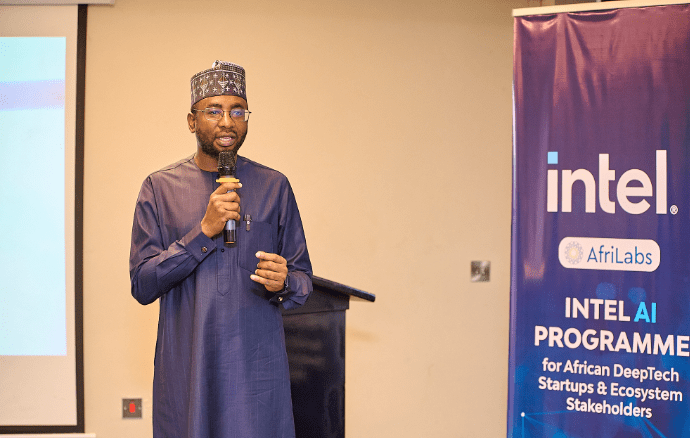
    In a collaborative effort to drive innovation and foster growth of Africa’s DeepTech ecosystem, Intel and AfriLabs celebrated the successful conclusion of the Intel AI Programme for African DeepTech Startups & Ecosystem Stakeholders.

    Held in Abuja from March 5th to 7th, 2024, the event served as a pivotal platform for stakeholders to explore the transformative potential of DeepTech across the continent.

    The event, organized by AfriLabs in collaboration with Intel, aimed to propel growth and innovation in Nigeria’s DeepTech ecosystem. Participants from diverse backgrounds including government officials, industry experts, startups, developers, and ecosystem stakeholders convened to explore the challenges, opportunities, and prospects of DeepTech in Africa.

    The event commenced with opening remarks from esteemed government officials and representatives from Intel and AfriLabs. Dr. Bienvenu Agbokponto Soglo, Director of Government Affairs Africa and IGA CTO Liaison at Intel set the stage with an insightful presentation on the socio-economic and policy implications of DeepTech in Africa. This was followed by a thought-provoking panel discussion featuring high-level representatives from the National Information Technology Development Agency (NITDA), the Nigerian Communications Commission (NCC), Intel, and other industry partners, moderated by Jennifer Okeke-Ojiudu, Senior Ecosystem Engagements Manager at AfriLabs. The session provided valuable insights into the challenges and opportunities facing the DeepTech ecosystem in Africa. Finally, day one culminated with a High-Level Roundtable Discussion on AI Policy, facilitated by Dr. Bienvenu Agbokponto Soglo of Intel, engaging the Director-General of the National Centre for Technology Management, other Government Officials and AI Ecosystem Stakeholders.

    Day two of the event focused on empowering startups, developers, and innovation hubs with the tools and resources needed to thrive in the AI landscape. Highlights included an introduction to the Intel® Liftoff for AI Startups Program, presentations on the Intel Developer Cloud and OneAPI initiative, and valuable lessons learned from industry experts. The day concluded with presentations from leading innovation hubs, further enriching the discourse on DeepTech entrepreneurship and innovation in Nigeria.

    The final day of the event centered on building vibrant startup communities and fostering collaboration among ecosystem stakeholders. Keynote addresses by notable figures such as Ajibola Odukoya, Chief Operating Officer at AfriLabs, and Dr. Kashifu Inuwa Abdullahi, Director-General of NITDA, set the tone for engaging discussions on the role of government in driving innovation in Africa. Presentations from various innovation hubs underscored the importance of community-building and collaboration in nurturing Africa’s burgeoning DeepTech ecosystem.

    Dr. Kashifu Inuwa Abdullahi, Director-General of NITDA, emphasized the importance of collaboration and shared vision in his address: “When I learned of the aims and objectives of this workshop, my enthusiasm for our ecosystem was truly ignited.

    At NITDA, we firmly believe that no single entity can navigate this landscape alone; collective effort is imperative. Our vision for Nigeria is one of digital empowerment, innovation-driven prosperity, and inclusive economic growth fostered by technology. The global AI race has commenced, and the nation’s leading it will shape the future. Africa, with its abundant talent and youthful population, is poised to play a significant role. In Nigeria, our path is clear: AI is our journey, our goals are defined, and our determination is unwavering.”

    Reflecting on the event’s success, Anna Ekeledo, Executive Director at AfriLabs, remarked, “This collaboration has provided a platform for meaningful engagement, knowledge-sharing, and collaboration, laying the groundwork for future innovation and growth across Africa.”

    As the curtains close on the Intel AI Programme for African DeepTech Startups & Ecosystem Stakeholders, the legacy of collaboration, innovation, and empowerment lives on. Looking ahead, the journey continues as Africa’s DeepTech community embarks on a path of growth, resilience, and boundless possibilities.