



Category: Governance

  • Youth Without Opportunity Is a Threat, Shettima Warns Nigeria

    Youth Without Opportunity Is a Threat, Shettima Warns Nigeria

    Nigeria’s Vice President, Kashim Shettima, has warned that the country’s status as one of the youngest nations in the world could become meaningless without deliberate institutional investment to harness its demographic potential.

    Speaking on Monday in Abuja at the Abuja Dialogue 2026, Shettima stressed that Nigeria’s youthful population should no longer be treated as a mere talking point but as a strategic national reality requiring urgent policy attention. The event was organised by the Office of the Vice President in collaboration with the Lateef Jakande Leadership Academy.

    According to him, the country’s growing youth population risks turning into a liability if investments in education, skills acquisition, and economic opportunities are not prioritised.

    “We are one of the youngest nations on earth. That fact should not be treated as a line for conferences or a statistic for brochures. It is a national condition with profound consequences,” Shettima said.

    Call for Structured Youth Leadership Development

    The Vice President emphasised that Nigeria’s future would depend not only on natural resources or government ambitions, but on the strength of systems designed to ensure leadership continuity.

    He advocated a deliberate and forward-looking framework for youth leadership development, noting that leadership must be cultivated through structured pathways rather than left to chance.

    Shettima explained that youth leadership should not be seen as a ceremonial transition based on age, but as a continuous process of preparing and integrating young people into governance and nation-building institutions.

    Sanwo-Olu Highlights Role of Leadership Academy

    Also speaking at the event, Lagos State Governor, Babajide Sanwo-Olu, described the dialogue as a strong signal of the federal government’s commitment to youth leadership development.

    He noted that the Lateef Jakande Leadership Academy serves as a talent incubator, providing young Nigerians with practical exposure to public sector governance.

    Sanwo-Olu called for stronger policy frameworks, adequate funding, and political will to transform youth-focused initiatives into sustainable institutions.

    Federal Government Reaffirms Commitment to Youth Empowerment

    Other government officials echoed the importance of investing in youth development.

    Deputy Chief of Staff to the President, Ibrahim Hadejia, described youth leadership as critical infrastructure that determines the strength of national institutions.

    Minister of Youth Development, Ayodele Olawande, said Nigerian youths are ready to contribute meaningfully to national progress. He added that President Bola Tinubu remains committed to creating enabling platforms for young people to thrive.

    Youth at the Centre of National Development

    Executive Secretary of the academy, Ayisat Agbaje-Okunade, said the collaboration between the federal and Lagos State governments reflects a growing recognition of youth as central to national development.

    She noted that the Abuja Dialogue provides an opportunity to build consensus, align institutions, and reposition youth leadership from the margins to the core of policy and governance.

    A Critical Moment for Nigeria’s Future

    The Abuja Dialogue 2026 comes at a time when governments globally are grappling with rapid technological, economic, and social changes.

    For Nigeria, Shettima’s message underscores a pressing reality: without intentional investment and structured planning, the country’s demographic advantage could become a burden rather than a catalyst for growth.

  • Tinubu’s Choice of Tunde Disu as Acting IGP Triggers Nepotism Firestorm

    Tinubu’s Choice of Tunde Disu as Acting IGP Triggers Nepotism Firestorm

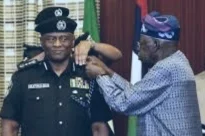
    The appointment of Tunde Disu as Acting Inspector General of Police (IGP) has continued to generate intense public controversy, with critics accusing President Bola Tinubu of nepotism and a growing disregard for Nigeria’s federal character principle.

    Across social media and political commentary spaces, Nigerians have questioned both the timing and rationale behind Disu’s elevation, arguing that it undermines seniority within the Nigeria Police Force and reinforces perceptions of regional and ethnic imbalance in key national appointments.

    One of the most vocal critics, social commentator Isaac Fayose, openly condemned the decision, describing it as nepotistic and difficult to justify on professional grounds.

    Fayose queried why the president would overlook a more senior officer, Frank Mbah, whom he referred to as a “Super Cop” who holds the rank of Deputy Inspector General of Police, in favour of a junior officer appointed only in an acting capacity.

    According to Fayose, the appointment aligns with what he described as a pattern under Tinubu’s administration with the concentration of strategic security, defence, and economic positions among individuals from the South West and of his Yoruba extraction.

    He cited several top offices, including the Chief of Defence Staff, Director General of the Department of State Services, Chairman of the Independent National Electoral Commission, Governor of the Central Bank of Nigeria, Chairman of the National Revenue Service, and the Minister of Finance.

    Fayose questioned what he described as the president’s apparent fear of broadening appointments to reflect Nigeria’s ethnic and regional diversity.

    The criticism gained further momentum following comments by former presidential candidate and human rights activist Omoyele Sowore, who called for the immediate appointment of a substantive Inspector General of Police.

    Sowore stressed that Disu’s position is inherently temporary, noting that the acting IGP is expected to retire from the Nigeria Police Force in April.

    Speaking during an interview on Channels Television, Sowore acknowledged the acting nature of the appointment as announced by the presidency.

    “Tunji Disu is retiring in April, and it is clear that once he is no longer in the police force, he must give way,” he said. “What we know for now is that he has been appointed in an acting capacity, pending the appointment of a substantive IGP.”

    Sowore went further to warn against any arrangement that would allow a retired officer to continue leading the police force.

    He argued that Disu’s elevation had already resulted in the displacement of more than 30 senior police officers, an outcome he described as unnecessary and destabilising for an institution already grappling with public trust challenges.

    With an estimated strength of between 300,000 and 450,000 officers, Sowore insisted that the Nigeria Police Force has no shortage of experienced and competent senior officers capable of assuming the role without controversy.

    He maintained that adherence to seniority, professionalism, and constitutional balance would help restore confidence in the force and the government’s commitment to fairness.

    As the backlash continues to grow, analysts say the controversy underscores broader national concerns about equity, inclusion, and transparency in high-level appointments.

    Pressure is mounting on the presidency to clarify its long-term plan for police leadership and to reassure Nigerians that competence and constitutional principles, rather than ethnicity or political loyalty, will guide decisions at the highest levels of national security.

  • Nigeria Defeats European Dynamics in $6.2m Arbitration Case

    Nigeria Defeats European Dynamics in $6.2m Arbitration Case

    Nigeria has secured a major legal victory after an arbitral tribunal dismissed in its entirety a $6.2 million claim brought against the country by European Dynamics UK Ltd, an international technology contractor, over a disputed national e-Procurement project.

    The ruling followed an arbitration initiated by the company against the Bureau of Public Procurement (BPP) and was delivered at the International Centre for Arbitration and Mediation, Abuja. The decision, which is final and not subject to appeal, was handed down by Mrs Funmi Roberts, the sole arbitrator.

    This development was disclosed in a statement issued by Mr Kamarudeen Ogundele, Senior Assistant on Communication and Publicity to the Lateef Fagbemi, the Attorney-General of the Federation and Minister of Justice.

    According to the statement, the tribunal dismissed all claims by European Dynamics, thereby relieving Nigeria of a potential financial exposure estimated at more than $6.2 million—equivalent to about ₦9.3 billion in claimed payments and damages.

    European Dynamics had sought approximately $2.4 million for alleged milestone completions, $3 million in general damages, and an additional $800,000 as settlement claims, all of which were rejected by the tribunal.

    Background to the Dispute

    The dispute arose from a contract for the design, development, customisation, supply, installation and maintenance of a national electronic Government Procurement (eGP) system. The project was financed with support from the World Bank and was designed to enhance transparency, accountability and efficiency in federal public procurement.

    Upon assuming office, the Director-General of the BPP, Adebowale Adedokun, inherited both a stalled technology project and ongoing arbitration proceedings. Although discussions had previously taken place regarding an out-of-court settlement, the bureau opted to proceed with arbitration, insisting that payments must be strictly tied to verifiable value delivered.

    Tribunal Upholds Nigeria’s Position

    Central to the dispute was the User Acceptance Test (UAT) conducted by the BPP, which revealed significant functional deficiencies in the system, including critical omissions and errors affecting performance.

    The bureau argued that unlike traditional supply contracts, software customisation projects require performance validation, with delivery deemed complete only after a successful UAT confirming compliance with technical, statutory and operational requirements.

    The tribunal agreed with Nigeria’s position, holding that the identified deficiencies were the contractor’s responsibility to remedy at no additional cost. It further ruled that European Dynamics, as the technical expert, bore full responsibility for ensuring compliance with contractual obligations, regardless of any earlier technical documents approved by the BPP.

    The arbitrator also found no contractual basis for the contractor’s claim that multiple project phases had been merged into a single phase, noting that payments under the contract were clearly structured in phases.

    A Landmark Signal for Public Sector Contracting

    Presenting the arbitral award to the Minister of Justice, Adedokun described the outcome as a landmark moment for public sector technology contracting in Nigeria.

    “This particular vendor has taken various African countries to court and won every single case. Nigeria is the first to defeat them,” he said, praising the confidence placed in Nigerian legal professionals.

    He expressed appreciation to the Attorney-General for authorising the proceedings, noting that the decision saved the country billions of naira that can now be redirected toward critical national development.

    Commending the BPP leadership and the legal team, Fagbemi described the victory as a strong signal to the international community.

    “By standing up to European Dynamics, Nigeria has instilled courage in other African nations to protect their own resources. It is no longer business as usual,” the minister said.

    Nigeria’s legal team was led by Johnson & Wilner LLP, a Nigerian business and technology law firm, with Basil Udotai, the firm’s founding partner, leading the arbitration alongside strategic partners and associates.

    The ministry noted that legal representatives for the BPP have encouraged the integration of lessons from the arbitration into ongoing e-procurement reforms, with the aim of strengthening contract performance oversight and reducing the risk of future disputes.

  • NASS Puts INEC on the Spot Over ₦873.78bn 2027 Election Budget

    NASS Puts INEC on the Spot Over ₦873.78bn 2027 Election Budget

    Nigeria’s next general election may be one year away, but the battle over its price tag has already begun.

    The Independent National Electoral Commission (INEC) has projected a staggering ₦873.778 billion to conduct the 2027 general elections — a figure that immediately triggered pointed questions and heightened scrutiny at the National Assembly.

    INEC Chairman, Prof. Joash Amupitan, presented the projection while defending the Commission’s ₦171 billion 2026 budget proposal before the Joint Committee on Electoral Matters. He was emphatic: the ₦873.78 billion earmarked for 2027 is separate from the 2026 allocation, which is meant to fund routine activities such as off-cycle governorship elections, by-elections, voter registration updates, logistics, and administrative operations.

    But lawmakers made it clear that separating the figures does not soften the impact of the headline number.

    Nearly ₦1 Trillion — and Counting?

    Amupitan further disclosed that the ₦873.78 billion projection does not include a fresh request from the National Youth Service Corps (NYSC), which is seeking an upward review of allowances for corps members deployed as ad-hoc election staff.

    That revelation raises a critical possibility: the final cost of the 2027 elections could climb even higher.

    With inflationary pressures, rising logistics costs, security challenges, and technological upgrades expected ahead of the polls, legislators signaled that Nigerians deserve clarity on every naira proposed.

    Lawmakers Draw the Line

    Chairman of the Senate Committee on INEC, Simon Lalong, assured the Commission of legislative cooperation but stressed that support would not translate into a blank cheque.

    He indicated that the National Assembly would rigorously examine the assumptions behind the projection, demanding detailed breakdowns and measurable benchmarks to justify the enormous public expenditure.

    Similarly, Chairman of the House Committee on Electoral Matters, Bayo Balogun, pledged backing for credible elections but delivered a pointed warning: INEC must avoid overpromising and underdelivering.

    Balogun cautioned that operational failures, procurement irregularities, or unrealistic commitments would not be excused under the weight of a near-trillion-naira budget.

    Transparency or Trouble

    Members of the joint committee reiterated that the credibility of the 2027 elections will depend not only on logistics and technology but also on fiscal discipline. With public trust in institutions often tested during election cycles, lawmakers emphasized that transparent budgeting, early planning, and strict oversight are non-negotiable.

    The message from the National Assembly was unmistakable: INEC will get the support it needs, but every kobo must be accounted for.

    As preparations for 2027 quietly gather pace, one thing is clear: the politics of funding the election may prove just as intense as the election itself.

  • Skepticism as FG Budgets N6.69bn for Idle Ajaokuta Steel Company

    Skepticism as FG Budgets N6.69bn for Idle Ajaokuta Steel Company

    Stakeholders have expressed strong reservations and deep skepticism over the Federal Government’s decision to allocate N6.69 billion to the long-idle Ajaokuta Steel Company Limited (ASCL) in the 2026 Appropriation Bill.

    Speaking to the News Agency of Nigeria (NAN) on Monday in Abuja they warned that continued spending without production amounts to institutionalised waste..

    Established in 1979 and once envisioned as the backbone of Nigeria’s industrial revolution, ASCL has remained non-functional for decades, despite repeated promises, policy resets and billions of naira in public expenditure.

    NAN reports that the 2026 allocation represents a 4.9 per cent reduction from the N7.03 billion approved in 2025. Of the total amount, N6.04 billion is earmarked for personnel costs, N233.6 million for overheads, and just N410.8 million for capital projects — a breakdown critics say exposes the absence of a genuine revival strategy.

    While government officials argue that the funding aligns with President Bola Tinubu’s economic diversification agenda, several civil society leaders described the allocation as symbolic spending divorced from industrial reality.

    Mr Philip Jakpor, Executive Director of the Renevyln Development Initiative (RDI), said the steel plant had become a recurring budget line with no measurable outcomes.

    “For decades, administrations have poured billions into Ajaokuta with nothing to show for it. The mill has not produced steel for a single day, yet allocations continue. At this point, it looks less like industrial policy and more like a drain pipe for public funds,” Jakpor said.

    He alleged that ASCL had been repeatedly used by successive governments as a financial conduit under the guise of rehabilitation.

    Dr Abdullahi Jabi, Chairman of the North Central Zone of the Campaign for Democracy, Human Rights Advocacy, and Civil Society of Nigeria, said Nigeria’s industrial failure was being reinforced by what he described as budgetary inconsistency and weak implementation discipline.

    “Steel is not a ceremonial sector. You cannot industrialise through MoUs, press statements and budget speeches. Without strict execution, these allocations are meaningless,” Jabi said.

    He added that the continued neglect of technical expertise and specialised manpower had left Nigeria’s steel ambitions hollow.

    A former ASCL resident, Dr Emmanuel Shuiabu, described the current state of the plant as a national tragedy, recalling that Ajaokuta once symbolised Nigeria’s industrial promise.

    Shuiabu, who lived in the steel town between 1982 and 2002, said ASCL was formerly Nigeria’s largest employer, providing over 10,000 direct jobs, while its in-house power infrastructure supplied uninterrupted electricity to the host community for years.

    “Beyond political slogans, what is missing is decisive action. The original builders of the plant must be brought back, and experienced hands who ran the facility should be re-engaged. Anything short of that is cosmetic,” he said.

    Shuiabu, a finance expert, also noted that rising allocations often masked the reality that budgeted funds were frequently not released, further weakening implementation credibility.

    NAN recalls that the Minister of Steel Development, Shuaibu Audu, admitted in his New Year message that funds appropriated for the 2025 budget were largely not released, despite claims of sustained reform momentum.

    A Lokoja-based public analyst, who requested anonymity, said activities at the plant were limited to basic maintenance.

    “They are simply preventing total collapse — nothing more. It’s like keeping a patient on life support without any plan for recovery. The same pattern exists at the Jos Steel Rolling Mill,” he said.

    Mrs Victoria Ola, a former staff member who lived in the company’s quarters, said surrounding communities had deteriorated economically and socially as the plant remained idle.

    “Entire livelihoods vanished when the steel plant died. What remains are empty houses, broken infrastructure and lost opportunities,” she said, though she urged citizens to give the government time to deliver on its promises.

    A government official, who spoke on condition of anonymity, confirmed that over 90 per cent of the 2026 allocation was devoted to salaries and upkeep, while capital expenditure accounted for just 6.1 per cent, a figure widely regarded as inadequate for any meaningful industrial turnaround.

    NAN further recalls that Prof. Linus Asuquo, Director-General of the National Metallurgical Development Centre, Jos, disclosed at the 2025 National Steel Summit that ASCL costs Nigeria over N1 billion annually in pensions, salaries, taxes and administrative expenses — despite producing no steel.

    In defence of the government’s position, Audu said Nigeria had advanced talks with prospective Chinese investors to revive the plant and disclosed that a 500-million-dollar investment by NNPCL and partners was underway to establish five mini-LNG plants within the Ajaokuta complex.

    He also said the ministry had signed an MoU with the Federal Ministry of Defence to establish a Military Industrial Complex and commence local production of military hardware at ASCL in collaboration with the Defence Industries Corporation of Nigeria.

    However, critics insist that without timelines, transparency and production benchmarks, Ajaokuta risks remaining Nigeria’s most expensive industrial monument to failure.

  • Bandits Unleash Terror, Kill Scores in Brazen Daylight Attack on Katsina Community

    Bandits Unleash Terror, Kill Scores in Brazen Daylight Attack on Katsina Community

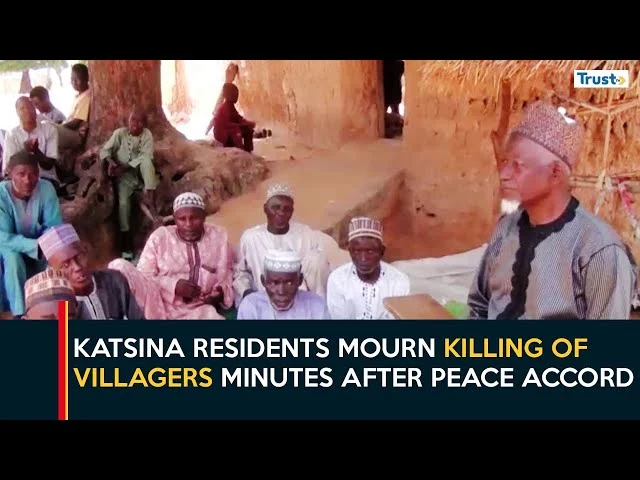
    Suspected bandits on Tuesday carried out a brutal and audacious daylight attack on Doma community under Tafoki Ward in Faskari Local Government Area of Katsina State, killing about 20 residents and leaving the area in ruins.

    The assailants reportedly stormed the community in the early afternoon and operated freely for hours, shooting sporadically and setting houses on fire, before withdrawing around 4:00 p.m. without resistance.

    Eyewitnesses said the attackers moved from house to house, unleashing terror on helpless residents, while several buildings were reduced to ashes in what locals described as one of the most savage assaults in recent months.

    The attack came despite a peace agreement earlier reached between the armed groups and the community, raising serious concerns over the effectiveness and credibility of such arrangements.

    Confirming the incident, the area chairman, Alhaji Surajo Aliyu-Daudawa, described the invasion as a reprisal attack and the most devastating assault on the community in the past five months.

    According to him, bodies of the victims were evacuated after the attack, while funeral prayers were scheduled to take place in Tafoki town on Wednesday morning.

    Aliyu-Daudawa lamented the scale of destruction and loss of lives, praying for divine intervention to prevent a repeat of the tragedy.

    Meanwhile, the Katsina State Police Command confirmed the attack but gave a lower casualty figure, stating that 13 people were killed by the assailants.

    In a statement issued on Tuesday, the Police Public Relations Officer, DSP Aliyu Abubakar, said a distress call was received at about 2:00 p.m. on February 3, 2026, reporting that armed bandits had launched an attack on Doma village in Faskari Local Government Area.

    He said operatives from the Faskari Division, working with the military and members of the Katsina State Community Watch Corps, were mobilised to the area, but the attackers fled before security forces arrived.

    “Unfortunately, the assailants had fatally shot 13 persons and escaped the scene before the arrival of the operatives,” the statement said.

    The latest attack once again underscores the persistent insecurity in rural Katsina communities, where armed groups continue to strike with impunity despite security operations and peace initiatives.

  • World Bank Commends Tinubu’s Reform Drive, Calls Nigeria Global Reference Point

    World Bank Commends Tinubu’s Reform Drive, Calls Nigeria Global Reference Point

    The World Bank has commended President Bola Tinubu for his administration’s reform drive, describing Nigeria as a frequent global reference point for reform implementation and results.

    The bank’s Managing Director of Operations, Anna Bjerde, made the remarks on Tuesday while leading a World Bank Group delegation to meet the president at the State House in Abuja.

    Bjerde said the outcomes of Nigeria’s reforms over the past two years were widely discussed among global leaders, policymakers and investors, noting that the scale and pace of progress had drawn international attention.

    “Nigeria is a frequent example in my discussions around the world because the results achieved in two years are really commendable,” she said.

    She praised President Tinubu’s consistency in communicating the necessity of the reforms, adding that his steady leadership had helped sustain confidence despite the challenges associated with implementation.

    “Even when reform implementation is difficult, there is no turning back. You are staying the course,” Bjerde said.

    According to her, feedback from Nigeria’s private sector indicates that reform outcomes are becoming more visible, with improving investor sentiment and growing confidence in the policy direction of the government.

    On the forthcoming Country Partnership Framework, Bjerde said the new programme would be anchored on Nigeria’s development ambition of building a $1 trillion economy and achieving seven per cent economic growth. She stressed that job creation would be central to the partnership, particularly in light of Africa’s growing population and the urgency of employment opportunities for young people.

    She identified infrastructure investment, agricultural modernisation and improved access to finance for small and medium-sized enterprises as priority areas for collaboration, noting that Nigeria’s infrastructure spending remains low relative to its gross domestic product.

    Bjerde said this gap would require innovative public-private partnerships to unlock private capital and accelerate development. She disclosed that the World Bank’s public sector portfolio in Nigeria currently stands at about $17 billion, while its private-sector arm, the International Finance Corporation, invests approximately $5 billion annually in the country.

    She added that a new reform-linked budget support operation was being prepared, alongside expanded risk guarantee instruments designed to attract more private investment.

    “Your reforms and our budget support go hand in hand,” Bjerde said.

    Earlier, President Tinubu reaffirmed that his administration’s reform agenda was irreversible, declaring that Nigeria had “its hands on the plough” and would not retreat from the path of reform.

    “Since we went into this turn of reform, we are never going to look back,” the president said.

    Tinubu acknowledged that the reforms had been painful at the initial stage but said they were necessary to secure long-term economic stability and sustainable growth. He identified agriculture as a key pillar of the reform agenda, citing the establishment of mechanisation centres and Nigeria’s openness to World Bank support in the areas of improved seeds and productivity.

    The president also reiterated his commitment to transparency and accountability, describing the removal of fuel subsidies and the unification of the foreign exchange rate as difficult but unavoidable decisions.

    “The first reaction was high inflation, but it has come down dramatically. Now that it is stable, we can help investors,” Tinubu said.

    He urged the World Bank to accelerate innovative financing solutions, reduce bureaucratic bottlenecks and deepen support for skills development, while assuring the institution of Nigeria’s readiness for deeper engagement and a sustained partnership.

  • Tinubu’s Türkiye Visit: Diplomatic Ambitions Meet Domestic Scrutiny

    Tinubu’s Türkiye Visit: Diplomatic Ambitions Meet Domestic Scrutiny

    Abuja — President Bola Ahmed Tinubu returned to Abuja late Saturday night from a State Visit to the Republic of Türkiye that was officially billed as a diplomatic success but unfolded into a far more complicated political moment at home.

    The visit, which culminated in the signing of nine bilateral agreements with Türkiye, was intended to signal Nigeria’s renewed international engagement and strategic outreach under Tinubu’s administration. Instead, it has opened a broader conversation, one that blends diplomacy with domestic unease, policy ambition with public scepticism, and substance with symbolism.

    At the formal level, the trip delivered what governments typically seek from state visits. Tinubu held high-level talks with Turkish President Recep Tayyip Erdoğan, and both leaders reaffirmed their commitment to deeper cooperation in defence, energy, security, research, and trade. Officials described the agreements as instruments for investment growth, security collaboration, and long-term institutional partnerships.

    Yet even as handshakes were exchanged and documents signed, questions began to surface. Beyond general statements, the Nigerian government offered little detail on the specific terms of the agreements, how they will be financed, who bears what obligations, and when tangible outcomes can be expected. In a country shaped by past experiences of ambitious memoranda that never matured into real projects, the lack of clarity quickly became a source of concern.

    Security cooperation, in particular, attracted close scrutiny. Nigeria’s prolonged struggle with insurgency, banditry, and violent crime has made foreign defence partnerships politically sensitive. While Türkiye’s growing defence industry positions it as an attractive partner, many analysts argue that past international security arrangements have failed to deliver decisive results. Without clear safeguards, performance benchmarks, and legislative oversight, sceptics fear history could repeat itself.

    The economic promises attached to the visit were also met with caution. Nigeria–Türkiye trade remains modest when measured against Nigeria’s engagements with other global partners. Economists and policy watchers argue that unless the agreements contain enforceable provisions for local content, technology transfer, and job creation, their impact may be limited—especially at a time when Nigerians are under intense economic pressure.

    But perhaps the most politically charged dimension of the visit emerged not from policy documents, but from images.

    Photos and videos from official ceremonies in Türkiye circulated rapidly across social media and opposition platforms. In several of them, the President appeared subdued during extended protocol events, prompting sharp commentary and, in some quarters, unflattering interpretations. Supporters dismissed the reaction as exaggerated and partisan, arguing that long ceremonial routines often produce awkward still images. Critics, however, seized on the visuals as emblematic of broader concerns about leadership optics and preparedness.

    In modern politics, such moments rarely remain superficial. Analysts note that in an age of instant digital circulation, images can define narratives more powerfully than communiqués. For an administration seeking to project confidence, strength, and momentum on the global stage, the visual language of a state visit matters almost as much as its diplomatic content. In this case, the imagery shifted attention away from signed agreements and toward questions of presentation and perception.

    The timing of the visit further complicated its reception. As Nigerians confront inflation, currency volatility, and rising living costs, foreign travel by political leaders is increasingly judged through a domestic lens. Supporters argue that diplomacy is essential for long-term recovery and international credibility. Critics counter that such engagements must produce visible, near-term benefits to justify their political cost.

    By the time Tinubu’s aircraft touched down at the Presidential Wing of the Nnamdi Azikiwe International Airport, the Türkiye visit had become more than a foreign policy exercise. It had evolved into a mirror reflecting Nigeria’s anxieties about governance, communication, and results.

    Ultimately, the political meaning of the trip will not be determined in Ankara or Abuja’s VIP lounges, but in the months ahead. If the agreements translate into real investment, improved security capacity, and measurable economic gains, the doubts may fade. If they do not, the visit risks being remembered less for what was signed and more for the questions it raised.

    For President Tinubu, the Türkiye trip stands as a reminder that in contemporary politics, diplomacy is judged not only by documents and declarations, but by delivery, and by the images that linger long after the ceremonies end.hat in contemporary politics, diplomacy is judged not only by documents and declarations, but by delivery—and by the images that linger long after the ceremonies end.ical sessions that led to the finalisation of the agreements.

  • NGF Prioritises Sugar Production to Boost Industrial Development in Nigeria

    NGF Prioritises Sugar Production to Boost Industrial Development in Nigeria

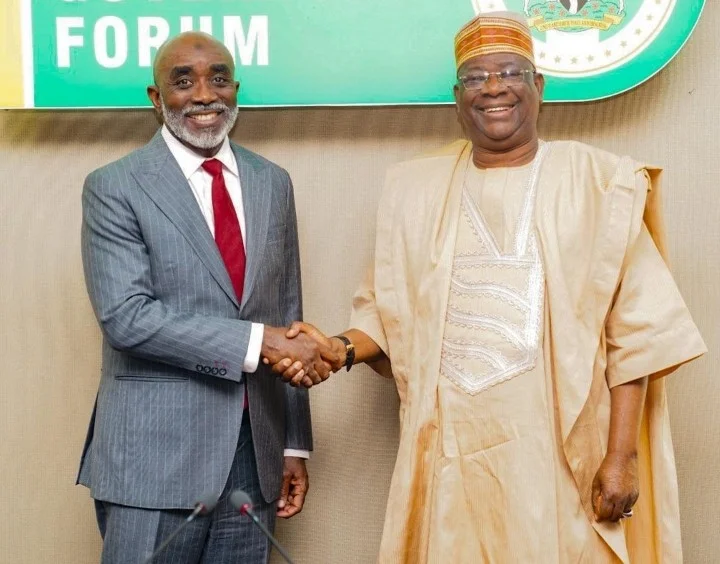
    The Nigeria Governors’ Forum (NGF) has agreed to prioritise sugar as a key product for accelerating industrial development across states of the federation, in a move aimed at reducing imports, creating jobs and achieving national self-sufficiency.

    The Executive Secretary and Chief Executive Officer of the National Sugar Development Council (NSDC), Kamar Bakrin, disclosed this in a statement issued on Sunday in Abuja.

    Bakrin said the decision followed a request by the NSDC to the NGF as part of broader efforts to develop Nigeria’s sugar sector and halt the continued importation of raw sugar.

    Under the arrangement, the NGF secretariat will include sugar projects as priority beneficiaries in its engagements with development partners both within and outside Nigeria. The forum will also collaborate with the NSDC to support states in preparing and positioning investor-ready sugar projects.

    According to Bakrin, the partnership will facilitate structured engagement between state governments, investors and industry operators, while improving coordination around critical enablers such as land access, infrastructure provision and incentive frameworks.

    During a meeting with the NGF leadership, Bakrin highlighted the vast investment opportunities in the sugar sector and urged governors of sugarcane-viable states to embrace large-scale sugar project development.

    He identified 11 states with proven land suitability for profitable sugar production as Oyo, Kwara, Niger, Nasarawa, Kaduna, Kano, Bauchi, Gombe, Jigawa, Adamawa and Taraba.

    The NSDC boss noted that recent macroeconomic developments had improved the competitiveness and profitability of local sugar production. He explained that while global sugar prices had remained relatively stable in dollar terms, exchange rate movements had made sugar imports significantly more expensive.

    “Exchange rate movements have made imports significantly more expensive, thereby enhancing the commercial viability of domestically produced sugar, whose inputs are largely naira-denominated,” Bakrin said.

    He added that Nigeria now had strong operational fundamentals for sugar production, with assessments identifying about 1.2 million hectares of prime land suitable for large-scale sugarcane cultivation nationwide. However, only about 200,000 hectares would be required to achieve national self-sufficiency.

    Bakrin said the Nigerian sugar sector is currently valued at about $2 billion, adding that opportunities would expand significantly under the African Continental Free Trade Agreement (AfCFTA). He estimated the continental sugar market at $7 billion, while the market for sugar by-products alone was valued at about $10 billion in Nigeria.

    He explained that a model sugar project producing 100,000 metric tonnes annually would require an estimated investment of $250 million and deliver an internal rate of return of about 24 per cent. Such projects would also generate valuable by-products including ethanol and bio-electricity.

    Bakrin emphasised that sugar projects promote inclusive development by integrating host communities into the value chain through outgrower schemes and employment opportunities, while also supporting environmental sustainability.

    Meanwhile, the Director-General of the NGF, Abdulateef Shittu, said many state governments were already engaged or keen to invest in sugar-related projects spanning land development, agricultural schemes and agro-industrial initiatives.

    Shittu said unlocking the sector’s potential would require effective coordination, credible investment frameworks and strong alignment between federal policy objectives and state-level development priorities.

    He pledged the commitment of the NGF secretariat to ensuring that state development priorities increasingly focus on sugar investments, given their capacity to drive rural development and job creation.