Category: Travelogue

  • Cross River Assures Readiness for 2025 Carnival Calabar

    Cross River Assures Readiness for 2025 Carnival Calabar

    The Cross River State Tourism Bureau (CRSTB) has assured stakeholders and visitors of the state’s full preparedness for the hosting of the 2025 Carnival Calabar.

    The Managing Director of CRSTB, Mr. Ojoi Ekpenyong, gave the assurance in a statement on Monday as the state marked 20 years of sustaining Carnival Calabar as an international cultural brand.

    Ekpenyong said the state government had put in place expanded hotel capacity, improved airlift, enhanced security, and upgraded tourism infrastructure ahead of the annual event, widely regarded as Nigeria’s biggest street party.

    According to him, Carnival Calabar remains the flagship of the state’s tourism calendar, attracting thousands of local and international tourists every December, with spillover events extending to destinations such as the Obudu Mountain Resort.

    “The government and people of Cross River are celebrating 20 years of sustaining an international brand — Carnival Calabar and Festival,” he said.

    As part of preparations, Ekpenyong noted that the state had strengthened air connectivity through CallyAir with the acquisition of two new aircraft to ease access to Calabar during the festive period.

    He added that about 4,000 hotel rooms had been prepared, while grants were approved to assist hospitality facility owners in upgrading and cleaning their facilities.

    The state, he said, had also invested in beautification and urban renewal, including early festive lighting along major roads and the unveiling of one of the tallest Christmas light towers in Nigeria.

    “Our roads are wearing new looks with fresh asphalt. There is the introduction of VIP seating for visitors during the carnival, and the opening of a cinema this month at the Calabar Marina Resort,” Ekpenyong said.

    He assured tourists of their safety, stressing that security remains a top priority before, during, and after the carnival.

    Ekpenyong also noted that Cross River’s version of “Detty December” commenced on Nov. 1 at the Christmas Village and would run across multiple locations in Calabar until the end of the year.

    He disclosed that the grand finale of the 2025 Carnival Calabar would take place on Dec. 29.

  • Insecurity Major Threat to Tourism, Creative Sector in Africa – Expert

    Insecurity Major Threat to Tourism, Creative Sector in Africa – Expert

    A tourism and creativity expert, Mr Sunnie Chukumele, has identified insecurity, especially in Nigeria, as a major obstacle to the growth of tourism, hospitality and the creative sector in Africa.

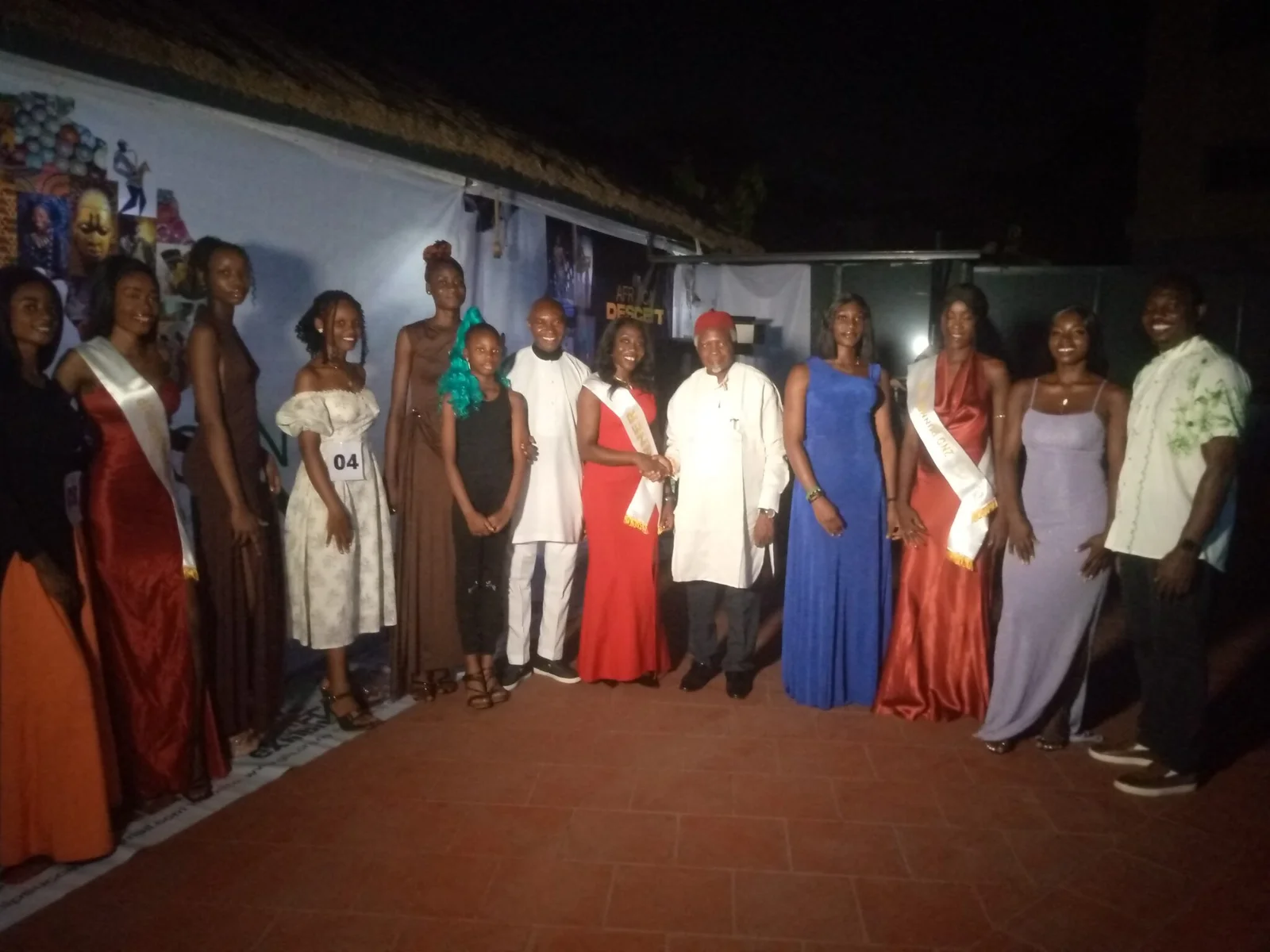
    Chukumele made this known on Sunday night in Abuja at the African Descent Creative Industry Leadership Summit, Honours and Beauty Pageant.

    The programme was organised by the Global Initiative for Leadership Success (GILS), a non-governmental organisation, in collaboration with the Federal Ministry of Art, Culture, Tourism and Creative Economy.

    Presenting a paper titled “Africa, Insecurity, and the Future of Tourism and Hospitality,” Chukumele said Africa’s tourism and hospitality sector had shown remarkable resilience since the COVID-19 pandemic, with many destinations recording near-record or record tourist arrivals.

    He, however, noted that insecurity remained a structural threat influencing where and how tourism develops across the continent.

    According to him, insecurity concentrates tourism benefits in safer locations, discourages investment in fragile regions and imposes recurring costs on operators and host communities.

    Chukumele said a forward-looking strategy must integrate community-centred development, practical safety measures, targeted infrastructure investment and stronger regional cooperation.

    “International tourist arrivals to Africa and tourism receipts have been on a strong recovery path since 2022.

    “United Nations tourism data and regional reports indicate that the continent returned to, and in many sub-regions exceeded, pre-pandemic levels by 2024 and 2025.

    “Africa recorded approximately 74 million international arrivals in 2024 and sustained positive growth into 2025,” he said.

    He stressed that when safety is combined with inclusion and smart investment, tourism could serve as both a beneficiary of stability and an engine for building it.

    The expert urged African leaders, particularly in Nigeria, to pursue lasting solutions to insecurity threatening sustainable development.

    On his part, Dr Raphael Obi, Chief of Staff to the Minister of Art, Culture, Tourism and Creative Economy, Mrs Hannatu Musawa, said the creative industry had emerged as one of the leading drivers of the global economy.

    Obi noted that countries were increasingly relying on the sector to stimulate economic growth, adding that Nigeria was richly endowed with creative talents that must be effectively harnessed.

    “As far as this industry is concerned, Nigeria is a hub of creativity and a beacon of hope in culture, arts, culinary expression and photography.

    “Our music, imagery and cultural expressions project Nigeria globally. For us in the ministry, we will continue to give our best to ensure the growth and development of this sector,”

  • BREAKING: FG Issues Travel Alert to Citizens Travelling to UK 

    BREAKING: FG Issues Travel Alert to Citizens Travelling to UK 

    Avoid political processions and protests, rallies or marches. Avoid crowded areas and large gatherings. Be vigilant and self aware at all times.

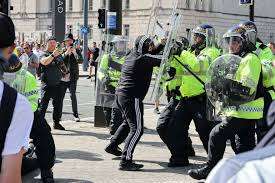
    The Nigerian government has issued a travel warning to citizens planning to visit the United Kingdom due to the escalating crisis following the tragic killing of three young girls at a concert.
    In a travel alert released on Monday by the Ministry of Foreign Affairs (Ref. No: MFA/PR/2024/14), signed by Ambassador Eche Abu-Obe, Spokesperson for the Ministry, the government cautioned Nigerians that the situation in the UK has taken a dangerous turn, with reports of attacks on law enforcement officers and infrastructure damage.
    The alert advises Nigerians to exercise extreme caution when traveling to the UK.
    It warned Nigerians in the UK to be vigilant and self-aware at all times. The Nigerian government also advised them to avoid political processions and protests, rallies or marches, crowded areas and large gatherings.
    The advisory reads: “There is an increased risk of violence and disorder occasioned by the recent riots in the UK, stemming from the killing of 3 young girls at a concert. The violence has assumed dangerous proportions as evidenced by reported attacks on Law enforcement agents and damage to infrastructure.
    “To this end, citizens are advised to be extra vigilant and take measures as follows:
    “Avoid political processions and protests, rallies or marches. Avoid crowded areas and large gatherings. Be vigilant and self aware at all times.
    “Contact the High Commission with a view to passing information that could be of interest via e-mail and hc@nigeriahc.org.uk, +442078391244. telephone”
    Giving background of the situation, the Nigerian government stated that demonstrations by far right and other extra-parliamentary groups in parts of the UK in recent weeks have been large, and in some instances unruly.
    “These disturbances have only been aggravated by the unfortunate deaths of the 3 girls and it has spawned an anti-immigration narrative, with particular emphasis on Muslim immigrants or persons of colour being targeted.
    “This advisory remains under review,” it said.
  • My visit to the beautiful city of Kinshasa

    My feet in the crocodile infested waters of the River Congo

    My first glimpse of Kinshasa was the River Congo. As the African World Airline AWA Flight 342 from Accra, Ghana continued to circle in the air while awaiting permission to land, the sight of the gloriously serpentine river was a temporary relief to the anxiety of waiting.

    Moments later, when the airport closure due to a ‘VIP Movement’ was over, the aircraft descended into the turbid embrace of a collection of clouds before erupting into the brilliant Congolese sunshine. That was when the river came fully into view. From my aerial position, I could see the river and its fan-shaped web of tributaries as it meandered through the vast mass of land before emptying into the Atlantic Ocean.

    A quick investigation confirmed that River Congo is the second longest river in Africa, shorter only than the Nile, as well as the second largest river in the world by discharge volume, following only the Amazon. It is also the world’s deepest recorded river, with measured depths in excess of 220 m (720 ft). With its many tributaries, the River Congo forms Africa’s largest network of navigable waterways.

    I was so enthralled by the river that within 24 hours of my arrival in the capital city of the Democratic Republic of Congo, I was by the riverside at the Gombe area of the city for a leisurely evening walk.  It was a cool and windy evening and the riverside was full of people. There were joggers, loners, lovers as well as picnicking families and groups. Along the lyrical curve of the riverside, the river elicited a collage of dreams and sundry voices that left a myriad of images in the mind. For the young, the river represented a heart-pounding adventure, for the lonely, a companion, for the weary, a solace and for a writer, a repository of stories. 

    My first Lunch of fried plantain, chicken, butter and pepper.

    The river, a romantic interlude to the difficult history of the Congo’s, is also the dividing line between the capital cities of the two countries.

    From my position at the Gombe side of the river, Kinshasa, the capital of the Democratic Republic of the Congo (DRC) was on the right bank, while on the left bank was Brazzaville,  the capital of the Republic of the Congo. Spanning the river far ahead in the horizon was a splendid bridge wthatjoined the two capital cities.

    Expectedly, some major differences exist between the two equatorial Congo neighbors.

    The DCR is much larger in both population and area with a population of about 100 million people and area of 2.345 mill km sq out of which, about 17 million people live in Kinshasa. On the other hand, the Republic of Congo has a population of 5.3 million and an area of 342k km sq with 2.3 million in the capital city of Congo Brazzaville. I was also informed that although my visa to the DRC would not permit me to visit the Republic of Congo, citizens of both Congos do not require visas to visit each other.

    Apart from being a formidable navigable waterway, the River Congo is the largest source of hydroelectric power in Africa. When fully operational, the river is said to be capable of providing electricity to half of the African continent.

    To the literary-minded, the river is evocative of the famous 1902 short story “Heart of Darkness” by Joseph Conrad. Conrad’s book conjured up an atmosphere of foreboding, treachery, greed, and exploitation. Today, however, the Congo appears as the key to the economic development of the central African interior.

     In my usual practice of paying homage to any great river or ocean of my country of visit, I removed my shoes and stepped into the warm waters of the river.

    I was still savouring the pleasure of the company of the deepest river in the world when a young man standing close to me shouted in French; “Attention monsieur, il y a des crocodiles dans la riviere” (Excuse me, Mister, there are crocodiles in the river).

    I had come to the Democratic Republic of Congo on the invitation of the Congolese Writers Association for the official inauguration of the Pan African Literature Prize which had been endowed by the President of the DRC and current Chairman of the African Union (AU), His Excellency, Felix Tshisekedi. In addition, I was to also visit the Congolese minister for Culture and Tourism in addition to some other literary functions.

    Established as a Belgian colony in 1908, the Democratic Republic of the Congo (DRC) French: République démocratique du Congo (RDC and historically Zaire, is a country in Central Africa.

    It is, by area, the largest country in sub-Saharan Africa, the second-largest in all of Africa (after Algeria), and the 11th-largest in the world. With a population of around 100 million, the DRC is the most populous officially Francophone country in the world, as well as the 4th-most populous country in Africa (after Nigeria, Ethiopia, and Egypt) and the 15th-most populous country in the world.

    It must have rained before my arrival as evidenced by the water-clogged roads which I traversed in a taxi cab that had been arranged by my hosts who had come to the airport to welcome me. With its teeming population of commuters waiting for transport in the congested after-work traffic, Kinshasa reminded me of Lagos. After a long winding and tortious journey through many back streets over potholed-riddled roads, we finally arrived in my hotel, Hacienda Hotel in the highbrow Gombe district of the city.

    The following morning after a meeting with the President of the Congo Writers Association, Bia Bietusiwa, and some of his executive members in my hotel suite, I was driven to the venue of my main meeting with other members of the Association at the Kasa-vubu part of the city. To reach the meeting venue, we had to pass through the Boulevard du 30 Juin (Boulevard of 30 June) the main jugular of the city which was named for the date in 1960 when the country gained independence from her colonial master, Belgium.

    After the meeting with my writer colleagues at Kasa-vubu (named after the country’s first President) I paid a courtesy call to the Hon Commissioner of Arts and Culture for Kinshasa, Madam Yvette Tabu Minangoy.

    The trip took me past the Cathedral Notre Dame then on to Boulevard Triumph with its ‘People’s Palace, the seat of the Congolese parliament said to have been built by the Chinese during the reign of President Mobutu. Next was the country’s national stadium, the Stade des Martyrs (Stadium of the Martyrs) located in the Lingwala district of the city. It is the home stadium of the National Team of the DRC, as well as the local clubs; AS Vita Club and DC Motema Pembe. The stadium which has a capacity of 125,000 for most matches is considered to be the biggest in central Africa. 

    Also in the vicinity was the Avenue Democracy, with its Food and Towel markets, the defunct BIAC bank, the Police National Camp, and the National Research Centre. In addition, the National Museum (built by the Koreans), as well as the proposed site of the Congolese Cultural Centre (to be built by the Chinese).

    Later that evening, I attended a reception in honour of delegates to the inauguration of the Pan African Literature Prize in the residence of Madam Kathryn Brahy, the General Delegate of the Belgium-based NGO, Wallonie Bruxelles International at her official residence at the Gombe area of the city. It was a large gathering of Diplomats, Academicians, Writers and Cultural enthusiasts. The event took place outdoors in the expansive garden of Madam Brahy’s colonial style house. While smartly dressed waiters passed round cocktails and ‘small chops’, a band pelted out beautiful and sonorous ‘Congolese music’ from the veranda.

    As I put away the tantalizing food and drink, the music brought back childhood memories of listening to ‘Congo music’ every evening on the local radio in my native Nigeria. Not even the slight drizzle which came later and made us move into the main house could douse the beauty and enjoyment of the evening of cocktails, music, speeches and camaraderie.

    Sassy, ebullient and restless, Kinshasa is Africa’s third-largest metropolitan area after Cairo and Lagos.

    A street scene in Kinshasa

    It is also the world’s largest Francophone urban area, with French being the language of government, education, media, public services and high-end commerce in the city, while Lingala is used as a lingua franca in the street  Expectedly, the city is the engine room of the high decibel socio-political activities of the land made famous by a succession of leaders such as Patrice Lumumba, Joseph Kasa-Vubu, Mobutu SeseSeko, Laurent Kabila, his son, Joseph Kabila on to the current President, Felix Tshisekedi.

    The DRC’s turbulent history has seen the country colonized, liberated, engaged in civil wars, suffered from military dictatorship and currently contending with the negative activities of some terrorists in the eastern part of the country.

    However, despite DRC’s difficult past and current challenges, I found Kinshasa a lively place with a light-hearted festivity amidst a colourful social life. A festival city, with a rich offering of arts and cultural events, I quickly melted into the city with its fast paced, soulful beats of ‘Congo music’ (Rumba Lingala) that seemed to ooze from every corner of the energetic city.

    Having realized my love for the popular music, my hosts quickly loaded my phone with the music of some of their stars such as Franco Luambo, Tabu Ley, Simaro Lutumba, Papa Wemba, Koffi Olomide, Kanda Bongo Man, Ray Lema, as well as one of the most talented and respected pioneers of African rhumba – Tabu Ley Pascal Rochereau. These musicians kept me awake every night during my stay as I listened and sometimes danced to their music in the solitude of my hotel room.

    The big event, the inauguration of the Pan African Prize took place on a hot afternoon at the National Museum (Musee National De La RDC) located on the Boulevard Triumph (Boulevard Triumphal). Unfortunately, the cab which my interpreter, Edimo had hired to take me to the venue got stuck in a thick traffic snarl in the central part of the city.

    Since most of the other dignitaries were already at the venue of the event, Edimo convinced me to abandon the cab and jump on a commercial motorbike (Moto). Although I had ridden motorbikes during some of my previous trips to places such as Rwanda, Uganda and Tanzania, riding a motorbike in the congested Kinshasa traffic was one of my scariest experiences in recent times.

    On a number of occasions during the approximately 30 -minute trip to the National Museum, I had to close my eyes out of fear of a collision as my Congolese motorcyclist weaved his way in between tightly packed vehicles and pedestrians with an uncanny dexterity.  Much to my relief, we arrived unscratched at the venue of the inauguration in time to be part of the historic and memorable ceremony.

    My official visit to the riverside Office of the President of the DRC (Palais de la Nation) the following day was both historical and emotional. After the formalities of meeting with government officials in lieu of President Felix Tshisekedi whom I was informed had to urgently travel out of town, I was taken on a tour of the Presidential Palace.

    Standing out of the multitude of historical mementoes was an elaborate tomb at the entrance of the Presidential office. Four enormous fists, sculpted in cement supported a structure that looked like a giant tent toppled with a gold star. ‘’That is the tomb of former President Laurent Kabila’’ my hosts explained. Although I could not inspect the tomb because of the late hour, I was reliably informed that the former President’s corpse rested in a coffin clad in the old colonial flag and enclosed in glass. Next to the tomb was the late President’s statue standing about eight meters high.

    As I toured the forecourt of the Presidential Palace that oozed with much history and legend, I walked carefully, stepping tenderly on the grounds that the famous and the controversial had once trodden. I was careful not to disturb the spirits of those that had gone before but whom tradition still believes are looking after the place.  The names came tumbling out in my mind; Patrice Lumumba, Joseph Kasa-vubu, Mobutu Seke Seko, Laurent-Desire Kabila…

    My last official engagement in Kin (nickname for Kinshasa) was at the National Institute of Arts (Institut National Des Arts- INA) at the Flambeau Gombe district of the city. The occasion was a lecture on the Role of the French Language in African Literature to be delivered by Prof Andre Yoka Lye Mudaba, a veteran Congolese bilingual writer.

    The Institute which I was told was for the training of youths in all areas of creative arts was jam packed with writers, musicians, actors among others when I arrived for the mid- morning event. In a corner of the hall, a two- man band was playing some old memorable music with the help of a keyboard and violin.

    After a rendition of the country’s national anthem, a danceable fast paced music, the proceedings for the day began with beautiful poetry renditions to the accompaniment of ‘Congo music’. 

    This was followed by the lecture which centered mainly on the need to encourage Francophone countries to also learn English in order to open up their works and the country to Anglophone countries which he believed are more in number. After my own speech, the event came to a close with the band playing another Congo musical piece in my honor. Inspired by the melodious lyrical piece, I got up to dance much to the admiration of the crowd.

    Twilight was setting when my hosts took me on a walking tour of the Barndal and Matonge parts of the city. As we walked down an expanse network of open -air bars, canteens and ‘drinking joints’ full of happy revelers, the percussions of sonorous ‘Congo music’ filled the air. ‘’People usually come here every day to relax after work before going back home’ my hosts explained.

    The main delicacy among the patrons, I was informed was the grilled bottom part of turkey. ‘’Nobody wants to eat the main turkey, just the bottom part’’ my friends informed me amidst bouts of laughter.

    We finally retired to the Writers secretariat for what appeared to be a farewell reception. 

    After some speeches, photographs and presentations, we feasted on hearty portions of fried chicken, plantain mutton, fish as well as boiled potatoes and cassava. These were followed by generous doses of assorted drinks before the introduction of the ubiquitous ‘Congo music’ which my hosts sang with gusto and relish alongside the musicians. The more the drinks flowed, the higher the decibel of their voices.

    It was a befitting end to my one week visit to my Congolese brothers and sisters.