







Category: Economy

  • NRS Targets N40.7tn Revenue from 2026 Tax Reforms — Adedeji

    NRS Targets N40.7tn Revenue from 2026 Tax Reforms — Adedeji

    The Executive Chairman of the National Revenue Service, Mr Zach Adedeji, has said Nigeria’s 2026 tax reforms have positioned the service to generate N40.7 trillion in taxes and royalties.

    Adedeji disclosed this on Wednesday in Abuja while speaking at a roundtable organised by the House of Representatives Committee on Appropriations for key stakeholders in the financial sector.

    According to him, the projected revenue reflects the impact of recent reforms that transferred petroleum and solid mineral royalties, alongside other revenue streams, to the National Revenue Service.

    “In light of the tax reforms transferring petroleum and mineral royalties and other revenues to the NRS, the total target is N40.7 trillion,” Adedeji said.

    “We believe that with the support of the House, we will achieve what we have proposed.”

    Strong 2025 Performance

    The NRS chairman also highlighted the agency’s strong performance in 2025, noting that it exceeded its revenue target by a wide margin.

    He said the service generated N28.23 trillion in 2025, surpassing its target of N25.2 trillion.

    “Compared with 2024, we collected N6.5 trillion more in 2025, representing a 30.3 per cent increase, driven largely by non-oil taxes,” he stated.

    Finance Minister Explains Reform Rationale

    The Minister of Finance and Coordinating Minister of the Economy, Mr Wale Edun, said Nigeria had previously relied heavily on Ways and Means financing to cover large fiscal deficits.

    He added that the Nigerian National Petroleum Company had been funding petrol subsidies through an under-recovery arrangement, which he described as unsustainable.

    Edun said the government was compelled to address these structural distortions and replace them with market-based solutions, leading to the current wave of fiscal and tax reforms.

    Lawmakers Seek Clarity on Revenue Projections

    The Chairman of the House Committee on Appropriations, Rep. Abubakar Bichi (APC–Kano), said the roundtable was organised to allow lawmakers to engage directly with the presidential economic team on the 2026 Appropriation Bill.

    “This is for us to study, consider and approve the request. We decided to engage the President’s team on 2025 performance and the 2026 proposal,” Bichi said.

    He added that lawmakers also engaged the NRS leadership to gain clarity on the ambitious 2026 revenue projections.

    “In 2025, we achieved about N28 trillion against a N25 trillion target. We need more information so Nigerians can understand what is going on,” he said.

  • NPA: Arrival of 33 Ships at Lagos Ports Expected to Ease Fuel, Food Supply Pressures

    NPA: Arrival of 33 Ships at Lagos Ports Expected to Ease Fuel, Food Supply Pressures

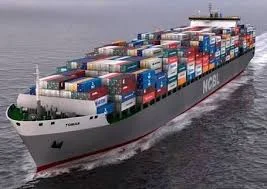
    The Nigerian Ports Authority (NPA) has announced the expected arrival of 33 vessels carrying petroleum products, food items and other cargoes at major Lagos ports, a development analysts say could help ease supply shortages and moderate inflationary pressures in the country.

    According to the Authority’s Daily Shipping Position released on Monday, the vessels are scheduled to arrive between February 22 and February 27 at the Apapa Port, Tin Can Island Port, and the Lekki Deep Sea Port.

    The NPA disclosed that 17 of the incoming ships are container vessels transporting assorted goods, while the remaining 16 ships will berth with bulk gas, diplomatic cargo, bulk urea, empty containers, crude oil, bulk clinker and blended stock.

    The mix of cargoes highlights the role of Lagos ports as a critical gateway for consumer goods, industrial inputs and energy products.

    The Authority also revealed that seven ships and tanker vessels have already arrived at the ports and are currently waiting to berth with aviation fuel, petrol, containerised goods and general cargo, while 17 vessels are actively discharging bulk wheat, soya beans oil, general cargo, bulk sugar, bulk urea, trucks, fresh fish and containers of various goods.

    Economic and Inflation Implications

    Economists say the steady inflow of vessels laden with petroleum products could help stabilise domestic fuel supply, particularly for aviation fuel and petrol, at a time when energy costs remain a major driver of inflation in Nigeria. Improved fuel availability is expected to reduce logistics and transportation costs, which often cascade into higher prices for goods and services.

    Similarly, the discharge of food-related cargoes such as wheat, sugar, soya beans oil and fresh fish is seen as critical to easing pressure on food prices, which account for a significant portion of Nigeria’s inflation basket. Adequate supply of these commodities supports food processors, bakeries and retailers, potentially slowing the pace of price increases if distribution bottlenecks are minimised.

    The arrival of bulk urea and clinker is also expected to support the agricultural and construction sectors. Urea availability is vital for fertiliser production and farm output, while clinker imports are essential for cement manufacturing. Improved access to these inputs could help contain production costs in both sectors, with positive spillover effects on food prices and housing costs.

    Industry analysts note that while vessel arrivals alone do not automatically translate into lower prices, efficient port operations, timely cargo evacuation and improved inland transportation are key factors that will determine the overall economic impact. Delays, congestion or high logistics costs could offset the potential benefits of increased cargo inflow.

    The NPA reiterated its commitment to improving operational efficiency across Nigeria’s ports, stating that faster vessel turnaround and enhanced cargo handling remain central to efforts aimed at supporting trade, economic stability and inflation management.

  • Industry Ministry’s $500m Export Claim Faces Scrutiny

    Industry Ministry’s $500m Export Claim Faces Scrutiny

    Nigeria’s Minister of Industry, Trade and Investment, Jumoke Oduwole, says the ministry generated more than $500 million in export revenue in 2025 through industrial development and diversification initiatives. However, details presented to lawmakers raise questions about attribution, scale, and the ministry’s capacity to sustain impact under persistent capital constraints.

    Oduwole made the disclosure on Monday while defending the ministry’s 2026 budget proposal before the Senate Committee on Trade and Investment.

    The minister also claimed that the ministry’s programmes created over 20,000 direct jobs in 2025. No supporting data was provided on the sectors involved, the duration or quality of the jobs, or the methodology used to separate ministry-driven outcomes from broader private sector activity.

    From a trade perspective, Oduwole pointed to a reported 500 per cent increase in traded volumes on the Nigeria Commodity Exchange. While the growth suggests rising activity in structured commodity markets, the ministry did not disclose absolute volume figures, making it difficult to assess whether the increase reflects meaningful market depth or a rebound from a low base.

    She said the ministry advanced plans for a national trade and distribution company to improve commodity aggregation and market access. However, key commercial details, including capital structure, governance, funding sources, and expected timelines, were not outlined, leaving uncertainty around execution and private sector participation.

    On policy delivery, the minister confirmed that the Federal Executive Council approved the National Industrial Policy in November 2025 and that Nigeria launched its first National Intellectual Property Policy. While these approvals expand Nigeria’s policy framework, they add to a growing list of strategies whose effectiveness will depend on implementation capacity rather than regulatory intent.

    Funding constraints dominated the budget defence. Oduwole said the ministry’s 2025 appropriation totalled ₦11.8 billion, largely consumed by personnel and overhead costs. Apart from a ₦3.8 billion capital allocation, she said no capital funds had been released, effectively limiting the ministry’s ability to execute industrial infrastructure, cluster development, or export-support programmes.

    Despite these limitations, the minister disclosed that the ministry exceeded its revenue target by approximately ₦100 million, with full remittance to the Consolidated Revenue Fund. In macro terms, however, the figure remains marginal when set against Nigeria’s industrial financing gap and the scale of the country’s non-oil export ambitions.

    Looking to 2026, Oduwole said the ministry’s priorities align with the Renewed Hope Agenda of Bola Tinubu, the National Development Plan, and existing trade, investment and industrial policy frameworks. She said the emphasis would shift from policy formulation to implementation across priority value chains, industrial clusters, and special economic zones, with a renewed focus on local production and non-oil exports.

    The minister described domestic investors as the primary signal of confidence in the economy, while foreign investors would continue to be targeted through trade missions and investment roadshows. She also announced plans for a National AfCFTA Tour and expanded sub-national engagement to embed trade and industrial outcomes at state level.

    She said these initiatives would be supported by digital investor portals and trade intelligence tools, measures long promised by successive administrations but yet to materially change investor experience.

    Oduwole disclosed that the ministry’s proposed 2026 capital allocation stands at ₦2.72 billion, a level she acknowledged would be insufficient given the ministry’s mandate and execution targets. She urged lawmakers to approve an increase, warning that without improved funding, delivery risks would persist.

    For investors and market operators, the central issue remains whether the ministry can translate policy approvals and headline revenue figures into measurable gains in industrial output, export competitiveness, and market infrastructure , or whether ambition will continue to outpace execution capacity.

  • Naira Extends Weekly Rally, Appreciates to ₦1,386.55/$ on CBN Reforms

    Naira Extends Weekly Rally, Appreciates to ₦1,386.55/$ on CBN Reforms

    he naira closed the week on a stronger note on Friday, appreciating further against the U.S. dollar at the official market to trade at ₦1,386.55/$1.

    Data published on the official website of the Central Bank of Nigeria (CBN) showed that the local currency gained ₦10.43, representing a 0.7 per cent appreciation compared with Thursday’s closing rate of ₦1,396.99/$1.

    The naira has remained relatively stable in recent days, buoyed by ongoing CBN reforms, recording a week-long appreciation trend.

    Earlier in the week, the currency traded at ₦1,418.95 on Monday, ₦1,401.22 on Tuesday, and ₦1,400.47 on Wednesday.

  • Senate Launches Probe as as Nigeria’s Rail Services Plummet

    Senate Launches Probe as as Nigeria’s Rail Services Plummet

    The Senate has launched an investigation into Nigeria’s railway contracts and project execution following a sharp decline in services across key routes.


    Lawmakers expressed alarm that major lines such as the Kano–Kaduna corridor now operate just one passenger trip per day, while cargo delays have nearly doubled.


    During plenary, senators cited persistent bandit attacks, poor maintenance, and aging infrastructure as major setbacks undermining the rail sector’s revival.


    Senate President Godswill Akpabio directed relevant committees to conduct a comprehensive review of all ongoing and completed rail projects, focusing on their design, funding, execution, and maintenance records.


    The probe, lawmakers said, seeks to determine why Nigeria’s railway system, once seen as the backbone of national transport, is now struggling to meet basic operational standards.

  • Tinubunomics Not About Instant Wealth, Says Budget Office DG

    Tinubunomics Not About Instant Wealth, Says Budget Office DG

    Abuja – Nigeria’s economic reforms under President Bola Tinubu, popularly called Tinubunomics, were never designed to create sudden riches, the Director-General of the Budget Office of the Federation, Tanimu Yakubu, explains.

    In a statement titled “Tinubunomics and the Arithmetic of Illusion”, Yakubu warned that much of the criticism surrounding the reforms is based on misleading numbers, not proper economic analysis.

    “This is not economic analysis. It is an arithmetic illusion,” he said.

    Yakubu explained that viral critiques often confuse revenue with actual cash, and borrowings with income.

    Many also treat federation-wide collections as fully available to the federal government, a mistake that creates unrealistic expectations.

    “Revenue is not the same as cash available to the Federal Government. Borrowing is not income; it is financing and creates future obligations,” Yakubu said.

    He criticized analysts who add up tax collections, oil revenues, customs receipts, borrowing, and subsidy savings to arrive at huge figures like ₦150 trillion, ₦170 trillion, or ₦180 trillion  only to ask, “Where did the money go?”

    “Much of it never existed in the form being implied,” Yakubu said.

    On fuel subsidies, Yakubu clarified that removing them doesn’t generate instant cash. Instead, it closes long-standing leaks in the budget, gradually freeing resources to improve fiscal discipline and support vulnerable Nigerians.

    “Subsidy reform does not conjure idle cash. It closes a hole,” he explained.

    Yakubu also addressed concerns about rising debt, explaining that much of the increase in naira-denominated debt comes from exchange-rate adjustments of existing foreign loans, not new borrowing.

    “Treating this accounting effect as new borrowing is a category error,” he said.

    The Budget Office chief said Tinubunomics is a macro-fiscal reset, not a promise of instant abundance. It aims to:

    • Restore proper price signals
    • Strengthen revenue administration
    • Rebuild credibility
    • Protect vulnerable citizens

    “Accountability does not begin with social media arithmetic. It starts with audit logic; anything else is theatre,” Yakubu said.

    Yakubu urged Nigerians to look beyond headline numbers and focus on how the government spends what it actually controls.

    He said this approach, rather than viral figures and social media commentary, is the true measure of accountability.

  • From Secrecy to Openness: Why 2025 Actually Meant Something for NNPCL

    From Secrecy to Openness: Why 2025 Actually Meant Something for NNPCL

    For most Nigerians, the old NNPC was a black box.

    Money went in. Crude came out. Losses were explained away. Profits, when they appeared, were never quite clear. And no one outside the building really knew what was going on inside.

    That history matters, because it explains why 2025 felt different.

    Not because everything suddenly worked, Nigerian oil has never worked that way, but because, for the first time in a long while, the Nigeria National Petroleum Company Limited (NNPCL) behaved less like a government department hiding behind silence and more like a business willing to show its workings.

    Production Finally Stopped Being a Mystery

    For years, the headline around oil production was always the same: theft, sabotage, decline. This year, that script changed.

    By December, NNPCL’s exploration arm, NEPL, recorded peak daily production of about 355,000 barrels per day, a level not seen in decades. More importantly, national output settled into a steady 1.6–1.7 million barrels per day range.

    That stability mattered more than the record itself. Nigeria has spent years missing OPEC targets and explaining why. In 2025, the explanations gave way, at least partly, to results.

    Was everything independently verified down to the last barrel? No. But the consistency of the data, month after month, was a noticeable improvement over the erratic, often contradictory figures of the past.

    The Profit Headline: and What Sat Behind It

    NNPCL’s announcement of ₦5.4 trillion in profit naturally raised eyebrows. Critics were quick to point out that a weaker naira made the numbers look bigger than they might otherwise have been.

    That criticism isn’t wrong. But it’s also not the whole story.

    What made this different from previous years was not just the profit figure, but the detail that came with it: revenues north of ₦45 trillion, clearer cost breakdowns, and open acknowledgment of FX exposure and legacy subsidy distortions.

    For an institution long known for saying as little as possible, saying this much was progress. Transparency doesn’t mean everyone agrees with your numbers, it means people can finally argue about them.

    Gas: Less Noise, More Substance

    While attention stayed fixed on petrol prices, NNPCL quietly made some of its most important moves in gas.

    The AKK pipeline crossed the River Niger. The long-delayed OB3 pipeline finally linked eastern gas to western and northern markets. And in a subtle but significant shift, NNPCL opened up third-party access to NLNG feedstock, easing its grip on export routes.

    These weren’t flashy announcements. But they signaled something new: a willingness to loosen control and let infrastructure work for the wider market, not just the company.

    In a system built on discretion and gatekeeping, that kind of openness is reform.

    Refining: Saying the Quiet Part Out Loud

    If there was one moment that captured NNPCL’s changing posture, it was the refinery conversation.

    After years, and trillions of naira poured into Port Harcourt, Warri, and Kaduna Refineries with little to show for it, the company stopped pretending that sentiment could replace economics. Instead of promising yet another “near completion,” management admitted the obvious: some of these assets may simply not be worth reviving.

    The decision to review them honestly, even if that means converting some into storage or blending hubs, didn’t deliver fuel independence. What it delivered was something rarer: honesty.

    Did Any of This Matter to Regular Nigerians?

    Early in the year, it didn’t feel like it.

    Petrol prices surged, hitting ₦1,200 per litre and beyond in some areas after full deregulation. For months, it looked like the pain had no upside.

    Then, slowly, things eased.

    As crude production stabilized and the Dangote Refinery ramped up, supply pressures softened. By December, prices in major cities dropped into the ₦850–₦950 range, with differences driven more by transport costs than scarcity.

    Fuel wasn’t cheap, but it stopped being unpredictable. And in Nigeria’s fragile economy, predictability is relief.

    Why 2025 Actually Matters

    NNPCL didn’t transform Nigeria’s oil sector in one year. What it did was more basic and more important.

    It spoke more openly.
    It published more data.
    It made choices that could be questioned, and questioned publicly.

    For a company once defined by silence, that alone is a shift.

    The real test is still ahead. Transparency has to deepen. Audits must stay credible. And none of this can disappear when politics heats up or oil prices fall.

    But for the first time in a long time, NNPCL ended a year not asking Nigerians to trust it
    but giving them something to examine.

    And that’s how institutions stop being myths and start becoming accountable.

  • Naira Ends Week Weaker at ₦1,464.49 Amid FX Demand Pressures

    Naira Ends Week Weaker at ₦1,464.49 Amid FX Demand Pressures

    The naira ended the week on a weaker note against the US dollar at the official foreign exchange market on Friday, settling at ₦1,464.49 as sustained demand pressures continued to weigh on the local currency.

    Data released by the Central Bank of Nigeria showed that the naira depreciated by 0.4 per cent from Thursday’s closing rate of ₦1,457.84.

    The currency had started the week on a positive footing, recording an appreciation of ₦2.59 at the official window on Monday. However, the gains proved short-lived as demand for foreign exchange resurfaced, eroding early optimism.

    By Monday, the naira traded at ₦1,451.81 before weakening further to ₦1,455.08 on Tuesday. The depreciation trend persisted on Wednesday, with the currency exchanging at ₦1,455.49, and continued through the rest of the week, culminating in Friday’s weaker close.

    Despite the early gains, sustained pressure in the foreign exchange market limited the naira’s ability to hold its ground, highlighting ongoing challenges in balancing demand and supply at the official window.

  • Yuan Strengthens as Central Parity Rate Rises to 7.0602 Against Dollar

    Yuan Strengthens as Central Parity Rate Rises to 7.0602 Against Dollar

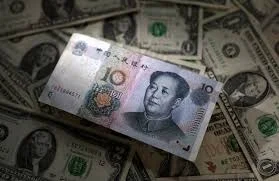
    China’s currency, the renminbi (yuan), strengthened on Tuesday after the central parity rate was set 54 pips higher at 7.0602 per U.S. dollar, data from the China Foreign Exchange Trade System (CFETS) showed.

    The daily fixing serves as a key reference point for the onshore yuan and is closely watched by markets for signals on currency policy and official guidance. Under China’s managed floating exchange rate system, the yuan is permitted to trade within a band of plus or minus 2 percent around the central parity rate in the spot foreign exchange market.

    The central parity rate is determined each business day before the opening of the interbank foreign exchange market. It is calculated based on a weighted average of prices quoted by market makers, taking into account market supply and demand, movements in major global currencies, and changes in offshore yuan trading.

    A stronger-than-expected fixing is often interpreted by investors as an effort to support the currency or to anchor market expectations, particularly amid volatility in global financial markets and shifting interest rate dynamics between China and the United States.

    In recent months, the yuan’s performance has drawn heightened attention as traders assess the outlook for China’s economy, capital flows, and monetary policy stance. Movements in the daily fixing can influence onshore trading sentiment and short-term currency positioning, even as broader trends remain driven by economic fundamentals.

    The yuan’s allowed trading band provides flexibility for market forces while enabling authorities to manage excessive swings, maintaining relative stability in the foreign exchange market.

  • NBS Reports Drop in Petrol and Diesel Prices in October 2025

    NBS Reports Drop in Petrol and Diesel Prices in October 2025

    The National Bureau of Statistics (NBS) has reported a decline in average retail fuel prices in October 2025.

    According to the bureau’s Petrol Price Watch released in Abuja, the average price of a litre of petrol fell to ₦1,052.31, down from ₦1,184.83 in October 2024, marking an 11.18% year-on-year decrease.

    However, compared to September 2025, petrol prices rose by 8.42%, from ₦970.59.

    State-level data showed Kogi recorded the highest average price at ₦1,110.00, followed by Sokoto (₦1,105.93) and Borno (₦1,101.63).

    The lowest prices were in Oyo (₦1,001.79), Nasarawa (₦1,009.38), and Abia (₦1,012.50).

    Zone analysis indicated the North-East had the highest average at ₦1,072.74, while the South-West recorded the lowest at ₦1,032.81.

    In the diesel market, the NBS Diesel Price Watch revealed an average retail price of ₦1,398.57 per litre in October 2025, representing a 2.96% decrease year-on-year from ₦1,441.28 in October 2024. Month-on-month, diesel prices increased by 9.45% from ₦1,277.81 in September 2025.

    State-wise, Enugu had the highest diesel price at ₦1,468.29, followed by Niger (₦1,465.69) and Jigawa (₦1,437.40).

    The lowest prices were recorded in Katsina (₦1,301.24), Edo (₦1,307.84), and Kebbi (₦1,308.94). By zone, the South-East led with ₦1,415.85, while the South-South recorded the lowest at ₦1,387.18.