


Category: Opinion

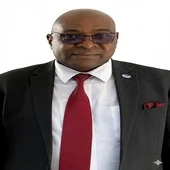
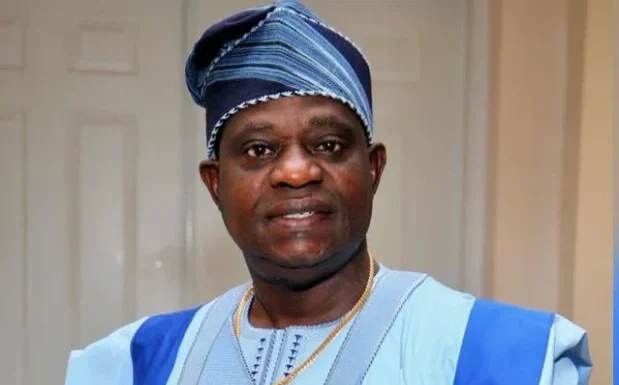
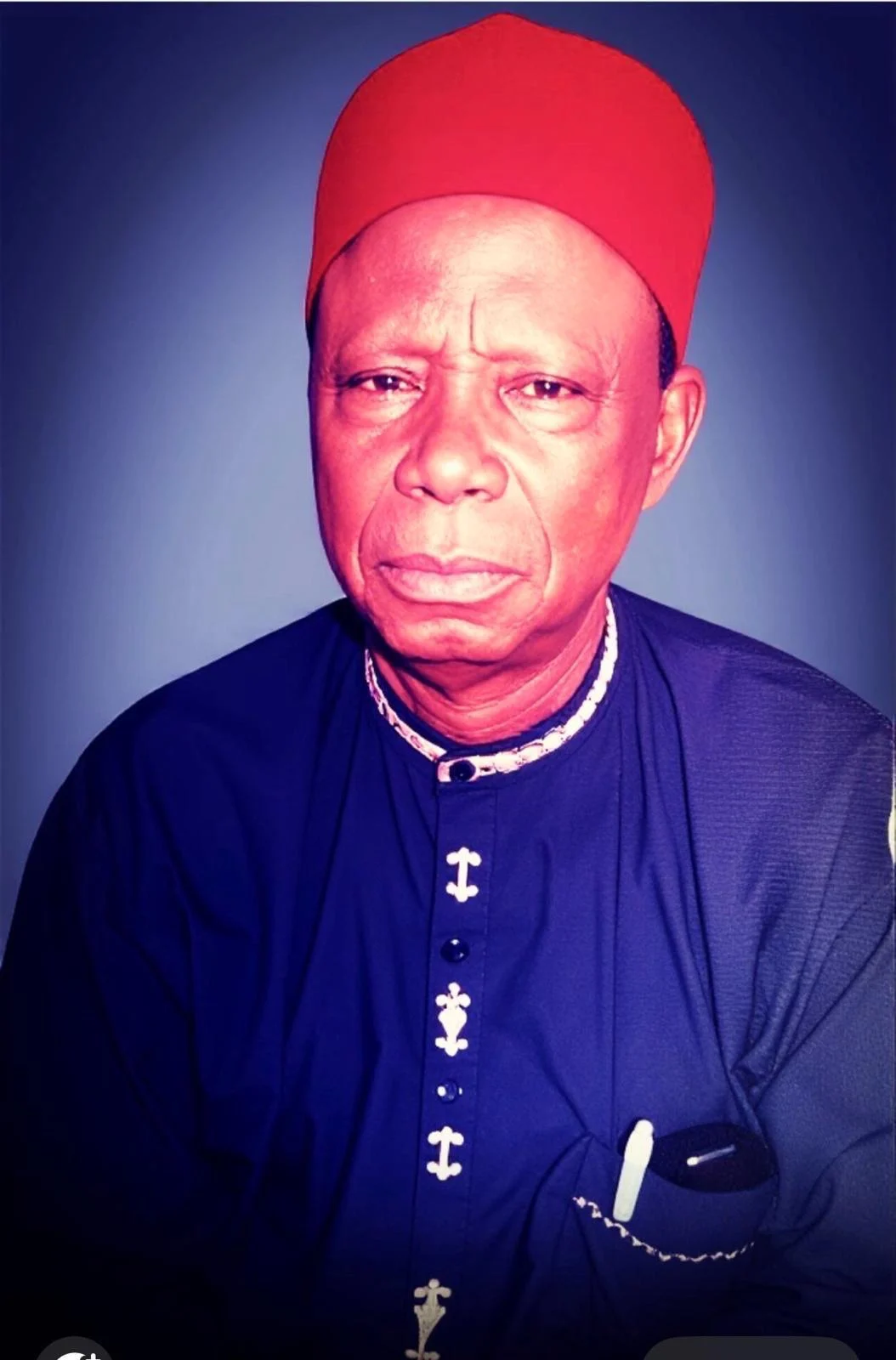
  • Chief Solomon Enuma Azuka: Here Was a Soul in Whom No Guile Did Dwell

    Chief Solomon Enuma Azuka: Here Was a Soul in Whom No Guile Did Dwell

    By

    Romanus Ikechukwu Azuka

    In the annals of quiet heroism, few lives shine as steadily as that of my brother, my boss, my second father, my brother sui generis. The third of five siblings and the firstborn son of the first wife, Mrs. Lucy Nwamgbeke Azuka, he became the moon among all the stars of the family, illuminating every path without ever casting a shadow of favoritism or pride. He took care of everybody: family members, relatives and beyond, yet never abused that central privilege. No one can claim exemption from his benevolence; he was a true man of the people, amiable par excellence, with no enemies. He loathed flashlights and spotlights, preferring the gentle glow of quiet service. He never hurt a fly, lived without pretense, and set his house, and the extended family’s, in perfect order long before the world demanded it. Jordan Peterson’s rule resonates eternally here: ” Set your house in perfect order before you criticize the world.” He did precisely that, with magnanimity, generosity and resolute altruism—and left a legacy that outlasts tragedy. He was a man without cants.

    Born on December 31, 1936 in humble circumstances in Ojoto, he carried forward a chain of resolve forged in pain and providence, becoming the architect of equity for his family and beyond.

    The roots trace to our father, Chief Francis Okeke Nnaoma Azuka ( Kwaji-Kwaji), a man of unlettered depth whose rage at humiliation became the family’s unbreakable vow. With only one sibling, a strong-willed younger brother. Stubborn. Fearless. He lived far away, in Ahoda, Rivers state, with an older cousin. Their relationship was turbulent, often marked by quarrels. One day, a letter arrived. It was from that distant city. A letter our father could neither read nor reply to. Approaching a literate man from our village for aid, he met cruelty: the man demanded he cultivate cocoyam on massive land just to read it, and again for the reply. Twice he toiled in insult, fetching tools, laboring under mockery, all for words that should have been free. Rage consumed him; shame scarred him. He swore then: no child of his would suffer such degradation. Education would shield them forever.

    Had our father been schooled, he would have been a historian or lawyer, his stories never rushed, always dressed in rich preambles, layered with context and flair. Instead, his illiteracy fueled determination: every child would read, write , and rise. He kept that oath.

    This vow propelled my boss to the Merchants of Light Secondary School, Oba (1956 set), founded in 1946 by the renowned Dr. Enoch Ifediorah Oli–lde Oba, Oxford -educated. As the only one among his peers to attend secondary school, he arrived worst-dressed, sandals perforated, sleepy from 8-mile treks after dawn farming. Exhaustion often overtook him; he would nod off in class, head resting on folded arms amid the murmur of lessons. On a fateful day during one such “sleeping session”, the principal and owner of the school, Dr. Oli himself, approached quietly and touched him awake. The great man inquired gently: Who is your father? From which town? The neighboring one, came the reply. What does he do for a living? The truth poured out: a farmer who carried palm wine on his head over 10 miles to sell at Onitsha markets. Dr. Oli , marvelled at such humble sacrifice in an era when education was a rare luxury, extended a personal invitation to our father. Our father, deeply honored, went and shook hands with the great Oli of Oba, one of his lifelong boasts, recounted with pride again and again, as if the touch of that hand carried the weight of possibility itself. In those days, excelling in studies earned comparisons to Zik or Oli himself, such was the principal’s fame as a beacon of learning. He completed his studies in 1956, carrying away a creed of education as equalizer, opportunity without favoritism.

    Upon finishing school, like many educated Nigerians, he sought the Post Office, the coveted civil service prize. The forms were exhausted. Dejected on the balcony, frustration settling heavy, he prepared to leave. Then a stranger beckoned from the side. The man, observant and ordinary, called him over and spoke with simple directness: ” Why don’t you try Customs and Excise? It’s a new department. Not every person should work at the Post Office.” My boss, ever quiet and agreeable, listened. He took the form, filled it out. That single act—prompted by a stranger’s gentle nudge, proved one of the best decisions of his lifetime. In 1959, he joined the Department of Customs and Excise; postings followed from Lagos to Port Harcourt ( his golden peak), Jos ( during my UniJos days), Aba , and then back to Lagos where he retired in 1994. In 1971, he married madam Veronica Nwogo Azuka, beginning a shared journey of dignity and care.

    Por Harcourt proved providential. Had his influence not anchored me there, l might have missed becoming a Dengramite.

    After passing Common Entrance in Primary 5, my boss refused premature advancement: “Finish primary six, earn your First School Leaving Certificate.” Then: “Attend a grammar school.” I searched; DMGS was my first choice. It was the last published in the state newspaper, if unseen, I’d have left Port Harcourt for Ojoto to repeat primary six. Returning from Ojoto that evening, he yelled my name in anger, assuming failure. Quietly, l approached. He declared that l should be returning to Ojoto to repeat primary six since I had failed. I said that l made it. “What school?” I revealed: “the exact grammar school you wanted. DMGS.” He stepped forward and shook my hands. “Congratulations!” -the first and last such gesture from a reserved man. I knew then I made him proud.

    He was my second father, training me identically to his children—no discrimination despite my mother as second wife.

    Two deeds he performed stand as monuments to his magnanimity and generosity, teaching me , until this day, to detest discrimination in family and to recognize the purest form of altruism.

    My mother, Mrs.Florence Ego Azuka, was the second wife. Custom and tradition imposed no obligation on him to build a house for her. Yet he did—not merely a house, but one identical in every detail to the one he built for his own mother. The same design, the same structure, the same time of construction, the same dignity. That perfect sameness struck me deeply then and echoes in me still. It was no small gesture; it was a deliberate, silent declaration that no one in the nfamily would be treated as lesser, no matter the circumstances of birth or marriage. In that act of equity, he taught me the ugliness of favoritism and the beauty of impartial love.

    Another deed, equally luminous, occurred in the middle 1970s, when electricity was still a luxury in our town. Not for us. He purchased a giant Lister generator and ensured that each of the five clustered family compounds ( out of the six grand branches) received reliable power. Wires were run, connections made, light brought to homes that had known only darkness. The sixth branch lived far away, but the five he could reach—he reached. Whenever l read Jordan Peterson’s words about putting one’s house in order before attempting to rule the world, these memories flood back. He ordered not just his own home, but the homes of his relatives, lending a brother’s hand when no one else could or would. That was generosity in its purest form—altruism without fanfare, a quiet lending of strength to those bound by blood.

    Amid the Nigerian Civil War( 1967-1970) when Biafra conscripted aggressively—men stopped on roads, pulled from travels—divine providence intervened. Returning from a Nnobi meeting on a bicycle, he was forcibly enlisted. In camp queuing recruits, a bomb landed. The man ahead died instantly, stomach emptied in the blast. It could have been him. One step, one shift—and no further story: there might not be DMGS, no UniJos, and maybe not even Uninove, São Paulo, and by extension, Brazil. Six children across continents would not be. Providence spared him, allowing light to spread.

    Yet in quiet flashes, the question arises: Was the dementia —-the slow extinguishing we witnessed in Lagos the price for that salvation? Why grant escape from the bomb, only to claim mind and dignity in age? The man who ordered chaos into comfort, who never harmed, reduced to frozen helplessness.

    This enigma ignited fully last year during my mother’s burial. One of my cousins, Mr. Linus Ilonze, knowing how deeply l cherished him, warned me before I even left São Paulo: it would not be advisable to go upstairs to see him, given my emotional nature. I normally stayed in his Lagos home. When I arrived, his last son, Chibuzor, a lawyer, told me to go up and see him. I refused, relaying the cousin’s caution. He insisted that it didn’t matter. Almost immediately, my brother’s wife came downstairs and urged me again. I refused once more, explaining why. She gave almost the same reassurance. I thought the cousin had exaggerated. After a few minutes, l summoned courage and climbed the stairs.

    Behold—the exact moment: the paid caregiver and my boss’s wife were carrying him from the shower to the living room. His body frozen, mouth wide open, no flicker of consciousness, no recognition—the unmistakable signs of advanced dementia had taken him completely. I froze. The peak sensation overwhelmed—no movement, only shock. When awareness returned, rage consumed me wholly. Why my beloved boss? Why that generous man who couldn’t hurt a fly? Just why him? I refused to accept it.

    That moment in the living room became my own funeral oration—not spoken, but felt. Like Mark Antony standing over Caesar’s body, l could only say to myself what he declared to the plebeians: “My heart is in the coffin there with Caesar, and l must pause till it comes back to me.” I found myself undone by what l saw—not slain by daggers, but by something far more merciless: the slow erasure of a man l loved. In Lagos, l met silence, and my heart stayed upstairs in that room, entombed with the man who had once brought light to us all. It has never fully returned; it lingers there still, pausing the world whenever memory revives the sight.

    Those memories of that Lagos encounter still haunt me. That image haunts as Duncan’s death haunts Macbeth. Macbeth slays innocent, sleeping Duncan—grace and order—unleashes curse: “Sleep no more! Macbeth does murder sleep.” Guilt invades relentlessly—blood no ocean washes, hallucinations, Paranoia. Though there is no blood shed here, the parallel is merciless: seeing my boss—embodiment of order, equity, harmless goodness—murdered in dignity by dementia, consciousness extinguished—shattered inner peace irrevocably. Sleep flees in memory; the sight replays, provoking unquenchable anger at injustice.

    That was when the question began: Why do good people suffer?

    Fyodor Dostoevsky, in The Brothers Karamazov’s “Rebellion,” voices this torment through Ivan. Confining anguish to innocents—the blameless untainted by sin—Ivan protests any harmony purchased with unavenged tears: “If even one child’s suffering is required to make the grand design of truth or justice complete, l reject it completely. That kind of truth isn’t worth the price of a single innocent tear. I give God back my ticket—l won’t accept a world built on such cruelty.” No mother has the right to forgive the person who tortured her child just so the universe can have its supposed harmony. My boss’s decline—harmless, upright—evokes that innocent affliction. Ivan’s rebellion mirrors my Lagos rage: the price too high; no explanation suffices when goodness fades without cause.

    In the same Dostoevskian spirit, another profound moment from The Brothers Karamazov resonates here: in Ivan’s parable, “The Grande Inquisitor”, Christ returns to Earth during the Inquisition. The old Inquisitor arrests Him and delivers a long speech: “You offered people freedom, but they can’t bear it. They want bread, not choice; they want miracles and mystery, not responsibility. The Church has fixed Your mistake—we give them security and control instead of freedom, and that’s what they truly need for happiness.” Christ offers no words, no defence, no rebuttal. He remains silent. Then, in that silence, He steps forward and kisses the lnquisitor gently on his withered lips—an act of pure, forgiving love that burns in the old man’s heart, yet changes nothing of his resolve. Dostoevsky draws on the Gospel of John, where Christ is often silent before accusers ( as before Pilate), answering not with argument but with presence and compassion—the seed of love’s wordless power, as in the foot-washing humility.

    So too, in the face of the unanswerable—why the harmless, benevolent man who illuminated so many lives should fade into Frozen silence—there may be no verbal resolution. The question “Why him?” echoes Ivan’s rebellion, yet the kiss whispers a different possibility: love persists beyond explanation, forgiveness meets injustice without justification, and quiet presence endures where words fail. My boss’s life was that kiss— wordless benevolence to all, never abusing privilege, loathing the flashlights and spotlights. In Lagos, l met silence; perhaps the enduring response is the same: to kiss the memory with reverence, to let love burn on in protest and gratitude.

    The Book of Job confronts the enigma starkly: blameless Job loses all, yet “Why” remains a mystery. It tells of a truly good man who loses everything—children, wealth, health—for no apparent reason. His friends insist he must have sinned. Job refuses: “I did nothing to deserve this.” He demands answers from God. God does not give a reason. Instead, God speaks from whirlwind, showing the vastness of creation: ” Where were you when l laid the foundations of the earth?” Job is humbled, not explained to. He accepts the mystery and is eventually restored— not because the pain made sense, but because faithfulness endures.

    Ecclesiastes echoes futility: time and chance befall all. Theologically, in a fallen world, tragedy touches the innocent and guilty alike. Philosophically, life’s tragic structure—entropy, fragility—claims even the great. Jordan Peterson framed it: tragedy inherent, response voluntary responsibility amid chaos. For him, tragedy isn’t something that happens to some people— it’s the basic condition of being alive. Everything breaks down, people hurt each other, death waits. The only real answer is to step up anyway: willingly carry your share of the suffering , take care of what you can control, and build meaning out of the mess.

    My boss lived that response: equal homes for his mother and mine ( no obligation, yet identical structure—teaching detest of discrimination); giant Lister generator in mid -1970s powering five of six family branches when electricity rare. Great leadership, foresight, collective well-being.

    An ancient Greek tale, too, casts its light on this tension. Democritus, the Laughing Philosopher, laughed at everything—the follies of men, the vanities of power, the absurdities of existence. His constant laughter so alarmed his fellow citizens that they summoned Hippocrates, the great physician, to examine him for madness. After spending time with him, Hippocrates declared: this is not madness; this is the wisest man on earth. Democritus saw clearly enough to laugh where others despaired.

    Heraclitus, his near-contemporary, was the opposite —-the Weeping Philosopher. He wept at the injustices, the endless flux, the strife that defines the world. “War the father of all,” he said; everything changes and suffering woven into the fabric. His tears were not despair but honest recognition of life’s tragic current.

    My brother lived between these two postures. In his daily deeds, he was Democritean—quietly amused at life’s pretensions, ordering chaos with steady hands, bringing light without seeking applause, laughing in the gentle way of one who knows the absurdity of discrimination and chooses equity anyway. Yet in Lagos, when l saw him carried, frozen, mouth agape, the victim of advanced dementia, l met the Heraclitean river full force. The tears—my tears, my rage—came unbidden, as they came to Heraclitus, before the injustice of a good man extinguished.

    Neither laughter nor weeping alone suffices. Wisdom, perhaps, lies in bearing both: to order the house while the world burns, to laugh at folly while weeping for the innocent who suffer. My second father bore that tension without complaint. Hippocrates might have examined him and said the same: here is a wise man.

    The question—Why do good people suffer?”—-persists, unconditional and raw. No tidy resolution erases pain; anger is love’s protest. Yet his legacy endures: light brought where darkness reigned, education extended without bias, family ordered with magnanimity. From cocoyam’s humiliation, Merchants of Light Secondary School,Oba, to the admission to the department of Customs and Excise, to the bomb’s near-miss to Lagos’s revelation, his life testifies: goodness multiplies beyond suffering. In any next world, bonds renew—l choose him again.

    Our father called him Enuma.
    His mother called him the same.
    His devoted wife called him Solo.
    His folks called him collector.
    His friends called him okaa Customs.
    His extended kin, in playful mischief, called him “Bunker”—for his quiet, recluse ways.
    In school, he was Solomon.
    His colleagues in the office called him chief Azuka.
    His younger sibling called him Obieze
    And l—l called him my boss.

    Different names. The same man.

    He passed on January 23, 2026.

    He left behind six children— Chinwe, Obiageli, Ifeanyi, Benji, Nwike and Chibuzor. Three live in Nigeria, and the other three live in the United States.

    His light shines on.

  • Nigeria’s Youth Confab Is Being Replaced, Not Rescheduled

    Nigeria’s Youth Confab Is Being Replaced, Not Rescheduled

    As the 2026 federal budget advanced through the National Assembly, complete with the familiar reassurances that priority sectors had been fully captured, one of the government’s most consequential decisions revealed itself not through what was announced but through what was quietly thinned out. In the budget defence delivered by the Minister of Youth Development, Ayodele Olawande, the National Youth Conference, once framed as a generational intervention rather than a routine programme, appeared only as an idea suspended in abstraction, absent the timelines, funding clarity, and institutional urgency that signal political intent.

    In its place stood a confident architecture of skills-based interventions, from digital training pipelines to innovation challenges and vocational grants, all of which align neatly with a governing instinct that prefers administrable solutions to contested dialogue, and measurable outputs to unpredictable engagement. Within this framework, youth are increasingly addressed as economic units expected to adapt continuously, rather than as political actors whose collective grievances demand confrontation rather than containment.

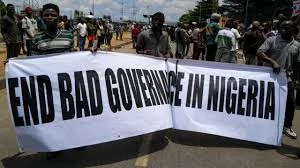
    This recalibration matters because Nigeria has walked this road before. When President Bola Ahmed Tinubu announced the Youth Confab in 2024, it came as a response to the #EndBadGovernance protests against a backdrop of deepening insecurity, excruciating cost of living crisis, and policy reforms that many young Nigerians experienced as exclusionary rather than corrective. The promise of a national youth dialogue carried weight precisely because it echoed an older recognition in Nigerian politics: that when grievances accumulate faster than institutions can absorb them, dialogue becomes a stabilising necessity rather than a symbolic gesture.

    That lesson was imperfectly learned during previous national dialogue efforts. Under President Olusegun Obasanjo, the 2005 National Political Reform Conference was convened amid mounting tensions over federalism, resource control, and representation. Despite its breadth, the conference collapsed under political calculation, leaving core questions unresolved, many of which later resurfaced with greater intensity in electoral disputes and regional agitation. Nearly a decade later, President Goodluck Jonathan’s 2014 National Conference produced extensive recommendations, yet its timing, too close to a charged election cycle, ensured that its outcomes were shelved rather than institutionalised.

    In both cases, the pattern was unmistakable: dialogue deferred or diluted did not neutralise dissent; it merely displaced it.

    It is against this historical backdrop that the slow hollowing-out of the Youth Confab becomes more than a scheduling issue. As timelines slipped, substantive engagement gave way to procedural gestures, including delegate registration portals that created the appearance of movement while postponing the harder work of convening disagreement. Participation statistics were offered where political listening was expected, reinforcing a familiar Nigerian cycle in which process substitutes for resolve.

    The consequences of continued deferral sharpen further as the electoral calendar advances. With the Independent National Electoral Commission already laying groundwork for the 2027 general elections, and civil society organisations such as Yiaga Africa warning that consultative platforms risk contamination once campaign logic takes hold, the space for a credible, non-partisan youth dialogue is narrowing by the month. History suggests that when national conversations are postponed until politics intrudes, they cease to be conversations at all.

    Meanwhile, the government’s reliance on skills acquisition as a response to youth discontent sits uneasily beside the persistence of insecurity. Despite vast allocations to defence in the 2026 budget, violence continues to shape daily life in parts of the country, including Zamfara, Niger, Kwara, Benue, Plateau, Kaduna and Katsina states where repeated attacks underscore the gap between expenditure and safety. In such contexts, digital empowerment narratives risk sounding less like opportunity and more like displacement, asking young people to adapt individually to conditions the state has failed to collectively resolve.

    The deeper danger, as history repeatedly demonstrates, lies not in protest itself but in what follows prolonged institutional deafness. When dialogue is consistently postponed, grievances migrate from conference halls to courtrooms, from courtrooms to streets, and from streets into long-term disengagement or radicalisation. Nigeria’s past national dialogues faltered not because conversation was unnecessary, but because it was treated as expendable once political risk increased.

    Seen through this lens, the Youth Confab’s current ambiguity is not a neutral pause but a familiar warning sign. By privileging adaptability over accountability, and management over engagement, the state risks repeating an old mistake under new branding. Young Nigerians have already demonstrated an extraordinary capacity to adjust to economic and social instability. What remains untested is whether a government that repeatedly avoids listening can indefinitely rely on that adaptability without consequence.

    History suggests otherwise.

    In that sense, the Youth Confab is no longer simply a postponed programme awaiting political convenience. It has become a measure of whether the Nigerian state has truly absorbed the lessons of its own past, or whether it is once again deferring a conversation until it returns under far less forgiving conditions.

    Time will tell.

  • FCT Council Polls: Between Political Triumph and Democratic Questions

    FCT Council Polls: Between Political Triumph and Democratic Questions

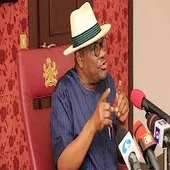
     The reaction of the Minister of the Federal Capital Territory (FCT), Nyesom Wike, to Saturday’s area council elections has sparked debate about whether the results represent genuine democratic consolidation or the growing dominance of the ruling party under President Bola Tinubu.

    Speaking in Abuja on Sunday, Wike described the outcome—where the All Progressives Congress (APC) won five of the six chairmanship seats—as a clear endorsement of Tinubu’s “visionary leadership” and the Renewed Hope Agenda. However, critics argue that such framing risks conflating electoral success with unquestioned public approval.

    According to the News Agency of Nigeria (NAN), the APC swept victories in Abuja Municipal, Bwari, Kuje, Abaji and Kwali, while the Peoples Democratic Party (PDP) secured Gwagwalada. While Wike portrayed this distribution as proof of a healthy democratic contest, analysts note that the overwhelming win by the ruling party raises concerns about the shrinking political space for opposition voices in the nation’s capital.

    Wike’s assertion that the elections demonstrated a “renewed and credible democratic process” has also drawn scrutiny. Although the polls were largely peaceful, critics argue that peace alone does not fully address deeper questions about voter confidence, electoral fairness, and the influence of incumbency power in local elections within the Federal Capital Territory.

    The minister’s praise for President Tinubu’s role in strengthening democracy, including support for amendments to the Electoral Act, has been welcomed in principle. Yet observers point out that legislative reforms must translate into consistently transparent practices on the ground to earn lasting public trust.

    Wike also commended the Independent National Electoral Commission (INEC) and security agencies for conducting what he described as a free and credible poll. While there were no widespread reports of violence, civil society groups maintain that credibility should be measured not only by orderly voting but also by equal access, reduced state influence, and genuine competition.

    Perhaps most controversially, Wike’s remarks distinguishing between what he called the “real opposition party” and “emergency democrats” have been interpreted by critics as dismissive of dissenting political voices. Such rhetoric, they argue, risks deepening political polarization rather than fostering the inclusive democratic culture the administration claims to champion.

    As the newly elected council chairmen prepare to assume office, the elections leave behind mixed signals: a ruling party celebrating dominance and continuity, and a democracy still grappling with how to balance stability, opposition strength, and genuine grassroots participation.

    Ultimately, whether the FCT council polls mark a true renewal of democratic confidence or simply reinforce existing power structures will depend less on victory speeches and more on governance outcomes in the months ahead.

  • The Marginalisation of Benue Zone C

    The Marginalisation of Benue Zone C

    Deleterious Effects on President Tinubu’s 2027 Presidential Election Prospects and the Unwitting Drift of Zone C to the ADC

    By Chris Echikwu

    The deepening political marginalisation of Benue State’s Zone C has evolved from a long-standing grievance into a full-scale electoral threat with direct implications for President Bola Tinubu’s 2027 re-election bid. Nearly five decades after Benue State was created, the Idoma and Igede peoples of Benue South remain completely excluded from the state’s highest executive and legislative offices, an imbalance now fuelling an organised political realignment toward the opposition African Democratic Congress (ADC).

    Political analysts warn that unless urgently addressed, this exclusion could trigger the collapse of the ruling All Progressives Congress (APC) structure across Benue South’s nine local government areas, with devastating consequences for Tinubu’s presidential vote tally in a state he cannot afford to lose.

    A Historical Exclusion Hardened Into Policy

    Benue State is divided into three senatorial districts: Zones A and B, dominated by Tiv-speaking communities, and Zone C, Benue South, home primarily to the Idoma and Igede peoples. Since the state’s creation in 1976, every governor and every Speaker of the Benue State House of Assembly has come from Zones A or B.

    Traditionally, political balance was loosely maintained through the allocation of deputy positions and the powerful Secretary to the State Government (SSG) slot to Zone C. That convention began to unravel during the second term of former governor Samuel Ortom, when an Idoma SSG was replaced by a Tiv appointee. The current administration under Governor Hyacinth Alia has not only retained this structure but reinforced it.

    To political leaders in Zone C, the message is unmistakable: exclusion is no longer incidental, it is systemic.

    2023: Votes Delivered, Exclusion Returned

    The sense of betrayal peaked after the 2023 governorship election. Electoral data and party intelligence indicate that APC’s performance in Benue was significantly bolstered by turnout and bloc voting from Zone C. Yet, unlike previous electoral cycles, no substantive concessions followed, not even symbolic gestures.

    The SSG position remained outside Zone C, key appointments bypassed the zone, and no credible zoning discussion for the 2027 governorship emerged. For many Idoma political actors, this marked the end of goodwill politics.

    Why Zone C Is Drifting to the ADC

    The political vacuum created by APC’s internal crisis has been swiftly occupied by the ADC, which is increasingly viewed in Benue South as a viable platform for both protest and power.

    The ADC’s growing influence is underpinned by heavyweight political figures, including former Vice President Atiku Abubakar, former Benue governor Gabriel Suswam, and former Senate President David Mark. Their combined networks give the ADC instant organisational depth across the North-Central region.

    Suswam’s deep understanding of Benue’s internal political fault lines, particularly the Zone C grievance, has made him a highly effective bridge between the ADC and disaffected APC stakeholders. For many in Zone C, the ADC now represents not just opposition, but recognition.

    APC in Benue South: An Implosion in Plain Sight

    The crisis within the APC has spilled into the open. A coalition of APC stakeholders from Benue South has publicly accused the state party chairman and traditional authorities of imposing candidates and appointments, undermining party legitimacy at the grassroots.

    More alarming for the Tinubu campaign is the structural consequence: once the party’s ward and local government machinery collapses, presidential votes cannot be mobilised. In Nigeria’s electoral system, governorship and presidential campaigns rely on the same local structures. A broken APC in Zone C for the governorship race is automatically a broken APC for Tinubu’s presidential campaign.

    Benue: A State Tinubu Cannot Lose

    Benue State is not electorally optional for Tinubu. It was one of only six northern states he carried in the 2023 presidential election. The North-Central zone has been identified by APC strategists as decisive terrain for 2027, with ambitious targets of securing up to 90 per cent of regional votes.

    Zone C’s nine local government areas represent a substantial share of Benue’s voter population. Even partial defection or organised voter apathy in the zone could flip the state, and with it, undermine Tinubu’s broader North-Central strategy.

    The demolition of Tinubu’s campaign office in Makurdi shortly after its commissioning has only reinforced perceptions of institutional dysfunction and hostility within the APC’s Benue structure.

    A Regional Grievance With National Implications

    Zone C’s alienation resonates beyond Benue. It feeds into a wider North-Central narrative of marginalisation, insecurity, and political disposability—sentiments the ADC is actively consolidating into a regional movement.

    David Mark’s stature on security issues, combined with Suswam’s organisational reach, gives the ADC a compelling alternative message in communities battered by herder-farmer violence and state neglect. For many voters, the choice is no longer ideological but existential.

    What Tinubu Must Do—And Fast

    Political observers agree that cosmetic interventions will not suffice. To arrest the drift, decisive national-level action is required:

    • Direct Presidential Engagement: A public, personal intervention by President Tinubu with Zone C leaders would signal seriousness and reset trust.
    • Substantive Federal Appointments: High-impact federal positions for respected Idoma and Igede figures would demonstrate inclusion beyond rhetoric.
    • A Binding 2027 Zoning Commitment: Without a credible guarantee of the Benue governorship ticket for Zone C, all other concessions will be dismissed as tactical.
    • Resolution of APC’s Internal Crisis: Allegations of imposition and manipulation within the party must be addressed through credible mediation.

    Conclusion

    The marginalisation of Benue Zone C is no longer a local grievance, it is a strategic vulnerability with national consequences. Left unresolved, it threatens to dismantle APC’s grassroots machinery in Benue, flip a critical state, and weaken President Tinubu’s standing across the North-Central region.

    The ADC’s advance into Zone C is structured, deliberate, and increasingly irreversible. The window for intervention is closing.

    Unless decisive action is taken, Benue State may well become the first domino in a chain reaction that imperils Tinubu’s 2027 re-election bid.

    Chris Echikwu is a public affairs analyst.

  • Africa in the New Global Order: Playing the Recolonization Victim Card Is a Losing Strategy

    Africa in the New Global Order: Playing the Recolonization Victim Card Is a Losing Strategy

    By

    Wale Alonge

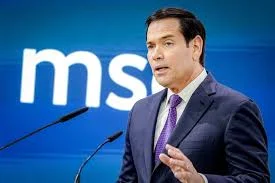
    The recent speech by Marco Rubio has generated significant global attention within the broader context of Donald Trump’s ongoing effort to unravel the post–World War II rules-based global order. Trump’s threat to invade and forcibly take over Greenland—a NATO territory linked to Denmark—has shaken the very foundations of Europe’s security architecture. Since the end of World War II, Europe has slept with two eyes closed, complacently relying on the U.S.-led NATO umbrella as the ultimate guarantor of its security. Trump has now thrown that guarantee off the rails, plunging Europe into panic.

    It was within this context that Rubio’s speech in Munich assumed enormous geopolitical significance. Every word was scrutinized, parsed, and analyzed. The speech was directed squarely at Europe—intended as a reassuring olive branch. Yet pseudo-analysts on social media have cherry-picked snippets, twisted them to fit preexisting narratives, and spun wild conjectures. In one video circulating widely on Nigerian social media, a gentleman who could not even pronounce “Munich” correctly alleged that Rubio was advocating the recolonization of Africa.

    Sadly, in today’s attention economy—devoid of the editorial gatekeeping that once characterized traditional media—every Dick, Tom, and Harry with a mobile phone is suddenly an expert. All it takes is the most outlandish, attention-grabbing claim to go viral. Predictably, this long-winded and incoherent video has been widely shared, further inundating our social media space with half-baked and outrageous content. The unnamed speaker has now been elevated, by sheer virality, into a supposed geopolitical analyst.

    Yes, Rubio—himself the son of immigrants from colonized Cuba—did, in seeking to mend fences with a frazzled Europe, echo elements of Trump’s rhetoric about restoring a lost Western “glory.” That rhetoric is rooted in white Christian Euro-nationalism, xenophobia, and rage against perceived mass immigration from non-white countries. Trump has openly castigated Europe and the United States for what he describes in crude terms as allowing immigrants of color from “shithole” and “hellhole” countries to dilute and replace a supposedly superior white identity. He has repeatedly railed against European leaders for permitting large-scale immigration, arguing that it has destroyed the continent.

    In Trump’s worldview, immigrants from Scandinavia are preferable to immigrants of color. He even offered white South African farmers fast-tracked green cards while simultaneously threatening to denaturalize Omar, the Somali-American member of Congress. He has openly embraced the so-called “replacement theory,” blaming it for the decline of Western civilization and the erosion of its racial and cultural identity.

    However, nowhere in Rubio’s Munich speech did he recommend—or even hint at—Europe recolonizing Africa.

    Rather, the speech was aimed at peeling Europe away from its growing romance with China, which has become an increasingly attractive partner as Trump alienated Europe with threats to undermine NATO’s Article 5 and seize Greenland. Rubio’s remarks were an attempt to recalibrate the geopolitical imbalance that China has exploited under Trump’s misguided “America First”—or more accurately, “America Alone”—neo-Monroe Doctrine.

    With a pointed focus on China, Rubio warned against the illusion that the post–Cold War rules-based order would supplant national interest, ushering in a borderless world of global citizenship. He argued that the West embraced dogmatic free trade while other nations protected their economies, subsidized their industries, undercut Western companies, shuttered factories, deindustrialized communities, and shipped millions of working- and middle-class jobs overseas—handing control of critical supply chains to rivals and adversaries. There was no ambiguity about his target: China.

    Yet somehow, this was twisted into an argument for Africa’s recolonization.

    What Rubio was actually advocating was a united Euro-American front to counter China’s expanding influence in the Global South. He made this explicit by calling for Western-controlled supply chains for critical minerals—insulated from coercion by rival powers—and a coordinated effort to compete for market share in emerging economies of the South.

    What should truly concern Africa is not imaginary European recolonization, but the dangerous over-romanticization of military juntas and Vladimir Putin’s proxies in the Sahel. Africa must not replace one imperial colonial master with another. In its engagement with China, the continent must also avoid sliding into a new, long-term neo-colonial dependency reminiscent of Europe’s past exploitation.

    Africa is not helpless. Acting collectively, the continent can determine its own future and decide who has access to its vast resources—including its human capital, which since the era of the transatlantic slave trade has been extracted and exploited by successive foreign powers for their our benefit at the detriment of the continent. That cycle must end, and only Africans can end it—without apology.

    Africa holds extraordinary advantages if its leaders regain confidence and play to the continent’s strengths. Africa possesses in abundance what the world urgently needs: lithium and rare earth minerals essential to the digital economy; a vast youth population that, with proper education and digital skills, represents immense human capital in a rapidly depopulating world; and enormous arable land with the potential to feed a hungry planet. What Africa must not continue to do is export raw, unprocessed materials. Value addition must be non-negotiable in every trade and investment agreement. China is a benevolent partner, neither is the West. We live in dog eat dog world where the weak and vulnerable gets the shaft.

    The future belongs to Africa—but only if we are bold enough to claim it, instead of endlessly playing the victim. One striking quality of Bola Tinubu is the confidence he projects on the global stage. Educated in the West and well-traveled, he does not carry the inferiority complex that afflicts many African leaders. He has even managed to recast a bombastic Trump from a condescending overlord into a security partner.

    That confidence—not hand-wringing victimhood—is what Africa needs. The world has little sympathy for the weak.

  • US–Nigeria Military Cooperation: A Strategic Wake-Up Call

    US–Nigeria Military Cooperation: A Strategic Wake-Up Call

    By

    Ambassador Uzo Owunne*

    The proposed deployment of additional U.S. troops to Nigeria for counter-terrorism training and intelligence support demands careful national reflection.

    Security cooperation, in itself, is not inherently negative. Nigeria faces persistent threats from insurgent and extremist groups such as Boko Haram and Islamic State West Africa Province, alongside widespread armed banditry. Strengthened surveillance systems, improved intelligence coordination, and enhanced tactical capacity are all necessary in confronting these threats.

    However, international partnerships are rarely acts of charity. They are shaped by strategic calculations and national interests.

    Nigeria’s Internal Challenge

    Nigeria’s insecurity is fundamentally domestic. External assistance cannot resolve core structural weaknesses such as weak governance and corruption, poor troop welfare and equipment shortfalls, leakages in defence procurement, and political interference combined with limited accountability.

    When defence spending fails to translate into operational effectiveness at the frontline, foreign assistance risks treating symptoms rather than causes. Sustainable security must be rooted in institutional reform, transparency, and leadership accountability within Nigeria itself.

    The Reality of External Interests

    Major powers engage abroad based on strategic objectives, whether geopolitical influence, regional stability calculations, or economic considerations.

    When military assistance is reportedly quantified at tens of millions of dollars, it reinforces the transactional nature of such engagement. Nigeria must therefore ask critical questions about the long-term commitments that accompany this support, the strategic concessions embedded within cooperation agreements, and whether such engagement strengthens national sovereignty or gradually constrains it.

    History suggests that foreign policy priorities can shift abruptly. When they do, smaller partner states may find themselves exposed.

    The Lesson of Strategic Autonomy

    The experience of countries like Afghanistan illustrates the risks of over-reliance on external military backing. When a superpower recalibrates its interests, domestic institutions must be strong enough to stand independently.

    Nigeria must avoid constructing its security architecture around external saviours. Training programs and intelligence collaboration are valuable, but legitimacy, governance reform, and community-driven stabilization efforts must remain Nigerian-led.

    The insurgency is not America’s war. It is Nigeria’s responsibility.

    The Way Forward

    If Nigeria is serious about restoring lasting stability, it must ensure that defence funds reach operational units, strengthen troop welfare and morale, reform procurement systems to close financial leakages, build indigenous intelligence and surveillance capacity, and maintain strategic clarity and balance in foreign military agreements.

    Foreign partnerships should reinforce national capacity rather than substitute for it.

    Final Reflection

    No nation has successfully outsourced its sovereignty.

    Missiles and military hardware alone do not secure peace. Accountability, institutional reform, public trust, and effective governance are the true pillars of national security. External assistance can support these efforts, but the responsibility for Nigeria’s safety ultimately rests at home.

    *Ambassador Uzo Owunne is a Nigerian diplomat and international development expert based in the United Kingdom.

  • Opposition’s Hyper-Hysteria over E-Transmission: A Case of the Boy Who Cries Wolf

    Opposition’s Hyper-Hysteria over E-Transmission: A Case of the Boy Who Cries Wolf

    By

    Wale Alonge

    Even before a single vote has been cast, Nigeria’s opposition has already declared the 2027 elections rigged and democracy murdered. Their hyper-hysteria over the e-transmission provisions of the newly enacted Electoral Act 2022 (Repeal & Re-enactment) Amendment Bill 2026 has reached such absurd heights that one would not be surprised if election boycotts are soon threatened.

    One is almost tempted to believe that the opposition is convinced that the only path to electoral victory in 2027 lies in hacking a real-time electronic results transmission system. Otherwise, how does one explain the incessant wailing, outlandish accusations, and collective hyperventilation—long before a single ballot has been cast? The hysteria would suggest that no credible election was ever conducted anywhere on the planet prior to the invention of the internet.

    Yet history tells a different story. The most credible and transparent election in Nigeria’s history remains the low-tech Option A4 election of 1993, where voters simply lined up behind the photograph of their preferred candidate. Technology can enhance elections, but it has never been the sole determinant of electoral credibility.

    The new electoral law allows for the electronic transmission of vote tallies from polling units to INEC’s IReV portal, with clear and practical safeguards. Where electronic transmission fails—due to network or technological challenges—the physically signed Form EC8A serves as the primary and legally binding result. To any rational observer, this is a commonsense provision, especially in a country where network failures are a daily reality, whether during phone calls or online banking transactions.

    Yet the opposition insists that e-transmission must be mandatory under all circumstances, regardless of technological failure. This absolutist position ignores Nigeria’s infrastructural realities and elevates performative outrage above practical governance. It is the classic case of the boy who cries wolf.

    Lost amid this feigned hysteria are several far-reaching reforms embedded in the amended Electoral Act—reforms that, taken together, strengthen electoral integrity far beyond the narrow fixation on e-transmission.

    First, the law formally replaces the old smart card reader with the Bimodal Voter Accreditation System (BVAS) for voter accreditation and result collation. BVAS has already been deployed in recent elections; the amendment simply embeds it firmly in law.

    Second, the Act introduces harsher penalties for electoral offences, including increased fines—up to ₦5 million—for vote-buying, alongside existing jail terms. It also imposes tougher sanctions for result falsification and obstruction of the electoral process.

    Third, the legislation strengthens the institutional capacity and independence of INEC, clarifying its election management role and ensuring earlier release of election funds. These provisions are designed to reduce logistical bottlenecks and enhance operational efficiency—issues that have historically plagued Nigerian elections.

    Fourth, the amended law tightens candidate qualification and party nomination rules, setting clearer timelines for party primaries and submissions, thereby reducing intra-party disputes and post-primary litigation.

    Finally, the Act introduces important legal and procedural clarifications, particularly regarding the consequences of candidate disqualification and related judicial processes, closing loopholes that have previously undermined electoral certainty.

    A serious opposition would engage these substantive reforms honestly and constructively. Instead, we are treated to crocodile tears and manufactured outrage over a single provision that already balances transparency with practicality. Democracy is not safeguarded by hysteria, nor is electoral credibility built on absolutism divorced from reality.

    Nigeria’s democracy deserves rigorous debate, not theatrical panic. The real danger is not in conditional e-transmission, but in the deliberate erosion of public trust through reckless, pre-emptive delegitimization of the electoral process.

  • 2027 and fear of free, fair and credible election

    2027 and fear of free, fair and credible election

    By

    UGO ONUOHA

    One, two, three…, 17, 18, 19…, 28, 29, 30. Counting may no longer be of any use. The figure changes at the drop of a hat. It has remained a moving and elusive target since 2024, and especially so since last year. They were in a queue. And on cue. They said the regime had done good for the country. But when you look around, you only see a mountain of bad and ugly things. Poverty bestrides the country – relentless poverty. Nevertheless, the Presidency was overwhelmed by the rush by many governors elected on the platforms of opposition political parties to align with the regime at the centre. To synchronise the obviously hostile acquisitions of the mandates of opposition political parties, the Presidency which present occupants are Alhaji Bola Ahmed Tinubu and Alhaji Mohammed Kashim Shettima, and their collaborators were compelled to draw up a schedule, a roster and a calendar for the admission of the mandate thieves into the fold of the ruling and ruining All Progressives Congress [APC] political party.

    The governors who were jostling among themselves as to who would be the first to jump ship were of the former ruling, and we dare say ruining party, the People’s Democratic Party [PDP]. This party held Nigerians in a chokehold for 16 years from 1999-2015. They boastfully told Nigerians that they would rule the country for an unbroken 60 years, ostensibly in the mold of PRI [Institutional Revolutionary Party, 1929-2000] that ruled Mexico for 71 years. Innocent Ogbulafor who was once the national secretary of the party said this much. And publicly. He’s long dead, and this democratic dispensation is barely 27 years old.

    The PDP as a behemoth, ruling party, and a self-styled largest political party in Africa lasted for barely 16 years in office before it was swept out. The party is dead in spite of the delusions of the remnants of its fractured leadership at the centre and in the states and the local governments and the wards. Its national headquarters, the Wadata Plaza has been shuttered for weeks by the obviously partisan Nigerian Police and wrapped with barbed wire. Minister of the federal capital territory [FCT], Nysom Wike, who’s the face of a faction of that party which is working for President Tinubu and the APC has assured that the PDP secretariat would be unchained this week [yesterday really]. Wike is believable because he’s the Law and works hands-in-gloves with judges. He builds our judges’ houses and buys them cars. In fact, the chief justice of Nigeria [CJN] was at the sod turning ceremony for an estate that Wike is building for judges working in the FCT. Wike as Rivers state governor routinely fêted the immediate past chief justice in Port Harcourt. It was during one of those occasions that the erstwhile CJN endorsed the rebellion of five PDP governors led by the same Wike against their party. That pathetic man was still the CJN at that time.

    That Wike is the law is not a conjecture. Somehow, disputes involving him routinely managed to be assigned to particular judges in Abuja. It could be a coincidence. But it should be concerning that some words spoken by Wike in public during political stomping manage to be replicated, sometimes word-for-word, in the judgments of a particularly notorious Abuja judge. What could not be coincidence are the words that proceed from Wike’s mouth. For instance, in the course of a very public spat with the national chairman and national secretary of the APC over who was the leader of the APC in Rivers state, the minister reminded them that they did not know how the court judgment that ensured the continuing seizure of the federal financial allocations to Osun state local government councils was procured. Osun state is governed by the opposition PDP. State governor, Ademola Adeleke, has since left the crises-riven PDP for the Accord Party, preparatory to his contesting for a second term in an election slated for later this year. Unlike other PDP governors, he did not join the APC which is led by his Yoruba kinsman, Tinubu. It should be curious that while the PDP governors from virtually every geopolitical zone of the country had been joining the APC, the two in the president’s south west zone, Seyi Makinde of Oyo state and Adeleke, have refused to do the same. By the way, Makinde was part of the insurrectionist PDP governors who worked for Tinubu to be declared president in 2023. So his new stance is really after the fact.

    The fact that for now Tinubu’s governor – kinsmen have not joined the APC bandwagon has not affected the deluge. It should be instructive that the gale of defections of state assembly lawmakers, local government chairmen and their councillors, and federal legislators had been in spite of a ruling by the Supreme Court in 2015 or thereabouts in a suit involving former governor, Rotimi Amaechi, in which the court ruled that votes cast in elections were for the political party that sponsored the candidates. The court said only the names of political parties were on the ballot, not the candidates. Elsewhere, Supreme Court judgments serve as precedents. But that appears to strictly not apply in our jurisdiction. Otherwise, what would be the explanation for a governor who ascended office on the strength of ballots cast for the PDP, dumping the party and moving to another party, and still remained a governor. And there are no consequences. Part of the strangeness of our judicial system is that the Supreme Court can make a ruling, and then forbid lower courts and lawyers from citing the judgment as a precedent. Ballots cast for political parties could be one such case.

    Now back to the counting of governors and others who have defected to the APC ahead of the general elections next year. As at the last count which may not be accurate since defections have become a daily fare, the ruling APC had 82 of the 109 senators; 242 out of the 360 members of the House of Representatives; 30 of the 36 state governors; it has the judiciary firmly in its grips; APC has the Independent National Electoral Commission [INEC]; the Armed Forces [after all the leader of the ruling party is also the Commander-in-Chief]; the Police, the civil defence militia; national union of road transport workers; and sundry area and city boys. One Abdulkadir Musa dutifully conducted the count which was shared on social media. But he’s likely to have under-counted.

    If the APC has this armada behind it, as it surely does, the expectation would have been that the party will rest assured that the results of the elections in 2027 are already firmly in the bag. No, that surely is not the case. The party is jittery. It’s scared stiff. Why? It is because the APC cannot vouch that the vast majority of Nigerians are with them. The party faces the reality that the next general election will be a referendum by the people on the performance [more like its non-performance] since 2023. Actually since 2015 under the regime of Nigeria’s affliction, the late Muhammadu Buhari. The APC has forfeited the right to again campaign on the basis of promises of delivery. It will have to seek a mandate renewal on the strength of promises that had been delivered. The tragedy is that the right hand side of its governance ledger is hopelessly light and scanty on deliveries, but heavy on sloganeering and propaganda and gaslighting. The hallmark of good and focused governance is how many citizens had been lifted out of poverty during the tenure of any administration. On this count, Tinubu and the APC have performed terribly poorly. Indeed, many of our compatriots have been dropping below the poverty line everyday since 2023. As at the last count about 70% of Nigerians are dirt poor. Late last year, a ranking federal government official said that about the same percentage of our people did not know where their next meal would come from. In any case, Nigeria has held the dubious record of being the global capital for poverty for seven years since 2019.

    So, it should not come as a shock if the national assembly [NASS] which is overwhelmingly dominated by the APC and the fair weather defectors are stoutly against anything that could ensure that the 2027 elections are free, fair and credible. It would not bode well for them. To be sure, the remnants of opposition lawmakers are part of the game to sabotage the widespread demand by Nigerians for mandatory and real time transmission of election results as part of the amendments of the Electoral Act. The few opposition lawmakers who have spoken up on the raging controversy have skillfully avoided the word ‘mandatory’ in their references to the affected provision. But that’s the key word in addition to ‘transmission’. The bone of contention in the proposed provision from the Electoral Act [Amendment] Bill is: “The presiding officer shall electronically transmit the results from each polling unit to the INEC Result Viewing Portal [IReV] in real time, and such transmission shall be done after the prescribed Form EC8A has been signed and stamped by the presiding officer and, where available, countersigned by candidates or polling unit agents”. Allowing this amendment should not be difficult except with fraudulent politicians. The excuse of weak internet infrastructure is just that – excuse. The other rationalisation, energy deficit, for being hesitant with this amendment is even more damning. It is self indictment that our rulers have failed and neglected to provide stable public power supply to citizens in 2026, almost 200 years after Lagos, a British colony, started enjoying electricity.

    Well, expecting politicians to be altruistic in their conducts would be expecting too much. Politicians are by nature selfish. They are incapable of building anything that would endure. Their style is ‘chere were’ or expediency. So Nigerians would have to own their country. The test of the resolve of our people does not come any better than the current battle to bring a measure of sanity to the country’s electoral process. Anything that will discourage or eliminate “grab, snatch and run” or “technical glitch” in our electoral process will be another step forward. Nigerians have to seize the moment.

    Meanwhile, many knowledgeable persons have rubbished the poor rationalisations by the leadership of NASS who are working in cahoots with the APC on why mandatory real time transmission of election results in 2027 will not fly. One such person is Dr. Alex Ter Adum of the Narrative Force. He wrote on the social media under the headline ‘Senate’s Tech Illiteracy As Electoral Policy’: “I have listened carefully to the arguments advanced by the Senate President Godswill Akpabio and the Senate spokesperson and other proponents of retaining the discretionary provisions of the 2022 Electoral Act on electronic transmission of results… The claim of inadequate internet connectivity in rural areas is hogwash… To begin with, voter registration in Nigeria was conducted manually. However, voter accreditation on election day is carried out electronically using the BVAS. The same BVAS is also designed to capture Form EC8A at the conclusion of voting and collation, and to transmit the polling unit results to the INEC electronic viewing portal called IReV electronically in real time.

    “If a network exists to enable electronic accreditation with the BVAS, then that same network necessarily exists to enable electronic transmission of results using the same device. This is a basic technological fact, not a matter of conjecture or complexity. It is a standard system functionality, and certainly not rocket science. Moreover, the argument that voting is manual and therefore cannot support real-time transmission is…baseless. What is required to be transmitted is not the act of voting, but the final results tally at the polling unit after voting has concluded, votes have been counted, and the figures duly entered on Form EC8A, which is the primary result sheet. Once the presiding officer announces the results, the completed EC8A is snapped and transmitted immediately. This process is entirely independent of whether voting itself was manuel or electronic.

    “Furthermore, where a temporary network blind spot occurs during transmission, the BVAS automatically stores the data and uploads it once the device enters a network coverage area. This is standard operating protocol for computing devices. So the claim that results transmission will fail due to poor network coverage therefore collapses under even the lightest scrutiny. In addition, internet connectivity across INEC’s approximately 176,000 polling units is today close to 98 percent. The narrative of widespread network absence is thus a choreographed smokescreen, not a genuine concern. To drive the point home. Point-of-Sale [POS] machines, which are equally dependent on internet connectivity, function in virtually every village and hamlet across Nigeria. [So], if POS machines can operate almost everywhere in the country, there is no logical basis for claiming that the BVAS cannot do the same when they rely on the same internet operating protocol… The Senate should therefore desist from its attempt to cripple electronic transmission of election results using the BVAS on the basis of exaggerated, contrived, and largely non-resident network concerns”. 2027 might just be the last stand in the battle for the soul of this country.

  • Nigeria’s Commodity Exchange Gap: A Costly Weak Link in Africa’s Largest Economy

    Nigeria’s Commodity Exchange Gap: A Costly Weak Link in Africa’s Largest Economy

    How structured trading platforms can unlock billions in agricultural value and transform industrial competitiveness

    By Chris Echikwu

    Nigeria’s industrial sector consumes more than ten million metric tons of agricultural commodities each year, yet the absence of a fully functional and liquid commodity exchange continues to impose enormous costs on manufacturers, farmers, and the broader economy. Industry experts warn that fragmented trading systems, weak price discovery, and inconsistent quality standards are undermining productivity across key value chains in Africa’s largest economy.

    From breweries struggling to secure stable maize supplies to food processors being subjected to inefficient and substandard input supplies, Nigeria’s agro-industrial ecosystem operates largely through opaque and inefficient informal markets. These inefficiencies, analysts say, translate into billions of naira in avoidable losses annually.

    A Market Defined by Inefficiency

    Available data paints a stark picture. Nigerian industries process roughly 1.3 million metric tons of palm oil annually for food, cosmetics, and household products, yet price markups between farm gate and factory often reach as high as 70 percent. Breweries consume an estimated 400,000 metric tons of sorghum every year, but face price volatility exceeding 40 percent within a single crop cycle.

    Meanwhile, the country’s textile industry uses just 70,000 metric tons of cotton annually—far below its installed capacity—due largely to unreliable supply chains and inconsistent quality. The decline has contributed to the collapse of an industry that once employed millions.

    At the heart of these challenges is poor price discovery. Most commodity transactions occur through bilateral negotiations involving multiple intermediaries, creating information asymmetries that inflate costs for manufacturers while depressing incomes for farmers. In some cases, processors pay above-market prices even as producers in nearby regions receive less than fair value, with intermediaries capturing disproportionate margins.

    Quality and Financing Constraints

    Quality inconsistency further compounds the problem. Manufacturers routinely receive maize with varying moisture levels, palm oil with fluctuating fatty acid content, and cocoa beans lacking standardized fermentation. These variations increase processing costs, reduce output quality, and frequently lead to commercial disputes, disputes made harder to resolve in the absence of enforceable grading standards or arbitration mechanisms.

    Financing gaps also persist. Commercial banks remain reluctant to lend against physical commodities due to concerns over price volatility and quality verification. As a result, farmers struggle to access production credit, while small and medium-scale manufacturers face working capital constraints. The outcome is a low-investment equilibrium that suppresses productivity across entire value chains.

    How a Functional Commodity Exchange Could Help

    Analysts argue that a properly structured commodity exchange would address many of these systemic failures. Transparent, centralized trading platforms with publicly visible prices would reduce information asymmetries and shift negotiations toward market-based pricing. Farmers would gain clearer price signals, improving production planning and reducing exploitation.

    Futures trading, in particular, could be transformative. By locking in prices months ahead, food processors and manufacturers could hedge against seasonal price spikes, stabilize budgets, and reduce speculative inventory costs. International evidence suggests that active futures markets can reduce commodity price volatility by 20 to 30 percent.

    Standardized quality grading enforced through independent certification would further enhance efficiency. Exchange-traded contracts define precise quality parameters, while certified warehouses provide third-party verification. This system allows buyers to purchase commodities without inspecting every lot and rewards producers who invest in quality with measurable price premiums.

    Unlocking Credit Through Warehouse Receipts

    The warehouse receipt system (WRS) is another critical component. Farmers who store produce in certified warehouses receive receipts representing verified quantity and quality. These receipts can be used as collateral, enabling banks to lend with greater confidence. The system helps farmers avoid distress sales during harvest gluts while ensuring year-round supply for industrial users.

    Broader Economic Impact

    The macroeconomic implications are significant. Improved price discovery and quality assurance could attract investment into mechanization, better inputs, and improved agronomic practices. Even modest productivity gains in agriculture, employing about 35 percent of Nigeria’s labour force, could add billions to GDP and generate jobs across logistics, processing, and trade.

    Industrial competitiveness would also improve. Studies from comparable economies suggest that functional commodity exchanges can lower industrial input costs by 15 to 25 percent. For Nigeria, this could reduce dependence on imports of palm oil, food products, and textiles, saving hundreds of millions of naira annually, while enabling premium exports of cocoa, sesame, ginger, and niche products such as hibiscus (“zobo”).

    Institutional Challenges Remain

    Despite its potential, Nigeria’s commodity exchange ecosystem faces institutional hurdles. While several exchanges exist, trading volumes remain low due to limited warehouse infrastructure, weak regulatory enforcement, and insufficient market participation.

    International experience offers clear lessons. Ethiopia’s commodity exchange, launched in 2008, now trades more than 700,000 metric tons annually, transforming price transparency and farmer incomes. India’s commodity exchange network handles over 100 million metric tons each year, supporting the world’s second-largest agricultural economy.

    For Nigeria, experts argue, the issue is not proof of concept but political and institutional commitment. With industrial demand exceeding ten million metric tons annually and inefficiencies draining billions from the economy, the case for prioritizing commodity market infrastructure has become increasingly urgent.

    Chris Echikwu is a former General Manager for Corporate Communications and Strategy at the Nigeria Commodity Exchange, Abuja.

    Mr Chris Echikwu is a former General Manager, Corporate Communications and Strategy, Nigeria Commodity Exchange, Abuja.

  • Tinubu’s Silent Domination: A Threat to Nigeria’s Democracy

    Tinubu’s Silent Domination: A Threat to Nigeria’s Democracy

    By

    Editor

    President Tinubu does not need to threaten a “do-or-die” election. By capturing institutions, absorbing opposition structures, and weakening electoral safeguards, he is shaping the outcome long before voting begins. When referees are loyal and rules are rewritten, elections become ritual, not choice.

    The events of last Wednesday at the Nigerian Senate left a bitter and lingering taste in the mouths of many Nigerians. For a public already exhausted by broken promises and eroded trust, the handling of the 2026 Electoral Act Amendment Bill felt less like a disappointment and more like a confirmation of long-held fears. For weeks, citizens waited with restrained hope, believing, perhaps naively, that the Senate might finally take a step toward restoring confidence in governance and the electoral process. Instead, what unfolded appeared to be the final straw, a moment that exposed, in stark terms, where power truly lies and whose interests are being served.

    When Olusegun Obasanjo infamously described the 2003 election as a “do-or-die affair,” he revealed his mindset with startling clarity. It was the language of conquest, not consent; of domination, not democracy. The backlash was immediate, but the damage was irreversible. That election has since become a grim reference point, a reminder of what happens when incumbents abandon restraint and treat democratic competition as a personal survival exercise. Yet for all his brazenness, Obasanjo made one critical error: he spoke too plainly. He announced his intentions. He warned the public. And in politics, forewarning invites resistance.

    President Bola Tinubu has learned that lesson well. He has not threatened Nigerians with “do or die.” He has adopted a far more effective strategy: silent domination. There is no bluster, no dramatic declarations, no rhetorical excess. Instead, there is method, cold, patient, and systematic. Tinubu is not engaging in speculation or theatrics; he is locking down the very mechanisms that decide electoral outcomes. This is not opposition paranoia or conspiracy theory. It is observable, sequential, and intentional. Tinubu is not preparing to contest the 2027 election; he is preparing to control it.

    The foundation of this control is institutional obedience. Elections in Nigeria are no longer stolen primarily by ballot-box snatching; they are shaped long before voting begins, inside institutions that determine how votes are counted, challenged, secured, and enforced. Tinubu has therefore ensured that the most critical offices—the judiciary, electoral management bodies, the police, intelligence services, and military command, are headed by individuals whose loyalty is dependable and whose independence is, at best, compromised. This has nothing to do with merit or federal character. It has everything to do with predictability. When disputes arise, when injunctions are sought, when security decisions must tilt one way or another, the president does not want doubt. He wants alignment. In such a system, instructions need not be given. The expectations are already understood.

    Yet institutions alone do not guarantee victory; geography still matters. That is why the ruling party has pursued a ruthless campaign of political absorption across the country. Governors are defecting not out of conviction, but out of calculation. Nigerian politics is unforgiving to dissent and generous to surrender. Federal power is wielded as a weapon, through control of funds, security pressure, and administrative chokeholds. Faced with these realities, many governors have chosen capitulation over confrontation. The result is a weakened opposition and a ruling party that now controls the very state machinery responsible for administering elections. In Nigeria, whoever controls the states controls logistics, security coordination, and the practical implementation of electoral rules. This is not competitive democracy; it is political enclosure.

    Then came the most decisive move: rewriting the rules themselves. Nigerians had placed what little faith remained in technology as a shield against fraud. Electronic transmission of results was imperfect, but it disrupted decades of rigging culture by limiting human discretion at collation centres, the traditional graveyard of the popular will. That disruption made it dangerous. And so it had to be neutralized. The Senate’s decision to weaken electronic transmission and preserve manual handling of results was not the product of confusion or incompetence. It was deliberate. Lawmakers understood precisely what they were doing. They chose the system that allows figures to “change,” results to “adjust,” and outcomes to “emerge.” They acted openly, confidently, and without fear, because they know the system shields them from accountability.

    Calling the Senate a rubber stamp is no longer rhetorical excess; it is an accurate description. In that moment, the chamber made clear that it represents power, not voters. It did not fail Nigerians by accident, it betrayed them by choice. By dismantling electronic safeguards, it restored the most dangerous phase of Nigeria’s electoral process: the opaque journey between polling units and final collation, where votes lose meaning and manipulation thrives.

    Government defenders will insist, as always, that everything done was legal. They are correct, and that is precisely the danger. Authoritarianism in the modern age does not announce itself with tanks and decrees. It advances quietly, through laws, appointments, and procedural camouflage. It smiles, quotes the constitution, and pretends neutrality while suffocating competition. Tinubu’s approach may be legal, but it is fundamentally illegitimate. It drains democracy of substance while preserving its outward form.

    The real danger is not that Tinubu may win re-election. Incumbents often do. The danger is that Nigeria is sliding toward a system where elections exist without real choice, opposition exists without real power, and voters exist without real consequence. When outcomes are engineered in advance, participation becomes ritual. Citizens vote, but nothing changes. Tinubu does not need to rig ballots if he controls the referees. He does not need to intimidate voters if he controls collation. He does not need to threaten rivals if he absorbs or neutralizes them. This is domination without spectacle, power without noise, and manipulation without fingerprints, cleaner than Obasanjo’s blunt-force tactics, and far more corrosive.

    History is unforgiving to such arrangements. Before they collapse, they extract a heavy toll: public cynicism, voter apathy, institutional decay, and the slow suffocation of accountability. Nigeria has seen this story before, and it never ends well. The warning signs are glaring. The tragedy is not that they are subtle, but that those in power are pretending they do not exist.