


Category: North West

  • Hoodlums attack Malami in Kebbi

    Hoodlums attack Malami in Kebbi

    A crowd suspected to be hoodlums, have attacked the convoy of the former Justice Minister and Attorney-General, Abubakar Malami (SAN), in Birnin Kebbi.

    Malami’s convoy was attacked on Monday while returning from a condolence visit in the state capital.

    Subsequently, the Police Command in the state says it has begun investigation into the reported attack on the convoy of the former minister.

    Malami resigned from the All Progressives Congress (APC) on July 2 and later joined the African Democratic Congress (ADC).

    After an emergency security meeting with security chiefs, the Commissioner of Police, Mr Bello Sani, confirmed that no arrest had been made.

    “We have commenced investigation into the attack, and no arrest has been made yet. The governor convened this meeting to review security developments,” Sani said.

    He added that incidents occurred around the GRA area involving political party members, linked to breaches of Independent National Electoral Commission (INEC) campaign regulations.

    The commissioner stated that leaders of political parties would be summoned and cautioned against further violations of electoral guidelines.

    He stressed that the measures aimed to prevent further violence as the elections draw nearer.

    The commissioner also urged political leaders to remain calm and sustain peace and stability in the state.

  • Reintroduce Arts, Culture Ministry: Festival organisers urge KDSG

    Reintroduce Arts, Culture Ministry: Festival organisers urge KDSG

    Organisers of the 8th Kaduna International Film Festival (KADIFF) have urged the Kaduna State Government to reintroduce the Ministry for Arts and Culture which served as a tool of social transformation.

    Recall that in 2019, former Gov. Nasir El-Rufa’i had  issued an Executive Order that restructured the State’s Ministries including abolishing the Ministry of Youth, Sports and Culture, under which Culture previously fell.

    The ministry was replaced by the Ministry of Human Services and Social Development, effectively reducing the status of culture to a Department within a broader portfolio.

  • Kaduna Guvnor cautions APC, says grassroots, not social media win elections

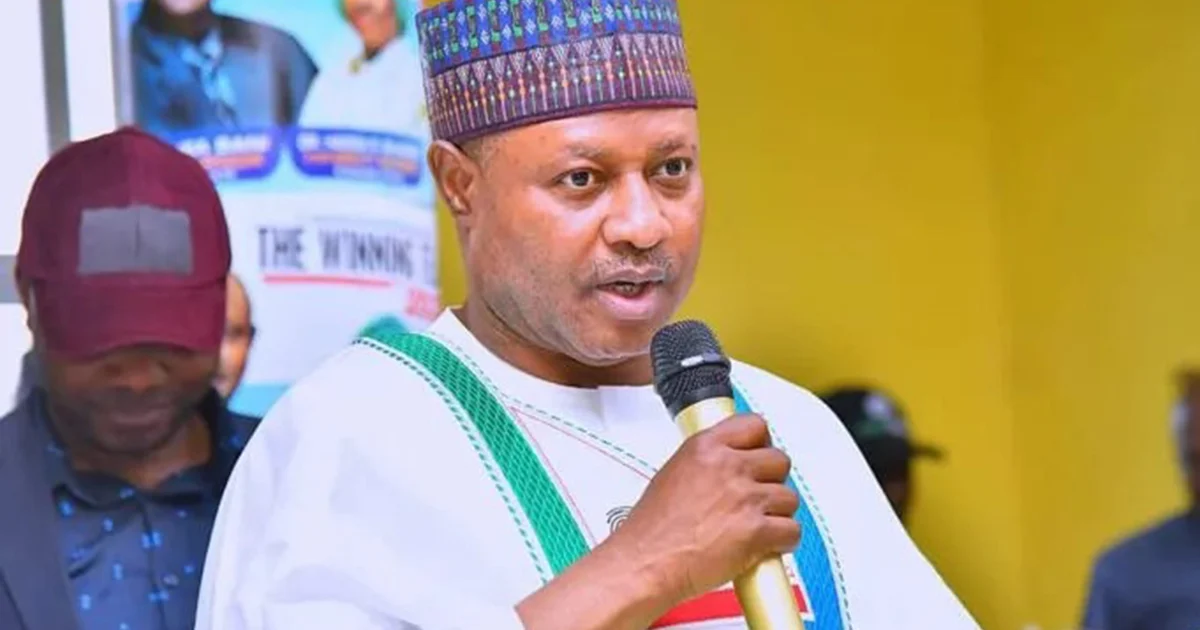
    Kaduna State Governor, Uba Sani, has cautioned All Progressives Congress (APC) members against relying on social media propaganda, stressing that elections are not won on X, Facebook, Instagram or TikTok.

    He made the remark on Monday during an APC stakeholders’ meeting in Kaduna, following the party’s victory in Saturday’s bye-election.

    Sani said while the opposition focused on “X battles and Facebook noise,” the APC concentrated on grassroots mobilisation, inclusivity, and effective governance, which delivered the party’s electoral success.

    “There is no ballot box on Twitter. There is no ballot box on Instagram or Facebook. Elections are won at the grassroots, not online,” he stressed.

    The governor insisted that propaganda could never secure electoral victory, adding that only governance, inclusivity, and people-centred policies could sustain the APC in power.

    “Our opponents fought a propaganda battle, but we fought a political battle. They lost because the people know who truly works for them,” he declared.

    Sani told stakeholders that Saturday’s victory was historic, especially in communities where the APC had never won since 1999, attributing it to deliberate investment in rural empowerment and agriculture.

    “Before now, some communities never voted for our party. Today, they stood with us because they saw inclusivity. We defended everyone, regardless of faith, ethnicity, or party,” he said.

    He noted that Kaduna had reclaimed over 500,000 hectares of abandoned farmlands and emerged a leader in maize, tomato, and ginger production, boosting farmers’ livelihoods.

    According to him, agricultural policies supported by strong budgetary allocations had restored hope to rural dwellers, proving that grassroots voters are the people who truly matter.

    Sani also urged party leaders not to abandon the APC manifesto, warning that 2027 success depended on maintaining close ties with communities.

    “Party first, politics second. We must not neglect our wards and councils. If we remain with the people, no party can defeat us,” he stated.

    APC State Chairman, Air Commodore Emmanuel Jekada (rtd.), commended the governor’s inclusive leadership style and praised stakeholders for ensuring the party’s victory in the bye-election.

    He expressed optimism that with unity, the APC would further consolidate its hold on power in 2027. 

  • Katsina adopts bottom-up approach for 2026 budgeting

    Like Delta, Katsina State Government has organised a town hall meeting across the 361 wards in the state to assess community needs and gather citizens’ inputs for the 2026 budget.

    The town hall meeting was inaugurated on Thursday at Kankara Local Government Area (LGA),by the Deputy Governor, Alhaji Faruq Lawal-Jobe.

    Nigerian Anchor reports that the current administration in Delta state had adopted similar bottom-up approach to get the buy-in of citizens in the annual budget plan.

    In a speech at the event, Katsina deputy governor said the initiative, approved was  part of the state’s preparation for the formulation of the 2026 budget .

    “This event marks a significant milestone that reaffirms the government’s  commitment to inclusive governance, citizen participation, and Community-Driven Development (CDD).

    “Gov. Dikko Radda’s administration believes that the best ideas for development often comes from the people as they live with the realities we seek to transform.

    “The town hall meeting taking place in all the 361 wards in the state represents more than just a consultation, it is part  of a broader vision to deepen democratic governance, promote accountability, and ensure that our budget reflects the actual needs of our communities.

    “We are here to listen and to collaborate towards building a stronger, as well as a virile Katsina State together,” according to the deputy governor,” he said.

    Lawal-Jobe  further explained that the initiative, jointly implemented by the state’s Ministry of Budget and Economic Planning and the Community Development Programme ( CDP,), was a deliberate policy designed to bring government closer to the people and improve  service delivery to the citizens.

    According to him, the policy will give the residents the platform to voice their challenges, outline their priorities and suggest workable solutions.

    He pointed out that through the approach, they were  implementing the core principles of CDD by empowering the people to actively participate in shaping the interventions that affect their lives.

    The deputy governor added that in so doing, they were  also fulfilling their obligations under the Open Government Partnership (OGP), and reinforcing their transparency and accountability frameworks.

    In his remarks, the state’s Commissioner for Budget and Economic Planning, Alhaji Anas Malik, said the process was not just another meeting, but a strategic shift in the way they plan and budget.

    He added, “For too long, budgets were drawn  up with minimal consultation with the very people they are meant to serve.

    “But today, we’re changing that narrative. We’re here because we believe the voices of our citizens matter.

    “We believe that development must begin at the grassroots, and we believe that for any budget to be effective, it must reflect the real priorities of the people.

    “The exercise will also help us differentiate between what the local government should address, what the state government should prioritise, and what should be escalated to the Federal government or development partners.”

    “We are also working closely with Local Government Councils, CSOs, traditional institutions, and the media to ensure transparency and accountability throughout the process,” he said.

    Earlier, the Coordinator of the CDP, Dr Kamaludeen Kabir, said that the meeting across all wards of the state was as a result of Radda’s unwavering belief in participatory democracy and CDD.

    “This initiative did not just happen by chance, it is a bold policy decision by a governor who believes that development must begin with the people, and that communities must define their own priorities.

    “His Excellency deserves our collective commendation for bringing this idea to life and institutionalising it as part of the state’s budgeting process,” Kabir said.

    He told the participants that the 2026 budget would  be shaped by their priorities, challenges, and aspirations, from water to education, roads to markets, health centres to livelihood opportunities. 

  • Pre-marital examination: Sokoto Assembly passes Bill

    Pre-marital examination: Sokoto Assembly passes Bill

    The law compels would-be couple to subject to compulsory pre-marital medical examination

    The Sokoto State House of Assembly has passed a bill mandating compulsory pre-marital medical screening.

    The proposed law requires intending couples to undergo tests for HIV/AIDS, hepatitis, sickle cell, genotype and other related health conditions before marriage.

    This development followed the presentation of the House Committee on Health’s report by its Chairman, Alhaji Kabiru Dauda (APC- Gada East), during the Assembly’s plenary on Wednesday in Sokoto.

    The News Agency of Nigeria (NAN) reports that the private member bill, introduced by Dauda, passed its second reading on April 16 and referred to the committee for further legislative procedures.

    Speaking on behalf of the committee, Chairman Dauda explained that the legislation aims to protect public health by ensuring that couples are aware of potential health issues before marriage.

    He warned that anyone who incites or facilitates a breach of the law would face severe penalties, including imprisonment for no less than twelve months or a fine of at least ₦500,000 or both.

    “Furthermore, health facilities or workers who knowingly issue or assist in issuing false test results will be liable to additional fines or imprisonment.

    “In particular, a violating health facility may be fined a minimum of ₦3 million, while a health worker could face imprisonment for not less than three years or a fine of at least ₦1 million, or both, along with further disciplinary action by the appropriate regulatory body,” he said.

    Several lawmakers expressed strong support for the bill, highlighting its significance for public well-being and the positive economic impact it could have on the state’s healthcare development.

    Following a voice vote, the Speaker, Alhaji Tukur Bala, announced that the bill had been unanimously adopted for a third reading and passed.

    In a another development, the Assembly has urged the state government to reconstruct a 49 km road linking several villages in Sabon Birni and Isa Local Government Areas (LGAs).

    The motion was sponsored by Alhaji Habibu Modachi (PDP- Isa), co-sponsored by Alhaji Sa’idu Ibrahim (APC- Sabon Birni South), and seconded by Alhaji Atiku Liman (PDP- Silame).

    Modachi stated that the reconstruction is in recognition of the government’s commitment to providing critical infrastructure.

    He emphasised that well-maintained rural roads are essential for a healthy, secure and thriving rural community, especially amid current security challenges.

    “The proposed link road will serve villages including Garin Malan, Kurawa, Tarah, Garin Zago, Dumkawa, Gatawa, Dan-Gari, Adamawa, Sardauna, Dan Maliki, Turba, Gawakuke, and Kaibaba in Isa and Sabon Birni LGAs.” 

  • KDSG to train 8,700 to combat menace of out-of-school children

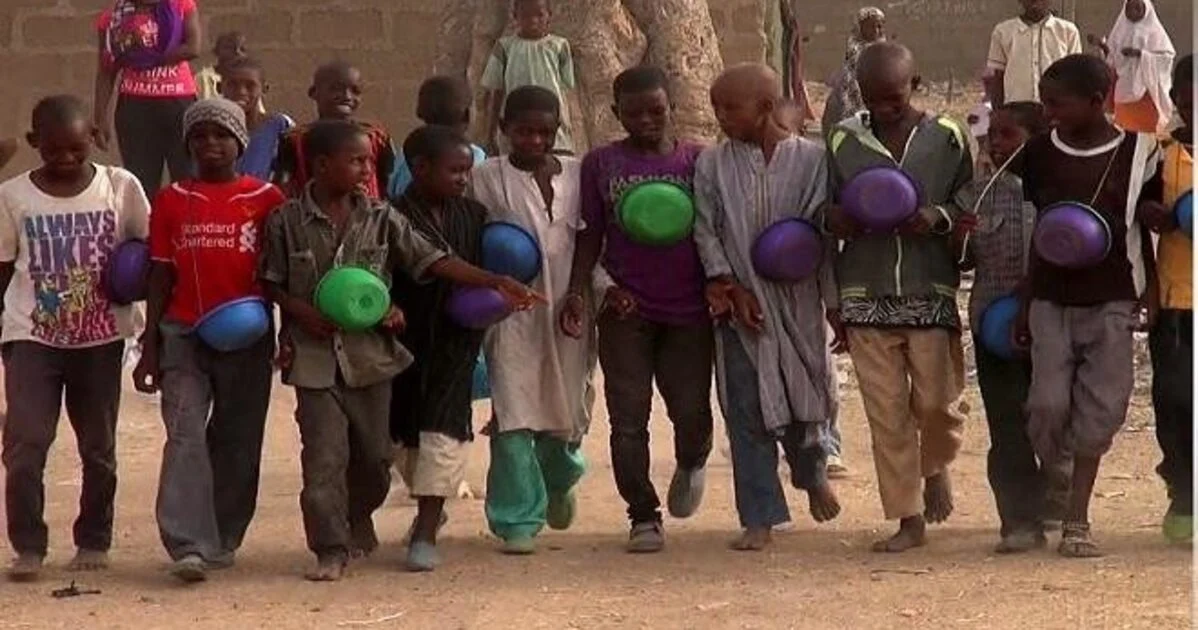
    The Kaduna State Government says it will train 8,700 School Based Management Committee (SBMC) members to improve basic education in the state.

    Mubarak Muhammad, acting Executive Chairman of the Kaduna State Universal Basic Education Board (KADSUBEB), disclosed this at the opening of a six-day training of 92 Social Mobilisation Officers (SMOs) on Monday in Kaduna.

    The training is supported by UNICEF in collaboration with the Kaduna Government and the Reaching Out-of-School-Children (ROOSC) project, among other development partners.

    The 92 SMOs cut across the state’s 23 LGAs and would serve as master trainers who would cascade the training to SBMCs across the LGAs.

    Muhammad explained that the training, which was part of the ROOSC project, aimed to equip the officials with necessary skills to bridge the gap between the government and communities.

    He added that the training would cover school leadership, communication skills and resource mobilisation.

    “The officials will be equipped to mobilise resources and support for schools; ultimately improving education outcomes in Kaduna state,” he said.

    Muhammad also said it would focus on how to mobilise children back to school, addressing the out-of-school children phenomenon in the state.

    He stated that Gov. Uba Sani’s administration has been working to reduce the number of out-of-school children, adding the training was expected to have significant impact on the basic education subsector.

    The KADSUBEB acting boss restated the state government’s commitment to building the capacity of its citizens and ensuring a brighter future for its young people.

    The UNICEF Education Officer, Kaduna Field Office, Mr Bala Dada, lamented that the state was facing a significant out-of-school children crisis.

    “According to a 2022 KDBS survey, 768,000 children of basic school age currently not in formal education.

    “The ROOSC project by Kaduna state government and partners aims to reintegrate at least 200,000 of these children back into school,” he said.

    Dada stated that through collaboration, UNICEF and other partners leveraged community structures and government support to tackle the root causes of children being out of school.

    This, according to him, could be poverty, insecurity or lack of awareness.

    He contended that the SBMCs remained the most powerful community structures for ensuring school enrolment, retention, transition, and effective management of primary education.

    “SBMCs bring together parents, teachers and local leaders to support schools.

    “They bridge the gap between communities and the education system, helping to keep children in school and learning.

    “In the push to reduce out-of-school children, our greatest asset is community involvement through these SBMCs,” he said.

    Dada submitted that during the training, the master trainers  would empower the SBMC members with the skills and knowledge to mobilise their communities.

    He added that it would also help identify out-of-school children and support the children’s enrolment and successful progression through school.

    According to him, UNICEF is counting on SBMCs to transform community attitudes and ensure every child is welcomed into a safe learning environment.

    The education officer said UNICEF’s
    partnership extends technical expertise, funding and monitoring support, while the government provides the policy backing and personnel to drive change on the ground.

    The Coordinator of the ROOSC project, Mr Ezra Angal, said the training was a strategic investment in community-led school management.

    He added that SBMCs serves as a bridge between schools and the communities they served, ensuring that every child especially the most marginalised, has a voice and pathway into inclusive and quality education.

    He said that building resilient and responsive school systems starts with empowering local actors by equipping master trainers with the tools and knowledge to train others.

    Angal, therefore, said UNICEF and the Kaduna State Government were reinforcing the ROOSC project’s shared commitment.

    This, he said, was to increase access, participation, and learning outcomes for all children including girls, children with disabilities and out-of-school children.

    He urged all the participants to approach the training with dedication and a sense of purpose.

  • Kano-Morocco partnership may attract $10b in energy sector

    Kano-Morocco partnership may attract $10b in energy sector

    The Kano state government says it will attract over 10 billion dollars investment in renewable energy and solid minerals development from its partnership with Moroccan companies.

    The state government also said the stage was set for the signing of a series of investment Memoranda of Understanding (MoU) with the Kingdom of Morocco.

    This is contained in a statement on Sunday in Kano  by Sunusi Bature Dawakin-Tofa, the media aide to Gov. Abba Kabir-Yusuf. 

    He said the agreements cover a period of five years and would focus on renewable energy, agriculture and commerce to reposition its economy.

    Dawakin-Tofa said the development was sequel to a high level investment mission to Morocco led by the governor.

    He said the delegation held strategic meetings with key Moroccan institutions including the Ministry of Energy Transition and Sustainable Development, the Moroccan Agency for Sustainable Energy (MASEN).

    Others are the Moroccan Agency for Africa (OCP Africa) and the Casablanca Chamber of Commerce.

    According to Dawakin-Tofa, the agreements will also explore areas such as investor identification, financing models, and cutting-edge technologies for energy storage, distribution, and industrial use.

    He said the Casablanca Chamber of Commerce, one of Africa’s leading private sector platforms, expressed its willingness to collaborate with the state in areas of renewable energy and solid minerals development.

     “This partnership is expected to boost the state’s economy and contribute to the projections of attracting up to $10 billion in investments over the next five years in line with the state’s strategic investment plan,” he said.

    Dawakin-Tofa said the delegation also met with OCP Africa, one of the world’s largest fertiliser producers.

    “OCP welcomed the partnership, proposing new agricultural development projects that include fertiliser blending plants, advanced supply chain systems, and support for smallholder farmers through modern farming technologies.

    “The visit marks a major milestone in the state’s pursuit of global partnerships to fast-track industrial growth, clean energy transition, and sustainable agricultural development.” 

     According to Dawakin-Tofa, one of the major outcomes of the visit is a proposed partnership with MASEN, which included technical collaboration to support Kano’s transition to clean energy.

     “MASEN, renowned for managing one of Africa’s largest solar power plants in Ouarzazate generating 500 megawatts has pledged to share its expertise, lessons learned, and offer technical support for Kano’s Light-Up Kano Initiative, which aims to generate 2,000 megawatts of solar energy within five years.” 

  • Katsina begins GDP survey to gauge economic performance

    Katsina begins GDP survey to gauge economic performance

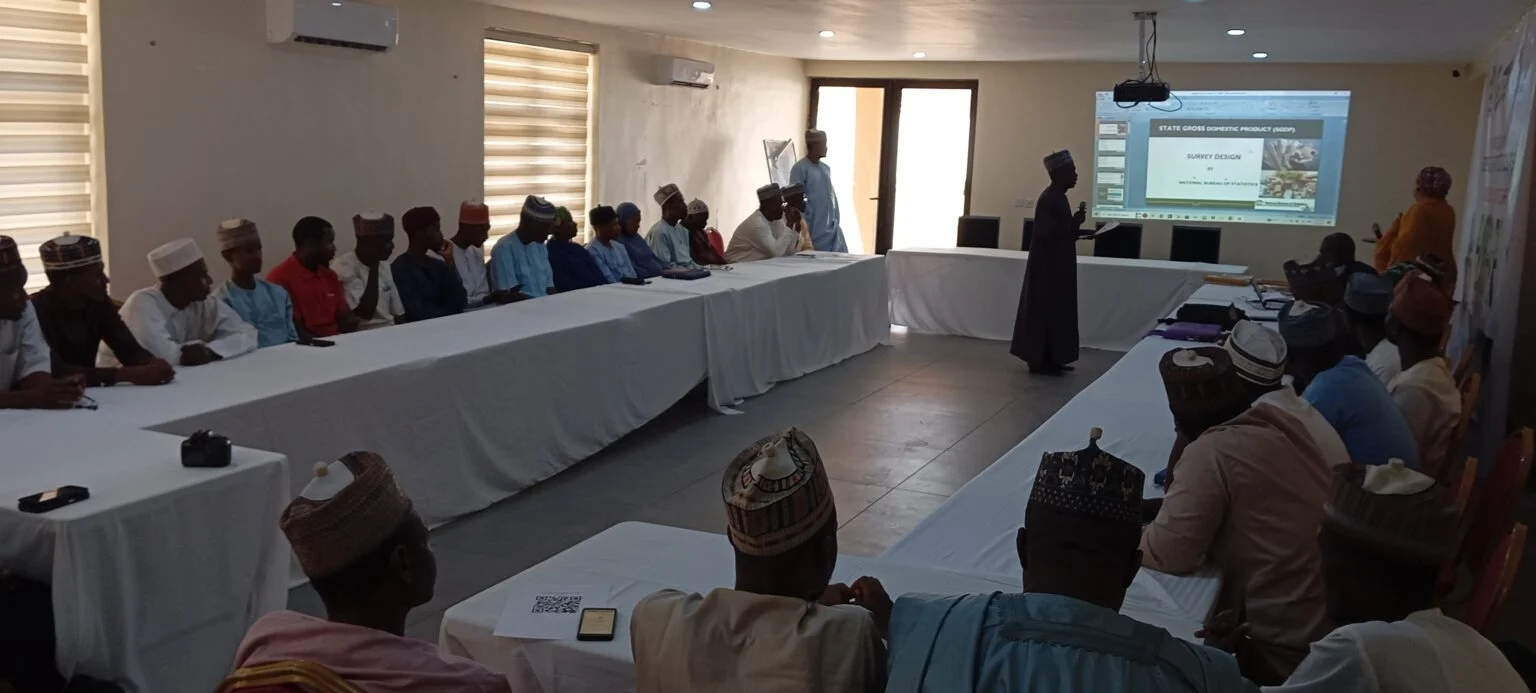
    The Katsina State Government, has flagged off the process towards the conduct of the State’s Gross Domestic Product (SGDP) survey to gauge the state economic performance.

    Gov. Dikko Radda, announced this in Katsina on Tuesday, at the opening of a 5-day training for the project enumerators, supervisors and other stakeholders.

    Represented by Alhaji Ibrahim Mu’azu-Safana, Permanent Secretary Ministry of Budget and Economic Planning, Radda said that the exercise would provide insights into the performance of the state’s economy.

    This he said include the contribution of various stakeholders, the growth rate of the state’s  GDP, and the challenges needed to be addressed.

    ”It is salient that we have a metric for measuring overall economic activities in the state. The one that is often used by National and Sub-national is the GDP.

    ”That is why we are here to flag off the implementation of the state GDP,” the governor said.

    He reiterated that the computed state GDP that would be produced at the end of the activities would be used in making informed fiscal reforms and evidence-based development plans.

    The governor noted that the Medium Term Expenditure Framework (MTEF), was based on some macroeconomic assumptions, which include the GDP and inflation.

    ”I charged the state’s Bureau of Statistics to work on the state-level inflation statistics. These two vital statistics shall be released timely to aid implementable economic planning in Katsina.

    ”We have started witnessing the fruits of our collective labour, as food insecurity is continually diminishing, and prices of produce are crashing.

    ”We will not relent until we ensure that access to affordable food is achieved by all and sundry in the state.

    ”Let me assure you without equivocation that the security improvement recorded in the state will be sustained to serve as an impetus that will drive investment,” he also said.

    Radda revealed that the wisdom behind the establishment of the Katsina State Development Enterprises (KASEDA) was to transform MSMEs, in terms of capacity building and provision of supportive capital.

    ”I hope that all the more than 500,000 registered enterprises in the state will benefit from one intervention or the other without recourse to party politics.

    ”Similarly, my administration has placed a premium on Agriculture consistent with what is often described as an agrarian state,” he added.

    Earlier, the state’s Commissioner of Budget and Economic Planning, Alhaji Malik Anas, said that the survey was a crucial step towards understanding the economic landscape of the state and identifying areas for growth and development.

    Anas, represented by Alhaji Sa’idu Danrimi, a Director in the ministry, said that as the state strive to build a more prosperous and equitable society, it was essential to have accurate and reliable data to inform a decision.

    ”It will also provide the required macro-economic assumptions for the ongoing government reforms, including MTEF, MTSS and the entire budget process,” he said.

    Anas commended the effort of the state governor and the state’s Statistician General, Prof. Saifullahi Sani-Ibrahim for working tirelessly to design and implement the survey.

    In his remarks, the state’s Statistician, Prof. Saifullahi Sani-Ibrahim, said the main exercise was expected to commence across the state on March 24, 2025.

    According to him, it has been the dream of the governor to see that all data that have been lacking in the state and will stand the test of time are generated.

  • Gov Uba Sani unveils Zaria road project

    Gov Uba Sani unveils Zaria road project

    Governor Uba Sani has pledged to leave Kaduna State in a better condition than he met it.

    He made the assertion as his administration executes projects in key sectors like education, health, and agriculture.

    He made this commitment at the groundbreaking ceremony for the construction and upgrading of Zaria township roads.

    These include Magajiya Junction to Kasuwan Amaru and a link to Unguwan Liman/Albarkawa Road intersection and Audi to Kako Roads in Zaria Local Government.

    The governor said his administration was intensifying the Rural Transformation Programme, initiating over 78 road projects since assuming office.

    He reiterated that these projects are progressing well, with contractors adequately funded to meet deadlines. His focus is to connect local communities for social and economic benefits.

    “When completed, these Zaria township roads will serve a significant urban poor population. Job opportunities will increase, commercial activities will improve, and security will be enhanced,” he assured.

    He stressed that Zaria is too important to be left in its current state, adding that the groundbreaking reflects his administration’s commitment to road expansion, repair, and maintenance.

    “The road from Audi to Kako, on the outskirts of Zaria City, connects farming communities. We are extending infrastructure to all local governments for accelerated development.

    “Our goal is to support rapid economic growth, address infrastructure deficits, curb rural-urban migration, and improve the quality of life for our people,” he added.

    Earlier, Zaria Local Government Chairman, Jamil Ahmad, thanked the governor for developmental projects in the area and pledged the people’s full support for his administration.

    He promised that the people of Zaria would increase their votes for the governor in the next election, showing their appreciation for the ongoing projects.

    The Emir of Zazzau, Amb. Ahmed Nuhu Bamalli, welcomed the governor home, recognising him as a son of the soil and commending his commitment to development.

    The Emir, who is also the Chairman of the Kaduna State Council of Chiefs, praised the governor for executing projects across the state, improving infrastructure and livelihoods. 

  • Kuwait commits to empower 200,000 out-of-school children in Kaduna

    Kuwait commits to empower 200,000 out-of-school children in Kaduna

    The Kuwaiti government has reiterated its commitment to empowering 200,000 out-of-school children in Kaduna State, Nigeria, through the Reaching Out-of-School Children (ROOSC) project.

    Mr Salim Almuzayen, the Ambassador of the State of Kuwait to Nigeria, made this announcement on Tuesday during the 64th National Day and 34th Liberation Day commemoration of Kuwait in Abuja.

    Almuzayen explained that the initiative aimed to provide equitable access to quality primary education, especially for children with disabilities, girls, and adolescents in Kaduna State.

    He noted that the project, funded by the Kuwait Fund for Arab Economic Development in collaboration with partners and UNICEF, was designed to support more than 200,000 students.

    The Ambassador also highlighted the long-standing bilateral relations between Kuwait and Nigeria, dating back to the 1960s, when the Al-Sabah School was built in Kaduna.

    “It reflects the depth of these historical relations and shows the potential for further cooperation in various areas between our two friendly countries,” he added.

    On his part, Mr Adeolu Okenla, the Senior Councillor of the Middle East and Gulf Division at the Ministry of Foreign Affairs, lauded the strong diplomatic ties between Nigeria and Kuwait.

    These ties, he noted, began in 1971, with collaboration in political and economic areas.

    Okenla explained that Kuwait’s National Day and Liberation Day were significant milestones in the country’s history.

    “The National Day marks Kuwait’s independence from British protection in 1961, while the Liberation Day commemorates the country’s freedom from Iraqi occupation in 1991.

    “Kuwait has made significant progress since then, becoming a wealthy and safe country with a high standard of living,” he said.

    He further commended Kuwait for its contributions to regional peace and development, particularly within the Gulf Cooperation Council.

    Okenla also expressed appreciation for Kuwait’s free education policy, which spans from primary school to university and has contributed to a 96.46 per cent adult literacy rate in the country.