



Category: communications

communications

  • Consumer Burden: Tinubu abolishes 5% telecoms tax

    President Bola Tinubu has permanently abolished the 5% excise duty on telecommunications services.

    Industry watchers say the levy had faced strong opposition from industry operators and consumer groups.

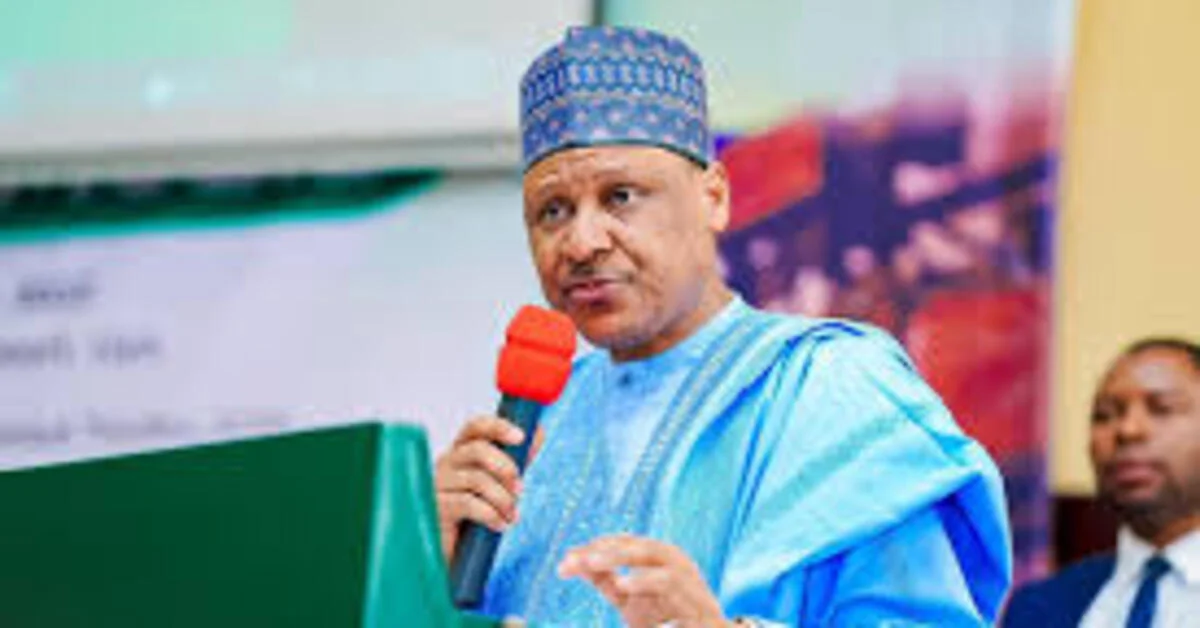
    The announcement was made on Tuesday in Abuja by the Executive Vice-Chairman of the Nigerian Communications Commission (NCC), Dr. Aminu Maida, during a media briefing.

    “The 5 percent excise duty is no longer in effect,” Maida said. “It was initially suspended, but the President has now completely removed it. I was present when the issue was raised, and he firmly said, ‘No, we cannot place this burden on Nigerians.’”

    The tax, which applied to mobile voice and data services, was first suspended in July 2023 as part of Tinubu’s fiscal reforms to ease multiple taxation on businesses and households.

    However, it resurfaced in late 2024 when the National Assembly proposed reinstating it as part of revenue measures.

    Industry stakeholders, including the Association of Telecommunications Companies of Nigeria (ATCON), had warned that the levy would drive up the cost of digital access, strain operators already battling high operational expenses, and slow Nigeria’s digital growth.

    With the President’s directive now backed by law, the excise duty has been fully scrapped, a move expected to provide relief for consumers and support growth in the telecom sector, which is central to Nigeria’s digital economy.

  • Editors berate Gov Bago for closing radio Badeggi in Niger State

    Gov Mohammed Bago claims that the radio station was closed because it was inciting the public to violence

    The Nigerian Guild of Editors (NGE) has condemned the recent order for the closure of Badeggi Radio by Gov. Mohammed Bago of Niger.

    The apex body of editors in Nigeria said in a statement that the governor’s action was a “blatant attack on press freedom and democracy.”

    The statement made available to the Nigerian Anchor in Abuja was signed by the guild ‘s President, Eze Anaba, and General Secretary, Onuoha Ukeh.

    ” This act of censorship and intimidation undermines the fundamental principles of a democratic society where free press is essential for holding those in power accountable,” it said.

    The statement said Section 39 of the 1999 Constitution (as amended) guarantees freedom of expression and press freedom.

    According to the Editors, Article 9 of the African Charter on Human and Peoples’ Rights, which Nigeria is signatory to, also guarantees press freedom and freedom of expression

    It added that the governor acted outside his powers to order the closure of a radio station.

    ” The power to sanction television and radio stations only lies with the Nigerian Broadcasting Commission (NBC) after a thorough investigation of any alleged breach of the Code.

    ” We are happy that the Minister of Information and National Orientation, Malam Mohammed Idris, has pointed this out.

    ” This should go beyond observing the anomaly.

    ” The Federal Government should order the unsealing of the premises of the radio station, while investigation is carried out,” it said.

    The statement said arbitrary closure of media houses was a reminder of the dark days of military rule.

    It, however, noted that Bago’s allegation of incitement of violence by the radio station was a serious issue which had to be investigated and proven before any action could be taken.

    ” We urge the media to operate under strict adherence to the code of ethics of journalism, with responsible conduct at the back of the minds of the professionals,” it said.

    The statement called on the authorities to take measures to respect the rights of citizens to access information and express themselves freely.

    ” Badeggi Radio should be reopened while the investigation continues,” it said.

    The guild reiterated that a free and independent press remained essential for a functioning democracy.

    It also demanded that governments at all levels must respect and uphold this fundamental right.

  • NUJ seeks constitutional protection for journalists

    The Nigeria Union of Journalists (NUJ) has called for constitutional protection for journalists and their equipment to uphold human rights and align with international best practices.

    Mr Alhassan Abdullahi, NUJ National President, made the demand at the South-West Zonal Constitutional Review Conference held in Lagos on Saturday.

    He noted that while the Constitution guarantees freedom of expression, the safety of journalists remains a critical, inseparable aspect of this fundamental right.

    Abdullahi stated that attacks on journalists and independent media are systemic threats, not isolated incidents, undermining national progress and social stability.

    He described attacks on media professionals as violations of fundamental freedoms meant for all citizens in a democratic society.

    “We meet today at a decisive moment. A free and independent press is vital to transparency and accountability in any democratic society,” Abdullahi said.

    He warned that media professionals now face growing dangers, including threats to their safety and a worsening economic climate affecting independent journalism.

    Abdullahi stressed that journalists deserve constitutional protections to reinforce their right to life and liberty, especially while carrying out professional duties.

    He said the absence of explicit protections encourages impunity, allowing attackers to go unpunished and worsening the suppression of press freedom.

    “The time for action is now. This constitutional review must create a safer future for media professionals to work without fear,” he said.

    Abdullahi added that National Assembly support for the proposals would reshape the media sector and strengthen Nigeria’s democratic foundations.

    He said the proposal was more than a plea — it is an urgent strategic action to protect democracy and ensure a well-informed public.

    Abdullahi reiterated that threats to journalists were broader societal problems, not just industry-specific challenges, affecting everyone’s stability and development.

    He called for urgent consideration of a bailout fund to support innovation and sustainability in media organisations.

    The NUJ president said the Media Bailout Fund would help secure independent journalism and acknowledge its essential role as a public good.

    He added that fund management must be transparent and fully accountable, free from political interference or favouritism.

    “An independent body, without government influence, must manage the fund to ensure it supports journalism, not political interests,” he said.

    In his remarks, Mr Funmi Sessi, Chairman of the Nigeria Labour Congress (NLC), demanded stiff penalties for states tampering with workers’ pensions or salaries.

    Sessi said the constitution must include strong provisions to punish state governments that interfere with labour entitlements.

    He also urged the committee to retain all labour-related matters under the exclusive legislative list for federal oversight. 

  • Media Executives to reposition the sector for democratic governance

    Media Executives to reposition the sector for democratic governance

    Spurred by the early recourse to partisan activities, media executives and stakeholders this Monday, resolved to chart a new course to strengthen journalism’s role in democratic governance.

    The senior journalists made the resolution at a high-level strategic engagement on the theme, “Strengthening Media Professionalism and Collaboration for Democratic Governance in Nigeria.”

    The event brought together top media leaders, editors, regulators, and development partners who collectively agreed that a well-resourced, ethical, and inclusive press is essential to the building of a pluralistic, representative democracy in Nigeria.

    Mr. Lanre Arogundade, Executive Director of the International Press Centre (IPC), urged the media to transcend its current challenges and reclaim its foundational role in democracy.

    “The time has come for the media to rise above external pressures and internal complacency, and re-establish its integrity as a democratic pillar,” Arogundade said.

    Dr. Akin Akingbulu of the Centre for Media and Society (CEMESO) delivered a rousing welcome address, emphasizing that democracy cannot thrive without a healthy, professional media sector.

    “A healthy, vibrant media is not a luxury; it is a democratic necessity,” Akingbulu said. “We either maintain the status quo or lead the transformation. The choice is ours — and the time is now.”


    The forum is part of the European Union Support to Democratic Governance in Nigeria (EU-SDGN) Phase 2 project with the main focus being implementation.

    According to him, reforms must move from resolutions to resource backed execution and policy-driven transformation.

    Under EU funding and support, and through implementing partners such as IPC and CEMESO, several measurable gains have been recorded.

    These include, anti-disinformation strategies for reporters, digital storytelling frameworks, more inclusive editorial planning for women and youth coverage and improved adoption of the Media Code of Election Coverage as a newsroom standard.

    However, despite these gains, gaps remain as stakeholders lamented that women-focused programming remains largely domestic in scope, sidelining leadership narratives.

    Youth voices are often relegated to social media fringes.
    Also, Persons with disabilities are still framed through pity rather than empowerment and civic and voter education efforts remain seasonal and insufficient.

    Akingbulu urged media leaders to drive what he described as a “non-negotiable content revolution,” calling for a re-engineering of newsroom programming DNA. “We must transform women’s content into national conversations, amplify youth voices, elevate PWDs as agents of change, and make civic education a daily staple,” he said.

    Other reform areas discussed include legislative reviews of media laws governing public broadcasters such as the NTA and FRCN, and the transformation of these entities from state media to truly public service broadcasters. Discussions also called for an overhaul of the National Broadcasting Commission (NBC) to enhance its autonomy and professionalism.

    Key pillars proposed for transformation include: Inclusion: Structural editorial quotas and inclusive broadcast programming; Fact-Checking: Institutional fact-checking desks to combat disinformation; Ethical Journalism: Continuous improvement of professional standards and digital Transformation: Embracing AI tools, crisis simulation drills, and advanced digital storytelling.


    Participants equally noted that although the 2011 Freedom of Information Act guarantees media rights, both federal and state control of media houses continue to undermine impartial coverage. The EU and its partners believe a stronger legal and operational environment is needed to ensure journalists can report ethically, fairly, and without fear of reprisal.

    “This project is not just about training journalists; it is about embedding higher standards into the very fabric of our media institutions. We’ve equipped our teams—now we must unleash their potential,” Dr. Akingbulu added.

    Key Recommendations from the Engagement: Renewed editorial commitment and increased newsroom investment; Emphasis on both pre- and post-election coverage, not just during voting periods; greater use of researchers for evidence based reporting; strengthened editorial gatekeeping and newsroom mentorship and collaboration between legacy media and digital-native platforms.

    Others include capacity building for young journalists and reward systems for high performers; Integration of solution journalism, data, and investigative storytelling; editorial quotas to include women, youth, and persons with disabilities (PWDs); the adoption of digital tools and AI-powered fact-checking systems and Institutionalization of ethical best practices in editorial policies.

    The event concluded with a unified commitment from media organizations to implement reforms and provide opportunities for journalists trained under the EU-SDGN initiative. Participants called for the translation of training into institutional policy, sustained support, and newsroom accountability.

  • Puzzle Craft Company: emergent PR powerhouse, delivers strategic edge

    Puzzle Craft Company: emergent PR powerhouse, delivers strategic edge

    Puzzle Craft PR & Communications, a newly established public relations and communications firm, has commenced operations in Abuja.

    The company offers a range of services focused on brand visibility, reputation management, and stakeholder engagement. Its client base includes individuals and organisations from various sectors, such as corporate, political, faith-based, and non-profit.

    The launch event, held in Garki Area 1, Abuja, included an introduction to the company’s leadership team and its areas of operation.

    Speaking at the event, the Chief Executive Officer and Principal Consultant,, Mrs. Beatrice Izeagbe Okpara, said the firm was set up to address communication challenges using structured and research-informed approaches.

    “We help political figures, movements, and institutions communicate with clarity, credibility, and strategic intent. But our work extends well beyond that; we support businesses, executives, and organisations in shaping narratives and managing relationships with their stakeholders,” said Mrs Okpara.

    See Also: AFREXIM Annual Meetings, Abuja, 2025

    According to the company, its services include brand strategy, corporate communications, crisis and reputation management, digital public relations, content development, event communications, and executive visibility.

    It also works in internal communications, leadership messaging, and employer engagement. These services are supported by research and digital analysis tools.

    “At Puzzle Craft PR & Communications, we help brands find their voice, shape their story, and own their spotlight. Our communication solutions aim to spark influence, inspire trust, and drive long-term impact,” Mrs Okpara said.

    The Team

    The team includes Chief Operating Officer, Mr Chidiebere Norbert, and Director, Stakeholder Engagement & Strategic Partnerships, Mr Dahiru Gani Ali. The firm also employs specialists in digital media, public relation, research, copywriting, and design.

    “We transform legacy publicity models by blending proven methods with digital innovation powered by analytics, media intelligence, and forward-thinking tech solutions,” Mr. Norbert stated.

    The firm is currently working with clients in the financial, medical and lifestyle sectors and is considering future engagements in education, technology, and civil society.

    ____________________________________

    For media inquiries or further information, please contact

    Puzzle Craft PR & Communications
    No. 8 Bichi Close, Off Sokoto Street
    Garki Area 1, Abuja, Nigeria
    Phone: +234 810 602 2149
    Email: Beatrice@puzzlecraftng.com
    Website: www.puzzlecraftng.com

  • Inform consumers of outages – NCC orders service providers

    The Nigerian Communications Commission (NCC) has mandated service providers to inform consumers of major service outages on their networks.

    The NCC Acting Head, Public Affairs, Mrs Nnenna Ukoha, said, on Sunday, that such notifications should be made via the media.

    The Commission’s directive required operators to provide details on the cause of the outage, affected areas, and estimated down time.

    It said the move is aimed at enhancing transparency and accountability in the industry, and to ensure that consumers are kept informed about service disruptions that may affect their communication needs.

    “By providing timely updates, operators can help manage consumer expectations and minimise the impact of outages on their daily activities,” it said.

    The NCC also mandated that customers must be notified at least a week ahead of any planned service disruptions.

    It said that the order applied to mobile network operators, internet service providers, and other last-mile providers.

    According to the statement, operators are now required to offer appropriate compensation, such as validity extensions, if an outage lasts more than 24 hours, in line with the Consumer Code of Practice Regulations.

    The NCC said: “We identify three types of major outages to include any network operational condition such as fibre cut due to construction or access issues or theft and vandalism that impacts five per cent or more of the affected operator’s subscriber base or five or more Local Government Areas (LGAs).

    “Also, having an occasion of unplanned outage of or complete isolation of network resources in 100 or more sites or five per cent of the total number of sites (whichever is less) or one cluster that lasts for 30 minutes or more.

    “Lastly, any form of outage that can degrade network quality in the top 10 states based on traffic volume as specified by the Commission from time to time.”

    Commenting on the directive, the Director, Technical Standards and Network Integrity, Mr Edoyemi Ogor, said that the commission had trialled the reporting process and portal with operators for some months now before issuing the directive.

    Ogor said that by providing consumers and stakeholders in the telecoms industry with timely and transparent information on network outages, they could entrench a culture of accountability and transparency.

    “This approach also ensures that culprits are held responsible for sabotage to telecommunications infrastructure.

    “It also aligns with our broader commitment to the effective implementation of the Executive Order signed by President Bola Ahmed Tinubu, which designates telecommunications infrastructure as Critical National Information Infrastructure (CNII).

    “It reinforces the need to safeguard these assets, given their centrality to national security, economic stability, and the everyday lives of Nigerians,” Ogor said.

  • FG challenges PR professionals on Nigeria’s economy

    FG challenges PR professionals on Nigeria’s economy

    The Federal Government has called on public relation professionals to strategically deploy their skills in galvanising Nigerians home and abroad, to participate in reawakening Nigeria’s economy.

    According to the government, such skills include persuasive, values-driven and inclusive communication mechanisms.

    The Minister of Information and National Orientation, Alhaji Mohammed Idris, made the call during his remarks at the Nigeria Public Relations Week (NPRW 2025) on Tuesday in Uyo, Akwa Ibom.

    The event with the theme, “Harnessing Public Relations for Nigeria’s Economic Renaissance,” was organised by the Nigerian Institute of Public Relations (NIPR) with support from stakeholders.

    “The theme evidently speaks to the NIPR’s appreciation of its strategic role in a nation of over 200 million people, endowed with human and material resources.

    “And now the country is undergoing a most consequential economic reform under President Bola Tinubu’s Renewed Hope Agenda.

    ” Permit me to posit, with every iota of conviction, that the Renewed Hope Agenda is steadfastly paving the way for Nigeria’s economic renaissance.

    “It is for us as public relations professionals to match the moment by strategically deploying our persuasive, values-driven and inclusive communication mechanisms.

    ”This is to ensure galvanising our population, home and abroad, to participate in the reawakening of an economic giant,” Idris said.

    The minister noted that the first plank of the eight priority objectives of the Renewed Hope Agenda, was to “Reform the Economy for Sustained Inclusive Growth”.

    He added that the path was defined by Tinubu on Day One, when he removed the fuel subsidy and floated the naira.

    Idris explained that those two major policies stood as the bedrock of the nation’s economic transition or renaissance.

    “While the two policies unleashed shock waves on the system, resulting in teething hardships to the populace, it has adeptly entrenched a realistic exchange rate stability.

    “In the case of the oil subsidy removal, more money is accruing to the state governments to accelerate their development, and has boosted our local refining capacity of crude oil.

    “A week or so from now, the Tinubu administration will be two years in office, marking a period of unprecedented investment in infrastructure, agriculture, security, and human capital, amongst others,” Idris said.

    He reiterated the call for public relations professionals to deploy their skills to propagate positive narrative of the achievements of Tinubu-led administration. 

  • Pay TV Tariff: Court dismisses MultiChoice‘s suit seeking to stop FCCPC’s sanction 

    Pay TV Tariff: Court dismisses MultiChoice‘s suit seeking to stop FCCPC’s sanction 

    The Federal High Court in Abuja, on Thursday, dismissed a suit filed by MultiChoice Nigeria Limited seeking to stop the Federal Competition and Consumer Protection Commission (FCCPC) from taking administrative action against it.

    Justice James Omotosho, in a judgment, held that the suit was an abuse of court process having been filed after a similar suit was filed on the issue by a lawyer, Festus Onifade, with Multichoice and FCCPC as parties in the suit.

    MultiChoice, the operator of DStv and Gotv had, recently, increased the subscription rates on its packages against an invitation by FCCPC to give explanation on why the company wanted to effect a price hike.

    Justice Omotosho, on March 12, restrained FCCPC from sanctioning the pay-Tv company until the hearing and determination of the substance suit.

    The judge gave the order after an ex-parte motion marked: FHC/ABJ/CS/379/2025 and moved by Moyosore Onigbanjo, SAN, to challenge FCCPC’s alleged threat.

    The FCCPC had summoned MultiChoice Nigeria Ltd to provide explanations regarding the March 1 price review of its packages.

    The commission directed the company’s chief executive officer to appear for an investigative hearing on Feb. 27, raising concerns over frequent price hikes, potential market dominance abuse and anti-competitive practices within the pay-TV industry.

    The FCCPC also issued a stern warning, stating that failure to justify the price adjustment or comply with fair market principles would lead to regulatory sanctions.

    However in the ex parte motion filed by MultiChoice’s legal team led by Moyosore Onigbanjo, the company sought an order of interim injunction restraining the FCCPC and its officers from carrying out the threat against it, as communicated via a letter dated March 3, pending the hearing and determination of the motion for an interlocutory injunction.

    It also sought an order restraining the commission and its officers from issuing any further directive or taking any steps capable of disrupting its business activities, pending the hearing and determination of the motion for an interlocutory injunction.

    Justice Omotosho had, on March 27, fixed today for judgement after counsel for the MultiChoice, Onigbanjo and FCCPC’s lawyer, Prof. J.E.O. Abugu, SAN, adopted their processes and presented their arguments for and against the suit.

    Delivering the judgement, the judge observed that an earlier suit filed by Onifade before the same Federal High Court in Abuja, and in which Multichoice is a party, was still pending before the company decided to file the instant suit.

    The judge said Multichoice could ventilate the issues in the suit filed by Onifade simply filing a counter claim rather than filing a separate suit.

    “With respect to issue two, abuse of court process refers to when a party misuses a court process for the purpose of harassing or annoying his opponent.

    “It is to file multiple processes on the same issues and between the same parties,” he said, citing previous court cases.

    According to the judge, the abuse lies in the multiplicity and the manner or evidence of the right of the parties rather than the exercise of the right per se.

    Citing previous case, Justice Omotosho held that “the employment of judicial process is generally regarded as abuse of judicial process where a party improperly uses the issue of the judicial process to the irritation and annoyance of his opponent and the efficient administration of justice.”

    The judge said MultiChoice also admitted to the existence of a similar suit In Paragraphs 7 and 8 of its further affidavit.

    “Now in that suit No. FHC/ABJ/CS/363/2025 between Mr. Festus Onifade and Multichoice Nigeria Limited and the Federal Competition and Consumer Protection Commission, the plaintiff there had filed a suit challenging the right of Multichoice to increase its subscription price as same is unfair.

    “The plaintiff therefore sought among others a declaration that Multichoice suspends its impending price increase for being in breach of the Federal Competition and Consumer Protection Act, 2018.

    “This instant suit was filed by Multichoice challenging the powers of the defendant (FCCPC) to regulate its subscription prices.

    “The origin of both suits is from a complaint by the said Mr Festus Onifade about the alleged unfair increase proposed by Multichoice Nigeria Limited.

    “It is therefore clear as day that weighing both suits, especially the parties and reliefs sought, the suits are similar and can be contested in one of the suits and not in different actions,” he said.

    He further held that MultiChoice was aware of the suit number: FHC/ABJ/CS/363/2025 filed by Onifade on Feb. 27, “which means it was filed before this instant suit.”

    “To my mind, filing this instant suit even though the defendant in that suit is now the plaintiff is an abuse of court and an unnecessary and vexatious duplicity of actions.

    “Quite dearly, these issues can be dealt with in that pending suit without the need to file a fresh surt.

    “Relying on the above decisions, I therefore hold that the plaintiff in this suit could have ventilated its grievance in the other pending suit without the need to file a fresh suit.

    “Allowing this suit to go on to conclusion will lead to a likely conflict of decisions arising from judgments in this court and in the other suit.

    “The long and short of what this court is trying to say is that this instant suit is an abuse of court process on grounds of multiplicity of actions.

    “Thus this suit must be dismissed for being an abuse of court process,” the judge ruled.

    The judge then proceeded to decline jurisdiction and dismissed the suit.

    However, Justice Omotosho went ahead to determine the case on the merit and held that since Nigeria runs a free market economy, the FCCPC lacked the power to interfere in the decisions of private companies to fix their prices.

    The judge held that  under Section 88 of the Federal Competition and Consumer Protection Act, it is only the president of the Federal Republic of Nigeria that can regulate prices in a regulated industry and for essential goods, not the kind of services being rendered by the Multichoice where consumers have choices.

    The judge  held that the FCCPC had no business querying how companies fix their prices in a free market economy.