





Category: Agriculture

  • The Imperative of a Sustainable Shea Aggregation System in Nigeria

    The Imperative of a Sustainable Shea Aggregation System in Nigeria

    A Strategic Pathway to Revitalising the Shea Sector

    By:

    Chris Echikwu

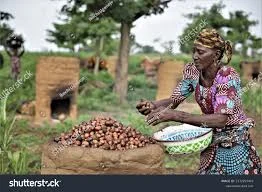
    Nigeria sits atop the world’s Shea belt, producing nearly half of the global output. Yet, despite this natural advantage, the country earns little from the multi-billion-dollar global Shea industry. Every year, millions of rural women across Nigeria’s Middle Belt and northern states gather tonnes of Shea nuts — only for most of it to be exported raw.

    The paradox is painful but clear: Nigeria is rich in Shea, yet poor in Shea wealth.

    Industry experts say the problem isn’t production — it’s structure. The Shea sector remains informal, uncoordinated, and largely unregulated. Without organisation, the country’s Shea economy continues to bleed value that could have transformed rural livelihoods and boosted non-oil exports.

    An Economy Lost to Fragmentation

    Across Nigeria’s Shea-producing communities, rural women collect nuts individually, selling them to itinerant traders who dictate prices. This opaque system has produced a long list of setbacks — inconsistent quality, high contamination, lack of grading, and a complete absence of reliable production data.

    The consequences ripple across the value chain: falling prices discourage processing investments, factories operate below capacity, and rural incomes stagnate. What should be a thriving export sector remains stuck in a cycle of poverty and inefficiency.

    “Nigeria’s problem is not a lack of Shea — it’s a lack of structure,” says industry analyst and retired Nigeria Commodity Exchange Director, Mr. Chris Echikwu.

    Aggregation as the Turning Point

    The game changer, Echikwu argues, lies in building an organised Shea nut aggregation system.

    Aggregation is more than logistics — it’s the backbone of a sustainable Shea economy. Under such a framework, producers would form Village Shea Producer Groups, linked to Primary Collection Points for grading and controlled intake. These would feed into Secondary Aggregation Centres for bulk storage, logistics, and quality control.

    Licensed buyers would operate transparently under regulatory oversight. Digital traceability platforms and warehouse receipt systems would ensure accountability, price stability, and access to finance.

    This model aligns incentives across the value chain while protecting the most vulnerable — the rural women collectors.

    Empowering Women, Strengthening Communities

    Over 80 percent of Nigeria’s Shea collectors are women. A functioning aggregation framework is therefore also a gender empowerment policy.

    “When women are organised into cooperatives with transparent pricing, quality training, and access to finance, they shift from being invisible collectors to recognised economic actors,” Echikwu notes.

    Structured aggregation allows rural women to enjoy predictable incomes, gain credit access, and take leadership roles within cooperatives — combining gender inclusion with export competitiveness.

    NASPAN: The Institutional Backbone

    For the vision to succeed, institutional coordination is essential. Echikwu highlights the National Association of Shea Products of Nigeria (NASPAN) as the central pillar for reform.

    NASPAN’s mandate, he suggests, should include policy leadership, buyer licensing, registry management, industry dialogue, and donor coordination. Only a nationally empowered body can anchor reforms beyond the cycle of changing administrations and regional politics.

    Government’s Role and Coordination

    The Federal Government already recognises Shea as a strategic export crop, but acknowledgment alone is not enough. This to call attention to a tighter coordination among key agencies — including the Federal Ministry of Agriculture and Food Security, the Federal Ministry of Industry, Trade and Investment, RMRDC, NEPC, SON, NAFDAC, and the State Ministries of Agriculture.

    “Without government ownership, no national aggregation system can be sustained,” he warns.

    Why Donor Support Matters

    Transforming the Shea sector requires more than good policy — it needs patient capital and technical assistance. Development partners such as GIZ, FAO, UNDP, ITC, IFAD, and the Global Shea Alliance (GSA) are already active in parts of West Africa. Their support will be critical in financing pilot aggregation centres, building digital traceability platforms, training producer cooperatives, and connecting Nigerian producers to international markets.

    Unlocking Nigeria’s Shea Potential

    If Nigeria succeeds in structuring its Shea value chain, the rewards could be enormous:

    • Rural incomes could grow by up to 50 percent;
    • New processing investments would emerge;
    • Export earnings could surpass ₦500 billion annually; and
    • Employment would expand across rural communities.

    The belief is that this is Nigeria’s opportunity to dominate the African Shea market — not only in production, but in value creation.

    Conclusion

    The Shea economy cannot thrive on informality. Nigeria must choose: remain a raw material supplier, or become a value leader.

    A sustainable aggregation mechanism is not optional — it is imperative.

    Chris Echikwu is a retired Director from the Nigeria Commodity Exchange, Abuja.

  • The Alternative Bank Unveils Risk-Sharing Agrifinance Strategy, Targets Women, Youth

    The Alternative Bank Unveils Risk-Sharing Agrifinance Strategy, Targets Women, Youth


    At this year’s Agriculture Summit Africa (ASA) in Abuja, one announcement drew the attention of policymakers, investors, and smallholder farmers alike. The Alternative Bank, Nigeria’s pioneering non-interest financial institution, unveiled a bold agrifinance strategy that could reshape how agriculture is funded — and who gets to lead it.

    Putting Inclusion at the Center

    Speaking at the summit, Korede Demola-Adeniyi, Executive Director (South) of The Alternative Bank, said the institution is expanding its non-interest agricultural facilities to target women and youth, two groups often excluded from traditional banking and agribusiness finance.

    “Our goal is to ensure that women and young people don’t just participate but thrive across the agricultural value chain,” Adeniyi said. “We don’t call what we do loans because we work hand-in-hand with beneficiaries. We provide facilities at next to nothing, particularly for women. Since we share both the risk and the profit, our focus is on creating lasting impact for all parties.”

    That principle — shared risk, shared reward — underpins The Alternative Bank’s model, setting it apart from conventional lenders that rely on interest-based credit. By investing alongside its clients, the bank aims to build mutual accountability and long-term sustainability rather than short-term debt.

    From Kano’s Roads to Kaduna’s Farms

    The bank’s agrifinance vision isn’t theoretical — it’s already on the ground. In Kano State, The Alternative Bank launched a tricycle empowerment programme for women, providing 120 participants with new tricycles to generate income and improve community safety.

    “The women in Kano, who were previously underserved, now have a steady source of income,” Adeniyi said. “Beyond economic empowerment, the initiative has improved safety, as women now transport other women and children, reducing the risk of assault and kidnapping.”

    In Kaduna, the bank has taken the model further with a ginger production pilot exclusively for women farmers. Through partnerships with development institutions, the project tackles market access and pricing challenges, ensuring participants receive fair compensation for their produce.

    Staying Close to the Grassroots

    Expanding access to finance in rural Nigeria often hits one major hurdle — physical distance. To close that gap, The Alternative Bank has built a network of empowered local agents serving as real-time links between the bank and farming communities.

    “We want to remain effective in rural areas where banks can’t always be physically present,” Adeniyi explained. “Our agents help us stay connected and responsive.”

    These agents do more than facilitate transactions. They provide financial literacy, gather feedback, and help tailor the bank’s products to local realities — ensuring that rural entrepreneurs aren’t left behind.

    Looking Ahead: A Blueprint for Agrifinancing

    Before the end of the year, The Alternative Bank plans to introduce a dedicated agriculture finance product designed to integrate women and youth into key value chains across Nigeria. The product will be unveiled alongside what Adeniyi described as the bank’s “Blueprint for Agrifinancing” — a roadmap for sustainable, inclusive agricultural funding.

    “For launch updates and to access our current facilities, visit our website or any branch nationwide,” she said. “And keep an eye out for our Blueprint for Agrifinancing — coming soon.”

    As Nigeria works to unlock the full potential of its agricultural sector, initiatives like this signal a shift toward more inclusive, participatory finance — one that views women and youth not as beneficiaries, but as the drivers of transformation.

    And if The Alternative Bank’s recent track record is anything to go by, the seeds of that transformation are already taking root.


  • The Alternative Bank Puts Farmers First with New Ethical Finance Framework

    The Alternative Bank Puts Farmers First with New Ethical Finance Framework

    Bank calls for a shift from profit-driven lending to purpose-driven partnerships across Africa’s food system.

    Lagos, Nigeria – November 2025.
    The Alternative Bank is setting a fresh direction for agricultural finance in Africa with the launch of an ethical financing framework that places farmers, not financiers, at the heart of the continent’s food future.

    Speaking at the Agriculture Summit Africa 2025, themed “Survival of the Greenest: Reclaiming Africa’s Food Destiny,” the Bank’s Executive Director (North), Garba Mohammed, represented by his Chief of Staff, Azeez Badru, said Africa’s prosperity depends not just on how food is grown or processed, but on how it is financed.

    “Africa’s food destiny won’t be reclaimed by technology alone,” Mohammed said. “It will take the courage to finance differently — to make money serve humanity, not the other way around.”

    With food insecurity deepening across Nigeria, The Alternative Bank is championing a model of finance built on ethics, transparency, and shared value.

    Mohammed described agriculture as “a sacred trust,” explaining that the Bank’s goal is to fund productivity and resilience rather than speculation.

    “We are financing purpose, not just profit,” he added. “Every loan, every partnership should feed families, protect the land, and strengthen communities. That’s the heart of ethical finance.”

    The framework draws inspiration from non-interest financing systems such as Mudarabah (profit-and-loss sharing), Musharakah (equity partnership), Ijara (lease-to-own), and Murabaha (cost-plus trade).

    These approaches share risk and reward more fairly across the agricultural value chain — from farmers to processors — while promoting long-term sustainability.

    For too long, Mohammed noted, those who feed Africa have borne the greatest risks while financiers walked away with the largest gains. “That imbalance must end,” he said.

    Beyond funding, The Alternative Bank is investing in renewable energy and green innovations — solar-powered cold rooms, irrigation systems, and waste-to-value solutions — all designed to help farmers cut costs, reduce waste, and improve their livelihoods.

    “The survival of the greenest reminds us to build systems that reward stewardship over speculation,” Mohammed said. “We must finance not just growth, but good.”

    In closing, he commended the organisers of Agriculture Summit Africa 2025 and reaffirmed the Bank’s commitment to reshaping Africa’s food economy through finance that empowers rather than exploits.

    “We’re leading this charge,” he said. “And we invite farmers, off-takers, partners, and everyone who believes finance should serve people — not profit — to join us.”


  • Smart Agriculture: NNPC foundation trains 15,000 farmers

    Smart Agriculture: NNPC foundation trains 15,000 farmers

    Describes programme as a national journey toward resilience, food security and economic empowerment

    No fewer than 15,000 farmers have benefitted from the Smart Agriculture Initiative of the NNPC Foundation.

    The beneficiaries received intensive training under the NNPC Ltd/Gte Vulnerable Farmers Training designed to encourage agricultural productivity in Nigeria.

    Mrs Emanuella Arukwe, Managing Director, NNPC Foundation, said this during the closing of the training exercise on Saturday at Kaktungo in Kaltungo Local Government Area of Gombe State.

    She described the programme as a national journey toward resilience, food security and economic empowerment.

    Climate-Smart Agriculture

    Represented by Bala T. David, Executive Director, Programme Development, NNPC Foundation, Arukwe said the initiative exposed over 2,000 beneficiaries to climate-smart agriculture under the Gombe Cluster comprising Gombe, Adamawa and Taraba.

    Arukwe said the exercise targeted about 4,000 farmers in the North-East, and 15,000 across the country.

    “What began as a bold intervention to strengthen rural livelihoods has evolved into a nationwide movement that embodies hope, resilience and sustainability,” she said.

    According to Arukwe, the programme is designed not just for short-term relief but for long-term transformation, equipping farmers with practical knowledge in climate-smart agriculture, market access, post-harvest handling and agribusiness competitiveness.

    “We are proud of the lives transformed and the future we are cultivating. The real heroes are our farmers, their enthusiasm and discipline reaffirm our faith in Nigeria’s agricultural future,”  Arukwe said.

    While highlighting the inclusive nature of the training to ensufing over 35 per cent participation by women and youth, Arukwe said it also focused on improving farmer access to market, packaging and climate adaptation strategies.

    Arukwe said the programme has been yielding visible results through increased cooperative formations, improved farming practices, and better market access in participating communities.

    “Let us see today not as the end of a programme but the beginning of a new agricultural awakening across Nigeria,” she said.

    “In terms of health, safety and security, we are proud to report zero Lost-Time Injuries (LTI) across all phases and zero security incidents during implementation.

    “This was made possible through close collaboration with key stakeholders including traditional leaders, local authorities and security agencies. Ensuring safety and peace remained our highest priority at each training centre,” she said.

    Transformation in Gombe State

    Dr Barnabas Malle, Commissioner for Agriculture, Animal Husbandry and Cooperatives, lauded the gesture, adding Gombe state witnessed major transformation under the leadership of Gov. Inuwa Yahaya.

    According to Malle, the ministry is collaborating development partners to train over 5,000 women and youths in modern agricultural practices for sustainable development in the sector.

    The Paramount Ruler of Kaltungo, Alhaji Saleh Mohammed, appreciated the foundation and encouraged beneficiaries to take farming seriously.

    The royal father was represented by Habila Garba, District Head of Ture,

    He commended the Federal Government for maintaining peace across the region and praised the Gombe State Government for its efforts in addressing farmer-herder conflicts and creating an enabling environment for agricultural growth.

    Some of the beneficiaries, Habila Bitrus and Serah Yakubu, commended the gesture.

    They said the beneficiaries had acquired valuable skills to practice climate-smart agriculture in response to impact of global warming.

  • Food insecurity: Cardoso urges Edun to reconstitute ACGSF Board

    Food insecurity: Cardoso urges Edun to reconstitute ACGSF Board

    The Central Bank of Nigeria (CBN) has urged the Minister of Finance and Coordinating Minister of the Economy, Yomi Edun to urgently reconstitute the board of the Agricultural Credit Guaranty Scheme Fund (ACGSF).

    The CBN governor issued the communication in a letter dated March 6, 2025 with reference no. CSD/DIR/CON/DCS/023/021.

    In the letter, the CBN governor also urged the minister to take necessary steps required to retool the Fund in order to intervene in the agricultural value chain.

    “The absence of a Board has led to delays in policy formulation, approval of key strategic initiatives and the general oversight required it operates optimally in supporting agricultural financing in Nigeria,” the governor stressed.

    To fill this void, the the apex bank encouraged the ministry to pay up the balance of N28,199,196,000 being its equity stake in the recapitalised share base of N50billion.

    The Fund is owned 60 percent by the Federal Ministry of Finance (FMF) and 40 percent by the CBN.

    Out of its allotted share of N30billion, the FMF has paid up N1,800,804,000, leaving a balance of N28,199,196,000.

    Second, the apex bank also urged the Minister of Finance to expedite the process by appointing individuals to fill up vacancies in the board of the Fund.

    By provisions of the ACGSF (amended) Act 2019, the FMF is to appoint four directors to the board of the Fund.

    The Ministry of Finance is to appoint the Chairman of the Fund. The ministry is also to appoint the representative of the Nigerian farmers.

    Others are the Representative of the Ministry of Finance and representative of the Federal Ministry of Agriculture.

    The CBN governor explained in the letter that the ACGSF was established via Decree No. 20 of 1977 (now an Act), with the sole mandate to provide guarantee to agricultural loans.

    The Fund has been without a board since the dissolution of Boards of Agencies of government at the inception of the Tinubu Presidency in May 2023.

    The CBN regretted that the absence of a board has resulted in “delays in policy formulation, approval of key strategic initiatives and the general oversight required it operates optimally in supporting agricultural financing in Nigeria.”

  • Reduce cost of agriculture inputs to tackle food importation-IAR

    Reduce cost of agriculture inputs to tackle food importation-IAR

    Following recent declaration of a state of emergency in food security by President Tinubu, a university don, Prof Ado Yusuf has urged the government to subsidise the cost of agricultural inputs.

    Professor Yusuf is the Executive Director of the Institute for Agricultural Research (IAR) Ahmadu Bello University (ABU) Zaria.

    He said the proper implementation such subsidy would help to reduce the cost of farm inputs, especially for local farmers.

    Prof. Ado Yusuf made the appeal during the 2025 Annual Review and Planning Meeting in Zaria on Thursday.

    Prof Ado Yusuf

    Yusuf said that such action would help local farmers upscale their productivity and reduce food importation.

    He noted that Nigeria local farmers were thriving in spite of the influx of imported food products in the country.

    He added that Nigeria was a net importer of food which means that the country’s food production was less than its need.

    ”But the food importation must be regulated by the government; for instance, we know our demands so if we know our demand then we should have a targeted supply so that we don’t have excess,’’ he said.

    The executive director noted that the prices of agricultural products have dropped compared to what was obtained in 2024.

    ”That is not to say however that farmers are not making profit,” he said.

    He added that he was an advocate of farmers making profit from agriculture, explaining that such profit should not be excessive such that the common man could not afford foods on their table.

    Yusuf advised peasant and small scale farmers not to exercise fears over importation of farm produce into Nigeria, as what the nation was producing was not only for the country.

    According to him, Nigeria exports farm produce to the neighboring countries therefore there is market for the produce.

    He re-echoed the urgent need for deliberate interventions on inputs.

    According to him if the costs of inputs are so high many farmers will not be able to afford it and they will be out of business and cannot produce and this may lead to hunger.

    He disclosed that the institute since its establishment in 1922 had grown into one of Nigeria’s foremost national research institutes with mandate on Sorghum, maize, cowpea groundnut, cotton castor, jatropa, sunflower and artemisia.

    According to him, as at 2025 the institute was undertaking over 180 research projects and introduced 32 prioritised activities towards improving the livelihood of Nigerian farmers.

    Earlier, Prof. Kabiru Bala, Vice-Chancellor of ABU and Chairman on the occasion, said the theme of the event “Advancing agricultural Innovation for food security and Economic Prosperity: Aligning research with new hope agenda’’ was apt.

    He also appealed to key stakeholders in the sector for improved funding of research activities in order for improvement in food production, job creation and national security.

  • Hunger, insecurity:  Tinubu declares emergency on food security

    Hunger, insecurity: Tinubu declares emergency on food security

    President Bola Tinubu on Monday declared a national emergency on food security, urging expanded irrigation infrastructure and participatory water resource management nationwide.

    Tinubu made the declaration while opening the 6th African Regional Conference on Irrigation and Drainage in Abuja.

    He was represented by the Secretary to the Government of the Federation, Sen. George Akume.

    He urged African nations to adopt innovative strategies in addressing the continent’s irrigation and water management challenges.

    He described the conference theme, “Tackling Irrigation Development and Water Management Crisis in Africa”, as a clarion call to action for sustainable agriculture and economic resilience.

    “Africa continues to face major challenges in unlocking its irrigation potential due to inadequate infrastructure, financial constraints, climate change, and governance issues.

    “This conference offers a vital platform for us to collectively chart a path forward”.

    Tinubu stated that the country had more than 3.1 million hectares of irrigable land located around key river basins such as the Niger and Benue.

    In his remarks, the Minister of Water Resources and Sanitation, Prof. Joseph Utsev, said the government had completed several landmark initiatives under the Transforming Irrigation Management in Nigeria (TRIMING) project.

    He announced that its successor, the Sustainable Power and Irrigation for Nigeria (SPIN) project, would address outstanding gaps while optimising the economic value of water resources to support food security.

    “With the TRIMING project winding down, Nigeria is poised to begin implementation of the SPIN project in partnership with the World Bank.

    “This initiative will consolidate on the successes of TRIMING and expand our irrigation potential,” Utsev said.

    According to the minister, the TRIMING project, which spanned more than seven years, delivered notable achievements, including the completion of the Dadin-Kowa and Bakolori irrigation schemes and 90 per cent completion of the Middle Rima Valley irrigation project.

    It also supported ongoing interventions in Ondo, Kwara, Benue, Kebbi, Edo, Adamawa, and Oyo States.

    He also noted that the project established Water Users Associations (WUAs), farmer management centres, and supported market linkages for key value chains such as rice and tomato.

    The minister further revealed that River Basin Development Authorities (RBDAs) had developed more than 153,000 hectares of irrigable land and were being partially commercialised to attract private sector investment.

    He also referenced the 2025 Flood Outlook and Risk Management Strategy, aimed at minimising flood-related impacts on agriculture.

    “This conference is a platform for knowledge exchange, innovation, and collective commitment to resolving Africa’s pressing irrigation and water management issues,” he added.

    The Head of the Civil Service of the Federation, Dr Didi Wilson-Jack, called for renewed commitment across all tiers of government to ensure national food security.

    Former Permanent Secretary of the Ministry of Water Resources, Mr Godknows Igali, underscored the urgency of strategic planning, particularly in the face of Nigeria’s growing population.

    He stressed the importance of professional staffing and proper management of river basins, adding that sub-national governments must play an active role in water governance and food systems.

    Gov. Babagana Zulum of Borno, raised concerns over the shrinking farming seasons caused by climate change, warning that unpredictable rainfall patterns were creating uncertainty among farmers.

    “Our fertile lands are turning to dust. Irrigation is now a necessity, not a luxury.

    “Innovation must not be seen as a privilege of the few, we must empower women and youth who are at the frontline of agriculture,” Zulum said

    He appealed to development partners to show greater responsiveness to the challenges of water access and rural farming in Africa.

    President of the International Commission on Irrigation and Drainage (ICID), Dr Marco Arcieri, described the conference as both timely and essential.

    “This could be a turning point. We’ve celebrated big ideas and set tangible goals to confront the pressing challenges.

    “We remain committed to supporting Africa as it faces population growth and climate stress,” Arcieri stated.

    Mr Ibrahim Musa, who leads the African Regional Working Group, expressed optimism that the conference would lead to innovative approaches and actionable outcomes in addressing Africa’s unique irrigation development needs.

    The conference continues in Abuja until April 17, with technical sessions, policy dialogues, and field visits to irrigation sites across Nigeria.

  • Nigeria to build more dams for water supply and agriculture

    Nigeria to build more dams for water supply and agriculture

    The federal government is set to construct more dams across the country to improve water storage, prevent flooding, and support food production through irrigation.

    The Minister of Water Resources and Sanitation, Professor Joseph Utsev, shared this update during a meeting in Uyo, Akwa Ibom State.

    At the 31st Regular Meeting of the National Council on Water Resources and Sanitation, themed Water and Food Security: Challenges and Opportunities in the Face of Daunting Climate Change, Utsev explained that irrigation is key to food production, job creation, and poverty reduction.

    New irrigation projects have been approved in several states, including Ondo, Kwara, Benue, Kebbi, Edo, Adamawa, and Oyo. The government is also conducting safety assessments on existing dams, following a major flood in Maiduguri last year. Efforts are ongoing to complete Mangu Dam in Plateau State and Ogbesse Dam in Ekiti State by 2025.

    The Ministry has completed 44 water supply projects and is working on 64 more, funded by the African Development Bank. Additionally, 113 water supply contracts are in progress, with plans to finalize the Asaba and Umuahia National Water Quality Reference Laboratories.

    Governor Umo Eno of Akwa Ibom urged the federal government to reactivate the abandoned Nkari and Ibiono Ibom dams to support agriculture and economic growth in the state. He pledged N200 million to support irrigation projects and expressed readiness to collaborate with the federal government and development partners.

    The event included an inspection of exhibition stands and a keynote address on securing Nigeria’s future through better water management.

  • Dry season farming: Heifer Int’l inaugurates 160 solar-powered pumps in Nasarawa state

    Dry season farming: Heifer Int’l inaugurates 160 solar-powered pumps in Nasarawa state

    Heifer International Nigeria, on Thursday inaugurated 160 solar-powered water pumping machines in Lafia to support smallholder farmers and boost irrigation in the state.

    Heifer International (also known as Heifer Project International) is a global nonprofit organisation, working to eradicate poverty and hunger through sustainable, values-based holistic community development.

    Dr Lekan Tobe, Country Director of Heifer International Nigeria, who spoke at the event, said that the provision of the pumping machines was to  empower smallholder farmers and encourage them to adopt irrigation practices.

    According to the country director, the initiative is prompted by the high cost of fuel, which led many smallholder farmers to abandon irrigation.

    “A lot of farmers usually rely on fuel-powered water pumps, but with the removal of fuel subsidy by the Federal Government in 2024, fuel has become  unaffordable for smallholder farmers.

    “The solar-powered pump offers a sustainable and cost-effective solution to this challenge and will help increase productivity,” he said.

    Tobe said that 160 smallholder farmers would benefit from the pilot project in Nasarawa State.

    Heifer Pay-as-you-go tractor hire facility

    He further said that the pilot project would also enable farmers test the effectiveness and efficiency of the technology.

    In his remarks, Gov. Abdullahi Sule of Nasarawa State appreciated the organisation for aligning with his administration’s quest to promote agriculture and ensure food security in the state.

    The governor represented by Umar Abdullahi, Permanent Secretary, Ministry of Agriculture and Water Resources, expressed optimism that the technology would increase the income of farmers, increase production and reduce high cost of food.

    He reiterated the administration’s willingness to partner any organisation interested in promoting agriculture for the overall development of the state.

    Also speaking, the Managing Director, Nasarawa Investment and Development Agency (NASIDA), Ibrahim Abdullahi, represented by Fatima Zakari, said the deployment of solar-powered pumping machines would promote dry-season farming.

    The NASIDA boss added that it would also promote sustained agricultural practice and ensure food security.

    He encouraged farmers to embrace the technology as it would reduce cost of production by more than 50 per cent, given the fact that the power source – the sun, is free.

    He applauded Heifer International for the initiative to empower rural farmers and communities in the state and urged other organisations to emulate them.

  • Scientists Unlock key Advances in Sugarcane Genomics

    Scientists Unlock key Advances in Sugarcane Genomics

    Research team from Guangxi University, China has successfully decoded the genome of the modern cultivated sugarcane variety Xintaitang No. 22 (XTT22).

    It sheds light on the highly complex allopolyploid genome of sugarcane and its evolutionary mechanisms.

    Sugarcane plays a vital role in the production of sugar, alcohol, and bioenergy, offering substantial economic and agricultural value.

    XTT22 was once the leading sugarcane variety in terms of planting area in China for 15 consecutive years.

    More than 90 per cent of the country’s fourth and fifth-generation sugarcane varieties were developed using it as a parent.

    According to Liu Yaoguang, an academician of the Chinese Academy of Sciences (CAS), the genome of XTT22 decoded in this study is the most complete and highest-quality genome assembly of modern cultivated sugarcane to date.

    Another CAS academician, Han Bin noted that since the launch of the Sugarcane Expressed Sequence Tag (SUCEST) project in the 1990s.

    It happened in countries such as Brazil, France, China, Australia, and the United States have been jointly working to advance sugarcane genomics.

    However, earlier genome drafts of sugarcane faced significant issues, including incomplete chromosomes and highly fragmented sequences.

    Sugarcane Genome Database

    As a result, obtaining a complete and accurate genome of modern cultivated sugarcane has remained elusive.

    “This study is like drawing a detailed ‘map’ of the sugarcane genome.

    “In the past, the ‘map’ was so vague that we could only roughly navigate it,’’ said Zhang Jisen, research team leader from Guangxi University.

    “Now, however, every ‘street’ and even every ‘room’ on the ‘map’ is marked,’’ Zhang added.

    Sugarcane breeding primarily relied on traditional hybridisation methods, where parent plants were selected based on experience to observe the performance of their offspring.

    However, this approach proved to be both time-consuming and inefficient.

    Leveraging advancements in genomics, scientists can now use the genomic map to precisely pinpoint genes closely associated with sugarcane yield and sugar content, enabling more targeted improvements and optimization.

    “With the widespread application of genomics in sugarcane breeding, the yield, sugar content, and disease resistance of sugarcane are expected to see further improvements,’’ said Zhang.

    The research was recently published in the journal Nature Genetics.