
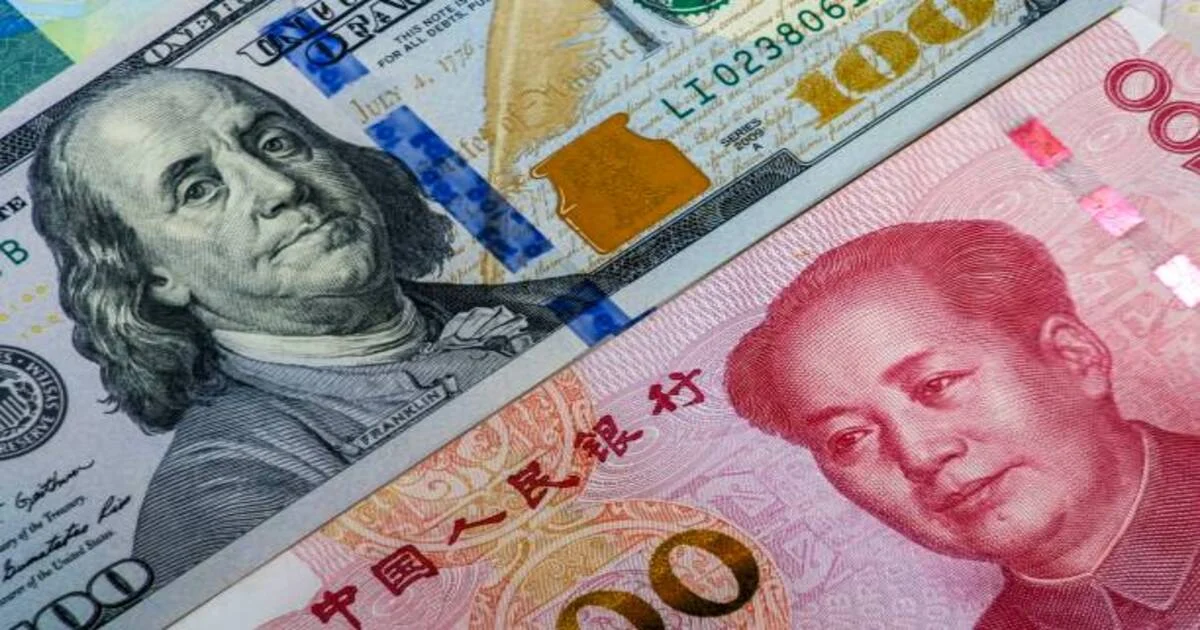



Category: Finance

  • Naira Extends Weekly Rally, Appreciates to ₦1,386.55/$ on CBN Reforms

    Naira Extends Weekly Rally, Appreciates to ₦1,386.55/$ on CBN Reforms

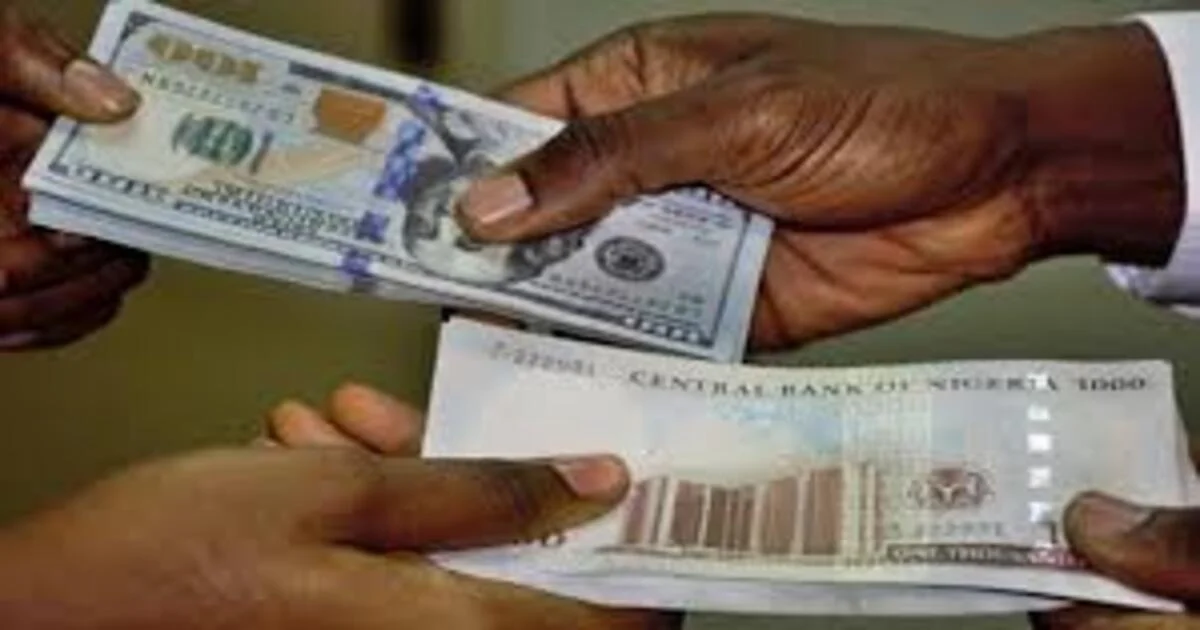
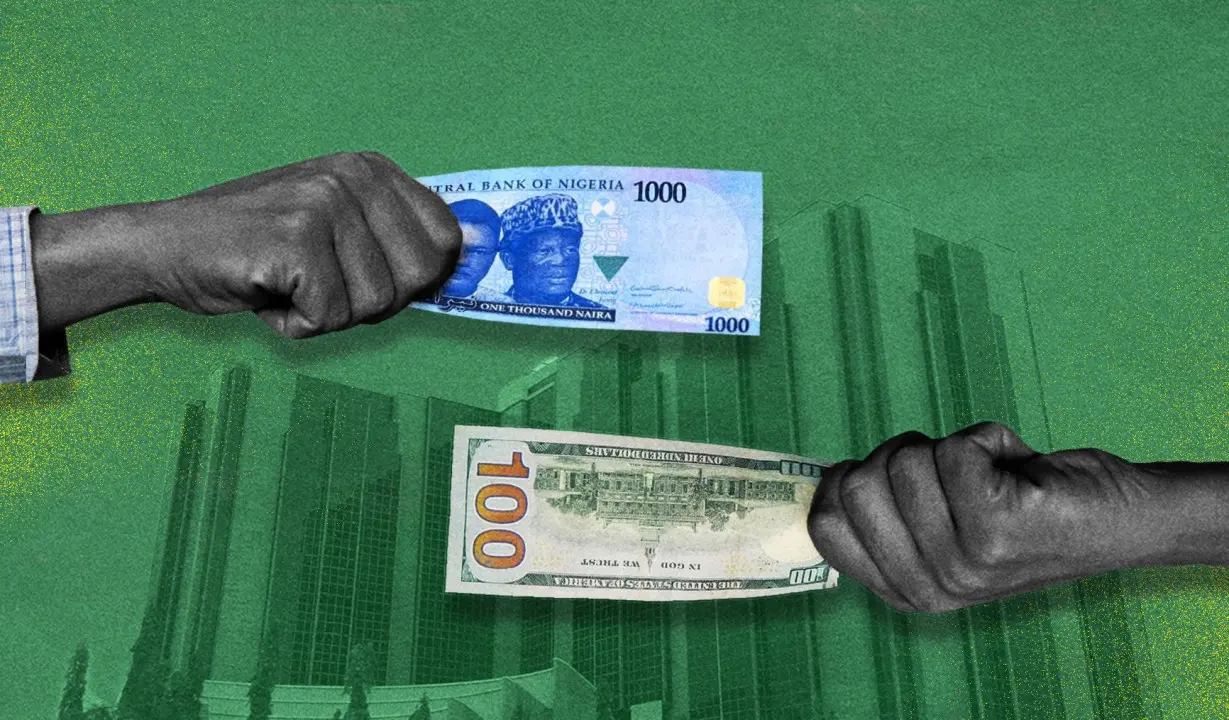
    he naira closed the week on a stronger note on Friday, appreciating further against the U.S. dollar at the official market to trade at ₦1,386.55/$1.

    Data published on the official website of the Central Bank of Nigeria (CBN) showed that the local currency gained ₦10.43, representing a 0.7 per cent appreciation compared with Thursday’s closing rate of ₦1,396.99/$1.

    The naira has remained relatively stable in recent days, buoyed by ongoing CBN reforms, recording a week-long appreciation trend.

    Earlier in the week, the currency traded at ₦1,418.95 on Monday, ₦1,401.22 on Tuesday, and ₦1,400.47 on Wednesday.

  • Tinubunomics Not About Instant Wealth, Says Budget Office DG

    Tinubunomics Not About Instant Wealth, Says Budget Office DG

    Abuja – Nigeria’s economic reforms under President Bola Tinubu, popularly called Tinubunomics, were never designed to create sudden riches, the Director-General of the Budget Office of the Federation, Tanimu Yakubu, explains.

    In a statement titled “Tinubunomics and the Arithmetic of Illusion”, Yakubu warned that much of the criticism surrounding the reforms is based on misleading numbers, not proper economic analysis.

    “This is not economic analysis. It is an arithmetic illusion,” he said.

    Yakubu explained that viral critiques often confuse revenue with actual cash, and borrowings with income.

    Many also treat federation-wide collections as fully available to the federal government, a mistake that creates unrealistic expectations.

    “Revenue is not the same as cash available to the Federal Government. Borrowing is not income; it is financing and creates future obligations,” Yakubu said.

    He criticized analysts who add up tax collections, oil revenues, customs receipts, borrowing, and subsidy savings to arrive at huge figures like ₦150 trillion, ₦170 trillion, or ₦180 trillion  only to ask, “Where did the money go?”

    “Much of it never existed in the form being implied,” Yakubu said.

    On fuel subsidies, Yakubu clarified that removing them doesn’t generate instant cash. Instead, it closes long-standing leaks in the budget, gradually freeing resources to improve fiscal discipline and support vulnerable Nigerians.

    “Subsidy reform does not conjure idle cash. It closes a hole,” he explained.

    Yakubu also addressed concerns about rising debt, explaining that much of the increase in naira-denominated debt comes from exchange-rate adjustments of existing foreign loans, not new borrowing.

    “Treating this accounting effect as new borrowing is a category error,” he said.

    The Budget Office chief said Tinubunomics is a macro-fiscal reset, not a promise of instant abundance. It aims to:

    • Restore proper price signals
    • Strengthen revenue administration
    • Rebuild credibility
    • Protect vulnerable citizens

    “Accountability does not begin with social media arithmetic. It starts with audit logic; anything else is theatre,” Yakubu said.

    Yakubu urged Nigerians to look beyond headline numbers and focus on how the government spends what it actually controls.

    He said this approach, rather than viral figures and social media commentary, is the true measure of accountability.

  • Naira Ends Week Weaker at ₦1,464.49 Amid FX Demand Pressures

    Naira Ends Week Weaker at ₦1,464.49 Amid FX Demand Pressures

    The naira ended the week on a weaker note against the US dollar at the official foreign exchange market on Friday, settling at ₦1,464.49 as sustained demand pressures continued to weigh on the local currency.

    Data released by the Central Bank of Nigeria showed that the naira depreciated by 0.4 per cent from Thursday’s closing rate of ₦1,457.84.

    The currency had started the week on a positive footing, recording an appreciation of ₦2.59 at the official window on Monday. However, the gains proved short-lived as demand for foreign exchange resurfaced, eroding early optimism.

    By Monday, the naira traded at ₦1,451.81 before weakening further to ₦1,455.08 on Tuesday. The depreciation trend persisted on Wednesday, with the currency exchanging at ₦1,455.49, and continued through the rest of the week, culminating in Friday’s weaker close.

    Despite the early gains, sustained pressure in the foreign exchange market limited the naira’s ability to hold its ground, highlighting ongoing challenges in balancing demand and supply at the official window.

  • Yuan Strengthens as Central Parity Rate Rises to 7.0602 Against Dollar

    Yuan Strengthens as Central Parity Rate Rises to 7.0602 Against Dollar

    China’s currency, the renminbi (yuan), strengthened on Tuesday after the central parity rate was set 54 pips higher at 7.0602 per U.S. dollar, data from the China Foreign Exchange Trade System (CFETS) showed.

    The daily fixing serves as a key reference point for the onshore yuan and is closely watched by markets for signals on currency policy and official guidance. Under China’s managed floating exchange rate system, the yuan is permitted to trade within a band of plus or minus 2 percent around the central parity rate in the spot foreign exchange market.

    The central parity rate is determined each business day before the opening of the interbank foreign exchange market. It is calculated based on a weighted average of prices quoted by market makers, taking into account market supply and demand, movements in major global currencies, and changes in offshore yuan trading.

    A stronger-than-expected fixing is often interpreted by investors as an effort to support the currency or to anchor market expectations, particularly amid volatility in global financial markets and shifting interest rate dynamics between China and the United States.

    In recent months, the yuan’s performance has drawn heightened attention as traders assess the outlook for China’s economy, capital flows, and monetary policy stance. Movements in the daily fixing can influence onshore trading sentiment and short-term currency positioning, even as broader trends remain driven by economic fundamentals.

    The yuan’s allowed trading band provides flexibility for market forces while enabling authorities to manage excessive swings, maintaining relative stability in the foreign exchange market.

  • Yuan strengthens 7.1688 against dollar

    Yuan strengthens 7.1688 against dollar

    The central parity rate of the Chinese currency, Renminbi, strengthened 50 pips to 7.1688 against the dollar on Monday.

    This is according to the China Foreign Exchange Trade System.

    Before the interbank market opens each business day, market makers give prices that are weighted average to determine the central parity rate of the Yuan against the dollar.

    In the international foreign exchange system, parity refers to the exchange rate between the currencies of two countries which makes the purchasing power of both currencies substantially equal.

    The Yuan is allowed to rise or fall by two per cent from the central parity rate during each trading day in China’s spot foreign exchange market.

  • Five candidates to contest for AfDB Presidency

    Five candidates to contest for AfDB Presidency


    The African Development Bank (AfDB) has confirmed five candidates who will compete for the position of its president.

     The announcement followed a two-day meeting of the board of governors’ steering committee at the bank’s headquarters in Abidjan, Côte d’Ivoire.

    The candidates are Hott Amadou from Senegal, Maimbo Munzele from Zambia, Tah Ould from Mauritania, Tolli Mahamat from Chad, and Tshabalala Swazi from South Africa. 

    The election is set to take place on May 29, and the winner will take over from Akinwumi Adesina, who has led the bank since 2015.

    Adesina, whose tenure is coming to an end, recently spoke about his future, stating that he remains committed to serving people in various capacities. 

    He described his passion for making a difference in communities and improving lives.

    The AfDB election is expected to draw significant attention as the candidates present their plans for the bank’s future.

    The presidency of Africa’s apex development banking institution is usually a context of vested interests within Africa and non-regional investors that is led by the United States of America.

    With a hawkish Donald Trump as president of the United States, many analysts fear that who emerges as the new president of the continental body would likely be a stooge of the USA.

  • Investors lose N72.51bn on NGX

    Investors lose N72.51bn on NGX

    Trading on the Nigerian Exchange Ltd. (NGX) closed negatively, with investors losing N72.51 billion on Monday.

    The market capitalisation, which opened at N67.418 trillion, fell by 0.10 per cent to close at N67.345 trillion.

    Similarly, the NGX All-Share Index (ASI) dropped by 0.10 per cent, settling at 107,937.74 points.

    The total value of shares traded was N12.806 billion across 17,095 deals on Monday.

    By the close of trading, 20 companies recorded gains, while 42 equities declined in value.

    Nigerian Breweries led the gainers, rising by 10 per cent, gaining N3.30 to close at N36.30. Cadbury followed, increasing by 9.97 per cent to N32.00.

    Ikeja Hotel topped the losers, shedding 10 per cent, dropping N1.40 to close at N12.60. Learn Africa also fell by 10 per cent, losing 43k to settle at N3.87. 

  • Naira ends week stronger against Dollar, gaining N11.17 

    Naira ends week stronger against Dollar, gaining N11.17 

    The Naira further appreciated in the official market on Friday, making analysts to wonder if this was a stable rebound or transient maneuvre as it traded at N1,474.78 to the Dollar.

    Data from the FMDQ Securities Exchange official forex trading platform revealed that the Naira gained N11.17.

    This represents a 0.7 per cent increase compared to the previous day’s trading figure on Thursday, when the local currency closed at N1,485.95 to the Dollar.

    Trading in the Investors and Exporters (I&E) Forex window on Friday saw a high of N1,495.01 and a low of N1,447.50.

    The Naira has remained stable against the US Dollar since December 2024, supported by sustained reforms from the Central Bank of Nigeria (CBN).

    The reforms aimed at ensuring transparency in the foreign exchange (FX) market.

    CBN Governor Olayemi Cardoso, speaking in Abuja on Thursday at the 2025 Monetary Policy Forum, stated that recent reforms in the FX segment had continued to attract foreign investments.

    Cardoso reassured that the apex bank would sustain efforts to ensure continued inflows. 

  • CBN sanctions 9 banks for failing to dispense cash via ATMs

    CBN sanctions 9 banks for failing to dispense cash via ATMs

    Often dispensed in dirty and tattered notes, yet the Naira, our local currency was quite scarce during last Christmas holidays as many bank Automated Teller Machines (ATMs) failed to avail Nigerians access to cash. Not a few suspected sabotage by the banks as Point of Sale (POS) operators came to the rescue. The verdict is in.

    The Central Bank of Nigeria (CBN) says it has sanctioned some Deposit Money Banks (DMBs) for failing to make Naira notes available through automated teller machines (ATMs), during the yuletide season.

    According to a statement by Hakama Sidi-Ali, CBN’s Director, Corporate Communications Department, this is a clear message of zero tolerance for cash flow disruptions.

    The affected banks are Fidelity Bank Plc, First Bank Plc, Keystone Bank Plc, Union Bank Plc, Globus Bank Plc, Providus Bank Plc, Zenith Bank Plc, United Bank for Africa Plc, and Sterling Bank Plc.

    Sidi-Ali said that each of the banks was fined N150 million for non-compliance, in line with the CBN’s cash distribution guidelines, following spot checks on their branches.

    She said that the enforcement action followed repeated warnings from the CBN to financial institutions to guarantee seamless cash availability, particularly during periods of high demand.

    “Communication with the banks revealed that the fines would be debited directly from their accounts with the apex bank.

    “Ensuring seamless cash flow is paramount to maintaining public trust and economic stability.

    “The CBN will not hesitate to impose further sanctions on any institution found violating its cash circulation guidelines,” she said.

    She said the CBN’s investigations and monitoring would continue to scrutinise cash hoarding and rationing, both at bank branches and by Point-of-Sale (POS) operators.

    She added that the CBN was working with security agencies to crack down on illegal cash sales and operational violations, including enforcing POS operators’ daily cumulative withdrawal limit of N1.2 million.

    She urged all financial institutions to comply with its guidelines, warning that further violations would attract swift and decisive sanctions.

    The CBN Governor, Yemi Cardoso, had earlier warned banks to strictly adhere to cash distribution policies or face severe penalties.

    Cardoso gave the warning in his address at the Annual Bankers’ Dinner of the Chartered Institute of Bankers of Nigeria (CIBN) in Nov., 2024.

    He underscored the apex bank’s commitment to maintaining a robust cash buffer to meet the need of Nigerians.

    “Our focus remains on fostering trust, ensuring stability, and guaranteeing seamless cash circulation across the financial system,” Cardoso had said.