
Category: Education

  • UNIBEN Students Block Benin-Ore Highway Over Power Outage

    UNIBEN Students Block Benin-Ore Highway Over Power Outage

    On Wednesday, University of Benin (UNIBEN) students took to the streets, blocking the busy Benin-Ore highway to protest an ongoing power outage on campus. The students, who are just two weeks away from their first semester exams, said the lack of electricity has severely impacted their ability to study.

    The power outage is the result of a dispute between the university and the Benin Electricity Distribution Company (BEDC) over a significant increase in the electricity bill. The university administration expressed frustration after the BEDC increased the monthly charges from approximately N80 million to between N200 million and N280 million. As a result, the university has been forced to rely on power generators, providing only limited electricity to the campuses and hostels.

    “We’ve had only one hour of electricity each day since this started. We’re tired of studying in the dark. We need electricity to prepare for our exams, and the university management needs to resolve this issue,” said John Afolabi, one of the protesting students.

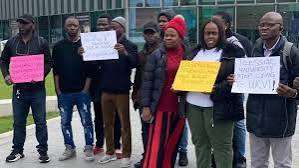
    The protest began early in the morning, with students carrying placards and chanting slogans as they blocked the highway. “We won’t leave until something is done. We can’t afford to fail our exams because of the university’s negligence,” said Sarah Osaigbovo, a 300-level student.

    The protest caused significant traffic disruptions, leaving many passengers stranded. “I’m supposed to be at work right now, but I’ve been stuck here for hours. I understand the students’ plight, but they need to find a better way to protest,” said a frustrated commuter who wished to remain anonymous.

    Despite the rain, the students remained resolute in their protest. UNIBEN spokeswoman Benedicta Ehanire confirmed that the university Senate was in a meeting to find a solution to the issue.

  • UNIVERSITY OF ABUJA: THE END OF AN INGLORIOUS REIGN

    UNIVERSITY OF ABUJA: THE END OF AN INGLORIOUS REIGN

    By Samson Gbemiga Ogunwoye

    The controversial reign of Prof. Abdul Rasheed Na’Aallah as the Vice Chancellor of the University of Abuja has come to an end. It is worth noting that his administration left a bitter-sweet taste in the mouths of many, with many believing that the tenure of the Kwara State born academic was characterized by an Osama-like terror, Hitler’s bullying, and Abacha’s impunity. As it is to be expected, the end of every reality is sacrosanct, and hence, this farewell dirge to a man many dreaded like a tyrant

    Upon his assumption of office, many were under the euphoria that he was coming to make a positive difference, seeing as the university was several years behind its growth projections as a befitting Ivory Tower in the national capital of Africa’s largest country. Unfortunately, this turned out to be a mistaken perception that was largely fueled by his initial grandstanding and loquacious posturing about his leadership acumen and a nonexistent developmental footprint. Prof. Na’Allah, was discovered to be a braggadocio that sees himself as a superior entity to every mortal. No student, not even a lecturer, could look into his eyes and dare to offer a contrary opinion; even the people that facilitated his appointment were pushed down the ladder; used and discarded.

    When Prof. Na’Allah took over management of the University of Abuja, it was ranked 9th best university in Nigeria by the National University Commission (NUC) in 2019. Within five years of a ruthless act of misgovernance, he is handing over a citadel of learning that now ranks 27th in the country. His tenure is therefore a tragic moment of management that should never befall any institution in Nigeria again.

    During his five years in office, Na’Allah raised the school fees five times. When he arrived in 2019, school fees were as low as N23,000, but as of today, when he is departing, some are as much as N250,000. The acceptance fee was arbitrarily increased from N4,500 to N50,000.

    Arbitrary fee increments forced many known students out of school. Our association found itself in a puzzling situation most times, where it had to raise funds for affected students. Many students had to wait for more years because they could not write exams due to late payment of school fees or delays in course registration due to the continuous technical glitches experienced with the so-called Integrated Portal that he imported from his former University, which consumes more funds than necessary.

    There is no doubting the fact that he took commendable strides in the effort to improve physical infrastructure of the university, but virtually all the structures he built were alleged to be at astronomically inflated prices. A testament to the overloaded contracts with substandard delivery were the dilapidated and moribund state of buildings, barely two years after completion. Many of the build structures have had their roofs repaired with unabated leakages. Bad furniture, substandard facilities like air conditioning, electronics, amongst others have been consigned unserviceable, several years ahead of their expected lifespan. It is pathetic that Malam Na’Allah built more mosques than hostels and libraries within the campus.

    Numerous recruitment exercises were ill-fated because they were largely underscored by impeccable mediocrity, bigotry and impunity. In several instances, he imported second class lower as a graduate assistant at the expense of internally qualified candidates with first class and strong second-class lower degree. He did a great disservice to the University of Abuja graduates by projecting us as unemployable. The fact that 90% of his employees are from other universities lends credence to that assertion. If the illegal recruitment is allowed to stand, the repercussions of the deleterious exercise will be indelible, not only within Abuja but throughout the larger society, that will feel the impact of the half-baked graduates that this new set of lecturers will produce.

    The VC is alleged to show total disregard for federal character in a university that prides itself on being a university of national unity. About 90% of the people employed are from one region or religion. A lady from Baze University who got employed into my department reportedly said she got the job against her wish even though her father paid for it. Na’Allah was not alone, as there was evidence that top officials in the ministry of education and some top politicians were accomplices, thus turning an ivory tower into a cash and carry market.

    The sordid incident that occurred at the Department of Sociology is worthy of recount just to buttress the degree of high-handedness of the departing Vice Chancellor.

    Na’Allah brought in a graduate with a second-class lower degree from another university and engaged the fellow as a lecturer. But the then lady HOD stood her ground and refused to sign the guy into the department.

    The following day, the lady was abruptly removed as HOD, and a junior lecturer who was hired by Na’Allah less than a year earlier was made the new HOD to do all the dirty work. These are not fallacies, but realities. It happened.

    Na’Allah met a functional Alumni Association but paralysed it in his bid to silence all the prospective dissenting voices and opinions.

    The divide and rule tactic adopted as strategy by the VC weakened ASUU for several years, as it took the union almost five years to introspect and re-strategize before they could confront the monster in Na’Allah. It’s pathetic to know that Na’Allah met a University of Abuja without strike but left the school on strike.

    With his gangs of academic hooligans, Na’Allah practically killed the Student Union. Two variants of student union leaders were nurtured by Na’Allah: the lollipop generation with milk spilled all over their mouths and the crumble eaters who survive from patronage, most especially from National Association of Nigerian Students (NANS).

    The former were bullied to acute silence, and Na’Allah feasted on their credulity and timidity, while the latter were fed with crumbs, and he rode on their gluttonous appetite. The few dissenting voices, who refused to sell out, frequently faced rustication and severe intimidation. It’s on record that Na’Allah expelled and rusticated students who called for Congress to discuss students’ welfare.

    The student union election is tele-guided by the management, as the chief security officer of the school decides who is to be cleared for the election, while the office of the dean of student affairs decides who to win. This highhanded tactic has led to chronic apathy where less than 600 out of about 20,000 students now participate in voting because they have lost confidence in the process.

    The Office of the Dean manages the electronic voting without any input from the students, and the contestants and their observers sit outside to hear the doctored results.

    In Na’Allah’s University of Abuja, students pay a regularization fee to Jamb, but Na’allah also charges his own fee for the same reason.

    More troublingly, graduates spend 5 months or more for clearance and to get their Statement of Results, which is given to students on convocation day in other schools. Some departments have not released the results of the last graduating set for NYSC till date due to issues in the portal he brought from his former university.

    A VC from another Federal University once disclosed that Na’Allah would brag at the meeting of VCs that if he sneezes, University of Abuja catches a cold! Yes! That was truly the case! He bullied even our professors into silence. ASUU became moribund until recent times. There was mutual suspicion among the lecturers as, with the help of some natives, he planted moles amongst the rank of teaching staff members.

    If you make any accusations against Na’Allah in your role as a lecturer, you will receive an invitation to respond to several allegations the next day. The five years of Na’Allah were frightening and cumbersome for the university community. He became lord of the university as he managed the school with an iron fist while he silenced every dissenting voice.

    Nothing lasts forever, and with a heavy sigh of relief, many now rejoice, realizing that, like yesterday, Na’Allah’s administration has been consigned into the dustbin of history where it shall be remembered as a dark era in the annals of the history of University of Abuja.

    At the moment, all hands must be on deck to make sure that Na’Allah and his cronies do not decide the next VC. At this critical juncture where a new Vice Chancellor shall be elected, the most important consideration should be to ensure a native VC; a credible lecturer who has grown through the ranks at the university should be considered.

    As they carry the university’s identity for the rest of their lives, it is their duty to join the patriotic voices and legitimate effort to ensure that the University of Abuja is restored to its pride of place as a centre of universal learning worthy of the appellation.

    Samson Gbemiga Ogunwoye,
    Director, Diaspora Affairs,
    NANS

  • Breaking: FG Shuns ASUU, Announces Date For Inauguration Of Universities Governing Councils

    Breaking: FG Shuns ASUU, Announces Date For Inauguration Of Universities Governing Councils

    The Federal Government has announced that the Governing Councils of Federal universities, polytechnics and other tertiary institutions will be inaugurated on July 4, 2024.

    This comes amidst the rejection from the Academic Staff Union of Universities (ASUU) regarding the composition of the newly constituted governing councils for federal universities across Nigeria.

    According to Prof Osodeke, the new list of council members is dominated by retired politicians rather than experts in academia or relevant fields.

    ASUU’s national President, Prof Emmanuel Osodeke, expressed concerns last week in an interview with the Nigerian Tribune, highlighting a worrying trend in the appointment process.

    Recall that President Bola Tinubu approved the reconstitution of the Governing Councils and Boards of federal universities, polytechnics and colleges of education.

    In an earlier statement, the Permanent Secretary, General Services, Office of the Secretary to the Government of the Federation, Nnamdi Mbaeri, noted that the approval was given for the effective management of Nigerian tertiary institutions across the country.

    According to Punch, the Acting Vice Chancellor of the University of Abuja, Prof. Aisha Maikudi, announced the inauguration date during her acceptance speech on Monday, while assuming the institution’s affairs.

    A total of 560 individuals were appointed to the governing councils and boards of Federal Government-owned tertiary institutions.

    For the University of Ibadan, the President appointed Chief Bisi Akande as the Chairman of the governing council. The board members are Alexander Ajipe, Nelson Alapa, Ifeoma Nwankwo, and Prof. Emmanuel Alo.

    Chief Wole Olanipekun (SAN) was appointed as the Chairman of the governing council of the University of Lagos. The council members are Bello Kumo, Prof. Idowu Mark, Niyi Akande, and Bola Njoku.

    Isa Yuguda chairs the board of the National Open University. The council members are Goddy Etta, Yomi Balogun, Deborah Apah, and Hingah Biem.

    Siyan Oyeweso was appointed to head the governing council of Obafemi Awolowo University, while Edward Sarki, Joseph Abaagu, Wahaab Owokoniran, and Abubakar Kachaalla are members of the council.

    Adebayo Shittu, Muiz Banire, and Senator Florence Ita Giwa were appointed as the chairpersons of the governing boards for David Umahi University of Medicine in Ebonyi State, Federal University of Transportation in Katsina State, and Federal Polytechnic in Ugep, Cross River State, respectively among others.

  • ASUU begs Nigerians to urge FG to meet union’s demands

    ASUU begs Nigerians to urge FG to meet union’s demands

    The Academic Staff Union of Universities (ASUU) has urged Nigerians to intervene with the federal government (FG) to fulfill its requests for improved welfare and administrative conditions in public universities. This plea was made during a press conference held at Abia State University (ABSU), Uturu, on Friday.

    Happiness Uduk, the zonal coordinator for ASUU Calabar zone, emphasized that unless the state and federal governments meet the union’s demands, a nationwide strike is likely unavoidable. ASUU has given a two-week ultimatum for these demands to be addressed, warning of impending industrial action if not met.

    Uduk expressed disappointment over the FG’s failure to honor commitments made under the 2009 FG-ASUU agreement, citing stagnant salary scales and overall welfare deficiencies as ongoing concerns.

    She said: “Government had an agreement with ASUU in 2009, which tells us that for 15 years running, ASUU members have been on the same salary scale, nothing has changed.

    “We are requesting that government should complete negotiations it started with us more than 13 years ago, first with the Babalakin-led team, then the Munzali-led team, finally the Briggs-led team.

    “These people had completed the negotiations, and if the negotiations had been completed and Mr President had the document, we don’t know why, for a year now, he has not called us to talk to us about it.

    “So, the government should, as a matter of urgency, address our renegotiation and take into account current realities, including inflation rate, exchange rate and whatever needs to go into that,” Ms Uduk said.

    She called on the federal and state governments to address issues bordering on revitalisation funds for public universities, payment of earned  academic allowances and withheld salaries, high taxation and victimisation of ASUU members

    She also said that ASUU strongly insisted on the removal of its members in federal universities from the Integrated Personnel Payroll System (IPPIS).

    Ms Uduk further said that the high rate of taxation experienced by ASUU members was a result of “the introduction of an obnoxious platform” for salary payment.

    “Whatever government has in mind with regards to that, it should use our University Transparency and Accountability Solution or any other platform that would originate from universities rather than the IPPIS,” she said.

    She advised that the FG’s students loan scheme be replaced with grants which, she said, would alleviate financial stress on students and improve their academic pursuit.

    Ms Uduk called on the FG to stop the proliferation of universities and focus on better funding for the existing ones to improve overall standards within the existing institutions.

    She also advocated for the quick resolution of the minimum wage debacle and the introduction of a living wage that was obtained in saner climes.

    On Abia, the ASUU zonal coordinator called on the Abia government to pay the 11 months salary arrears owed to lecturers in ABSU.

    “We are not negotiating any part of that salary for anything because we have worked, taught students and examined them, and some of them have graduated,” Ms Uduk said.

    She urged the Abia government to discontinue the use of Treasury Single Account in the payment of ABSU lecturers’ salaries and address the recent inconsistency in the payment of salaries.

    According to her, the government is owing April, May and June salaries.

    “Let the Abia Government leave payment in the hands of the university administrators and a platform that is consistent with the institution’s

  • Just in: JAMB releases 2024 supplementary UTME results

    Just in: JAMB releases 2024 supplementary UTME results

    The Joint Admissions and Matriculation Board, JAMB, has announced the release of results of candidates who participated in the supplementary Unified Tertiary Matriculation Examination, UTME.

    Recall that the examination was conducted between Friday, June 21, and Saturday, June 22, 2024. 

    The board disclosed the release in a statement Friday morning by its spokesman, Fabian Benjamin. 

    The supplementary examination was conducted for 28,835 candidates who were unable to be biometrically verified during the main 2024 UTME and were, therefore, unable to take their examination. 

    Similarly, the other category of candidates were those suspected to have been involved in examination malpractices during the main UTME but who were given a second chance to sit the examination. 

    “The exercise, which recorded a huge success nationwide, was marked by heightened security measures put in place by the Board to preclude any instance of examination infractions. 

    As such, some nefarious characters who had attempted to impersonate bona fide candidates were apprehended and handed over to law enforcement agencies for further investigation and prosecution, “the statement read. 

    It read further: “The board would continue to ensure that no candidate benefits from any acts of infractions through the deployment of state-of-the-art technology before, during, and after its examinations. 

    “Candidates are, therefore, urged in their own interest to refrain from engaging in any form of irregularity during their examinations.

     “They are also enjoined to desist from soliciting score upgrades from fraudsters or engage in the mutilation of their result sheets while trying to generate fake result sheets with higher scores.

    “To check their supplementary UTME results, candidates are to send UTMERESULT to either 55019 or 66019 through the same phone number they had used to generate their profile codes at the start of registration.”

  • University of Abuja elects youngest Acting VC

    University of Abuja elects youngest Acting VC

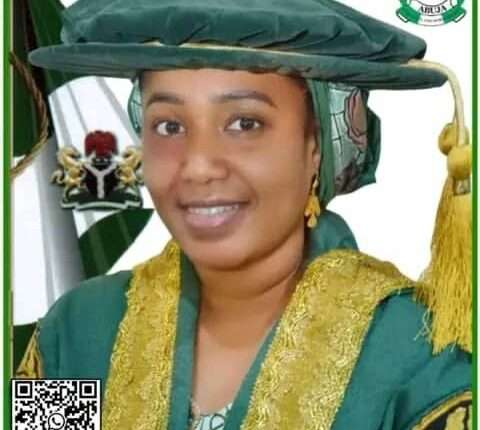
    The Senate of the University of Abuja, has elected Professor Aisha Sani Maikudi, as the Acting Vice Chancellor of the institution pending the inauguration of the University Council and the appointment of a substantive Vice-Chancellor.

    This followed the end of the tenure of Professor AbdulRasheed Na’Allah as the 6th Vice Chancellor of the University of Abuja (UniAbuja) on June 30, 2024.

    Aisha is a Professor of International Law and the current Deputy Vice-Chancellor (Academics) of the University.

    Born on January 31, 1983, in Zaria, Kaduna State, she obtained her West African Senior School Certificate Examination (WASSCE).

    She attended the University of Reading and the London School of Economics in the United Kingdom, after her Secondary school education, where she obtained her Bachelor of Laws (LLB) and Master of Laws (LLM) degrees, respectively. She also attended the Nigeria Law School, Abuja, for her call to the Bar and the University of Abuja for her Doctor of Philosophy (PhD) in Law.

    Aisha participated in the National Youth Service Corps (NYSC) in 2007, at the Corporate Secretariat and Legal Division of the Nigerian National Petroleum Corporation (NNPC).

    Aisha joined the University of Abuja in 2008 as a Lecturer and became the first female and youngest Head of the Department, Faculty of Law in 2014; the first female and youngest Deputy Dean, Faculty of Law in 2018; and the pioneer Director University of Abuja.

    The acting Vice Chancellor is the youngest Professor of the University of Abuja and indeed Nigeria, as well as the first female Professor of Law in the North West and the University of Abuja. She specializes in United Nations Law and has written extensively on the area.

    She completed a Postgraduate course on United Nations Law and has supervised numerous undergraduate and postgraduate works. She has also taught Company Law for over 12 years and is well-versed in its mechanics. She has participated in numerous conferences and trainings worldwide.

    She is also a Member of various professional associations, including the Nigerian Bar Association (NBA), the Nigerian Law Teachers Association (NLTA), and the International Federation of Women Lawyers (IFWL).

    Prof Aisha is married with children.

  • Strike: Nigerian govt, ASUU in closed-door meeting

    Strike: Nigerian govt, ASUU in closed-door meeting

    The Federal Government delegation and the leadership of Academic Staff Union of Universities, ASUU, are in closed door meeting to discuss lingering crisis and avert strike by the Union.

    The meeting holding on Thursday in the office of the Minister of Education, Prof. Tahir Mamman,commenced at about 4.30p.m.

    The Minister of State for Education, Dr Yusuf Sununu and other top officials in the ministry are in the federal government” team

    The ASUU President, Emmanuel Osodeke, who led the union’s delegation told newsmen that the meeting was to deliberate on lingering issues affecting the universities to avert the planned strike actions.

    “There are a lot of issues that are outstanding within the system and we believe that before now, they would have been taken care of.

    ‘The issues would have been resolved in line with the promise made by President Bola Tinubu and there will not be strike in the university system.

    “We hope that this meeting will be able to resolve some of these issues so that we can move forward as a country as well as our university system,” he said.

    Earlier, the Minister of Education, Prof. Tahir Mamman, said the meeting would provide an opportunity for both parties to rub minds on issues affecting the university system.

    Mr Mamman said that ASUU had earlier written to the ministry, detailing a number of issues and concerns affecting the universities and the union.

    He said that the issues required interactions between the union and government officials to avert any strike proposed by the union.

  • BREAKING: NELFUND postpones student loan application for state-owned institutions

    BREAKING: NELFUND postpones student loan application for state-owned institutions

    The Management of Nigerian Education Loan Fund on Tuesday announced a 14-day postponement of the application process for student loan for state institutions due” to low data submissions,” a statement by the agency said in Abuja.

    The Fund said the decision was necessitated by the failure of several state-owned institutions to upload the required student data and fee information to the NELFUND Student Verification System.

    “To date, only a limited number of state-owned institutions have successfully completed the data submission process. These include 20 state universities out of 48, 12 state colleges out of 54, and 2 state polytechnics out of 49.

    “While we acknowledge the efforts of these institutions, the failure to submit data from the remaining state institutions poses significant challenges to ensuring a seamless and accurate verification process for student loan applicants.

    “The application window, initially set to open on June 25, 2024, will now commence on July 10, 2024.”

    The Fund said the extension will provide additional time for state institutions to comply with the data submission requirements and ensure their students can benefit from the Federal Government student loan scheme.

    To facilitate an efficient and error-free application process, it is crucial that all state institutions provide complete and accurate information.

    This includes JAMB numbers, matriculation numbers, admission numbers, full names, level, faculties, departments, duration of program, fees, and gender of all eligible students.

    Incomplete or incorrect data submissions will result in application delays and potential disqualification for affected students.

    The fund urged all state institutions to expedite their data submission processes and ensure the accuracy of the information provided.

    It further warned that Institutions that fail to meet the revised deadline risk disadvantaging their students, who depend on these loans to support their education

  • Again, ASUU Rejects New University Governing Councils

    Again, ASUU Rejects New University Governing Councils

    The ding-dong between the Federal Government and the Academic Staff Union of Universities (ASUU) over the appointment of Governing Councils continues as the latter voiced disappointment regarding the composition of the new membership of the governing councils for federal universities.

    ASUU’s national president, Prof Emmanuel Osodeke, expressed these concerns in a recent interview with the Nigerian Tribune, highlighting a worrying trend in the appointment process.

    According to Prof Osodeke, the new list of council members is dominated by retired politicians rather than experts in academia or relevant fields.

    “Most of them are retired politicians. They are honourable this and honourable that,” Osodeke remarked, questioning the suitability of such appointments for the strategic development of higher education institutions in the country.

    Prof Osodeke further criticized the new list as being worse than its predecessor, indicating a regression rather than progress in the appointment policies.

    “Go and look at the list again, you will see that most of them are retired politicians. That is how terrible the thing has become,” he lamented.

    ASUU also raised issues beyond the qualifications of the appointed individuals. The union pointed out that the formation of new councils was procedurally flawed and possibly illegal.

    The Federal Government had dissolved the previous councils over ten months ago before their tenures had expired, contrary to the stipulations of the University Act.

    ASUU argued that these members should have been allowed to complete their terms instead of assembling a new council, which seems to overlook legal frameworks.

    The union emphasized that university education should not be subject to partisan politics if Nigeria aspires to achieve real educational quality that can lead to economic prosperity.

    “We can’t run our universities like this if we truly want genuine development to take place,” Prof Osodeke stated, urging a reevaluation of how university councils are constituted.

  • NYSC debunks reports of change of Corps members uniform

    NYSC debunks reports of change of Corps members uniform

    The National Service Corps, NYSC, has reacted to a trending social media video which depicts a change of Corps Members’ uniform to a new one.

    The NYSC said all the items that Corps members receive on arrival during registration at the Orientation Camps remain the same.

    The NYSC Director of Information and Public Relations, Eddy Megwa, in a statement said, “Members of the public, especially Prospective Corps members are hereby advised to disregard the misleading and highly embarrassing tiktok video in its entirety, as efforts are ongoing on the distribution of uniforms and other essential variables to all the 37 NYSC Orientation Camps across the country in preparation for the forthcoming 2024 Batch ‘B’ Stream One Orientation Course,”

    “Recently, the Federal Government approved the improvement in the quality of the material used in sewing Corps Members’ uniforms.

    “This is already done and Corps Members are already enjoying the improved quality.

    “Social Media Influencers are strongly warned to desist forthwith, from using NYSC Corporate brand in any online medium that may attract negative publicity to the Scheme, while defaulters would be prosecuted according to legal provisions.’