


Category: Foreign Affairs

  • UNGA80: Nigeria, 100 others unveil NDCs climate plan

    UNGA80: Nigeria, 100 others unveil NDCs climate plan

    Nigeria and leaders from 100 other countries have announced a new national climate action plan at a summit on the sidelines of UNGA80 in New York..

    The summit was convened by Secretary-General António Guterres alongside President Luiz Inácio Lula Da Silva of Brazil, host of the COP30 conference, which will be held in November in the Amazonian city of Belém.

    At the Climate meeting for Heads of State and Government, Vice President Kashim Shettima announced Nigeria’s new National Determined Contributions (NDCs) under the Paris Agreement.

    In a strong show of momentum, major economies – including China, the world’s largest emitter, and Nigeria – unveiled economy-wide targets to slash emissions across all greenhouse gases and sectors, making pledges that signal a more unified push toward deep decarbonization.

    Meanwhile, other nations stepped forward with bold commitments: scaling up renewable energy, cracking down on methane, protecting vital forests, and accelerating the phase-out of fossil fuels.

    Together, these announcements mark a turning point in global climate ambition, setting the stage for COP30 and a decade of decisive action.

    At the outset of the summit, leading climate scientists Johan Rockström and Katharine Hayhoe provided a stark assessment of global efforts so far to honour the Paris Agreement, the landmark 2015 treaty that seeks to limit global temperature rise to 1.5 degrees Celsius above pre-industrial levels.

    Ten years on, greenhouse gas emissions that cause global warming continue to rise, and annual global temperature change exceeded 1.5 degrees for the first time last year.

    “This is a deep concern,”  Professor Rockström, chief scientist at Conservation International. “An even deeper concern is that warming appears to be accelerating, outpacing emissions.”

    Yet it is still possible to meet the 1.5-degree goal, and the two experts highlighted solutions, including transitioning from fossil fuels to clean energy sources and transforming food systems to eliminate waste.

    “We cannot prevent this catastrophe alone. But together, we can. By setting stronger targets, moving on faster timelines, and making deeper commitments,” said Professor Hayhoe, a winner of the 2019 UN Champions of the Earth Prize.

    Under the Paris Agreement, governments are required to submit climate plans called Nationally Determined Contributions (NDCs) laying out bold action for the next decade.

    The treaty has made a difference, the Secretary-General said, as projected global temperature rise dropped from four degrees to less than three over the past 10 years, if current plans are fully implemented.

    “Now, we need new plans for 2035 that go much further, and much faster,” he said.

    “Delivering dramatic emissions cuts aligned with 1.5 degrees; covering all emissions and sectors; and accelerating a just energy transition globally.”

    He stressed that COP30 “must conclude with a credible global response plan to get us on track” and outlined five crucial areas for action: accelerating the transition to clean energy, drastically cutting methane gas emissions, forest conservation, cutting emissions from heavy industry, and ensuring climate justice for developing nations.

    With just a few weeks until COP30, President Lula wondered “whether the world will arrive in Belém with its homework done.”

    He said that “the energy transition opens the door to a productive and technological transformation comparable to the Industrial Revolution” and NDCs “are the road map that will guide each country through this change.”

    For its part, Brazil has committed to reducing all greenhouse gas emissions between 59 per cent and 67 per cent, covering all sectors of the economy, he said, and continues efforts to end deforestation by 2030.

    At the meeting, President Xi Jinping of China announced that by 2035, the country will reduce economy-wide net greenhouse gas emissions by seven to 10 per cent from peak levels.

    The country will also increase the share of non-fossil fuels in total energy consumption to over 30 per cent, expand wind and solar power capacity sixfold compared to 2020 levels, and make “new energy vehicles” the mainstream in new vehicle sales, he said in a video message.

    Meanwhile, “the clean transition is moving on” in the European Union, where emissions are down nearly 40 per cent since 1990, said European Commission President Ursula von der Leyen.

    European countries are also “doubling down on global partnerships” and will remain the world’s largest providers of climate finance, she said, while also mobilizing up to 300 billion Euros to support the clean energy transition worldwide.

    For Belize, the 1.5-degree goal “is not an aspiration” but “a threshold between hope and hardship, between flourishing communities and forced displacement, between shared prosperity and irreversible loss,” Prime Minister Johnny Briceño, said.

    Its new NDC covers concrete actions, such as expanding renewable electricity generation to cover 80 per cent of domestic needs by 2035, restoring some 25,000 hectares of degraded forest, and planting a million trees over the next three years.

    “But let me be clear, ambition can only succeed if matched by support for small climate vulnerable nations like Belize.

    “This means scaled up, predictable finance; accessible technology and genuine partnerships,” he said, noting that “success depends on all of us acting with unprecedented urgency, solidarity and climate justice.”

  • Tuggar Urges U.S. to Strengthen Partnerships with Nigeria

    Tuggar Urges U.S. to Strengthen Partnerships with Nigeria

    Describes Nigeria as Africa’s Anchor State

    Nigeria’s Minister of Foreign Affairs, Yusuf Maitama Tuggar, has reaffirmed the country’s strategic position as an anchor state in Africa.

    He therefore calls on the United States to deepen its engagement on the continent through stronger partnerships with Nigeria.

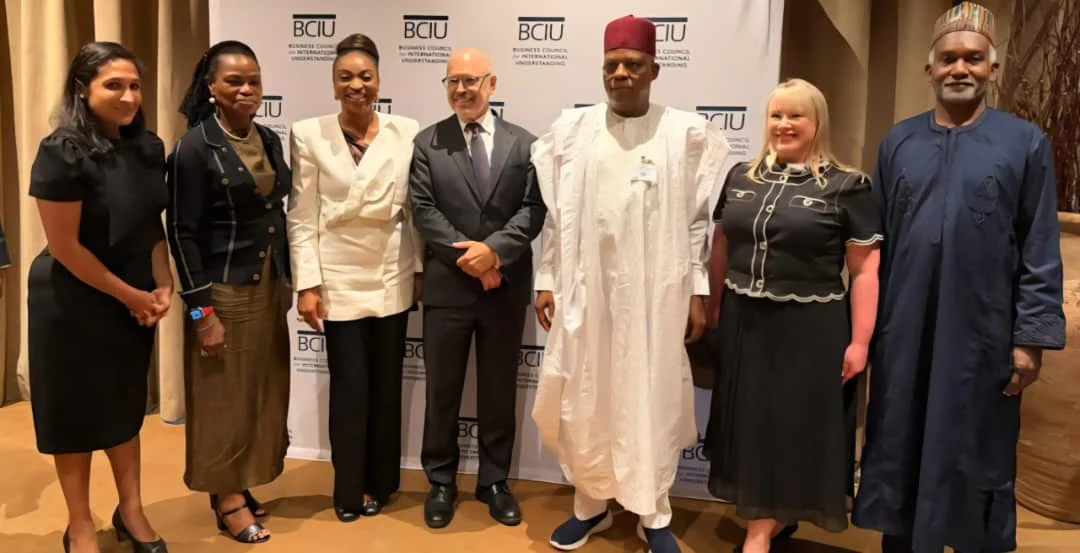
    Tuggar made the call at a high-level investment roundtable organized by the Business Council for International Understanding (BCIU) on the sidelines of the 80th United Nations General Assembly (UNGA).

    The forum was attended by Vice President Kashim Shettima and senior executives of top U.S. firms.

    Highlighting opportunities across priority sectors such as energy, agriculture, technology, and finance, Tuggar stressed that Nigeria’s size, resources, and leadership role make it the natural hub for U.S. investment in Africa.

    “With our vast population, abundant resources, and continental scale, Nigeria is a natural destination for U.S. business partnerships,” Tuggar said. “Such collaboration will reduce costs, provide access to a skilled talent pool, and help integrate millions of informal businesses into the formal economy.”

    He added that under President Bola Ahmed Tinubu’s Renewed Hope Agenda, Nigeria is pursuing economic diplomacy and reforms designed to attract investment, improve the ease of doing business, and ensure that global partnerships yield tangible benefits for citizens.

    Tuggar emphasized that Nigeria’s demographic advantage and continental influence reinforce its role as Africa’s premier gateway for global investors seeking growth and long-term impact

  • Retract ‘terrorist’ tag of political parties – Nigeria urges Canada

    The Federal Government has called on the Government of Canada to retract a Canadian court’s designation of some Nigerian political parties as terrorist organisations.

    The government’s reaction is contained in a statement issued on Friday by the Ministry of Foreign Affairs, signed by its spokesman, Kimiebi Ebienfa.

    The court had while delivering judgement on an appeal filed by a Nigerian asylum-seeker, Douglas Egharevba, denied him his request.

    The court declared that Egharevba, who arrived in Canada in Sept., 2017, was ineligible for Canadian residency because he was formerly a member of the said political parties who allegedly indulged in political violence.

    The Nigerian government therefore admonished Canada to refrain from actions that could be misconstrued as endorsing politically motivated narratives against Nigeria.

    “The designation is a baseless classification that is not only reckless, but constitutes an unacceptable interference in Nigeria’s internal affairs and democratic processes.

    “Nigeria is a sovereign nation with robust legal and constitutional framework governing political activities. Our political parties operate within the ambit of the law and are integral to the country’s vibrant democracy.

    “To associate legitimate political entities with terrorism without credible evidence is a grave misrepresentation that undermines Nigeria’s democratic institutions and could incite unnecessary tension,” the statement said.

    “The Federal Government of Nigeria, therefore, calls on the Canadian authorities to immediately retract this erroneous designation and refrain from actions that could be misconstrued, as endorsing politically motivated narratives against Nigeria,” it added.

    According to the Nigerian government, the Canadian Court only made a sweeping accusation against the entire membership of political parties that produced three democratically elected presidents, rather than  focus on individuals found wanting.

    The Federal Government also said that designating every member of the mentioned political parties as a potential terrorist, by implication, was completely false and unacceptable.

    It said that diplomatic channels remained open for constructive dialogue, and urged the Government of Canada to engage with the relevant Nigerian institutions to rectify such an error.

    “Nigeria remains committed to the global fights against terrorism and has made significant strides in countering extremist groups within its borders.

    “The Federal Government, therefore, calls on the international community to disregard this misguided ruling and reaffirm its confidence in Nigeria’s democratic governance, and the Rule of Law.

    “Government urges Nigerian nationals to refrain from making unfounded allegations against Nigeria, under the pretext of seeking asylum or favour from foreign entities,” the statement added.

  • U.S. threatens revocation of visa of truant students

    The U.S. Ambassador to Nigeria,  Mr Richard Mills, says students who skip classes without informing the school authority will get his or her visa revoked.

    Mills said this when he visited the Minister of Information and National Orientation, Alhaji Mohammed Idris,  on Friday in Abuja.

    According to him, the primary responsibility of obtaining a student visa is not to violate its terms.

    “Don’t stay beyond the amount of time you were admitted when you arrived in the United States. If you overstayed, it could result in deportation and a lifetime ban on future travel to the U.S.

    “It is also important to understand that when you come to the Visa Window to apply for a visa, you have to be as accurate as possible about the reason for your travel.

    ”How will you fund your travel in the U.S. and what are the requirements in your life that will make you come back to Nigeria.

    “Is not a piece of paper that guarantees your admittance into the US, it is your understanding of how to fund your travel and reason for you as a Nigerian Citizen to come back home,” he said.

    Mills said the U.S. wants to  ensure sanity by ensuring that the few that break laws don’t do that in the future as visas can be revoked and the holder deported if they break our laws.

    “Student Visa holders should know that they need to remain in the programme that underlines their visas; if you skip classes or leave your programme of study without informing the school, the student visa could be revoked,” Mills stressed.

    He said that the goal is to ensure that travels into Nigeria and the U.S. continue, and would be done in a safe and secure way for both countries to continue.

    Speaking, Idris said the partnership between Nigeria and the U.S. was boosting the renewed hope agenda of President Bola Tinubu in many ways.

    He said Nigeria will continue to have close collaboration and engagement with the U.S. for the benefit of the two nations.

    ”At the Ministry of Information and National Orientation, we will continue to engage with all our partners including the U.S. to help foster better understanding, like the new visa laws.

    “We will also continue to engage with our other international partners, so that they can understand what the Nigerian Government is doing to inform Nigerians for better understanding,” he said.

  • Tinubu’s Saint Lucia visit will boost ties with Caribbean -Presidency

    Tinubu’s Saint Lucia visit will boost ties with Caribbean -Presidency

    The Presidency says Tinubu’s state visit to Saint Lucia is a strategic engagement that will deepen educational and cultural cooperation with the island nation the Caribbean.

    ‎This is contained in a statement  by the Presidential Spokesperson, Mr Bayo Onanuga, on Sunday.

    ‎Onanuga said the visit will rekindle Nigeria’s ancestral and strategic economic ties with the Caribbean nation and the wider CARICOM bloc.

    ‎“In the wake of some Nigerians’ misguided, mischievous, and uninformed comments regarding President  Tinubu’s historic state visit to Saint Lucia, it is necessary to clarify the purpose.

    ‎“First, from the perspective of the Government of Saint Lucia, the visit by the Nigerian leader paves the way for  rekindling of  ancestral bonds, igniting a new era of diplomatic, cultural, and economic possibilities between our nations,” Onanuga stated.

    ‎He stated that  the President’s historic visit aligned with Nigeria’s “Four D’s” foreign policy: Democracy, Development, Diaspora, and Demography—key pillars of  the country’s global engagement.

    ‎Onanuga  noted that Saint Lucia, with deep African roots and a significant Nigerian-descended population, views the visit as a homecoming of sorts.

    ‎It would be recalled that in the 19th century, Nigerian immigrants brought enduring cultural and religious traditions to the island, a legacy still felt today.

    ‎Onanuga said  the visit underscored Nigeria’s rising soft power, driven by Afrobeats, Nollywood, and a literary heritage that resonated across the Caribbean.

    ‎He noted that Saint Lucia, home to the Organisation of Eastern Caribbean States (OECS), is a gateway to the 15-member CARICOM bloc with a 130 billion dollars GDP.

    ‎He said that President Tinubu’s presence signalled Nigeria’s interest in expanding South-South trade and strengthening diplomatic and economic ties with the Caribbean.

    ‎”Nigeria and Saint Lucia already share remarkable historical links, such as Sir Darnley Alexander, a Saint Lucian, who served as Chief Justice of Nigeria from

    ‎1975 to 1979,” he stated.

    ‎The presidency also highlighted  contributions of other Saint Lucians, including Neville Skeete, who helped design the Central Bank of Nigeria headquarters, and Sir Darnley’s son Michael, a frontline medical officer during the Nigerian civil war.

    ‎Onanuga said that Nigeria’s Technical Aid Corps, part of Tinubu’s delegation, will support development efforts by deploying professionals to key sectors in Saint Lucia.

    ‎The small Caribbean island of Saint Lucia gained independence in 1979, and had hosted fewer than 10 official state visits.

    ‎The last African leader to visit was President Nelson Mandela, who attended the 1998 CARICOM Heads of Government Summit.

  • Nigeria accepts invitation to join BRICS as a partner country

    Nigeria accepts invitation to join BRICS as a partner country

    Nigeria’s economic growth and development aspirations have been boosted, following its acceptance on Saturday, the offer to become a BRICS partner country.

    The Ministry of Foreign Affairs disclosed this in a statement by Kimiebi Ebienfa, its Acting Spokesperson.

    The alliance would assist in bringing Nigeria’s goals for regional integration and inclusive growth into compliance with the best practices of strategic autonomy, the statement said.

    Further, the statement reads, “The Federal Government of Nigeria has accepted the invitation to join BRICS as a partner country.”

    It was also emphasized that Nigeria’s dedication to promoting global cooperation, taking advantage of economic possibilities, and developing strategic alliances that support the country’s development goals was underscored by this official admission.

    “BRICS, as a collective of major emerging economies, presents a unique platform for Nigeria to enhance trade, investment, and socio-economic cooperation with member countries,” the statement added.

    “Nigeria aims to use this partnership to advance shared goals in areas such as trade and investment, energy security, infrastructure development, technology, and climate change.”

    The statement also emphasized how the collaboration was in line with Nigeria’s strategic autonomous ethos and its national goals of inclusive growth, regional integration, and active involvement in creating a just and equitable global economic order.

    In line with national interests and strategic aims, the ministry stated its hope to work constructively with BRICS members to promote innovation and people-to-people interactions.

  • UAE President to Visit Nigeria in 2025 

    UAE President to Visit Nigeria in 2025 

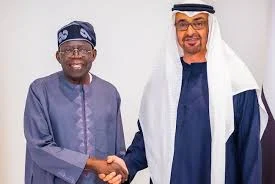
    The President of the United Arab Emirates, Sheikh Mohamed bin Zayed Al Nahyan, will visit Nigeria this year. 

    He accepted an invitation extended by Nigerian President Bola Ahmed Tinubu during a meeting on the sidelines of the Abu Dhabi Sustainability Week 2025.  

    President Tinubu, who arrived in Abu Dhabi on Sunday, participated in the global forum, which addresses challenges such as climate change, water, and energy issues. 

    On Wednesday, he shared Nigeria’s views on these matters and praised the UAE for hosting a successful event.  

    During their discussions, the UAE President expressed interest in strengthening economic ties with Nigeria. Both leaders discussed ways to attract investment into Nigeria. 

    President Tinubu highlighted his government’s recent reforms, which he said have improved the economy and drawn billion-dollar investments from foreign companies.  

    The meeting took place at the Emirates Palace Mandarin Oriental in Abu Dhabi, with top officials from both countries in attendance. 

    The Nigerian delegation included Ministers Yusuf Tuggar and Wale Edun, as well as National Security Adviser Nuhu Ribadu.  

    The UAE delegation featured senior officials like Sheikh Abdullah bin Zayed Al Nahyan and Dr. Sultan bin Ahmed Al Jaber.

  • John Mahama Visits Tinubu Ahead of Inauguration

    John Mahama Visits Tinubu Ahead of Inauguration

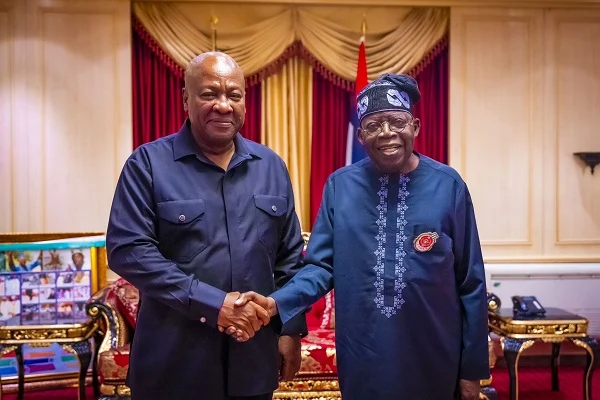
    John Dramani Mahama, Ghana’s president-elect, made a courtesy visit to Nigeria’s President Bola Tinubu at the Presidential Villa in Abuja on December 16, 2024. 

    The meeting, which took place on Monday, was part of Mahama’s visit to Nigeria before his official inauguration as Ghana’s president on January 7, 2025.

    Mahama, who emerged victorious in the 2024 Ghanaian elections, was welcomed by President Tinubu and his wife, First Lady Oluremi Tinubu, who also appeared in the photos shared on social media.

     The images, posted by Olusegun Dada, Tinubu’s special assistant on social media, captured the cordial interaction between the two leaders.

    Mahama’s political career includes serving as Ghana’s vice president from 2009 to 2012.

     Following the untimely death of President John Atta Mills in 2012, Mahama ascended to the presidency, where he served until 2017. 

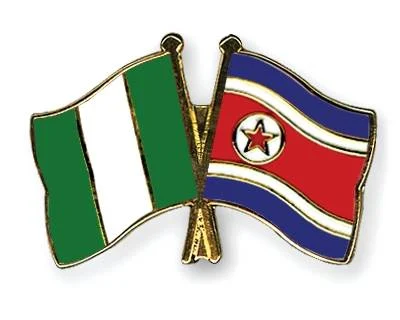
  • Nigeria Reopens North Korea Embassy After Long Closure  

    Nigeria Reopens North Korea Embassy After Long Closure  

    Nigeria has resumed operations at its embassy in Pyongyang, North Korea, after a closure that began during the global COVID-19 outbreak in 2021.

     This move makes Nigeria one of only two African countries, alongside Egypt, with a diplomatic presence in North Korea.  

    During the embassy’s closure, diplomatic activities between the two nations were managed through Nigeria’s mission in Abuja. 

    The Nigerian envoy, Patrick Imodu Imologhome, recently met with Russia’s ambassador to North Korea to discuss the reopening.  

    North Korea, which had sealed its borders at the start of the pandemic in 2020, only began allowing foreign diplomats back into the country in mid-2023. 

    Despite the challenges, both nations maintained their longstanding ties, established in 1976, through ongoing communications.  

    Nigeria joins a select group of nations with embassies in Pyongyang, reflecting a strategic decision to re-establish its presence in the isolated nation.

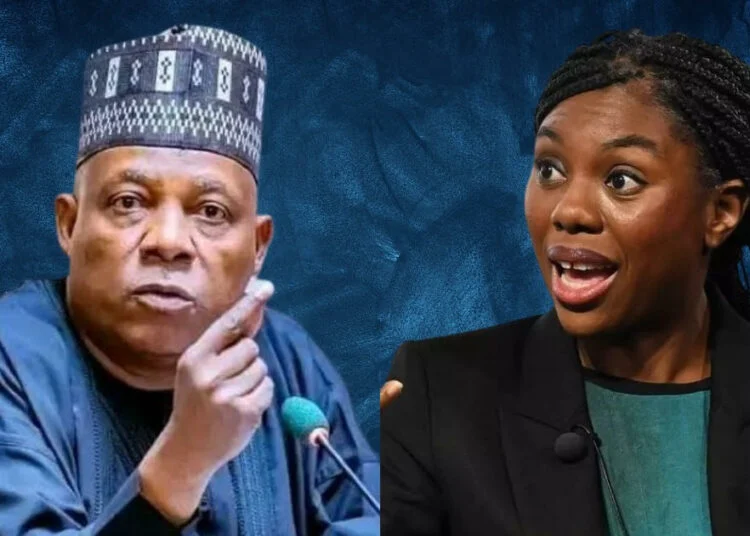
  • Shettima knocks Badenoch for Nigeria Comment

    Shettima knocks Badenoch for Nigeria Comment

    “She is entitled to her own opinions; she has even every right to remove the Kemi from her name, but that does not underscore the fact that the greatest black nation on earth is the nation called Nigeria.”

    The Nigerian Vice President, Kashim Shettima however thinks that considering her exalted position as the leader of the UK Conservative Party, Ms. Badenoch shall have been more measured in her comments and not be so disrespectful to Nigeria.

     Badenoch, who has Nigerian heritage, recently advocated for stricter immigration measures, citing concerns over the strain on public services and societal balance.  

    Speaking at the Annual Migration Dialogue in Abuja, Shettima addressed her stance, acknowledging her success while rejecting her portrayal of Nigeria.

     He noted Nigeria’s global significance, emphasizing its growing population and influence.  

    Badenoch’s previous remarks about her childhood in Nigeria have also drawn attention. 

    She described facing corruption and hardship before migrating to the UK, where she pursued better opportunities.

    While her narrative highlights challenges in Nigeria, Shettima countered by defending the nation’s resilience and potential.

    He said: “Kemi Badenoch, is the leader of the British Labour or Conservative Party. We are proud of her in spite of her efforts at denigrating her nation of origin.

    “She is entitled to her own opinions; she has even every right to remove the Kemi from her name, but that does not underscore the fact that the greatest black nation on earth is the nation called Nigeria.

    “One out of every three, four black men is a Nigerian and by 2050, Nigeria will support the United States, will be the third most populous nation on earth.”

    It must be noted however, that Ms. Badenoch is not the first highly placed Nigerian yo make such uncomplimentary remark about the country.

    Shettima’s principal, President Bola Tinubu is also recorded to have made a remark in the past that he did not believe in one Nigeria.