




Category: Security/Insecurity

  • Bandits Unleash Terror, Kill Scores in Brazen Daylight Attack on Katsina Community

    Bandits Unleash Terror, Kill Scores in Brazen Daylight Attack on Katsina Community

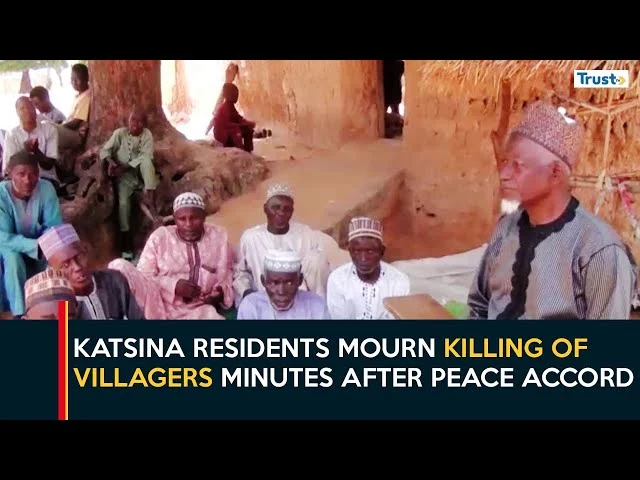
    Suspected bandits on Tuesday carried out a brutal and audacious daylight attack on Doma community under Tafoki Ward in Faskari Local Government Area of Katsina State, killing about 20 residents and leaving the area in ruins.

    The assailants reportedly stormed the community in the early afternoon and operated freely for hours, shooting sporadically and setting houses on fire, before withdrawing around 4:00 p.m. without resistance.

    Eyewitnesses said the attackers moved from house to house, unleashing terror on helpless residents, while several buildings were reduced to ashes in what locals described as one of the most savage assaults in recent months.

    The attack came despite a peace agreement earlier reached between the armed groups and the community, raising serious concerns over the effectiveness and credibility of such arrangements.

    Confirming the incident, the area chairman, Alhaji Surajo Aliyu-Daudawa, described the invasion as a reprisal attack and the most devastating assault on the community in the past five months.

    According to him, bodies of the victims were evacuated after the attack, while funeral prayers were scheduled to take place in Tafoki town on Wednesday morning.

    Aliyu-Daudawa lamented the scale of destruction and loss of lives, praying for divine intervention to prevent a repeat of the tragedy.

    Meanwhile, the Katsina State Police Command confirmed the attack but gave a lower casualty figure, stating that 13 people were killed by the assailants.

    In a statement issued on Tuesday, the Police Public Relations Officer, DSP Aliyu Abubakar, said a distress call was received at about 2:00 p.m. on February 3, 2026, reporting that armed bandits had launched an attack on Doma village in Faskari Local Government Area.

    He said operatives from the Faskari Division, working with the military and members of the Katsina State Community Watch Corps, were mobilised to the area, but the attackers fled before security forces arrived.

    “Unfortunately, the assailants had fatally shot 13 persons and escaped the scene before the arrival of the operatives,” the statement said.

    The latest attack once again underscores the persistent insecurity in rural Katsina communities, where armed groups continue to strike with impunity despite security operations and peace initiatives.

  • Northern Rulers Pledge Support for Security in South-South, South-East

    Northern Rulers Pledge Support for Security in South-South, South-East

    The Northern Traditional Rulers Council for the South-South and South-East has pledged to support security agencies and state governments in addressing security challenges across the two regions.

    The council’s chairman, Alhaji Yaro Danladi, disclosed this on Sunday while briefing journalists on the outcome of a two-day emergency meeting held in Umuahia, Abia State.

    Danladi said the council resolved that northern communities resident in the regions would work closely with state governments, host communities and security agencies to promote peace, stability and harmonious coexistence.

    “We agreed to work hand-in-hand with our governors and live peacefully with the indigenous people of our host states,” he said.

    He explained that the meeting was convened in response to emerging security concerns, adding that the council resolved to support security agencies through timely intelligence gathering and information sharing.

    According to him, representatives would be appointed in northern communities across the regions, including at local government levels, to ensure the swift transmission of security-related information to relevant authorities.

    “Once any incident occurs, information will reach us promptly, and we will immediately alert the appropriate security agencies,” Danladi said.

    He reaffirmed the council’s commitment to supporting state governments in the fight against crime and criminality, stressing that no criminal element within northern communities would be protected.

    “We do not support criminals. Anyone found engaging in criminal activities will be handed over to law enforcement agencies for prosecution,” he said.

    Danladi also urged youths from northern communities to respect the laws of their host states and continue to live peacefully with their neighbours. He called on state governments to strengthen collaboration with northern leaders in identifying and integrating long-term residents, noting that many northerners had lived in the regions for decades.

    Similarly, the leader of the Hausa community in Enugu State, Alhaji Abubakar Sambo, reiterated the council’s resolve to strengthen peace, security, cooperation and welfare in the South-East and South-South.

    Sambo, who is also the National Vice Chairman of the Inter-Tribal Traditional Leaders Association of Nigeria, said the council discussed strategies to enhance intelligence gathering and coordination within northern communities in support of state security efforts.

    He said the council resolved to establish a coordinated structure for northern communities in each state, down to local government and community levels, to improve engagement, welfare delivery and rapid information sharing.

    Sambo also reaffirmed the traditional role of the Sarkin Hausawa as the recognised leaders and primary point of contact for northern communities across the states.

    He called for sustained collaboration between the council and state governments, describing such partnership as critical to addressing security challenges and maintaining peaceful coexistence.

    In his remarks, the Head of the Hausa Muslim Umma in Cross River State, Alhaji Garba Lawan, said northern communities in the region had continued to enjoy cordial relations with host communities and state governments.

    Lawan said the communities had benefited from government support and security protection over the years, reflecting long-standing peaceful coexistence.

    Commenting on concerns over scavenging activities, he said the trade was not exclusive to northerners and noted that members of the Hausa Muslim Umma had been sensitised on lawful conduct and compliance with regulations.

    He recalled that scavenging was previously banned in Cross River State due to security concerns but said the ban was recently lifted following consultations between the government and key stakeholders, with strict conditions attached.

  • Nigerian Army Foils Bandits in Kogi: 3 Neutralised, Supplier Arrested

    Nigerian Army Foils Bandits in Kogi: 3 Neutralised, Supplier Arrested

    Troops of the Nigerian Army’s 12 Brigade, Lokoja, have successfully disrupted bandit activities in Kogi State, neutralising three suspected bandits and arresting one suspected logistics supplier, in a series of coordinated operations over the weekend.

    The operations, disclosed by the Brigade’s spokesperson, Lt. Hassan Abdullahi, occurred on Saturday, January 3, as part of ongoing efforts to curb banditry and kidnapping across the state.

    According to Lt. Abdullahi, the military conducted targeted patrols and ambushes in Kabba Bunu and Yagba West Local Government Areas, acting on credible intelligence about suspected bandits moving from the Adankolo general area.

    In one engagement, troops ambushed a group of bandits heading toward Agbadu Bunu. The encounter resulted in two bandits being neutralised, while troops recovered an AK-47 rifle, a magazine, ammunition, and a locally fabricated firearm.

    Lt. Abdullahi noted that the ambush forced the bandits to withdraw, leaving behind blood stains at the scene, indicating casualties.

    In a separate operation in Yagba West, troops, in collaboration with local vigilantes, confronted another bandit group around Saminaka village.

    One bandit was neutralised during the engagement, and another AK-47 rifle with ammunition was recovered.

    The operation also led to the arrest of a suspected bandit logistics supplier, identified as Sunday Adedotun.

    Items recovered from his settlement included energy drinks, soft drinks, bottled water, and harvested farm produce, believed to be intended to supply bandits in the area.

    The suspect is currently in custody and undergoing investigation.

    Lt. Abdullahi emphasised that these operations reflect the Nigerian Army’s sustained pressure on criminal elements and their support networks, aiming to deny them freedom of movement and operational space within the state.

    He added that the troops’ actions underscore professionalism, discipline, and rapid response to actionable intelligence.

    Brigade Commander Brig.-Gen. Kasim Sidi commended the troops for their courage and diligence, reiterating the Brigade’s commitment to aggressive patrols and operations aimed at securing communities and protecting lives and property in Kogi State.

  • Benue South Protests Exclusion from U.S. Fact-Finding Mission

    Benue South Protests Exclusion from U.S. Fact-Finding Mission

    “We Are Victims of Both Terror and State Marginalisation”

    The Ochetoha K’Idoma, the apex socio-cultural organisation of Benue South Senatorial District (Zone C), has formally protested the exclusion of Idoma and Igede communities from the itinerary of the visiting United States Fact-Finding Mission led by Congressman Riley Moore.

    In a petition submitted to the U.S. Embassy in Nigeria, the group described the omission as a deliberate act that reinforces what it called a “dangerous and misleading narrative” portraying Benue State’s security crisis as affecting only Tiv-speaking areas.

    “This exclusion is not an oversight; it is a systemic erasure of the suffering of our people,” the organisation stated.

    The Invisible War

    According to the petition, Benue South has endured sustained violent attacks for more than a decade. A 12-year timeline (2013–2024) attached to the letter documents repeated massacres across Agatu, Apa, Otukpo, and Obi Local Government Areas.

    The group cited the 2016 Agatu Massacre, where more than 500 people were reportedly killed, and the April 2023 Umogidi attack in Otukpo LGA, during which 52 victims were buried in mass graves.

    “Our land flows with blood,” the statement said. “Yet because our people absorb displaced families into private homes rather than formal IDP camps, the world assumes we are safe. We are not.”

    Demands to the U.S. Delegation

    The Ochetoha K’Idoma called on the U.S. Fact-Finding Mission to:

    • Grant an immediate audience to leaders of Benue South
    • Correct the distorted narrative that confines insecurity in Benue to a single ethnic group
    • Channel humanitarian relief and reconstruction assistance to the Apa–Agatu corridor

    In a statement signed by Dr. Echeofu Agada, Public Relations Officer of the organisation, the group warned that excluding Benue South undermines the credibility of any investigative mission.

    “You cannot claim to establish facts while ignoring half the victims,” the statement read.
    “The silence of Benue South is not peace; it is the silence of the graveyard.”

  • Senate Raises Alarm Over Insecurity, Probes Kebbi Troop Pullout

    Senate Raises Alarm Over Insecurity, Probes Kebbi Troop Pullout

    By Caroline Ameh | Abuja

    The Nigerian Senate on Tuesday expressed deep concern over the worsening insecurity in parts of Kwara, Kebbi, and Niger States, resolving to probe the alleged withdrawal of military personnel from a Kebbi school hours before a major abduction.

    The resolution followed the adoption of a motion of urgent national importance sponsored by Deputy Majority Leader, Senator Lola Ashiru, who described the escalating attacks on schools, worship centres, and rural communities as a national emergency requiring immediate federal action.

    Senators Decry Widening Attacks

    Lawmakers lamented the November 18 attack on Christ Apostolic Church (CAC), Eruku, in Ekiti Local Government Area of Kwara State, where gunmen killed two worshippers and abducted 38 others, all later rescued in coordinated security operations.

    They noted that the attack led to the temporary closure of schools in five local government areas across Kwara, as well as parts of Niger and Kebbi States, affecting 47 Federal Unity Colleges nationwide.

    The Senate also condemned the growing pattern of school kidnappings, including recent abductions in Niger and Kebbi States, warning that educational and religious institutions had become increasingly vulnerable to banditry and terrorism.

    Controversy Over Troop Withdrawal

    Lawmakers were particularly alarmed by credible reports that military personnel were withdrawn from Government Girls’ Secondary School, Maga, Kebbi State, just hours before the abduction of 24 female students.
    They demanded a transparent investigation into the decision and those responsible.

    Contributing to the debate, Senator Enyinnaya Abaribe (Abia South) urged his colleagues to confront insecurity “head-on and without reference to the past.”


    He insisted that the Senate must uncover who authorised the withdrawal of troops from the school before the attack.

    Abaribe’s position was strongly supported by Senate President Godswill Akpabio, Senator Seriake Dickson, and other lawmakers, who called for urgent and coordinated security action.

    Intelligence Points to Internal Sabotage

    The motion also cited intelligence reports indicating that internal collaborators continue to aid criminal networks with logistics, information, and escape routes.


    Senators warned that terrorists were exploiting forest corridors such as the Kwara–Kogi axis, Kebbi–Zamfara stretch, and Niger’s Shiroro–Rafi–Munya belt to carry out attacks and evade arrest.

    They further raised concern over the deplorable state of the Idofian–Omu-Aran–Eruku–Egbe–Kabba highway, which they said provides bandits with ambush points, easy escape routes, and concealment within thick forests.

    Tinubu Commended for Swift Response

    Earlier, Senate Majority Leader Opeyemi Bamidele cautioned against rising public speculation over the release of kidnap victims, urging a review of the performance of Senate security committees.
    He reaffirmed that the Tinubu administration does not and will not support ransom payments to abductors.

    The Senate commended President Bola Ahmed Tinubu for what it described as his “swift and personal intervention,” including cancelling planned foreign trips to coordinate national security efforts.


    It also lauded security agencies for the rescue of 38 abductees in Kwara and 51 students in Niger State.

    Key Resolutions

    The Senate resolved to:

    • Urge communities in Kwara, Kebbi, Niger, and across the country to remain vigilant and expose collaborators aiding criminal groups.
    • Commend President Tinubu and security agencies for swift interventions while calling for sustained rescue operations until all abductees are freed.
    • Mandate the immediate reconstruction of the Idofian–Omu-Aran–Eruku–Egbe–Kabba highway to curb ambushes and improve mobility for security forces.
    • Direct the Army, Police, DSS, and Defence Intelligence Bureau to intensify intelligence-driven operations, forest combing, and cross-state collaboration.
    • Establish a Joint Task Force (JTF) along the Kwara–Kogi corridor with forward operating bases in Eruku, Babanla, Oke-Ero, and Isanlu.
    • Instruct the Ministry of Humanitarian Affairs and NEMA to provide relief materials to affected families where schools remain closed.
    • Launch a 14-day Senate investigation into the surge in insecurity, including the alleged role of internal collaborators.
    • Strengthen local vigilante networks and review Nigeria’s firearms laws in line with global best practices.
    • Conduct a separate probe into the troop withdrawal from the Kebbi school before the abduction.
    • Pursue diplomatic engagement with the U.S. and allied nations to improve intelligence sharing and counter-terrorism support.
    • Observe a two-minute silence in honour of all victims of recent attacks.

  • Brains, Not Bullets: How Nigeria Can Defeat Terrorism, Banditry and Extremism

    Brains, Not Bullets: How Nigeria Can Defeat Terrorism, Banditry and Extremism

    When there is crisis and chaos in the jungle and the lion, the king of the forest, is under distress, even the snail, in its slow motion, proclaims itself the king of horned animals.

    So it is with Nigeria’s current crisis of insecurity. Every Dick, Tom, and Harry has suddenly become a security expert, diagnosing terrorism as though it were a mere ailment cured by sound bites.

    Those who have long sharpened their knives, waiting to take potshots at the president, are now out with their blades—poking half-baked truths, innuendos, and insinuations. Suddenly, President Tinubu has supposedly made a clandestine pact with terrorists to destabilize his own government! Haba. Some claim he is so obsessed with 2027 that he has chosen to appease the very insurgents who want to derail his ambition.

    Nothing could be further from the truth.

    Terrorism thrives on chaos. Its tactics, stealthy, asymmetric, opportunistic, are designed to shock and paralyze society. From bombings in schools and churches to mass kidnappings, terrorists choose soft targets because no government on earth can protect every space, every time. Even the mightiest military in the world, the United States, could not defeat Al-Qaeda or the Taliban after two decades of bleeding money, blood, and tears.

    The Old Wounds We Ignored

    Nigeria’s battle with religious extremism and violent sectarianism did not begin today. The Maitatsine sect, led by Muhammad Marwa until his death in 1980, waged an ideological war that left thousands dead—including soldiers and policemen.

    Yet, despite decades of conflict, we still treat terrorism and banditry as a purely military problem. We cannot bomb an idea out of existence.

    Until we confront the underlying causes, the social, economic, and moral rot that breeds extremism, we will remain trapped in a vicious cycle. Millions of young Nigerians, especially in the North, grow up unparented, uneducated, and unemployed, condemned to a Hobbesian existence of hopelessness. When life offers nothing to live for, dying for a “heavenly cause” becomes a seductive option.

    A government that abandons its most vulnerable citizens is waging a losing war against preachers of false paradise.

    The Carrot and the Stick

    Military power alone cannot deliver peace. Nigeria needs a multi-pronged strategy, combining the stick of firm justice with the carrot of opportunity, education, and reform.

    We must stop the endless production line of unparented street urchins and almajirai. Education and reorientation must replace indoctrination and idleness. We have ignored the warning signs for too long: a youth population bulge of millions of out-of-school children was a ticking time bomb. That bomb has now exploded.

    It now falls on President Tinubu to design both short- and long-term strategies to confront this monster. But he cannot do it alone.

    State governors, especially in the North, must take responsibility. Too many have abandoned their states, treating Abuja as home while insecurity festers under their watch. They must be forced back to confront the chaos they helped create. Citizens must also hold them accountable, not just the man in Aso Rock.

    The Role of Citizens

    Security is everyone’s business. These terrorists do not always live in forests, they often live among us. Some of our own community members serve as informants, kingpins, or collaborators in kidnapping rings.

    We must strengthen community–police cooperation and reward informants who provide actionable intelligence. The president’s new policy of prioritizing public safety over VIP protection is a welcome step.

    At the same time, sponsors of terrorism must face the harshest punishment. The law must be unambiguous: those who bankroll or enable terror must pay the ultimate price. Politicians who weaponize violence for electoral gain must be exposed and punished.

    The War of Information

    Equally dangerous is the spread of fake news. Each time we circulate unverified stories of attacks or kidnappings, we aid the terrorists’ cause. Panic is their oxygen. Spreading false alarms wastes precious security resources and deepens public fear.

    We must be disciplined. If you see something, say something, to the right authorities. President Tinubu is not omnipresent; he cannot see every threat. But collectively, we can build a web of vigilance strong enough to protect our communities.

    A Final Word

    And to those calling for foreign intervention, especially those invoking the name of Donald Trump, be warned: no country “saved” by U.S. invasion has emerged better. Vietnam, Iraq, Libya, Afghanistan, all lie in ruins. Nigeria’s salvation will not come from outside. We must save ourselves.

    The war against terrorism is not just a fight of guns and bullets, it is a fight for the soul of the nation.

    Adewale Alonge, PhD, Founder & President, Africa Diaspora Partnership for Empowerment and Development. www.adped.org, writes in from Dadeland, Miami, Florida, USA.

  • CAN Condemns Attack on Catholic Schools in Niger

    CAN Condemns Attack on Catholic Schools in Niger

    The Christian Association of Nigeria (CAN), Niger State chapter, has condemned the gunmen attack on St. Mary’s Catholic Primary and Secondary Schools in Papiri, Agwara Local Government Area.

    In a statement issued in Minna on Friday, the Chairman of CAN in Niger and Catholic Bishop of Kontagora Diocese, Rev. Bulus Yohanna, described the incident as “distressing and unacceptable.”

    According to Yohanna, the gunmen invaded the schools between 1 a.m. and 3 a.m., shooting the security guard before abducting pupils, students, teachers, and a security personnel.

    “We are deeply disturbed by this attack and the abduction of innocent children and their teachers,” Yohanna said. “This level of violence against educational institutions is completely unacceptable.”

    He expressed concern for the safety of the abducted victims and the trauma endured by their families. Yohanna assured that CAN was working with security agencies, community leaders, and government authorities to support ongoing rescue operations.

    “We appeal to residents to remain calm and cooperate with security operatives,” he added. “Christians and all Nigerians should continue to pray for the safe and quick return of those abducted.”

    The CAN chairman reaffirmed the association’s commitment to advocating for the protection of children and enhanced security in schools across the state.

    “May the Lord grant quick release to those abducted and continue to protect His people from all dangers,” Yohanna prayed.


  • Meet Nigeria’s 25th Chief of Naval Staff – Rear Adm. Idi Abbas

    Meet Nigeria’s 25th Chief of Naval Staff – Rear Adm. Idi Abbas

    The appointment of Rear Adm. Idi Abbas as the 25th Chief of Naval Staff (CNS) brings a wealth of experience, discipline, and professionalism to the leadership of the Nigerian Navy.

    A seasoned Above Water Warfare specialist, Rear Adm. Abbas has spent more than three decades in service to the nation, distinguished by dedication to duty and a passion for maritime security.

    Born on Sept. 20, 1969, Abbas hails from Nassarawa Local Government Area of Kano State.

    He began his educational journey at Gwagwarwa Primary School, Kano, and later attended the Air Force Military School, Jos, from 1981 to 1986.

    In 1987, he gained admission into the Nigerian Defence Academy (NDA) as a member of the 40 Regular Course and was commissioned Sub-Lieutenant on 10 September 1993 with a Bachelor’s degree in Chemistry.

    A well-trained officer, Abbas has attended several military courses at home and abroad.

    These include the Sub-Lieutenant Technical Course and Officers’ Long Course in Above Water Warfare at NNS QUORRA, as well as the Junior and Senior Staff Courses at the Armed Forces Command and Staff College, Jaji.

    He also attended the United Nations Military Observer Course in Tanzania in 2009 and is a graduate of the National Defence College (NDC), Abuja, Course 23.

    Over the years, the new Naval Chief has held several command and staff appointments. He has served onboard various Nigerian Navy ships, including NNS ARADU, NNS DAMISA, and NNS AYAM, as a Watch-Keeping Officer.

    He was also Naval Assistant to the Deputy Commandant, Armed Forces Command and Staff College, Jaji, and later served as Commanding Officer, Burma Battalion, NDA.

    His other notable appointments include Base Administrative Officer, NNS PATHFINDER; Maritime Guard Commander, Nigerian Maritime Administration and Safety Agency (NIMASA); Commander, Task Group Operation TSARE TEKU; and Flag Officer Commanding, Central Naval Command.

    He also served as Chief of Naval Safety and Standards, Chief of Defence Civil-Military Relations at Defence Headquarters, and Senior Research Fellow at the Nigerian Army Heritage Centre before his elevation to the position of Chief of Naval Staff.

    Rear Adm. Abbas has risen steadily through the ranks from Midshipman in 1996 to Rear Admiral on Sept. 10 2020.

    His career has been decorated with several honours, including the Forces Service Star (FSS), Meritorious Service Star (MSS), Distinguished Service Star (DSS), Grand Service Star (GSS), and the Defence General Staff Medal (DGSM).

    He is a Fellow of the Defence College (fdc) and a member of the Nigerian Institute of Management (NIM) and the International Institute of Professional Security (IIPS).

    A calm, focused, and result-oriented officer, Abbas is widely respected for his professionalism and strategic leadership.

    Outside the uniform, he enjoys playing hockey and driving. He is married to Mrs Aisha Abbas, and they are blessed with two sons.

    The new naval chief is expected to bring renewed drive and operational focus to the Nigerian Navy as it continues its mandate of safeguarding Nigeria’s maritime domain and contributing to national security. 

  • Anambra Guber: CP assures fair treatment for all

    Anambra Guber: CP assures fair treatment for all

    The Commissioner of Police in Anambra, Ikioye Orutugu, has assured the public of professional conduct and neutrality among its personnel during the Nov. 8 governorship election in the state.

    The Police Public Relations Officer (PPRO) in the state, SP Tochukwu Ikenga, gave the assurance in a statement on Monday in Awka.

    Ikenga quoted Orutugu as also calling for strict adherence to the rule of law among the officers and men, during the election.

    “As part of the ongoing security preparations for the forthcoming Anambra gubernatorial election, the CP, Anambra Command, Ikioye Orutugu has embarked on an operational tour and evaluation across the Police Area Command to assess the readiness of the officers and men for the crucial assignment.

    “The exercise which commenced with a visit to the Onitsha Area Command, saw the CP leading the high-visibility patrols through major routes and strategic locations within the area.

    “He also addressed officers and men  emphasizing the need for professionalism, neutrality, and strict adherence to the rule of law during election duties,” Ikenga said.

    The police spokesman also quoted the CP as calling on the officers and men to remain disciplined and committed to upholding the integrity of the Nigeria Police Force.

    The  Command reiterated its commitment to provide a safe and secure environment before, during and after the election.

    Orutugu noted the commitment of the Inspector-General of Police (IGP) Kayode Egbetokun, to free, fair, and credible elections nationwide.

    Ikenga said that during the patrol, the CP inspected operational formations, police posts, and checkpoints in the area to ensure that the deployed officers and men were alert and properly equipped.

    The CP commended the cooperation of sister security agencies as well as other security stakeholders in the area for their synergy and support to the police.

    Orutugu further urged residents of the state to remain law-abiding and to report all suspicious activities to the nearest police station.

  • AU, Nigeria sign MoU on counterterrorism cooperation

    AU, Nigeria sign MoU on counterterrorism cooperation

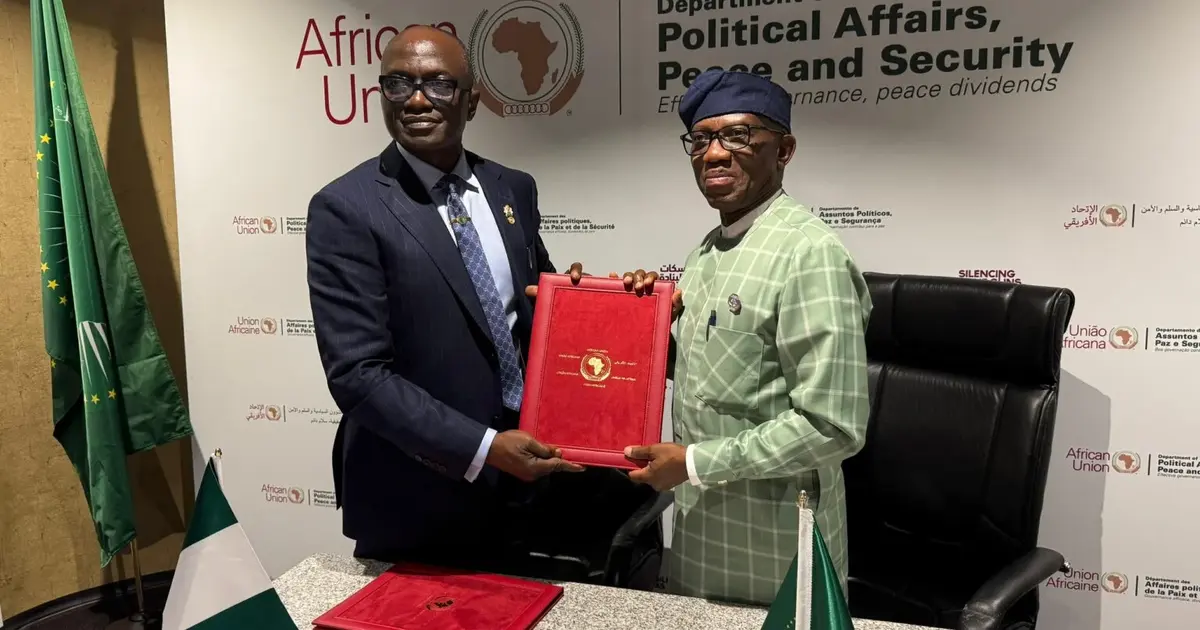
    The African Union (AU) Commission and Nigeria’s National Counter Terrorism Centre (NCTC) on Monday signed a Memorandum of Understanding (MoU) to boost collaboration against terrorism and violent extremism across Africa.

    This is contained in a statement by Mr Paschal Chem-Langhee, Communication Coordinator, PAPS, African Union Commission and made available to newsmen in Abuja.

    The MoU was endorsed by Amb. Bankole Adeoye, AU Commissioner for Political Affairs, Peace and Security, and Maj.-Gen. Adamu Garba Laka, National Coordinator of the NCTC.

    In his remarks, Adeoye commended Nigeria’s leadership role in West Africa and the Sahel.

    He noted that the country’s advanced facilities and expertise at the NCTC had “greatly contributed to regional and continental security.

    “The AU is proud to formalise this partnership with Nigeria, a key anchor state in the fight against terrorism.

    “The NCTC’s leadership and state-of-the-art technology have set a benchmark for counterterrorism efforts in Africa,” he said.

    On his part, Laka said the MoU reflected Nigeria’s commitment to advancing the Abuja Process Declaration of April 2024 and deepening regional collaboration.

    According to him, by working with the African Union, we intend to strengthen regional capacities, harmonise strategies and demonstrate Nigeria’s resolve in ensuring peace and security across the continent,” he said.

    The MoU will be jointly implemented by the AU Counterterrorism Centre (AUCTC) and Nigeria’s NCTC.

    “Areas of cooperation include real-time intelligence sharing, secondment of experts, joint research, support for victims of terrorism, and programmes on deradicalisation and reintegration.

    “It will also reinforce AU-backed initiatives such as the Nouakchott Process, the Accra Initiative, the UFL-Sahel Joint Force, and the Multinational Joint Task Force (MNJTF).

    “A Joint Working Group will monitor implementation,” it added.