



Category: Security

  • Tinubu’s Choice of Tunde Disu as Acting IGP Triggers Nepotism Firestorm

    Tinubu’s Choice of Tunde Disu as Acting IGP Triggers Nepotism Firestorm

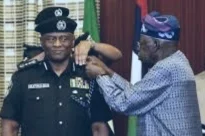
    The appointment of Tunde Disu as Acting Inspector General of Police (IGP) has continued to generate intense public controversy, with critics accusing President Bola Tinubu of nepotism and a growing disregard for Nigeria’s federal character principle.

    Across social media and political commentary spaces, Nigerians have questioned both the timing and rationale behind Disu’s elevation, arguing that it undermines seniority within the Nigeria Police Force and reinforces perceptions of regional and ethnic imbalance in key national appointments.

    One of the most vocal critics, social commentator Isaac Fayose, openly condemned the decision, describing it as nepotistic and difficult to justify on professional grounds.

    Fayose queried why the president would overlook a more senior officer, Frank Mbah, whom he referred to as a “Super Cop” who holds the rank of Deputy Inspector General of Police, in favour of a junior officer appointed only in an acting capacity.

    According to Fayose, the appointment aligns with what he described as a pattern under Tinubu’s administration with the concentration of strategic security, defence, and economic positions among individuals from the South West and of his Yoruba extraction.

    He cited several top offices, including the Chief of Defence Staff, Director General of the Department of State Services, Chairman of the Independent National Electoral Commission, Governor of the Central Bank of Nigeria, Chairman of the National Revenue Service, and the Minister of Finance.

    Fayose questioned what he described as the president’s apparent fear of broadening appointments to reflect Nigeria’s ethnic and regional diversity.

    The criticism gained further momentum following comments by former presidential candidate and human rights activist Omoyele Sowore, who called for the immediate appointment of a substantive Inspector General of Police.

    Sowore stressed that Disu’s position is inherently temporary, noting that the acting IGP is expected to retire from the Nigeria Police Force in April.

    Speaking during an interview on Channels Television, Sowore acknowledged the acting nature of the appointment as announced by the presidency.

    “Tunji Disu is retiring in April, and it is clear that once he is no longer in the police force, he must give way,” he said. “What we know for now is that he has been appointed in an acting capacity, pending the appointment of a substantive IGP.”

    Sowore went further to warn against any arrangement that would allow a retired officer to continue leading the police force.

    He argued that Disu’s elevation had already resulted in the displacement of more than 30 senior police officers, an outcome he described as unnecessary and destabilising for an institution already grappling with public trust challenges.

    With an estimated strength of between 300,000 and 450,000 officers, Sowore insisted that the Nigeria Police Force has no shortage of experienced and competent senior officers capable of assuming the role without controversy.

    He maintained that adherence to seniority, professionalism, and constitutional balance would help restore confidence in the force and the government’s commitment to fairness.

    As the backlash continues to grow, analysts say the controversy underscores broader national concerns about equity, inclusion, and transparency in high-level appointments.

    Pressure is mounting on the presidency to clarify its long-term plan for police leadership and to reassure Nigerians that competence and constitutional principles, rather than ethnicity or political loyalty, will guide decisions at the highest levels of national security.

  • Army Intercepts Criminal Kingpin’s Wife, Seizes Weapons in Taraba

    Army Intercepts Criminal Kingpin’s Wife, Seizes Weapons in Taraba

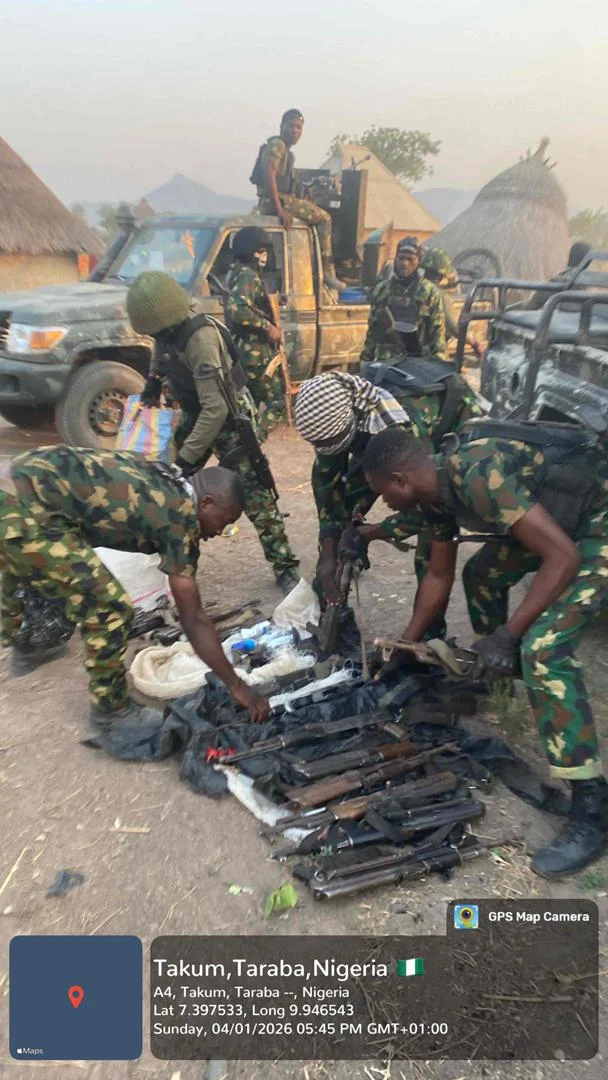
    Troops of Operation Whirl Stroke (OPWS) have intercepted the wife of notorious criminal kingpin John Gata and uncovered a major arms cache in Amadu Village, Takum Local Government Area, Taraba State.

    According to a source at Army Headquarters, actionable intelligence indicated that the suspect’s wife was moving from Amadu Village through Wukari, Kyado, and Zaki-Biam toward Gboko.

    “Troops of Sub Sector 1A quickly set up a snap roadblock at Zaki-Biam and intercepted the woman without any incident,” the source said.

    The suspect later led the troops to a hidden armoury, where they recovered:

    • 13 AK-47 rifles
    • 38 magazines
    • 690 rounds of 7.62mm ammunition
    • 4 hand grenades

    The facility was subsequently destroyed to prevent further use by the criminal network.

    Troops reportedly returned safely to base, with the security situation in the area described as calm but unpredictable, while civil-military relations remain cordial.

    “Troops’ morale and operational readiness continue to remain high as fighting and confidence-building patrols persist in the region,” the source added.

    This operation highlights the ongoing efforts by the military to disrupt criminal networks in the region and strengthen security in Taraba.

  • Nigerian Navy Boosts Legal Capacity to Tackle Maritime Crime

    Nigerian Navy Boosts Legal Capacity to Tackle Maritime Crime

    The Nigerian Navy has launched a renewed drive to strengthen its legal capacity in response to rising concerns over failed maritime prosecutions, procedural lapses, and the growing complexity of enforcing the law across Nigeria’s waters.

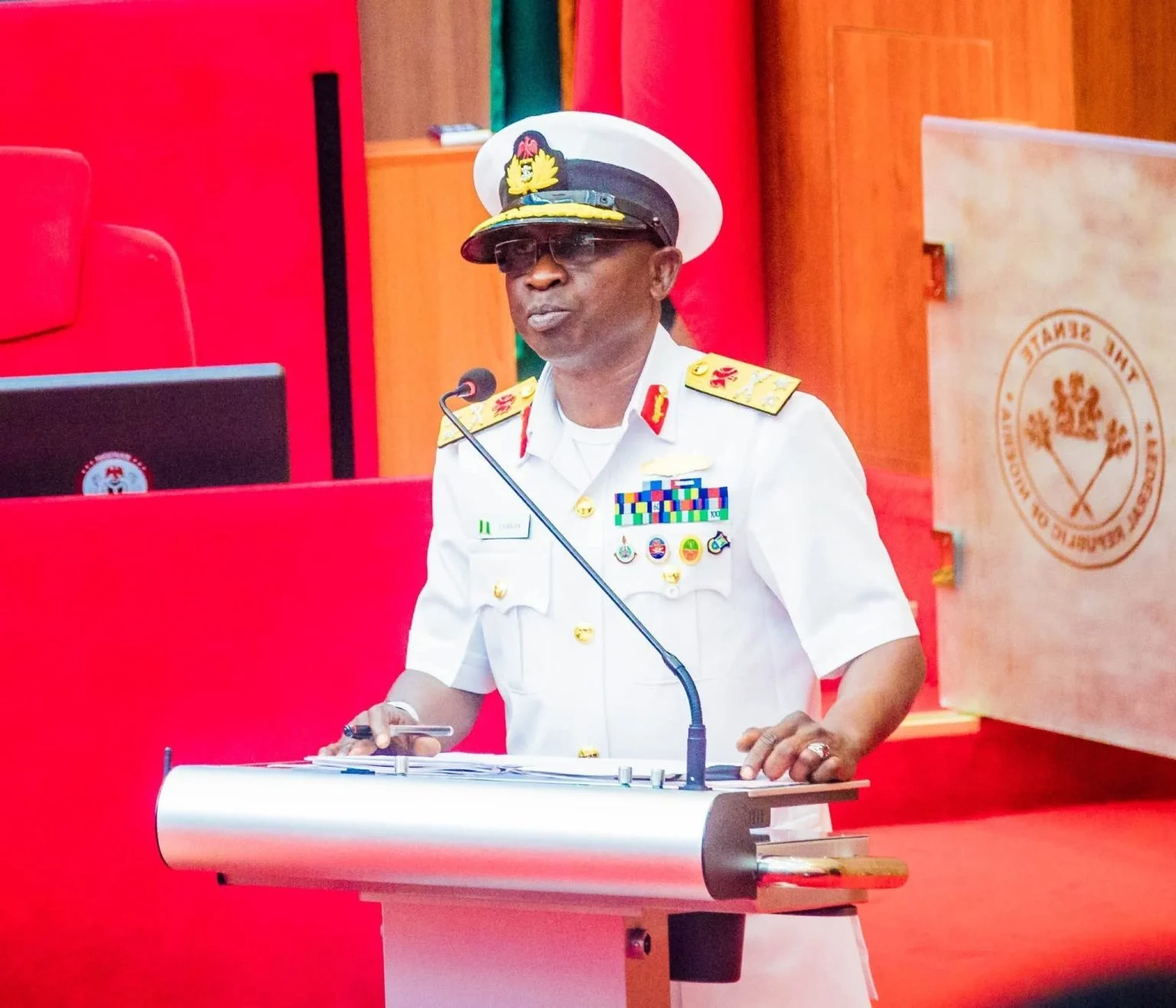
    Rear Admiral Jonathan Mamman, Chief of Administration of the Navy, announced the initiative at the opening of the Navy’s inaugural Legal Training Seminar in Abuja on Tuesday.

    Mamman described legal weaknesses as a critical national security gap, allowing maritime offenders to exploit loopholes and evade justice. He said the three-day seminar, themed “Strategic Enforcement of Maritime and Labour Law for Enhanced Naval Operations and Justice Delivery in Nigeria,” is aimed at addressing systemic shortcomings in handling maritime crimes, including piracy, illegal oil bunkering, smuggling, and unlawful vessel operations.

    “The challenges in prosecuting maritime-related offences are no longer abstract—they affect operations, morale, and national security. Too many cases collapse due to technicalities and avoidable errors. This must stop,” Mamman said.

    He identified four major problem areas: weak prosecution due to poor documentation, mishandled evidence, and gaps in inter-agency coordination; procedural inconsistencies in Standing Courts Martial; labour and personnel-related disputes; and issues in civil–military relations and rules of engagement, which intersect with human rights and international law.

    Mamman emphasized that the seminar will equip naval legal officers with enhanced skills in maritime law enforcement, vessel detention procedures, prosecution of maritime and military offences, and compliance with national and international legal frameworks. He noted that hosting the seminar at a Nigerian Army facility underscores the growing tri-service approach to operational justice.

    He also commended the Chief of Naval Staff, Vice Admiral Idi Abbas, for championing legal reforms and supporting initiatives to strengthen legal professionalism.

    Representing the Minister of State for Defence, Bello Matawalle, Director Legal of the Ministry of Defence, Mr. Usman Muhammed, praised the Navy for its commitment to upholding the rule of law. He described the seminar as a testament to the Navy’s dedication to professionalism and its resolve to operate within legal frameworks.

    “The Nigerian Navy plays a vital role in safeguarding our nation’s interests. It is imperative that operations are guided by a thorough understanding of laws governing both land and sea,” Muhammed said, urging participants to leverage the seminar to enhance their expertise and share knowledge with colleagues.

    The event also featured paper presentations by prominent legal professionals from the military, judiciary, and academia, providing a platform to tackle legal challenges and reinforce the Navy’s operational effectiveness.

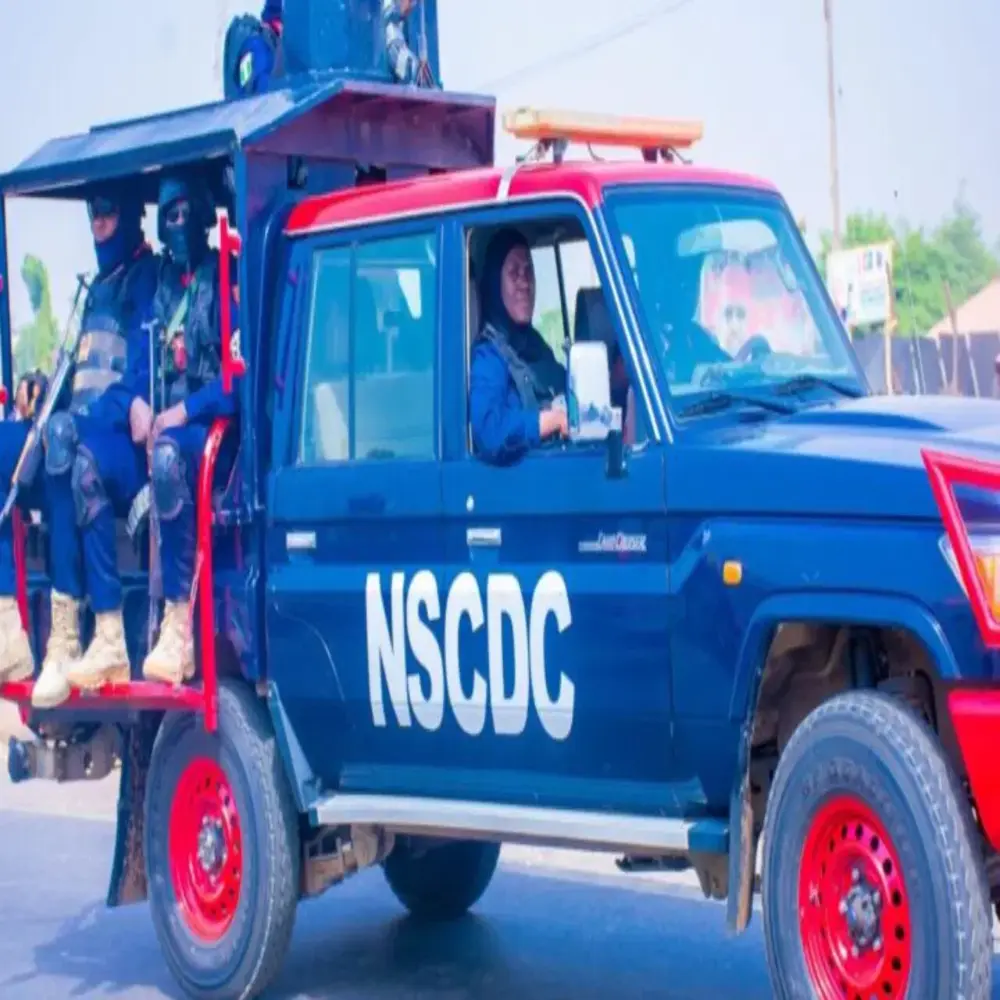
  • Why Nigeria Must Establish an Air Wing for the NSCDC Now

    Why Nigeria Must Establish an Air Wing for the NSCDC Now

    By Chris Echikwu

    Nigeria stands at a critical juncture in managing its internal security. Rising insecurity – from mass kidnappings and school attacks to assaults on religious institutions and the displacement of rural communities – has exposed a glaring weakness in the nation’s security architecture. While government efforts, including troop deployments and recruitment drives, are important, the reality is clear: Nigeria needs not just more boots on the ground, but new eyes in the sky.

    The call for an Air Wing within the Nigeria Security and Civil Defence Corps (NSCDC) has never been more urgent.

    Insecurity Has Outpaced Our Security System

    Criminal networks exploit Nigeria’s forests, borderlands, and waterways as operational hideouts. Camps and routes exist deep in ungoverned spaces, beyond the reach of standard patrols. Ground forces are often reactive, arriving after crimes have already occurred.

    School kidnappings have become a hallmark of this crisis. Children are abducted, transported through bush corridors, and hidden in forest camps for weeks or months. The state frequently responds too late, relying only on limited human intelligence and local reports.

    This is not just a tactical failure, it is a structural one. Nigeria’s internal security agencies remain almost entirely land-based in an era where surveillance, rapid response, and deterrence demand aerial capabilities.

    Why the NSCDC is the Right Agency

    The NSCDC is far from peripheral. It already plays a central role in Nigeria’s internal security:

    • Protecting critical national infrastructure
    • Ensuring school safety
    • Monitoring pipelines and industrial assets
    • Securing border communities
    • Supporting civic protection operations

    Yet, it cannot effectively monitor or respond to threats across vast forests, swamps, and deserts. An Air Wing would transform the NSCDC from a reactive, defensive body into an intelligence-driven force.

    Strategic Benefits of an NSCDC Air Wing

    An Air Wing would provide:

    • Persistent aerial surveillance of ungoverned spaces
    • Real-time intelligence for operations
    • Early warning systems for schools and villages
    • Aerial mapping of criminal routes and hideouts
    • Rapid assessment during attacks or emergencies
    • Faster coordination with police, army, and Air Force
    • Enhanced monitoring of pipelines and critical infrastructure

    This is not about militarizing the NSCDC; it is about modernizing it. Across Africa and Asia, countries Nigeria often compares itself to already deploy drones and light aircraft as standard tools for internal security. Fighting 21st-century crime with 20th-century methods is no longer viable.

    Financing: Affordable and Sustainable

    Arguments that Nigeria “cannot afford it” ignore the true cost of inaction. Insecurity already drains the economy through:

    • Disrupted agriculture
    • Flight of investment
    • Insurance losses
    • School closures
    • Community displacement
    • Damage to national assets

    A modest fleet of drones and light aircraft would cost far less than the economic loss caused by a single kidnapping wave. Financing could come from:

    • Federal appropriations
    • Security intervention funds
    • Infrastructure protection levies
    • Public-private partnerships
    • International security grants

    The return on investment would be immediate.

    The Risk of Doing Nothing

    Without modernization, the human and economic toll will worsen:

    • Education in unstable regions will collapse further
    • Rural economies will remain devastated
    • Citizens may turn to private militias and vigilante groups
    • Criminals will outpace the state
    • Public confidence in lawful authority will continue to erode

    A state that cannot see its territory cannot govern it.

    Conclusion: The Skies Matter

    Nigeria faces a choice: remain trapped in reactive security measures or invest in intelligence, speed, and foresight.

    An NSCDC Air Wing will not end insecurity overnight, but it will end Nigeria’s blindness to the spaces where crime is planned and executed. National security is no longer determined solely by personnel numbers, but by the ability to see, interpret, and respond faster than the threat.

    Nigeria must choose vision over delay.

  • EFCC and National Defence College Join Forces to Update Curriculum on Financial Crimes

    EFCC and National Defence College Join Forces to Update Curriculum on Financial Crimes

    New partnership aims to equip future leaders with skills to tackle corruption, public fund mismanagement, and emerging financial threats.


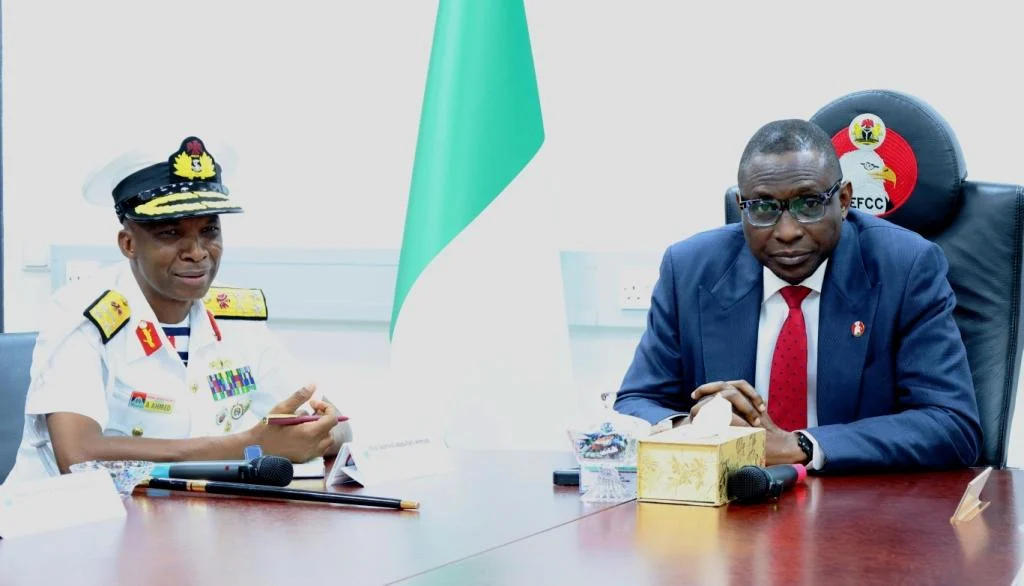
    he Economic and Financial Crimes Commission (EFCC) and the National Defence College (NDC) have agreed to collaborate on revamping the College’s curriculum to reflect Nigeria’s evolving security and governance landscape.

    During a courtesy visit to EFCC Chairman Ola Olukoyede in Abuja, NDC Commandant Rear Admiral Ahmed emphasized the need for a curriculum update to better prepare participants in public fund management and strategic governance.

    • EFCC Launches Advanced Anti-Fraud Training for Public Officers
    • National Defence College Partners with Nigerian Navy on Maritime Security
    • Cryptocurrency Fraud on the Rise: EFCC Warns Investors

    Ahmed lauded EFCC’s expertise in fighting economic crimes and requested the agency’s input in designing the new course content. “We want participants to learn how to manage public funds effectively so that they are ready for leadership roles,” he said.

    Olukoyede welcomed the proposal, highlighting EFCC’s readiness to support the initiative and noting emerging threats such as cryptocurrency fraud, which caused global losses exceeding $2 trillion last year. “There are areas where our work overlaps, and collaboration will help strengthen Nigeria’s fight against financial crimes,” he said.


  • Behold Nigeria’s New Service Chiefs, Senate Commends Choices

    Behold Nigeria’s New Service Chiefs, Senate Commends Choices

    The Nigerian Senate on Wednesday confirmed the appointments of new service chiefs nominated by President Bola Ahmed Tinubu.

    The senate arrived at the decision to confirm the president’s nominations following a thorough screening session conducted by the Committee of the Whole.

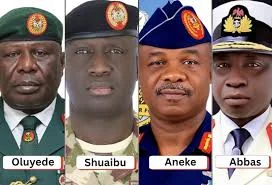
    Those confirmed comprise of Lieutenant General Olufemi Oluyede as Chief of Defence Staff, Major General W. Shuaibu as Chief of Army Staff, Rear Admiral I. Abbas as Chief of Naval Staff, and Air Vice Marshal S.K. Aneke as Chief of Air Staff.

    During the plenary, Senate President Godswill Akpabio announced the confirmations after each nominee received unanimous approval from lawmakers through a voice vote.

    In his remarks, Akpabio congratulated the newly confirmed service chiefs and commended President Tinubu for what he described as a “careful and strategic selection” of officers with proven experience from various theatres of operation across the country.

    “We believe this will renew the hope of Nigerians regarding efforts to restore security across the nation. Security is everybody’s business, and we have found these nominees fit and capable to deliver,” Akpabio stated.

    He also acknowledged the Senate’s commitment to national security, noting that the chamber suspended all other agenda items to prioritize the screening and confirmation process.

    The new service chiefs replace their predecessors who were relieved of their duties by President Tinubu earlier in October following reported concerns about internal discontent within the armed forces.

    The Senate President prayed for divine guidance for the newly appointed military leaders as they assume responsibility for safeguarding lives and property across the country.

  • Senate Screens New Service Chiefs as Air Chief Aneke Affirms Super Tucanos are Fully Operational

    Senate Screens New Service Chiefs as Air Chief Aneke Affirms Super Tucanos are Fully Operational

    The newly appointed Chief of Air Staff, Air Vice Marshal Kennedy Aneke, has assured Nigerians that the country’s Super Tucano fighter jets are in excellent condition and actively engaged in the ongoing fight against terrorism in the North-East and North-West regions.

    Aneke gave the assurance on Wednesday during his screening before the Senate in Abuja.

    Responding to questions from lawmakers concerning reports that the fighter jets were no longer operational, the Air Chief dismissed the claims as false.

    He explained that Nigerian Air Force pilots continue to deploy the aircraft with precision and intensity in counterterrorism operations. “Our Super Tucanos are fully functional and have been instrumental in recent missions.

    Service Chiefs

    Our pilots are engaging criminal elements with sustained intensity,” he told the lawmakers, addressing Senate President Godswill Akpabio directly.

    The screening also featured other newly appointed service chiefs, including the Chief of Defence Staff, General Olufemi Oluyede; Chief of Army Staff, Major General Waidi Shaibu; and Chief of Naval Staff, Rear Admiral Idi Abbas.

    The session, which held in plenary and later went into a closed-door meeting, was part of the Senate’s confirmation process following President Bola Ahmed Tinubu’s nomination of the new military chiefs on Tuesday.

    The new service chiefs were appointed after President Bola Ahmed Tinubu relieved their predecessors of their duties, following intelligence reports and heightened concerns over a possible coup plot within the military.

    The reshuffle was seen as a decisive move to reinforce loyalty, stability, and professionalism within Nigeria’s armed forces.

  • Miyetti Allah hails Tinubu on commitment to livestock development

    Miyetti Allah hails Tinubu on commitment to livestock development

    Pampered and enabled by the defunct Buhari regime, Miyetti Allah Kautal Hore, are on another fancy ride, applauding President Bola Tinubu for his administration’s commitment to livestock development.

    The socio-cultural association representing the interest of Fulani pastoralists in Nigeria, bared their mind in a communiqué jointly signed by the association’s National President and Secretary, Alhaji Abdullahi Bodejo and Saleh Alhassan.

    The statement issued Tuesday, in Keffi, Nasarawa State after an expanded national executive meeting by the national leadership of the association to x-ray the challenges confronting Fulani pastoralists in Nigeria.

    The meeting, which took place in Karu Local Government Area on Sunday, had state chairmen of the association and other critical stakeholders in attendance.

    Members of Miyetti Allah Kauthal hore

    According to the communiqué, the association expressed appreciation to Tinubu for his commitment to livestock development and enhancement of security and general welfare of the pastoralist community in the country.

    It, however, called for adequate funding of the Ministry for Livestock Development to ensure full implementation of the National Livestock Development Plan.

    The association also appreciated the decision of the ministry to commence designation, gazetting and development of all the 415 grazing reserves across the states of the federation.

    Miyetti Allah Leader, Baba Usman-Ngelzarma

    This, it said, would serve as a strategic step to addressing the challenges confronting Fulani herders in Nigeria.

    “This will include building of earth dams and solar boreholes, building of veterinary clinics and development of diary (milk) collection centres, among others,” the communiqué stated.

    It condemned the continuous profiling of Fulani pastoralists by a section of the media and called for unbiased and justice-based reportage of the farmers and herders’ conflicts.

    The association, however, applauded the National Security Adviser, Mallam Nuhu Ribadu and the Senate Committee on National Security and Intelligence for adopting both kinetic and non-kinetic strategies in addressing rural banditry, particularly in the North-West zone. 

  • Don’t abstain from sessions: court warns Al-Barnawi, terror suspects

    The Federal High Court in Abuja has warned Mohammed Usman, also known as Khalid Al-Barnawi, alleged leader of Boko Haram splinter group, Ansaru, and four others, against absenting themselves from court sessions.

    Justice Emeka Nwite issued the warning on Tuesday following the absence of Al-Barnawi, the 1st defendant, and his lawyer in court.

    Justice Nwite also ordered the counsel and the defendants to show up at the next hearing date fixed for Sept. 5.

    Al-Barnawi is being prosecuted on terrorism related charges along with other suspected members of his group.

    Other co-defendants include Mohammed Bashir Saleh; Umar Mohammed Bello, a.k.a Datti; Mohammmed Salisu and Yakubu Nuhu, a.k.a Bello Maishayi.

    They are among others, accused of being members of Ansaru terrorist group, also known as Jama’atu Ansarul Muslimina Fi Biladis Sudan.

    The defendants are also alleged to have conspired among themselves to carry out acts of terrorism between 2011 and 2013 in Sokoto, Kebbi, Bauchi, Borno, Gombe and other states in the northern part of the country.

    Upon resumed trial on Tuesday, the prosecuting lawyer, Alex Izinyon, SAN, told the court that the case was scheduled for continuation of proceedings in the trial-within-trial.

    Izinyon however said that the 1st defendant (Usman) and his lawyer were not in court.

    He further observed that lawyers to two other defendants were also not in court.

    The lawyer told the court that Al-Barnawi’s lawyer, who claimed to be away in Enugu, had promised to send a representative, but failed to do so.

    Izinyon expressed concern that the absence of the 1st defendant and the defence lawyers was unpleasant to the resolve by the court to accelerate hearing in the about 13-year trial.

    He said the absence of the defence lawyers without communicating to the court was disrespectful.

    Lawyer to Bello and Nuhu (3rd and 4th defendants), Abdulkarim Audu, equally submitted that the proceedings would have to be rescheduled in view of the absence of the 1st defendant and the defence lawyers.

    Both lawyers however urged the court to grant a short adjournment to enable parties make progress in the case within the ongoing vacation of the court.

    Justice Nwite expressed displeasure over the absence of the 1st defendant and some of the defence lawyers in court.

    According to the judge, it is unfortunate that this scenario is playing out when the effort is to ensure expeditious hearing of the matter.

    “This court will not condone the attitude of the 1st defendant or any of the defendants in absenting themselves from the proceedings,” he said.

    The judge directed lawyers to parties to work together to address what informed the absence of Al-Barnawi and other defence lawyers to prevent further delay in the case.

    Justice Nwite then adjourned the matter until Sept. 5 and Sept. 12 for continuation of evidence of the 3rd prosecution witness (PW3) and the playing of the videos in the trial-within-trial.

    The U.S. had, in 2012, placed a $5 million (£3.5m) bounty on Al-Barnawi’s head after branding him one of three Nigerian “specially designated global terrorists.”

    Ansaru is said to be ideologically aligned to al-Qaeda in the Islamic Maghreb and is also accused of killing a number of Westerners.

    Ansaru was reported to have claimed that it carried out an attack on a maximum security prison in Abuja in 2012 during which dozens of inmates were freed.

  • Persisting insecurity: Senate to stage Security Summit

    The Nigerian Senate on Tuesday set up an ad hoc committee to organise a three-day National Security Summit.

    The upper chamber’s resolution was sequel to a motion sponsored by Sen. Jimoh Ibrahim (APC-Ondo) and co sponsored by four other senators during plenary.

    The motion was titled “Urgent Need for a National Security Summit”.

    Moving the motion, Ibrahim raised concerns over the high level of global insecurity which was rising due to the events in Russia and Ukraine.

    He said that recent events in the country had led to feelings of discomfort and insecurity which has placed the past accomplishments of our security forces at risk.

    Ibrahim added that insecurity across Nigeria has become pervasive, impacting on both urban and rural areas.

    “Where banditry, ransom kidnappings and terrorism were pressing issues across the country as well as other violent crimes”.

    He said that President Bola Tinubu was serious about the peace of Nigeria, as such, there is the need for some fact-finding intelligence support for the President’s efforts.

    “No country will allow its citizens to understand security by living with insecurity.

    “Therefore, the ideology of peace for all, as outlined in the executive policies of the Renewed Hope Agenda should be upheld and promoted,” he said.

    Contributing, the Senate Minority Leader, Sen. Abba Moro said “What is before us now is whether we should convoke a national security summit.

    “These security challenges are happening in every area and in different dimensions. In proffering solutions to the security challenges, there is ‘no one side fits all’ approach.

    “We’ve provided solutions in the past and they have not worked does not stop us from proffering solutions.

    “Now that we are confronted with hydra-headed insecurity, there is nothing that stops us from exploring all means of bringing insecurity to a halt,” he said.

    In his remarks, the President of the Senate, Godswill Akpabio noted that the summit will compose delegates from states, communities affected, traditional rulers and students unions.

    This, he said was so we have a holistic debate because security is everybody’s business.

    The summit will include delegates from all levels of government, as well as traditional institutions.

    The Red Chamber also urged the federal government to review and rejig the country’s security policies based on outcomes from the summit.