


Category: National

  • Governors Set for 2025 PHC Leadership Awards in Abuja

    Governors Set for 2025 PHC Leadership Awards in Abuja

    Nigeria’s 36 state governors will on Friday, December 12, converge in Abuja for the third edition of the Primary Health Care (PHC) Leadership Challenge Awards.

    The award is an initiative aimed at promoting accountability and performance in the delivery of primary health care across the country.

    The event, scheduled for 7:00 p.m., is organised by the Nigeria Governors’ Forum (NGF) in collaboration with the Federal Ministry of Health and Social Welfare, the National Primary Health Care Development Agency (NPHCDA), and UNICEF, with support from the Bill & Melinda Gates Foundation.

    The awards were introduced to encourage governors to fulfill the commitments made under the Seattle Declaration of 2019, where all 36 governors pledged to improve access to quality primary health care services in their states.

    Accountability Platform for Primary Health Care

    The PHC Leadership Challenge uses a performance monitoring framework that tracks progress in governance, financing, service quality, data use, and sustainability of state-level health systems.

    The framework, developed with input from national health stakeholders, is based on the principles of Meaningfulness, Availability, Movability, Measurability, and Simplicity (MAMMS).

    READ ALSO:

    Following the inaugural edition, indicators from the Nigeria Health Sector Renewal Investment Initiative were integrated into the assessment process.

    The review system now rewards states not only for new investments but also for sustained funding, institutional leadership, and efficient management of PHC programmes.

    NGF Chairman AbdulRahman AbdulRazaq described the platform as “a clear example of how political will can translate into measurable outcomes,” noting that it has become “a beacon of what strong, accountable leadership can achieve in Nigeria’s health system.”

    Independent Review and Verification

    The judging panel consists of public health professionals, academics, traditional and religious leaders, media representatives, and members of civil society organisations.

    A statement released by Yunusa Tanko Abdullahi, NGF Director of Media and Strategic Communications explains that the assessments are conducted by independent verification agents recruited through the United Nations system to ensure objectivity and credibility.

    Governors are evaluated on a range of indicators, including functionality of PHC governance structures, budget releases, staffing, infrastructure readiness, use of reliable data, and efforts to institutionalize leadership at the Local Government Area (LGA) level.

    Awards and Incentives

    A total of 13 awards will be presented this year — two for each geopolitical zone and one national prize for the overall best-performing state.

    It was further explained tha the winners will share US$6.1 million, which must be reinvested in their state PHC systems.

    Previous editions have seen strong participation from states across the federation.

    • In 2023, Borno State won the national prize, receiving $700,000, while Kwara, Jigawa, Ebonyi, Rivers, and Ondo were zonal winners.
    • In 2024, Anambra State, under Governor Charles Soludo, emerged overall best performer, taking home $700,000, with Rivers, Osun, Yobe, Kaduna, and Kwara leading their zones.
    • Gombe State received a Special Innovation Award for unique PHC initiatives.

    Beyond Competition

    Organisers say the challenge has evolved beyond a competition into a structured accountability mechanism that fosters peer learning among states.

    Governors are expected to adopt and replicate effective strategies implemented by high-performing peers.

    “This is not just an award ceremony,” AbdulRazaq said. “It is a recognition of measurable impact and a collective commitment to improving the health and wellbeing of Nigerians.”

    The statement concludes that, “now in its third cycle, the PHC Leadership Challenge has become one of the country’s most consistent performance-based accountability initiatives, driving Nigeria toward the goal of universal access to functional, quality primary health care.”

  • Nigerian Governors’ Forum Partners UNDP to Boost Subnational Development

    Nigerian Governors’ Forum Partners UNDP to Boost Subnational Development

    In a major step towards driving sustainable investment and enhancing state-level economic resilience, the Nigerian Governors’ Forum (NGF) has deepened its collaboration with the United Nations Development Programme (UNDP).

    It states further that the move shall advance subnational investment and financing reforms across the country.

    This was made known in a press release signed by Yunusa Tanko Abdullahi, Director, Media & Strategic Communications, Nigeria Governors’ Forum (NGF).

    He said this was the outcome of a working visit by a high-level UNDP delegation led by Ms. Elsie G. Attafuah, Resident Representative in Nigeria, and Dr. Raymond Gilpin, Chief Economist for Africa and Head of the UNDP Economists’ Network.

    Mallam Abdullahi stated that the engagement focused on exploring innovative financing models to help Nigeria’s 36 States mobilize investments, strengthen fiscal systems, and bridge infrastructure gaps.

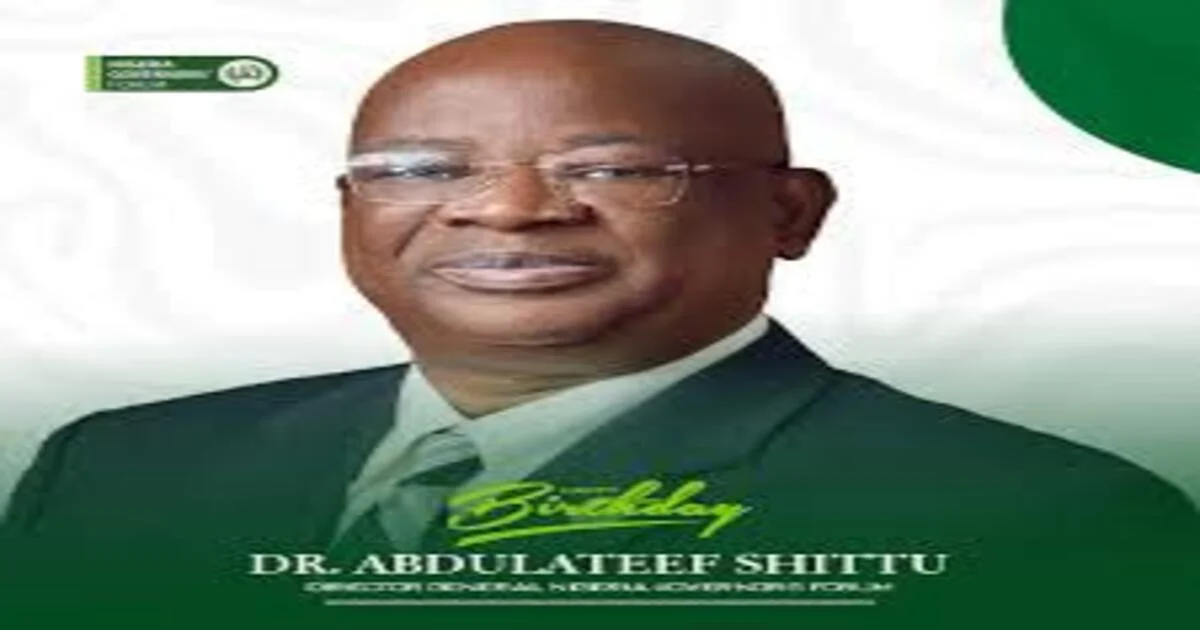
    Welcoming the delegation, Mr. Abdulateef Shittu, Director-General of the NGF, described the partnership as “a timely step in deepening Nigeria’s subnational development agenda.”

    “We value UNDP’s partnership in helping States become more competitive and investment ready,” Shittu said. “Our goal is to create a pathway where subnational governments can independently attract, manage, and sustain investments that directly impact lives and livelihoods.”

    Mr. Shittu highlighted the NGF’s recent launch of Investopedia, a digital investment intelligence platform showcasing over 269 investment-ready projects across Nigeria’s 36 States. He described the initiative as “a practical demonstration that Nigerian States are ready, willing, and able to lead the country’s transformation when provided with the right tools and partnerships.”

    He further noted that the next phase of collaboration with UNDP will focus on three strategic priorities which includes: strengthening States’ fiscal and institutional capacity to attract long-term financing, establishing frameworks for blended and innovative finance and building a pipeline of bankable projects aligned with national and global sustainability goals.

    “We see this partnership as catalytic,” he added. “With UNDP’s technical support and the Forum’s coordination structure, we can make subnational governments key drivers of Nigeria’s development narrative.”

    In his remarks, Dr. Raymond Gilpin commended the NGF’s leadership for creating platforms that enable States to engage global investors and development partners.

    “Nigeria’s States are essential building blocks of national development,” Gilpin said. “Our role at UNDP is to support the Forum in strengthening the systems that make investments viable from fiscal governance and data analytics to human capital and institutional efficiency.”

    He emphasized that the collaboration aims to develop sustainable financing mechanisms that blend public and private capital while ensuring transparency and inclusivity in project implementation.

    “We are ready to walk with the Forum in connecting the strategy, the financing, and the governance dots to make growth work for the people,” he affirmed.

    Also speaking, Ms. Elsie G. Attafuah, UNDP Resident Representative in Nigeria, described the engagement as a continuation of UNDP’s long-standing partnership with the NGF to promote inclusive and sustainable development across the country.

    “Our collaboration with the NGF represents a strategic partnership aimed at ensuring that no State is left behind in Nigeria’s development story,” she said.

    Ms. Attafuah reaffirmed UNDP’s commitment to supporting States in five key sectors: agriculture, energy transition, healthcare, education, and the digital economy noting that these areas have the greatest potential for visible impact on citizens’ lives.

    “This engagement is about helping States convert their opportunities into tangible investments that create jobs, expand access, and build resilience,” she added.

    Both the NGF and UNDP agreed to formalize their collaboration through a Memorandum of Understanding (MoU) that will outline technical assistance and pilot interventions in select States.

    The partnership will also establish a Subnational Development Finance Lab, a Public-Private Partnership (PPP) Competency Framework, and a State Investment Readiness Index to benchmark competitiveness across Nigeria’s States.

    “Together, we can convert Nigeria’s immense opportunities into transformative investments that uplift lives and strengthen local economies,” Mr. Shittu concluded.

  • Constitution review: Ijaw agitates for creation of 2 additional states

    Constitution review: Ijaw agitates for creation of 2 additional states

    As Nigeria battles to align the centripetal forces, the Ijaw National Congress (INC) has proposed the creation of two additional States.

    The proposed states the INC said should be carved out from  Edo, Delta, Ondo, Bayelsa, Rivers, Cross River and Akwa Ibom states.

    Prof. Benjamin Okaba, Global President, INC, made the proposal in his memorandum at the National Assembly Constitution Review Public hearing for South South Zone, made available to the Nigerian Anchor, Abuja on Saturday.

    Okaba proposed that the two states, Toru-Ebe and Oil Rivers states be carved out of Edo, Delta Ondo as well as Rivers and Akwa Ibom respectively.

    “We reaffirm our demand for the creation of two additional homogeneous Ijaw states; Toru-Ebe comprising Ijaws in Delta, Edo and Ondo and Oil Rivers State made up of Ijaws in Rivers and Akwa-Ibom

    “We also propose additional 33 local government areas for Bayelsa, which currently has just eight.

    “The demand for the creation of the proposed Toru Ebe State is aimed at addressing long standing yearnings and aspirations of the people for justice, peace, stability, self-determination and development.

    “The territorial configuration of the proposed Toru Ebe state includes only ljaw clans in the present Delta, Edo and Ondo states.

    “These distinct yet culturally homogeneous clans of the Ijaw ethnic nationality and customary owners of all land living in a geographical contiguous territory of their own and have been deliberately balkanised into different political and administrative units in the country are the ones demanding for the creation of the proposed state,” he said.

    He noted that the oil revenue from the Ijaw areas in the three states accounted for the largest revenue accruing to the National Economy.

    According to him, in spite of the receipt of the 13 per cent Derivations Revenue by Edo, Delta, and Ondo, the Ijaw areas which are mineral producing have been denied any meaningful development.

    “Modern infrastructure social services such as schools, hospitals, portable water are near absent in Ijaw communities especially in Edo.

    “Ancient traditional tools are easily denigrated and denied office recognition and patronage. With the political fragmentation in place, it has been impossible for an ljaw man in Edo to become a mere ward councillor.

    “Because of the neglect there is a high level of rural- urban migration leading to the loss of indigenous cultural heritage.”

    The INC global president said that however, the Ijaw as inhabitants of this marshy and swampy terrain were blessed with abundant natural resources including oil and natural gas.

    He added that the proposed state with a population of about 2.7 million people have natural landscapes with beautiful beaches and lengthy coastline which could be annexed into a blue economy and tourism that would make it economically viable.

    “We also propose Oil Rivers State that comprises Ijaws in Rivers and Akwa Ibom. This area remains the most naturally blessed but environmentally degraded in the entire world, with massive oil explodes, gas flaring threatening the very survival of the people.

    “Just like our counterparts in Edo, the Ijaws especially in Akwa Ibom are left with no basic infrastructure, electricity, and healthcare services.There is no meaningful state and federal government infrastructure in these Ijaw communities.

    “Due to the long period of fragmentation many Ijaw communities face cultural extinction with some losing their native language and their traditions. With the creation of the Oil Rivers state, the rich heritage and environment of our people can be resuscitated.

    “The proposed Oil Rivers state with Isaka Town, located in the northern part of Okrika Local Government Area as capital is endowed with abundant natural and human resources such as vast mangrove forests, rich fishery and agricultural potentials, palm oil industry, tourism potentials, natural harbours and oil and gas resources (with over 30 major oil and gas fields, making it economically viable),” he stressed.

    Okaba further proposed an additional 33 local government areas for Bayelsa.

    According to him, Bayelsa’s contribution to Nigeria’s GDP is significant, thanks to its rich human and natural resources. As one of the largest oil and gas producing states in Nigeria, the state accounts for a substantial portion of the country’s oil production, estimated to be around 35-45% as of 2022.

    “In terms of GDP, the state’s contribution stands at $4.3 billion, with a GDP per capital of $1,773, according to 2020 rankings.

    “The state’s economy is largely driven by the petroleum industry, with crude oil and natural gas being major contributors. The state therefore, has a critical role in the actualisation of Mr President’s projection to meet up with OPEC quota of 2.06 barrels per day.”

    He said that it was however, worthy to note that in spite of the state’s significant contribution to the nation’s GDP, land and river mass and huge potentials for steady growth and development, it currently had only eight local government areas, which include Brass, Ekeremor, Kolokuma/ Opokuma, Ogbia, Nembe, Sagbama Southern Ijaw and Yenagoa.

    “We all know that eight LGAs for Bayelsa is a case of injustice in many ramifications in terms of federal resource allocation and fair representation.

    “Our other concerns include protection and remediation of its environment, federal resource contribution through resource control and payment of tax, true federal constitution with no unitary coloration.

    “We also want the re-integration of Ijaws vide the wholesale prosecution of the Ijaw struggle for self-determination which has lasted centuries.
    Improve the quality and quantity of representation,” Okaba further said.

    He also called for the restoration of true federalism, including fiscal federalism, Resource Control (100 per cent derivation) and devolution of power.

    He further proposed the alteration of Section 3 (1) of the 1999 Constitution (as Amended); Establishment of Regions, and proposed 10 federating units (federating states) by way of readjustment of the well-known and accepted six geopolitical zones in the country.

  • Restructuring: Don admonishes attitudinal change

    Prof. Kamal Bello, Dean, Faculty of Social Sciences, National Open University of Nigeria (NOUN) has urged Nigerians to look beyond restructuring and channel their efforts towards behavioural and attitudinal change.

    Bello spoke as a Lead Discussant, at the first Dialogue Series of the Faculty of Social Sciences, NOUN, at the weekend in Abuja.

    The programme had the topic “Nigeria: To be Restructured or Not to be Restructured”.

    The don said that for Nigeria to be great, everyone must contribute to its success.

    He described restructuring as a cumbersome process that needed to be conceptualised in the Nigerian context as to what needed to be restructured.

    “The word restructuring is not new. Nigeria must understand the concentration of the country’s resources before true restructuring can take place.

    “People look at the contemporary things in restructuring; people are seeking true federalism.

    “Nigeria must know the concentration of her resources before it can be restructured. Most of Nigeria’s problems are how to share the cake, but not how to bake it.

    “What should be on every Nigerian’s mind should be the question of how to bridge the gap between the rich and the less endowed and not the question of creation of more states or local government.

    “It is our mindset that needs to be restructured, not the structure itself. Nigeria’s problem starts on an individual level. We should shun discrimination,” he said.

    Bello added that at this critical time, the question shouldn’t be about whether to restructure or not to restructure but to shun nepotism, corruption, and ethnicity.

    “We need to look at Nigeria as a nation that everyone must contribute to its success. The teachers and the lecturers should be role models,” he said.

    The dean thanked the university management for making the dialogue possible.

    He also thanked the Standing Committee on Seminar, Conference, and Public Lecture under the chairmanship of Dr Adeola Adams for ensuring that the dialogue was a success.

    Speaking, Prof. Hussaini Tukur of the Nasarawa State University, Keffi, said the legal framework should be taken into cognisance before the question of why restructuring and for whom.

    “The legal issues surrounding restructuring should be considered.

    “When you understand the purpose and the legal entity of restructuring you will realise the issues involved as there are several guidelines to restructuring,” Tukur said.

    In his remarks, the NOUN Vice-Chancellor, Prof. Olufemi Peters, noted that the dialogue was novel and innovative.

    He said that the topic was apt due to the recurring nature of the debate.

    Represented by the Deputy Vice-Chancellor Administration, Prof. Isaac Butswat, the VC said that the Faculty organised the dialogue to make an input.

    He said it was also to decide on which way Nigeria as a country should go on the issue of restructuring.

    The VC, however, expressed optimism in the crop of discussants drawn from various higher institutions of learning across the six geopolitical zones of the nation.

    He urged the participants to pay attention to the discussants for a better and more useful understanding of the dialogue.

  • Leverage on technology to deliver quality social interventions – NSIPA CEO

    Leverage on technology to deliver quality social interventions – NSIPA CEO

    The National Coordinator of the National Social Investment Programme Agency (NSIPA), Professor Badamasi Lawal has urged the staff members to harness technology to optimise service delivery.

    Professor Badamasi spoke at a three-day workshop for members of staff of the Government Enterprise and Empowerment  Programme (GEEP), a subsidiary of NSIPA.

    The NSIPA Chief Executive Officer emphasized the critical role of technology in modern governance, stating, “This training marks the beginning of a new learning initiative that is based on a renewed commitment to excellence, innovation, and inclusive development.”

    In a statement, Attari Hope, NSIPA Head f Communication and Public Relations, said the workshop was organized by GEEP in collaboration with Frontier Systems Limited.

    The theme of the training was “Improving Beneficiary Outcomes with Digital Solutions,” and it toke place, at the Federal Secretariat, Abuja.

    Prof Badamasi Lawal, NSIPA CEO (seated, middle), with other staff of NSIPA

    ”At NSIPA, our mandate is clear: to deliver impactful, evidence-driven social interventions that uplift the lives of millions of Nigerians, particularly those in vulnerable populations, in alignment with Mr. President’s Renewed Hope Agenda.” Prof Lawal said. 

    He emphasised that the 8-point Agenda of the Tinubu Presidency is focused on implementing social welfare programmes to support vulnerable populations and reduce poverty in the country.

    Prof. Lawal highlighted the significance of GEEP in advancing financial inclusion and empowering underserved communities, including petty traders, artisans, smallholder farmers, women, and youth. 

    He further stated that central to the digital transformation is the GEEP Dashboard, which he described as a powerful platform designed to track, analyze, and manage beneficiary data in real-time.

    “Your engagement in this training is vital. I urge you to approach this program with curiosity and commitment, embracing new ways of working,” he added.

    He concluded by reminding participants that behind every data point on the dashboard is a real individual—a mother, trader, farmer, or young entrepreneur—relying on NSIPA to deliver hope and opportunity.

    “The knowledge and skills you gain here will significantly shape how we fulfill our responsibility to these individuals,” he said.

    Earlier, Mrs. Ifeoma Chukwumbah, Acting Head of GEEP, said the programme’s mission is to expand financial inclusion and empower underserved Nigerians.

    She noted that initiatives like TraderMoni, MarketMoni, and FarmerMoni have already reached millions, providing access to capital and support for sustainable livelihoods.

    Mrs. Chukwumbah highlighted that the training program is designed to ensure transparency, efficiency, and real impact in our social interventions.

    “This training reflects our commitment to utilizing data and digital tools to better serve our beneficiaries,” she stated.

    She also emphasized the transformative potential of the GEEP Dashboard, which serves as a centralized, real-time platform for tracking beneficiaries, analyzing data, and enhancing decision-making.

    “The training will build our digital capacity, equipping us to deliver, monitor, and evaluate our interventions more effectively,” she concluded.

  • Sokoto-Badagry Super Highway: FG delegation meets Kebbi Gov.

    Sokoto-Badagry Super Highway: FG delegation meets Kebbi Gov.

    Gov. Nasir Idris of Kebbi, says the yearnings and aspirations of Kebbi people have been addressed by President Bola Tinubu’s administration.

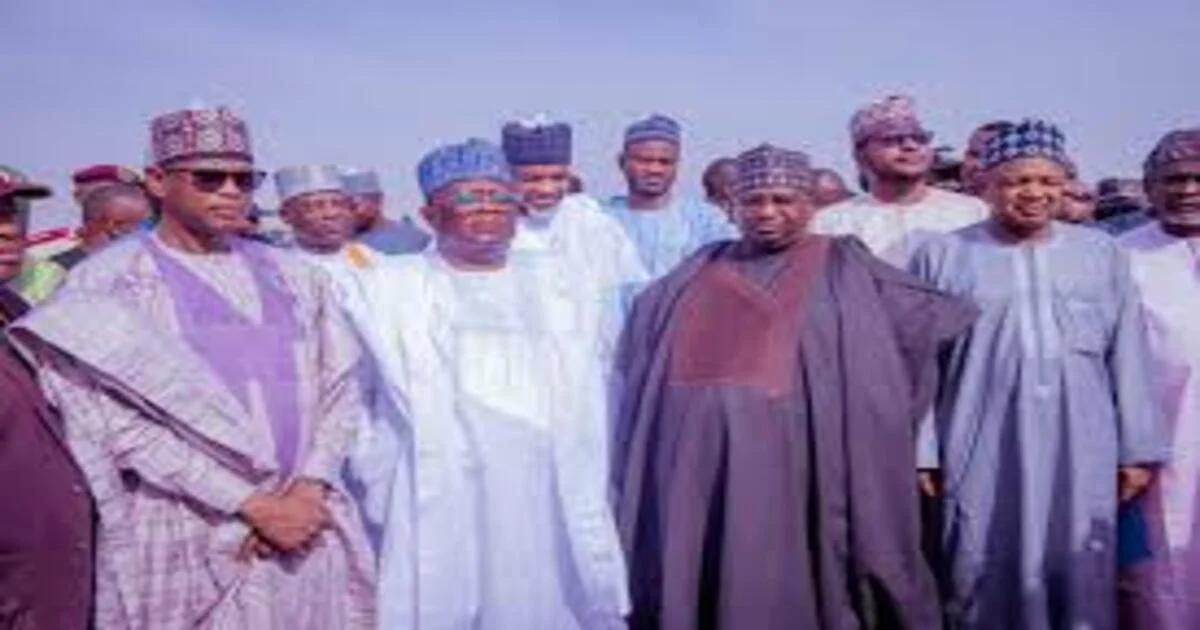
    Idris made the statement when a delegation of the Federal Government led by Minister of Works, Mr. Dave Umahi, undertook an inspection tour of ongoing Sokoto-Badagry Super Highway project in Kebbi on Tuesday.

    The delegation included Minister of Budget and Economic Planning, Sen. Atiku Bagudu, State Minister for Works, Alhaji Muhammad Bello-Goronyo and Permanent Secretary of the ministry among others.

    While inspecting the project, Gov. Idris said, “In Kebbi, we don’t play with Mr. President, the administration of President Bola Ahmed Tinubu has done so many things in the state, some things that we have not witnessed before.

    “It’s pertinent to show our appreciation to Mr. President through the honourable Minister of Works. Already, the yearnings and aspirations of people of Kebbi have been addressed by Mr. President.”

    He also observed that the essence of leadership was to bring development to the people, adding that Mr President had brought uncountable development to the people of Kebbi.

    “Therefore, we have no cause whatsoever not to support Mr. President. By God’s grace, people of Kebbi will support him come 2027,” he assured.

    Idris promised that the state government would create an enabling environment for HITECH, the company handling the project to execute the project successfully.

    The governor expressed delight that shortly after breaking of fast with Mr. President on Monday, the president singled him out of his colleagues, governors, and confided in him that,” the Sokoto-Badagry Super Highway has come to stay.”

    In his speech, Umahi clarified that the legacy projects of Mr. President covered all the six geopolitical zones of the federation.

    He appreciated Gov. Idris for not only showing total commitment towards the success of the project but also committed to Mr. president’s programmes.

    “I must appreciate you, you are doing fantastically well and most importantly, your relationship with the past governors, your respect for them, your honour for them, God will also honour you as such.

    “Whoever that will takeover from you after eight years will also honour and respects you and I want to assure you that the president’s heart is in this place,” he said.

    The minister expressed confidence in the ability of the company handling the project, HITECH, especially with the calibre of equipment they mobilised to the cites.

    Umahi recalled that the present administration had inherited a project of 350 kilometres Abuja-Kaduna-Kano road, adding that they inherited 240 kilometres times two (×2) making 480 kilometres.

    The minister expressed happiness that Mr. President had released the section one and three 30 per cent of the approved contract sum for the remaining 240×2 kilometres Abuja-Kaduna-Kano road.

    He said the president had also approved the two projects of second Niger bridge, “sections 2A and 2B, one in Anambra, the other one is in Delta State as well as Lagos-Ibada, section 2, phase 2, 30 per cent has been approved.”

    On his part, Sen. Bagudu said president Tinubu had inherited a number of uncompleted projects, but the president promised that none of them would be abandoned.

    He eulogised the president’s profound thinking that “the world is not” building infrastructure from government funding alone but also innovative financing.

    “And being somebody who has invested in relationships in Nigeria and elsewhere, he was quick to find friends of Nigeria, sons of Nigeria, who are willing to take the first challenge and fund part of these constructions.

    “So, HITECH is not just a construction company but it is behind the innovative financing that has supported us to have started this transformative projects, not only this one but also Lagos-Calabar Costal Highway,” he noted.

    Also speaking,, the Managing Director, HITECH, Dany Abboud assured the determination of the company to deliver a quality job within the stipulated period of time.

  • Nigeria, Saudi Arabia Sign MoU for 2025 Hajj

    Nigeria, Saudi Arabia Sign MoU for 2025 Hajj

    Ahead of the 2025 Hajj season, Nigeria and Saudi Arabia have signed an agreement to ensure smooth operations for Nigerian pilgrims. 

    The Memorandum of Understanding (MoU) was signed by Professor Abdullahi Saleh Usman, Chairman of the National Hajj Commission of Nigeria (NAHCON), and Dr. Abdulfattah Mashat, Deputy Minister of Hajj and Umrah for Saudi Arabia. 

    The agreement covers key areas such as accommodation, transportation, and healthcare services, aiming to improve the experience and welfare of Nigerian pilgrims.

     The signing event was attended by several officials, including Senator Abubakar Sani Bello, Chairman of the Senate Committee on Foreign Affairs, and Ambassador Muazam Ibrahim Nayaya, the Consul General of Nigeria in Jeddah.