
Category: AU/ECOWAS

  • ECOWAS Leaders Renew Call for United Front Against Terrorism

    ECOWAS Leaders Renew Call for United Front Against Terrorism

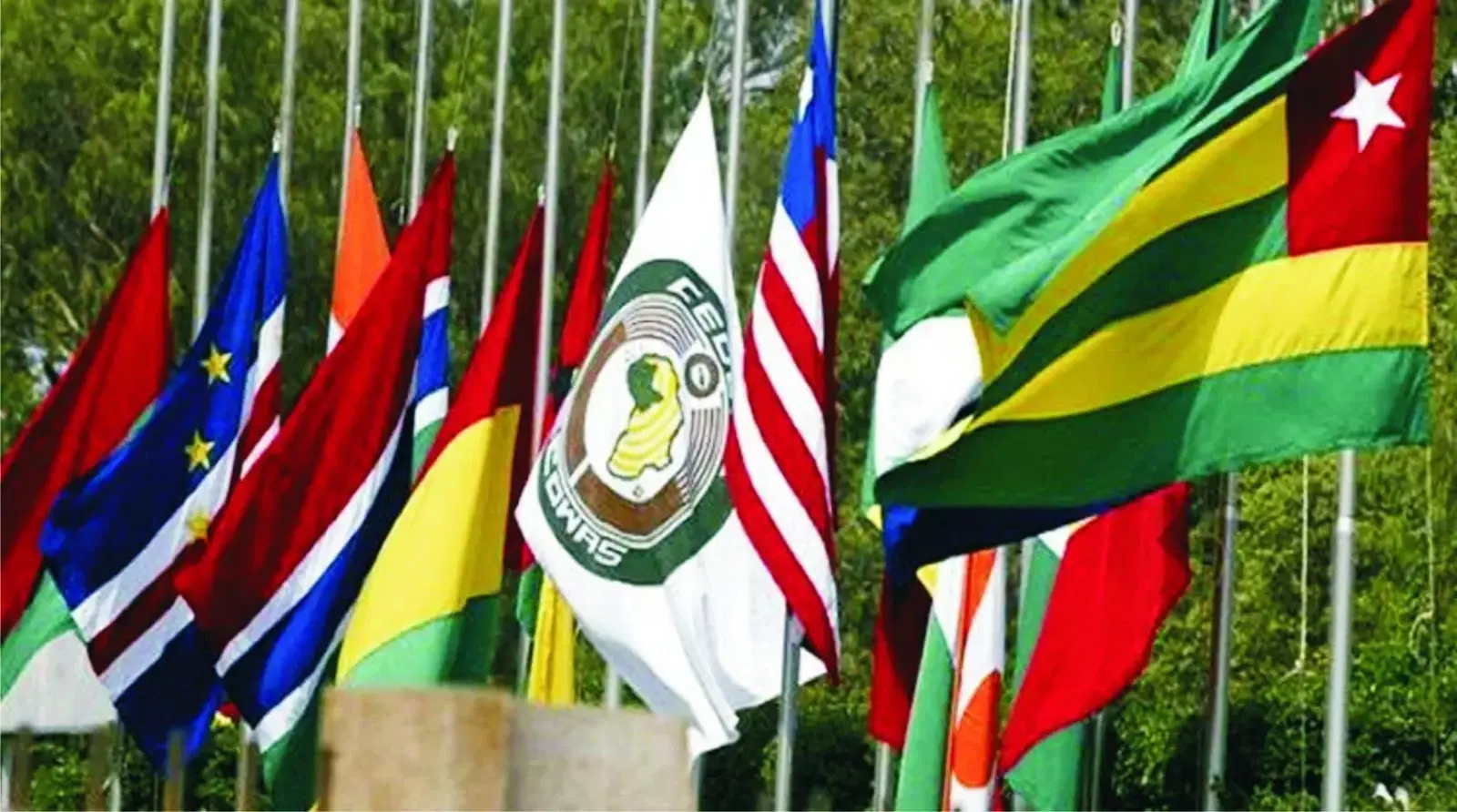
    Abuja, Nigeria — West African leaders on Sunday renewed calls for a coordinated, multilateral approach to tackling terrorism and insecurity in the sub-region, warning that instability in one country poses a threat to all.

    Speaking at the opening of the 68th Ordinary Session of the ECOWAS Authority of Heads of State and Government in Abuja, Chairman of the Authority and Sierra Leone President, Julius Maada Bio, urged member states to strengthen collective security efforts through integrated intelligence sharing, coordinated border operations and the operationalisation of an ECOWAS standby counter-terrorism force.

    Bio described the session as a defining moment for the region, noting that ECOWAS, now 50 years old, must confront escalating security challenges that threaten the future of more than 400 million people in West Africa.

    “West Africa faces some of the most complex and evolving threats in its history,” he said, citing terrorism, violent extremism, organised crime and communal conflicts, particularly in the Sahel. “Instability in one nation is instability for all. No border can insulate us from violence.”

    He commended regional ministers of finance and defence for developing modalities to ensure sustainable financing and raise a 1,650-personnel counter-terrorism brigade by the end of 2026, stressing that security measures must be matched with governance reforms, education, job creation and community resilience to effectively dismantle extremism.

    The ECOWAS chairman also expressed concern over political instability in Guinea-Bissau and the attempted coup in Benin Republic, reaffirming the bloc’s zero tolerance for unconstitutional changes of government.

    “ECOWAS does not, and will not, compromise on democratic governance,” Bio said, adding that the organisation remains committed to supporting credible and time-bound transitions back to constitutional rule where necessary.

    Nigeria’s President Bola Tinubu, represented by Vice-President Kashim Shettima, echoed the call for deeper regional cooperation, saying no single country can address terrorism, violent extremism, transnational crime and other cross-border threats alone.

    “Our security, prosperity and resilience are indivisible,” Tinubu said. “We must sit at the same table, speak with one voice and act with shared resolve.”

    President of the ECOWAS Commission, Dr Omar Touray, said recent global and regional developments — including rising insecurity in the Sahel and shifting geopolitical dynamics — pose significant challenges to achieving the bloc’s Vision 2050 objectives. He noted that ECOWAS is reinvigorating its economic integration agenda through the operationalisation of the ECOWAS Business Council to mobilise regional capital and strengthen member states’ comparative advantages.

    On economic integration, leaders reaffirmed commitments to the ECOWAS Trade Liberalisation Scheme and the planned single currency, while announcing measures to ease regional travel. From January 1, 2026, member states will abolish air transport taxes and reduce passenger and security charges by 25 per cent to lower the cost of air travel across West Africa.

    The meeting underscored ECOWAS’ resolve to strengthen security cooperation, defend democratic governance and deepen economic integration as the region navigates growing security and political challenges.

  • Threat of military rule looms in Africa – CDD

    Threat of military rule looms in Africa – CDD

    A Civil Society Organisation, the Centre for Democracy and Development (CDD-West Africa) has expressed concern over the looming threat and normalisation of military rule in West and Central Africa.

    The organisation warned that the trend posed a major threat to democracy, stability and regional integration, especially with the rise of ‘military populism’ in Francophone Africa.

    Dr Dauda Garuba, Director of CDD-West Africa, stated this in Abuja on Wednesday while releasing the organisation’s background paper titled “Militarism Reloaded: The Rise of Military Populism in Francophone West Africa”.

    According to him, recent coups in Mali, Burkina Faso, Niger and Guinea are not simply reversions to old authoritarian patterns but expressions of a more sophisticated, ideologically packaged form of militarism.

    “Far from being isolated disruptions, these military interventions present themselves as national corrections, cloaked in the language of sovereignty, anti-imperial resistance, and Pan-African revivalism.

    “But beneath the surface of patriotic slogans and digital virality lies a strategic attempt to consolidate power, silence dissent, delay transitions, and reconfigure what legitimacy means in postcolonial Africa,” Garuba said.

    He explained that the appeal of military populism is rooted in public frustration with democratic failures, insecurity and inequality.

    However, he warned that its allure was deceptive as regimes increasingly postponed elections, suspended constitutions, and curtailed civil society under the guise of national security.

    Read Also: Contextualizing the lovefest between Presidents Lula of Brazil and Tinubu

    Garuba added that in the Sahelian states of Burkina Faso, Mali and Niger, military juntas were now manipulating digital platforms to spread disinformation and mobilise support.

    He said the regimes also cultivate parallel narratives in which the army is portrayed as the “saviour of the state”.

    He stressed that this evolving phenomenon carries serious regional implications.

    “ECOWAS, once a bulwark of democratic norms, now struggles to enforce its own red lines.

    “The weakening of regional institutions, coupled with a geopolitical pivot away from traditional allies, threatens to undermine decades of democratic progress across West Africa,” he said.

    According to him, CDD-West Africa, in partnership with regional organisations, will over the next eight months conduct in-depth research on how military populism spreads and is sustained.

    He said the centre would monitor digital propaganda, analyse ideological framing, and assess the threats posed to elections, civic space and regional cohesion.

    “The goal is to generate evidence-based insights and practical recommendations to safeguard West Africa’s information environment and strengthen democratic resilience,” he added.

    Garuba urged African governments, civil society, regional bodies and citizens not to mistake military populism for genuine reform.

    “Coups are not answers to civilian failures; they are only accelerators of fragility. The time to act is now.

    “It is essential to underscore this before narratives harden, institutions crumble, and another generation of citizens grow up believing that the gun, not the vote, is the legitimate path to power in Africa,” he said.

  • Serving as AfDB President greatest honour of my life –Adesina

    Dr Akinwunmi Adesina, says serving as President of the African Development Bank (AfDB) is the greatest honour of his life.

    Adesina said this at a breakfast meeting held for the media to declare open the AfDB 2025 Annual Meetings in Abidjan.

    “It has been a decade of relentless purpose, of enduring passion, and of tireless service. I thank you for walking on this journey with me,’’ he said.

    Adesina, a Nigerian Development Economist and Agricultural Development Expert became president of the bank 10 years ago.

    This was after serving as Nigeria’s Minister of Agriculture from 2011 to 2015, transforming the sector by attracting private sector investments as well as supporting youth and Small and Medium Enterprises (SMEs).

    Adesina is dedicated to transforming agriculture in Africa from a subsistence activity to a viable business that attracts investments.

    He is also passionate about ending poverty, hunger and malnutrition in Africa and lifting millions of people into the middle class.

    “When I was elected in 2015, I did
    not have any grey hair then. Now my hair has turned several shades of grey.

    “Grey from 10 years of unrelenting drive to push Africa forward. Grey from our tireless efforts to turn the Bank into a globally respected financial institution where it was ranked as the best multilateral financial institution in the world.

    “Grey from leading the Bank to achieve the largest capital increase in its history, raising the capital of the Bank from 93 billion dollars in 2015 to 318 billion dollars today – an unprecedented achievement.

    “Grey from leading the Bank to achieve the largest capital increase in its history, raising the capital of the Bank from 93 billion dollars in 2015 to 318 billion dollars today – an unprecedented achievement.

    “Grey from leading the Bank to achieve the highest replenishment of the African Development Fund in the history of the Fund, as we successfully raised 8.9 billion dollars for its 16th replenishment.’’

    He said; “Grey from working side by side with my staff to lead on global financial innovations such as the launch of hybrid capital instruments and synthetic securitization, becoming the first ever multilateral financial institution to do so globally

    According to him, Grey from our collective work to ensure that we serve the people of Africa with passion, dedication, accountability, to help Africa develop with pride.

    “Grey from holding nothing back in service of the people of Africa, the president said.

    NAN reports that the 2025 meetings are being held under the theme: “Making Africa’s Capital Work Better for Africa’s Development.”

    Key highlights of the sessions include the Presidential Dialogue, the launch of the African Economic Outlook, and in-depth thematic discussions aimed at mobilising capital and building stronger institutions.

    The 2025 meetings are being held under the theme: “Making Africa’s Capital Work Better for Africa’s Development.”

    Key highlights of the sessions include the Presidential Dialogue, the launch of the African Economic Outlook, and in-depth thematic discussions aimed at mobilising capital and building stronger institutions.

    The Annual Meetings opened on Tuesday and it shall come to an end on Friday.