


Category: Religious

  • NAHCON in Turmoil as Usman Resigns, Stakeholders Demand Total Overhaul

    NAHCON in Turmoil as Usman Resigns, Stakeholders Demand Total Overhaul

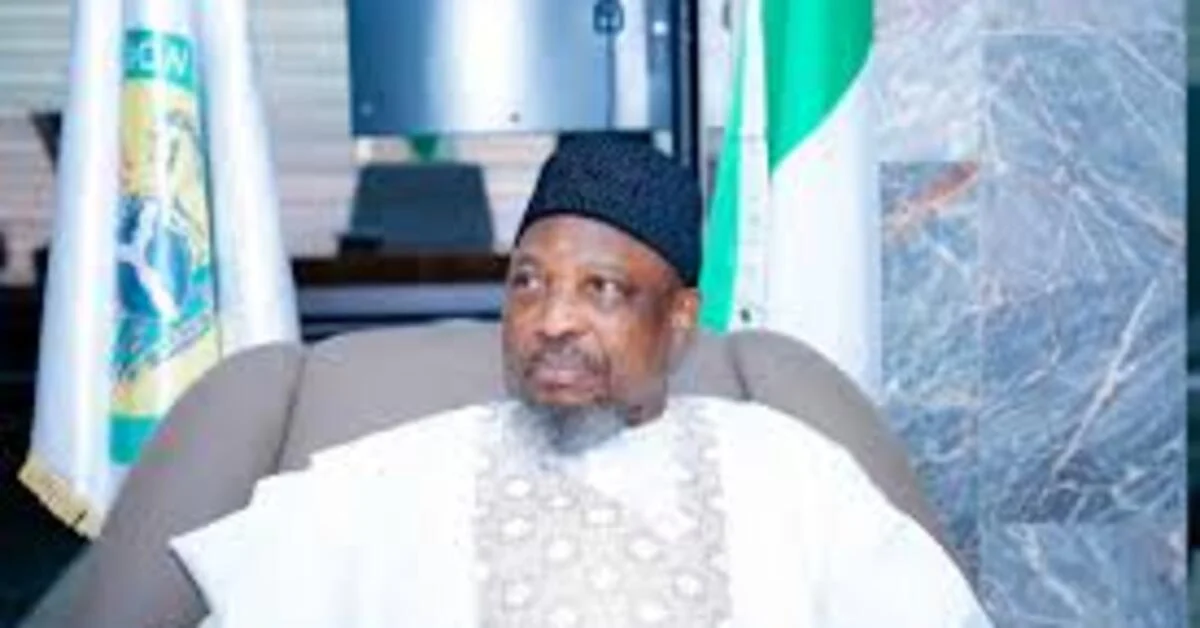
    Nigeria’s Hajj industry is once again under intense scrutiny following the resignation of Prof. Abdullahi Usman as Chairman and Chief Executive Officer of the National Hajj Commission of Nigeria (NAHCON), with stakeholders calling for a comprehensive overhaul of the commission.

    Usman’s resignation, which takes effect Monday, was announced on Wednesday in Abuja. He cited personal reasons for stepping down after about 14 months in office.

    However, industry experts argue that his exit reflects deeper structural and political tensions that have continued to destabilize the commission.

    Recurring Leadership Changes Raise Concern

    Within the last two years, NAHCON has witnessed three leadership changes, a trend stakeholders describe as troubling for the stability of Hajj operations.

    Alhaji Zikrullah Hassan served as NAHCON Chairman from December 2019 to October 2023 following his appointment by former President Muhammadu Buhari.

    During his tenure, the commission navigated the challenges of COVID-19 restrictions, introduced the Hajj Savings Scheme, and established the Hajj Institute of Nigeria.

    Hassan was replaced by Alhaji Jalal Ahmad Arabi, appointed by President Bola Tinubu on Oct. 17, 2023, for a four-year term. Arabi was later removed amid an investigation into alleged misappropriation of funds released for the 2024 Hajj exercise.

    Following those allegations, Tinubu appointed Usman in October 2024. His tenure, however, was marked by internal disputes and allegations concerning financial management during the 2025 Hajj, generating public scrutiny and tension within the commission.

    “Campaign of Calumny” — Experts React

    Abubakar Jiddah Usman, a Hajj industry expert, said the frequent leadership changes highlight entrenched discord within and outside the sector.

    “Yes, Prof. Abdullahi Usman has resigned. Whether voluntary or forced is immaterial,” he said.

    “What remains indisputable is that anyone overseeing the Hajj industry in Nigeria faces a campaign of calumny from within and outside the sector. Within two years, NAHCON has changed leadership three times. Shall we continue this way?”

    He dismissed claims that Usman lacked administrative competence, arguing that fluency in Arabic or clerical background had never been a defining criterion for success in managing Hajj operations.

    “To argue that modern Hajj operations require less Arabic fluency is baseless. Were previous chairmen deficient in administrative skills?” he queried.

    He added that past chairmen also faced allegations ranging from abuse of office to political interference, suggesting systemic issues rather than individual shortcomings.

    Call for Sole Administrator

    Another expert, Abdullahi Mohammad, advocated for a radical administrative intervention.

    According to him, NAHCON requires a “no-nonsense” reform strategy, potentially through the appointment of a sole administrator with full authority to restructure the commission.

    “The administrator must insulate the Hajj process from material interests and political interference. Only a radical administrative reset can restore diligence, transparency and service to pilgrims,” he said.

    Concerns Over 2026 Hajj Operations

    Muhammed Ibrahim, Coordinator of Independent Hajj Reporters, described Usman’s exit as unfortunate but not unexpected, noting that most pre-Hajj activities, including registration and airline contracts, had already been completed.

    “Given the discord, it may be best to allow the chairman step down to avoid conflicts affecting pilgrims,” he said.

    He recommended that an experienced insider oversee ongoing operations to ensure continuity until after the Hajj, when a substantive appointment can be made.

    Operators Lament Slot Allocation Issues

    Alhaji Abdullateef Yusuf, President of the Association for Hajj and Umrah Operators of Nigeria, pointed to challenges surrounding the allocation of additional Hajj slots.

    “Many members paid millions for hotels and tickets in Saudi Arabia, amounting to billions of naira. Slots promised were later withdrawn, and there is still no clarity. Our operators are in serious limbo,” he said.

    He urged the government to appoint a calm, reputable and experienced individual with integrity, warning against politically motivated appointments.

    Tinubu Nominates New Chairman

    In response to the resignation, President Tinubu has nominated Ambassador Ismail Yusuf as the new Chairman and Chief Executive Officer of NAHCON.

    The nomination, subject to confirmation by the Nigerian Senate under Section 3(2) of the NAHCON Act 2006, was conveyed in a statement by presidential spokesman Bayo Onanuga.

    The President confirmed that he had written to Senate President Godswill Akpabio seeking expeditious confirmation of the nominee.

    Ambassador Yusuf is a career diplomat who served as Nigeria’s Ambassador to Türkiye from 2021 to 2024.

    As stakeholders await Senate action, many insist that beyond leadership changes, what NAHCON urgently needs is structural reform to restore credibility, transparency and stability to Nigeria’s Hajj operations.

  • Another NAHCON Chairman Down as Old Fault Lines Resurface

    Another NAHCON Chairman Down as Old Fault Lines Resurface


    The reported resignation of Abdullahi Saleh Usman as Chairman of the National Hajj Commission of Nigeria (NAHCON) has once again exposed a troubling reality: nearly two decades after its creation, Nigeria’s Hajj regulatory body remains trapped in a cycle of leadership crises, boardroom warfare, and political interference.

    Documents, stakeholder accounts, and past official actions suggest that Usman’s exit is not an aberration—but the latest casualty of a system that has repeatedly failed to reform itself.

    January 2026 Warning That Broke the Camel’s Back

    The immediate trigger for Usman’s departure was a January letter sent by the NAHCON Board to Bola Ahmed Tinubu, in which board members passed a vote of no confidence in the chairman.

    According to sources familiar with the letter, the board accused Usman of:

    • Centralising decision-making
    • Undermining statutory board functions
    • Delaying key procurement and logistics processes
    • Presiding over a breakdown of trust between management and commissioners

    Most damningly, the board warned that the commission was “ill-prepared” for the 2026 Hajj cycle and risked “systemic failure” if leadership issues were not urgently addressed.

    Within days, reports of Usman’s resignation surfaced.

    A Familiar Pattern: Chairmen Who Rarely Finish Strong

    Since NAHCON was established in 2006, few of its chairmen have exited office without controversy.

    2016–2019: Abdullahi Mukhtar Muhammad

    The tenure of Abdullahi Mukhtar Muhammad remains one of the most turbulent in the commission’s history.

    In 2019, the Federal Government suspended him amid allegations of financial mismanagement and administrative breaches. Although Mukhtar denied wrongdoing and no criminal conviction followed, his suspension came after prolonged conflict with board members and internal audit queries that prompted presidential intervention.

    The episode paralysed preparations for that year’s Hajj and deepened mistrust between NAHCON and state pilgrim welfare boards.

    Earlier Years: Bello Sadiq and Boardroom Infighting

    Under Bello Sadiq, NAHCON also struggled with allegations of opaque contract awards and disputes over airline selection for pilgrim airlifts.

    Multiple states openly accused the commission of poor coordination and late communication, while internal disagreements between political appointees and career officials spilled into the public domain.

    Though no formal indictment followed, his tenure reinforced a growing perception of NAHCON as an institution perpetually at war with itself.

    Structural Flaws No Chairman Has Escaped

    Interviews with former officials and Hajj industry stakeholders point to structural weaknesses that transcend individual personalities:

    • Blurred authority lines between the chairman, board, and secretariat
    • Politicised appointments that prioritise patronage over expertise
    • Weak internal controls, particularly around procurement and vendor selection
    • Last-minute decision-making in an environment that requires years of advance planning

    Each new chairman inherits these flaws—and often attempts to consolidate power to manage them—triggering resistance from boards, staff, or political sponsors.

    Why the Stakes Are Now Higher Than Ever

    Unlike a decade ago, Saudi Arabia now enforces stricter timelines, digital pilgrim profiling, and early contractual commitments. Any internal paralysis at NAHCON has immediate international consequences.

    Stakeholders warn that repeated leadership implosions could eventually:

    • Jeopardise Nigeria’s Hajj quota
    • Increase costs for pilgrims
    • Damage Nigeria’s credibility with Saudi authorities

    A senior state pilgrims’ board official, who spoke on condition of anonymity, described the situation bluntly:

    “We change chairmen, but we never change the system that destroys them.”

    Usman’s Exit: End of a Tenure, Not the Crisis

    While the Presidency has yet to formally confirm Usman’s resignation or announce a successor, analysts argue that replacing him without comprehensive reform risks repeating history.

    Calls are now growing for:

    • Clear statutory separation of powers within NAHCON
    • Stronger external oversight and audits
    • Transparent procurement frameworks
    • Appointments based on sector competence, not politics

    Until those issues are addressed, critics warn that NAHCON’s revolving door will keep spinning—no matter who occupies the chairman’s seat.

  • Nigeria, Saudi Arabia Reaffirm Partnership on Hajj, Umrah Administration

    Nigeria, Saudi Arabia Reaffirm Partnership on Hajj, Umrah Administration

    Abuja — Nigeria and the Kingdom of Saudi Arabia have reaffirmed their commitment to strengthening cooperation in the administration of Hajj and Umrah, following a historic high-level engagement held in Abuja.

    The reaffirmation was disclosed in a statement by Ahmad Muazu, Technical Assistant (Media) in the Office of the Chairman and Chief Executive Officer of the National Hajj Commission of Nigeria (NAHCON), Prof. Abdullahi Usman.

    According to the statement, the commitment was expressed during talks between Nigerian authorities and a Saudi delegation led by the Kingdom’s Minister of Hajj and Umrah, Tawfiq Al-Rabiah.

    Welcoming the delegation, Prof. Usman described the visit as a landmark in Nigeria–Saudi relations and a strong signal of the Kingdom’s continued partnership with Nigeria in serving the “Guests of Allah.” He commended Saudi Arabia’s sustained investments in pilgrim welfare, infrastructure, safety, and service delivery.

    Usman said Saudi Vision 2030 had significantly improved the efficiency and quality of Hajj and Umrah operations globally. He also acknowledged challenges related to Umrah visa access for Nigerians, particularly overstaying by a segment of pilgrims.

    He said Nigeria was working with Saudi authorities to address the issue through stricter regulation of licensed operators, improved data accountability, and community-based sensitisation to ensure compliance and timely return.

    Usman reaffirmed NAHCON’s readiness to comply fully with all guidelines issued by the Saudi Ministry of Hajj and Umrah, stressing Nigeria’s resolve to protect the integrity of Hajj and Umrah operations while safeguarding pilgrims’ interests.

    Speaking at the meeting, Nigeria’s Minister of Foreign Affairs, Yusuf Tuggar, described the visit as historic, noting that it was the first time a Saudi Minister of Hajj and Umrah was visiting Nigeria.

    “This is the first time ever that a Minister of Hajj and Umrah of the Kingdom of Saudi Arabia is visiting Nigeria. It is history in the making,” Tuggar said.

    He conveyed the goodwill of President Bola Tinubu to the Custodian of the Two Holy Mosques, King Salman bin Abdulaziz Al-Saud, and to the Crown Prince and Prime Minister, Mohammad bin Salman bin Abdulaziz Al-Saud.

    Tuggar said cooperation in Hajj and Umrah administration remains a key pillar of Nigeria–Saudi relations, rooted in faith, mutual respect, and long-standing people-to-people ties. He also called for future discussions on quota expansion in view of Nigeria’s growing population.

    In his remarks, Al-Rabiah reaffirmed Saudi Arabia’s commitment to institutional cooperation with Nigeria, aimed at ensuring a safe and seamless experience for Nigerian pilgrims.

    He disclosed that about 89,000 Nigerians performed Umrah in 2025, with 92 per cent arriving on Umrah visas, supported by approximately 420 flights through King Abdulaziz International Airport in Jeddah.

    Al-Rabiah expressed optimism about preparations for the 1447 Hijri Hajj season, with emphasis on operational readiness, safety, service quality, and procedural efficiency.

    “Insha Allah, Hajj 2026 will be the best ever,” he said.

    Both sides agreed to sustain close coordination, strengthen regulatory compliance, and pursue practical solutions to enhance the experience of Nigerian pilgrims while preserving the integrity of Hajj and Umrah systems.

  • Faith-based groups resolve to tackle gender based violence

    Faith leaders and gender advocates have gathered in Abuja for an event aimed at equipping religious actors with the tools to combat gender-based violence (GBV).

    The programme, themed ‘Amplifying Voices and Building Capacity of Faith Actors in Nigeria,’ is also to promote gender equality.

    The event, a National Capacity Building and Development of Training Modules programme, was organised by the Faith to Action Network in collaboration with Gender Champions Nigeria.

    A statement by the organisers says the event brought together participants from various religious backgrounds to develop comprehensive training modules.

    These modules are designed to empower faith leaders with the knowledge and skills needed to tackle key social issues, especially GBV and gender inequality, within their communities.

    Key speakers at the event included Rev. Dr Uzoaku Williams, Team Lead of Gender Champions Nigeria, who highlighted the vital role faith actors play in shaping cultural and societal values.

    “Faith actors are pivotal in shaping societal norms and values. By building their capacity and providing them with the necessary tools, we are amplifying their voices and empowering them to be agents of change in their faith and communities,” she said.

    Rev. Dr Williams also emphasised the need for continuous support and cooperation beyond the event.

    “We must remember that the work does not stop here. We will follow up with attendees to monitor the implementation of the training modules and provide additional resources as needed,” she added.

    Other notable speakers included Rev. Jessie Fubara Manuel, PhD, and Hajiya Sumaye Hamza, PhD, who both gave keynote addresses on ‘The Role of Faith Actors in Ending GBV’.

    They discussed the specific challenges faced by communities in Nigeria and shared insights into how religious leaders can drive change through advocacy and local engagement.

    Speaking, Rev. Dr Jesse Fubara Manuel anchored his contribution in scripture, stressing the principles of love and justice.

    He explained the root causes of GBV, identifying drivers such as patriarchy, communal misreading of scripture, and economic inequality.

    Fubara also outlined seven key roles faith leaders must play: social, didactic, exemplary, partnership, judicial, advocacy, and prayer.

    On her part, Dr Mrs (Hajia) Sumaye Hamza delivered a powerful keynote, presenting striking GBV statistics and declaring that gender-based violence is a human issue, not just a women’s issue.

    She outlined seven key action areas for faith leaders, including issuing joint statements, training religious leaders, creating interfaith structures, engaging men and boys, supporting survivors, building alliances, and strengthening collaboration.

    Meanwhile, representatives of various organisations, including Mr Onyali Gabriel from the National Agency for the Prohibition of Trafficking in Persons (NAPTIP), Rev. Dr Yusuf Wushishi from the WCC Programme Office on Peace Building in West Africa, and Hajiya Sanni Rafiah, Amira of the Federation of Muslim Women Association of Nigeria (FOMWAN), also spoke at the event.

    Participants took part in several training sessions, group discussions, and interactive activities designed to encourage collaboration and the exchange of ideas among different faith communities.

    The programme also gave faith leaders an opportunity to examine the specific problems affecting their communities and come up with practical solutions.

    At the end of the event, participants renewed their commitment to apply the knowledge gained and put it into action in their communities.

    Organisers underlined the crucial role of faith leaders in driving social change and promoting inclusive development across Nigeria.

    They described the capacity-building initiative as a major step forward in empowering religious actors to fight gender-based violence and promote gender equality, reinforcing their role as important catalysts for positive change.

  • Sallah: CAN chairman urges sacrifices for Nigeria’s security

    Sallah: CAN chairman urges sacrifices for Nigeria’s security

    Joseph Hayab, Christian Association of Nigeria (CAN) Northern Chairman has urged political leaders to deepen sacrifices to ensure Nigeria’s security.

    Hayab who is the association’s lead in the 19 Northern States and the FCT has urged all Nigerians in positions of authority, particularly the political leadership, “to make a double sacrifice to secure Nigeria just as Muslims offer sacrifices in obedience to God during Sallah”.

    The CAN Chairman gave the advice in a Sallah message to the Muslim faithful as they join other parts of the world to celebrate Eid-el-Kabir.

    “This season, which honours Prophet Ibrahim’s total obedience and willingness to sacrifice for the sake of God, is a timely call for both leaders and citizens to demonstrate renewed faith, unity, and responsibility towards our nation.

    “In this spirit, Northern CAN encourages those in positions of authority, particularly the political leadership, to make a double sacrifice to secure Nigeria just as Muslims offer sacrifices in obedience to God during Sallah,” he said.

    The further advised the political elite to act in consonance with their constitutional obligation and moral responsibility in the interest of every Nigerian.

    “Our leaders must likewise act in obedience to their constitutional duty and moral responsibility to protect the lives and dignity of every Nigerian.

    “The country is groaning under the weight of insecurity, economic distress, and social disillusionment.

    “Nigerians are living in fear, and this climate of uncertainty is what gives room for enemies of peace to perpetrate evil without restraint.

    “It is no longer enough to issue statements or make promises.

    “The government must urgently remedy the conditions that have cast doubt on its commitment to the people.

    “Let the leadership act decisively so that Nigerians will no longer have reasons to question or complain,” Hayab added.

    According to him, the time has come for the Federal Government to take steps aimed at restoring public confidence and healing “our national wounds”.

    “CAN calls on Nigerians to use this solemn period to pray for the peace and unity of the country, while also reaching out to the less privileged in the true spirit of Eid.

    “We urge all religious and community leaders to continue fostering peaceful coexistence and to avoid making statements or taking actions capable of deepening our division.

    The CAN chairman expressed warm greetings and heartfelt felicitations to the Muslim Ummah on the celebration of Eid-el-Kabir, as well as a joyful and spiritually rewarding Eid-el-Kabir. 

  • Eid-el-Kabir: Ram sales tank amid short supply 

    Eid-el-Kabir: Ram sales tank amid short supply 

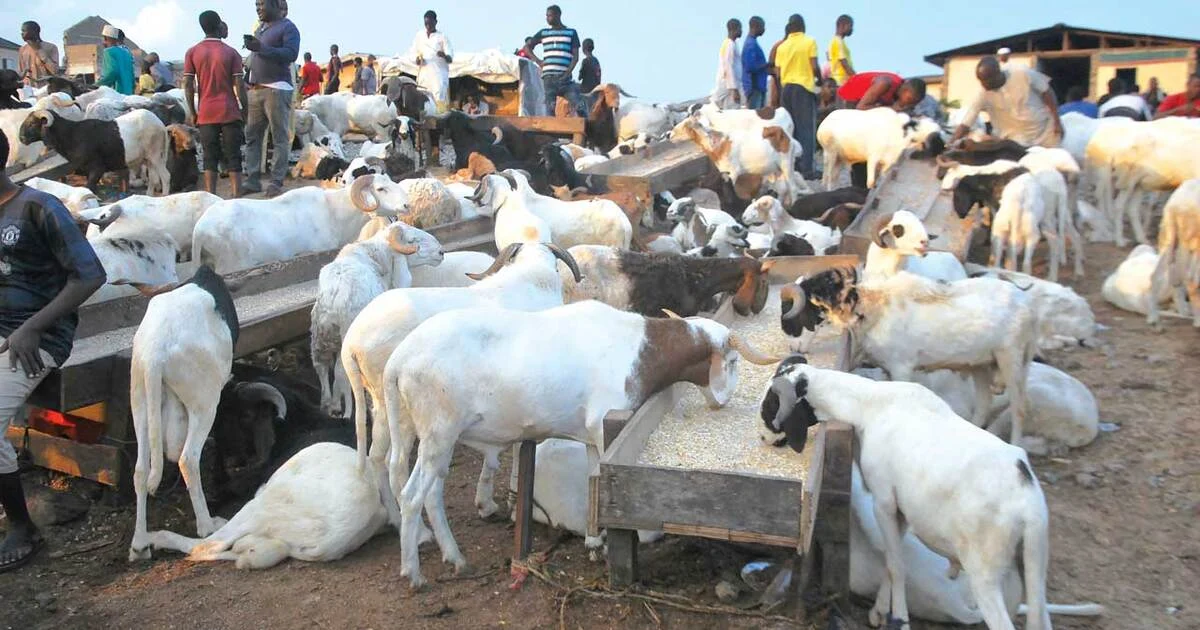
    Few days to the Muslim festival of Eid-el-Kabir, ram dealers at Mai’adua International Livestock Market in Katsina State complain of low patronage even when the animals are in short supply.

    A News Agency of Nigeria (NAN) correspondent who visited the market on Sunday reports that the animal dealers’ complain followed the exportation ban by authorities of the Niger Republic military to Nigeria.

    NAN reports that this is happening in spite of Federal Government’s measures to facilitate smooth trade between the two countries.

    Such efforts include the ongoing multi-billion-dollar rail project from Kano-Jigawa-Katsina-Maradi in Niger Republic, which is to be completed in 2026.

    Meanwhile, a big ram which cost N1.7 million one week ago, cost N1.2 million on Sunday, while a medium size one sold at N700,000 last week costs less, as prices of small rams  start from N100,000.

    Bashir Hassan, a ram dealer from Niger Republic, said that authorities had directed that no one should be allowed to exit the West African country with camels, cows, rams or goats.

    He added that the directive was due to flooding recorded in 2024 in Niamy, Maradi, Tawa, among others, which killed many animals.

    He said “the authorities expressed fear that the country might experience shortage of  animals during this year’s Eid-el-Kabir celebration.”

    Hassan revealed that police, immigration, army and traditional rulers were directed to seize animals from anyone who attempted to cross the border with them.

    He said many animals were siezed from those who attempted to cross the country’s border, causing short supply, even though patronage was also low, compared with 2024.

    However, another dealer, Alhaji Muazu Maifaru, explained that people from Niger Republic were more affected by the order, saying “but for the security challenge in some areas, Nigeria has big farms that can provide enough animals, even for exportation.

    “People from Niger Republic are more affected than our dealers here in Nigeria, who mostly buy from them.”

    Maifaru revealed that Nigeria still export commodities like maize, pepper, mango, rice, among others, to Niger Republic.

    “You see Mangal rice in many places in Niger Republic,” he said.

    He therefore, cautioned the Niger military authority on such policies, which he said, negatively affect international trade.

  • Hajj 2025: Pilgrims commend accommodation arrangements

    Hajj 2025: Pilgrims commend accommodation arrangements

    Some pilgrims taking part the 2025 Hajj exercise have commended the National Hajj Commission (NAHCON), for providing quality accommodation in Medina, Saudi Arabia.

    A cross section of the pilgrims stated this in separate interviews with the News Agency of Nigeria (NAN), on Sunday in Medina, Kingdom of Saudi Arabia.

    Alhaji Isa Riyau, a pilgrim from Niger state, said the gesture would ensure a smooth and dignified journey for Nigerian pilgrims in Saudi Arabia.

    He said that provision of a decent accommodation closed to the Holy Prophet Mosque, would enable the pilgrims to observe their prayers with ease.

    Riyau said that provision of decent meals for the pilgrims would also enhance their experiences, and encourage them to devote themselves to observing Hajj rituals.

    “Good nutrition is essential for the pilgrims physical and spiritual wellbeing during this sacred journey,” he said.

    A pilgrim from Kano State, Isa Abubakar lauded the state government for deploying effective medical team and facilities, to ensure prompt healthcare responses.

    Another pilgrim from Bauchi State, Abba Muhammad underscored the importance of quality healthcare services to facilitate smooth Hajj exercise.

    NAN reports that the commission has so far transported 36,359 pilgrims to the Kingdom of Saudi Arabia for the 2025 Hajj exercise.  

  • Fasting: Sultan declares Saturday as 1st Ramadan

    Fasting: Sultan declares Saturday as 1st Ramadan

    The Sultan of Sokoto and President General of the Nigeria Supreme Council for Islamic Affairs (NSCIA), Dr Sa’ad Abubakar III has declared Saturday, March 1, 2025, as the first day of Ramadan 1446 AH in Nigeria.

    The Sultan made the announcement in a nationwide radio and television broadcast on Friday, confirming the sighting of the new crescent of Ramadan in various parts of the country.

    He stated that reports of the moon sighting were received from Muslim leaders and organisations across Nigeria.

    “After due verification and authentication by the National Moon Sighting Committee, as well as confirmations from state committees, the new moon of Ramadan was officially recognised, marking the end of Sha’aban 1446 AH.

    “In accordance with Islamic law, Muslims are to commence fasting on Saturday, March 1,” the Sultan declared.

    He urged Muslim faithful to dedicate themselves to the worship of Allah (SWT) throughout the holy month and to use this period to pray for prevailing peace across the country and also pray for the leaders.

    Additionally, the Sultan encouraged wealthy individuals to assist the less privileged, emphasising the importance of religious tolerance and unity among Nigerians.

    He prayed to the Almighty to strengthen the leaders in their commitment to leading the country.

    Fasting, one of the five pillars of Islam, entails abstinence from eating, drinking, smoking and sexual intercourse from dawn to sunset with the intention of worshiping Almighty Allah.

    Ramadan, the ninth month of the Islamic calendar, is a sacred period during which adult Muslims observe compulsory fasting from dawn to sunset for a complete month. 

  • Ramadan: Pray for country, leadership, self – Bago tells Muslims

    Ramadan: Pray for country, leadership, self – Bago tells Muslims

    Mohammed-Umaru Bago of Niger has called for sustained prayers by the people for President Bola Tinubu, the country and the state government.

    The governor also sought Allah’s guidance in securing lives and property, while praying for the socio-economic prosperity of the nation.

    Bago made the call in a statement on Friday by his Chief Press Secretary, Bologi Ibrahim, as Muslims begin the 2025 Ramadan fast on Saturday.

    According to him, the period is a special month of spiritual exercise, which brings blessings, favours, and forgiveness from Allah.

    Bago urged the Muslim community in the state to use the period for spiritual rejuvenation and growth. He stressed the need for self-reflection and increased devotion.

    He encouraged Muslims to allow their spiritual growth to influence all aspects of their lives beyond the Ramadan period. He also advised them to engage in righteous deeds.

    The governor reiterated his approval of a food price reduction during Ramadan. He said this would ease the burden on the less privileged and support their fasting.

    He reminded those handling the subsidised food sales to act justly, fairly, and with sincerity. He urged them to ensure that the initiative meets its intended purpose.

    Bago also reaffirmed his commitment to improving the living conditions of the people.