Category: United Nations

  • UN Human Rights Chief Condemns U.S. Military Intervention in Venezuela

    UN Human Rights Chief Condemns U.S. Military Intervention in Venezuela

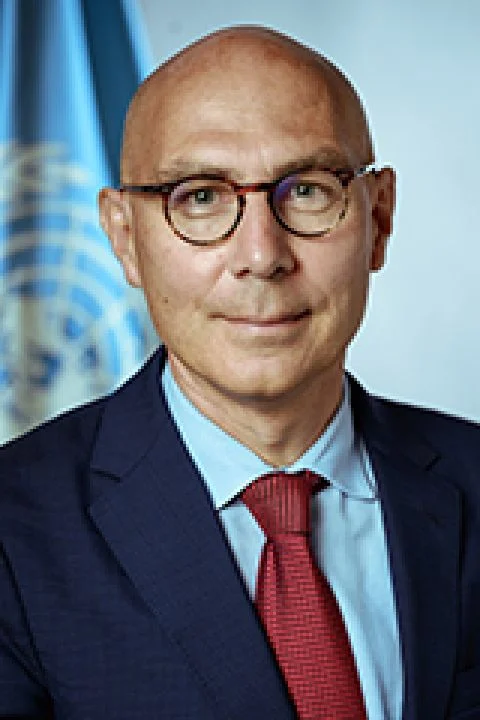
    UN Human Rights Chief Volker Türk raised alarm on Tuesday over the United States’ military operation in Venezuela, expressing deep concerns that it undermines fundamental protections for sovereign nations.

    Türk’s remarks followed the U.S. seizure of Venezuelan President Nicolás Maduro, which has drawn international scrutiny.

    Ravina Shamdasani, spokesperson for the UN High Commissioner for Human Rights, reinforced Türk’s position, stating that the U.S. action could make “all States less safe around the world.”

    Shamdasani disputed the U.S. justification for its intervention, citing the Venezuelan government’s “longstanding and appalling” human rights record.

    She stated, “Accountability for human rights violations cannot be achieved by unilateral military intervention in violation of international law.”

    Shamdasani highlighted that this intervention contravenes Venezuelan sovereignty and the principles laid out in the UN Charter, which prohibits the use of force against the territorial integrity of states.

    She reiterated that such actions damage international security frameworks, a sentiment echoed by the UN Secretary-General.

    The UN Human Rights Office (OHCHR) was expelled from Venezuela in February 2024 after documenting the deteriorating human rights situation in the country.

    Independent investigations by the Human Rights Council have previously revealed grave human rights abuses against opponents of the ruling party.

    Shamdasani stressed that the Venezuelan people deserve accountability through a fair, victim-centered process, emphasizing that their rights have been violated for far too long.

    Following the U.S. intervention, a state of emergency was declared in Venezuela, restricting free movement, seizing property for national defense, and suspending the right to assembly and protest.

    Shamdasani noted concerns about the Venezuelan government’s historical suppression of free speech and assembly under the guise of national security.

    The UN Human Rights Chief called on the U.S., Venezuelan authorities, and the international community to respect international law and ensure the protection of human rights.

    She urged that the future of Venezuela should be determined solely by its people, with respect for their self-determination and sovereignty over their resources.

    Despite the political turmoil, the humanitarian crisis continues to escalate, with approximately eight million Venezuelans in need of assistance due to years of economic decline, repression, and instability.

    The UN Office for the Coordination of Humanitarian Affairs (OCHA) reported that a response plan is in place requiring about $600 million to support relief efforts.

    OCHA spokesperson Jens Laerke noted that while the political situation has changed dramatically, the humanitarian needs of the population have persisted. “For the broad mass of people, their humanitarian day-to-day situation hasn’t changed that radically,” he stated.

    Among those in need, around 900,000 individuals face “very high” multisectoral needs, including access to food, nutrition, education, and health services.

    OCHA has managed to provide aid to approximately two million people within Venezuela despite funding challenges.

    Concerning Venezuelan refugees, the UN refugee agency UNHCR reported that nearly 7.9 million people have fled the country, with the majority finding refuge in Latin America and the Caribbean.

    UNHCR is closely monitoring the situation and collaborating with humanitarian partners to support emergency relief efforts and protect displaced individuals in need.

    As the world watches the unfolding situation in Venezuela, the UN continues to advocate for human rights and support initiatives aimed at stabilizing the region.

  • Ban Ki-moon Warns UN Risks Irrelevance Without Security Council Reform

    Ban Ki-moon Warns UN Risks Irrelevance Without Security Council Reform

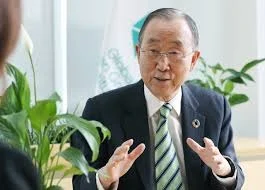
    Former United Nations Secretary-General Ban Ki-moon on Tuesday challenged the Security Council to overcome deep rivalry and distrust, warning that failure to reform its practices, particularly the use of the veto, risks pushing the Organisation toward irrelevance or collapse.

    Speaking during an open Security Council debate on “Leadership for Peace,” Ban called on Council members to look beyond narrow national interests and support UN leadership capable of steering the world away from catastrophe and toward renewed cooperation.

    “The path of each for themselves is no different from the path of mutual destruction,” Ban told the Council.

    Now an emeritus member of The Elders, Ban said global conditions have deteriorated significantly since he left office at the end of 2016, marked by growing confrontation among major powers, weakening multilateralism and persistent conflicts in which civilians bear the heaviest costs.

    “This deeply disappointing situation is characterised by confrontation rather than cooperation among major powers,” he said, citing the war in Ukraine, mass civilian casualties in Gaza and the erosion of international cooperation even as the global climate crisis accelerates.

    Ban said the broader crisis confronting the international system cannot be separated from the Security Council’s own shortcomings.

    “The Security Council’s ongoing failure to properly function constitutes the most egregious cause,” he said, pointing to the repeated use of the veto by permanent members to shield themselves, their allies and their proxies from accountability.

    Without meaningful reform, Ban warned, civilians would remain unprotected and impunity would persist. “Without it, the UN risks lurching towards either collapse or irrelevance,” he said.

    Turning to the selection of the next Secretary-General, Ban urged Member States to consider adopting a single, non-renewable seven-year term, arguing that it would strengthen the independence of the office.

    The current practice of two five-year terms, he said, leaves Secretaries-General “overly dependent on this Council’s Permanent Members for an extension,” even though the arrangement is a convention rather than a requirement of the UN Charter.

    “The General Assembly holds the power to set the terms of the appointment itself,” Ban said, calling on Member States to exercise that authority to empower future UN leaders more fully.

    Secretary-General António Guterres’s second term expires at the end of next year, and the formal selection process is already under way. In November, the Presidents of the General Assembly and the Security Council jointly launched the process in line with General Assembly resolution 79/327, which emphasizes transparency and inclusivity.

    Under established procedures, candidates are nominated by Member States or regional groups and must submit a vision statement, curriculum vitae and disclosures on campaign financing. The President of the General Assembly convenes publicly broadcast interactive dialogues with candidates while engaging closely with Member States throughout the process.

    As of mid-December, Rafael Mariano Grossi, Director-General of the International Atomic Energy Agency, is the only candidate formally nominated, put forward by Argentina.

    Addressing the Council during the debate, Anjali Dayal, Associate Professor of International Politics at Fordham University, said the next Secretary-General would assume office at a moment of unprecedented strain for the United Nations, including a deepening funding crisis that is already reducing the Organisation’s capacity to deliver essential services.

    “That will result not just in shrinking this Organisation, but also in less of the work that only the UN can do at scale,” Dayal said, warning of fewer vaccinations, reduced humanitarian assistance and diminished mine-clearance operations even as global needs continue to grow.

    Dayal said history demonstrates that, even during periods of acute geopolitical division, the Security Council has been capable of selecting leaders who advanced peace and cooperation.

    She recalled the prolonged deadlock that preceded the appointment of Javier Pérez de Cuéllar in 1981 and the criticisms faced by U Thant, noting that both Secretaries-General played key roles in helping to end the Iran-Iraq war, advance peace efforts in Cambodia and Nicaragua, and manage crises such as the Cuban Missile Crisis.

    Those examples, Dayal said, illustrate that the Secretary-General’s influence lies less in material power than in the ability to shape ideas, narratives and long-term cooperation within the international system.

  • Financial crisis hits UN, cuts spending, freezes hiring, scales back services

    Financial crisis hits UN, cuts spending, freezes hiring, scales back services

    The UN says it has been forced to cut spending, freeze hiring and scale back some services as the global organisation faces a worsening cash crisis.

    Member States on Monday, urged members to pay up, warning that the deepening financial crisis threatened the world body’s ability to carry out vital work.

    The General Assembly’s Fifth Committee met throughout Monday to discuss the multilateral organisation’s financial health.

    With a growing shortfall in contributions, member states owed $2.4 billion in unpaid regular budget dues and $2.7 billion in peacekeeping.

    Officials warned that the non-payment of contributions risked eroding the UN’s credibility and its capacity to fulfil mandates entrusted to it by member states.

    Switzerland’s delegate, speaking also on behalf of Liechtenstein, said “Each delay in payment, each hiring freeze, each cancelled service chips away at trust in our ability to deliver”.

    One proposed solution was to allow the UN to temporarily keep unspent funds at year’s end, instead of returning them to member states as credits.

    Currently, this return is mandatory, even if the funds arrive late in the year, giving the UN little time to spend them.

    The suggested change would be expected to act as a buffer to keep operations running, particularly in January when payments tend to lag.

    Delegates also backed limited use of “special commitments”, which is emergency funding tools, early in the year to bridge gaps caused by delayed contributions.

    While these fixes might help, several speakers, including delegates from Kazakhstan, Norway and the United Kingdom, emphasised that the root cause was the continued late or non-payment of dues.

    Norway noted that such temporary measures would not solve the underlying problem and urged member states to support bold financial reforms.

    The European Union stressed that the crisis was not abstract,  adding they were real operational risks and the burden could not fall solely on countries that paid on time.

    Singapore, speaking for the Southeast Asian group of nations, ASEAN, echoed concerns that the UN’s liquidity problems had become routine.

    It cited the UN Economic and Social Commission for Asia and the Pacific’s (ESCAP) need to shut its offices for three months and suspend travel and hiring.

    Particularly troubling to many delegates was the fact that one country, unnamed in the meeting but widely known to be the U.S. was responsible for over half of all unpaid dues.

    The U.S. under President Donald Trump, is reportedly withholding the funds due to the UN for political reasons.

    Russia called for more transparency in how the UN managed cash-saving measures, cautioning against actions taken without member states’ input.

    Catherine Pollard, the UN’s top management official, noted that since May 9, a handful of countries had paid in full across several budget categories, while the number of nations who had paid in full for the regular budget stood at 106 for the year.

    As of May 19, the UN records showed only 61 countries had met all their UN’s obligations in full.

    The message from member states on Monday clearly states that without broad, timely financial support, the UN’s ability to serve the world, especially in times of crisis, is at serious risk.