
Category: Weather

  • NiMet Rejects N5 Trillion Loss Claims, Says Reports Are Baseless and Misleading

    NiMet Rejects N5 Trillion Loss Claims, Says Reports Are Baseless and Misleading

    The Nigerian Meteorological Agency (NiMet) has strongly dismissed reports alleging that Nigerian farmers lost about N5 trillion as a result of inaccurate weather forecasts, describing the claims as false, misleading and unsupported by credible evidence.

    In a statement issued on Tuesday in Abuja, NiMet faulted publications by The Nation on February 2, 2026, and Daily Trust on February 3, 2026, which attributed the claim to the Foundation for Peace Professionals. The agency said the reports amounted to a deliberate attempt to misinform the public.

    The statement, signed by Rabiatu Lawal Ado, Acting Head of NiMet’s Public Relations Unit, said the alleged N5 trillion loss was not supported by any verifiable data, transparent methodology or independent assessment.

    “The alarmist claim that Nigerian farmers lost nearly N5 trillion in productive capital as a result of NiMet’s weather forecasts is entirely unfounded and economically irresponsible,” the agency stated.

    NiMet stressed that it has provided reliable weather and climate services in Nigeria for more than 140 years, supporting planning and decision-making across critical sectors of the economy, particularly agriculture.

    According to the agency, independent evaluations by development partners, the World Meteorological Organization, sector stakeholders and farmers nationwide indicate that NiMet’s forecast accuracy has improved significantly over time. The agency said its accuracy now exceeds the 60 per cent benchmark and has reached over 90 per cent in recent years.

    NiMet explained that its Seasonal Climate Predictions, early warning alerts and location-specific agro-advisories are designed to help farmers make informed decisions on planting dates, crop selection, irrigation planning and risk management.

    “These products are disseminated through state governments, agricultural extension services, traditional media platforms and digital channels to ensure wide reach and accessibility,” the agency noted.

    The meteorological agency also referenced the executive summary of the 2025 Wet Season Agricultural Performance Survey in Nigeria, conducted in collaboration with key institutions across the agricultural value chain. According to NiMet, the survey recorded increased crop yields and livestock production across the country.

    The findings showed improved output in major crops such as rice, maize, cowpea, yam, cassava and groundnut compared to 2024. The survey also indicated a reduction in food prices across all geopolitical zones, reflecting improved supply conditions and the impact of effective policy interventions.

    Reaffirming its commitment to national food security, climate resilience and sustainable agricultural development, NiMet said it would not be distracted by what it described as sensational narratives.

    The agency called on stakeholders, civil society organisations and the media to engage responsibly and ensure that public discourse is guided by facts, credible evidence and verified data.

  • NiMet Forecasts Dust Haze and Cloudiness Across Nigeria

    NiMet Forecasts Dust Haze and Cloudiness Across Nigeria

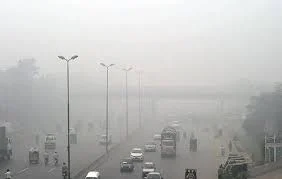
    The Nigerian Meteorological Agency (NiMet) has predicted dust haze and cloudiness in various parts of the country from Sunday to Wednesday.

    According to the agency’s weather outlook released in Abuja:

    • In the northern region, moderate dust haze is expected on Monday and Tuesday, increasing to thick dust haze on Wednesday.
    • The central region is forecast to experience thick to moderate dust haze throughout the period.
    • Inland cities in the southern region are expected to have moderate dust haze from Sunday through Wednesday.
    • Coastal areas are predicted to have sunny skies with patches of clouds, with isolated thunderstorms and light rains possible later in the day in Lagos, Bayelsa, Rivers, Cross River, Akwa Ibom, and Delta States.

    NiMet advised that dust particles are suspended in the air, recommending that people with asthma or respiratory conditions take necessary precautions. Drivers are advised to exercise caution during rainfall. Airline operators are encouraged to obtain airport-specific weather reports from NiMet.

    Residents are also advised to stay informed through official updates from NiMet via their website: www.nimet.gov.ng.

  • NiMet migrating to AI-Powered Weather Forecasting

    NiMet migrating to AI-Powered Weather Forecasting

    NiMet Director General says move is to boost climate onformation for Nigerian Farmers

    Nigerian Meteorological Agency (NiMet), Director General. Prof. Charles Anosike, has doubled down on the agency’s commitment to leverage artificial intelligence (AI)-powered weather forecasting.

    Prof Anosike promised that this realignment in technology will strengthen climate and weather information delivery for Nigerian farmers.

    Anosike made this known during a courtesy visit by the Agricultural Innovation Mechanism for Scale (AIM for Scale) team led by Imara Salas, Director of the AIM for Scale Secretariat, and Mohammad Farrae, Scientific Director, at NiMet headquarters in Abuja.

    AIM for Scale is a consortium of global partners promoting agricultural innovation and scaling up weather services for farmers.

    The visit focused on exploring areas of collaboration to co-develop strategies for expanding weather services and mobilising investments for innovative, data-driven agricultural solutions in Nigeria.

    The AIM for Scale consortium includes leading global institutions such as the Bill & Melinda Gates Foundation, United Arab Emirates (UAE), Asian Development Bank (ADB), Inter-American Development Bank and the World Bank.

    Others are U.S. Agency for International Development (USAID), NASA, Massachusetts Institute of Technology (MIT), Community Jameel, Mohamed bin Zayed University of Artificial Intelligence (MBZUAI) and the University of Chicago’s Human-Centered Weather Forecasts and AI for Climate (AICE) initiatives.

    The World Meteorological Organization (WMO), and the United Nations Systematic Observations Financing Facility (SOFF) are part of the consortium.

    Speaking during the visit, Salas commended NiMet for its leadership role in advancing agricultural weather services.

    She explained that AIM for Scale creates tailored innovation packages and AI-driven weather forecasts designed to deliver scalable, cost-effective solutions through partnerships with key stakeholders like NiMet.

    In his remarks, Prof. Anosike thanked AIM for Scale for including Nigeria in its first African pilot project and for inviting NiMet to the recently concluded AI weather training in Abu Dhabi.

    He assured that NiMet is well-prepared to support the initiative, citing the agency’s technical expertise and growing demand for accurate weather and climate data among smallholder farmers.

    “NiMet is committed to deepening AI-powered weather services to improve forecasting accuracy and speed of delivery.

    These innovations will enable farmers and other users to make better decisions, reduce risks, and increase productivity,” Anosike said.

    He, however, highlighted existing infrastructure gaps, including limited in-situ weather stations and inadequate radar coverage, as challenges requiring attention to fully realise the benefits of AI-powered forecasting.

    Following the discussions, Prof. Anosike led the AIM for Scale delegation on a guided tour of NiMet’s central forecasting facility, showcasing the agency’s operational capabilities and readiness for collaboration.

    Both parties agreed to develop and sign a Memorandum of Understanding (MoU) focusing on joint research and sustainable AI-driven weather service delivery for Nigeria’s agricultural sector.

  • Nigeria/Morocco Strengthen Ties to Deepen AI-based Weather Collaboration

    Nigeria/Morocco Strengthen Ties to Deepen AI-based Weather Collaboration

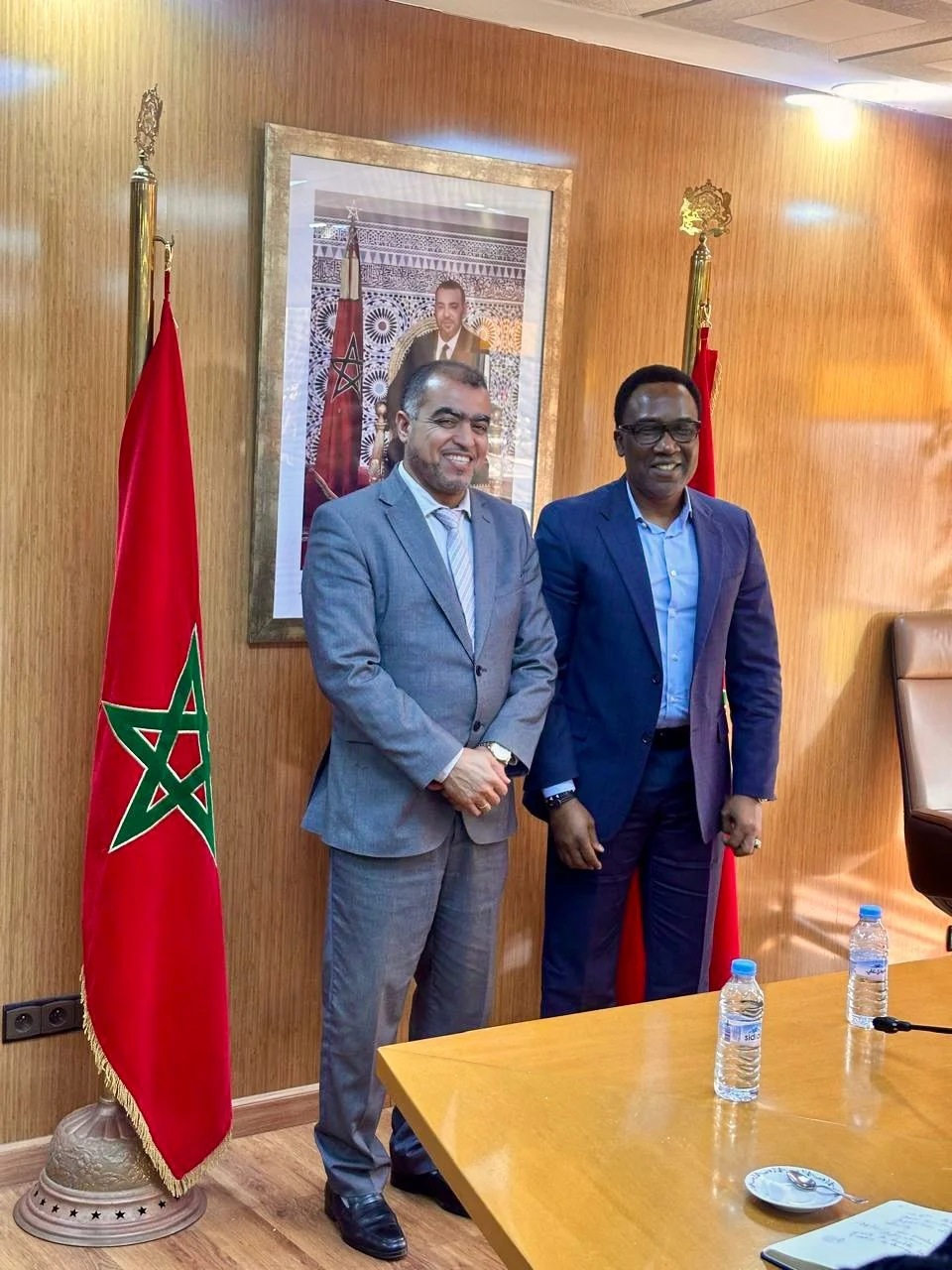
    The Director-General of the Nigerian Meteorological Agency (NiMet), Prof. Charles Anosike, has paid a working visit to his Moroccan, Mohammed Dhikissi.

    It was revealed that the visit is part of efforts to deepen bilateral collaboration on AI-driven weather forecasting and early warning systems.

    The visit took place on the sidelines of the ongoing United Nations Systematic Observation Financing Facility (SOFF) workshop for Peer Advisors and Implementing Entities in Casablanca.

    The SOFF workshop is one of the programmes designed to strengthen technical cooperation between Nigeria and Morocco in advancing climate services, data management, and predictive meteorology.

    During the meeting, Prof. Anosike and his Moroccan counterpart discussed areas of mutual interest, including joint research on AI-enabled weather models, capacity building for meteorologists, and the exchange of best practices for enhancing regional weather observation networks.

    He emphasized that leveraging AI technologies in meteorology would significantly improve the accuracy of forecasts and the timeliness of climate-related warnings, thereby enhancing resilience in sectors such as agriculture, transportation, and disaster management across Africa.

    The NiMet DG also highlighted the importance of regional partnerships in addressing the growing impacts of climate change, stressing that “Africa’s future in climate resilience depends on collaboration, innovation, and the intelligent use of technology.”

    Prof. Anosike and Mr. Dhikissi

    Morocco’s Directorate of General Meteorology, renowned for its advancements in modern forecasting systems and climate services, expressed readiness to work closely with NiMet to develop a framework for continuous technical exchange and joint innovation in weather prediction and climate adaptation.

    The visit is expected to pave the way for a stronger partnership between both institutions under the broader framework of the World Meteorological Organization (WMO), supporting the African continent’s push towards smarter, AI-enabled weather and climate solutions.

  • Extreme heat grips Europe, Spain hits June record of 46 degrees

    A new national heat record for June was set in Spain at the weekend, with temperatures reaching 46 degrees Celsius in the town of El Granado near the Portuguese border, as a broader early-summer heatwave grips parts of Portugal, France, and Greece.

    The Spanish state weather agency AEMET confirmed Saturday’s record-high temperature. Spain’s previous June high of 45.2 degrees was set in Seville in 1965.

    Dozens of towns and cities across Spain reported maximum temperatures above 40 degrees, while neighbouring Portugal also sweltered. In the country’s southern Algarve tourist region, highs reached around 40 degrees.

    On Spain’s holiday island of Mallorca, temperatures climbed to nearly 35 degrees.

    Overnight conditions offered little relief.

    In southern Spain, night-time lows remained above 30 degrees – a level of sustained heat that experts say can pose serious health risks.

    Locals are accustomed to coping with extreme temperatures by limiting outdoor activity during peak heat, wearing light clothing, and hydrating frequently.

    However, the combination of scorching heat and intense sun is rapidly drying out soil and vegetation, sharply increasing the risk of wildfires.

    Meteorologists warn that such heatwaves are becoming more frequent and arriving earlier in the season due to human-driven climate change.

    According to AEMET, only two heatwaves were recorded in June between 1975 and 2000.

    Between 2000 and 2024, that number rose to nine.

    This year, temperatures approached August levels as early as late May.

    France is also sweltering under the heatwave, which is expected to last through the middle of next week. On Monday, temperatures above 35 degrees are forecast across much of the country.

    By Tuesday, Paris could see highs of 40 degrees, according to the national weather agency Météo France.

    Wildfires have broken out in southern France amid the ongoing heat, possibly caused by a barbecue.

    A section of the A61 motorway was closed, and a campsite in Bizanet was evacuated, according to the local prefecture based in Carcassonne.

    A total of seven fires were reported after a person was transporting a barbecue with still-smouldering embers in a trailer, local civil protection chief Christian Pouget told broadcaster BFMTV on Sunday.

    In the small municipality of Bizanet alone, more than 150 firefighters battled the flames. Firefighting helicopters were also deployed, according to authorities.

    The fires affected 400 hectares of land.

    Experts note that directly linking individual wildfires to climate change is challenging.

    In Greece, strong winds brought an abrupt end to a three-day heatwave, with temperatures dropping from around 40 degrees to 30 degrees within hours, the national weather service reported.

    Despite the cooldown, the combination of heat and wind has prompted Greece’s civil protection agency to declare the highest fire danger level for large swathes of the country.

    Major wildfires have already broken out this European summer south of Athens and on the island of Chios.