Category: Petroleum

  • Farouk Ahmed Denies Education Funding Allegations, Invites Full Investigation

    Farouk Ahmed Denies Education Funding Allegations, Invites Full Investigation

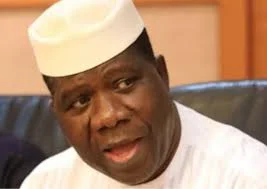
    The Chief Executive Officer of the Nigerian Midstream and Downstream Petroleum Regulatory Authority (NMDPRA), Engr. Farouk Ahmed, has rejected allegations linking the funding of his children’s foreign education to corruption, describing the claims as misleading, ill-timed, and motivated by vested commercial interests.

    In a detailed statement released on Tuesday, Ahmed said he welcomes scrutiny of his finances and has formally invited the Code of Conduct Bureau (CCB), the Economic and Financial Crimes Commission (EFCC), and the National Assembly to conduct comprehensive investigations into his assets, income, and regulatory decisions spanning over three decades of public service.

    Background of Allegations

    Recent claims circulating on social media alleged that Ahmed spent up to $5 million on his children’s secondary education in Switzerland, an amount critics argued was inconsistent with his official earnings as a public servant.

    Responding to the allegation, Ahmed said the figure was “factually incorrect” and failed to account for merit-based scholarships, family education trust funds, and personal savings accumulated over 30 years in the Nigerian petroleum sector.

    According to him, three of his four children received scholarships covering between 40 and 65 per cent of tuition costs, while additional funding came from education trusts established by his late father before his death in 2018.

    “My annual compensation as NMDPRA CEO, approximately ₦48 million including allowances, is publicly available in audited reports,” Ahmed stated.

    “When combined with decades of legitimate savings, cooperative investments available to civil servants, and family contributions, the expenses are fully explainable.”

    Asset Declarations and Transparency

    Ahmed said he has consistently filed asset declarations with the Code of Conduct Bureau since joining public service in 1991 and has authorized educational institutions attended by his children to release financial records to Nigerian investigators.

    He added that foreign educational institutions do not accept illegitimate funds, noting that “schools abroad operate under strict financial compliance regimes.”

    Allegations Linked to Regulatory Actions

    The NMDPRA chief suggested that the timing of the allegations coincides with recent regulatory actions by the Authority, including:

    • Enforcement of stricter fuel quality standards
    • Introduction of transparent licensing and pricing frameworks
    • Approval of fuel import licenses to prevent supply shortages

    Ahmed defended the import licensing decisions, citing Section 7 of the Petroleum Industry Act (PIA), which mandates the regulator to ensure energy security and prevent fuel scarcity.

    “Granting import licenses when domestic supply is insufficient is not economic sabotage; it is a statutory obligation,” he said, warning against reliance on a single-source supply model.

    Call for Investigation

    Ahmed formally called for:

    • A full review of his asset declarations by the CCB
    • Examination of his financial transactions by the EFCC
    • Oversight hearings by the National Assembly

    He pledged full cooperation and said he would testify under oath if required.

    “The Price of Regulatory Independence”

    Reflecting on his career, Ahmed said his rise from a junior engineer at the former Department of Petroleum Resources to CEO of NMDPRA was based on merit and technical competence, not political patronage.

    He acknowledged that reforms introduced under his leadership, aimed at reducing opacity, preferential treatment, and regulatory capture, have created resistance among entrenched interests.

    “If the price of regulatory independence is personal attacks and manufactured scandals, I accept that price,” he said.

    Ahmed concluded by reaffirming his commitment to implementing the Petroleum Industry Act transparently and without favoritism, expressing confidence that “principled regulation will ultimately be vindicated.”

  • Senate Reconstitutes Ad-hoc Committee to Probe Economic Sabotage in Petroleum Industry

    Senate Reconstitutes Ad-hoc Committee to Probe Economic Sabotage in Petroleum Industry

    The Senate has reconstituted its Ad hoc Committee to Investigate Alleged Economic Sabotage in the Nigerian Petroleum Industry contrary to reports that some stakeholders were working to stop the oil probe.

    The upper chamber also communicated the decision to reconstitute to the House of Representatives with a view to conducting a more holistic investigation that would sanitise the petroleum industry.

    At a session presided by the Deputy President, Senator Barau Jubrin, announced these decisions yesterday after the Leader of the Senate/Chairman of the Ad-hoc Committee, Senator Opeyemi Bamidele sponsored a motion on the need for the two chambers to jointly conduct the oil probe.

    In his motion yesterday, Bamidele observed that the House of Representatives had debated on the same subject and also constituted its ad-hoc committee to investigate it.

    He observed that there “is need for the Ad-hoc Committees of the two chambers to work together to avoid duplication in the discharge of their constitutional responsibilities.”

    He further called for the committee to be reconstituted and be named as “National Assembly Joint Ad-hoc Committee to Investigate Alleged Economic Sabotage in the Nigerian Petroleum Industry”.

    After Bamidele’s presentation, the Senate recaptioned the title to “National Assembly Joint Ad-hoc Committee to Investigate Alleged Economic Sabotage in the Nigerian Petroleum Industry”.

    The upper chamber also resolved “to communicate its decision to the House of Representatives for the purpose of constituting the equal number of an ad-hoc committee that will working with the Senate.”

    While Senator Opeyemi Bamidele will still chair the National Assembly Joint Ad-hoc Committee to Investigate Alleged Economic Sabotage, its members include Senator Asuquo Ekpenyong, Senator Yahaya Abdullahi; Senator Mohammed Monguno and Senator Solomon Olamilekan.

    Other members include: Senator Plang Diket, Senator Ipalibo Banigo; Senator Khabeeb Mustapha; Senator Adams Oshiomhole; Senator Williams Eteng Jonah; Senator Adetokunbo Abiru; Senator Osita Izunaso; Senator Sahabi Ya’u; Senator Ahmed Abdul Ningi and Senator Suleiman A. Kawu.

    The lawmakers agreed further that the resolution of the Senate be communicated to the House of Representatives, following which the Joint Ad-hoc Committee will be inaugurated by the presiding officers of both chamber

    The Senate had on Wednesday, 3rd July 2024 debated a motion on the urgent need to investigate the Importation of Hazardous Petroleum Products and Dumping of Substandard Diesel into Nigeria moved by Sen. Asuquo Ekpenyong (Cross River North).

    The Senate had on Thursday, 11th July 2024 recaptioned the title of the Ad-hoc Committee to Ad-hoc Committee to Investigate Alleged Economic Sabotage in the Nigerian Petroleum Industry.

    After holding meetings with key stakeholders in the petroleum sector, the Bamidele Committee put its activities on hold with conducting a joint session with the lower chamber and providing workable antidotes to a myriad of challenges in the industry.

  • TUC Pushes for Petrol Price Cut, Urges FG to Act

    TUC Pushes for Petrol Price Cut, Urges FG to Act

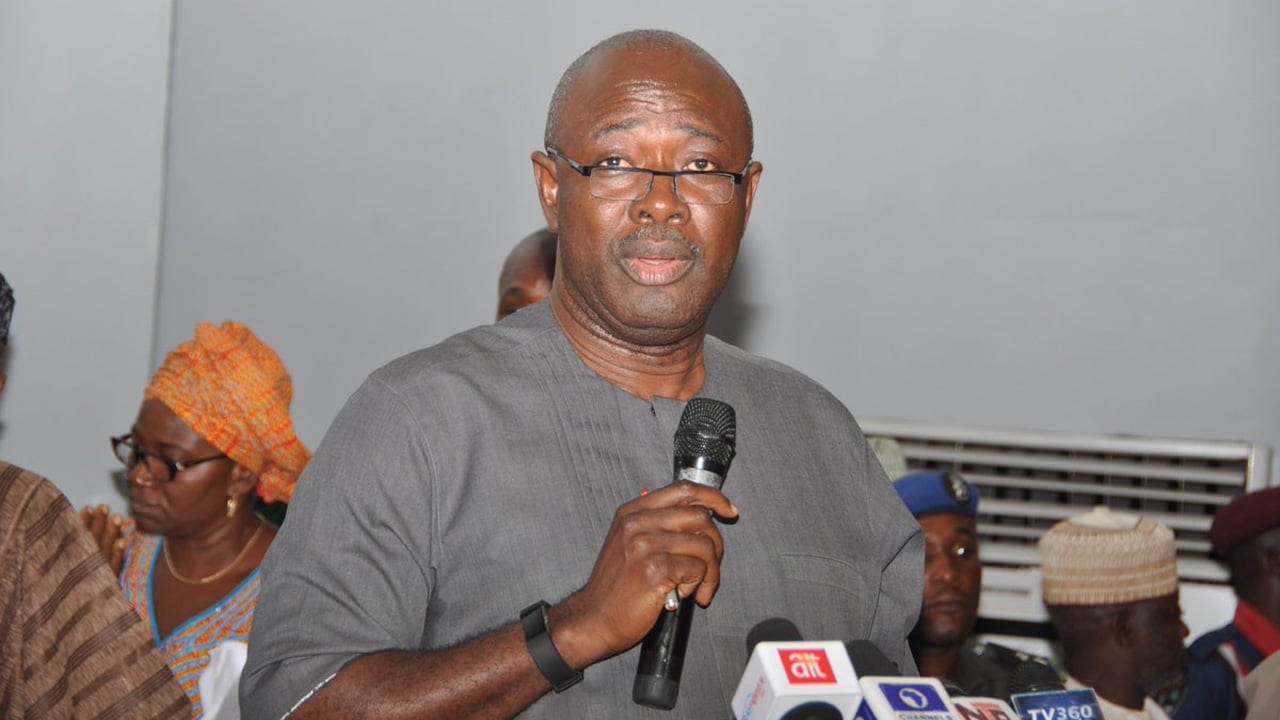
    The Trade Union Congress (TUC) has called on the Federal Government to reduce petrol prices to the rates seen in June 2023.

     This demand comes amidst rising fuel costs that have affected Nigerians since May when the rate surged from ₦184 to the current price of ₦998 per litre in Lagos.

    The Congress goes on to make a raft of suggestions which it reckons, when adopted by the Federal Government, would ameliorate the current hardship greeting the sudden increase in fuel pump price.

    avert the impending mallei The TUC proposed that foreign exchange be allocated to Dangote Refinery at a lower rate to make fuel more affordable.

    It also suggested sourcing refined petrol from other regions if current production cannot meet local demand.

    In addition, the TUC advocated for all marketers to be given licenses to lift petrol from the Dangote Refinery, ensuring availability and access to fuel across the country.

    “We want the price of the product to go below what it was before; not just reverse to what it was before but to go below,” said TUC President, Festus Osifo, at a press briefing in Abuja on Thursday.

    “We want the Federal Government to, through Nigerian Midstream and Downstream Petroleum Regulatory Authority (NMDPRA), give all marketers licenses to lift petrol from the Dangote Refinery.

    “The solution we are proposing if implemented will take us to the price we had as of June last year.

    “There is no government in the world that doesn’t intervene in its critical sector” and that the Federal Government “shouldn’t leave it (the oil sector) to the vagaries and gyration of our naira.

    “If it is not available, it is a problem. If, for example, the production from Dangote Refinery is less than 15 million litres per day, it is not sufficient.

    “So, while efforts are being made to ramp up production from Dangote Refinery, what we are demanding is that we should look for every other means as we are ramping up production, we should source for that difference and bring it in for a while until Dangote can get to that level where the production is sufficient to get to all nooks and crannies of Nigeria.

    For us, that is key because it will address the issue of availability,” the TUC boss stated.

  • South Korean Consortium to Establish Four Refineries in Nigeria

    South Korean Consortium to Establish Four Refineries in Nigeria

    Heineken Lokpobiri, Nigeria’s Junior oil Minister has hinted of a South Korean consortium establishing four refineries in Nigeria.

    Lokpobiri announced in Lagos, October 8, at the inaugural summit of Refineries Owners Association of Nigeria in Lagos, that each of the refineries will have 100,000 barrels/day capacity.

    The government is actively encouraging investments in the petroleum sector by creating a favorable environment for private partnerships. 

    Recently, an invitation was extended to the consortium, which aims to construct the refineries in different locations across the country. 

    Lokpobiri emphasized the government’s commitment to energy security and the need for more modular and mega refineries to boost the industry. 

    The approach involves a public-private partnership model to facilitate investment in the oil and gas sector’s midstream and downstream segments.

    To support local refineries, the Nigerian Upstream Petroleum Regulatory Commission has established guidelines to ensure a transparent supply of crude oil. 

    The government is also focusing on providing special concessions to local refinery owners, thereby enhancing their access to feedstock.

    Furthermore, Lokpobiri discussed the government’s plans to deregulate the downstream sector fully and ease tax burdens on imported refinery equipment.

     This initiative aims to position Nigeria as Africa’s leading petroleum refining hub and achieve self-sufficiency in petroleum production.

    In response to the challenges of crude oil theft and illegal refining, an international emergency committee has been formed to develop sustainable solutions for domestic refining operations. 

    The ministry is also exploring partnerships with international bodies to enhance knowledge transfer and technological advancements in the refining sector.

  • Don’t truncate Mallam Kyari good works at NNPCL- CSOs warn


    A group that goes by the name of the Global Centre for Conscious Living Against Corruption (GCCLAA), cautions against vested interests in the petroleum industry meddling in the works of the Mallam Mele Kyari led administration at the Nigeria National Petroleum Company Limited (NNPCL).

    Addressing the media Wednesday, the head of the Centre, Dr. Gabriel Nwambu told journalists that the coalition, after due evaluation of the record of stewardship of Mr. Kyari and the impact this has had on the Nigerian economy advises that the GMD should be allowed space to run his term.


    The group states that under his guidance, NNPC Limited has undergone a significant transformation, with a relentless focus on operational efficiency and productivity that has resulted in increased crude oil production and reserve growth.

    It posited that these achievements have greatly contributed to Nigeria’s energy security and economic development.

    “Mallam Kyari has strengthened strategic partnerships with both local and international stakeholders. This collaborative approach has fostered growth and innovation, positioning NNPC Limited as a premier energy company in Africa and earning widespread respect within the global oil and gas industry.

    “Recognizing the need for sustainable energy solutions, Mallam Kyari has demonstrated foresight and adaptability by expanding NNPC Limited’s portfolio and investments in renewable energy and gas development.