
Category: Politics

  • Presidency reaffirms commitment to harmony at the National Assembly

    Presidency reaffirms commitment to harmony at the National Assembly

    The Presidency has strongly refuted reports suggesting the deployment of security agents to obstruct senators from carrying out their legislative duties.

    It denied knowledge or deployment of agents to obstruct alleged impeachment plot against the Senate President.

    In a statement issued by Senator Basheer Lado, Special Adviser to President Bola Ahmed Tinubu, the Presidency dismissed these claims as baseless and urged the public to disregard them.

    Senator Lado emphasized that there is no discord among the senators and that the legislative body remains united in its commitment to advancing Nigeria’s democracy.

    He stressed that the reports of tension or a rift within the National Assembly are entirely unfounded.

    “The President of the Federal Republic of Nigeria, His Excellency Bola Ahmed Tinubu, is fully committed to fostering a harmonious working relationship among the senators.

    He recognizes the crucial role the Senate plays in driving legislative progress and is dedicated to ensuring that this collaboration is built on mutual respect, dialogue, and shared goals for the peace, progress, and prosperity of all Nigerians,” Senator Lado stated.

    He further clarified that any security presence within the National Assembly Complex is strictly routine, aimed at ensuring the safety and protection of lawmakers and staff, and not for any interference in legislative matters.

    The statement reassured the public that the Senate continues to function freely and without hindrance, and urged citizens to disregard the misleading reports, which could harm the integrity of the legislative process.

    This reaffirmation from the Presidency underscores its commitment to maintaining a stable and cooperative relationship between the executive and legislative arms of government.

  • Minimum Wage: Lagos Approves N85,000

    Minimum Wage: Lagos Approves N85,000

    The governor of Lagos state, Babajide Sanwoolu has approved N85,000 as minimum wage for civil servants in the state.

    This is in line with the federal government’s approval of N70,000 as minimum wage in Nigeria.

    Governor Sanwoolu made this announcement on Channels TV last night in an interview session.

    This move comes as a great relief to workers with the Lagos state government as it goes a long way to ameliorate the current spiraling inflation and cost of living crisis.

    While announcing the new wage, the governor cautioned that this should not be misconstrued as competing with any state government but a reflection of the socioeconomic realities of Lagos state.

  • Senate Debunks Impeachment Plot Reports 

    Senate Debunks Impeachment Plot Reports 

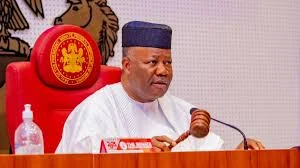
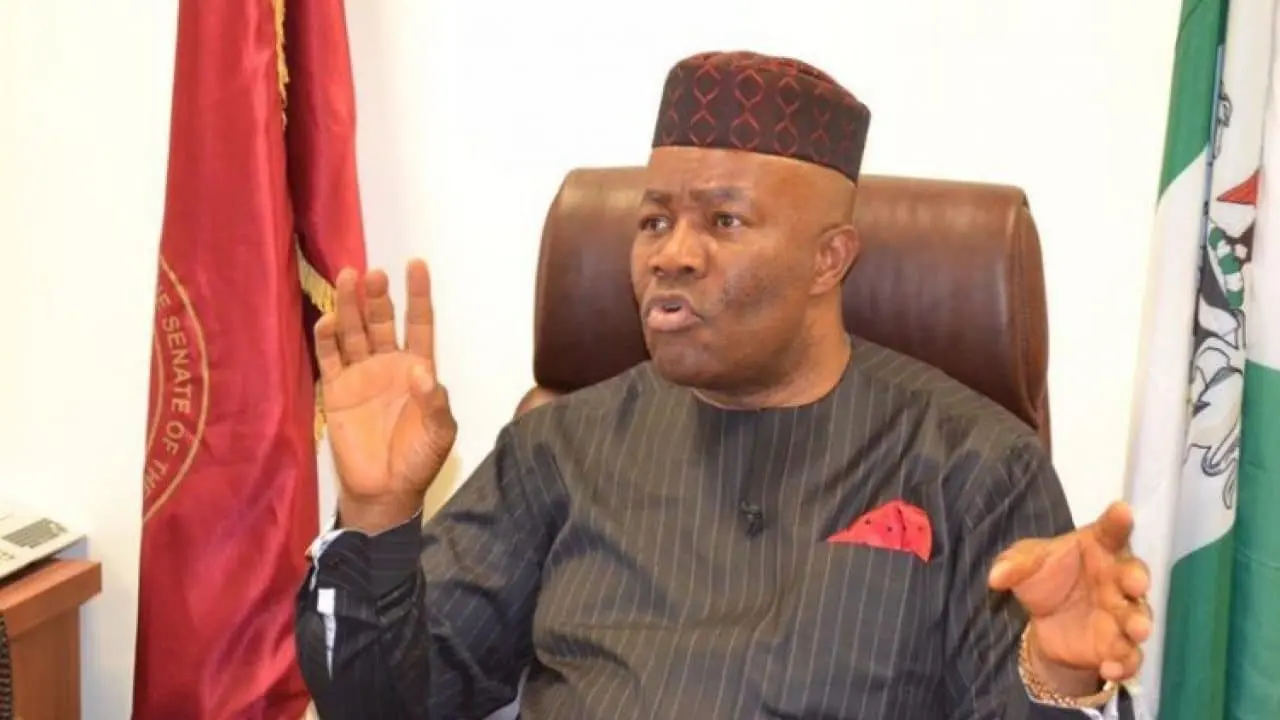
    President of the Senate , Senator Godswill Akpabio has dismissed a widespread news alleging that security agencies have taken control of the National Assembly to prevent a possible impeachment of the President of the Senate.

    Senator Akpabio was presiding over plenary when his attention was drawn to the speculations on social media.

    He described it as fake news fabricated by mischief makers.

    The President of the Senate urged members of the public to disregard such news and warned all those circulating deliberate falsehood to refrain from such acts.

    Senator Akpabio explained that there is peace in the Senate and there is no consideration for an impeachment by any section of the parliarment.

    However, the Matter has been referred to the Senates Committee on Public Services for Further investigation and legislative action

  • PDP Chairman Lifts Suspensions, Calls for Party Unity

    PDP Chairman Lifts Suspensions, Calls for Party Unity

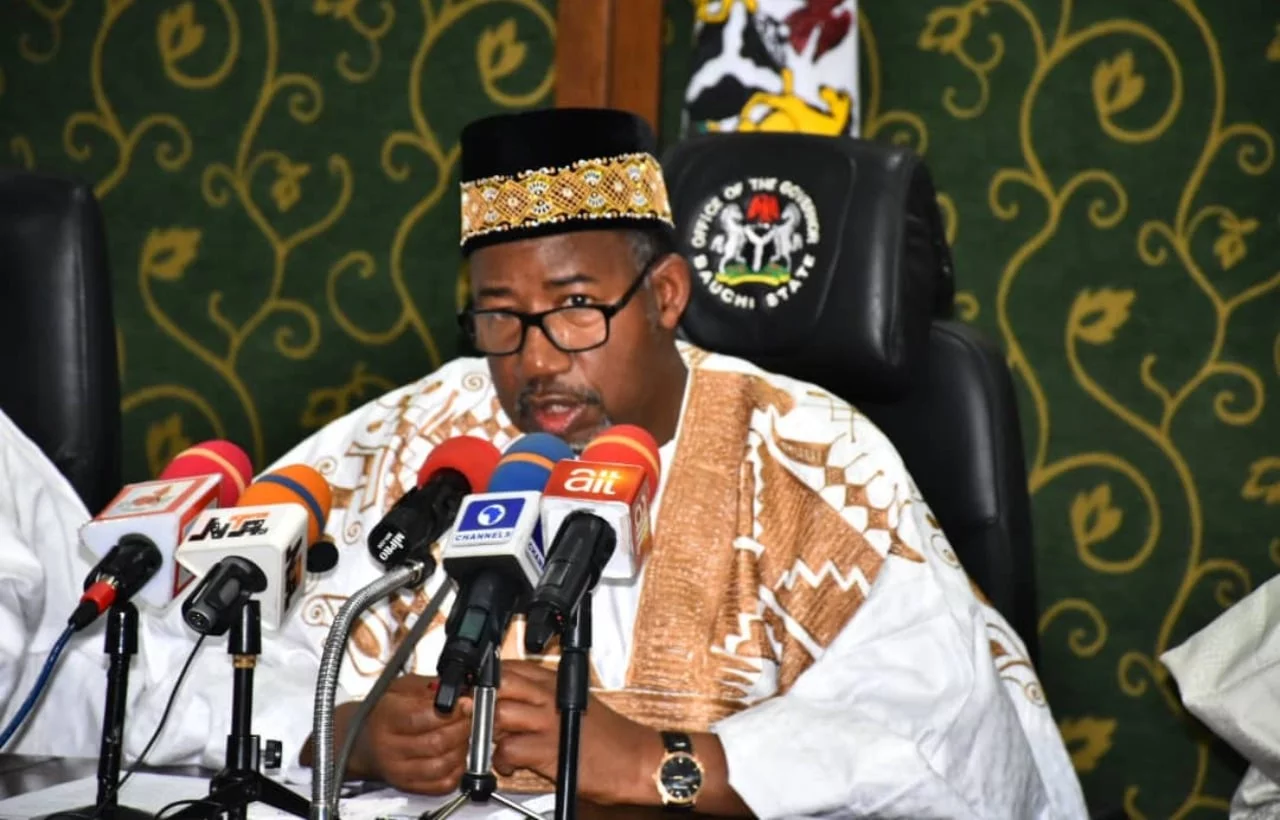
    The Chairman of the Peoples Democratic Party (PDP) and Governor of Bauchi State, Bala Mohammed, has lifted all recent suspensions of party members, signaling a move towards greater unity within the party.

     This decision comes after a meeting of the PDP Governors Forum held early Tuesday, where key issues affecting the party were discussed.

    In addressing the gathered governors, Mohammed acknowledged the presence of disputes among members but asserted that such challenges can be resolved through dialogue.

     The governors agreed to revert to previous arrangements, urging all factions within the party to set aside differences and work collaboratively for a stronger PDP moving forward.

    ReplyForwardAdd reaction
  • Kano State Promotes Teachers, Staff, New Education Initiative

    Kano State Promotes Teachers, Staff, New Education Initiative

    Governor Abba Kabir-Yusuf of Kano State has approved the promotion of 20,542 personnel within the state’s primary and junior secondary schools, covering both teaching and non-teaching staff for the years 2023 and 2024.

     The development was disclosed by the chairman of the State Universal Basic Education Board (SUBEB), Yusuf Kabir, during a meeting with various education stakeholders held in Kano on Monday.

    The promotions, scheduled for implementation in October, are part of the administration’s broader goal to enhance the welfare and motivation of education personnel across the state.

     Kabir encouraged the beneficiaries to demonstrate renewed commitment to their duties, underlining that the state government expects a positive impact on student performance and overall educational quality.

    Additionally, he called upon community leaders, Islamic scholars, and organizations to play a proactive role in advocating for school enrollment among children in their communities. 

    This step, he stated, would be crucial in ensuring that the benefits of the state’s investment in education reach as many children as possible.

    Attendees at the meeting acknowledged the governor’s consistent efforts to improve the educational system.

     They highlighted recent actions like distributing educational materials, constructing new classrooms, renovating existing ones, and providing specialized training for teachers as evidence of the administration’s dedication to uplifting Kano’s educational standards.

    ReplyForwardAdd reaction
  • Sokoto Offers Food Relief at 55% Discount Amidst Economic Hardship

    Sokoto Offers Food Relief at 55% Discount Amidst Economic Hardship

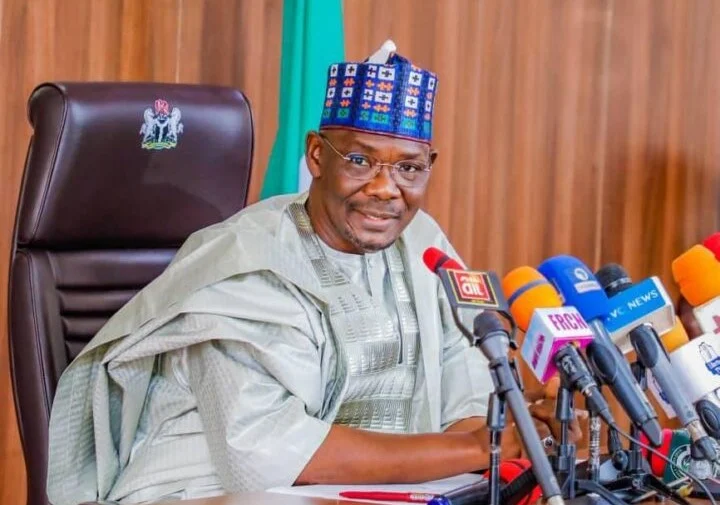
    Sokoto State has launched a new relief initiative aimed at providing residents with food and essential items at a 55% discount, as announced by Governor Ahmed Aliyu.

     This programme, introduced on Monday, is a response to the economic hardship intensified by the recent subsidy removal and global financial downturns.

    Governor Aliyu highlighted the inclusive nature of the initiative, ensuring that all residents, regardless of political affiliation or social status, have access to the discounted goods. 

    He emphasized the government’s dedication to distributing these items across all 244 wards in the state, making them accessible to families who need them the most.

    Additionally, the Sokoto government has taken other measures to ease the economic burden on residents. Mass transit services have been subsidized to reduce transportation costs and ensure that people can move around the state affordably.

     The governor affirmed that these palliatives are part of a broader strategy to support the population during this challenging period.

    Governor Aliyu also appealed to affluent community members and corporate organizations to support the program by providing food and essentials to the less privileged in their localities.

     This collaborative approach, he believes, would amplify the impact of the state’s efforts and create a wider safety net for those most in need.

    Chiso Dattijo, who leads the committee overseeing this initiative, expressed support for the governor’s actions, commending the approach as a proactive solution for the economic challenges faced by Sokoto residents.

    ReplyForwardAdd reaction
  • Senate President’s Office Debunks Viral Video 

    Senate President’s Office Debunks Viral Video 

    The office of Senate President Godswill Akpabio has responded to a viral video that misrepresents his comments about food and economic challenges.

     According to Akpabio’s media aide, Jackson Udom, the video in question is a manipulated version of a lighthearted conversation among Senate members shortly after Akpabio’s inauguration in June 2023. 

    Udom clarified that the clip was part of a private discussion where Akpabio jokingly suggested his colleagues take advantage of a dinner organized for them, given the current economic climate. 

    He criticized the dissemination of this doctored footage as a harmful attempt to tarnish Akpabio’s reputation and cause embarrassment to him and his constituents.

    Udom called for a balanced portrayal, urging media outlets to publish corrections alongside the misleading video to address the negative implications it has had on public perception.

     He stressed the importance of context in such communications, asserting that the original remarks were never intended for public scrutiny.

    ReplyForwardAdd reaction
  • INEC in America’s November election (1)

    INEC in America’s November election (1)

    America has many contradictions in spite of its claim to exceptionalism.

    THERE will be a significant election this year in a significant country which prides itself as the greatest democracy on earth. That country, a super power, claims that the election will be consequential, and will have ramifications for its citizens, and the whole world. For about two centuries this country has held this poll on the first Saturday in November in the election year. For this year, that date falls on November 5. The election was initially slated to be a fierce battle between two old men, one in his late 70s, and the other in his early 80s. It was supposed to be a rematch, sort of, because the duo had battled each other four years ago with the older prevailing. You already know because that country is the United States of America where the then incumbent president, Donald Trump, was defeated in 2020, and his successor, Joe Biden, was defeated from seeking a second term by a disastrous presidential debate outing on June 27. Biden came under intense pressure from his party people, and had to ‘pass the torch’ in July to his vice president Kamala Harris who is younger and more energetic.

    America has many contradictions in spite of its claim to exceptionalism. There’s is no record that it has been governed by any other means except through the ballot box, at least not in the last 200 years. It lays claim to democracy but it fails to meet the key ingredient of rule by the majority of its citizens voting in an election. Certainly, not for the election of its president. The classical definition of democracy is government of the people by the people for the people. In many climes, it is also governance by representatives who had been elected by a majority of voters during any election. Not so in the United States. In 2016, Hillary Clinton, candidate of the Democratic Party lost the presidential election in spite of winning three million more popular votes of the electorate. His rival, Donald Trump, of the Republican Party with an inferior popular votes tally was returned as the winner. The unique but apparently an undemocratic (to many outsiders) Electoral College gave victory to Trump. The candidates and the parties in that contest knew the rule and so could not complain.

    The name, Electoral College, which determines who is elected as the US president is not in that country’s constitution. History has it that the founding fathers of the country inserted this mode of electing a president as a compromise between election of the president by a vote in Congress (parliament), which used to be the practice, and the election of the president by a popular vote of qualified citizens. Until the 1960s not many people were qualified to vote in elections. There was no universal suffrage. The constitution in its 12th Amendment recognised ‘electors’. And the ‘electors’ for each of the 50 states have been determined, and the number of ‘electors’ for each state may be reflective but not necessarily proportional to the population of the state. Any candidate who secures a minimum of 270 Electoral College votes wins the presidency irrespective of the outcome of the popular votes.

    The Electoral College has been a vexatious subject in American politics for centuries. And that explains why surveys showed that in the past 200 years more than 700 proposals had been introduced in Congress to either reform or eliminate the Electoral College. Probably, to underline its undemocratic nature, it has been recorded that there have been more proposals for constitutional amendments on changing the ‘electors’ method for determining the winner of the American presidency than on any other subject.

    Apart from politicians, America’s body of lawyers, the American Bar Association, has had cause to criticise the Electoral College as “archaic” and “ambiguous”, and its polling showed that 69% of lawyers favoured abolishing it in 1987. In addition, public opinion polls showed that Americans favoured abolishing it by majorities of 58% in 1967; 81% in 1968; and 75% in 1981. The conventional wisdom is that any candidate who wins a majority or plurality of the popular votes nationwide has a good chance of winning in the Electoral College, but there are no guarantees as implicated in the presidential election results of 1824, 1876, 1888, 2000 and 2016.

    It has been suggested that the Electoral College was contrived by the founders of the US to stem the possible agitations for separation from the Union by less populated states who may feel cheated and excluded in producing the president of the country. In effect, the Electoral College was informed by the need for the accommodation of all segments of the society. However, some scholars argued that the ‘electors’ scheme was indeed the handiwork of a segment of the elite among the founding fathers who did not want to totally relinquish the election of the president to the masses.

    On November 5, two candidates  Harris (Democrat), and Trump (Republican ) will lock horns for who occupies the American presidency which is generally regarded as the most powerful office in the world. Third party candidates are usually inconsequential since none has won the office ever. Harris appears to have an edge in the race at this time but election watchers reckon that in reality, the two candidates are running neck-and-neck. The proposition for the moment is that any of Harris or Trump can win the election. And this uncertainty is down to the complexities of the Electoral College. In 2016, polls and pundits put Hillary Clinton ahead by several miles. It was expected to be a coronation of the former American first lady (she was the wife of former President Bill Clinton), senator and secretary of state. Alas, it was not. Trump, who reportedly had given up that fateful election night in 2016 in the wake of exit polls that overwhelmingly pointed to Hillary’s win, won through the Electoral College.

    That scenario may not play out the same way this November. Nobody has yet said that November 5 will be a coronation for either of the candidates. This is so because the division in American politics is deep. It has been so since the advent of Trump (descending from the golden escalator) in presidential politics in 2015. The division became deeper when Trump was declared as the loser of the 2020 election. He has refused to concede defeat. He has failed to accept that he lost. He still insists even less than one month to the next election that the election in 2020 was procured by fraud for Biden. It does not matter that he was the incumbent at the time.

    “…Next week we’ll discuss how Nigeria’s Independent National Electoral Commission (INEC’s) notorious inconclusive elections could play out in the November election in the US. The possibility of another round of violently contested election outcome is visible in the horizon with local election bodies planning to delay certification of results so as to provide ample time for the loser to sow doubts on the validity of the polls.”

    A lot has happened in the years between the 2020 presidential election and this year’s. There was a violent attack on January 6, 2021, ostensibly to stop the certification of the election results by the House of Representatives and the Senate. Those who stormed the Capitol Hill, the location of the parliament, chanted that they would hang the then vice president, Mike Pence. They even prepared a noose in the vicinity of Congress for Pence. And were heard chanting ‘hang Mike Pence’. By the way, Pence was on the losing ticket but he was constitutionally mandated to preside over the certification of the results of the election as the president of the senate. He rejected pressure from a section of his party to overthrow the election result. Trump, who was twice impeached by the House of Representatives and twice not convicted by the senate, reportedly watched the hours of the attack on the Capitol from the White House, and allegedly failed to lift a finger even when the life of his vice president was in danger. When he was told about the danger faced by Pence and the urgent need for him to act, he allegedly retorted, “so what?”

    In the intervening years also, former president Trump had been indicted in multiple jurisdictions, tried in two cases and convicted in at least two courts of law. He was convicted for sexual assault, and for business fraud. Trump and his supporters still rail that his indictments and convictions were politically motivated, and brazen attempts to interfere with the November presidential election. But in the eyes of the law, and at least until the convictions are upturned by superior courts, Trump remains a felon. In some other democracies a convict or felon would not be allowed to be on the ballot. But apparently not in the United States. So, he could be a felon and president of the most powerful country in the world at the same time. That could just be part of the exceptionalism of America.

    Next week we’ll discuss how Nigeria’s Independent National Electoral Commission (INEC’s) notorious inconclusive elections could play out in the November election in the US. The possibility of another round of violently contested election outcome is visible in the horizon with local election bodies planning to delay certification of results so as to provide ample time for the loser to sow doubts on the validity of the polls. We will also examine a ‘democratic’ setting where a single senator could hold the whole nation to ransom, a court system where judgments are informed not by the letters and spirit of the law but by the ideological leanings of the judges, and who appointed them, and a 21st century supposed beacon of democracy governed by a constitution written in the 18th century, some of which words were laid out in unclear words and fractured sentences.

  • Supreme Court Judgement: Nasarawa State Moves to Reform LG Structure

    Supreme Court Judgement: Nasarawa State Moves to Reform LG Structure

    The Nasarawa State Government has introduced a bill to the State House of Assembly aimed at revising the local government system in line with the Supreme Court’s recent decision on local government autonomy.

    The proposed legislation, titled “A Bill for a Law to Repeal and Re-enact the Establishment, Structure, Composition, Finance and Function of Local Government System in Nasarawa State, 2024,” seeks to update the current framework to reflect the new mandate.

    During a recent session, the Speaker of the House, Rt. Hon. Danladi Jatau, noted that the bill represents a move to reshape the local government structure to align with the Supreme Court’s ruling on financial independence for local councils.

     The House Leader, Hon. Suleiman Azara, presented the bill for the first reading, with the Minority Leader, Hon. Luka Zhekaba, providing support.

    The state government’s plan, as outlined by the Chairman of the House Committee on Information, Hon. Jonah Dizaho, includes the removal of the joint account system and the elimination of the Ministry for Local Government and Chieftaincy Affairs. 

    The second reading of the bill is scheduled for October 16, 2024.

  • INEC Announces PVC Collection for Registered Voters in Ondo State

    INEC Announces PVC Collection for Registered Voters in Ondo State

    The Independent National Electoral Commission (INEC) has announced that the Permanent Voters’ Cards (PVCs) for newly registered voters in Ondo State are ready for collection.

    The PVCs, which were printed following the recently concluded Continuous Voter Registration (CVR) exercise, have been delivered to INEC’s office in Akure.

    According to a press release signed by Sam Olumekun, National Commissioner and Chairman of the Information and Voter Education Committee, a total of 89,777 new PVCs have been printed. These include 58,708 new voters and 31,069 applicants who requested transfers, updates, or replacements for lost or damaged PVCs.

    The collection process will be carried out in two phases. First, from Thursday, October 17, to Monday, October 21, 2024, PVCs will be available at 203 Ward collection centres across the state.

    This will be followed by a second phase at the 18 Local Government Area (LGA) offices, where voters can collect their PVCs between Wednesday, October 23, and Tuesday, October 29, 2024. Collection times will be from 9:00 AM to 5:00 PM daily, including weekends.

    INEC also confirmed that PVCs from previous voter registrations, which have not yet been collected, will be available at the designated centres during this period.

    Registered voters in Ondo State are urged to collect their PVCs in person, as the commission reiterated that collection by proxy will not be allowed. INEC has provided detailed information on the addresses of the Ward and LGA collection centres on its website and social media platforms to assist voters.

    In a further effort to simplify the collection process, INEC will paste the register of new voters at each collection centre.

    Additionally, the entire collection register for new voters has been uploaded to the commission’s website, making it easier for individuals to identify their collection centres and pick up their PVCs seamlessly