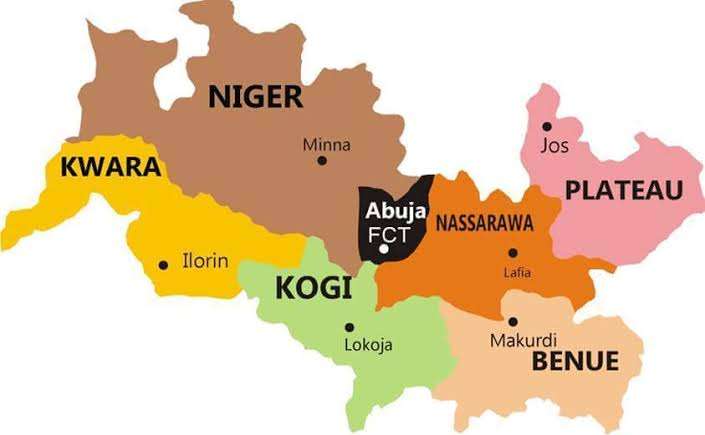
Tag: Abuja

  • Nigeria, Saudi Arabia Reaffirm Partnership on Hajj, Umrah Administration

    Nigeria, Saudi Arabia Reaffirm Partnership on Hajj, Umrah Administration

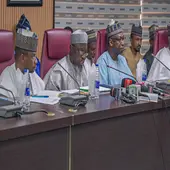
    Abuja — Nigeria and the Kingdom of Saudi Arabia have reaffirmed their commitment to strengthening cooperation in the administration of Hajj and Umrah, following a historic high-level engagement held in Abuja.

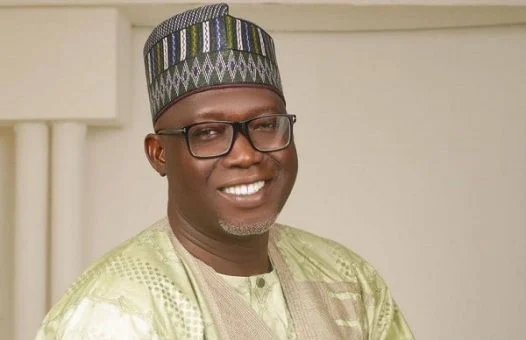
    The reaffirmation was disclosed in a statement by Ahmad Muazu, Technical Assistant (Media) in the Office of the Chairman and Chief Executive Officer of the National Hajj Commission of Nigeria (NAHCON), Prof. Abdullahi Usman.

    According to the statement, the commitment was expressed during talks between Nigerian authorities and a Saudi delegation led by the Kingdom’s Minister of Hajj and Umrah, Tawfiq Al-Rabiah.

    Welcoming the delegation, Prof. Usman described the visit as a landmark in Nigeria–Saudi relations and a strong signal of the Kingdom’s continued partnership with Nigeria in serving the “Guests of Allah.” He commended Saudi Arabia’s sustained investments in pilgrim welfare, infrastructure, safety, and service delivery.

    Usman said Saudi Vision 2030 had significantly improved the efficiency and quality of Hajj and Umrah operations globally. He also acknowledged challenges related to Umrah visa access for Nigerians, particularly overstaying by a segment of pilgrims.

    He said Nigeria was working with Saudi authorities to address the issue through stricter regulation of licensed operators, improved data accountability, and community-based sensitisation to ensure compliance and timely return.

    Usman reaffirmed NAHCON’s readiness to comply fully with all guidelines issued by the Saudi Ministry of Hajj and Umrah, stressing Nigeria’s resolve to protect the integrity of Hajj and Umrah operations while safeguarding pilgrims’ interests.

    Speaking at the meeting, Nigeria’s Minister of Foreign Affairs, Yusuf Tuggar, described the visit as historic, noting that it was the first time a Saudi Minister of Hajj and Umrah was visiting Nigeria.

    “This is the first time ever that a Minister of Hajj and Umrah of the Kingdom of Saudi Arabia is visiting Nigeria. It is history in the making,” Tuggar said.

    He conveyed the goodwill of President Bola Tinubu to the Custodian of the Two Holy Mosques, King Salman bin Abdulaziz Al-Saud, and to the Crown Prince and Prime Minister, Mohammad bin Salman bin Abdulaziz Al-Saud.

    Tuggar said cooperation in Hajj and Umrah administration remains a key pillar of Nigeria–Saudi relations, rooted in faith, mutual respect, and long-standing people-to-people ties. He also called for future discussions on quota expansion in view of Nigeria’s growing population.

    In his remarks, Al-Rabiah reaffirmed Saudi Arabia’s commitment to institutional cooperation with Nigeria, aimed at ensuring a safe and seamless experience for Nigerian pilgrims.

    He disclosed that about 89,000 Nigerians performed Umrah in 2025, with 92 per cent arriving on Umrah visas, supported by approximately 420 flights through King Abdulaziz International Airport in Jeddah.

    Al-Rabiah expressed optimism about preparations for the 1447 Hijri Hajj season, with emphasis on operational readiness, safety, service quality, and procedural efficiency.

    “Insha Allah, Hajj 2026 will be the best ever,” he said.

    Both sides agreed to sustain close coordination, strengthen regulatory compliance, and pursue practical solutions to enhance the experience of Nigerian pilgrims while preserving the integrity of Hajj and Umrah systems.

  • Senate Seeks Mandatory Anti-Venoms in Hospitals After Singer’s Death

    Senate Seeks Mandatory Anti-Venoms in Hospitals After Singer’s Death

    The Nigerian Senate has urged the Federal Government to mandate the availability of snake anti-venoms and other critical antidotes in hospitals across the country following the death of Abuja-based singer, Ifunanya Nwangene, popularly known as Nanyah.

    Nwangene reportedly died after she was bitten by a snake at her residence, a development lawmakers described as a reflection of serious gaps in emergency healthcare delivery.

    During plenary on Tuesday, the Senate called on the Federal Ministry of Health to formulate and enforce national guidelines stipulating minimum stock levels of anti-venoms, antidotes, and emergency medicines in both public and private hospitals.

    The upper chamber also resolved that private hospitals that fail to maintain these essential medicines should not be granted operating licences, stressing that emergency care must meet minimum safety standards nationwide.

    In addition, lawmakers urged the Federal Government to ensure adequate funding and sustained supply of anti-venoms in public health facilities to prevent avoidable deaths arising from snake bites, poisonings, scorpion stings, and drug overdoses.

    The resolutions followed a motion sponsored by Senator Idiat Oluranti Adebule (APC, Lagos West), who noted that Nigeria continues to record increasing cases of envenomation and poisoning requiring urgent medical attention.

    She warned that the absence of life-saving antidotes in hospitals often results in deaths that could otherwise be prevented with timely intervention.

    Contributing to the debate, senators observed that Nwangene’s death highlighted deficiencies in emergency preparedness, adding that prompt access to anti-venoms might have altered the outcome.

    The Senate further directed the National Agency for Food and Drug Administration and Control to work with the Ministry of Health to oversee the procurement, quality control, storage, and nationwide distribution of safe and affordable anti-venoms, with priority given to high-risk areas.

    State governments were also urged to conduct immediate audits of hospitals within their jurisdictions to ensure compliance with approved standards for antidote stocking and emergency response.

    The Senate observed a minute of silence in honour of Nwangene, who died at the age of 26.

  • ADC Signals Ideas-First Politics With 50-Member Policy Committee

    ADC Signals Ideas-First Politics With 50-Member Policy Committee

    The African Democratic Congress (ADC) has constituted a 50-member Wise Men and Women Policy and Manifesto Committee to provide strategic direction and shape the party’s ideological and policy framework ahead of future political engagements.

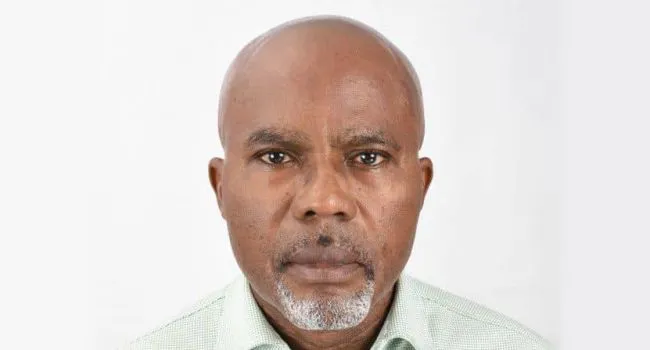
    The committee is chaired by former National Chairman of the APC, John Odigie-Oyegun, bringing decades of political leadership experience to the role. Serving as Deputy Chairman is renowned political economist and public intellectual Pat Utomi, while seasoned political organiser Salihu Lukman will act as Secretary, overseeing coordination and documentation.

    Other prominent members of the committee include former Senator Gershon Bassey, former Deputy Governor of Kogi State Simon Achuba, former Chief of Defence Staff Sadique Abubakar(rtd.), and respected diplomat Abioye Mohammed.

    The committee also features leading academics and policy experts, including Chidi Odinkalu, Remi Sonaiya, Anthony Kila, Sam Amadi, Jude Njoku, and Ibrahim Garba, underscoring the party’s emphasis on intellectual depth and evidence-based governance.

    Civil society representation is strong, with the inclusion of Oseloka Obaze, Otive Igbuzor, Nkoyo Toyo, Yemi Adamolekun, and Usman Bugaje.

    Gender inclusion is reinforced through the participation of figures such as Funke Awolowo, Hafsat Moji Bello, Jumoke Olawoyin, and Salametu Izuagie.

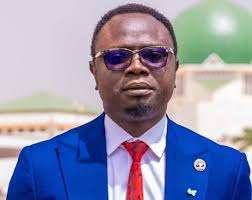
    Also listed is David Olofu, an emerging political figure in Benue State and aspirant for the Benue South Senatorial seat in the 2027 general election.

    According to the party, the committee reflects the ADC’s commitment to inclusivity, national spread, and cross-sector expertise, drawing members from politics, academia, security, civil society, and professional practice.

    The formal inauguration of the committee is scheduled for Monday, February 2, 2026, at the ADC National Secretariat in Abuja, where members are expected to commence deliberations on the party’s manifesto and long-term policy vision.

  • Wike Names Galadima as New SSA on Development

    Wike Names Galadima as New SSA on Development

    ControlThe Minister of the Federal Capital Territory (FCT), Nyesom Wike, has approved the appointment of Mukhtar Galadima as Senior Special Assistant on Development Control and Planning.

    The announcement was made on Wednesday in Abuja by Lere Olayinka, Senior Special Assistant to the Minister on Public Communications and Social Media.

    Galadima, a seasoned town planner, brings more than three decades of professional experience in urban planning and administration within the FCT Administration.

    Over the years, he has served in strategic capacities, including the Department of Development Control and the Satellite Towns Development Agency, before his appointment as Director of Development Control under the Abuja Metropolitan Management Council in 2016.

    He retired from the civil service in November.

    Olayinka noted that Galadima has served on key committees such as the Abuja Masterplan Restoration Task Team and the Committee on the Review of Revoked Land Titles and Change of Land Use.

    The appointment, he added, takes immediate effect.

  • A Minister of Particular Concern

    A Minister of Particular Concern

    By Ugo Onuoha


    A Minister of Particular Concern

    “What happened between the Minister of the Federal Capital Territory (FCT), Nyesom Wike, and Navy Lieutenant A.M. Yerima is unfortunate. When Wike arrived at the site of the disputed land in Abuja, the officer explained that he was simply obeying lawful orders. Wike should not have exchanged words with the officer; he ought to have addressed his concerns through the officer’s superiors. He is our colleague, and he could have reached out to us to resolve whatever issue there was.

    “The officer’s action was lawful—he was trained to be disciplined, loyal, and obedient to orders. Therefore, the young officer merely carried out his duty, which is worthy of commendation. He did not commit any offence under military regulations. If you observe carefully, he spoke respectfully and conducted himself properly.

    FCT Minister, Nyesom Wike in near fisticuff with an officer of the Nigerian Navy

    “There is, therefore, no offence under military law for which he should be charged. Wike should not have engaged him in an altercation, especially out of respect for the uniform he was wearing. Anyone who disrespects a soldier indirectly disrespects the President, who is the Commander-in-Chief of the Armed Forces. There is, therefore, no basis for any punishment against the officer. This is not about supporting the military to act disrespectfully towards civilians. The Minister should understand that every officer has superiors.

    “I gathered that he called the Chief of Defence Staff, who advised him to wait for an investigation. However, he did not wait and instead went straight to the site. As a leader, he ought to have exercised patience and waited for the outcome of the investigation. Wike also contacted the Chief of Naval Staff, who assured him that an inquiry would be conducted. Yet again, he did not wait. It was supposed to be a one-day inquiry, but he chose to go there and confront them. Now that the Chief of Naval Staff has visited the area—since it involves a land dispute—the matter will be investigated to determine who owns the lawful documents. If the land has been revoked, there are established procedures to follow diplomatically.

    “We [the Ministry of Defence] have not received any formal complaint from Wike, but I called him after the video went viral and advised that he should have spoken with me before going there, rather than confronting the officers directly.”


    A Matter Effectively Closed

    I have chosen to reproduce the words of Alhaji Bello Matawalle, the Minister of State for Defence, because of what they represent. Although he mentioned the need for further investigation, the tone and tenor of his statement suggest that the matter is effectively closed—and the naval officer has nothing to worry about. Lt. Yerima, by every indication, acquitted himself well. He was professional and measured in his conduct during that very public confrontation with a “super minister” known for his loquacity.

    To reinforce the sense that the matter is closed, one only needs to recall the words of the Minister of Defence, Alhaji Mohammed Badaru, who stated that his ministry and the armed forces “will always protect our officers on lawful duty.” Badaru added: “We will not allow anything to happen to him so far as he is doing his job, and he is doing his job greatly well.” The defence minister made this statement during a ministerial briefing for the 2026 Armed Forces Remembrance Day in Abuja. Let that sink in.

    You may call it esprit de corps, but several retired generals from both the North and the South—including former Chiefs of Defence Staff and Army Staff, Generals Lucky Irabor and Tukur Buratai—have spoken in Yerima’s defence. They even called for a public apology from Wike to both Yerima and the Commander-in-Chief, President Bola Tinubu, for dishonouring a military officer commissioned by the President himself.


    Lawyers, Silence, and Political Optics

    Notable voices have weighed in on the Wike–Yerima confrontation over the disputed plot of land in Abuja last Tuesday. Some are lawyers—senior and junior—while others are political commentators and public intellectuals. A few have argued in favour of Wike, citing the 1999 Constitution (as amended), but the majority have faulted him, emphasizing due process, the rule of law, and the impropriety of resorting to self-help, as appeared to be the case here.

    As usual, the legal community has been divided—lawyers seldom agree on anything, even when the law seems straightforward to the “unlearned.” For most of the past week, they have been doing what they do best: lawyering. Their disputations may be intellectually stimulating, but one must not take them too seriously. Often, their arguments are shaped by convenient partisanship masquerading as constitutional fidelity.

    By the way, has anyone noticed the deafening silence from Wike’s colleagues in the Federal Executive Council? Nearly fifty cabinet members, yet not one has publicly spoken in his defence. Does this silence reflect how they truly regard the Minister? As for President Tinubu, who appointed Wike “on our behalf,” the Minister may well be beyond reproach or removal—for obvious political reasons.


    The Politics of 2023 and the Future of 2027

    Wike appears untouchable—because of the past (2023) and the future (2027). President Tinubu, ever the political strategist, prioritizes electoral victory by any means necessary—the Machiavellian creed that the end justifies the means. And Wike fits perfectly into that school of thought.

    Tinubu “discovered” Wike in 2023, when the latter was nearing the end of his governorship of oil-rich Rivers State. Having fallen out with his own party, the PDP, Wike was eager to prove his relevance. Tinubu needed a foothold in the Niger Delta and, by extension, the national electoral map. In that year’s presidential election, Wike reportedly “delivered” Rivers State to Tinubu—an opposition candidate—in defiance of his own party’s standard-bearer, Atiku Abubakar.

    An APC governor from the North, astonished by Wike’s performance, allegedly remarked that his party merely begged for 25 percent of the votes but received an overwhelming—and inexplicable—victory. Unsurprisingly, the PDP still won the subsequent governorship election by a landslide, demonstrating the complex web of political transactions that define Nigerian elections.

    In essence, Wike paid with the votes of Rivers people for his current position in a supposedly opposition-led federal government. That, in part, explains his “untouchable” aura. He remains a crucial asset for the 2027 elections—and the President knows it.


    The Rivers Factor and a Trail of Conflict

    Wike has long been a person of concern throughout his political career—from his days as Chairman of Obio/Akpor Local Government Area, to Minister, to Governor, and now to FCT Minister. Since assuming office in August 2023, controversies have dogged both his official and personal conduct.

    He installed Siminalayi Fubara as his successor in Rivers State but soon fell out with him. Earlier this year, he was linked to political violence that led to a temporary declaration of emergency in the state, suspension of all elected officials—including the governor and lawmakers—by President Tinubu. The crux of the matter was political control. Wike openly claimed he nominated all elected officials, purchased their nomination forms, and installed them in office. The implication: Rivers State belongs to him.

    A chastened Fubara has since been reinstated under conditions widely reported to include a promise not to defect to the APC as its leader and to forgo a second-term bid.

    Throughout his political journey, Wike has sparred with nearly everyone who once aided his rise—from former President Goodluck Jonathan and his wife, Patience, to his predecessor, Rotimi Amaechi. His rift with Atiku Abubakar and the PDP leadership over the 2023 presidential ticket further cemented his image as a combative political loner.

    On Saturday, he and his loyalists were reportedly expelled from the PDP—a move he predictably dismissed with scorn. Wike is, as the Igbo say, an ikiri—a tenacious creature that never lets go once it bites. But the real casualty may be the PDP itself, now adrift and internally fractured.

    A court ruling against holding the party’s Ibadan convention underscores how the PDP’s legal and political machinery remains compromised. In Abuja, many judges are whispered to be “Wike’s judges,” highlighting his alleged influence over the judiciary.


    Money, Power, and the Capital Territory

    Wike’s public persona is equally polarizing. His frequent, combative media chats—lavishly funded from the FCT’s coffers—have become theatrical displays of arrogance. Barely two months after his appointment, he reportedly secured presidential approval to exempt the FCT from the Treasury Single Account (TSA) policy, giving him free rein over the territory’s internally generated revenue—beyond public scrutiny.

    Allegations have since swirled around him: the revocation and reallocation of prime land to cronies and family members, misuse of public resources (including taking his children on official foreign trips), and failure to fully declare assets, notably properties in the United States allegedly registered in his wife’s and children’s names. He has also been accused of using public venues for partisan political events, including hosting a factional PDP meeting at the FCDA conference hall. Wike, for his part, has strenuously denied all allegations of wrongdoing.


    A Dangerous Moment for Civil–Military Relations

    The Wike–Yerima spat, however, carries deeper implications—especially against the backdrop of an alleged coup plot reportedly involving northern military officers. Although the government insists the arrests were disciplinary, many Nigerians remain skeptical.

    The vehement defence of Lt. Yerima by northern political figures, including the Defence Ministers, raises its own concerns. And then came the cryptic post from the Nigerian Defence Headquarters’ X (formerly Twitter) account, in bold uppercase letters:

    “IT IS AN HONOUR TO SERVE IN THE NIGERIAN MILITARY. UNSHAKEN. UNBENT. UNBROKEN.”

    Make of that what you will.

    Meanwhile, the National Assembly is reportedly considering legislation to make the military answerable not only to the President but to all tiers of civilian authority.

    In a manner of speaking, may Wike not become Nigeria’s Achilles’ heel in this fragile and fractious democracy of twenty-six years.


    About the Author

    Ugo Onuoha is a veteran journalist, former Managing Director/Editor-in-Chief, Champion Newspapers Ltd, columnist, and public affairs analyst. His works often explore governance, power dynamics, and civic accountability in Nigeria’s evolving democracy. He writes from Lagos.


  • Eight Demands Of North Central Indigenes To President Tinubu

    Eight Demands Of North Central Indigenes To President Tinubu

    Indigenes of the six states of the North Central region have presented an Eight-item demand to President Bola Tinubu.
    The demands were collected and presented by the Senior Special Assistant on Community Engagement (North Central) to the President, Abiodun Essiet.
    Essiet said the 8 items were the common feedback she received from her listening tour across the Six North central states.
    While she has covered five states, except the Federal Capital Territory (FCT), Essiet stated that the uniform demands include constitutional recognition of traditional rulers’ roles, establishment of state police and a demand for the Independent National Electoral Commission (INEC) to be responsible for local government areas elections.
    On her X handle on Monday, she wrote: “The lack of any Constitutional roles for the Traditional Rulers
    “State Government and Local Government Allocations and other Federal Government incentives to the State should be made available to the public to enforce accountability and transparency on the people at the helm of affairs at those levels of governance.
    “Need for the Federal Government to establish State Police without further delay for better community policing.
    “INEC be saddled with the responsibility of conducting the Local Government Election now that they have been given their full autonomy by the Federal Government with direct allocation of Funds.
    “The return of the Price Control Marketing Board as was in the years past during the Military Regime, to curb the monopoly of the price of commodities by the marketers at will.
    “Retirees should be included in the minimum wage proposal of the Federal Government and also Senior Citizens should be considered in their welfare plans.
    “Citizens should be sensitized about the new policy before implementation
    “The need for the Federal Government to embark on Digital means of monitoring palliative distribution.”
  • Protesters shout down minister at Eagles Square

    Protesters shout down minister at Eagles Square

    Protesters shouted down the Minister of State for Youths Development, Ayodele Olawande, who arrived at the Eagles Square in Abuja to address the protesters.
    As the minister tried to address the crowd, the protesters continued to chant “hunger dey”, preventing the minister from speaking.
    However, after quelling the crowd, the minister said he wasn’t attempting to shut down the protest, describing himself as a comrade who has attended between a hundred and five hundred protests.
    “I’m not here to fight you, I’m not here to ask you not to protest, it is your right. Like I said, I’ve been to over 100-500 protests,” he said.
    The minister also assured that he would address the police regarding the shooting of canisters against the protesters.
    Meanwhile, protesters have insisted they would not join the others at the Moshood Abiola National Stadium, noting that a few days ago, a parallel protest had been held without interference by the police.
  • Morocco 2024: Madugu Upbeat Falcons Will Soar As Cape Verde Storm Abuja

    Coach Justin Madugu has expressed deep faith in his Super Falcons’ squad to excel when they clash with their Cape Verdean counterparts in a 2024 Women Africa Cup of Nations final round, first leg qualifier at the MKO Abiola National Stadium on Thursday evening.

    “We are without a few regular players for various reasons but we are not here to dwell on that. The Super Falcons’ team remains the Super Falcons anytime, anyday and anywhere. We have players in camp who will do justice to the badge and get us the qualification ticket to the AFCON.

    “Surely, we would have wanted a couple more days for the team to train together, but the fixture is the fixture and the window is the window, and we just have to make do with what we have and get the best out of the arrangement. Everyone in camp will play their part for the Super Falcons to qualify for Morocco 2024.”

    A total of 20 of the 21 invited players were at the team’s camp on Tuesday morning, with only University of Pittsburgh of America’s Deborah Abiodun still expected.

    Nine-time champions Nigeria reached this final stage of the qualification series following the withdrawal of Sao Tome’s senior girls from a second-round fixture in September.

    The delegation of Cape Verde’s senior girls flew into Nigeria’s capital, Abuja on Monday morning, and the visiting team will have its official training at the mainbowl of the MKO Abiola National Stadium on Wednesday evening from 4pm.

    Thursday’s encounter will begin at 4pm, with Madugu most likely to hand leadership of the rearguard to Mexico-based veteran Osinachi Ohale, who was among the first players in camp, and with Captain Rasheedat Ajibade to lead a midfield and attack that could include Peace Efih, Toni Payne, Esther Onyenezide, Omorinsola Babajide, Esther Okoronkwo, Uchenna Kanu and Gift Monday. Goalkeeper Chiamaka Nnadozie, in the shortlist for the CAF African Player of the Year awards holding in Morocco this weekend, will be in goal.

    The 13th edition of Africa’s flagship women football championship will be staged in Morocco in July next year.

    For the encounter in Abuja on Thursday, the Confederation of African Football has picked Ghanaian official Ama Boateng-Nkansah as referee, with her compatriots Doris Darko, Alice Chakule and Barikisu Salifu as assistant referee 1, assistant referee 2 and fourth official respectively. Oumou Sy from Guinea will be commissioner while Madeleine Somda from Burkina Faso will be the referee assessor.

    For the return leg in Praia on Tuesday, 5th December, Liberian Sylvina Welma Garnett will be the referee with her compatriot Hannah Moses as assistant referee 1. Sierra Leoneans Precious Amara and Humu Marah will be assistant referee 2 and fourth official respectively, while Oumou Souleymane Kane from Mauritania will serve as commissioner and Fadouma Dia from Senegal will be in the role of referee assessor.  

  • Wike Slams N5m Charge On Abuja C-of-O

    Mr Nyesom Wike, Minister of the FCT says the FCT Administration has pegged cost of issuance of Certificate of Occupancy (C- of-O) at N5 million.

    Wike made the pronouncement at a meeting he held with estate developers in Abuja.

    He said payment could be made within four months of land allocation after which the C-of-O would be handed over to the applicant.

    He added that he would seek the approval of President Bola Tinubu to link applicants’ National Identification Number to C-of-Os before issuance.

    Wike said the era where three or more persons were allocated the same plot of land with fake C-of-O was over.

    “Allocation of land to three or more persons will no longer be allowed because the C-of-O enables you to do business.

    “When we make the right decision, some people will be happy, and some will not. The rich will kick against some of our decisions, but anything that will help our people must be done,’’ Wike said.

    He promised to ensure orderliness and sanity in land administration system and processes in the FCT.

    The minister expressed worries that workers’ salaries at the FCT Administration and the Federal Capital Development Authority gulped N8.9 billion monthly.

    Wike said he had saved N110 billion for the FCT barely three months into office and assured that the funds would be attached to specific projects.

    Wike inaugurated a taskforce on the issuance of Certificate of Occupancy (C of O) for housing estates and the recovery of land use contravention fees on November 14.

    He explained that the measure was to ensure that each unit in the housing estates had its separate C-of-O.

  • NDLEA Nabs Notorious Drug Kingpin, Accomplices In Abuja

    The National Drug Law Enforcement Agency (NDLEA) has captured Ibrahim Momoh, popularly known as Ibrahim Bendel, a major distributor of illegal substances in the Federal Capital Territory (FCT), Abuja.

    According to NDLEA spokesperson Femi Babafemi on Monday, the arrest took place during a raid on Momoh’s hideout at Filin Dabo, Dei-Dei area, seven years after his escape from prison custody. 

    Momoh, previously convicted for drug dealing, absconded while serving a seven-and-a-half-year sentence in 2016.

    “Acting on credible intelligence, NDLEA operatives raided Momoh’s warehouse, recovering 1,278kg of Cannabis sativa hidden in 81 jumbo bags,” Babafemi stated.

    The drug lord’s warehouse was discreetly situated within his poultry farm, with his manager, Richard Forson Gordon, a 55-year-old Ghanaian, apprehended during the operation and subsequently sentenced to two years in jail.

    Continuing their pursuit, NDLEA operatives finally captured Momoh on November 5, 2022, in another raid at his hideout in Filin Dabo, seizing 56.9kg of Cannabis sativa and 42.7 grams of Diazepam.

    Additionally, during a separate operation in the FCT, a 27-year-old suspect named Yusufa Ibrahim was arrested with 75.3kg of cannabis.

    The NDLEA said it remains resolute in its efforts to curb illicit drug activities within the FCT, ensuring the law is upheld and perpetrators face justice.