Tag: Afenifere

  • Why all Yoruba must support Tinubu except…

    Why all Yoruba must support Tinubu except…

    By

    UGO ONUOHA

    EXCEPT for the “Omoluabi”, every Yoruba person at home, and in the diaspora, should fiercely support the regime of Nigeria’s president, Alhaji Bola Ahmed Tinubu. So far, he is doing well for them, especially his Yoruba “boys” from Lagos, many of whom actually are not indigenes of the state. Anyway, Tinubu himself is also said not to be an indigene of Lagos. The inevitable question then will be: why the attempt to exclude some Yoruba from being part of the permanent choristers for Tinubu for the perceived good things he is doing for the Yoruba nation? We will explain.

    Meanwhile I could have asked any of my many Yoruba friends for the meaning of “Omoluabi”, the group that I excluded from chanting the incantation “On your mandate” Tinubu personal anthem that could in time supplant the old/new national anthem. I deliberately refused to, but instead opted to consult Meta AI. And it described it thus: “Yoruba ‘Omoluabi’ is a concept that refers to a person of good character, someone who embodies traditional Yoruba values such as respect, honesty, and integrity. It’s about being a good human being, showing empathy, kindness, and strong moral principles”. It went further to explain that “in Yoruba culture, an Omoluabi is highly respected and admired for their virtues and behaviour”. This concept, I believe, also exists in other nations that make up our country. It can be compared to ‘ubuntu’.

    In recent times, and for as long as it lasted, some members of Afenifere, a Yoruba socio-cultural group, which was led by Chief Ayo Adebanjo approximated the virtues of Omoluabi, two of which are sensitivity to fairness and equity. In the run up to the presidential election in 2023, the group stoutly advocated for equity in the consideration for access to power at the topmost level for a critical section it believed had been left out of the power loop for too long. And according to the Adebanjo group that section was not its own Yoruba nation. For that faction of the Afenifere, it did not matter that a Yoruba personage was canvassing and had been adopted as the presidential candidate of the ruling All Progressives Congress [APC] political party. It adopted and endorsed Peter Obi, an Igbo who was running on the ticket of the opposition Labour Party [LP].

    It took courage, though not unusual, to take such a stand in the politics of Yoruba land. But it spoke to the stuff Adebanjo and those who stuck with him in spite of the dangers were made of. Like elsewhere, partisan politics in the south west region can be vicious, deadly, and bloody. But Pa Adebanjo, a renowned nationalist, elder statesman, and lawyer was unfazed by the potential consequences of the position that he took. He had known danger, having played significant roles in Nigeria’s political evolution from colonial time. A lawyer, Adebanjo had served as the organising secretary of the Action Group, one of the leading political parties in the First Republic dominated by the Yoruba. Before he died last February 14 at 96, he had told Nigerians that he would not be around when they would face the consequences of their political choice. How prescient he had been.

    Tinubu has been in office for a little over two years. Or 30 months to be precise. And it was obvious from Day One on May 29, 2023, that his rulership will be consequential for the country. First, he removed petrol subsidy, a policy he had vehemently preached against as an opposition politician. Then he devalued the Naira in a precipitous manner. He imposed taxes on everything ahead of setting up a committee to review and reform Nigeria’s tax laws. The new tax laws are ready and will come into effect from January 1, 2026, about two months hence. The new tax laws can be likened to an elephant in the midst of blind people. Each person describes it from the feel of the part the person touches. But as the elephant is heavy and massive, so will be the burden of new taxes on Nigerians. Even ahead of the implementation of the new tax laws,

    Tinubu has approved the implementation of a 15% tax on imported petroleum products. He said the tax was to protect local refiners of petroleum products. Nigerians say that the tax will worsen the already biting cost of living crisis because a litre of petrol will shoot above N1,000. Nigeria’s informal economy estimated at above 60% depends on petrol for its lubrication. The formal economy is largely driven by diesel fuel. That explains why Nigeria is derisively described as a generator economy. So whatever happens in the petroleum products sector has rippling effects on Nigerians. The other day, a notable critic of this regime said Nigerians should brace up for a tax by Tinubu on the oxygen they inhale. He said that the president, said to be an accountant, is so ignorant that he believes that he can use taxation to to bring the country to the path of sustainable development.

    What should be clear and obvious in this dispensation of Tinubu in the years since his advent, and in the remainder of his tenure is that his policies, programmes, and actions have been tailored to reimagine Nigeria in his own image, to his personal advantage, to the benefits of his cronies and acolytes, to empower his Yoruba of Lagos, and to the advantage of the Yoruba nation. It used to be that many Nigerians were singing from the same hymn book with Tinubu on the restructuring of this country while he was the governor of Lagos state, and then opposition politician. But the restructuring vision and form we once shared with the man, and the other self-styled ‘progressives’ got lost in the shuffle immediately our progressive comrades assumed office at the centre in 2015.

    The irony: the face of the ‘progressives’ at the time was one Muhammadu Buhari, an arch-convervative, sectarian, Fulani Muslim irredentist. Of course, and as expected, Buhari promptly disclaimed the party’s [APC] manifesto promising political and economic restructuring of the country. But he pretended to come back to the issue of restructuring ahead of his reelection campaign in 2019. He set up a committee headed by the then governor of Kaduna state, Nasir el-Rufai, to revisit the matter. It was a ruse. Immediately he ‘won’ reelection, the matter died a natural death. The Rufai Report had served its purpose as a vote catcher especially in the southern parts of Nigeria.

    Buhari scoffed restructuring. Tinubu is redefining and aggressively implementing his own version. Almost every nation within Nigeria is aware of Tinubu’s peculiar and self-serving restructuring even if they appear helpless in challenging him. But the present political leadership of the Igbo nation which suffers from an acute myopia does not realise it because they are like “ndi nzuzu na ndi iberibe na amaghi mgbe ekechara nku ukwa”.

    Tinubu is actively empowering the Yoruba nation to hit the ground running when the inevitable proper restructuring of the country happens or when Nigeria folds under the weight of its many contradictions. Anybody who believes that what obtains currently will be sustainable is being delusional, and living in a fool’s paradise. There’s so much that any president of this country can do to help Nigeria turn the corner, but certainly not the one with a baggage as Tinubu’s. Any other president who is sold to servant leadership could mend Nigeria to an extent but only by the force of a moral personal example.  And there are not many today in the cadre of those now jostling for the office of the presidency.

    Now let’s take a glimpse into the future of Nigeria and how Tinubu is positioning the Yoruba for dominance. As much as we can we will try to sidestep the issue of appointments into critical and sensitive top government positions across board because the matter has been overflogged. Tinubu’s supporters have failed miserably in their attempts to gaslight Nigerians with counter arguments about the overwhelming dominance of the Yoruba and associated Yoruba in leadership in key positions in the military, para-military, maritime, financial, and other sectors. The faces and mannerisms of those who speak the same or similar language, dress and behave the same way may not be a sufficient measure to accuse Tinubu of a barely hidden agenda. For an irrefutable evidence of Tinubu’s designs, ignore the appointments and follow the flow of the money from the central purse to the geopolitical zones. The regime is adept at obfuscation. They would rather we follow the physical counts of the projects allocated to each of the six zones. To do that will be to fall into their trap. At an engagement last July, the Arewa Consultative Forum, a northern pressure group, ignored the project counts and followed the money to accuse the Tinubu regime of sleigh-of-hand in resource allocations.

    The ACF chairman, Alhaji Bashir Dalhatu, cited figures from the federal ministry of works of May 2025 to highlight the disparities in federal allocations for road projects alone. He claimed, for instance, that the figures showed that the south west was allocated N1.394 trillion; south east, N205 billion; north west, N105 billion; and north east, N30 billion. Dalhatu also alleged that Lagos and parts of the south west got the lion’s share of a $21.5 billion loan request with projects in the south west including the Lagos Green Line, Western Super Grid, Lagos – Calabar coastal highway, and Lekki Access Roads, getting eye-popping allocations. The ACF did not cite figures for the south south and north central subregions.

    The proposed hundreds of billions of Naira investments in the Lagos airport and the Lagos seaports at Tin Can Island and Apapa fall into the same category of a Tinubu agenda for the Yoruba nation in a future Nigeria which will not resemble what we have now. That future could also include ‘to your tents o’ nations of the erstwhile Nigeria. But we will digress from the huge investments in the entry ports to expand on how the Investments in the Lagos – Calabar and the Sokoto – Badagry highways are essentially structured to benefit the south west. The two highways will separately or jointly pass through each of the states in the south west except Osun. The federal government said the highways will, among other benefits, stimulate economic activities, ensure free movement of persons, as well as goods and services. In other words, all the states in the south west region are potential beneficiaries except Osun. Since the cost of the Lagos – Calabar road is indeterminate, President Tinubu as a Father Christmas, could still order that a spur be added to link Osun state to the largesse. It has been reported that he has directed that Edo state be linked to the road. It’s also our understanding that the same gesture had been extended to Ebonyi, the home state of David Nweze Umahi, the minister of works.

    The Lagos airport involves an upgrade costing a staggering N712.3 billion. The same airport was renovated with billions of Naira in 2022, on the eve of Buhari’s departure from office as president. The contract will see to the overhaul of Terminal 1, expansion of terminal 2, and the construction of a new apron and access roads. The investment is happening at a time that many of the geopolitical zones do not have any international airport worth its name. Perhaps, the most brazen yet of the Tinubu agenda is the recently announced plan to invest $1 billion in Lagos seaports. When the regime was called out for the concentration of investments in the seaports in Lagos to the neglect of other ports in other parts of the country, it suddenly remembered that those other ports will also benefit from the $1 billion. But the regime still dug in even after being reminded of the social, security, economic, and political implications of putting all of Nigeria’s eggs in one basket. It closed its ears to salient arguments in favour of developing the seaports in Onne, Rivers state, Koko in Delta state, and Calabar in Cross River state. Or even building a brand new port in Imo state, in the heart of Igbo land. Of course, that should be a taboo because a section of Igbo youngsters are clamouring for self determination for the region. For successive rulers of our country, it is of no consequence that a sizeable population of users of the ports everywhere in this country are the Igbo.

  • Afenifere calls for tighter security for NAFDAC DG Adeyeye

    Afenifere calls for tighter security for NAFDAC DG Adeyeye

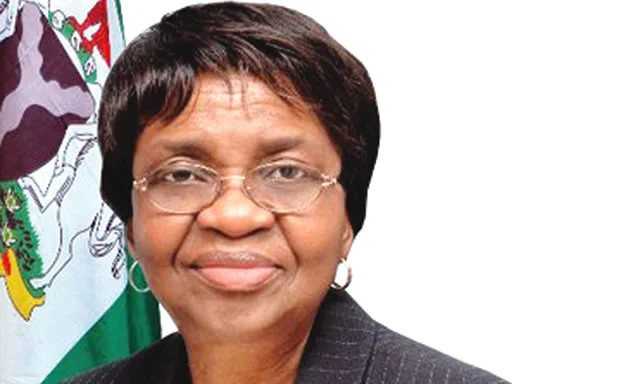
    The Pan-Yoruba socio-political group, Afenifere, has urged President Bola Tinubu to improve security measures around Prof. Mojisola Adeyeye, the Director-General of the National Agency for Food and Drug Administration and Control (NAFDAC).

     This appeal comes after alleged threats to her life and that of her staff.

    Afenifere’s Organizing Secretary, Abagun Kole Omololu, expressed concern over Adeyeye’s safety, stressing that her work in combating counterfeit drugs and harmful consumables exposes her to dangerous criminal networks.

     The group believes that any attack on her would not only endanger public health but also threaten national security.

    The organization also called for enhanced protection for other key officials, such as the heads of the Economic and Financial Crimes Commission (EFCC) and the National Drug Law Enforcement Agency (NDLEA). 

    They suggested providing these officials with armored vehicles, well-trained security personnel, and modern surveillance systems to ensure their safety.

    Afenifere warned that failing to act could embolden criminal groups, making it harder to fight the circulation of dangerous drugs. 

    The group urged the government to recognize Adeyeye’s contributions and ensure she and her team receive adequate protection.

  • Insecurity: Allow NYSC members serve in their zones — Afenifere 

    Insecurity: Allow NYSC members serve in their zones — Afenifere 

    The pan-Yoruba socio-political organization, Afenifere, yesterday, urged the Federal Government to allow graduates performing their mandatory one-year programme in the National Youths Service Corps, NYSC, to serve within their geopolitical zones.
    Afenifere advised the Federal Government given the increasing rate of kidnapping and banditry across the country.
    While commending the Federal Government and security agencies for rescuing kidnapped NYSC members who were on their way from Akwa Ibom to Sokoto State, the organization urged the government to equip security agents better for optimum performance.
    Afenifere, in a statement by its National Publicity Secretary, Mr Jare Ajayi, reiterated its advocacy for enrollees to the NYSC scheme to serve within their geopolitical zones rather than going from one part of the country to the other.
    The association further observed that these pockets of ‘achievements’ appear to be dwarfed by the avalanche of security challenges people are facing in different parts of the country.
    Alluding to recent incidents, Ajayi noted that fear of kidnappers and attacks by bandits including cattle rustlers, are now rampant.
    The Afenifere spokesman, who observed that kidnappers now seem to go for groups and high-profile individuals, called the attention of those concerned to factors responsible for banditry and kidnapping.
    The organization stressed that attention should be given to the prevalence of ungoverned or under-governed spaces where the government’s control is ineffective.
    Afenifere added that absence or paucity of government presence in such areas makes people of the area vulnerable to exploitation by terrorist groups, traffickers and other criminal elements.
    He said: “The porosity of the borders has increased the influx of small arms and light weapons from the Sahel region – thus heightening the incentives for crimes and banditry.
    “Illegal mining has created room for poor governance in the areas affected – resulting in poor service delivery, displacement of the local people, increasing unemployment as farmers and youths are forced out of their farmlands – a situation that is making these set of people to be ready recruits for banditry.”
  • Afenifere rejects Supreme Court Ruling On LG Autonomy 

    Afenifere rejects Supreme Court Ruling On LG Autonomy 

    The Pan Yoruba Socio-Political Group, Afenifere, has faulted the Supreme Court verdict that granted fiscal autonomy to local government areas.

    It lamented that the Apex Court verdict has “done incalculable injury to the Nigerian state.

    This was contained in a statement signed by the leader of the group, Pa Ayo Adebanjo and it’s National Publicity Secretary Prince Justice Faloye, made available to newsmen in Akure, the state capital.

    It’s entitled ” Tinubu and the Grand Conspiracy Against Democracy and True Federalism in Nigeria.

    The statement declared that ” Afenifere views the judgment of the Supreme Court in the case filed by the Federal Government on the so-called Local Government autonomy as sheer judicial conspiracy in cahoots with the Tinubu administration against the Nigerian state and its foundational principles of federalism.

    Rather than interpret the constitution to uphold its elementary but overriding federal principle which recognises only a two-tier federal structure of the central government and federating states, the Supreme Court played to the gallery and wittingly allowed itself a most retrogessive declaration that the power of the government is portioned into three arms of government, the federal, the state and the local government.

    For the avoidance of any doubt, Afenifere makes bold to say that in line with its negotiated basis of existence, Nigeria is a “Federation consisting of States and a Federal Capital Territory”. as affirmed by Section 2 (2) of the 1999 constitution.

    While Afenifere frowns at corruption and misuse of public funds at levels of government, it condemns in most unmistaken terms the subjugation of the states and its constitutional roles including the Local Government system to the whims and caprices of the federal government by any means including obvious manipulation of the federation account as in the present case.

    The 1999 constitution, which in spite of its flaws, gives life and power to the Supreme Court provides in Section 162 and particularly subsection (6) that “each state shall maintain a special account to be called “State Joint Local Government Account” into which shall be paid all allocations to the local government councils of the state from the Federation Account and from the Government of the state”.

    “Against this unambiguous provision the Supreme Court held that “demands of justice requires a progressive interpretation of the law.

    ”It is the position of this court that the federation can pay Local Government allocations to the Local Government directly or pay them through the states.

    ”In this case, since paying them through states has not worked, justice of this case demands that Local Government allocations from the federation account should henceforth be paid directly to the Local Governments .

    ”Contrary to this invented alternative routes, Section 162 of the Constitution is not ambivalent about the process and route through which “all allocations to the local government councils of the state from the Federation Account and from the Government of the state” shall become payable to the Councils.

    ‘In other words, the interpretation does not require a voyage into jurisprudential sophistry leading to the absurdity of deliberate judicial amendment of the grundnorm.

    “By wittingly or inadvertently equating the Nigerian Federation with the Federal Government in the erroneous belief that both expressions are used interchangeably, such that the President may withold funds to the credit of the Local Governments from the Federation Account, under the guise of having no democratically elected officials, which is obviously subject to the interpretation by the Federal Government.

    ”The apex court has not only done incalculable injury to the Nigerian state, it has lent itself to setting aside its precedent in the hallowed judgment against the President Obasanjo administration withholding funds to the credit of Local Governments in Lagos State even when the Supreme Court said so.