Tag: Aliko Dangote

  • NPA, Dangote to deepen maritime sector, expand export operations

    NPA, Dangote to deepen maritime sector, expand export operations

    Nigerian Ports Authority (NPA) and Dangote Industries Ltd. (DIL) have collaborated on developing the Marine and Blue Economy sector, with a focus on expanding the nation’s export operations.

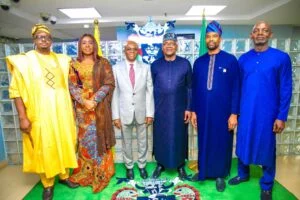
    General Manager, Communication and Strategy, NPA, Okechukwu Onyemekara, disclose this after a courtesy visit by DIL President, Alhaji Aliko Dangote, to NPA Headquarters, in Lagos on Monday.

    Mr. Onyemakara said in a statement that Dangote elaborated on efforts to expand export products outside Nigeria.

    He said that the company would soon expand its export operations, adding that its cement factory at Itori had already started cement exportation.

    Dangote said that the Itori cement factory had six million tons of cement designated for export.

    “In the next couple of weeks, we will start exporting coal out of Nigeria. Our fertilizer export will almost be like eight cargos.

    “The refinery operations will not export less than 25 million tons of various products.

    “We will also be exporting almost about 600,000 to 700,000 metric tons of polypropylene. So when you are talking about export, we are going to be very big.

    “In the next two years, we will be exporting about 16,000 tons of fertilizer. 16,000 tons of fertilizer, it’s actually about $6.5 million to $7 million revenue that will be coming into the country on a daily basis,” Dangote said.

    He said that as part of its export program, DIL will be the major supplier of foreign exchange earnings in Nigeria, and that the operations of Nigerian ports would double in the next two years.

    Dangote promised to frequently highlight the port situation to enable the Federal Government to consider NPA for necessary support.

    He commended NPA for encouraging export at the various ports across the country.

    “The interaction between NPA and DIL is very important for the growth of the industry and to deepen the Marine and Blue Economy, and we have agreed to collaborate for the benefit of Nigeria.

    “The size of our own operation at Lekki alone is going to be almost 240 ships of crude, with each ship carrying one million crude each. And then we’ll have products that will amount to over 600 ships in a year.

    “Then we also have our fertilizer operation, which will be loading almost eight ships. This is an operation that has never, ever been seen in the country,” Dangote said.

    He explained operational challenges with export, adding that he hoped they would be resolved and that they would be able to deliver with the present leadership of NPA.

    Dangote said that their operation could falter if the company was not given the necessary requirements needed for their operations.

    He acknowledged the need for the Federal Government to support NPA with more equipment such as tugboats, among others.

    In his remark, the Managing Director of NPA, Dr Abubakar Dantsoho, thanked Dangote for commending the authority for the benefits of the Naira for Crude sale policy of the Federal Government.

    Dantsoho also praised Dangote for appreciating the establishment of the One Stop Shop policy on the Naira for Crude deal, being coordinated by the Nigerian Port Authority.

    “Dangote appreciated the fact that the government initiative has contributed immensely to achieving more efficiency in the area of transactions and operations among Nigerian government agencies.

    “This is something that started on the 1st of October 2024, and so far, we have treated or operated over 57 vessels every month.

    The projected volume that Dangote is looking at per annum is 600 vessels.

    “If you do 56, 57 vessels into 12 months, you will see that we are already doing bigger than the projection. We will continue to do our best with support from government,” Dantsoho said.

    “The last time government built a new port in Nigeria was 1977, which was Tin-Can Island Port. There is already an approval for the port modernisation of both Tin-Can and Apapa ports.

    “We are looking at maybe the third quarter of this year to commence construction, which is on the brownfield development.

    “On the greenfield part, we have deep seaport development projects that have already been approved by the Federal Executive Council. We have Ibom Port, Bakasi Port, Olokola, Ondo Port, and Badagry in Lagos.

    “These are new ports that the government is concerned about. Very soon, we’ll begin to see that these ports will become reality,” Dantsoho said.

    NPA boss said that 95 per cent of cargoes approved through the National Single Window established by the government were ready for the Port Community System.

    He urged other government agencies to collaborate to enhance port efficiency, adding that other sectors of the economy would witness progress as well. 

  • Job creation: W/Bank inaugurates investment lab, woo Dangote, others

    Job creation: W/Bank inaugurates investment lab, woo Dangote, others

    The World Bank Group on Wednesday announced the inauguration of the next phase of its Private Sector Investment Lab(PSIL), focused on implementing proven solutions at scale.

    This is contained in a statement issued by the World Bank Online Media Briefing Centre made available to the media on Wednesday.

    The statement said the new chapter also expands the Lab’s membership to include private sector leaders in sectors critical to job creation in developing economies.

    It said these sectors included infrastructure and energy, agribusiness, healthcare, tourism, and manufacturing.

    “These industries have a proven ability to translate investment into broad-based employment and economic opportunity.

    “This  aligns  directly with the Bank’s sharpened focus on job creation as a core driver of development.”

    Ajay Banga, World Group President was quoted as saying, “with the expanded membership, we are mainstreaming this work across our operations and tying it directly to the jobs agenda that is driving our strategy.

    “This isn’t about altruism, it is  about helping the private sector see a path to investments that will deliver returns, and lift people and economies alike. It is central to our mandate.”

    The Lab brought together leaders from global financial institutions over the past 18-years to identify the most pressing barriers to private sector investment in developing countries and to test actionable solutions.

    The statement said that the work had now been consolidated into five priority focus areas that were being integrated across the Bank Group operations and they include, Regulatory and Policy Certainty.

    Others are Political Risk Insurance, Foreign Exchange Risk, Junior Equity Capital and Securitization.
    It listed the new members of the Lab to  include Bill Anderson, CEO, Bayer AG and Sunil Bharti Mittal, Chair, Bharti Enterprises.

    Others  are Aliko Dangote, President and CEO, Dangote Group, and Mark Hoplamazian, President and  CEO, Hyatt Hotels Corporation.

    The statement said the Lab’s founding members included senior executives from AXA, BlackRock, HSBC, Macquarie, Mitsubishi UFJ Financial Group, and Ninety One.

    Others are Ping An Group, Royal Philips, Standard Bank, Standard Chartered, Sustainable Energy for All, Tata Sons, Temasek, and Three Cairns Group.

    It said the Lab is chaired by Shriti Vadera, Chair of Prudential Plc.

    The statement quoted  Shriti Vadera, Chair, Prudential Plc. and Chair, Private Sector Investment Lab as saying, “We are grateful to the Lab leaders who helped deliver such important results in the first phase.

    “We welcome our new members’ support in continuing our focus on five key areas.”

    The statement also quoted Sunil Bharti Mittal, Chair, Bharti Enterprises, as saying, “The World Bank Group is leading the way with initiatives to grow economies and create opportunities in emerging markets around the globe.

    “I have seen firsthand the power of connectivity to transform lives by creating opportunities for businesses to grow and communities to thrive.

    “I hope that the successes of the telecommunications sector will be valuable as PSIL embarks on the next stage of its important work,” he said. 

  • Nigerian Youths and revelations at IBB book launch

    Nigerian Youths and revelations at IBB book launch

    By Uzo Owunne

    Recent revelations from Aliko Dangote at Gen. Ibrahim Babangida’s book launch, along with Prince Arthur Eze’s own testimony, have once again exposed the deep-seated inequalities that have long defined Nigeria’s economic and political landscape.

    Dangote openly admitted: “He (IBB) called us into a room and gave us banking licenses… He asked us to pay 1 million each for oil blocs.”

    Meanwhile, Prince Arthur Eze declared that he, Dangote, Mike Adenuga, and a few others were “brought up” by IBB, stating that without Babangida’s direct intervention, he (Arthur Eze) “would have long been dead.”

    These statements confirm what young Nigerians have always suspected—the wealthiest figures in Nigeria were not simply products of exceptional hard work and perseverance, but beneficiaries of a system that handed them privileged access to opportunities, resources, and state-backed economic advantages.

    Yet, most of these same individuals now stand on their podiums, telling young Nigerians to “work hard and persevere.” Even more insulting, former President Muhammadu Buhari dismissed young Nigerians as “lazy,” despite the countless obstacles they face in a system that remains rigged against them.

    The hypocrisy is glaring. A handful of men were gifted access to oil blocs, banking licenses, and economic monopolies with little to no competition. Yet, today’s young Nigerians are expected to fight for survival in an economy where:

    • Government policies stifle innovation and favor monopolies.
      • Corruption ensures that only the well-connected thrive.
      • Youth-led businesses struggle due to a lack of access to capital and a hostile business environment.
      • Unemployment and underemployment rates are at record highs, leaving millions without a clear path to prosperity.

    There is a demand for a Fairer Nigeria.
    Nigerian youths are not lazy, and they are not asking for handouts. They are demanding a level playing field—a system where success is based on merit, not political connections or favoritism. They want:

    (1) Transparent Access to Opportunities – No more backroom deals that hand national wealth to a privileged few.(2) Equal Economic Participation – Young entrepreneurs should have access to funding and support without needing elite connections.(3) A Merit-Based System – Policies must promote fair competition, not protect monopolies.
    (4)Government Accountability – Leaders must stop gaslighting the youth and start addressing the systemic issues that hinder progress.

    The interesting questions for Nigeria’s leaders become; if the current economic giants were truly self-made, why didn’t they compete on an open, level playing field? Why were they given resources and opportunities behind closed doors while today’s youth – the ones that are not standing on the shoulders of the old privileges – are left to fend for themselves?

    Nigerian youth are ready to build, innovate, and contribute to national prosperity—but they have lost patience for a system designed to exclude them,while the privileged few lecture them about hard work. It is time for real change, not empty rhetoric.
    Statements at the Babangida book launch are revealing.

    Uzo Owunne is a development expert

  • Subsidy Has To Go – Dangote To Nigerian Government

    Subsidy Has To Go – Dangote To Nigerian Government

    As Nigerians grapple with prohibitive pump price of petrol and consequent spiraling inflation, Alhaji Aliko Dangote, the President and Chief Executive of Dangote Refinery, repeats the call for removal of fuel subsidy.
    The businessman asserted that the removal would determine the actual petrol consumption in the country.
    Speaking in a 26-minute interview with Bloomberg Television in New York on Monday, he confirmed ownership of two oil blocks in the upstream sector with an expected production date of next month.
    Dangote also stated that fuel production from his $20bn mega refinery in Lagos will help ease pressures on the naira.
    Speaking further, he noted that ending petrol imports will have a huge upside in easing currency pressures.
    According to him, “Subsidy is a very sensitive issue. Once you are subsidising something then people will bloat the price and then the government will end up paying what they are not supposed to be paying. It is the right time to get rid of subsidies.
    “But this refinery will resolve a lot of issues out there, you know, it will show the real consumption of Nigeria, because, you know, nobody can tell you. Some people say 60 million litres of gasoline per day.
    “Some say, it’s less. But right now, if you look at it by us producing, everything can be counted. So everything can be accounted for, particularly for most of the trucks or ships that will come to load from us. We are going to put a tracker on them to be sure they are going to take the oil within Nigeria, and that, I think, can help the government save quite a lot of money. I think it is the right time, you know, to remove the subsidy.”
    On whether the subsidy will make the refinery viable, Dangote said, “Well, you see, we have a choice of either one. We produce, we export, and when we produce, we sell locally. But we are a big private company. And yes, it’s true, we have to make a profit. We build something worth $20bn so definitely we have to make money.
    “The removal of subsidies is totally dependent on the government, not on us. We cannot change the price, but I think the government will have to give up something for something. So I think at the end of the day, this subsidy will have to go.”
  • FG to supply Dangote Refinery 12m barrels of crude in October

    The Federal Government and Dangote Refinery have finalized an agreement for the supply of 12 million barrels of crude oil to the facility in October.
    Aliko Dangote, the chief executive officer of Dangote Refinery, confirmed this information during an interview with Bloomberg TV in the United States.
    He stated that the crude oil supply is a component of an ongoing agreement with the federal government, aimed at allowing the refinery to process crude domestically and produce petrol, diesel, and jet fuel for the local market.
    This arrangement is part of the “Crude Oil for Naira” initiative, which represents a strategic collaboration between the Dangote Group and the Nigerian government.
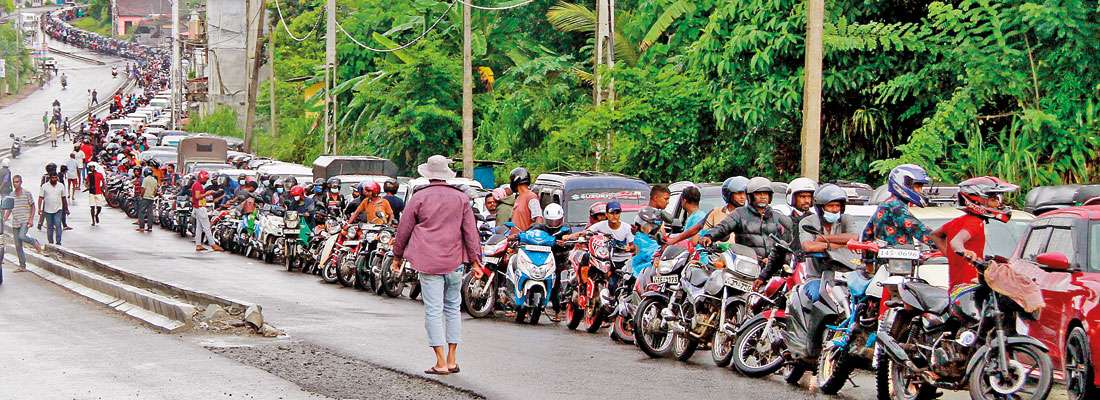
    “We are working towards a solid agreement with the federal government that ensures energy security for the country. This means no more fuel queues,” Dangote stated.
    “The government has committed to providing us with crude oil, and in October, they will deliver 12 million barrels, which translates to roughly 390,000 barrels a day. We will refine this crude to produce gasoline, diesel, and aviation fuel for the local market. Any surplus will be exported.”
    Dangote further noted that it will help bring 50 to 60 per cent of currently non-operational filling stations back into service, drastically improving access to fuel across the country.
    “The deal with the government ensures that we sell the refined products to all marketers, which will mean the reopening of 50 per cent to 60 per cent of our petrol stations that have been idle. This will also reduce the costs tied to having ships floating off the coasts of Lomé and elsewhere. In terms of demurrage alone, we are looking at saving over $1 billion,” Dangote added
  • Wale Edun flags off Commencement Fuel Lifting from Dangote Refinery

    Wale Edun flags off Commencement Fuel Lifting from Dangote Refinery

    History was made this afternoon, Sunday, September 15, 2024 as the the Nigerian National Petroleum Company Ltd (NNPCL) commences lifting of fuel from the Dangote Refinery.

    Flagging off the epoch making exercise, Finance Minister and Coordinating Minister of the Economy, Wale Edun thanked Alhaji Aliko Dangote for the initiative that positions Nigeria for the attainment of energy efficiency.

    Nigeria, a prominent member of the OPEC is currently going through crippling fuel supply emergency running into weeks.


  • Still on the Dangote Refinery ‘Clearer Fuel’

    Still on the Dangote Refinery ‘Clearer Fuel’

    President of Dangote Group, Alhaji Aliko Dangote, has shed light on why the first batch of Premium Motor Spirit (PMS), commonly known as petrol, produced at his refinery appears noticeably clearer than the petrol currently available in the market.
    During a broadcast from his refinery in the Ibeju-Lekki area of Lagos State, Dangote explained that the clarity of this petrol is indicative of its higher environmental standards.
    He emphasized that the cleaner petrol is designed to be more eco-friendly, potentially reducing health risks associated with the pollutants found in traditional petroleum products.
    Dangote also highlighted the benefits of this refined petrol in protecting vehicle engines from the damage typically caused by the lower-quality petrol available on the market.
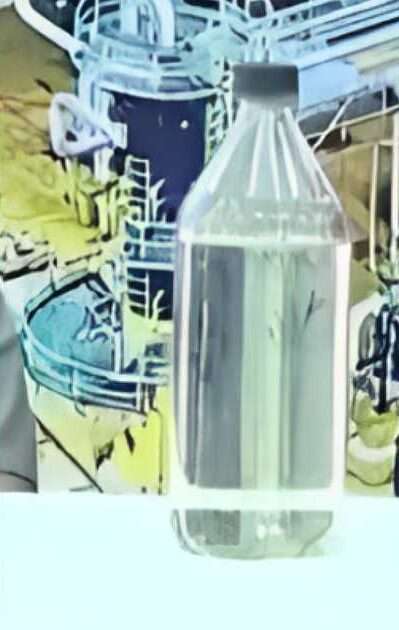
    “This is the sample of the petrol. You see it as a different colour but that is the real deal. You are now going to have a good and real product,” Dangote stated.
    Speaking about the diesel produced at the refinery, Dangote added, “I am sure Nigerians have not seen this colour of diesel before.
    “This is called Euro-5 diesel. It contains less than 10 parts per million (PPM) of sulfur. This will help vehicles, engines, and generators last longer.”
    He further emphasized the importance of this development for public health and environmental safety, stating, “The health of the people and the environment will not be compromised. This is the real deal.”
  • Dangote Refinery: End of fuel queues

    Dangote Refinery: End of fuel queues

    For the first time in 28 years, Dangote Refining and Petrochemical Company commences the production of fuel in Nigeria.

    “This marks the end of fuel scarcity and fuel queues in Nigeria” Alhaji Aliko Dangote, the President of Dangote Refining and Petrochemical Company said.

    “No more foreign exchange woes to import fuel,” he said.

    Seeing, it is claimed in Nigeria, is believing and Alhaji Aliko Dangote has demonstrated that axiom as he lifted a sample of petrol produced in his factory today, at Ibeju Lekky, Lagos.

    “I hope the attainment of this milestone by the refinery will change the dynamics not only in Nigeria but the entire sub-saharan Africa” an elated Dangote said.

    He drew attention to the unique crystal clear colour of the product and said that it represents “the highest quality which is friendly with car engines and meets the best international standards.”

    He appreciated President Tinubu for the support of his government which has enabled the commencement of the refining activities in the factory.

    With this major breakthrough the Dangote Refinery has broken the jinx about petrol refining in Nigeria which happened for the last time 28 years ago.

    Dangote also posited that with the commencement of this operation, the refinery had assisted Nigeria to kill several birds with one stone.

    Linking it to the leadership of the country, he said the refinery now has an opportunity to produce energy for growth and productivity.

    Hopes that the move will stabilise the Naira, reduce inflation and improve the quality of life.

    He asserted also that there will be no more import of polypropylene.

    Also appreciated the government for the opportunity to purchase crude in Naira.


  • Dangote, Otedola Get FG Appointment 

    Dangote, Otedola Get FG Appointment 

    In furtherance of the effort to reduce the scourge of malaria in Nigeria, the federal government at the weekend, appointed Africa’s richest person, Aliko Dangote, astute businessman Femi Otedola, and renowned banker Tony Elumelu to lead the effort.
    Speaking at the inauguration of the team in Abuja, the minister of state for health and social welfare, Dr Tunji Alausa, stated that the country currently contributes over a quarter of global malaria cases and about a third of the over 600,000 malaria deaths worldwide, mostly affecting children and pregnant women.
    Describing the situation as sad, the minister noted that the ailment contributes about 25 per cent to 30 per cent of childhood mortality and about 60 per cent of hospital attendance.
    According to him, malaria is also a major cause of absenteeism in schools, markets, and workplaces, as well as a significant out-of-pocket expense for most households in the country.
    Dangote is the chairman of the Dangote Group, Otedola is chairman of FBN Holdings Plc, Geregu Power Plc, and several other business concerns, while Elumelu is the chairman of UBA Group, founder of Heirs Holdings, and also chairs Trancorp Group.
    At the inaugural meeting of the Nigeria End Malaria Council (NEMC), which also includes John Cardinal Onaiyekan, the minister stated that the industry heavyweights would collaborate with the Nigerian Governors’ Forum (NGF), National Assembly joint Health Committees and women’s organisations to drive the fresh efforts.
    The minister noted that it was common knowledge that Nigeria, which currently has a population of over 200 million, has its entire population at risk of malaria, a situation that puts a huge challenge on the government.
    He lamented that the implementation of the various interventions, such as the provision of antimalarial medicines, protective interventions such as chemo-preventive treatments, and treated nets and insecticides for indoor and outdoor spraying, had remained inadequate to meet the targeted population.
    “While malaria cases and deaths are shrinking in other countries, Nigeria has continuously recorded a higher number of cases. The bulk of the support for the interventions is donor-driven, hence inadequate and not sustainable.
    “Aware of the fact that no country ever eliminated malaria through donor support, the African Heads of State launched the African Leaders Malaria Alliance (ALMA) during the African Union Summit of 2009 and the Malaria Scorecard was developed in 2011 to monitor the country’s performance and also to be used as an advocacy tool for heads of government,” the minister added.
    He recalled that the council was established in 2017 and was inaugurated by former President Muhammadu Buhari on August 16, 2022, stressing that the inaugural meeting was long overdue.
    According to him, the End Malaria Council was set up to advocate for malaria to remain high on the national and state agendas through strong political commitment from leaders at all levels and mobilise financial and in-kind resources from new sources, including the private sector, to help close resource gaps in the national malaria strategic plan.
    “By reason of your positions in Nigeria, your passion towards health issues, especially malaria, and the interest groups you represent, your membership to this council is inevitable for the benefit of the larger society, and especially children and pregnant women who are the most affected and would remain forever grateful,” he added.
    As part of the event, the minister handed over the leadership of the council to Dangote, who has served as Nigeria’s Malaria Ambassador as well as a member of the Global End Malaria Council.
  • Dangote, others: Crude sales begin Oct 1

    The Federal Government has disclosed that sales of crude oil to Dangote Refinery and other local refineries will commence October 1, 2024.


    The Minister of Finance and Coordinating Minister of the Economy, Wale Edun, made the announcement during a meeting with the Implementation Committee on Monday in Abuja.


    According to a post on the official X (formerly Twitter) page of the finance ministry, the meeting was to review progress on key initiatives.


    At the meeting, key roles were outlined for stakeholders, including the Nigerian Midstream and Downstream Petroleum Regulatory Authority, Central Bank of Nigeria, Nigerian Upstream Petroleum Regulatory Commission and the African Export-Import Bank to ensure smooth implementation.


    The post read, “The Minister of Finance and Coordinating Minister of the Economy, Mr. Wale Edun, today led the Implementation Committee meeting on the transition to crude oil sales in naira.


    “The meeting reviewed progress on key initiatives, including the upcoming commencement of naira payments for crude oil sales to the Dangote Refinery starting October 1, 2024.”


    Also, the Executive Chairman of the Federal Inland Revenue Service, Dr Zacch Adedeji, and the Chairman of the Technical Sub-Committee reported that “The first PMS delivery from Dangote is expected next month under existing agreements.”


    It also stated that updates were provided on the Port Harcourt and Dangote Refineries were also provided, with significant production increases expected from November 2024.


    The minister emphasised the need for transparency and directed the Technical Sub-Committee to finalize details and prepare a report for the President, confirming that his directives are on track for implementation from September.