Tag: Bola Tinubu

  • What Nigerians expect from Tinubu’s new cabinet

    What Nigerians expect from Tinubu’s new cabinet
    President Bola Tinubu and his new ministers pose for a group photograph on Monday after their inauguration.

    In a momentous ceremony that marked a significant transition for Nigeria, President Bola Tinubu on Monday inaugurated a new cohort of ministers to consolidate his presidency.

    With the swearing-in of these individuals into their respective offices, Nigerians are now looking ahead with a mixture of hope and anticipation, more so that, this time, like his predecessor, he did not wait for almost a year to form his cabinet.

    No doubt, the responsibilities bestowed upon these new ministers are immense, and the citizens’ expectations on them are equally high.

    Even though Tinubu had inherited a myriad of challenges, ranging from a lame economy to security concerns, Nigerians are fervently hoping that this new cabinet will rise to the occasion and lead the country towards a brighter future.

    One of the most pressing issues on the minds of Nigerians is the economy. The COVID-19 pandemic dealt a severe blow to the global economy with Nigeria getting its fair share and this has exacerbated existing challenges such as high unemployment rates and inflation.

    As the new ministers assume their roles, citizens are yearning for innovative economic policies that will stimulate growth and provide much-needed jobs. They expect these ministers to engage in strategic partnerships, attract foreign investments, and diversify the economy beyond oil dependency.

    A clear roadmap for infrastructural development, with a focus on power generation, transportation, and technological advancement, is eagerly awaited.

    Nigerians are hopeful that the new cabinet will foster an environment that supports small and medium-sized businesses, driving entrepreneurship and creating a sustainable economic ecosystem.

    Another paramount concern is security. In recent years, Nigeria has faced an upsurge in security challenges, from insurgency and banditry to kidnapping and communal conflicts.

    The citizens’ security and safety are non-negotiable, and they look to the new ministers to demonstrate unwavering commitment to restoring stability. Nigerians anticipate comprehensive reforms within the security sector, including equipping and adequately training law enforcement agencies, intelligence sharing, and collaboration with international partners to tackle transnational crimes.

    A holistic approach that addresses the root causes of these security issues, such as poverty and lack of education, is eagerly awaited.

    The state of healthcare in Nigeria has also been a cause for concern. The COVID-19 pandemic exposed the vulnerabilities of the healthcare system, shedding light on the inadequate infrastructure, limited access to quality medical care, and the brain drain of healthcare professionals.

    The citizens expect the newly inaugurated Minister of Health, Prof. Muhammad Ali Pate, to prioritize healthcare reform, ensuring that adequate funding is allocated to build and upgrade healthcare facilities, procure essential medical equipment, and provide training and incentives to healthcare workers.

    A robust healthcare system not only safeguards the population’s health but also bolsters the nation’s overall productivity and development.

    Education is another arena where Nigerians are looking for transformative changes. Despite being blessed with a young and vibrant population, the education sector has suffered from inadequate funding, outdated curriculum, and a lack of access to quality education in many regions.

    The new ministers are being entrusted with the responsibility of revamping the education system, from primary to tertiary levels. Citizens hope for the implementation of policies that prioritize teacher training, curriculum modernization, and the integration of technology in education.

    Additionally, special attention needs to be given to regions where educational disparities are most pronounced, ensuring that every Nigerian child has equal access to quality education.

    Corruption remains a significant impediment to Nigeria’s progress. Nigerians are looking to the new cabinet to not only maintain the anti-corruption drive but to intensify efforts in ensuring transparency and accountability in public office.

    Effective utilization of resources, strict adherence to due process, and the swift prosecution of corrupt individuals are the expectations of the citizens. Furthermore, they anticipate the implementation of policies that promote ethical governance and discourage corrupt practices at all levels of government.

    Infrastructural development, particularly in the areas of power generation, transportation, and information technology, is crucial for Nigeria’s growth.

    Citizens eagerly await the unveiling of comprehensive plans that will address the longstanding issues of inadequate power supply, inadequate road networks, and poor internet connectivity. These are fundamental elements that underpin economic development and enhance the quality of life for the population.

    In the realm of foreign policy, Nigerians hope for a government that will foster strong diplomatic relationships with other nations while advancing the country’s interests on the global stage. Economic partnerships, trade agreements, and international collaborations are seen as critical for Nigeria’s growth and development. The citizens look to the new ministers to represent the nation effectively in international forums and negotiations, projecting a positive image of Nigeria to the world.

    In conclusion, as President Bola Tinubu’s new ministers assume their respective offices, they should understand that they’re stepping into roles of immense responsibility and great expectation. Nigerians envision a future marked by economic prosperity, enhanced security, improved healthcare and education systems, eradication of corruption, and infrastructural development.

    The challenges ahead are daunting, but the citizens’ hope and optimism are unwavering. It is incumbent upon Tinubu and his cabinet to translate these hopes into concrete actions, demonstrating their commitment to serving the best interests of Nigeria and its people.

    As the nation watches, their decisions and actions will determine the course of Nigeria’s journey towards a brighter and more prosperous future.

  • ECOWAS rejects Niger Junta’s 3-year transition plan

    The transition plan presented by the Niger junta for a three-year period to presumably establish a democratic government has been unequivocally dismissed by the Economic Community of West African States (ECOWAS).

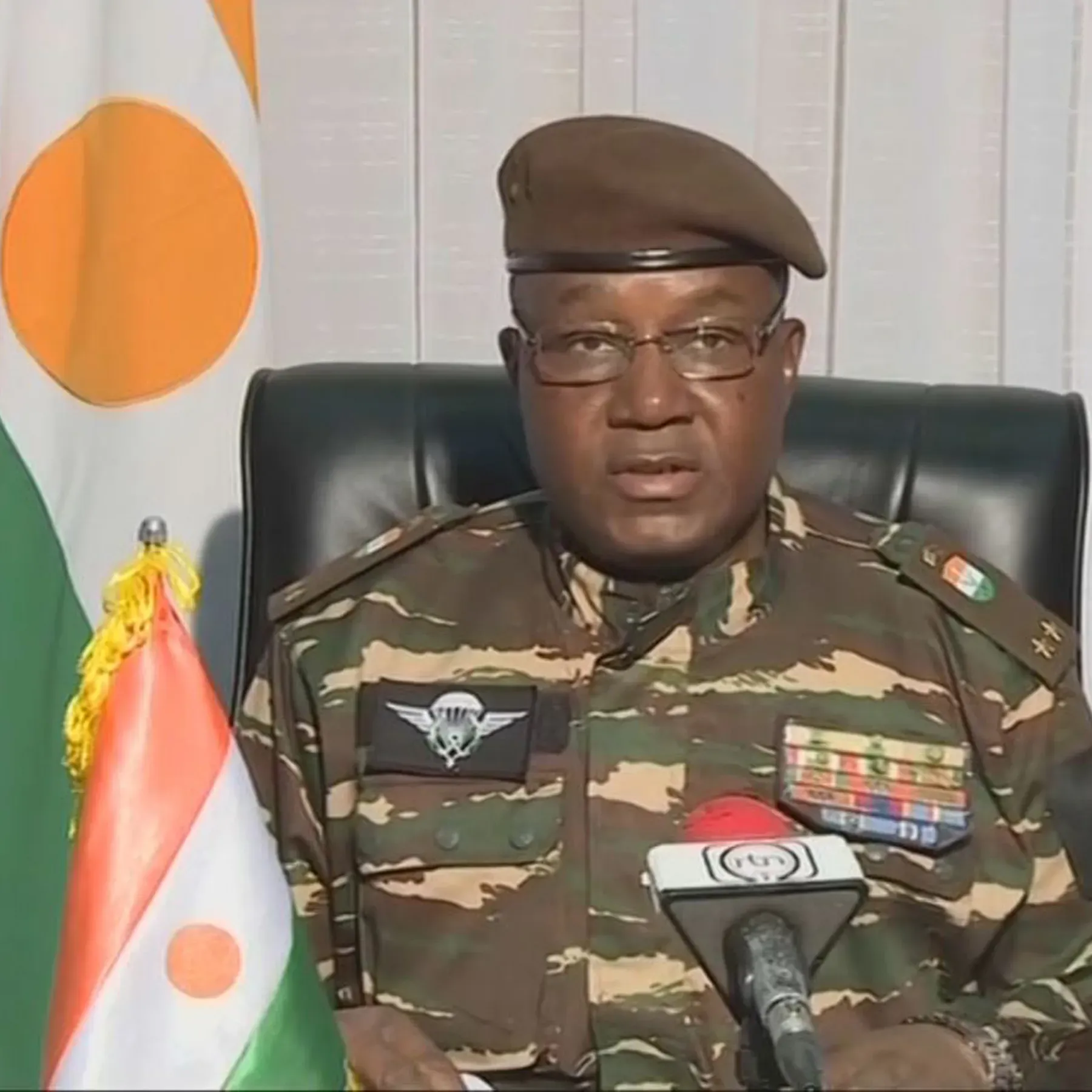
    General Abdourahamane Tchiani, leader of the Niger junta, had said in a televised broadcast on Saturday night that the army will hand over power to the civilian government within the next three years.

    According to him, his ambition is not to confiscate power but help the country out of its current conundrum.

    “Our ambition is not to confiscate power,” General Abdourahamane Tiani emphasized in a televised address. He further stated, “Any transition of power would not go beyond three years.”

    However, in a contrary view, the ECOWAS Commissioner for Political Affairs, Amb. Abdel-Fatau Musah, who made an appearance on Channels Television on Monday, voiced the West African bloc’s strong objection to the proposal.

    “This offer is completely unacceptable, and ECOWAS insists on the restoration of constitutional order as quickly as possible,” Amb. Musah stated firmly, emphasizing that the commission had prior experience dealing with similar maneuvers by military regimes.

    He referred to the situation in Niger, highlighting the creation of the “new” constitution in 2010, which was subsequently revised in 2017.

    Musah posed a pointed question, “What dramatic change do you need in the governance architecture of the country to require three years to experiment with something else?

    Expressing skepticism about the junta’s intentions, Musah remarked, “This is like subterfuge to throw ECOWAS off-course and then do whatever they want.”

    Drawing comparisons, he pointed out that some other West African countries under military rule had been given about three years, yet they were now “negotiating” with their populations for an additional 18 months.

    Putting the timeframe into perspective, he highlighted the fact that even a democratically elected president in Nigeria only has four years in office. Musah concluded by questioning the legitimacy of the junta’s decision to start with a three-year period and implying that it could extend beyond that.

    ECOWAS’ response underscores its unwavering commitment to democratic governance and stability in the region, raising concerns about the motives behind the proposed three-year transition plan.

  • Niger Coup: Tchiani asserts defensive stance against ECOWAS

    Niger Coup: Tchiani asserts defensive stance against ECOWAS

    In the wake of the recent coup in Niger, General Abdourahamane Tchiani, the leader of the mutineers who assumed control, emphasized his nation’s reluctance for conflict but readiness to safeguard itself when necessary.

    Tchiani conveyed that both the military and the populace of Niger are averse to the prospects of war, yet they remain steadfast in their determination to counter any signs of aggression, as reported by Al Jazeera.

    The head of the junta underscored the unawareness of member states within the Economic Community of West African States (ECOWAS) regarding Niger’s pivotal role in preventing regional destabilization amidst a surge in terrorist activities.

    He expressed skepticism towards the imposed sanctions on his country, suggesting that they aimed to exert pressure on the rebels rather than resolve the ongoing crisis.

    Tchiani further clarified that the insurgents’ objective isn’t to seize power but to facilitate a solution that aligns with the best interests of the populace.

    The coup leader disclosed that an ECOWAS delegation visited Niger’s capital and held discussions both with the deposed President Mohamed Bazoum, who was removed and detained by his own guard led by Tchiani, and with Tchiani himself.

    Since the coup’s occurrence on July 26, ECOWAS has responded by suspending financial aid to Niger, freezing rebel-held assets, and imposing travel restrictions on flights to and from the nation.

    A subsequent summit in Nigeria’s Abuja resulted in ECOWAS leaders agreeing to ready a standby force to potentially compel the Nigerien military to reinstate Bazoum.

    On a recent note, ECOWAS Commissioner for Political Affairs, Abdel-Fatau Musah, indicated that the general staff chiefs within ECOWAS have set a date for an undisclosed military intervention. This decision comes as tensions and uncertainties persist within Niger’s political landscape.

    General Abdourahamane Tchiani’s statements echo a stance against war while highlighting the nation’s resolve to defend itself against aggression, as Niger navigates through these challenging times of political transition and unrest.

  • PHOTO NEWS: Tinubu receives NLNG Management at State House Villa

    President Bola Ahmed Tinubu receives in audience the Board and Management of the Nigeria Liquified Natural Gas Limited (NLNG) led by its MD/CEO, Dr Philip Mshelbila, at the State House, Abuja, at the weekend.

    Photo Credit: State House

    PHOTO NEWS: Tinubu receives NLNG Management at State House Villa
    PHOTO NEWS: Tinubu receives NLNG Management at State House Villa
    PHOTO NEWS: Tinubu receives NLNG Management at State House Villa
  • N6.9bn Fraud: FG arraigns Emefiele, allies Thursday

    N6.9bn Fraud: FG arraigns Emefiele, allies Thursday

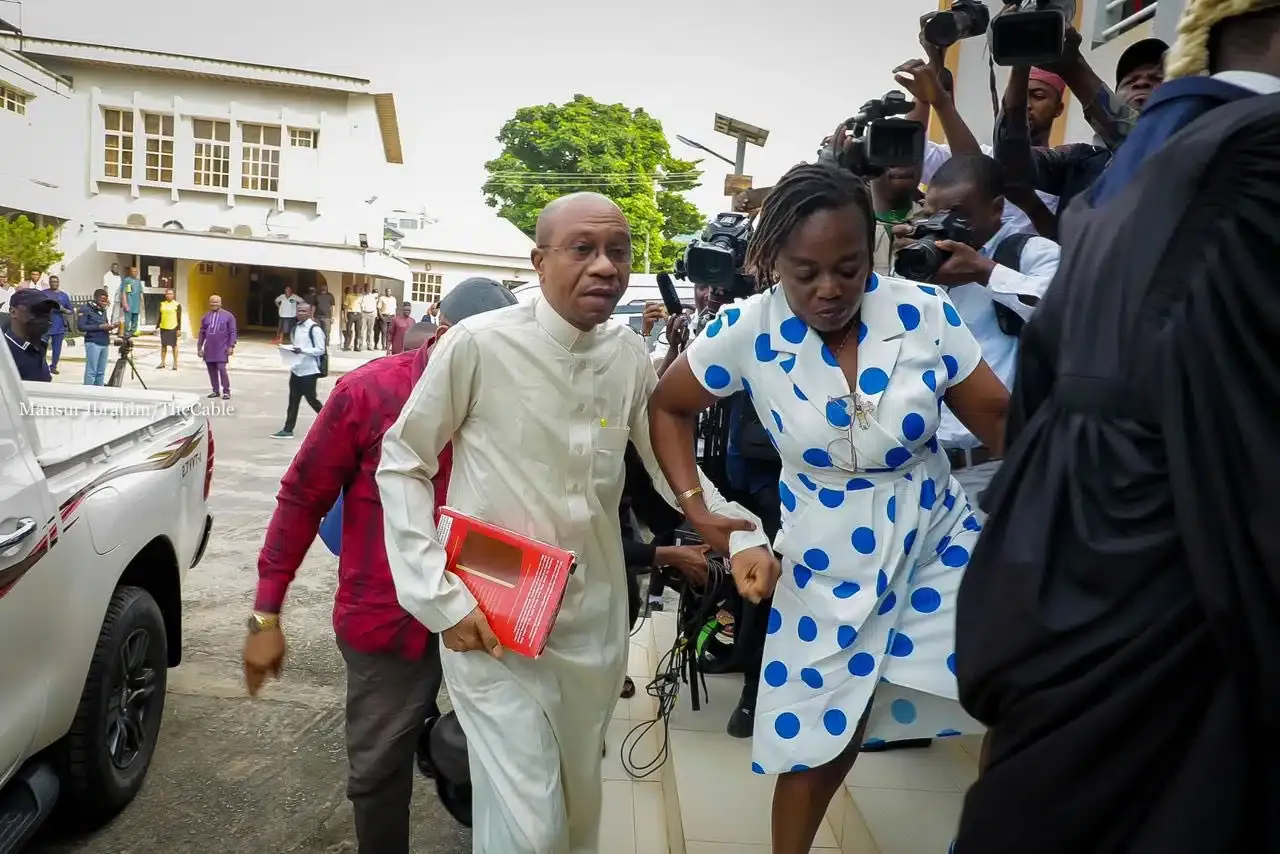
    The Federal Government will on Thursday arraign suspended Central Bank of Nigeria (CBN) Governor, Godwin Emefiele, and his associates for N6.9 billion procurement fraud at the Federal Capital Territory (FCT) High Court in Abuja.

    Emefiele will be arraigned alongside a female CBN employee, Sa’adatu Yaro and her company, April1616 Investment Limited on 20 charges of procurement fraud, conspiracy and conferring corrupt advantages on his associates.

    The embattled apex bank chief, who has been in detention since he was suspended from office on June 9, 2023, was accused of conferring corrupt advantages on Yaro, a director in April 1616 Investment Ltd.

    The offence is contrary to Section 19 of the Corrupt Practices and Other Related Offences Act 2000.

    The section read, “Any public officer who uses his office or position to gratify or confer any corrupt or unfair advantage upon himself or any relation or associate of the public officer or any other public officer shall be guilty of an offence and shall on conviction be liable to imprisonment for five years without an option of fine.’’

    In the charges signed by the Director of Public Prosecutions, Federal Ministry of Justice, Mohammed Abubakar; Deputy Director, Public Prosecution, Mrs Nkiru Jones-Nebo and eight other ministry officials, the three accused persons were alleged to have bought a fleet of over 98 exotic vehicles and armoured buses valued at about N6.9bn.

    Some of the vehicles bought between 2018 and 2020 included 84 Toyota Hilux vehicles, 10 armoured Mercedes Benz buses, three Toyota Landcruisers and one Toyota Avalon car.

    Count one read, “That you, Godwin Ifeanyi Emefiele, male, adult, sometime in 2018 within the jurisdiction of this honourable court did use your position as Governor of the Central Bank of Nigeria to confer a corrupt advantage on Sa’adatu Ramallan Yaro, a staff member of the Central Bank of Nigeria by awarding a contract for the supply of 37 (Nos.) Toyota Hilux Vehicles at the cost of N854,700,000 only to April 1616 Investment Ltd, a company in which she is a director and thereby committed an offence.

    “Statement of the offence: Conferring corrupt advantage contrary to section 19 of the Corrupt Practices and Other Related Offences Act 2000.’’

    The Federal Government further accused Emefiele of conspiracy to confer corrupt advantage on the second defendant contrary to sections 26 (c) and 19 of the Corrupt Practices and Other Related Offences Act 2000 and punishable under Section 19 of the same Act.

    “That you, Godwin Ifeanyi Emefiele, male, adult, Sa’adatu Ramallan Yaro, female, adult, and April 1616 Investment Ltd, sometime in 2019 within the jurisdiction of this Honourable Court did conspire amongst yourselves to use the office of Mr. Godwin Ifeanyi Emefiele as Governor of the Central Bank of Nigeria to confer a corrupt advantage on Sa’adatu Ramallan Yaro, a staff of the Central Bank of Nigeria by awarding a contract for the supply of 1 (No.) Toyota Landcruiser V8 at the cost of N73,800,000 only to April 1616 Investment Ltd,” the charge stated.

    Emefiele was said to have also conferred a corrupt advantage on Yaro by awarding a contract for the supply of one Toyota Avalon at the cost of N99.9m to her company, April1616 Investment Ltd., in 2019.

    The suspended governor was also accused of awarding a contract for the supply of another Toyota Landcruiser V8 for N77.050m to the third defendant in 2018.

    The ex-CBN governor was said to have conspired with Yaro to confer corrupt advantages on the CBN staffer by awarding to her a contract for the supply of two Toyota Hilux Shell specification vehicles at the cost of N44.2m sometime in 2020.

    Emefiele was further alleged to have awarded another contract to Yaro and her firm for the purchase of one Toyota Landcruiser VXR valued at N96m in 2020.

    Yaro was similarly accused of fraudulent acquisition of property for getting a contract from the CBN for the supply of 47 Toyota Hilux vehicles at the cost of N1,085, 700,000 and thereby committed a punishable offence.

    Other counts read, “That you, Sa’adatu Rammala Yaro, female, adult, sometime in 2018 within the jurisdiction of this honourable court while being employed at the CBN knowingly held directly a private interest as director in April1616 Investment Ltd., in a contract awarded to the said company, for the supply of 47 Toyota Hilux vehicles at the cost of N1,085, 700,000 and thereby committed an offence.’’

    Count 11, “That you, Sa’adatu Rammala Yaro, female, adult, sometime in 2018 within the jurisdiction of this honourable court while being employed at the CBN knowingly held directly a private interest as director in April1616 Investment Ltd., in a contract awarded to the said company, emanating from the CBN where you are employed, for the supply of 10 Mercedes Benz armoured buses at the cost of N2,222, 500,00 and thereby committed an offence.’’

    Listed as witnesses against the defendants were the CBN Director of Procurement, Stanley Alvan; CBN Head of Procurement, Mike Agboro, Tahir Jafar, David Usman and “any other witnesses to be supplied later in the additional proof of evidence.’’

  • Nigeria can deradicalise Niger within 24 hours – Expert Asserts

    Dr. Blessing Agbomhere, a renowned security management specialist, has expressed his astonishment and disappointment over the reactions of certain Nigerians towards the planned restoration of civil rule in Niger Republic, orchestrated by the Economic Community of West African States (ECOWAS) under the guidance of President Bola Tinubu.

    Agbomhere, who holds accreditation as an expert in security management and strategic operations from the International Institute of Professional Security, firmly believes that Nigeria, with President Bola Tinubu as the Commander-in-Chief of the Armed Forces and Nuhu Ribadu as the National Security Adviser, possess the capability to swiftly deradicalize Niger Republic within a mere 24 hours and reinstate ousted President Mohamed Bazoum into power.

    Issuing a statement in Abuja, Agbomhere remarked that the apprehensions voiced by certain Nigerians, which stem from concerns about the armed forces’ readiness to swiftly neutralize the military junta, reflect a lack of patriotism within the nation.

    He attributes this sentiment to previous administrations’ initial struggles in managing insurgent and bandit activities that have plagued parts of the country.

    Agbomhere, a member of the Nigerian Institute of Chartered Arbitrators and a strong proponent of the Rule of Law, advocates for dialogue as the primary approach to resolving Niger’s political deadlock.

    However, as a final resort, he asserts that Nigeria should not shy away from its responsibility of upholding democratic governance in the West African sub-region, even if it entails military intervention.

    Nigeria has historically fulfilled this role in Liberia, Sao Tome, Sierra Leone, and Cote d’Ivoire, contributing to the defense of democracy and regional stability.

    Agbomhere further underscored President Bola Tinubu’s commitment to rejuvenating Nigeria and called for encouragement and support to enable the nation to regain its rightful position as the Giant of Africa.

  • Niger Military Junta vows to prosecute ousted Bazoum for ‘high treason’

    *Says it’s open to diplomatic resolution; decries ECOWAS sanctions

    Niger’s military junta announced late on Sunday its intention to press charges of “high treason” against former President Mohamed Bazoum, who was ousted from power, even as the regime also criticized the Economic Community of West African States (ECOWAS) for imposing sanctions on the nation.

    ECOWAS had placed sanctions on Niger as a response to the coup and had not ruled out the possibility of using force against the military officers responsible for toppling the democratically elected Bazoum on July 26.

    While ECOWAS had approved the potential deployment of a “standby force to restore constitutional order” in Niger, it maintained its commitment to pursuing a diplomatic resolution to the crisis.

    In a statement delivered on national television by Colonel-Major Amadou Abdramane late Sunday night, Niger’s military leaders conveyed their intent to prosecute Bazoum for “high treason” and for undermining both the internal and external security of Niger.

    The former president, aged 63, along with his family, has been confined to the official Niamey residence since the coup, raising international concerns about their well-being during detention.

    According to sources close to Bazoum, he received a medical check-up on Saturday, and the military authorities stated that the doctor found no health issues concerning the deposed president and his family.

    The military also decried the sanctions imposed on Niger, asserting that they had led to difficulties in accessing essential supplies such as medicines, food, and electricity. They characterized these sanctions as “illegal, inhumane, and humiliating.”

    The remarks from the military came shortly after a meeting between religious mediators and coup leader General Abdourahamane Tiani. During the meeting, Tiani expressed his regime’s openness to diplomatic discussions and peaceful resolution of the crisis.

    Sheikh Bala Lau, part of a Nigerian Muslim delegation that engaged in talks in Niamey, reported that Tiani stated their willingness to explore diplomacy and peace in addressing the situation. Tiani also contended that the coup had been executed with good intentions, aimed at averting an imminent threat that could have impacted both Nigeria and Niger.

    Tiani lamented that ECOWAS had issued an ultimatum demanding Bazoum’s restoration without giving them an opportunity to present their perspective on the matter.

    Nigeria’s President Bola Tinubu, who also serves as the head of ECOWAS, sanctioned the visit of the Muslim leaders to Niamey. Tinubu had adopted a resolute stance against the coup, marking the sixth instance of such an occurrence in an ECOWAS member state since 2020.

    ECOWAS had enacted stringent measures, including halting financial transactions and electricity supplies and sealing borders with Niger, causing significant disruptions to imports in one of the world’s most impoverished countries.

    The organization had set a seven-day ultimatum for the reinstatement of Bazoum, threatening a potential use of force, but the deadline passed without compliance from the new rulers. A crisis meeting scheduled for Accra, Ghana, was canceled for “technical reasons.”

    Support for the new military leadership has manifested in public demonstrations, with large crowds gathering in Niamey. Concerts at the Seyni Kountche Stadium saw thousands of individuals expressing backing for the National Council for the Safeguard of the Homeland (CNSP), the group of generals who have assumed control. The gathering, primarily composed of youth, waved flags of Niger, Burkina Faso, Mali, and Russia.

    The prospect of a military intervention to reinstate Bazoum has polarized ECOWAS members and evoked warnings from international powers, including Russia and Algeria.

    Neighboring countries Mali and Burkina Faso, both governed by military regimes resulting from coups, have cautioned that such an intervention could escalate into a declaration of war against them.

  • Military Action Against Niger: Int’l Group drags Tinubu to ECOWAS Court

    An International Civil Group, Egalitarian Mission for Africa (EMA)  has dragged President Bola Tínubu of Nigeria before the Economic Community of West African (ECOWAS) Court of Justice, invoking the Protocols of the Court to stop the planned military action against the Republic of Niger over coup plot.

    The group, in the suit instituted on its behalf by a Nigerian lawyer, Dr Oluwakayode Ajulo, OON, is praying the Regional Court to invoke relevant ECOWAS treaties and international laws to stop the military invasion of Niger Republic being spearhead by the Nigerian Government.

    The grouse of the Civil Group, among others, is that the planned military action or invasion will run foul of the obligations in the ECOWAS treaties and therefore amounting to illegality.

    The suit marked ECW/CCJ/APP/3/23 emphasized categorically that ECOWAS treaties prohibit aggression among member States.

    Apart from the Egalitarian Mission for Africa (EMA), other plaintiffs in the matter are a former Director General of the Nigerian Institute of the Internal Affairs (NIIA), Professor Bola Akinterinwa and a Nigerian Northern Region lawyer, Hamza Nuhu Dantani.

    Defendants are ECOWAS, Authority of Heads of State & Government of ECOWAS, President of ECOWAS Mission,  Federal Republic of Nigeria and Republic of Niger.

    A military group led by General Abdourhamane Tchiani had on July 26 toppled the civilian and democratic government of President Mohammed Bazoun who has since been clamped into unlawful military detention.

    Although the three plaintiffs in the regional suit described the coup detat as most unfortunate, they however warned that Nigeria should not travel the dangerous road of military hostilities that may further escalate the crisis in the Niger Republic.

    According to them, over 300,000 refugees, mainly Nigeria citizens, have already fled the Niger Republic adding that military action against Niger Republic would lead to breach of fundermrntal rights to life, right to dignity of human persons and liberty to life.

    The plaintiffs therefore prayed the ECOWAS Court of Justice for a restraining order against any form of military action in Niger Republic that may undermine the sovereignty and the territorial integrity of Niger Republic.

    Besides the Court action, the plaintiffs’ Counsel, Dr Ajulo wrote a strongly worded letter to President Tinubu, notifying him of pendency of the suit and invoking the Protocol of the ECOWAS Court on the need to respect and obey the rule of law as well as to refrain from doing that will militate against the subject matter.

    The letter is entitled “Notification of Pendency of case before the ECOWAS Community Court of Justice ; Call For Strict Adherence To The Protocol of the Honourable Court of the ECOWAS Commumity Court of Justice’.

     It read in part “We are Counsel to the Plaintiffs/Applicants in the above case before the ECOWAS Community Court of Justice and it is on their firm and unequivocal instructions that we write.

    Sequel to the Resolution and several sanctions imposed by the ECOWAS in the aftermath of the unfortunate and unconstitutional takeover of the democratically elected Government of the Republic of Niger, we have lodged a Case before the ECOWAS Community Court of Justice in an application for reliefs as the proposed military intervention in the Republic of Niger would be tantamount to aggression between ECOWAS Member States.

    ” The intervention will specifically violate Articles 1, 5, 15, 16, 17, 21, 22 & 24 of the African Charter on Human and Peoples’ Rights; Articles 1 (2), 2, 3, 4, 5, 6, 7, 8, 9, 11, 12, 13 & 14 of the International Covenant on Economic, Social and Cultural Rights; Articles 1, 3, 22, 23 (3), 25 (1) & 26 of the Universal Declaration of Human Rights 1948; Articles 1, 2, 3, 4, 5, 6, 7, 8, 9 & 10 of the Declaration on the Right to Development 1986; Articles 6, 15, 31, 63 & 64 of the Revised Treaty of the Economic Community of West African States; Article 10 of the Supplementary Protocol (A/SP.1/01/05) amending the Protocol (A/P.I/7/91) relating to the Community Court of Justice and Articles 10 (c), 22, 26, 27, 28, 56 of the ECOWAS Protocol Relating to the Mechanism for Conflict Prevention, Management, Resolution, Peace– Keeping and Security 1999.

    “The Case, an official copy of which has been duly served on your Excellency through the ECOWAS Secretariat, 101, Yakubu Gowon Crescent, Asokoro, Abuja, has invoked the jurisdiction of the International Court to consider conventions, treaties, Protocols and regulations to which your Excellency and the Federal Republic of Nigeria are signatories and which override the resolutions, sanctions, domestic law and practices and which the ECOWAS Community Court of Justice has been called upon to declare illegal. Another copy of the Case is attached for your informed action.

    “We wish to further draw your attention to Article 22(2) of the Protocol on the Community Court of Justice which mandates that “When a dispute is brought before the Court, Member states or institutions of the Community shall refrain from any action likely to aggravate or militate against its settlement”

    “In the Case before the ECOWAS Community Court of Justice, The Economic Community of West African States (ECOWAS), Authority of Heads of State and Government (of which your Excellency is the Chairman), President, ECOWAS Commission, The Federal Republic of Nigeria (of which your Excellency is the President and Commander-in-Chief of the Armed Forces) have been sued as sovereign legal representatives of respective institutions including the Republic of Niger.

    “It is your Excellency’s sacred duty as the Chairman of the Authority of Heads of State and Government of ECOWAS and the President and Commander-in-Chief of Armed Forces of Federal Republic of Nigeria under your hand to bring the institution of the Case before ECOWAS Community Court of Justice to the attention of the other Defendants and to insist, particularly in your Excellences’ subsequent meetings, that the Defendants refrain from taking any action in respect of the subject matter pending the determination of the case, in view of your Excellency and Nigeria’s protocol obligation under the Article above quoted.

    “Your Excellency, it is our firm confidence that by your enviable knowledge of high international standard of due adherence to the rule of law and respect for the supranational judicial process obtainable in a Case of this nature, we need not further stress the need to ensure that all the Defendants concerned maintain the status quo presently obtaining, and restrain themselves from taking any step susceptible to being regarded by the ECOWAS Community Court of Justice and international Community as prejudicial to the interest of our client or any of the parties in court.

    “Your Excellency would agree with us that as the law stands presently, the Resolution on proposed military actions be discontinued pending the determination of the Case by the ECOWAS Community Court of Justice.

  • Protests: FG bows to Organised Labour, withdraws contempt suit

    Protests: FG bows to Organised Labour, withdraws contempt suit

    The Federal Government says it has withdrawn the contempt of court proceedings against organised labour for embarking on a nationwide protest.

    This is contained in a letter addressed to the lead counsel to the NLC, Falana and Falana’s Chambers on Tuesday in Abuja.

    The letter dated August 7 to Falana’s Chambers was signed by the Solicitor General of the Federation, Mrs  B.E. Jeddy-Agba.

    The Federal Ministry of Justice had through the National Industrial Court (NICN) issued the leadership of the organised labour summons on contempt of court for embarking on the protest.

    The Union had responded by threatening to embark on a nationwide strike from August 14, if the Federal Government failed to withdraw its contempt of court charges.

    The Labour Congress and it’s affiliate the Tarde Union Congress (TUC) had embarked on a mass protest over anti-poor policies of government, especially the removal of fuel subsidy that had brought untold hardship to Nigerians.

    The letter reads: “Kindly recall the exchange of correspondence between the ministry and your office on the need for compliance with the extant court orders, restraining industrial action of any kind on the part of the Nigeria Labour Congress and Trade Union Congress.

    “The position of the ministry was informed by the need to safeguard the integrity of the court and prevent avoidable service disruption or damage to public facilities.

    “In spite of these exchanges/interventions, the labour unions on August 2, proceeded with the industrial action through public pretests”.

    It also said the protest led to disruption of work and the eventual pulling down of the gate of the National Assembly.

    “The foregoing, it said, prompted the ministry to initiate contempt proceedings by tiling Form 48 on the same 2nd August 2023 in accordance with Section 72 of the Sheriffs and Civil Process Act and Order 9 Rule 13 oftlwe Judgment (Enforcement) Rules.

    “It is trite that issuance of Form 48 is just the starting point in contempt proceedings which will only crystalize upon the issuance of Form 49 and the consequential committal order.”

    It noted that upon the intervention of President Bola Tinubu and the decision of the labour unions to call-off their industrial action after meetings with the President and leadership of the National Assembly.

    “The ministry did not proceed further with the contempt proceedings, which would have required the issuance of Form 49 within two days of the issuance of Form 48.

    “It is self-evident that the none-issuance of Form 49 as at August 4, renders the contempt proceedings inchoate.

    “You may therefore wish to advise or guide the labour unions on the practice and procedure of contempt proceedings.

    “Also,  particularly to the effect that the issues or concerns raised by NLC in its communique on the proceedings, have been overtaken by events,” it said.

  • NLC kicks off nationwide strike; says no overture from FG

    The Nigeria Labour Congress (NLC) on Wednesday began its nationwide strike, with its President Comrade Joe Ajaero saying that there has been no advances or promises from the Federal Government for them not to proceed with the industrial action.
    NLC President, Comrade Joe Ajaero, who spoke on ChannelsTV which was monitored by NIGERIAN ANCHOR, said the protests have begun in earnest, but however regretted the Federal Government’s nonchalance in not making any overtures to stop it.
    “As you can see, the nationwide protest has started and we are moving on. There has been no overture or promise from the Federal Government concerning this planned protest which means we are going ahead with it” Ajaero said.

    The Nigeria Labour Congress (NLC) and Trade Union Congress (TUC) had faced a tough decision on whether to proceed with their planned nationwide protest or cancel it, with the Federal Government making efforts to thwart the protest.

    Chief of Staff to the President, Bola Tinubu’s representative, Femi Gbajabiamila, had on Tuesday urged the labour unions to call off the proposed strike, citing palliative measures announced by the President on Monday night as reasons to shelve the protest.

    He said, “We have laid out the plans, the interventions of Mr. President, as you all heard in his broadcast yesterday, we made it clear that this was just Mr. President’s initial rollout and interventions and that conversations will be ongoing as we go along.

    “And we appealed to Labour, we did appeal to labour to call off the protests for tomorrow. We found listening ears here and they did agree that they all accepted that Mr. President’s broadcast was a welcome development and that they will go back home to talk to the other leaders that are not present today. So we’re hopeful that they will do the right thing and call off the strike tomorrow.”

    Adding to the complexity, a Coalition of Civil Society Organisations/Labour Centre has cautioned the NLC and TUC against proceeding with the strike.

    They expressed concerns about the potential consequences on the nation, fearing that the protest could be hijacked by disgruntled Nigerians benefiting from fuel subsidies, leading to loss of lives and property.

    This cautionary message was conveyed in a communique issued after a meeting at Lagos Airport Hotel, Ikeja, attended by representatives of various civil society groups.

    It was attended by Razak Olokoba of Campaign for Dignity in Governance (CDG), Nelson Ekujumi (Centre for Social and Economic Rights), Titi Akosa (Centre for 21st Century Issues), Linus Okoroji (Humanity Services Project), Raji Rasheed Oyewunmi (Yoruba Citizen Action for Change), Gbenga Soloki (Campaign Against Impunity and Domestic Violence), Razaq Oladosu (Grassroots Democratic Initiatives), Ramat Abdulrazak (Women Grassroot Network), among others.

     It awaits to be seen how the strike action will pan out after its first day (today).