Tag: Civil society

  • Nigeria’s Youth Confab Is Being Replaced, Not Rescheduled

    Nigeria’s Youth Confab Is Being Replaced, Not Rescheduled

    As the 2026 federal budget advanced through the National Assembly, complete with the familiar reassurances that priority sectors had been fully captured, one of the government’s most consequential decisions revealed itself not through what was announced but through what was quietly thinned out. In the budget defence delivered by the Minister of Youth Development, Ayodele Olawande, the National Youth Conference, once framed as a generational intervention rather than a routine programme, appeared only as an idea suspended in abstraction, absent the timelines, funding clarity, and institutional urgency that signal political intent.

    In its place stood a confident architecture of skills-based interventions, from digital training pipelines to innovation challenges and vocational grants, all of which align neatly with a governing instinct that prefers administrable solutions to contested dialogue, and measurable outputs to unpredictable engagement. Within this framework, youth are increasingly addressed as economic units expected to adapt continuously, rather than as political actors whose collective grievances demand confrontation rather than containment.

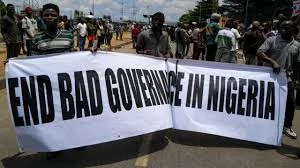
    This recalibration matters because Nigeria has walked this road before. When President Bola Ahmed Tinubu announced the Youth Confab in 2024, it came as a response to the #EndBadGovernance protests against a backdrop of deepening insecurity, excruciating cost of living crisis, and policy reforms that many young Nigerians experienced as exclusionary rather than corrective. The promise of a national youth dialogue carried weight precisely because it echoed an older recognition in Nigerian politics: that when grievances accumulate faster than institutions can absorb them, dialogue becomes a stabilising necessity rather than a symbolic gesture.

    That lesson was imperfectly learned during previous national dialogue efforts. Under President Olusegun Obasanjo, the 2005 National Political Reform Conference was convened amid mounting tensions over federalism, resource control, and representation. Despite its breadth, the conference collapsed under political calculation, leaving core questions unresolved, many of which later resurfaced with greater intensity in electoral disputes and regional agitation. Nearly a decade later, President Goodluck Jonathan’s 2014 National Conference produced extensive recommendations, yet its timing, too close to a charged election cycle, ensured that its outcomes were shelved rather than institutionalised.

    In both cases, the pattern was unmistakable: dialogue deferred or diluted did not neutralise dissent; it merely displaced it.

    It is against this historical backdrop that the slow hollowing-out of the Youth Confab becomes more than a scheduling issue. As timelines slipped, substantive engagement gave way to procedural gestures, including delegate registration portals that created the appearance of movement while postponing the harder work of convening disagreement. Participation statistics were offered where political listening was expected, reinforcing a familiar Nigerian cycle in which process substitutes for resolve.

    The consequences of continued deferral sharpen further as the electoral calendar advances. With the Independent National Electoral Commission already laying groundwork for the 2027 general elections, and civil society organisations such as Yiaga Africa warning that consultative platforms risk contamination once campaign logic takes hold, the space for a credible, non-partisan youth dialogue is narrowing by the month. History suggests that when national conversations are postponed until politics intrudes, they cease to be conversations at all.

    Meanwhile, the government’s reliance on skills acquisition as a response to youth discontent sits uneasily beside the persistence of insecurity. Despite vast allocations to defence in the 2026 budget, violence continues to shape daily life in parts of the country, including Zamfara, Niger, Kwara, Benue, Plateau, Kaduna and Katsina states where repeated attacks underscore the gap between expenditure and safety. In such contexts, digital empowerment narratives risk sounding less like opportunity and more like displacement, asking young people to adapt individually to conditions the state has failed to collectively resolve.

    The deeper danger, as history repeatedly demonstrates, lies not in protest itself but in what follows prolonged institutional deafness. When dialogue is consistently postponed, grievances migrate from conference halls to courtrooms, from courtrooms to streets, and from streets into long-term disengagement or radicalisation. Nigeria’s past national dialogues faltered not because conversation was unnecessary, but because it was treated as expendable once political risk increased.

    Seen through this lens, the Youth Confab’s current ambiguity is not a neutral pause but a familiar warning sign. By privileging adaptability over accountability, and management over engagement, the state risks repeating an old mistake under new branding. Young Nigerians have already demonstrated an extraordinary capacity to adjust to economic and social instability. What remains untested is whether a government that repeatedly avoids listening can indefinitely rely on that adaptability without consequence.

    History suggests otherwise.

    In that sense, the Youth Confab is no longer simply a postponed programme awaiting political convenience. It has become a measure of whether the Nigerian state has truly absorbed the lessons of its own past, or whether it is once again deferring a conversation until it returns under far less forgiving conditions.

    Time will tell.

  • Peter Obi, Activists Protest at National Assembly Over Electoral Act Reform Bill

    Peter Obi, Activists Protest at National Assembly Over Electoral Act Reform Bill

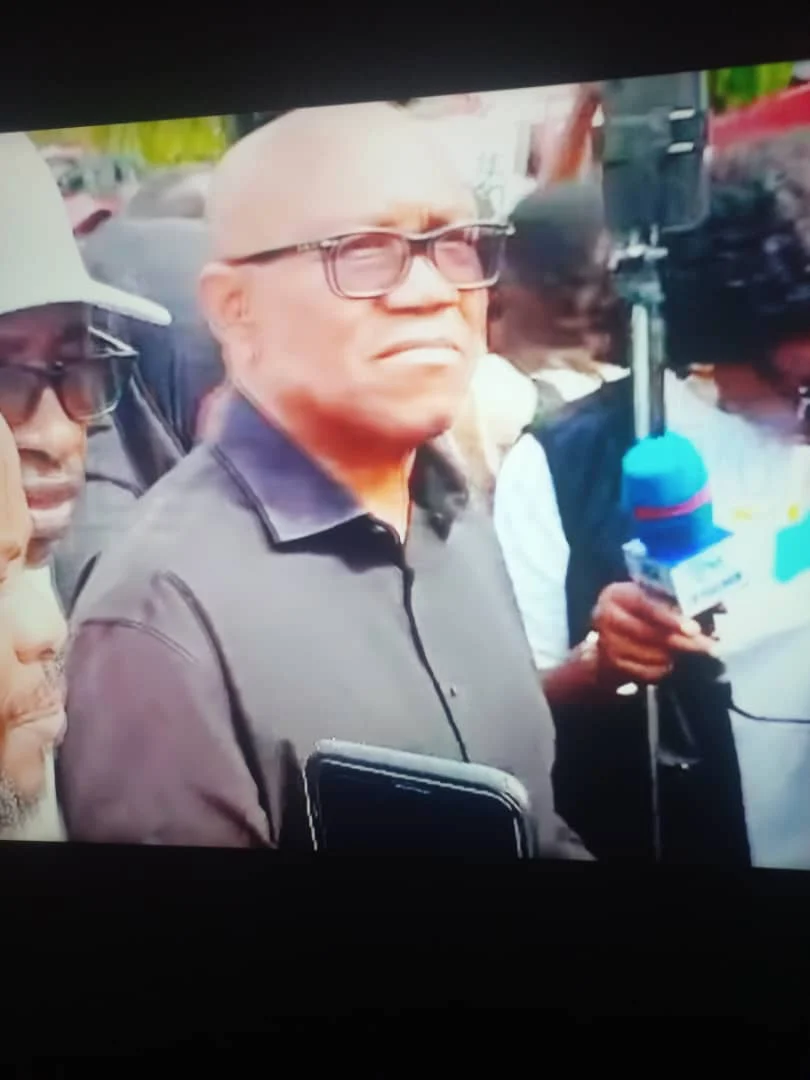
    Presidential aspirant Peter Obi on Tuesday joined pro-democracy activists in a protest at the National Assembly, calling for a review of the Electoral Act Reform Bill currently under consideration by lawmakers.

    The protesters, made up of civil society groups and political supporters, gathered at the National Assembly complex in Abuja, expressing concerns that some provisions of the proposed legislation could weaken electoral transparency and accountability.

    Speaking during the protest, Obi urged lawmakers to ensure that any amendments to the Electoral Act strengthen the credibility of elections and protect the independence of the electoral process. He said the bill, in its current form, requires broader consultation with stakeholders.

    The demonstrators also called for greater public input, warning that poorly crafted reforms could erode confidence in future elections.

    Security operatives were deployed around the National Assembly, but the protest remained peaceful, with no reported incidents.

    As of the time of reporting, the National Assembly had not issued an official response to the demands raised by the protesters. Deliberations on the Electoral Act Reform Bill are ongoing.

  • Anti-corruption groups demand transparency in investigation of Kano PCACC Chairman

    A coalition of prominent civil society groups dedicated to combating corruption and promoting transparency and accountability is closely monitoring the alleged investigation of Barrister Muhyi Rimingado, Chairman of the Kano State Public Complaints and Anti-Corruption Commission (Kano State PCACC), by the Economic and Financial Crimes Commission (EFCC) and the Code of Conduct Bureau (CCB).

    The statement, jointly signed by Olanrewaju Suraju of HEDA, Anwalu Musa Rafsanjani of CISLAC, David Ugolor of ANEEJ, Ibrahim M. Zikrullahi of CHRICED, and Muhammed Attah of PRADIN, underscores the coalition’s commitment to tracking developments in this case as they unfold.

    The coalition expresses concern that this probe follows the PCACC’s inquiry into alleged financial misconduct during the previous administration led by Dr. Abdullahi Umar Ganduje, who currently serves as the National Chairman of the All Progressives Congress (APC).

    The coalition stands in support of Chairman Muhyi Rimingado, believing that he will emerge unscathed from the investigation.

    In their official statement, the coalition commends the EFCC and CCB for their efforts to uphold transparency and accountability. They call upon these agencies to conduct their duties with unwavering professionalism and integrity, free from political interference.

    The statement emphasizes the importance of an impartial and thorough inquiry into recent developments surrounding the investigation of the Kano State Anti-Corruption Commission Chairman. The credibility and reputation of the Kano State PCACC depend on demonstrating transparency and fairness in its internal processes. All parties involved are urged to collaborate closely and adhere strictly to established legal procedures.

    The anti-corruption groups further call on the Kano State Anti-Corruption Commission, the EFCC, and the CCB to foster a spirit of collaboration in their individual anti-corruption pursuits. Timely cooperation between these agencies is crucial to addressing historical and current allegations of corruption promptly and diligently.

    By working together, these organizations can significantly contribute to a governance framework in Kano State characterized by transparency and accountability. For these groups, the commitment to eradicating corruption goes beyond mere rhetoric; it represents a shared conviction that eliminating corruption is fundamental to sustainable development, social justice, and the overall well-being of society.

    The coalition remains optimistic that the involved agencies will uphold the highest standards of professionalism and make substantial contributions to the realization of a corruption-free Kano State while holding former public office holders in the state accountable for their actions before the Kano State Anti-Corruption Commission.