Tag: Conditional Cash Transfer

  • FG Begins Direct Cash Transfer To Nigerians

    FG Begins Direct Cash Transfer To Nigerians

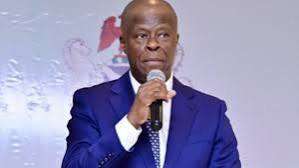
    No fewer than 4.3 million Nigerians have received direct cash transfers from the Federal Government, Minister of Finance and Coordinating Minister of the Economy, Mr Wale Edun, said yesterday.


    He said one million citizens were reached in the last few weeks, while the target is to transfer cash to one million vulnerable Nigerians each month.


    The minister spoke on a business programme of a national television during which he outlined the Federal Government’s comprehensive plan to address the current economic challenges.


    He said the government was expanding its cash transfer programme to support the poorest and most vulnerable.


    The programme, he said, had reached 4.3 million people, with plans to increase this number rapidly.


    “Right now, it’s about 4.3 million. But the last million was in the last few weeks. And when I say we’re ramping at a rate of 1 million per month, that is an ongoing process,” Edun said.


    He projected that the programme could potentially scale to assist a million people per week or every two weeks, depending on technological capabilities.


    Of great importance to the government, Edun said, is the welfare of the people, particularly the vulnerable.


    One of the key areas of focus is ensuring food availability and affordability.


    Edun said: “There is a concerted effort to ensure that we have homegrown food available.


    “In the short term, there is, apart from what is being distributed from reserves, a window that has been opened for importation because the commitment of Mr. President is to drive down those prices now and make food available now.”


    He emphasised that this measure will not undermine local farmers, as importation will only be permitted after exhausting local supplies.


    “One of the conditions for this importation will be that everything available locally in the markets or with the millers and so forth has been taken up. We will have auditors that will check that,” he said.


    Edun noted that these interventions aim to reduce inflation, stabilise the exchange rate, and lower interest rates, thereby creating a conducive environment for investment and job creation.


    “With the kind of food production programme we have, inflation will come down as prices come down. When inflation comes down, exchange rate will stabilize.


    “Interest rates will come down and the economy will have a chance.


    “People will have a chance at reasonable rates to invest in various sectors of the economy, increase productivity, grow the economy and create jobs which is the key to reducing poverty,” he elaborated.


    On the source of funding for these initiatives, Edun explained: “This particular money, $800 million, is under a World Bank programme.


    “But it’s under an International Development Association programme, and that money is for 40 years at one per cent.


    “So, if you say it is borrowing, well it is, but it is the softest and the cheapest and the most affordable form you can get. The rest will come from the federal government budget.”


    The finance minister also explained the rationale for the windfall levy, stressing that its role is in redistributing unearned income.


    “Where you have unearned income, where you have a section of the society or an industry or a set of companies that earn money through no dint of hard work of their own, the society deserves a chance to share some of that and it’s just redistribution of that.


    “So, I think that takes care of the issue of the windfall levy. It’s done everywhere else in the world where you have, especially the energy sector as well as banking,” he noted.

  • Tinubu’s anniversary: FG begins N75,000 cash payment to 75 million Nigerians

    Tinubu’s anniversary: FG begins N75,000 cash payment to 75 million Nigerians

    The Federal Government announced on Tuesday the reinstatement of the suspended social investment programme, aimed at providing direct payments to 75 million Nigerians across 50 million households.

    This initiative is intended to alleviate the hardships faced by citizens, particularly vulnerable groups, as disclosed during a ministerial sectoral briefing marking President Bola Tinubu’s first year in office.

    Wale Edun, the Minister of Finance and Coordinating Minister of the Economy, revealed that the cash transfer programme had undergone significant overhauls to address and mitigate fraud.

    This announcement follows the suspension of all National Social Investment Programme Agency (NSIPA) activities by President Tinubu on January 12 for a six-week period, due to alleged mismanagement.

    Concurrently, Betta Edu, the Minister of Humanitarian Affairs and Poverty Alleviation, was suspended on January 8.

    The intervention programmes affected by this suspension included N-Power, the conditional cash transfer scheme, the government enterprise and empowerment programme, and the home-grown school feeding initiative.

    On March 13, the House of Representatives urged the federal government to resume these social investment initiatives.

    To revamp the programme, President Tinubu established a Special Presidential Panel, led by Edun, to conduct an intensive review and audit of the existing financial frameworks and policy guidelines of the social investment programmes.

    Providing an update on the committee’s progress, Edun emphasised the government’s commitment to providing relief for poor Nigerians.

    “I am duty-bound to give you an overview of the strategy, policies, and implementation of Mr President’s reform programme,” Edun said.

    “Immediately upon assuming office, Mr President launched macroeconomic reforms to restore stability to the Nigerian economy, including subsidy reforms and foreign exchange market reforms.

    “These reforms caused a spike in costs for individuals and businesses, but Mr President is committed to counterbalancing the negative effects with interventions across the social spectrum.”

    Edun outlined the government’s restarted social investment programme, which includes direct payments to 75 million Nigerians in 50 million households.

    He also mentioned improvements in access to credit, with ₦1 billion allocated to consumer credit and grants of ₦50,000 being provided to 1 million nanoindustries.