Tag: cryptocurrency

  • Nigerian Government Withdraws Charges Against Gambaryan, Binance Exec

    Nigerian Government Withdraws Charges Against Gambaryan, Binance Exec

    The Nigerian government has unexpectedly dropped the case against Tigran Gambaryan, a Binance executive facing money laundering allegations.

    Gambaryan, who has been detained since April, appeared at the Federal High Court in Abuja where charges were withdrawn just days ahead of the initially scheduled October 25 hearing.

    Gambaryan, a U.S. citizen, was detained on five counts related to money laundering and currency speculation, involving over $34 million.

    Despite two unsuccessful bail attempts, citing his health and being deemed a flight risk, the charges were suddenly dropped during a low-profile hearing.

    The unexpected move comes after prolonged diplomatic negotiations between Nigerian and U.S. officials.

    His detention at Kuje Correctional Centre and previous bail rejections drew attention from U.S. lawmakers, who advocated for his release.

    Another Binance official, Nadeem Anjarwalla, had earlier escaped from pre-trial custody in March, adding complexity to the case.

    This development concludes the case that has drawn international scrutiny, with Binance still facing separate tax evasion charges in Nigeria.

    Gambaryan’s health conditions had played a central role in his legal journey, but the court consistently maintained its stance against his bail, citing procedural concerns.

  • Trump unveils new cryptocurrency platform 

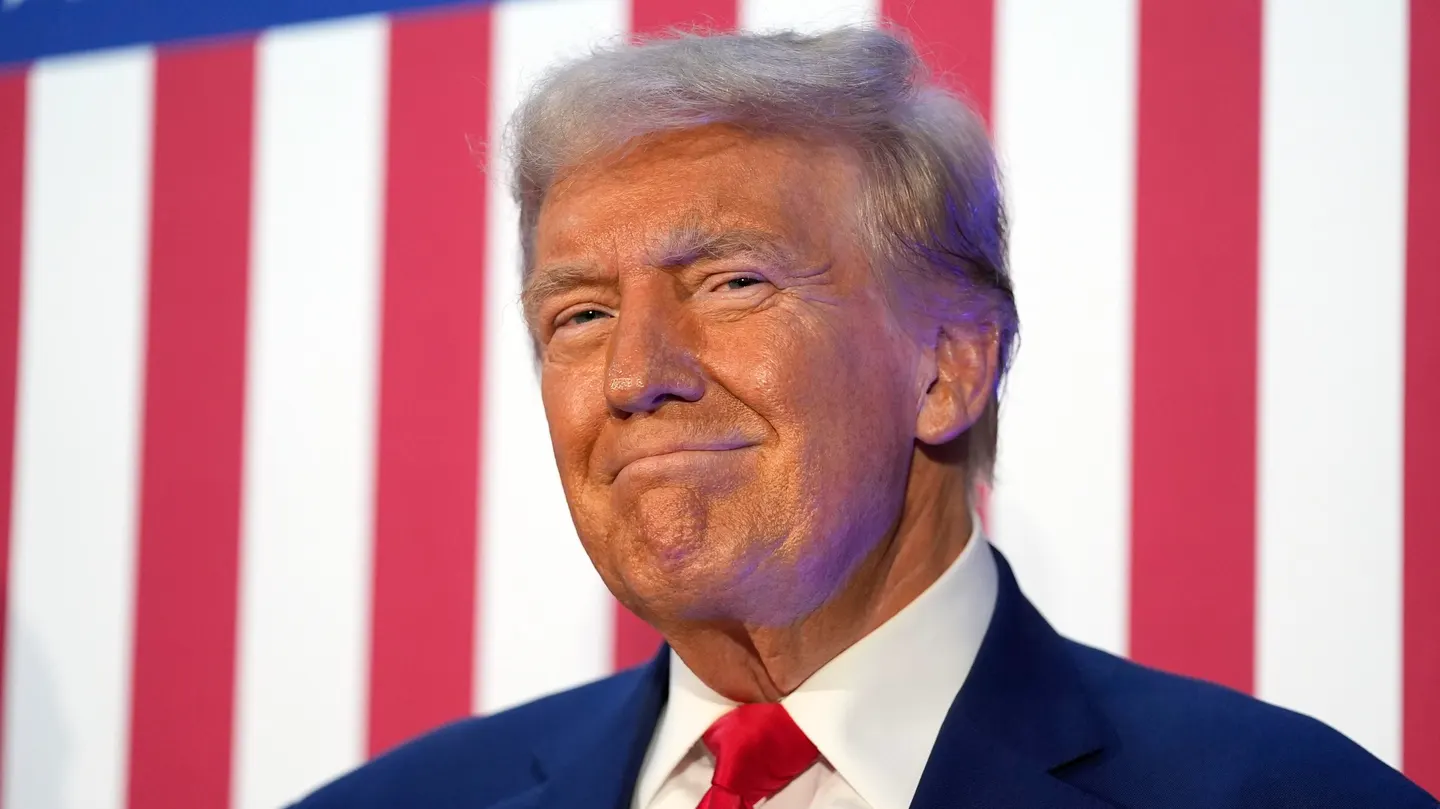
    Trump unveils new cryptocurrency platform 

    Notorious for failed startups and suing for bankruptcy, former US president, Donald Trump along with his sons and entrepreneurs late Monday launched a cryptocurrency platform but provided few details.
    Little was revealed about the Trump family crypto project during a two-hour online presentation other than an offer to let people buy digital “tokens” giving them a vote in platform decisions.
    The event went ahead as planned despite an apparent assassination attempt against Trump on Sunday at his golf club in West Palm Beach, Florida.
    World Liberty Financial intends to offer services based on so-called decentralized finance, a mechanism that eliminates the need for an intermediary such as a bank to carry out transactions with a third party, the politics-laced discussion indicated.
    Decentralized finance, or DeFi, is based on so-called blockchain technology, which keeps a theoretically open but tamper-proof record of transactions.
    World Liberty Financial will enable users to lend or borrow cryptocurrencies to or from one another, a service already offered by many platforms, one of the best-known of which is Aave.
    The former president’s son Donald Trump Jr. touted this as “the start of a financial revolution,” during a session streamed on X, formerly Twitter.
    Zachary Folkman and Chase Herro, the linchpins of the project and established cryptocurrency entrepreneurs, said the platform would primarily use “stablecoins”, which are backed by a traditional currency, most often the dollar.
    Trump’s vicinity at golf course
    As a result, they are free from the sometimes brutal fluctuations experienced by digital currencies untethered to real-world money.
    World Liberty Financial wants to attract the masses to cryptocurrencies, creating a platform easily accessible to people, Folkman said.
    Project leaders said they would sell tokens that give owners the right to take part in the governance of the platform, with 63 per cent of them offered to the public, 20 per cent going to the founding team and the rest set aside as rewards for users.
    No timetable for the project was disclosed.
    During his presidency Trump referred to cryptocurrencies as a scam, but has since radically changed his position, presenting himself as a “pro-bitcoin president” if elected in November.
    In so doing, he is standing in opposition to the Biden administration, which is seen as a proponent of regulating the sector.
  • Crypto Billionaire BLord Arrested For Terrorism Financing 

    Crypto Billionaire BLord Arrested For Terrorism Financing 

    The Nigeria Police Force has confirmed the arrest of a crypto billionaire, Linus Williams, popularly known as BLord.

    According to a statement on Tuesday by the Force Public Relations Officer, Olumuyiwa Adejobi, BLord was arrested for offences related to alleged internet fraud, terrorism funding, and violation of the CBN act based on complaints lodged against him and his company.

    Adejobi promised that the Police would do due diligence in the investigations into the allegations against the crypto billionaire and ensure Nigeria’s cyberspace is safe and secure.

    “The FCID (NPF-NCCC) is currently investigating complaints lodged against BLORD GROUP, BLORD REAL ESTATE LTD, BLORD JETPAYE LIMITED, and BILLPOINT TECHNOLOGY.

    “These offences include allegations bothering on cryptocurrency fraud, aiding internet fraud, computer-related fraud, terrorism funding, and non-compliance with regulatory frameworks.

    “We will do due diligence in our investigations. Our cyber space in Nigeria must be safe and secured by all means. We are committed to achieving that,” the statement reads.

  • Presidential Aide Onanuga Pushes For Cryptocurrency Ban

    Presidential Aide Onanuga Pushes For Cryptocurrency Ban

    Bayo Onanuga, the Special Adviser to President Bola Tinubu on Information and Strategy, has called for the ban of cryptocurrency and foreign exchange (Forex) platforms operating in Nigeria.

    Onanuga specifically targeted platforms like Binance, Kucoin, AbokiFX, and OctaFx, claiming that they are manipulating the national currency.

    Expressing concern over Binance’s influence, Onanuga pointed out the platform’s regulatory challenges in the United Kingdom, Japan, Canada, and Singapore. 

    He urged the Economic and Financial Crimes Commission (EFCC) and the Central Bank of Nigeria (CBN) to take action against these platforms, emphasizing the need to prevent further devaluation of the Naira.

    He wrote: “According to Data Wallet, Binance is prohibited in the United Kingdom by the Financial Conduct Authority from conducting any regulated activities. In Japan, the Financial Services Agency (FSA) banned Binance for operating without the necessary regulatory approval,” the presidential aide said.

    “Ontario, Canada, has also suspended Binance services following its inability to meet the province’s securities regulation criteria. The Monetary Authority of Singapore also banned Singaporean investors from accessing Binance’s services.

    “Binance, facing regulatory showdown in many countries, and causing disruptions in the currency market, should not be allowed to dictate the value of the Naira, not on its crypto exchange platform.

    “Other crypto platforms such as Kucoin, Bybit should be banned from operating in our cyberspace. FX platform Aboki should be re-banned.”

    This call for a ban aligns with the CBN’s previous directive on February 5, 2021, instructing financial institutions to close accounts involved in crypto transactions due to concerns about money laundering, terrorism financing, cybercrime, and the volatile nature of cryptocurrencies.

  • 24 Central Banks will have digital currencies by 2030 – Survey

    A survey by the Bank for International Settlements (BIS) shows that 93 percent of central banks are already researching Central Bank Digital Currencies (CBDCs).

    According to the survey, there could be up to 15 retail and nine wholesale CBDCs in circulation by 2030.
    According to a survey, over half of the world’s central banks are conducting experiments or working on a CBDC pilot. Almost a quarter of all central banks are already piloting their retail CBDC projects, and the number of wholesale CBDCs in the works is much lower.
    Geoeconomically, nations within emerging markets and developing economies are leading CBDC adoption.

    Their share in piloting the retail (29 per cent) and wholesale (16%) CBDCs almost doubled that of advanced economies, which stands at 18 per cent and 10 per cent, respectively.
    Both developing and advanced economies mostly share the motivation behind their CBDC projects — financial stability and cross-border payments efficiency. However, developing countries are more often driven by financial inclusion reasons.

    The share of central banks likely to issue retail CBDC within the next three years grew from 15 per cent to 18 per cent in 2022. At the same time, 68 per cent of central banks still state their unreadiness to issue retail CBDC “any time soon.”
    So far, there are still only four CBDCs in circulation: in the Bahamas, the Eastern Caribbean, Jamaica and Nigeria. Yet, based on the central bankers’ answers, the survey predicts 15 retail and nine wholesale CBDCs will be live by the end of the decade.
    At the end of June, the Reserve Bank of India reported ongoing negotiations with at least 18 central banks worldwide regarding the possibility of cross-border payments via its CBDC, the “digital rupee.”

    In July, the Federal Reserve Bank of New York’s Innovation Center completed its proof-of-concept of a regulated liability network for a CBDC.