Tag: ECONOMIC DIVERSIFICATION

  • Skepticism as FG Budgets N6.69bn for Idle Ajaokuta Steel Company

    Skepticism as FG Budgets N6.69bn for Idle Ajaokuta Steel Company

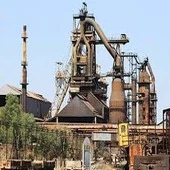
    Stakeholders have expressed strong reservations and deep skepticism over the Federal Government’s decision to allocate N6.69 billion to the long-idle Ajaokuta Steel Company Limited (ASCL) in the 2026 Appropriation Bill.

    Speaking to the News Agency of Nigeria (NAN) on Monday in Abuja they warned that continued spending without production amounts to institutionalised waste..

    Established in 1979 and once envisioned as the backbone of Nigeria’s industrial revolution, ASCL has remained non-functional for decades, despite repeated promises, policy resets and billions of naira in public expenditure.

    NAN reports that the 2026 allocation represents a 4.9 per cent reduction from the N7.03 billion approved in 2025. Of the total amount, N6.04 billion is earmarked for personnel costs, N233.6 million for overheads, and just N410.8 million for capital projects — a breakdown critics say exposes the absence of a genuine revival strategy.

    While government officials argue that the funding aligns with President Bola Tinubu’s economic diversification agenda, several civil society leaders described the allocation as symbolic spending divorced from industrial reality.

    Mr Philip Jakpor, Executive Director of the Renevyln Development Initiative (RDI), said the steel plant had become a recurring budget line with no measurable outcomes.

    “For decades, administrations have poured billions into Ajaokuta with nothing to show for it. The mill has not produced steel for a single day, yet allocations continue. At this point, it looks less like industrial policy and more like a drain pipe for public funds,” Jakpor said.

    He alleged that ASCL had been repeatedly used by successive governments as a financial conduit under the guise of rehabilitation.

    Dr Abdullahi Jabi, Chairman of the North Central Zone of the Campaign for Democracy, Human Rights Advocacy, and Civil Society of Nigeria, said Nigeria’s industrial failure was being reinforced by what he described as budgetary inconsistency and weak implementation discipline.

    “Steel is not a ceremonial sector. You cannot industrialise through MoUs, press statements and budget speeches. Without strict execution, these allocations are meaningless,” Jabi said.

    He added that the continued neglect of technical expertise and specialised manpower had left Nigeria’s steel ambitions hollow.

    A former ASCL resident, Dr Emmanuel Shuiabu, described the current state of the plant as a national tragedy, recalling that Ajaokuta once symbolised Nigeria’s industrial promise.

    Shuiabu, who lived in the steel town between 1982 and 2002, said ASCL was formerly Nigeria’s largest employer, providing over 10,000 direct jobs, while its in-house power infrastructure supplied uninterrupted electricity to the host community for years.

    “Beyond political slogans, what is missing is decisive action. The original builders of the plant must be brought back, and experienced hands who ran the facility should be re-engaged. Anything short of that is cosmetic,” he said.

    Shuiabu, a finance expert, also noted that rising allocations often masked the reality that budgeted funds were frequently not released, further weakening implementation credibility.

    NAN recalls that the Minister of Steel Development, Shuaibu Audu, admitted in his New Year message that funds appropriated for the 2025 budget were largely not released, despite claims of sustained reform momentum.

    A Lokoja-based public analyst, who requested anonymity, said activities at the plant were limited to basic maintenance.

    “They are simply preventing total collapse — nothing more. It’s like keeping a patient on life support without any plan for recovery. The same pattern exists at the Jos Steel Rolling Mill,” he said.

    Mrs Victoria Ola, a former staff member who lived in the company’s quarters, said surrounding communities had deteriorated economically and socially as the plant remained idle.

    “Entire livelihoods vanished when the steel plant died. What remains are empty houses, broken infrastructure and lost opportunities,” she said, though she urged citizens to give the government time to deliver on its promises.

    A government official, who spoke on condition of anonymity, confirmed that over 90 per cent of the 2026 allocation was devoted to salaries and upkeep, while capital expenditure accounted for just 6.1 per cent, a figure widely regarded as inadequate for any meaningful industrial turnaround.

    NAN further recalls that Prof. Linus Asuquo, Director-General of the National Metallurgical Development Centre, Jos, disclosed at the 2025 National Steel Summit that ASCL costs Nigeria over N1 billion annually in pensions, salaries, taxes and administrative expenses — despite producing no steel.

    In defence of the government’s position, Audu said Nigeria had advanced talks with prospective Chinese investors to revive the plant and disclosed that a 500-million-dollar investment by NNPCL and partners was underway to establish five mini-LNG plants within the Ajaokuta complex.

    He also said the ministry had signed an MoU with the Federal Ministry of Defence to establish a Military Industrial Complex and commence local production of military hardware at ASCL in collaboration with the Defence Industries Corporation of Nigeria.

    However, critics insist that without timelines, transparency and production benchmarks, Ajaokuta risks remaining Nigeria’s most expensive industrial monument to failure.

  • Diversify Export Earnings, Increase FDIs To Address Fx Liquidity Challenge -Uwaleke

    Professor of Finance and Capital Market, Uche Uwaleke, has said that except the Federal Government diversify its export base and increased foreign direct investments (FDIs), the liquidity challenge in the forex market would persist.

    Uwaleke, who gave the advice Monday in Abuja, added that the country’s weak economic indices would make it difficult for the government to implement the naira float. 

    In a bid to address the widening exchange rate gap, the federal government resorted to a managed float of the naira on the I&E Window. However, this policy has failed to halt the fall of the naira. 

    The exchange rate for a dollar to naira at the official window is N751.1 as of Monday, 11 September 2023, according to the data published by CBN. While at the parallel market, the naira exchanged for N925 to a dollar in Lagos.

    Experts have said that with a larger part of Nigeria’s revenue still coming from oil, it would not be easy for the government to address supply side constraints in the FX due to the country’s inability to meet it’s OPEC quota.

    “The only sustainable solution to deal with the liquidity challenge in the forex market is to have multiple streams of forex comprising export proceeds and foreign investments.

    “Nigeria’s economy is not ready for a complete float of the naira due to weak economic fundamentals.

    “Regrettably, over 90% of forex inflows still come from crude oil sales. A diversified export base is required to check volatility in a forex market where the exchange rate is determined by market forces. This is still lacking in Nigeria.

    “On the demand side, I support the idea of curbing dangerous currency speculation by making the trading in forex outside the Banks and BDCs illegal. By doing so, the CBN can be in a position to monitor activities in the forex market,” he said.