Tag: Economic Reform

  • World Bank Commends Tinubu’s Reform Drive, Calls Nigeria Global Reference Point

    World Bank Commends Tinubu’s Reform Drive, Calls Nigeria Global Reference Point

    The World Bank has commended President Bola Tinubu for his administration’s reform drive, describing Nigeria as a frequent global reference point for reform implementation and results.

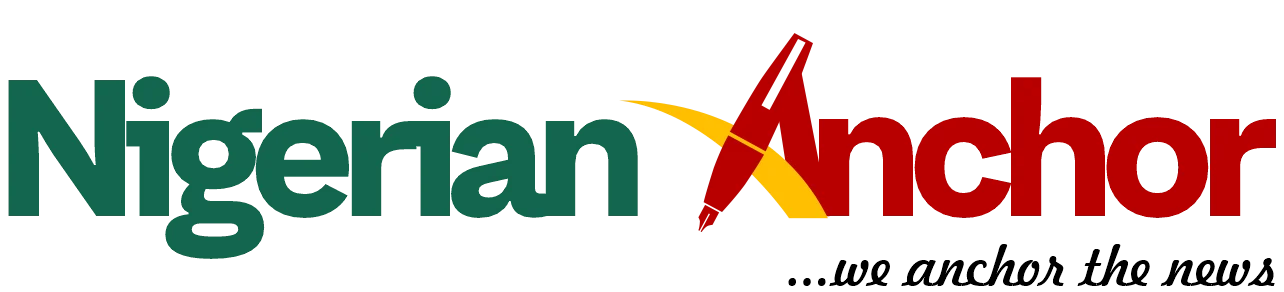
    The bank’s Managing Director of Operations, Anna Bjerde, made the remarks on Tuesday while leading a World Bank Group delegation to meet the president at the State House in Abuja.

    Bjerde said the outcomes of Nigeria’s reforms over the past two years were widely discussed among global leaders, policymakers and investors, noting that the scale and pace of progress had drawn international attention.

    “Nigeria is a frequent example in my discussions around the world because the results achieved in two years are really commendable,” she said.

    She praised President Tinubu’s consistency in communicating the necessity of the reforms, adding that his steady leadership had helped sustain confidence despite the challenges associated with implementation.

    “Even when reform implementation is difficult, there is no turning back. You are staying the course,” Bjerde said.

    According to her, feedback from Nigeria’s private sector indicates that reform outcomes are becoming more visible, with improving investor sentiment and growing confidence in the policy direction of the government.

    On the forthcoming Country Partnership Framework, Bjerde said the new programme would be anchored on Nigeria’s development ambition of building a $1 trillion economy and achieving seven per cent economic growth. She stressed that job creation would be central to the partnership, particularly in light of Africa’s growing population and the urgency of employment opportunities for young people.

    She identified infrastructure investment, agricultural modernisation and improved access to finance for small and medium-sized enterprises as priority areas for collaboration, noting that Nigeria’s infrastructure spending remains low relative to its gross domestic product.

    Bjerde said this gap would require innovative public-private partnerships to unlock private capital and accelerate development. She disclosed that the World Bank’s public sector portfolio in Nigeria currently stands at about $17 billion, while its private-sector arm, the International Finance Corporation, invests approximately $5 billion annually in the country.

    She added that a new reform-linked budget support operation was being prepared, alongside expanded risk guarantee instruments designed to attract more private investment.

    “Your reforms and our budget support go hand in hand,” Bjerde said.

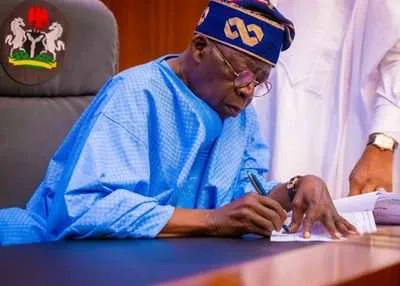
    Earlier, President Tinubu reaffirmed that his administration’s reform agenda was irreversible, declaring that Nigeria had “its hands on the plough” and would not retreat from the path of reform.

    “Since we went into this turn of reform, we are never going to look back,” the president said.

    Tinubu acknowledged that the reforms had been painful at the initial stage but said they were necessary to secure long-term economic stability and sustainable growth. He identified agriculture as a key pillar of the reform agenda, citing the establishment of mechanisation centres and Nigeria’s openness to World Bank support in the areas of improved seeds and productivity.

    The president also reiterated his commitment to transparency and accountability, describing the removal of fuel subsidies and the unification of the foreign exchange rate as difficult but unavoidable decisions.

    “The first reaction was high inflation, but it has come down dramatically. Now that it is stable, we can help investors,” Tinubu said.

    He urged the World Bank to accelerate innovative financing solutions, reduce bureaucratic bottlenecks and deepen support for skills development, while assuring the institution of Nigeria’s readiness for deeper engagement and a sustained partnership.

  • Naira Redenomination Is Speculators’ Antics

    Naira Redenomination Is Speculators’ Antics

    Naira Redenomination Is Speculators’ Antics

    The issue of Naira redenomination started gaining traction on social media around September 2023. It was believed that the trending misinformation was the handiwork of some drunks in a Chinese bar”, idled, and needed to ruffle the economy’s feathers. The Central of Nigeria has denied the trending malicious story.

    Unperturbed though, the perpetrators retreated awhile, and recently, the malicious misinformation started gaining traction on social media. One may wonder what their motive is. No soothsayer is needed to know that economic saboteurs are at work again, but to gain what?

    The attack on the Naira is one of the many products of corruption bedeviling the nation. Others include untamed obnoxious taste for foreign items, and utter disdain for locally produced items (often of better quality than their foreign counterparts), mono-economy, – dependence on oil, forgetting that the foundation and strength of the economy was agriculture.

    Monumental legacies adorned the nooks and crannies of the country that are attestation to what agriculture did before the petrol-dollar craze. Agriculture was later neglected. The scramble for fast buck from oil till date incapacitated the economy. No effort was made to diversify the economy. At a time in the history of this economy, a regime once told the world that Nigeria’s problem was not money but how to spend it.

    Profligacy became the order of the day. Corruption crept in, and scrambles for power to get a bite of the oil ‘cake caused successive military coups. This was in connivance with corrupt civilians. Every successive administration embarked on primitive acquisition of wealth stolen from our commonwealth. Mediocrity reigned, leadership selection became “paddy-paddy, and merit took a flight. Some past leaders sought power for power’s sake, clueless of what to do with it. The economy was on autopilot, burdened, and still suffering from those uncoordinated and rudderless inactions. The economy has been in chains while the masses bear the brunt.

    The descent to this ignoble state started before1986 and became a reality with the introduction of Structural Adjustment Programme (SAP). It was the onset of gradual destruction of all economic fibers of Nigeria. A leader at the time frustratingly retorted that ‘the Nigerian economy defied all economic theories.’

    Little did he know that vultures and vampires had taken over the economy, and ever since the economy has been under attack. Still the only legacy we hold onto, the Naira, is under serious threat now.

    They took over and destroyed all the refineries, made them non-functional despite trillions of Naira spent to fix them. They destroyed the Power Holding Company of Nigeria (PHCN),and bought them over under the disguise of privatization, leaving us with what we have today – darkness.

    The Nigerian Airways, and Nigeria National Shipping Line are all moribund, yet investors who professed competence and business acumen bought them. They hijacked the Nigeria National Petroleum Company (NNPC) making all refineries derelict.

    Fuel importation and subsidy was introduced through which the economy was sucked. No past regime had the political will to end the obnoxious regime.

    But since this regime took the bold decision to remove fuel subsidy and harmonize the exchange rate, the economic vampires and the vultures have swooped on the economy, baring their fangs ferociously on the Naira.

    While other oil producing nations are reaping bountifully from oil, building infrastructure, and bettering the welfare of their citizens, Nigeria, the 6th oil producing nation in the world is wallowing in poverty, corruption, darkness, yet its leaders are unperturbed.

    Those calling for the redenomination of the Naira are the faceless ‘owners’of Nigeria, attacking the economy with the main aim of wrecking it to enable them to take it over. They have gained, and still gaining bountifully from every crisis of the past.They are determined to destroy the Naira.

    Their grouse may have been the current administration’s gut to take away the fuel subsidy. They have the war chest – hoarded foreign and local currencies, through the BDCs they own. They are rich and entrenched individuals, using their ill-gotten wealth to attack the Naira.

    Their call for the redenomination is to cause disaffection between the government and Nigerians, thereby bending the hands of the government backward.

    When in 2006 the Republic of Zimbabwe redenominated its currency at the rate of 1,000 old Zimbabwean note to one Zimbabwean dollar, it was because of hyperinflation.

    The newly independent nation probably got carried away with the euphoria of independence and forgot to do the real business of governance.

    Things spiraled out of control, the currency began to lose value because of the taste for foreign goods, no effort to develop local capacity, and the currency suffered. The Republic of Ghana that plied same route thought it had no better option than to redenominate in 2007.

    If it must be recalled, Ghana’s hyperinflation between 1977-1983 hovered between 116% and 123%. The reason the government gave for taking the action was to reassert the monetary sovereignty of Cedi.

    The government was conscious of the fact that if Ghanaians should lose confidence in the currency and begin to embrace other foreign currencies as store of value, there will be problems.

    Another reason it gave was years of economic decline that took a toll on the Cedi. In fact, it was to arrest the spiraling hyperinflation that threatened the country, and to also make it easy for accounting and statistical purposes.

    According to the authorities, they believed it would be easier to maintain by setting 10,000 Cedis to be 1 Ghana Cedi.

    Has the Nigerian economic situation reached what can be compared to the Zimbabwe or Ghana situation? The answer is No. The problem with Nigeria is corruption and greed, self-centeredness, obnoxious foreign taste, and disdain for what she produces. Nigerians do not eat what they produce, nor produce what they eat.

    What the purveyors of this malicious misinformation set to achieve is to arm-twist the government and the CBN to do their bid and redenominate to suit their criminal desires.They are presently clueless about what the government is doing going forward to address the economic challenges, and the exchange rate as it unfolds its economic reforms template.

    The CBN said in its latest press release on the issue that, the masterminds of this fake news had in September circulated same through a misleading WhatsApp message, and rather than retracing their steps have become recalcitrant “in their mischief, (and) modified text eked from an old policy move by a previous CBN Governor in 2007 to make it appear recent”.

    It read, “For the avoidance of doubt, there is currently no plan by the Bank to restructure and redenominate the Naira. While the Bank may be considering reforms, such are subject to laid-down procedures in line with the provisions of the CBN Act 2007”.

    Nigeria, hugely endowed with human and natural resources, and rated as the largest economy in Africa was recently warned by the International Monetary Fund (IMF) that if the urgent necessary reforms are not introduced to address its economic challenges, South Africa by 2024 may become the largest economy in the continent.

    Patriotic citizens of some thriving economies in the continent are supportive of their governments’ efforts for a better living standard, but here at home, the reverse is the case.

    Thus, if Naira is destroyed, what legacy would we have as a nation?

    Ademola Oyetunji writes from Ibadan.

  • We’re Reforming Economic, Business Environment To Promote Efficiency – Tinubu

    We’re Reforming Economic, Business Environment To Promote Efficiency – Tinubu

    President Bola Tinubu says his administration is working assiduously to reform the nation’s economic and business environment to promote efficiency.

    Tinubu said this on Sunday during a bilateral meeting with the Chancellor of the Federal Republic of Germany, Olaf Scholz and his entourage, in the Presidential Villa, Abuja.

    Tinubu and the chancellor engaged in three separate meetings before addressing a joint press briefing.

    According to the Nigerian leader, the country has a very high deposit of gas availability and the investment environment as well as liquid natural gas is improving.

    Tinubu said his administration had improved the nation’s business environment, saying, “we are going through several reforms.”

    He also said that Nigeria was ready to encourage investment in gas pipelines and that the LNG would facilitate the shipment of liquefied gas to Europe.

    According to him, the government will continue to promote the opportunity for the growth of businesses and their partners.

    Tinubu said, “We are reforming our economic and business environment to promote efficiency.

    “You might have read or been aware that we have removed oil subsidy.

    “We’re going through tax reforms to eliminate double taxation and give you better returns on investments.”

    According to the president, there are principles that will ensure that investment grows well and is protected.

    He added, “We definitely welcome you to the collaboration; we’re happy this is happening to us.

    “I believe that my friend will add more to the value of Nigeria’s environment; we have discussed that.

    “I’ve made a commitment to you that we’ll promote efficiency, ease of doing business and remove all conflict areas that might be possible immediately.”

    On the Federal Government’s alleged refusal to retrieve over 12,000 Nigerians who were unable to make Germany’s asylum provision and were at risk of deportation, Tinubu said that such persons were welcome to return home.

    He, however, disclosed that both countries were working on regularising the stay of those who were economic refugees.”

    The president said there was a very deep discussion in this direction, urging the separation of economic refugees from real refugees.

    “We have a programme, to work in partnership, to really ensure normal migration and deepen the relationship in that area.

    “I’m not making any demands; if they are Nigerian citizens, they are Nigerian citizens and they are welcome back home.

    “Nothing should send them away; we are ready to enter into a partnership to improve the migration situation.

    “Since other young and vibrant people can go through the process according to the immigration law of the country, to accept them as long as they are of good behaviour and good character.

    “We are ready to work together in that direction,” Tinubu said.

    Also responding to the migration question, Scholz said the debate was on and, very soon, the grey areas would be addressed.

    He said, “The first is yes, there is a need, in Germany, for people that have talent and that want to work in our country in a way which is a regular path for migrants.

    “We are working intensely in this field and we want to get (make) more progress and get things agreed in detail.

    “The second part of this is also an agreement that those who do not have the right to stay in my country can go back and should go back.

    “But this is where cooperation is also important; we will do so and it will be an important aspect of our work together.”

    The German chancellor regretted that minerals were ‘just about extraction’ as they ended up in other countries rather than for Nigeria’s development.

    “It is also important that we use the way of developing your economy in the fields of the minerals you have.

    “I think that the investments into this structure must be easy but also beneficial for your country.

    “It is something that bothered me a lot in the past that, sometimes, it is just about extraction which is not enough.

    “There should be one bit more for making it feasible that some parts of the economic development can be used in the countries of origin.

    “This is not the case today in our world but, if we change this a little bit, it will change a lot and work on this field is also important for us.”

    According to Scholz, a lot of investments have to be taken, adding,” looking at infrastructure; it’s not just about roads and railways.

    “It is also about electricity, the infrastructure using the grid, making it feasible that all the produced energy or the power that is already there could go to the people.

    “Finding a way how we can develop the economy in this field will also be important.”