Tag: education funding

  • FUHSO and the Cost of Governing Without Foresight

    FUHSO and the Cost of Governing Without Foresight

    The difficulties confronting the Federal University of Health Sciences, Otukpo (FUHSO) reflect the challenges that arise when institutional ambition outpaces careful planning. Established to contribute meaningfully to Nigeria’s health workforce development, the university is now struggling to deliver one of the most basic requirements of medical education, clinical training. The fact that several cohorts of medical students are unable to progress because a teaching hospital is not yet operational points to gaps in planning, funding execution, and oversight that deserve urgent and thoughtful attention. Addressing this situation will require coordinated action by the relevant ministries and regulatory bodies to prioritise the completion of core clinical infrastructure, strengthen budget implementation, and ensure that future institutional decisions are guided by long-term sustainability rather than short-term expediency.

    What makes the situation particularly concerning is that it was neither sudden nor unforeseeable. Medical education is among the most capital-intensive forms of tertiary training, and the absence of a functional teaching hospital inevitably undermines any programme designed to produce doctors. Yet admissions proceeded, cohorts advanced through pre-clinical studies, and the warning signs were allowed to accumulate. The resulting bottleneck now confronting students underscores the consequences of launching critical institutions without fully aligning timelines, infrastructure, and financing, a pattern that has too often characterised public sector projects in Nigeria.

    Insiders familiar with the situation say the problem began long before the first students were stranded. The old Otukpo General Hospital, redesignated as FUHSO’s teaching hospital, has seen little more than cosmetic attention. Although funds were captured in the federal budget for its upgrade, an official disclosed that roughly ₦1 billion earmarked for the project could not be meaningfully accessed. The explanation points to Nigeria’s chronic budget implementation failures, allocations announced with fanfare but trapped in bureaucratic bottlenecks, released too late or not at all.

    But the funding story, troubling as it is, does not fully explain the depth of FUHSO’s crisis.

    Records and interviews suggest that early leadership decisions compounded the institution’s vulnerability. Instead of pursuing low-cost, temporary arrangements using existing government facilities, abandoned schools, idle public buildings, or shared spaces common in the early life of many public universities, the university’s pioneer management opted to operate from rented hotels and privately owned structures. These choices consumed scarce take-off funds without building any lasting academic or clinical capacity.

    Education analysts describe this as a classic case of misplaced priorities. While administrative comfort was secured, the essentials of a medical university, laboratories, teaching wards, clinical partnerships, were deferred. Allegations of opaque leasing arrangements and potential conflicts of interest have only deepened concerns, particularly in the absence of publicly available breakdowns of how early funds were spent.

    The contrast with other federally funded health institutions is stark. In the same national budgets where FUHSO struggled to secure just over a billion naira for capital development, established teaching hospitals such as those in Kano, Awka, and Lagos received tens of billions of naira each. These hospitals serve as training grounds for medical students across the country, yet FUHSO, a university designed to anchor health education, was left trying to build from scratch with a fraction of the resources.

    Even among federal universities, the disparity is glaring. While long-established institutions routinely receive allocations approaching ₦50 billion annually, newer specialised universities like FUHSO have been confined to single-digit billions, regardless of the capital-intensive nature of medical education. This raises uncomfortable questions about national priorities and whether the decision to establish such institutions was matched by the willingness to fund them properly.

    The human cost of these failures is now unavoidable. Students face indefinite delays, uncertainty about accreditation, and the emotional and financial strain of a medical education placed on pause. For a country already battling an exodus of healthcare workers, the irony is painful: an institution meant to strengthen the health system is instead producing stalled graduates.

    Regulatory bodies have not escaped scrutiny. The National Universities Commission and relevant medical training authorities approved programmes and admissions without ensuring that minimum clinical infrastructure was in place. Their silence as the crisis deepens suggests a regulatory culture more reactive than preventive.

    What is happening at FUHSO is not an isolated mishap. It reflects a broader national pattern in which institutions are created for political symbolism, budgets are announced without execution plans, and accountability is diffused across ministries, councils, and agencies until responsibility belongs to no one.

    As students remain trapped in academic limbo and public funds continue to trickle into administrative overheads rather than concrete outcomes, the question grows louder: who will answer for the gap between promise and reality at FUHSO? Until this question is confronted honestly, Otukpo will remain a cautionary tale, not of what Nigeria lacks, but of what it repeatedly fails to do with what it has.

    Beyond the immediate impact on affected students, the situation at FUHSO carries broader implications for Nigeria’s health system and national development. At a time when the country faces persistent shortages of medical professionals and the steady migration of trained doctors abroad, allowing a specialised health sciences university to drift without its core clinical capacity is a cost Nigeria can ill afford. Resolving this challenge promptly and transparently would not only restore confidence among students and staff, but also signal a renewed commitment to disciplined planning and accountability in public institutions, principles that remain essential to achieving sustainable progress.

  • Abia Budgets N1.016 Trillion, Focus Education, Health, Roads in 2026

    Abia Budgets N1.016 Trillion, Focus Education, Health, Roads in 2026


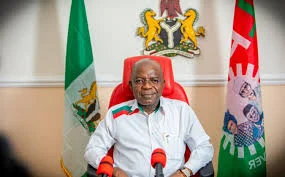
    Umuahia, Abia State – Governor Alex Otti on Tuesday presented a N1.016 trillion Appropriation Bill for the 2026 fiscal year to the Abia State House of Assembly, describing it as the “Budget of Acceleration and New Possibilities.”

    The proposed budget represents a 13 per cent increase over the 2025 appropriation of N750.28 billion and is aimed at fast-tracking infrastructure expansion, enhancing social services, and deepening ongoing reforms across the state.

    Of the total outlay, N811.8 billion, or 80 per cent, is earmarked for capital projects, while recurrent expenditure accounts for N204.4 billion, representing 20 per cent of the budget.

    Compared with 2025, the capital vote increased by 32 per cent, and recurrent expenditure rose by 33 per cent to support daily operations and new personnel.

    Governor Otti highlighted allocations for key sectors, with education receiving N203.2 billion, including N150.4 billion for salaries of at least 15,000 teachers and new school infrastructure.

    Plans include constructing 17 model primary and secondary schools, three technical colleges, staff quarters, and over 100 ICT laboratories. Tertiary institutions will receive N52.8 billion for staff salaries and new facilities.

    The health sector is set to receive N149.7 billion, representing 15 per cent of the budget, for the acquisition of new equipment at Abia State University Teaching Hospital, Aba, 23 other facilities, and the renovation of seven general hospitals.

    Road construction and rehabilitation will take N169.3 billion, or 16.7 per cent of the budget, with priority given to the Umuahia-Ikot Ekpene, Ahiaeke-Okwuta-Bende, and Umuahia-Umueze-Agwu roads.

    The transport sector is allocated N11.1 billion, including N6 billion to fund 80 additional electric buses, complete transport terminals, and build bus shelters.

    Other allocations include over N229 billion for agriculture, entrepreneurship, youth development, sports, ICT, women’s empowerment, housing, environment, and urban renewal.

    Governor Otti projected the state’s internally generated revenue (IGR) to reach N223.4 billion in 2026, up from a target of about N100 billion in 2025.

    Recurrent expenses will be fully funded from IGR. Federal allocations are projected at N83.2 billion from FAAC, N67.1 billion from VAT, N26.5 billion from grants, and N168 billion from other federal sources, bringing total revenue to N607.2 billion.

    The governor indicated a budget deficit of N409 billion, or 40 per cent of the budget, which will be financed through concessionary loans strictly for capital projects. He stressed that loans would not be used to fund recurrent expenditure.

    Governor Otti urged the House to consider and pass the budget, emphasizing its importance in sustaining the state’s development trajectory.

    Responding, Speaker Emmanuel Emeruwa noted that the state had inherited a deep fiscal hole in 2023 but praised the administration for restoring stability.

    He said the 2026 budget reflects growing responsibilities and expanding development needs and commended the governor for prudent fiscal management.

    Emeruwa assured the governor that the House would thoroughly review the estimates and support initiatives that benefit the state.

  • Yahaya Bello Pays N497m WAEC Fees For 15,033 Students

    Governor Yahaya Bello of Kogi State has released N497 million for the payment of 2023 West Africa Examination Council (WAEC) examinations fees for 15,033 students enrolled in the state’s public schools.

    According to the governor, it is part of his administration’s commitment to free education and tackling the menace of out-of-school students in the state.

    “This is part of my administration’s commitment to free education and `Zero Out-of-School Policy’ for our young citizens to fulfil their God-given destinies.

    “It is also part of efforts at further improving the state’s educational system,’’ the governor’s media aide, Mr Onogwu Mohammed, quoted the governor as saying in a statement issued in Lokoja on Saturday.

    The governor said also that the disbursement of the money was also in realisation of his administration’s recent pledge to provide free education from primary to secondary school level within the state’s public schools.

    “This resolute step reflects my administration’s dedication to ensuring that every child has the opportunity to access quality education, regardless of his or her socioeconomic status.

    “The gesture is aimed to empower students to undertake crucial examinations without imposing any financial burden on their parents or guardians.

    “Furthermore, my administration won’t hesitate to penalise parents who fail to enrol their children in school.

    “This comprehensive approach to education underscores the state’s commitment to not only increase access to education, but also ensure active participation,’’ Gov. Bello added in the statement.

    Three of the 21 local government areas of Kogi led the list of benefitting students.

    Out of the 15,033 students, Dekina Local Government Area has the highest number of 1,867 beneficiaries, followed by Lokoja Local Government Area, with 1,569 beneficiaries, while Okene Local Government Area has 1,345 beneficiaries. 

  • FG Announces New Date For Students’ Loan Take-Off

    The Nigerian government has officially declared a revised date for the commencement of the Access to Higher Education Act, often referred to as the Students Loan Law, which was recently signed into law by President Bola Tinubu in June.

    The legislation has faced substantial criticism from many Nigerians who fear it could pave the way for the introduction of tuition fees in the country’s tertiary institutions.

    Despite initial plans for implementation to begin in September, the timeline was not realized. 

    However, President Bola Tinubu, speaking at the 29th National Economic Summit on Monday, confirmed that the student loan program is now set to kick off in January 2024.

    Tinubu said the loan programme “must commence” in January 2024. The announcement comes in the midst of ongoing debates and concerns surrounding the law.

    Further details regarding the program’s structure and execution are anticipated as the implementation date approaches.

  • Tetfund Has Invested Over N4.5bn In Gombe Varsity- Echono

    The Tertiary Education Trust Fund (TETFUND) has executed 11 projects at the Gombe State University worth N4.5 billion.

    The Executive Secretary of Tetfund, Mr Sonny Echono, said this at the inauguration ceremony of the projects at the university main campus at the weekend in Gombe.

    Echono said that since the university’s enlistment as a beneficiary of the Fund in 2006 to 2023, TETFund has allocated more than N15 billion for infrastructure-related interventions, cutting across the Annual, Special and Zonal interventions, among others.

    He expressed satisfaction that the projects undertaken with the fund had impacted on the mandate of the university in facilitating teaching, learning and research.

    Echono also commended the university management in partnering with the Federal Government in its efforts at making public tertiary institutions centres of excellence, research and discovery, as well as a drive towards making the institutions globally competitive.

    He noted that completing projects amidst the prevailing economic situation was not easy.

    However, he said despite the challenges, the projects were delivered, urging the university to ensure that the facilities were well maintained to avoid dilapidation.

    The TetFund executive scribe assured that the Fund would continue to support the institution’s drive for creativity through meaningful research endeavours.

    The Vice Chancellor of the university, Prof. Aliyu Elnafaty, said since its establishment the institution has benefited from the Fund’s various intervention projects, including lecture halls, laboratories, libraries and ICT facilities.

    On manpower development, he said the Fund has sponsored about 500 academic staff for postgraduate studies from Masters up to PhD levels at various universities within and outside the country.

    On his part, the visitor to the university, who is the state Governor, Alhaji Inuwa Yahaya, announced that the Dukku campus of the institution would soon take off with the Faculty of Environmental Studies.

    Yahaya noted that 80 per cent of the structures in the university were executed by TetFund, noting that its Senate building would soon be constructed under the Special Intervention fund.

    TetFund also inaugurated four projects at the Federal College of Education Technical, Gombe, also executed under various interventions.