Tag: EFCC

  • Alleged N90.4m Fraud: Court Admits More Exhibits Against Ex-NHIS Boss

    Alleged N90.4m Fraud: Court Admits More Exhibits Against Ex-NHIS Boss

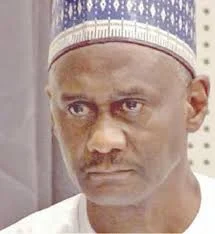
    The Federal Capital Territory High Court sitting at Kuchiako, Kuje, Abuja, has admitted additional documentary exhibits in the ongoing trial of former Executive Secretary of the National Health Insurance Scheme, Usman Yusuf, who is standing trial over alleged financial impropriety.

    Justice Chinyere E. Nwecheonwu admitted the documents on Wednesday, February 25, 2026, following their presentation by the prosecution led by the Economic and Financial Crimes Commission.

    The documents were tendered through the second prosecution witness, James Balami, the Director of Procurement at the National Health Insurance Scheme, during proceedings that commenced earlier in January 2026.

    In her ruling, Justice Nwecheonwu held that the documents were properly admitted in line with extant legal provisions, noting that the defence raised no objection at the point of tendering. Defence counsel, O. I. Habeeb, SAN, did not oppose their admissibility.

    Among the exhibits admitted were Certified True Copies of letters dated November 11, 2016, marked as Exhibits E1–E32. Also admitted were the Certified True Copy of the NHIS Procurement Plan for 2016 (Exhibits F1–F4), the NHIS Procurement Plan for 2017 (Exhibits G1–G5), and the Certified True Copy of the NHIS Procurement Act 2016 (Exhibits H1–H2).

    While being led in evidence by prosecution counsel Francis Usani, the witness narrated his interactions with the EFCC following his invitation by the commission.

    “After I took those documents to the Commission, I made statements. The statements were not made in one day. I can recognise the statements. There are five,” Balami told the court.

    However, attempts by the prosecution to tender the extra-judicial statements of the witness were opposed by the defence.

    Following arguments from both sides, Justice Nwecheonwu adjourned the matter to May 13 and 14, 2026, for ruling on the admissibility of the statements and continuation of trial.

    Professor Yusuf is facing a five-count charge bordering on embezzlement, conferring undue advantage, and fraud involving the sum of N90,439,178.00.

    Public Reactions Trail Trial

    The court proceedings have continued to attract strong reactions on social media, where opinions remain sharply divided.

    While some commentators insist that Yusuf should be allowed to defend himself in court, others have questioned what they describe as selective prosecution by anti-graft agencies.

    Several commenters compared the case with other high-profile corruption allegations involving former governors and senior political figures, arguing that public confidence in the anti-corruption fight depends on fairness and consistency.

    Others cautioned against drawing conclusions before the conclusion of trial, stressing the constitutional principle of presumption of innocence.

    As the case progresses, the court is expected to rule on the disputed extra-judicial statements at the next adjourned date, a decision that could shape the direction of the trial going forward.

  • Amachree Petitions Tinubu, Warns of Rivers Instability

    Amachree Petitions Tinubu, Warns of Rivers Instability

    Abuja — A serious political confrontation is unfolding over Rivers State following a blistering petition submitted to President Bola Ahmed Tinubu by political scientist and international executive Kio Amachree, who has accused the Federal Government of reckless interference, selective justice, and actions capable of destabilising the Niger Delta.

    The petition, dated 8 February 2026, was formally addressed to the President through his Chief of Staff and copied to Nigeria’s top security chiefs, the Attorney-General of the Federation, and the leadership of the country’s anti-corruption agencies. In it, Amachree warned that the federal posture in Rivers State is “dangerous, provocative, and unnecessary,” and risks igniting a crisis in one of Nigeria’s most economically vital regions.

    Amachree rejected any suggestion that Rivers State constitutes a security emergency, arguing that the state is being treated as though it were an insurgency zone despite facing none of the terrorism or banditry challenges afflicting other parts of the country. Rivers State, he said, is neither Boko Haram territory nor a bandit stronghold, yet is experiencing what he described as disproportionate federal pressure and political manipulation.

    He warned that the Niger Delta, which remains the backbone of Nigeria’s oil-dependent economy, cannot be governed through intimidation or manufactured political crises without severe national consequences. According to the petition, Abuja’s current approach risks undoing years of fragile stability in the oil-producing region.

    At the centre of the petition is a direct demand for the immediate removal of Minister Nyesom Wike from federal office pending investigation. Amachree described Wike’s continued presence in federal power as a destabilising factor in Rivers State and a matter of national concern.

    The petition calls for full-scale investigations by the Economic and Financial Crimes Commission and the Independent Corrupt Practices and Other Related Offences Commission into allegations of corruption, abuse of office, diversion of public funds, and unexplained wealth. It further demands a comprehensive asset and lifestyle audit, including scrutiny of luxury vehicles, overseas properties, and alleged proxy holdings.

    Amachree argued that the absence of visible accountability in high office fuels public cynicism and erodes confidence in the rule of law. “Selective justice destroys nations,” the petition stated.

    The document also raises questions over a widely circulated audio recording shared across social media platforms, allegedly capturing Wike making threats of violence against a political opponent. Amachree questioned why, despite the recording’s widespread circulation, no public arrest, interrogation, or formal investigation has been announced by security agencies.

    He warned that the apparent reluctance to act in such a high-profile case sends a damaging signal that power, rather than law, determines accountability in Nigeria.

    Beyond current politics, Amachree framed his intervention within the longer history of Rivers State and the Niger Delta. He identified himself as the son of Chief Godfrey Kio Jaja Amachree, a former Solicitor-General of the Federation, Acting Attorney-General of Nigeria, and senior United Nations official who played a central role in the creation and early administration of Rivers State.

    Amachree stressed that his petition was not driven by party politics or personal ambition, stating that he does not belong to any political party and holds no political office. He described his action as a civic intervention motivated by concern for constitutional order, justice, and regional stability.

    The petition also demands renewed action on the killing of Amachree’s cousin, Miss Ibyami Amachree, allegedly by a soldier. He called for the identification of the soldier involved, disclosure of the unit and chain of command, and prosecution where evidence supports it. According to the petition, unresolved killings involving security personnel deepen public anger and lay the groundwork for future unrest.

    As of the time of this report, the Presidency and the federal agencies copied on the petition have not issued an official response, and no indication has been given as to whether the allegations raised will be investigated. Attempts to obtain comments from representatives of the minister named in the petition were unsuccessful.

    Political analysts say the petition now places the matter squarely at the feet of the President. According to them, the silence or response of the Presidency will be read as a signal — either that allegations of corruption and intimidation at the highest levels will be confronted, or that political expediency will prevail over accountability.

    They warn that failure to act decisively could deepen mistrust in federal authority across the Niger Delta and reinforce perceptions that power shields allies from scrutiny. In a region historically sensitive to marginalisation and coercion, analysts say, such a signal carries consequences far beyond Rivers State.

    For President Tinubu, the petition represents an early and defining test of leadership in the Niger Delta. Whether he orders investigations, distances the presidency from the allegations, or allows the matter to fade into silence may determine not only the immediate political temperature in Rivers State, but Nigeria’s credibility in claiming commitment to justice, federal balance, and the rule of law.

  • Yahaya Bello Facing Political Witch-Hunt, Not Money Laundering Trial — JB Daudu

    Yahaya Bello Facing Political Witch-Hunt, Not Money Laundering Trial — JB Daudu

    The defence team of former Kogi State Governor Yahaya Bello has bluntly told the Federal High Court, Abuja, that the case instituted against him by the Economic and Financial Crimes Commission (EFCC) is nothing more than a political witch-hunt disguised as a money laundering trial.

    Mr Joseph Daudu, SAN, made the assertion on Wednesday before Justice Emeka Nwite, in a sharp rebuttal to remarks by EFCC counsel, Mr Kemi Pinheiro, SAN, during proceedings.

    The stinging exchange unfolded while Olomotane Egoro, the EFCC’s seventh prosecution witness (PW-7) and a compliance officer with Access Bank Plc, was being rigorously cross-examined by the defence.

    Under oath, the witness made a series of admissions that appeared to undermine the prosecution’s case. Egoro confirmed unequivocally that Bello never served as a local government chairman in Kogi State and had no role in awarding any of the contracts under investigation.

    He further admitted that all the contracts referenced by the prosecution were awarded by various local government chairmen, as reflected in Exhibit 33 tendered before the court.

    More damaging to the prosecution, Egoro told the court that Bello’s name did not appear anywhere in the transaction records linked to the alleged money laundering. According to him, “Yahaya Bello” was neither a sender nor a recipient in any of the local government transactions cited by the EFCC.

    The witness also conceded that transactions contained in Exhibit 33(11), particularly those involving local governments and Keyless Nature Limited, were, on their face, consistent with normal banking operations. He admitted he did not know the purposes of several payments made by the 21 local government areas, nor could he establish whether there was any contractual relationship between the councils and the company.

    Egoro further testified that banks only raise red flags where fraud is suspected, stressing that customers are free to spend their money as they choose. He confirmed that Access Bank was not acting under any court order and had no fraud report relating to the transactions in question.

    On payments made to Fayzade Business Enterprise, the witness identified a May 6, 2022 inflow from Okene Local Government Area as payment for the supply of reading materials. He also listed other payments from Ogorimagongo, Okehi, Omala and Yagba local government areas for clearly stated purposes, including education materials, medical items, sporting equipment and medical consumables, with amounts running into several millions of naira. Other transactions, he said, covered agrochemicals, farm inputs and medical supplies.

    When pressed by the defence to confirm whether Bello was a local government chairman in any part of Kogi State, Egoro answered plainly: he was not.

    In an apparent attempt to rescue the prosecution’s narrative, Pinheiro interjected, suggesting that payments in money laundering cases are often disguised. Daudu immediately fired back, insisting that such casual remarks could not mask the reality before the court.

    He maintained that the evidence so far had exposed the trial as politically motivated, declaring that the proceedings would soon be seen for what they truly are — a political prosecution rather than a genuine money laundering case.

    Justice Nwite subsequently adjourned the matter until February 5 for the continuation of the cross-examination of the prosecution witness.

  • EFCC to Arraign Ex-AGF Malami on Money Laundering Charges

    EFCC to Arraign Ex-AGF Malami on Money Laundering Charges

    Abuja, December 30, 2025 – The Economic and Financial Crimes Commission (EFCC) will arraign former Attorney-General of the Federation (AGF), Abubakar Malami, his son, and Bashir Asabe, an employee of Rahamaniyya Properties Ltd, before the Federal High Court in Abuja on 16 counts of fraud and corruption.

    The case is scheduled to be heard by Justice Emeka Nwite.

    Malami has been under investigation by the EFCC since December 8, 2025.

    The anti-graft agency alleges that between 2015 and 2025, the former AGF, alongside his son and Asabe, engaged in a series of suspicious transactions, attempting to conceal billions of naira through bank accounts and property acquisitions across Abuja, Kano, and Kebbi.

    According to the EFCC, the defendants conspired to disguise the origin of funds, acquire property indirectly, and retain sums they allegedly knew were proceeds of unlawful activity, in violation of the Money Laundering (Prohibition and Prevention) Acts of 2011 and 2022.

    Some of the key allegations include:

    Counts 1 and 2: Between July 2022 and February 2021, Malami and his son allegedly concealed over N1.6 billion through Metropolitan Auto Tech Limited accounts at Sterling Bank.

    Count 3: In March 2021, the duo allegedly retained N600 million as collateral for a N500 million loan to Rayhaan Hotels Ltd, knowing the funds were illicit.

    Counts 4–16: The EFCC claims the defendants acquired multiple properties, including luxury duplexes in Maitama and residences in Garki, Asokoro, and Jabi districts, with funds allegedly from unlawful sources. The amounts involved range from N120 million to over N1.3 billion.

    The commission said it plans to call several witnesses, including EFCC staff, bank representatives, Bureau de Change operators, and financial experts.

    Among the key witnesses are Folarin Dare, Chinedu Eneanya, and Sani Lukeman, who are expected to testify on intelligence and petitions received by the EFCC, and Abdulrahman Musa Basheer, who will provide evidence regarding Rahamaniyya Properties Ltd’s role in purchasing properties for Malami.

    Representatives from Zenith Bank Plc and Sterling Bank Plc are also expected to testify.

    The EFCC alleges that the offences span Malami’s tenure as AGF under former President Muhammadu Buhari, highlighting a decade-long pattern of concealing and misappropriating funds through complex financial and property transactions.

  • Chris Ngige Faces N1.8B Corruption Trial in Abuja

    Chris Ngige Faces N1.8B Corruption Trial in Abuja

    The Economic and Financial Crimes Commission (EFCC) will arraign former Minister of Labour and Employment, Chris Ngige, on Friday over alleged corruption, the News Agency of Nigeria (NAN) reports.

    Ngige, also a former Governor of Anambra State, will appear at a Federal Capital Territory High Court in Gwarimpa, Abuja, as the sole defendant in an eight-count corruption charge (FCT/HC/CR/726/2025).

    Filed on December 9 by a legal team led by Sylvanus Tahir, SAN, the charges allege that Ngige, while serving under ex-President Muhammadu Buhari, used his position to benefit companies linked to his associates.

    He is accused of awarding NSITF contracts worth over N1.8 billion to companies including Cezimo Nigeria Limited, Zitacom Nigeria Limited, Jeff & Xris Limited, Olde English Consolidated Limited, and Shale Atlantic Intercontinental Services Limited.

    Ngige is also alleged to have accepted gifts totaling N119,783,000 through organisations linked to him, including the Senator Chris Ngige Campaign Organisation and the Chris Ngige Scholarship Scheme, while performing official duties.

    The offences contravene the Corrupt Practices and Other Related Offences Act, 2000, specifically Sections 17(a) and 19, and are punishable under Section 179(c) of the Act.

  • EFCC and National Defence College Join Forces to Update Curriculum on Financial Crimes

    EFCC and National Defence College Join Forces to Update Curriculum on Financial Crimes

    New partnership aims to equip future leaders with skills to tackle corruption, public fund mismanagement, and emerging financial threats.


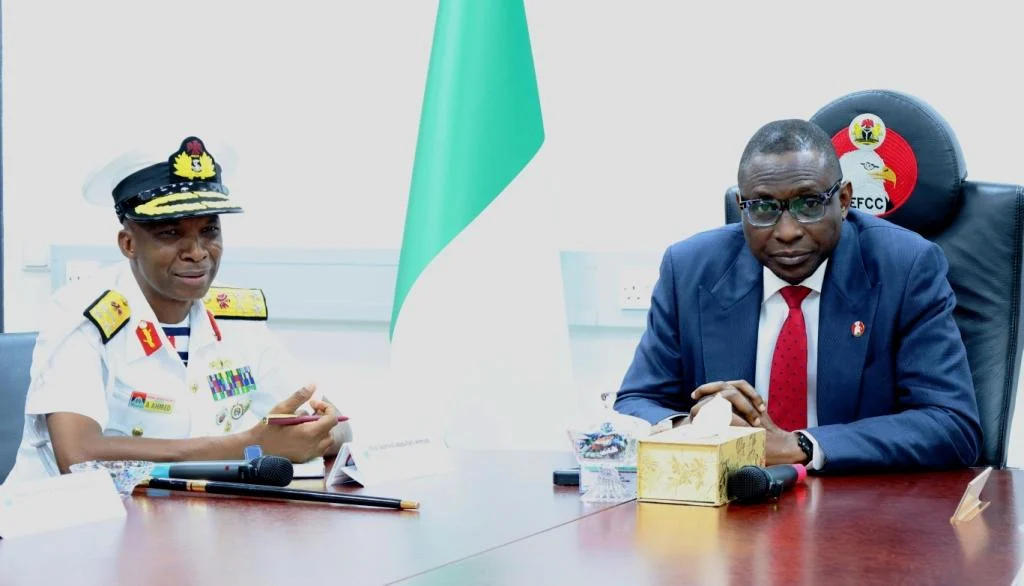
    he Economic and Financial Crimes Commission (EFCC) and the National Defence College (NDC) have agreed to collaborate on revamping the College’s curriculum to reflect Nigeria’s evolving security and governance landscape.

    During a courtesy visit to EFCC Chairman Ola Olukoyede in Abuja, NDC Commandant Rear Admiral Ahmed emphasized the need for a curriculum update to better prepare participants in public fund management and strategic governance.

    • EFCC Launches Advanced Anti-Fraud Training for Public Officers
    • National Defence College Partners with Nigerian Navy on Maritime Security
    • Cryptocurrency Fraud on the Rise: EFCC Warns Investors

    Ahmed lauded EFCC’s expertise in fighting economic crimes and requested the agency’s input in designing the new course content. “We want participants to learn how to manage public funds effectively so that they are ready for leadership roles,” he said.

    Olukoyede welcomed the proposal, highlighting EFCC’s readiness to support the initiative and noting emerging threats such as cryptocurrency fraud, which caused global losses exceeding $2 trillion last year. “There are areas where our work overlaps, and collaboration will help strengthen Nigeria’s fight against financial crimes,” he said.


  • Senate Commends EFCC for Record 4,111 Convictions in 2024

    Senate Commends EFCC for Record 4,111 Convictions in 2024


    …praises anti-graft agency’s resilience, call for stronger legislative support

    The Nigerian Senate has lauded the Economic and Financial Crimes Commission (EFCC) for ecuring 4,111 convictions in 2024.

    The upper legislative body said the performance represents the highest annual figure since the anticrime agency was established.

    The commendation came following the adoption of a motion titled “Urgent Need to Commend the Economic and Financial Crimes Commission (EFCC) for Its Significant Gains Made in Recent Times, Particularly in 2024, Despite the Challenges It Has Encountered.”

    The motion was sponsored by Senator Emmanuel Udende Memga (Benue North-East) during plenary on Tuesday.

    Presenting the motion, Senator Udende described the EFCC as a “frontline agency mandated to combat economic and financial crimes in Nigeria,” with powers to investigate, prevent, and prosecute offenders involved in money laundering, cybercrimes, advance fee fraud, and other related offences.

    He noted that the Commission has played a crucial role in promoting accountability, transparency, and integrity across the public and private sectors, thereby safeguarding the country’s financial system.

    According to data presented to the Senate, the EFCC in 2024 received 15,724 petitions, opened and investigated 12,000 cases, and filed 5,081 cases in court.

    Despite operational and resource limitations, the Commission recorded 4,111 convictions, marking the highest number in any operational year since its inception.

    Senator Udende said, “The EFCC has remained steadfast and professional in the discharge of its statutory mandate despite threats to its personnel and the increasing sophistication of financial crimes. The Commission’s resilience is commendable.”

    He further disclosed that the EFCC’s efforts in 2024 led to significant monetary recoveries and asset forfeitures that comprised of
    173 automobiles, 378 electronic devices, 1 hotel, 2 gold Cuban chains, 14 landed properties, 784 estates, and Unspecified quantities of petroleum products.

    Seconding the motion, Senator Nwaebonyi Onyeka (Ebonyi East) described the EFCC’s effort as “unprecedented,” commending the Commission’s diligence in recovering the nation’s stolen wealth.

    He emphasized the need for the relevant committees of the National Assembly to strengthen legislative oversight and provide continuous institutional support to the Commission.

    Ruling on the motion, President of the Senate, Godswill Akpabio, commended the EFCC for its dedication and attributed the agency’s recent successes to what he described as “the right choice in the appointment of the Commission’s leadership” by President Bola Ahmed Tinubu.

    Akpabio also urged the EFCC to publish the total number of genuine convictions as well as petitions found to be frivolous or politically motivated, as a way of deepening public trust and enhancing the integrity of its anti-corruption drive.

    “Transparency in outcomes will further strengthen the EFCC’s credibility and sustain public confidence in the fight against corruption,” Akpabio stated.

    The Senate President further saluted the integrity and professionalism of EFCC staff, pledging the continued legislative support of the National Assembly to the Commission and other anti-corruption agencies in the country.

    Monetary recoveries included ₦9,477,977,318.78, $2,605,858.30, £1,600.13, and various digital currencies such as 13.37 BTC (worth $572,992.86), 5.97886094 Ethereum ($13,353.06), 298.4770071 Green Satoshi Tokens ($6), 1,002.547631 USDT ($1,002.22), and an additional 2,699,233 USDT (TRC-20).

    The Senate observed that these results have significantly enhanced Nigeria’s global image and public confidence in the country’s anti-corruption drive.


    The Lawmakers also acknowledged the sacrifices of EFCC officers who, despite operating under difficult conditions and personal risks, continue to pursue justice and protect the nation’s economic well-being.

    The upper chamber therefore resolved to commend the Economic and Financial Crimes Commission (EFCC) for its dedication, professionalism, integrity, patriotism, and remarkable achievements in the fight against financial crimes.

    The Senate reaffirmed its commitment to supporting anti-graft institutions in their pursuit of integrity, national development, and financial accountability.

  • Court Orders Freeze of Four Bank Accounts Linked to Ex-NNPCL Boss Kyari

    The Federal High Court in Abuja has ordered the temporary freezing of four accounts at Jaiz Bank, allegedly linked to Mele Kyari, former Group Managing Director (GMD) of Nigerian National Petroleum Company Limited (NNPCL).

    Justice Emeka Nwite gave the order on Tuesday after hearing an ex parte application filed by the Economic and Financial Crimes Commission (EFCC). The anti-graft agency told the court that Kyari is under investigation for alleged conspiracy, abuse of office, and money laundering.

    According to an affidavit presented by EFCC investigator Amin Abdullahi, the four accounts — two in Kyari’s name and two belonging to the Guwori Community Development Foundation Flood Relief — were discovered to contain ₦661.4 million suspected to be proceeds of unlawful activities.

    The EFCC alleged that the funds were disguised as payments for a book launch and NGO projects but were in fact linked to suspicious inflows from the NNPCL and oil companies. It further claimed that the accounts were being controlled by Kyari through family members acting as fronts.

    Justice Nwite, while granting the order, said the application had merit and adjourned the matter to September 23 for a report on the investigation.

    The Commission said the freeze order was necessary to preserve the funds while investigations continue, with a view to possible prosecution.

  • Alia’s aide in EFCC net for alleged sexual exploitation,  cyberbullying

    Alia’s aide in EFCC net for alleged sexual exploitation,  cyberbullying

    The Economic and Financial Crimes Commission (EFCC) has confirmed the arrest of Dr Mkor Aondona, the Special Adviser to Gov. Hyacinth Alia of Benue on Documentation, Research and Planning.

    Mr Dele Oyewale, the EFCC Spokesman confirmed the arrest to newsmen on Saturday in Makurdi.

    He said Aondona was arrested by operatives of Makurdi Zonal Directorate of the Commission on Friday over alleged sexual expolitation and cyber bullying.

    According to him, some female students had accused him of unethical and criminal behaviour involving sexual exploitation,  cyberbullying and blackmail.

    “The petitioners alleged that Aondona was routinely recruiting slim and attractive girls for ushering jobs and insisted on sexual favours as a condition for selection.

    “Based on this, they became vulnerable to having sexual affairs with him but unknown to them, he had videos of every sexual act without their consent and was always threatening to leak the videos if they refused to continue having sex with him.

     “Aondona was also alleged to be involved in blackmail—sending explicit videos of the girls allegedly recorded without their knowledge or consent through several  messaging platforms. Some of the videos are said to be in circulation.” he said

    He said the suspect would soon be charged to court.

  • Court orders staff member to forfeit properties acquired with stolen money to FIRS

    Court orders staff member to forfeit properties acquired with stolen money to FIRS

    EFCC investigations revealed that between 2017 and 2018, Garunbaba received the sum of N341, 971,960.00 as Duty Tour Allowance for journeys he never undertook

    Garunbaba also personally converted to his use the sum of N148, 079,450.00

    EFCC operative said in 2018, Garunbaba purchased the four bedroom terrace maisonette from Barumark Investment and Development Company Ltd (Barumark) at the rate of N65,000,000.00 (sixty five million naira).

    The Federal High Court in Abuja on Thursday, ordered the final forfeiture of two property linked to a staff member of Federal Inland Revenue Services (FIRS), Aminu Garunbaba, to the Federal Government.

    The property include a four bedroom terrace maisonette with BQ at Barumark Groove Estate, Plot 667, Cadastral Zone, BO3, Wuye District, Abuja and bought by Garunbaba in the name of MYZ Venture.

    The second property, located at No. 5, Lodge Road, Kano in Kano State, was said to have been purchased also by Garunbaba.

    Justice Obiora Egwuatu, in a judgment, held that Garunbaba failed to show the instrument he used to purchase the property.

    Justice Egwuatu held that the respondent also failed to show any reasonable cause that the funds used in purchasing the property is from his legitimate earnings.

    “A person cannot be allowed to benefit from illegitimate acts,” he said.

    The judge earlier dismissed the preliminary objection filed by Garunbaba on the grounds that the objector did not discharge the burden to proof that the particular paragraphs in the EFCC’s application offended the Evidence Act.

    He  agreed with counsel to the Economic and Financial Crimes Commission (EFCC), Martha Babatunde, that a public officer can be investigated and prosecuted before an administrative disciplinary action is taken.

    The EFCC had, in the suit marked: FHC/ABJ/CS/876/2021 filed by Ekele Iheanacho, SAN, sued Aminu Sidi Garunbaba as sole respondent.

    In the motion on notice dated March 16, 2022 but filed on March 21, 2022, the anti-graft agency prayed for final order of the court “forfeiting the properties described in Schedule 1 which were found by the commission on the respondent as properties reasonably suspected to be proceeds of unlawful activities.”

    Giving four grounds, the commission  argued that the court had the statutory powers under the provision of Section 17 of the Advance Fee Fraud and Other Fraud Related Offences Act, 2006 to grant the reliefs being sought.

    It said: “The properties sought to be attached and forfeited are reasonably suspected to be proceeds of unlawful activities.

    “The interim order of this honourable court has been published in two national dailies namely: THISDAY and PUNCH Newspapers.

    “No cause or sufficient cause has been shown why the properties under the interim forfeiture should not be finally forfeited to the Federal Government of Nigeria.”

    In the affidavit in support of the motion deposed to by an operative of the EFCC, Apagu Wudah, the officer said several investigations were carried out regarding the assets.

    He said as an investigating officer with the Economic Governance Section of the agency, he was assigned to investigate an intelligence report bordering on criminal conspiracy, stealing, abuse of office and money laundering among some FIRS

    Wudah said the investigation revealed that between 2017 and 2018, Garunbaba and some of the staff of the FIRS conspired amongst themselves and obtained millions of Naira from the FIRS under the guise of Duty Tour Allowances (DTA) which they never travelled for.

    He said in the execution of the fraud, the staff involved applied for DTA in respect of a non-existing trip.

    According to him, upon being paid the DTA, the staff would deduct 10% to 15 per cent  of the amount paid as his/her share, while the rest amount was withdrawn and transmitted to other senior officials of the agency who in turn also retained some while passing the rest up to the former Director of Finance and the Coordinating Director.

    “The respondent (Garunbaba) not only directly applied and received DTA payment for none existing trips from FIRS, other staff who received these fraudulent payments also handed over to him part of their own money.”

    The investigator said between 2017 and 2018, Garunbaba received the sum of N341, 971,960.00 (three hundred and forty one million, nine hundred and seventy-one thousand, nine hundred and fifty naira) from the misappropriated DTA payments.

    He said Garunbaba also personally converted to his use the sum of N148, 079,450.00 (one hundred and forty eight million, seventy nine thousand, four hundred and fifty naira).

    “The respondent gave details of the various funds he received in the fraudulent scheme and how he utilised some of them in his extra l-judicial statements to the applicant,” he averred

    Wudah said Garunbaba, in explaining how he shared part of the entire funds, wrote in his extra-judicial statement made in the presence of his legal representative on May 23, 2019  some startling revelations.

    He said the respondent revealed that the total sum of N269, 335, 750 was giving as follows: Peter Hena, 145,000,000; Bello Auta, N95, 000,000; and Aminu Sidi, N29, 336,750.

    He said Garunbaba confessed that the money was giving in cash at the FIRS office.

     The investigator said Garunbaba received part of the above diverted funds through his Stanbic IBTC Bank account number: 9301540597 while the rest were in cash from other staff.

    He said Garunbaba also converted most of these funds into US dollars through a Bureau De Change Operator — Mr. Wan Jafar Shehu.

    “According to Mr. Shehu, between 2017 and 2019, the respondent gave him a total sum of about N216, 000, 000 at different occasions for him to exchange into United States Dollars which he did” Wudah said.

    The EFCC operative said in 2018, Garunbaba purchased the four bedroom terrace maisonette from Barumark Investment and Development Company Ltd (Barumark) at the rate of N65,000,000.00 (sixty five million naira).

    He said the money was paid through his First Bank account number: 3040986059 to Barumark’s First Bank account.

    He said Garunbaba equally purchased the property situated at No.5 Lodge Road in Kano State at the sum of N39, 000,000.00 (thirty nine million naira) from one Alakhillau Enterprises which is operated by Adamu Muhammed.

    Wudah said Garunbaba is a public servant on fixed annual salary whose lawful income was not used to purchase the property described.

    He said the assets were purchased at the time Garunbaba was receiving and diverting funds paid as DTA by the FIRS to him and his colleagues.