ALHAJI Bola Ahmed Tinubu violently shook and severely unsettled the national economy in the first few hours after he assumed office eighteen months ago. That of its own could not have been a problem. What manifested down the line was the real issue – Tinubu had no discernable plan to methodically work on an economy that, it must be acknowledged, had been dealt a severe blow by a serial bungler, one Maj.-Gen Muhammadu Buhari, the affliction who passed through here masquerading as a president. If this country were to be a human being what Buhari inflicted on it between 2015-2023 would have had more severe and deadlier outcome than the COVID-19 pandemic that swept through the globe in 2020/2021, leaving millions dead in its wake, destroying economies, and permanently impairing the health of many people worldwide, especially those with pre-existing health challenges. And Nigeria when Tinubu took the helm had pre-existing political and economic conditions. But instead of stemming the hemorrhaging, he made it worse.
Tinubu clearly mistook naivety bordering on ignorance for courage when he declared on May 29 last year that subsidy was gone. The spirit that he said led him to act in such a manner was the evil spirit. That same spirit drove him to act in such a manner in the foreign exchange market. The combined effects of those impulsive actions are responsible for our severely depressed and damaged economy and the littering of the landscape with human skeletons. Everything that followed had added to compound the dire straits this country has been consigned to in less than two years. The greater tragedy is that the regime is still digging, assuring only itself that it was on the journey of great economic reforms. Though it has no benchmarks and timelines for its promised dividends of democracy, it keeps assuring of light at the end of the tunnel.
It’s now obvious that this regime believes that the vigorous and mindless application of a narrow monetary policy instrument alone will cure the many ills afflicting Nigeria’s economy. Through the central bank of Nigeria (CBN), it has misguidedly pursued taming the rampaging inflation which, by the way, it caused by its own impulsive decisions early in the life of the administration through the so-called petrol subsidy removal, and the attempt at market-determined value of the Naira. Both policies have spectacularly failed in spite of the concerted efforts by the regime to put a spin to them.
Let’s explain why we argue that the twin policies have already failed. When Tinubu announced the scrapping of the so-called petrol subsidy in May 2023, Nigeria had no petroleum resources minister and no cabinet. And 18 months down the line, the country still does not have an oil minister. Information adviser to the president, Bayo Onanuga, said this much recently in a national television interview. Crude oil generates about 80% of our national revenue, and until recently the country imports 100% of the petroleum products for domestic consumption, and has had no dedicated minister for almost two years. It only has a junior minister or what we call minister of state. Furthermore, there has been no physical manifestation of the gains from the removal of subsidy. If anything, we have suffered from the illusion of money, that is, a situation where the federal and state governments get more money from the federation account which has had no tangible impacts in the lives of the people. The national minimum wage has been increased from N30000 to N70000, but in real terms the value of the minimum wage is less than what it was about 40 years ago. Indeed, the Nigerian Labour Congress (NLC) and other workers’ unions are gearing for a further upward review of the minimum wage barely two months after it was passed into law. More than 70% of the country’s 36 states and the federal capital territory have not even started implementing the new wage.
Every increment in salaries and wages impacts inflationary trends. In Nigeria it has been a constant case of the monetary and fiscal policies in misalignment. It’s obvious that salaries and wages are the least of the problems at the root of galloping inflation. The government is implicated with its voracious appetite to borrow in our name, and steal or spend on consumption. At a time the CBN pretends to be fighting inflation by mopping up money in circulation, bank credits to the government are experiencing a phenomenal rise. Data from the central bank showed that credit to the government rose by 89.9% year-on-year to hit N42.01 trillion in September, up from N22.13 trillion in the corresponding month last year. The clear implication is that the Tinubu regime relies almost exclusively on offshore loan facilities and domestic borrowings to run.
According to the report, “When government credit levels rise, it indicates that it is increasingly borrowing from the financial sector, particularly from domestic banks and other lenders. This rise in borrowing generally reflects an increase in government debt, as funds are sought for financing various operations, social programmes, and budget deficit coverage”. The surge in banks’ credit to the government is in conflict with the stated drive of this administration. In August 2023, President Tinubu had vowed that his government will break the reliance on borrowing for public spending. One year on the evidence points to the contrary. Domestic and foreign borrowings have surpassed every projection, and there’s no end in sight. When a government sucks up credit from banks other potential investors are crowded out and production is negatively impacted. So where’s the basis and expectations for economic revival?
When Tinubu spoke last year of curbing government’s appetite for credit from domestic banks it was at the inauguration of the presidential committee on public policy and tax reforms. Coincidentally, the report of that committee chaired by Taiwo Oyedele, one of the tax czars of Tinubu, which has taken the form of a bill now with the national assembly, is facing a vigorous pushback from a section of the country. Stakeholders in the north met about two weeks ago , and demanded that the tax bills be withdrawn because they will impact their people and governments negatively. Days after the north took a stand against the bills, the national economic council (which comprises state governors and others with the Vice President presiding recommended the withdrawal of the bills by the president. But the president promptly dismissed the advice fearing that If the demand of the north and the request of the economic council were heeded to, then the reforms in the revenue sector will stall, and the borrowing from the domestic financial market will continue apace with its deleterious effects on private sector investments, production and economic revival. Contrast the current uncertainty as regards the reforms in the tax laws with the urgency of the task as stated by Tinubu more than one year ago. “The Committee, in the first instance, is expected to deliver a schedule of quick reforms that can be implemented within thirty days. Critical reform measures should be recommended within six months, and full implementation will take place within one calendar year“. Obviously, all the targets have been missed, so where’s the hope for the government to avoid crowding others out of the domestic credit market? The emerging picture is not made any better by the fact that the north, apparently speaking through the controversial and outspoken Senator Ali Ndume, has committed to scuttling the tax bills in parliament. Another issue we should not gloss over is the indication that the bills appeared to show a fracture in the presidency.
There’s yet another reason why the revival of the economy is not in sight apart from the profligacy of this regime and the admonition by the Bretton Woods institutions that we should be prepared to wait for some 15 years for a possible turn around in Nigeria’s economy, as long as we stick with the ongoing punishing prescriptions. The piggyvest saving report for 2024 which was released recently is revealing, insightful, and depressing. It said 65% of Nigerians have a monthly income of about N100,000 ($65) or less; 86% earn below N250,000 ($151) monthly: multiple income sources dropped by 10% against the corresponding period last year; and, only 3% of over 220 million Nigerians spend above N500,000 ($303) every month. The findings should be concerning to every discerning citizen. And the pathetic picture about the state of our country and its people did not end as in above.
The report goes on to say that food remains the largest expense head in spite of findings of decreased spending from 2023. Today transport ranks as the second largest expense head, overtaking utilities and bills due to the removal of petrol subsidy. In addition, the report finds that the percentage of Nigerians saving money fell from 64% last year to 57%, while 10% of those who save do so only occasionally. In like manner, emigration as a savings goal dropped precipitously from third to eighth place, due largely to the 70% devaluation of the Naira. Also, the number of Nigerians with emergency savings decreased by 5%; over two-thirds of us lack savings for unplanned expenses without incurring debt; only 15% of Nigerians increased their savings over the past year; and, 19% who had emergency savings in 2023 no longer have any. It’s important to bear this sobering data in mind as this regime engages the overdrive to assure you about their Renewed Hope. It’s not your own hope, it’s theirs and they are very few. The few who live off their government.
Any economic recovery driven by pointing fingers at slight movement in the gross domestic product (GDP) alone is an illusion. It is worse when the GDP is growing at a slower pace than the population rate. Economies are revived and grown by human beings. And gainful employment is key to increased purchasing power. Nothing currently indicates that any of the two is happening or about to happen. In addition, there must be trust between the leaders and the led as well as implicit confidence of the people on their leaders. These ingredients are not there. They are just not there. Even without the benefits of a structured study, many Nigerians do not believe their country is heading in the right direction both politically and economically. And without a buy-in, there’s only so much the present rulers can achieve. And Tinubu by his actions in appointments into critical offices has demonstrated that he does not care about carrying every part of Nigeria along. That will magnify his failure. Sadly, the regime’s attempt to deflect its nepotism in appointments left it in a bad place. It publicly admitted that two geo-political zones (south south and south east) of the six zones of the country do not matter in appointments into critical and sensitive security positions.
Ugo Onuoha: Veteran Journalist of repute is the former Managing Director/Editor-in-Chief, Champion Newspapers Limited
As Nigeria’s first lawyer, Sapara Williams stated, the lawyer lives for the wellbeing and direction of his society. The obligation to promote the wellbeing of the society is not just for the lawyer. It is for all professionals. There is a special obligation on the professional to work for the good of the society.
Because Just Friend Club is a club of professional men and women, I think I should say something about professionalism, the professional and the future of Nigeria.
The Professions, Professionals and the Public Good
We have many professionals in public and private leadership in the country. With such array of well educated and nurtured people you would expect a high degree of ethics and competence in corporate and public leadership in Nigeria. But that is not the case as shown by Nigeria’s poor rating in corruption perception index and other indicators of public probity. Nigeria is also very poor in the rating of state effectiveness. The Transparency International rated Nigeria 14th out of 180 countries in the world in the 2023 Corruption Perception Index. This comes to 25% where 0 is highly corrupt and 100% is very clean. Nigeria is also doing badly on the Mo Ibrahim Index of African Governance (IIAG) and the World Intellectual Property (WIPO) ranking on Global Innovation Index. In the former, Nigeria ranked 33 out of 54 African countries, with 45.7% out of 100%. On state effectiveness index, Nigeria does very badly. In 2022, Nigeria’s score was -1.04, which was a decline from -1.03. The world average score was -1.05. State effectiveness is a measure of the capacity of the state’s public sector to formulate and implement policies in a manner that achieves good governance and development. An ineffective state means that the bureaucracy is not strong enough to implement transformative policies.
Nigeria faces an acute crisis of values which reflects in the gross lack of productivity in both its private and public sectors. Nigeria is abundantly blessed in natural resources. As a world leading producer of oil, we ought to be richer than we are. But we know that the wealth of nations does not come mostly from natural resources. Countries like Singapore and South Korea are not so much naturally endowed. In fact, they are geographically constrained in many ways. But Nigeria won the geographical lottery in many ways. Yet are in many ways victim of Dutch Disease. Natural resources have not translated into wealth. They have mostly turned into a curse. Natural resources in themselves are not a curse. They are a blessing. But a blessing that call for more work to turn them into lasting benefit to the people. Some of the Scandinavian countries are endowed with oil like Nigeria. They turned theirs into a blessing through smart policies and management. For them, oil resources have lubricated national innovation system that has made them high income economies. Examples are Norway and Finland.
Nigeria’s travail is partly the lack of good leadership that can mobilize citizens towards a virtuous path of productivity. Such leadership is often described as transformative or redefining. In his book on public leadership titled ‘The Myth of the Strong Leader, Achie Brown, Oxford University emeritus professor of politics, argues that redefining leaders are those who lead their country away from the unpleasant past and toward a better future. Such a journey requires adaptivity, which could be very difficult. It is the genius of redefining leadership that the people get to learn the hard lesson and embrace new values and practices that will ensure economic development and social transformation.
At the heart of leadership, whether transformative or redefining, are values and value-based practices. These values and value-based practices are usually sourced from the practice of the professions. The professions are human endeavours that highlight the highest levels of expertise, responsibility and corporateness. These are the three elements of a profession. We expect that a professional is a person of high expertise in a specialized area of human activity. A professional is also a person with overriding sense of responsibility, first to his or her craft, and second to the society which the profession serves. A professional is also guided by a deep sense of corporateness. That is, he or she is trained to subordinate his or her personal interests for collective good. These three elements of professionalism influence the direction of national politics and the economy. Where professionals manifest high levels of technical and ethical expertise and show a high degree of responsibility to the ethics of their profession and able to subordinate the pursuit of personal interest to the good of their profession and society, we see an uplift in the productivity and probity. We see the society rate high in state effectiveness and low on corruption perception index.
Arising from the above, is the proposition that the problem of high cost of governance in Nigeria relates to the problem of the crisis of value, which is partly a problem of the crisis of professionalism. Anyone who reviews the economic and social indicators of development for Nigeria in the First Republic and early in the Second Republic will see a marked difference with contemporary indicators. There is a great decline in any of these vital indicators of human and social development. These declines are somewhat parallel to the decline in professionalism in the same period. If we measure the quality of professionalism by the ratings of Nigeria’s tertiary institutions and the level of knowledge production and ethical conducts of Nigerian professionals, we can conclude that loss of professionalism leads to stagnation in development.
It is Bureaucracy, Stupid:
There are three importance elements of public governance. The first is institution. The second is policy. The third is bureaucracy. Institution is now an important buss word in political economy discourse. Two economists and a political scientist were awarded the 2024 Nobel Prize in economics for their work that illuminate the importance of institutions to economic development. Daren Acemoglu, James Robinson and Simon Johnson argue that the reason for the divergence in economic performance between the developed west and the rest is the quality of political and economic institutions in the different regions. In their view, the cause of sustained economic growth is political and economic institutions that are inclusive and invest in the wellbeing of the people. In a sense, it means that growth equals to democracy or democratic society. The converse is true. Countries with institutions that are restrictive and exclusive and extract from citizens lead to economic stagnation. The predecessor of Acemoglu, Robertson and Johnson, Douglas North, defined institutions as “the rules of the game, humanly devised devices to constrain human action. Institutions provide incentives for actions and disincentives for other action.
After institutions, we get to policies. The difference between policy and institution is that whereas the former is short-termed and variable, the latter is mostly long-termed and invariable. So, the legal system is an institution. The policy of not prosecuting persons younger than 18years is a policy. Often, institution generates and sustains institutions. Therefore, the quality of institutions matters because of their generative power. Beyond institution and policy, there is the bureaucracy. We often hear about the danger of bureaucracy. The popular language makes it look like bureaucracy is itself a bad thing. But it is not. Bureaucracy is the mechanism that implements the policies generated by institution. Bureaucracy is the implementation arm of the state. Max Weber argues that the main mark of a state is the monopoly of legitimate violence in a defined territory. The state manages this legitimate violence through a government. The government acts through a bureaucracy. The quality of that bureaucracy matters.
The biggest issue about state effectiveness may be about the quality of the bureaucracy. In layman’s term, bureaucracy means the public service. The colonial authorities understood the importance of the public service to development that the bequeathed to the colonies a model of the form of public service in their home countries. The public service was modelled to be meritocratic, technocratic and politically neutral. In the early years post-independence, Nigeria recorded significant economic growth. The three regions were economically vibrant than the 36 states of the federation are today. Things were so good that the Eastern Nigeria was rated the fastest growing economy in the world. At the root of great economic performance is a bureaucracy that has competence and capacity to formulate and deliver policies and programs. The quality of the Nigerian bureaucracy has both a software and hardware. The software was the quality of public education, especially at the secondary and tertiary level. The report of the Ashby Commission on Higher Education in Nigeria was the first official articulation of policy for university education in Nigeria. The policy was based on providing excellent manpower for economic and social development. Arising from this, we saw many of the regions established universities that rated highly in the world and attracted the best and the brightest scholars and researcher across the world.
Additional software of public service is the culture of the public service. Many scholars of economic development point to the interplay between institutions and culture as the main determinant of economic development and social change. Both institution and culture reinforce themselves. Culture includes values, beliefs and attitudes. Institutions include the constitution, laws, procedures, norms and standard operating procedures. The quality of the bureaucracy is determined by the software of public education and prevalent culture. The software of the public service runs on the hardware of institutional structure that sustain delivery of public service. This includes departmentalization, manning levels and staffing of the public service. It also goes to the interdependence and interrelationship between different sections of the bureaucracy. The hardware of the high-quality bureaucracy we had in the First Republic is the structure and institutions of the public service. This is what made that bureaucracy able to generate and implement policies and programs that delivered sustained economic growth to a reasonable extent. The bad hardware and software of the contemporary Nigerian bureaucracy is what has failed to deliver sustained economic growth and high human development.
Today, we have a low-quality public education and a dysfunctional public service structure that weaken the capacity of the Nigerian state to deliver development. Capacity is an important ingredient of development. With low capacity a country may not be able to generate good policies and effectively implement them. Lessons from successful Asian countries underline the importance of state capacity. These countries succeeded because they have capacity to design good policies and implement them with coherence and effectiveness. Development economists have studied what happened in Asia starting with Japan, to South Korea, China and Taiwan, in what is now referred to as developmentalist state economic model. The logic of the developmentalist state is that the state is the champion of public policy. The state, through a central agency, designs and implements the policies and mobilizes the private sector through sundry incentives to enter specified sectors that have potential for higher growth. These countries gradually improved the quality of education, entrenched meritocracy in the public service through quality examinations, enhanced recruitment of the best and brightest, and provided motivation and rewards for continued improvement of the workforce. The recruitment based on merit mattered. The reward for competence and performance also mattered.
The important point to make is that bureaucracy is an important issue in development. We have to pay good attention to the quality of the public service because it determines the possibility of escape from economic and social stagnation. The bureaucracy is the public service. The notion that what we need for economic development in Nigeria is an entrepreneurial private sector is actually a mistake. We need more of an entrepreneurial public sector. This is the reason we speak today about entrepreneurial states. As the Mariana Mazzucato, University of London economist argues in her book, The Entrepreneurial State: Debunking Public vs. Private Sector Myth (2013) that the economic growth and technological transformation we see in the United and Europe owes more to the role state institutions play in initiating innovation.
I cannot overstate the importance of a fit-for-purpose bureaucracy for economic and social development in Nigeria or anywhere else. In 2011, i was appointed to a committee to review the public service of Nigeria. Together with Professors MJ Balogun, I issued a minority report to the president where we addressed the key issues of a good public public sector reform in Nigeria. I would like to quote extensively from that report on the importance of well-designed and functional public service.
“Against the backdrop of the challenges facing Nigeria, the role of the public service cannot but be critical. Not long ago, the service was reputed for effective and efficient discharge of its statutory responsibilities. For decades, it enforced law and order, constructed high-speed expressways, built dams, managed banks and insurance companies, and opened the economy to local and foreign investors. The government worked simply because its public service instrumentalities worked. And the public service worked because it strictly observed the principles transplanted from Whitehall and bequeathed by the British colonial power—notably, those of political neutrality or impartiality, anonymity, integrity, professionalism, merit and security of tenure. So highly regarded was the public service that when the country looked like falling apart in 1967, it was to it that the government of the day turned for support. It provided invaluable policy advice, effectively backstopped the police-cum-military action which finally ended the three-year civil war in 1970, and, all the while—and even in the face of dwindling resources and the mounting war-time commitments–kept the essential services going. The impact of the public service during the immediate post-independence period was felt at both the federal and regional levels. Besides the core civil service operating at the regional level to implement policies and programmes (e.g., works, education, health, agriculture, and cooperatives), development corporations and marketing boards were established to handle commercial and quasi-commercial operations with substantial government interest. The former (the development corporations) invested fiscal surpluses on infrastructure development, the construction of health and educational facilities (including three 40 Universities in Zaria, Nsukka, and Ile-Ife and countless primary and secondary schools), as well as industrial manufacturing and mining.
The marketing boards organized small-scale farmers into producers’ cooperatives and collaborated with the cooperatives on the construction of storage depots for export commodities (like cocoa and palm oil in the east and the west, and cotton, groundnuts, hides and skins, in the north). The marketing boards also assisted small peasants to explore opportunities in overseas markets and to handle the trade-related paperwork which would have been beyond the capacity of individuals with modest or no formal education.
At the federal level, the public service designed and implemented programmes targeted at the “commanding heights” of the economy. To correct market failures, the federal (like each regional) public service directly handled key socio-economic ventures, particularly, those characterized by high technical indivisibilities and constantly increasing returns to scale, in other words, enterprises with monopolistic tendencies”.
The current situation is different. The public service has lost its capacity and competence to drive transformative policies. The public needs rebuilding. To rebuild the public service to become a true engine of economic growth and socioeconomic transformation, we need to re-entrench merit and professionalism in the recruitment, promotion and management of the public service, the rationalization of the structure of the public service and its reauthorization as the engine of development. The latter point requires a reconceptualization of the purpose and merit and rethinking the value of bureaucracy to economic and social development.
From Utility of Bureaucracy to Cost of Governance:
Currently one of the major challenges to the re-emergence of an effective bureaucracy at the federal and state levels is the rising costs of governance. We have ballooned the costs of governance such that we cannot free financial resources to invest in capital goods and services that will enhance our productive capacity. The fundamental theory of economic development is based on high capital formation. This means that the government should save and invest in capital goods like infrastructure-physical and social infrastructure. The elementary point about capital formation is that the government should reduce its recurrent expenditure in other to have enough funds for capital expenditure.
It is important to note that concern for rising cost of governance is not a recent development. Since 1980s there has been significant concern about the rising costs of governance arising from both increase in federal agencies and enhancement of entitlements. The concern for rising cost of governance is influenced by the state of the national economy. When there is economic downturn, there is greater concern about rising cost of governance than when the economy is buoyant. In our 2011 public service reform report, we argued that “Ever since the 1980s when fiscal and macro-economic imbalances warranted the enactment of structural adjustment policies, reducing the cost of governance has been the standard by which progress in public service reform is measured. Consequently, and apart from the focus on the amount expended maintaining the public household, two other issues that have constantly cropped up in recent years’ reform drives are the structure of the public service, and the number on public payroll (otherwise termed “manning level”). Yet, important as cost reduction is in an era of austerity, and regardless of the need to streamline the unwieldy structure, and check the growing size of the public service, not much gain would appear to have accrued from recent rationalization efforts. The efforts failed mainly because of the overwhelming reliance on ad hoc, piecemeal, and retroactive interventions rather than on a coherent and holistic reform strategy. If truth be told, public service structure and manning levels are only two sides of a complex reform story. Following the story requires that the hitherto neglected angle of performance monitoring and productivity management also be pursued.”.
Why should we be concerned about the rising cost of government. the first reason is that we are in a very poor economic situation that calls for great prudence and fiscal discipline. Today, Nigeria is highly indebted to the point that we service our debts with almost 80-90% of our revenue. We are not just a highly indebted country, we are borrowing to service the debts, further worsening our economic situation. We are stuck in debts after we struggled to free ourselves from debt under President Olusegun Obasanjo’s administration. The first requirement of debt restructuring is to look inwards and restructure public expenditure. This is one reason for worrying about the rising cost of governance.
Another reason for worrying about the rising cost of governance is how big government affects performance. This is not just about financials costs. It is about lack of optimization and how incoherent an over bloated public service can exhibit. The essence of the public service is performance. If the bureaucracy is over bloated, it affects the efficiency and effectiveness of bureaucratic actions. Optimizing government through de-layering and restructuring is important for efficient performance.
This last point raises an important issue about the language and concept of cost of governance dominant in public discourse. Oftentimes, the focus is only on the number of ministries and departments of government. There is a call for reduction of the number of departments, agencies and ministries either by merging some of them or shutting them down. That is the approach of the famous Steve Oronsaye Report which recommended merger and elimination of some agencies and departments of government, considered to be duplicitous and unnecessary. This is one aspect of reducing cost. But there are other important aspects of cost reduction beyond the number of ministries, departments and agencies in the federal government.
It is still true as we argued in 2011 that “The challenges confronting Nigeria in controlling the cost of governance warrant a holistic response. However, in getting to the root of cost escalation, the Federal Government has consistently focused on and questioned only two of the “usual suspects”—that is, the structure of the public service and the number on public payroll. Based on pure administrative considerations, the fixation on structure and, for that matter, on manning levels, is understandable. As an approach to cost-cutting, both appeal to policymakers and senior managers seeking to get a grip on an otherwise unmanageable budgeting process”. Contrarily, the issues to consider in a robust discussion about costs of government should be comprehensive and encompass the following:
i Institution/agency proliferation;
ii ii) Distorted and misplaced priorities;
iii iii) Rising overheads;
iv iv) Duplication and overlap in the structure of the public service;
v) Retention of perquisites earlier and purportedly “monetized”
vi) Budget indiscipline and accountability failure (resulting in miscellaneous leakages); and
(vii) Lack of accurate and up to date cost data (and early warning mechanisms).
I intend to take up these issues and use them to illustrate the enormity of the problem we face in reforming government and the superficiality of the solutions peddled by political leaders.
Institutional Proliferation:
The kernel of the Orosanya Report is that the federal government over the years have proliferated ministries, departments and agencies such that the cost of administering the federal government has become exorbitant. The report recommended the merger of many departments and agencies that perform similar functions. An example of such agencies are the Bureau of Public Enterprises (BPE) and the Infrastructure Concession and Regulatory Commission (ICRC). Proliferation of institutions is the major driver of rising cost of governance as each of these institutions will be provided with extensive capital and recurrent costs. It is also a major source institutional inefficiency as agencies get caught in turf battles and undercut the coherence and effectiveness of government policy objectives.
The recommendation of the Orosanya committee that some of the agencies be merged and some eliminated is an important but insufficient approach to reducing costs of governance. There are two problems associated with this. The first is that the rationalization may be haphazard and uninformed by a strategic vision of economic and social transformation such that actions may be taken based on public perception and vested interest. The second problem is the probable lack of political will to push through the reform, especially where it will lead to loss of political and economic power by some bureaucrats and employment for some civil servants. This problem is compounded by time lag which offers opportunity for lobbying. This is what has happened in Nigeria. No government has been bold and committed to push through implementation of Orosanya report. Tinubu promised but has not delivered so far.
How to Reduce Cost of Governance:
The problem with managing cost of governance is that it is multidimensional and must be part of a strategic vision of development. The problem of development in Nigeria can be summed by in three phrases- coherence, comprehensiveness and consistence. Incoherence relates to alignment between institutions, policies and bureaucracy. The overarching element of a strategic vision of development is that it must flow from a proper diagnosis of the problem. The problem with the public service is not that we have too many departments, agencies and ministries as much that we have created multiple agencies without clear-cut idea of how each agency reinforces the concept and project of development. Development requires coherent ideas and coherent practice.
We cannot reduce cost of governance in any systematic and effective manner unless we can articulate a strong and coherent vision of government and design simple processes that enable us to deliver. We have to learn from nature itself. Nature fits organ to function. We have to create structure that matches function. Simplicity is an art of genius. We need simple system that are cost efficient and effective.
The process of development involves three stages: strategy, operation and tactics. In strategy, you start with diagnosis which correctly captures the social pathology that you want to cure. If we mistake the social pathology we administer the wrong cure. From accurate diagnosis we get to directing policy. Directing policy asks where you want to be, what new state of affair do you want. When you have a clear directing policy which shows what is changing, then you get to coherent set of actions to create the new future. The problem is that Nigeria’s cost of governance reform does not follow this rigorous analysis.
Sam Amadi, PhD, made the presentation as Guest Speaker at the 6th Annual Lecture of the Justfrends Club on Tuesday, November 5, 2024, Abuja
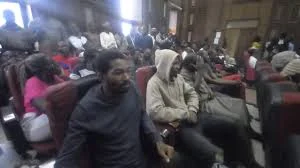
THE pictures match. Perfectly. Whenever freelance and hardened criminals released their kidnapped victims, those fortunate victims looked haggard, jaded, famished, hungry, disorganised, disoriented, and generally forlorn. Fortunate kidnap victims? Yes. The unfortunate ones do not come back alive even after family, friends and relatives had paid the usual steep ransom, or the negotiated variant. The pictures and videos of the #ENDBADGOVERNANCE protests prisoners who were arraigned in an Abuja court last week were replicas of the fares we have treated to and will still be treated to in our collective march into further darkness. The message embedded therein is that no matter who kidnapped you, you will end up being treated the same way. If the street kidnapper abducts you in your home or on the highway, you will be roughened up, starved, and tried. The torture and trial are embedded in the ransom negotiations and the constant threats to kill and throw your body to wild animals. If the security agencies of this emerging totalitarian state kidnap you, you will undergo similar experience. You will be imprisoned even before you get a day in court. You will be tortured possibly inside an underground dungeon. You will be starved. Like the victim of street kidnappers, you could be killed execution style. The street kidnapper has no mandate to preserve your life. The state kidnapper has a bounding duty of care for you. But it does not. And it is not often held to account.
It has been said that if you want to measure the health or otherwise of any country, visit its prisons. Our country does not allow you to break that sweat. They bring the evidence of our diseased country to the court of law, and put it in open and public display. That was what happened in Abuja last weekend. Some Nigerians who protested against poverty, privations, hunger, and hopelessness imposed and inflicted on them by the dumb economic policy options taken by Nigeria’s president, Alhaji Bola Ahmed Tinubu’s regime, were arbitrarily arrested and herded into prisons. Many of the prisoners were minors even though the government worked hard to make us not to believe the glaring evidence before our eyes. All the prisoners looked withered and weather -beaten. But as we know, especially those of us who were in Biafra during the Nigeria -Biafra civil war (1967-1970), malnutrition has a way of ravaging and savaging younger people. If the minors who were shamelessly brought to court by agents of the state were to stay a little longer in prison, the footage the world would have seen could have competed with what was seen during the civil war. The minors of Abuja were in prison for three months and their images competed vigorously with the images of Biafran kids at the receiving end of starvation as a weapon of war for three years. This administration brought our children to court ostensibly pretending to seek justice but the world saw a demonstrably insecure regime which came to court not to prosecute but to persecute and to intimidate. The regime must have reasoned that if they made an example of their present set of hostages they could succeed in cowering the rest of Nigerians who do not agree with the direction that the country is headed.
The irony which regime enforcers may not in their life be able to comprehend is that the minors and the young adults that they brought to court for persecution were the children of Tinubu. Yes, they were to the extent that in our part of the world the president is generally, even if sometimes misguidedly, regarded as the father of the nation. Since obviously Nigeria is not yet a nation, Tinubu might as well pass as the father of the country, a benighted one at that. If Tinubu is the father of the country, then Nigerian children and youths do not really need a father. A father protects, Tinubu does not. A typical father fights for his children, this one stands aloof. A father sacrifices for his children, this one gorges the children’s dinner and ravishes the grand children’s breakfast. If the minors of Abuja manifested tell-tale signs of starvation and malnutrition, could it not be because the state is focused in serving the vanities of our president and his cohorts by providing appointed jets, spectacular yacht, fancy sport utility vehicles (SUVs), vacations abroad, and luxury mansions in choice locations.
If this regime were to have its way it would love for the spectacle of last week to continue. That explains why a captured judge in a cowed judiciary adjourned the sham case to January of 2025. In which jurisdiction except under an aspiring dictatorship would a citizen, and a minor for that matter, be slapped with charges of treason for protesting against bad governance, deprivation, and hunger? Where else?
Without doubt, this regime has its designs for Nigeria and Nigerians, and those designs are not for the good of a majority of the people. And in this regard, Nigerians need to pay special attention to the Nigerian Police Force (NPF). This security agency does not leave Nigerians in any doubt that they are not on the side of the people. The hackneyed slogan that police is your friend is a ruse to lure citizens to sleep. This police is a friend of the regime, and the regime alone. If you are in doubt read and analyse the statement issued in the name of the inspector – general of police by the Force’s spokesman. Study what that statement said, and especially what it failed to say. The IGP said 76 persons were arraigned on charges including ‘terrorism, arson, and treasonable felony’. The statement proceeded to claim that the ‘suspects were initially presented in court, where they were formally charged, and a remand order was issued by the court’. You are invited to note that the date the suspects were presented in court was not stated, the cadre of the court was not mentioned, the duration of the remand order was avoided, and no mention was made of legal representation for the suspects during that arraignment. Neither was it revealed the nature of the suspects’ plea. What’s the police hiding? Such number of suspects cannot be taken to court at once, and Nigerians would not get wind of it. Did the police procure a secret remand order, and which court issued it? Or was it an oluwole remand order since it seems nothing is now beyond the NPF in the service of their current masters? The police needs to come clean.
Furthermore, the police boss said that,’Under Nigerian law, individuals who have reached the age of criminal responsibility are answerable for their actions, regardless of their age’, and that globally, accountability applies to ‘young individuals who commit serious offences:. As in this sham case the prosecution (police) is at liberty to claim that the suspects committed serious offences but it’s the court or judge that determines the severity of the crime and the punishment thereto. There’s an implied assumption in the police statement that the suspects actually committed the offences they have been charged with. In our laws it is a given that every suspect is innocent of the charges until a competent court of law vested with the requisite jurisdiction pronounced otherwise. How many conscientious judges do we still have in the country?
A more pathetic case in this drama of the absurd was that of a man who addressed journalists within the precincts of the Abuja court. He is ostensibly a lawyer who was excited by the crumbs of the police brief on the case. This one would also refer to himself as a learned person. Really! We will reproduce much of his gibberish in support of the police and the regime and then leave you to make the call. He said: “These boys we brought to the court today are adults. Most of them are married men. None of them is a minor. Some of them are university graduates… Do you know how much it cost us to be at this level of democracy in this country? These boys are trying to destabilise Nigeria using the Russian flags and other countries, while calling on the military to remove our president. Is it fair? To even remove the state governor. If they don’t want democracy again, are we forcing them? Everybody is enjoying their fundamental human rights. Nobody is abusing their rights. Everything is moving on well in the country only for these boys for no reason started protests with Russia and other countries’ flags”. If this so-called lawyer’s statement didn’t make sense, it’s just because it didn’t make sense. Freedom of speech and freedom of gibberish are not the same. There’s need for routine house cleaning amongst lawyers.
But there is a silver lining in the insight reportedly provided by a senior lawyer, JB Daudu, a former president of the Nigerian Bar Association (NBA). “The only thing obscene about the federal high court proceeding in Abuja yesterday (Friday) is the nature of the charge, which is allegedly treason. Minors and that is if they are less than 16 years are usually treated as adults when they are found committing crimes. So had they been charged for the right offences in the territory of their States where they allegedly misconducted themselves, I would have had no problems. For me the highest offences that they could have been charged for are ‘conduct likely to cause a breach of the peace’, ‘unlawful assembly’, wilful destruction of public property ‘, ‘theft’ otherwise known in the South of Nigeria as ‘Stealing’, and other offences of like nature i.e, Affray’, which are not only State Offences but bailable offences”.
Daudu went on to submit that the attorney general of the federation has no locus to charge any of the young men “we saw in the dock for any offence committed during the #end bad governance riots within the territory of their respective States. It is a complete caricature of the Federalism that we claim to operate in Nigeria, where State Governments abdicate their responsibilities to the Federal Government and turn a blind eye to the pillaging of the rights of their citizens. For the avoidance of doubt, there was nothing treasonable in the conduct of these children or young men as discernable from the charge, and if our systems were working they could easily have been charged for offences mentioned above in Juvenile or Magistrate’s Courts, within the territory of the States where it is alleged they committed those riots induced offences”.
He submitted and rightly so that nobody should gloss over the fact that the defendants, be they children or adults, have already spent over three months in ”very dehumanising detention conditions. This is very inhumane and a breach of their fundamental rights. It is my view that even if they committed the offences they are being accused of, (certainly not Treason) the maximum sentences that could have been handed down should have been reasonable fines and in serious cases, imprisonment not exceeding three months in the proximate correctional facility. For Daudu the case should be discontinued by the federal government, with “adequate rehabilitative compensation paid” to the victims.
Dehumanising Nigerians is a regular fare with our rulers. If what’s going on with these minors and young adults was not with the prior knowledge of the attorney general of the federation, and indeed the president, then the police have gone rogue and they need to be reined in. There are serious security challenges across the country, and this distraction serves nobody no good. Let the children go and pay them ‘rehabilitative compensation’ to rebuild their lives. They should not suffer double jeopardy in that some of the minors could be among the 20 million out-of-school kids who are now also being visited with the rough edges of selective application of twisted laws.
Mr. Ugo Onuoha is a Veteran Journalist & former Managing Director of Champion Newspapers Ltd
President Bola Tinubu has directed the immediate release of minors detained in connection with the #EndBadGovernance protests.
The order, which aims to reunite these young individuals with their families, was announced by the Minister of Information and National Orientation, Mohammed Idris, during a press briefing on Monday.
Under the President’s instruction, Attorney-General of the Federation Lateef Fagbemi is set to lead efforts to secure the minors’ release.
In apparent face-saving measure, a committee has been established to investigate the circumstances of their arrest and detention, with plans to hold accountable any law enforcement officials involved in improper actions.
The directive comes in response to rising public concern, including appeals from the Arewa Consultative Forum (ACF), which recently condemned the treason trial of detained minors and called for their unconditional release.
The ACF criticized the proceedings as inappropriate, especially given the youths’ participation in the peaceful protests held in August.
The Guardian Editorial Board’s recent article on President Tinubu’s excruciatingly painful economic reform policies and the call for military intervention and the response by the presidency sent shockwave through the polity. The Guardian is the icon of Nigeria print journalism. Mr. Bayo Onanuga, the spokesman for the presidency is undoubtedly one of the most respected in the journalistic business. Hence, beyond the merits of the argument for or against the journalistic propriety of the Guardian’s article in question, let me sincerely thank Mr. Bayo Onanuga for reminding us all of the lost great tradition of excellence in penmanship, the economy of word, analytical logicism, and the succinctness that once characterized the best of journalism in our country.
Sadly, today that tradition has all but become a rarity. Some of the best in the business now routinely feed us long, unwieldy, incoherent, incomprehensible, emotion-laden, illogical, mumbo jumbo maze of word salad that is a torturous to go through. We are routinely fed with long articles that go on and on with Yoruba folklores, long tales, simile, metaphor, personification, hyperbole, irony, alliteration, onomatopoeia, and puns that are best left for comedic drama performances than journalism. I have often wondered whether today’s journalists including our brothers in the Tribune are compensated based on their word counts as opposed to the logic and journalistic excellence of their posts. What is mind-numbing, bewildering and frustrating is that both the Tribune and Guardian were once the flagship of excellence in journalism that many of grew up to know. Many of us develop a love for writing, from reading mesmerizingly beautiful prose in the Guardian, and the Tribune. Sadly, the same cannot be said today, of these great journalism icons for inspiring the next generation.
Now to Mr. Bayo Onanuga’s rebuttal to the Guardian article. He is totally on point that the Guardian could have made the points it intended to make in the article, that is the misery and suffering being imposed on the populace by the policies of the Tinubu’s regime without leading with the call for military intervention. Even a first year student in journalism school knows that no part of an article receives more critical attention than the headline. That the headline/title is the most important part that conveys in few attention catching phrase, the intent of the article. The Guardian editorial board knew what it was doing when it chose the headline “Calls for military intervention: misery, harsh policies driving Nigerian military desperate choices”. It was nothing but a tacit acquiescence to the propaganda by a fringe population particularly in the north, who are advocating for military intervention as a way to regain what they perceive as their stolen birthright to rule the country in perpetuity no matter how incompetently and disastrously they have done so for decades.
In the age of social media of X-Twitter, Instagram and the associated information overload, which has shrunk our attention span to nanoseconds, headlines have taken on much more importance than at any time. Most readers now routinely scan through news headlines without reading the body of the article. It is therefore the height of journalistic malpractice for the Guardian to lead with military take-over headline despite its tepid denunciation of military take-over.
Yes, our country is going through arguably the most excruciatingly painful span of economic hardship and suffering in a generation, however, no objective analyst will pin the entire culpability for it on the less than 18 months old regime of President Tinubu. More importantly no rational thinking person, especially anyone who understands that the origin of our national disaster and dysfunction, including the apocalyptic Biafra war in which Nigerians turned deadly weapon against one another, could be traced to the military intervention in our nascent experiment with democratic governance during the first republic.
Yes, our experience with democracy since 1999 has fallen woefully short of our expectations and has in fact left many of us despondent. Nonetheless, it is criminally irresponsible for any journalist, especially from an iconic flagship like the Guardian to even be remotely associated with advocating or justifying military intervention. What is so troubling is that this is not an isolated event. We have witnessed many highly respected journalists including and especially many highly influential Yoruba opinion writers, who have sought to normalize and whitewash the reprehensible, blood curling, ignominious murderous Abacha regime by equating the Tinubu presidency with that regime. We have highly placed Yoruba who have dropped the name of Hitler in the same sentence describing the Tinubu regime. We all must condemn in the strongest term this attempt by influential journalists from the Southwest to normalize evil and justify military intervention.
The worse democratic government is better than the most benevolent military juntas. The antidote to a bad democratic government is not to sell our suffrage for a pot of military porridge, but to seek a change thorough the electoral process. President Tinubu was explicitly upfront with the electorate about what he would do if they gave him the presidency. He told everyone of us that he would remove the criminal fuel subsidy, and float the currency. He also alerted the citizens that his policy prescriptions would impose excruciating pain to the citizens, albeit temporarily, with a promise of a big pay-off at the end of the pain. The president went a step further doing what many political consultants would consider a kiss of death, by telling the people not to vote for him should his reform policies fail to deliver on its promise. Yet, less than two years to his presidency some irresponsible journalists are already joining the wacko crowd mostly from the north, to slyly advocate for military intervention by speaking from both sides of the mouth.
That is totally unacceptable. It is journalism at its worst form. It must be roundly and unequivocally condemned by everyone.
The Nigeria Police Force (NPF) has alleged the collapse of six suspects arraigned with 70 other individuals on charges including terrorism, arson, and treasonable felony was deliberate and scripted to draw negative media attention.
It however said medical aid was promptly provided to them, demonstrating the Police Force’s commitment to the welfare of those in its custody, irrespective of the allegations they face.
This was contained in a statement by the Force Public Relations Officer, Olumuyiwa Adejobi, on Friday, November 1.
The statement reads: “The Nigeria Police Force (NPF) has recently arraigned 76 individuals in court on charges including terrorism, arson, and treasonable felony.
These serious allegations encompass offenses such as the destruction of public property and threats to national security.
In managing the detention and arraignment of these suspects, the NPF has rigorously adhered to legal provisions to ensure fairness and accountability under the rule of law.”
The suspects were initially presented in court, where they were formally charged, and a remand order was issued by the court.
Throughout this process, the Police have worked to balance justice with compassion, ensuring that each suspect’s basic rights and privileges are respected, including access to medical care and other necessary provisions.
“Today, an unexpected incident in court saw six of the suspects suddenly rush out and faint, drawing media attention in a deliberate and scripted manner to draw negative attention.
Medical aid was promptly provided to these individuals, demonstrating the Police Force’s commitment to the welfare of those in its custody, irrespective of the allegations they face.
“While committed to upholding justice, the Nigeria Police Force remains sensitive to the rights of all individuals, including young persons.
Under Nigerian law, individuals who have reached the age of criminal responsibility are answerable for their actions, regardless of their age.
“This principle aligns with global practices, where accountability is upheld for young individuals who commit serious offenses.
As seen in other jurisdictions, including the United Kingdom, age does not exempt individuals from facing legal consequences.
However, each case is approached with empathy and in accordance with human rights standards.”
On Friday, 76 suspects, primarily minors showing signs of malnutrition, were arraigned related to the #EndBadGovernance protest.
Six of them collapsed and were quickly taken out of the courtroom. After their arraignment, the court granted bail to each minor at N10 million.
There was a mild drama on Friday when one of the suspects brought before the Federal High Court in Abuja over the recent #EndBadGovernance protests fainted in court.
seventy-five suspects, aged between twelve and fifteen years of age, were brought by the Police before Justice Obiora Egwuatu on a 10-count charge in relation to their participation in the protest.
The suspects, who were allegedly arrested on August 3rd and have since been in detention, are accused of attempting to overthrow the government of President Bola Tinubu by participating in the nationwide protest.
However, when they were arraigned in court on Friday, one of the suspects fainted, which made Justice Egwuatu rise abruptly.
The development caused panic in the courtroom, with some background voices questioning why such young children should be arraigned in court. The other children were also seen shivering in fear with tears in their eyes.
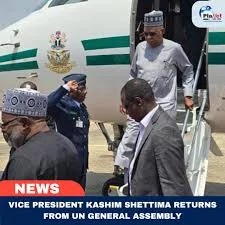
Labour Party presidential candidate in the 2023 elections, Peter Obi, has criticized a call for a new jet for Nigeria’s Vice President, Kashim Shettima, calling it “insensitive” amidst the country’s economic struggles.
The former Anambra state governor stated that Nigeria’s challenges, such as extreme poverty, unreliable power grid, and failing businesses, should be the priority of the country’s leaders and not luxury.
He urged leaders to focus on essential trips and prioritize selfless service to uplift Nigeria’s development and welfare.
“We are today among one of the eleven worst-governed African nations in the last 10 years.
“We are also among the 20 most hungry nations in the world, with our people facing worsening mass poverty, extreme hunger and starvation.
“Our nation remains the poverty capital of the world, with our per capita income crashing further from $1700 in 2023 to $1109 this year. Are these not the issues that should be prioritized by committed leaders?” Obi queried.
Using Indonesia as an example, Obi stated: “It was not until 2014 that Indonesia, with sustainable economic growth of over 6% annually for the past 10 years, adding about 50% to both her GDP and GDP per capita, decide to buy a Presidential jet, used by both the President and Vice President.
“The Vice President travels mostly in the country’s national airline, Garuda Indonesia. And since we have recently undeservedly bought one, it should be used on essential, inevitable trips of the President and Vice President.
“I appeal to the President, Vice President, and our public office holders that our present precarious situation calls only for minimal and highly contributory inevitable travels.
“It is time to sit down and find solutions to our litany of challenges for the wellbeing of the people and the development of our country. Nigeria will rise again if the leadership can commit to selfless service.”
In a feeble effort towards cost cutting President Tinubu orders ministers and heads of agencies not to travel in a convey of more than three vehicles in their official convoys.
A release by Bayo Onanuga, the Special Adviser to the President (Information & Strategy) on Thursday said this was a “reduction in cost of governance” measure by the Tinubu’s administration.
The presidency added that Tinubu also ordered all ministers, ministers of state, and heads of agencies to have at most five security personnel attached to them.
The security team would comprise four police officers and one Department of State Services (DSS) officer.
The release said, “President Bola Tinubu has restricted Ministers, Ministers of State, and Heads of Agencies of the Federal Government to a maximum of three vehicles in their official convoys.
No additional vehicles will be assigned to them for movement.”
The cost-cutting measure was announced today in a statement signed by the President.
In January this year, President Tinubu took significant steps to reduce government expenditure by reducing his entourage on foreign trips from 50 to 20 officials.
For local trips, he reduced it to 25 officials. “He similarly reduced the Vice President’s entourage to five officials on foreign trips and 15 for local trips.
In the directive issued today, President Tinubu also ordered all ministers, ministers of state, and heads of agencies to have at most five security personnel attached to them.
The security team will comprise four police officers and one Department of State Services (DSS) officer.
No additional security personnel will be assigned, he ordered.
“President Tinubu instructed the National Security Adviser to engage with the Military, Paramilitary and Security Agencies to determine a suitable reduction in their vehicle and security personnel deployment.
“All affected officials are expected to comply with these new measures immediately, underscoring the urgency and seriousness of these changes.”
President Bola Tinubu has scrapped the Niger Delta Ministry and the Ministry of Sports Development.
Special Adviser to the president on Information and Strategy, Bayo Onanuga, disclosed this in a post on his official X handle on Wednesday.
He said the decisions were taken at the meeting of the FEC in Abuja.
According to him, “there will now be a Ministry of Regional Development to oversee all the regional development commissions, such as the Niger Delta Development Commission, North West Development Commission, South West Development Commission, North East Development Commission”.
He also stated that the National Sports Commission will take over the role of the Ministry of Sports henceforth.
During the FEC meeting, the president also approved the merger of the Ministry of Tourism with the Ministry of Culture and Creative Economy.
Observers of governmental affairs opine that the creation of the new Ministry of Regional Development was anticipated following the recent creation of regional development commissions with some still to be announced.
Already, legislative works are at advanced stages preparatory to the creation of North Central
Development Commission and South East Development Commission to round off one development commission each for the six geopolitical zones of the country.