Our children are now chasing out the adults from the business. But in their own case they are mainly foraging for foods that are often not there. On Monday, January 20, a national newspaper published a news feature on the dire situation of some Nigerian children. Its finding was that not many children were currently privileged to have tea and bread for food at home. It said many of them now live off refuse dumps; they carry sacks filled with used cartons, empty drink cans, and discarded plastic bottles and bowls.
WHAT’S unfolding presently will form part of the foundations for the future of our country. And the picture is not good. That the majority of the privileged and the ruling elite live in denial will not change it. What is looming and getting clearer as daylight is that this will be a future and a disaster that was foretold. Successive regimes, and especially those of the All Progressives Congress (APC) political party since 2015, had been leading Nigeria down a slippery slope. The 15 years or so of the former ruling People’s Democratic Party (PDP) are now being celebrated as the ‘golden years’ of Nigeria, to borrow from President Donald Trump’s so-called American golden age. But as disasters go the PDP as a ruling party was just a shade above this ruinous APC. PDP lived on borrowed robes. It started fairly well under President Olusegun Obasanjo (1999-2007) but quickly relapsed into bad ways, profligacy and the expressed feelings of invincibility. The party suffered from low crude oil prices at the beginning, as low as $15 per barrel at the start of this democratic dispensation, but later under President Goodluck Jonathan enjoyed a boom with prices surging beyond $120/barrel. It failed miserably in managing the bumper returns. And so got itself sacked ostensibly by voters in 2015.
The APC, a hastily cobbled special purpose vehicle that passed as a political party, took power at the centre and in most of the sub nationals subsequently. This party over-promised in its quest for power during the campaigns in 2014. It promised everything under the sun except creating human beings. It even promised to recreate Nigeria and Nigerians. But under Muhammadu Buhari it started very poorly by first denying virtually all it promised, and disclaiming its own manifesto. Its candidate – turned – president Buhari was strident in distancing himself from the promises of the party, the so-called Contract with Nigerians. In terms of ineptitude the APC under Buhari turned out worse than the PDP. In corruption the party and its principal operatives were worse than eye-sores. It piled up debts from every source – offshore, domestic markets, and through Ways and Means which simply means minting Naira banknotes backed by nothing. Yes, nothing. Buhari fumbled and wobbled for eight years, and took the country back by 30 years. He was an affliction of unimaginable proportions.
Buhari’s successor, Alhaji Bola Ahmed Tinubu, now going to 20 months on the saddle, appears to be no better in spite of claims to courage and to reforming the economy and the country. He came with a baggage of personal failings, certificates and names controversies, and a questionable electoral victory. So he was dogged by palpable legitimacy issues. Indeed, there was a recent report, which is yet to be refuted (unlike what is in the regime’s DNA), that a foreign lobbying firm was retained with millions of dollars to help burnish his image and to make him appear less a pariah among his supposed peers on the international stage. By some calculations, Tinubu jets out of the country after every 17 days of what now appears to be a visit to the country he is supposed to be governing to, according to his officials woo foreign investors. He cuts a forlorn and isolated figure in many of his trips abroad, especially when he is in the midst of other significant world leaders. Not a good comparison, anyway, but the US President Donald Trump who took office one week ago, yesterday, and without travelling out of his country, has attracted pledges of investments reported to be close to $3 trillion from around the world.
Nobody needs to dig deep to find out how shallow this regime is and how desperately it looks for a win. Recently, the henchmen of the administration and their choristers started celebrating that the Naira, Nigeria’s national currency, has stabilised at N1,500 to $1USD. Are they for real? At the beginning of the so-called economic reforms and currency convergence, the consensus and the projection was that the rate would settle at N800/$. Rulers with a modicum of shame will not roll out the drums for the current exchange rate.
The economic policies and programmes of the Tinubu regime are whimsical and his claimed political reforms are inchoate and haphazard. The jury is still out on his quest to make federating units out of the country’s 774 local councils by making them ‘autonomous’ and funding them directly from the federation account. He claims his actions were informed by Constitutional provisions. But that’s self – serving because this same man, in his earlier incarnation as Lagos state governor (1999-2007) fought tooth and nail for councils to be under the suzerainty of state governments. But not anymore today. The only thing that has changed is that Bola Tinubu is now the president. His actions are political and driven by 2027. He wants his fingers in every pie, and foot soldiers to ‘grab, snatch and run’ away with results of the 2027 election, that is, if there will be any elections in the true sense of the word. The same uncertainty is playing out in the economy. Tinubu says repeatedly that he is already seeing light at the end of the tunnel. He might be seeing a mirage. The World Bank has said it would take a minimum of 15 years of sustaining his punishing economic regimen for any impact to be noticed. The hallmarks of the Tinubu economic kalo kalo are that his policies and programmes are not measurable, they have no benchmarks, they have no timelines, and they have no publicly available templates for reviews should the need arise. They are more like the rural Nigerian children’s game of tumbom tumbom.
Nobody needs to dig deep to find out how shallow this regime is and how desperately it looks for a win. Recently, the henchmen of the administration and their choristers started celebrating that the Naira, Nigeria’s national currency, has stabilised at N1,500 to $1USD. Are they for real? At the beginning of the so-called economic reforms and currency convergence, the consensus and the projection was that the rate would settle at N800/$. Rulers with a modicum of shame will not roll out the drums for the current exchange rate. But APC has no shame. The party’s serial misrule is on display. Poverty is becoming entrenched in our country. The other day the deputy speaker of the House of Representatives Benjamin Kalu celebrated the rise in diaspora remittances from $25 billion in 2023 to $28 in 2024, as a sign of confidence in Nigeria’s economy. No, it was not. It showed that Nigerians at home were in dire straits, and that the situation had increased the pressure on diasporans to up their remittances. How could it be otherwise with inflation running in the high 30s, the worst level in about one generation?
The increased diaspora remittances could be the reasons why Nigerians are not yet widely dropping dead on the streets as Europeans predicted and wished would happen in Africa during the COVID pandemic; why some families are still managing to pay children’s school fees at all levels in spite of students’ loan scheme; why some families can still spare a little money for hospital bills; why there’s no widespread starvation; why erstwhile middle class citizens can afford transportation fares to their offices or business premises, or to repair and fuel their cars. If Tinubu’s friend whom he claimed had abandoned his four Rolls Royce limousines had been a destiny – helper, he probably wouldn’t have suffered humiliation brought upon him by friend, the president. A little dollar here and a little pounds sterling and euro there would have kept him going. He would not have been reduced to using a car whose front wheel is susceptible to breaking off in motion without notice on Nigerian roads. In spite of diaspora remittances and other mercies, the Tinubu and APC economic wizardry is taking a huge toll presently on a vulnerable segment of the population. And it presents a foreboding future for our country.
WASTE to wealth is a fairly popular phrase. Ordinarily, it means a situation where some citizens out of choice visit dump sites to pick out supposed waste and recycle the same to create value and possibly wealth. And this used to be the exclusive preserve of adults. It is no longer the case. Our children are now chasing out the adults from the business. But in their own case they are mainly foraging for foods that are often not there. On Monday, January 20, a national newspaper published a news feature on the dire situation of some Nigerian children. Its finding was that not many children were currently privileged to have tea and bread for food at home. It said many of them now live off refuse dumps; they carry sacks filled with used cartons, empty drink cans, and discarded plastic bottles and bowls. The newspaper illustrated with the story of one Jacob Olorunfemi who claimed that the economy had crippled his parents, forcing him to drop out of school. “I don’t go to lesson(s) anymore because my parents said there is no money… I usually attend lessons like school, where I pay N500 per week. My mother usually sweeps and wash(es) clothes for customers . My father works at a bus park. I have a friend called Sule. He is twelve years old. He used to pick used plastics and condemned items and sell them. His mother beg(s) for alms for a living. He advised me to join him in this scavenging routine and I have been able to save N2,000 since I started”. Jacob is 10 years old.
Yet there’s another child, Yekini Salam, 11 years old. His late father reportedly left him with a step mother who also had three other children of her own to care for. “I have not been in school for years”, he started. “I dropped out when I lost my father. I don’t know who my mother is but I have a stepmother and three step brothers. I usually hawk wares for my stepmother. But last year she asked me to stop. Sometimes I help people to run errands and they give me tokens in the form of food or cash (in) appreciation. Recently I had to join my friends who are a little above my age in the scavenging routine. I move around places sourcing for plastics, cans and bottles. There are people who I sell to. The materials are scaled (weighed) and I am paid. I want to save enough money to learn aluminium window and door frame construction skills”. The plights of Jacob and Yekini are not just urban phenomena. Children engaging in menial jobs and dropping out of school for various reasons are widespread. The figures for Nigeria’s out of school children range from between 18-20 million. The future is sadly not also bright for some of our children who are fortunate to be in school. The findings are depressing in schools in one of the country’s most populated states. Last Friday, the United Nations Children’s Fund (UNICEF) disclosed that only 9.6% of primary school pupils in Kano showed reading proficiency whilst only 11.2% had basic numeracy skills. The agency’s chief field officer for Kano, Rahama Mohammed further indicated that almost one million children (989,234) of primary school age (about 32% of the population), were “currently not enrolled in formal education in the state”.
The depressing statistics in Kano could be the same across many states in the north of this country. And it will be myopic to blame the situation solely on the emphasis placed on Islamic or religious education in that part of Nigeria. Even if that were to be the case, a more sensitive ruling elite should know that in the fullness of time what’s happening in Kano and some other states would have a cataclysmic national impact, and would have taken steps to arrest the looming disaster. But how can the situation be redressed with no discernable and sustainable national policy on education with widespread buy-in, and with a miserable and miserly allocation to education in the 2025 national and sub nationals budgets. Even before the advent of the APC in governance at the federal level, infrastructure in public schools were dilapidated. They have only become worse. Not many teachers are in the profession out of choice. The teachers in public schools are badly trained or not trained at all, poorly remunerated, ill-equipped, and generally demotivated. Some of them are petty traders hawking their wares right inside school premises. The future of this country is not looking good. But do our rulers care?
UGO ONUOHA, a veteran journalist, was the Editor-in-Chief of Champion Newspaper
UNICEF says Katsina, Sokoto and Zamfara States will need $15 million to upscale the quality of life of their citizenry.
The UNICEF Representative in Nigeria, Ms Christian Munduate, said this at a news briefing in Gusau on Wednesday shortly after holding an interactive session with stakeholders from Gidanwada Model Primary School in Bungudu Local Government Area.
Munduate said that the governors of the three states needed to provide the matching grants to address the socio-economic challenges and provide quality life for their citizens.
She regretted the prevalence of malnourished children and nursing mothers in the three states.
She identified open defecation as a major cause of diseases capable of reversing polio epidemic to the states.
According to her, children, mothers and other Nigerians deserve quality education, healthcare and nutrition, among other critical needs.
Munduate urged the three states to collaborate with partners and stakeholders to tackle the challenges and improve the living condition of their people.
She further solicited for a strong partnership with all the stakeholders to address the needs of children, mothers and the entire people of the three states and other Nigerians.
Deaths and blood rituals for bulaba balablu Christmas
‘It will get worse before it gets worse’. That was the title of my article published here and in other newspapers on November 21, 2023, six months after Nigeria’s president, Alhaji Bola Ahmed Tinubu, assumed office, and started his incoherent economic policies and programmes. The chicken is coming home to roost but it’s doing so at the cost of limbs, livelihoods and lives of the majority of Nigerians who are at the receiving end. Everyday we wake up to news of tragedies, especially of avoidable accidents, miseries and needless deaths. Tragedies now straddle the land – at home, school, market, highway, sea/river, farm, stream, bush path. Everywhere, really. There are no safe places in our country anymore. Nigerian lives no longer matter. Generator fumes wipe out families in their sleep. Kidnappers are no longer content with snatching travelers on the highways; they now pluck them from their homes, and kids from their schools, playgrounds, and classrooms. Terrorists, bandits, and sectarian insurgents who for political correctness were christened herdsmen invade farmlands and rape women and girls, slaughter men and occupy farms. Markets routinely go up in flames, many of them suspected to be acts of sabotage designed to cause economic dis-empowerment of a section of the country. Panels of inquiry follow such incidents but the results usually come to naught. There’s no life for a vast majority of Nigerians, and where there is, it is cheap.
When we wrote on November 21, last year that things will only get worse in this country we had no inkling it will be this bad. We had wished that we will not be vindicated because the consequences will be dire. The reality today is that Nigeria is in a dire straits. But the truth is that in spite of the acute poverty gripping Nigerians right now, the prognosis is that the future, at least the near future, is not looking good. If truth be told the future for many Nigerians is foreboding. What we wrote 13 months ago could have been written today and they will not be widely off the mark. The first three paragraphs of that entry unedited read: “Nigeria is in the intensive care unit and its caregivers appear not to be perturbed. No. They are actually engaged but not in attending to a gravely ill patient. They make platitudes on the delivery of their promises but commit to attending to their hedonistic desires and pleasures.
“It is 146 days (as at November 21, 2023) since another set of rulers took the reins of power in Abuja. But not for one day have Nigerians heaved a sigh of relief. It has been like the reign of the Biblical rebellious Absalom in one part of the divided Kingdom of Israel. Absalom had told his subjects that whilst his father King David chastised them with the whip, he would do the same with the scorpion. Under former President, Maj.-Gen. Mohammadu Buhari, Nigeria suffered afflictions of unimaginable proportions. Indeed as that clueless regime that was bereft of imagination and humaneness was winding down, the common refrain from Nigerians was: Never Again. Many citizens believed that no future administration in Nigeria will be worse than Buhari’s in terms of abuse of power, impunity, desecration of democratic ethos, insensitivity to the country’s diversity, disregard for the suffering of citizens and intolerance of critical and opposing views. Obviously, we were mistaken”.
Stampede at Okija, Anambra State
The extant regime which we wrote about when it was six months old in November last year will be 20 months in office by next month, January 2025. Loyalists and choristers of ‘on your mandate we shall stand…” will still fly off-the-handle to insist that it is still too early to assess the capacity of the regime with a four-year mandate. We will grudgingly concede that they may be right. However, the challenge is that there are virtually no indications that the needles for economic recovery and good governance are moving in the right direction, even if slowly. The experience is that of deterioration in the living standards of many, crisis in the cost of living, runaway inflation with food inflation about 40%, imported inflation caused by the country’s overwhelming dependence on imports and the poor exchange rate. The prediction is that many of these indicators will continue to head south for the foreseeable future. The consequences of forlorn hope which has trumped Tinubu’s ill-fitting mantra of Renewed Hope are beginning to increase in their effects. You don’t need to listen to hear the groans of the people. You don’t need to be sensitive to feel the despondency of citizens. The sound of hopelessness is loud and clear. Nigerians are buffeted and the country could just be sitting on a keg of gunpowder. But do our rulers know about this clear and present danger? I doubt it otherwise they won’t still be behaving like Nero who serenaded himself with the wafting sounds and melodies from his flute while Rome burnt.
If they know that the folks are hurting they probably will not continue their hedonistic indulgences by parcelling significant portions of the 2025 national budget to themselves. As in the budget of this year, hefty sums in billions have been carved out in next year’s appropriation bill to buy sport utility vehicles (SUVs) for themselves, their consorts, cronies, and their acolytes; renovate mansions, residences and offices; procure cooking utensils and cutleries; provide fittings, fixtures and furnishings; pay for offshore frivolous junkets and carousing; gorge themselves on foods and drinks at banquets; organize trainings at home and abroad where nothing useful are learned; set up additional ministries, departments and agencies that fail even before they take – off; and, sundry things that suit their fancies. Almost N50 trillion is said to be the size of the proposed 2025 budget. But by this time next year Nigeria will at best still be stagnant, and at worst deteriorated further in the global misery index. By the way, the current budget is said to have its implementation extended up till June 2025. So by the time next year’s budget is rubber-stamped by the national assembly, say in February or March, the two budgets will be running side-by-side. Multiple budgets make accountability by the government difficult but it has remained the preferred option for this regime since its inception. It ran multiple budgets in 2023. It is doing the same in 2024. It will do so in 2025. When you want to evade accountability, muddle the budget, and distort the conventional January -December budget cycle. Play ‘smart’ and pretend that nobody will understand the game. But Nigerians are no fools.
We are in the season of Christmas and New Year celebrations. But the aroma of the season is not in the air. In its place we have the smell of death. Nigerians are not amused. Ordinarily, Christmas should be a season of celebrations and reflections symbolising light, hope, and redemption. It’s a period when people, especially Christians demonstrate love, kindness, and generosity towards others. It’s a time for family reunion, boost in retail sales and businesses as well as travels and tourism, and vacations. It’s also a period when many people engage in charitable giving, donating to causes and organisations that support the vulnerable and those in need. Christmas is a time for renewal and new beginnings. It offers the opportunity to reflect on past experiences and to look forward to the future. But under Tinubu Christmas has added a new, depressing and morbid dimension – death in dozens. Gloom has overtaken excitement. Mourning has replaced celebration. Hopelessness has displaced hope. It’s renewed anguish for renewed hope. Death has taken the place of life. For Christians December is a celebration of life, the birth of Jesus Christ. But Christmas of 2024 looks more like Easter when Christ was crucified. This Christmas is a season of mourning – mourning in scores.
Ibadan Stampede, Oyo State
Tomorrow is Christmas Day but many homes will be mourning, wearing sac clothes. The week before this Christmas may go down in history as the period the most tragedies were recorded in Nigeria with scores of avoidable deaths through stampede caused essentially by grinding poverty. In a space of one week about 35 persons, mostly children, were killed in Ibadan, Oyo state in a supposed fun fair. In reality, it was not a fun fair. It was a hunting ground for food and sundry gifts for starving kids and their parents or guardians. A stampede ensued and the children trampled under the foot. There was no assurance that the children who turned up in their numbers, far more than the capacity the organisers could handle, had any food in their stomachs, and the energy to survive the push and the shove. So they died because this country eats its children. Arrests have been made. Probe has been ordered. Commiserations have been offered. Those are standard fairs. As we wrote this last Sunday, the Ibadan deaths have receded from the news headlines. The authorities are still probing the devastating blast that wrecked the same Ibadan about the middle of this year. As we say here, that probe has ‘entered voicemail’. There’s no reason to believe that the same will not happen to the deaths of the kids.
Soon after Ibadan tragedies struck in Abuja in the federal capital territory at a Roman Catholic church. Eleven persons were reportedly killed in yet another stampede. The church has a tradition of giving alms to its neighbours and other less privileged people in the community and beyond. The charity is not limited to its members nor to Christians. The church has done this in the past without any incidents. Until this year. The venue was besieged, and in the process of distributing the alms, a stampede ensued and almost a dozen people were killed. About 350 km from the Abuja church, another harvest of deaths took place. This time in Okija in Anambra state. Obijackson Foundation founded by billionaire Ernest Obiejesi, was conducting its annual gifting of bags of rice and other food items to the needy when tragedy through yet another stampede struck. The death toll was officially put at 21. They were mostly women and expectant mothers. A mother of Nigerian extraction who is abroad wept uncontrollably when her son showed her the video of the incident. She lamented that it had to be mothers because they were searching for where the next meal for their children would come from. She reportedly would not eat for the rest of that day. So in the week before Christmas about 70 Nigerians died because of poverty inflicted on them by their own rulers.
Already the search for scapegoats for these avalanche of deaths has started. Some persons, especially regime choristers, are pointing accusing fingers at the organisers of these events for failure to put in place mechanisms for crowd control. They may have a point. But they conveniently forget that some of these charities have been going on for years with no incident. Could it then be possible that the misery and poverty and hopelessness inflicted on Nigerians are the reasons for the desperation that led to the stampedes in Abuja (north), Ibadan (west), and Okija (east)? Governments at all levels are culpable for the harvest of deaths. But the federal government whose misguided macro economic policies have pauperised the majority of Nigerians takes the lion’s share. The policies of this regime have turned once proud and otherwise hard working Nigerians into beggars and hunters of palliatives. The federal government has ordered that the tragedies be probed. What’s there to probe? The reason for what happened is in plain sight – hunger and starvation occasioned by government policies have driven people to the edge. In Okija, for instance, people were not deterred by the deaths. A video showed that people still stayed on for the bags of rice even after the confirmation that 21 persons from amongst them had died. That was the level of desperation. Nobody was scared that the next stampede could claim their own lives.
Meanwhile, the Nigerian Police are at it. They said that they are minded to prosecute the charities and persons in whose events the tragedies happened for being negligent in crowd control. They can go ahead as long as they bear in mind that the first to be indicted should be the federal government which has breached a crucial provision in the Constitution which says that the primary duty of the government is to ensure the welfare and security of Nigerians. Has it lived up to it? The police should also know that after indicting the organisers, getting the courts to proscribe the charities, and jailing their operatives, others may begin to shun the act of giving. The emergent hungry and angry people will be recruiting grounds for criminals. It will be a vicious cycle. Is that where we want to be at this time in our country?
President Lays 2025 Budget Proposal Before the Joint Session of NASS
The Federal Government of Nigeria has relaunched its conditional cash transfer program, aiming to support 15 million households and an estimated 75 million individuals.
This initiative, which was previously suspended due to allegations of corruption, provides ₦25,000 per household each month, distributed three times annually.
The Minister of Humanitarian Affairs, Disaster Management, and Social Development, Nentawe Yilwatda, explained that the program seeks to ease the financial strain on vulnerable Nigerians.
The relaunch of the scheme at this time coincides with the current needless death of over 60 Nigerians from stampede occurring at various distribution venues in Ibadan, Okija and Abuja where charities dole out foodstuff to indigent and hungry Nigerians.
To ensure effective management and transparency, the government now requires all beneficiaries to possess digital identities, a move introduced following new policies by the Central Bank of Nigeria (CBN).
So far, the programme has reached five million people, but only 1.4 million beneficiaries are registered with digital IDs.
The minister acknowledged that many targeted individuals are unbanked, presenting challenges in expanding the reach of the scheme.
Despite these hurdles, efforts are ongoing to sanitize the national social register and improve accessibility for the most affected.
Women are being prioritized as heads of households in the program, with the rationale that they are better positioned to manage resources for the benefit of children and other vulnerable family members.
This targeted approach, according to the minister, ensures that the financial assistance reaches those who need it most.
The programme, initially suspended in January due to corruption concerns, was revamped and restarted in February.
The government also plans to extend the initiative to an additional 12 million households in the coming months.
This measure is part of President Bola Tinubu’s broader strategy to address the economic challenges faced by Nigerians, particularly those at the lower end of the economic spectrum.
WE will do the unusual in our discourse today. We will copiously quote Nigeria’s president, Alhaji Bola Ahmed Tinubu, in his address to a university convocation about two weeks ago. But first the summary of what he said. He claimed in his usual unconscionable, insensitive, provocative and uncaring manner that the ‘good life’ Nigerians had enjoyed before he happened to the presidency was fake, unreal, undeserved, and contrived. He said that that life was bogus, founded on falsehood, and erected on nothing really. He said we lived the life of, to use a local parlance, 419ers. Four one nine (419) is a clause in Nigeria’s criminal code that deals with obtaining by false pretext. In other words, in the president’s full contemplation, Nigerians were all 419ners or were made to appear so until he came and removed the so-called petrol subsidy on May 29, 2023. What a man. What callousness. What a president of a people going through severe privations visited on them by himself.
Tinubu said, as widely reported in the media during the 34th and 35th combined convocation ceremonies of the Federal University of Technology, Akure (FUTA) in Ondo state: “As you are all aware, we took the baton of authority at a time our economy was nose-diving as a result of heavy debts from fuel and Dollar subsidies. The subsidies were meant to support the poor and make life better for all Nigerians. We are all aware of the fact that the poor and average Nigerians were the sufferers of what was supposed to give them succour and improved standard of living. Unfortunately, the good life we (other Nigerians really) thought we (they) were living was a fake one that was capable of leading to a total collapse unless drastic efforts were urgently taken. The need to salvage the future of our children, and bring the country back from the brink of collapse necessitated the strategic (thoughtless) decisions to remove the fuel subsidy and also unify the exchange rate”. ‘Unify the exchange rate’ was an euphemism for what has turned out to be the current and sustained devaluation of the Naira. But as we write the Naira is gaining in value due largely to the recently issued Euro bond (yet another debt) which was made attractive by high coupon rates offered to ‘hot money’ and volatile foreign portfolio investors (FPIs); the new mechanism introduced by the central bank for FX traders (usually banks); and, the influx of dollars from diaspora Nigerians who are home for the Christmas and New Year celebrations.
For a start here’s the immediate fallout of the regime’s claim about securing the future of Nigerian children. Recently there was a report that a consultant in one of Nigeria’s foremost teaching hospitals had raised an alarm that many children in our country were presenting with kwashiorkor. In 2024? Damn it! This is not only a national embarrassment but a grave national disaster. There has been no time since the Nigeria -Biafra civil war that kwashiorkor had posed a clear and present danger to the country than today. And this is all down to Tinubu’s economic ‘rescue mission’ and Renewed Hope mantra. For our casual information kwashiorkor is a disease that affects children who don’t have access to enough protein in their meals. Its early symptoms include but are not limited to fatigue, irritability, lethargy, growth retardation, loss of muscle mass, swelling and severely eroded immunity which makes room for other opportunistic diseases to strike. I saw this image live as a child in the defunct Republic of Biafra in the late 1960s. The legs of a kwashiorkor victim look like tiny sticks and s/he presents a protruded stomach which is filled with rotten gas. There are exceptions but generally kwashiorkor leads to poor brain development and low IQ, that’s, if the child survives.
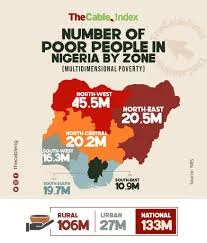
The frightening dimension is that the findings claim that the outbreak of kwashiorkor is across all the zones of the country. It has to be said, no matter how offensive our current rulers may consider it, that the prevailing outbreak of kwashiorkor in this country is a direct result of the pervasive hunger situation which now borders on starvation. And this is down to the grossly misguided economic policies of the All Progressives Congress (APC), and Tinubu. If Nigerians lose their children to death through kwashiorkor or stunted growth in body and IQ, then the claim by the extant regime that it is fighting to secure the future of the country becomes questionable. Whose future? And for whom? It has to be stated that kwashiorkor is not an infectious disease, and so it can be arrested and reversed within weeks with diets that are rich in protein and sundry wholesome foods. Even before the kwashiorkor story broke UNICEF had revealed that “around 11 million children in Nigeria, or one in every three children under five years of age”, were “experiencing severe child food poverty, making them up to 50% more likely to experience wasting, a life – threatening form of malnutrition”. (Apparently UNICEF restrained itself from using the word kwashiorkor). But how can the prevailing food insecurity situation and the attendant kwashiorkor be reversed with a majority of Nigerian families struggling for access to basic foods. Just before Nigeria’s affliction, Maj Gen. Muhammadu Buhari, left the presidency in 2023, the National Bureau of Statistics (NBS) had reported that about 133 million Nigerians were suffering from multidimensional poverty. By the level of today’s suffering where two-thirds of families in Nigeria can hardly afford one decent meal a day, the Buhari era could as well be classified as being among the good old days. Certainly, the figure of the dimensionally poor in Nigeria could be in excess of 150 million people today.
In Tinubu’s reckoning the ‘fake good life’ that many Nigerians lived before he happened on the country and yanked off the so-called petrol subsidy and then devalued the Naira would certainly include to get by the day with at least two meals that may actually have been of doubtful nutritional quality; struggle to see their children through schools and in some cases the university; acquire and dress up in modest attires; afford a modicum of potable water (a rarity before Tinubu and after Tinubu); barely manage to provide a shelter over their heads; afford transportation fares to commute from one point to the other to eke out a living; visit a drug (chemist as we know them) shop or hospital (consulting clinic really) and then be able to pay for medication and consultation; buy a 15-year-old pre-used or tokunbo car/truck shipped in from the dump sites of Europe, North America and Asia; buy an okrika (second hand) shirt or blouse that probably might have been stripped off the back of a dead person elsewhere; or to buy a coffin, not casket, to bury a dead loved one. For Tinubu and his cohorts and choristers, these were luxuries and in their own words ‘fake good life’. One illustration they routinely use to justify their silliness was that in the era of Nigerians living a ‘fake good life’, there were some people who had a fleet of cars, some of which were fuel guzzlers, who ran around town aimlessly. The people who make this argument to justify petrol subsidy removal and Naira devaluation are either being mischievous or are outrightly depraved. They could have the two maladies at the same time, anyway. How many Nigerians since the advent of this dispensation in 1999 could afford a multiplicity of cars/vehicles for frivolities? Even without the benefit of any structured study, they were certainly less than 5%, and we are being generous, of Nigeria’s population at any point in time. And the people in this class were mostly civil/public servants, their proxies, and the few rich and wealthy families in our midst. And the wealth of some of these families were linked to the pervasive corruption in government. How then could that be a basis for inflicting pains on the vast majority of the citizens.
If the truth must be told, the people who are really presently living a fake good life are Tinubu and his co-travellers. It was the president who acquired a $150 million presidential jet and reportedly used another $50 million to retrofit it for his globetrotting. Since the country is in the throes of debt peonage, it could reasonably be argued that every dollar expended on the purchase of that bird and to retrofit it was borrowed money. In addition, the acquisition of the craft was tainted with corruption. There was no request before the national assembly. There was no specific appropriation for the purchase of the aircraft. The purchase was shrouded in secrecy. The latter-day revelation that the aircraft was bought via the service -wide vote was a glaring abuse of the budgetary system. The service – wide vote was not designed for such a purpose. Apart from the litany of abuses, what more can demonstrate living a fake good life than that the president of a country that is the poverty capital of the world had prioritised the purchase of an aircraft for his personal comfort above the crying needs in all sectors of the country? And he feels no shame travelling inside the same aircraft to visit countries from whose institutions the monies were borrowed. From the last count which was before he went to South Africa recently, Tinubu jets out of Nigeria to visit one country or the other after spending only 17 days of any given month here at home since he assumed office in May 2023. Every expert will tell you that a presidential trip abroad is akin to the execution of a big envelope capital project. Every trip involves payment for personnel in dollars, aircraft maintenance in dollars, hotel bills in dollars like the $500,000 or so that was expended on hotel bills last year in New York in barely one week, airport parking fees in dollars, among others. Now supporters of the vice president Kashim Shettima are also clamouring for an aircraft for him. Why not? Shettima’s life also matters.
A fake good life is when the president of a country where families can hardly afford one meal a day, and where some family members would need to skip meals completely for the sake of others, will proceed to buy a car worth tens of millions of Naira for prestige purposes without qualms. The same country also embarks on buying sprees of luxury sport utility vehicles (SUVs) for the vice president, ministers and sundry state functionaries. It also spends billions of Naira on SUVs for offices that are not known to the laws of the land such as that of the first lady. Ours is a country that is said to be poor but behaves as though it is affluent. Our rulers have no conscience. If they do, their consciences are seared. They splurge money borrowed in our collective names on themselves for their fake good life. And they then turn around to provocatively project the fake good life on the rest of us. What more can better illustrate living a fake good life than splashing N21 billion to build a mansion for the vice president in a paranoid and paralyzed economy and to spend billions of Naira to renovate presidential and vice presidential vacation mansions? Here’s the debt profile as at June of a country whose rulers are spending borrowed money with reckless abandon on promiscuous consumption, and as if money is going out of fashion. Going by the prevailing exchange rate the indebtedness of our country should be in excess of N100 trillion with multilateral lenders accounting for more than half of the debt. And the creditors include the International Monetary Fund (IMF), the World Bank Group, the African Development Bank (AfDB), the Islamic Development Bank (IDB), among others.
As at last June Nigeria whose rulers live the life of drunken sailors owed the IMF about $1.61 billion; the World Bank Group $16.32 billion; AfDB $3.87 billion; the Arab Bank for Economic Development in Africa $4.97 million; the Islamic Development Bank $241.84 million; and, the International Fund for Agricultural Development $273.51 million. Then there are debts from bilateral lenders with Nigeria owing China in excess of $5 billion routed through that country’s Exim Bank. We owe Nigeria’s new lovers, France, about $623.55 million; Japan $52.18 million; India $22 million; Germany $115.81 million; and, commercial creditors through Eurobonds $15.12 billion. Meanwhile, Nigeria has struggled to reduce debt servicing, not repayment, from over 100% of revenue to just below 70% currently. In other words, after servicing debts and taking care of recurrent expenditures and overhead, nothing is left for capital projects which spur development. This could explain why the regime is desperate to force through its tax reform bills now mired in controversy. The implication of this situation is that borrowing is not about to end.
It has been said that people get the kind of leadership they deserve. Nigeria is a classical case in the 21st century. It has fake rulers with fake promises and fake assurances and fake policies and fake programmes. And the rulers are in overdrive to project fakery on the hapless citizens. But they will not succeed in making Nigeria a fake and failed country.
Ugo Onuoha, Veteran Journalist, was the Managing Director, Editor-in-Chief, Champion Newspapers Limited.
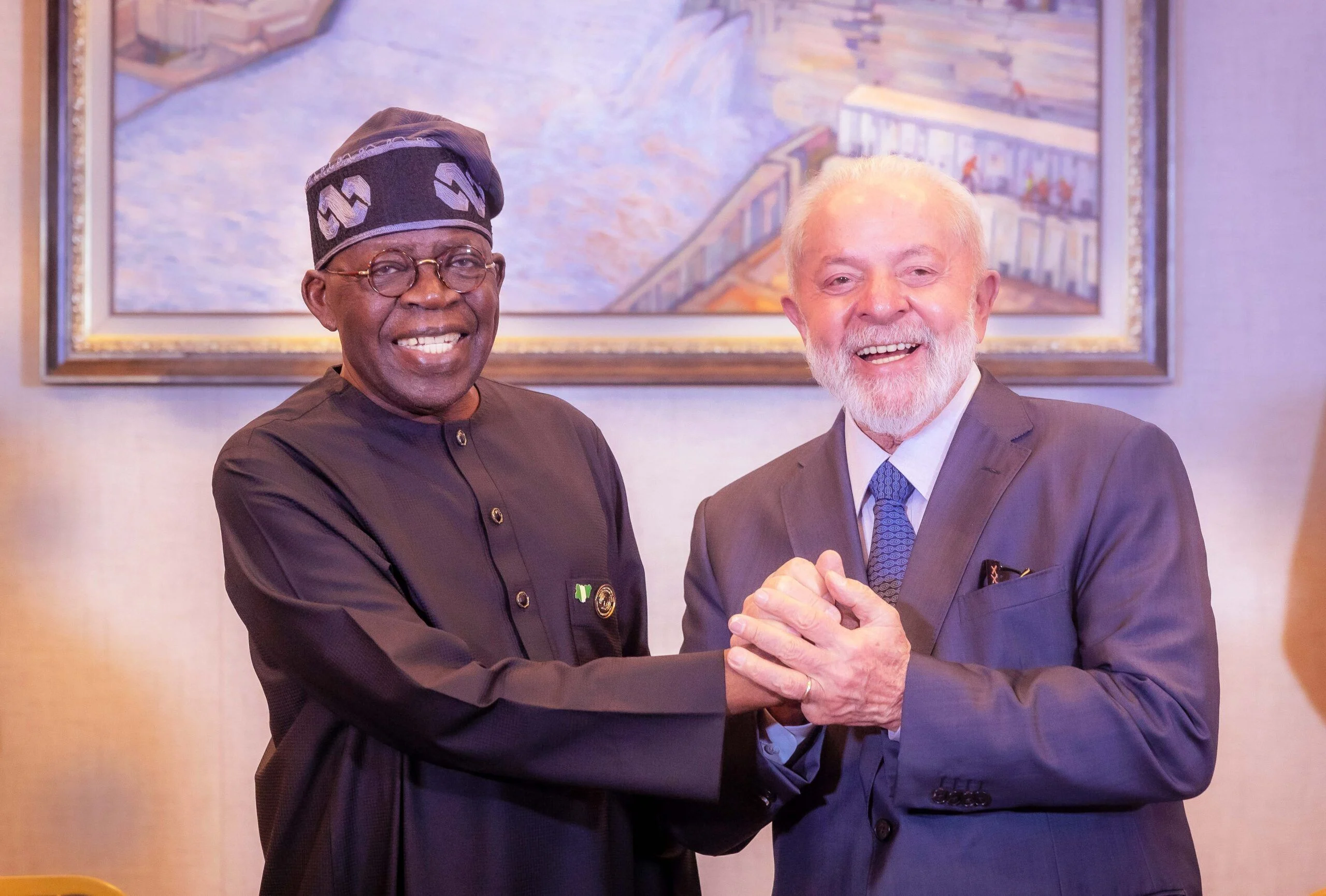
The MOU was signed by Mr. Temitope Fashedemi, Permanent Secretary of the Nigerian Ministry of Agriculture and Food Security (FMAFS), and Professor Carlos Ivan Simonsen Leal, President of FGV.
This partnership marks a new phase in the ongoing collaboration between Nigeria and Brazil, which has already been in motion through the Green Imperative Project (GIP).
This project, valued at $1.2 billion, is aimed at modernizing Nigerian agriculture with the help of Brazilian expertise in tropical farming.
The Green Imperative Project, which was first initiated in 2018, represents a significant international cooperation effort.
Over the course of the project’s ten-year duration, it will focus on transferring advanced agricultural technologies and best practices from Brazil to Nigeria.
The aim is to make Nigerian agriculture more efficient, sustainable, and capable of supporting the country’s growing population.
The project is designed to support agribusinesses across Nigeria’s 774 local government areas, providing them with both the financial and technical resources needed to thrive.
With an eye on sustainable economic growth, the initiative will focus on fostering businesses that can contribute to Nigeria’s food security and economic development.
Moreover, the MOU aims to attract private-sector investments totaling $4.3 billion, directed toward vital sectors like fertilizer manufacturing, seed innovation, and agricultural finance.
By attracting such investment, the project hopes to create lasting improvements in Nigeria’s agricultural landscape.
The signing ceremony, attended by Nigerian government officials and FGV leaders, signals the beginning of a strong partnership that is expected to bring meaningful change to Nigeria’s agricultural economy.
Kano State Governor, Abba Yusuf, has returned 76 minors detained during the August #EndBadGovernance protests to their families.
The handover took place on Thursday at the Muhammadu Buhari Specialist Hospital, where the children had been cared for after being arrested for their involvement in the protests, which called attention to governance issues in Kano and Nigeria at large.
Governor Yusuf, represented by his Chief of Staff Shehu Sagagi, acknowledged President Bola Tinubu’s role in securing the minors’ release. In his address, he urged parents to collaborate with the state government in providing quality education for their children, which he believes is key to the state’s growth.
He also cautioned parents against using any associations to solicit funds, as such behavior would not be tolerated.
Kano’s Education Commissioner, Haruna Doguwa, shared that steps had been taken to support the minors’ educational journeys, including providing school uniforms for 50 of them.
Additionally, a final-year student protester would be assisted in completing their studies, and another with a National Certificate in Education would be given a job.
Health Commissioner Dr. Abubakar Yusuf confirmed that the minors had all received medical treatment during their stay at the hospital before being reunited with their families.
The event also saw former Sokoto State Governor, Attahiru Bafarawa, donate N50,000 to each child for their education.
ALHAJI Bola Ahmed Tinubu violently shook and severely unsettled the national economy in the first few hours after he assumed office eighteen months ago. That of its own could not have been a problem. What manifested down the line was the real issue – Tinubu had no discernable plan to methodically work on an economy that, it must be acknowledged, had been dealt a severe blow by a serial bungler, one Maj.-Gen Muhammadu Buhari, the affliction who passed through here masquerading as a president. If this country were to be a human being what Buhari inflicted on it between 2015-2023 would have had more severe and deadlier outcome than the COVID-19 pandemic that swept through the globe in 2020/2021, leaving millions dead in its wake, destroying economies, and permanently impairing the health of many people worldwide, especially those with pre-existing health challenges. And Nigeria when Tinubu took the helm had pre-existing political and economic conditions. But instead of stemming the hemorrhaging, he made it worse.
Tinubu clearly mistook naivety bordering on ignorance for courage when he declared on May 29 last year that subsidy was gone. The spirit that he said led him to act in such a manner was the evil spirit. That same spirit drove him to act in such a manner in the foreign exchange market. The combined effects of those impulsive actions are responsible for our severely depressed and damaged economy and the littering of the landscape with human skeletons. Everything that followed had added to compound the dire straits this country has been consigned to in less than two years. The greater tragedy is that the regime is still digging, assuring only itself that it was on the journey of great economic reforms. Though it has no benchmarks and timelines for its promised dividends of democracy, it keeps assuring of light at the end of the tunnel.
It’s now obvious that this regime believes that the vigorous and mindless application of a narrow monetary policy instrument alone will cure the many ills afflicting Nigeria’s economy. Through the central bank of Nigeria (CBN), it has misguidedly pursued taming the rampaging inflation which, by the way, it caused by its own impulsive decisions early in the life of the administration through the so-called petrol subsidy removal, and the attempt at market-determined value of the Naira. Both policies have spectacularly failed in spite of the concerted efforts by the regime to put a spin to them.
Let’s explain why we argue that the twin policies have already failed. When Tinubu announced the scrapping of the so-called petrol subsidy in May 2023, Nigeria had no petroleum resources minister and no cabinet. And 18 months down the line, the country still does not have an oil minister. Information adviser to the president, Bayo Onanuga, said this much recently in a national television interview. Crude oil generates about 80% of our national revenue, and until recently the country imports 100% of the petroleum products for domestic consumption, and has had no dedicated minister for almost two years. It only has a junior minister or what we call minister of state. Furthermore, there has been no physical manifestation of the gains from the removal of subsidy. If anything, we have suffered from the illusion of money, that is, a situation where the federal and state governments get more money from the federation account which has had no tangible impacts in the lives of the people. The national minimum wage has been increased from N30000 to N70000, but in real terms the value of the minimum wage is less than what it was about 40 years ago. Indeed, the Nigerian Labour Congress (NLC) and other workers’ unions are gearing for a further upward review of the minimum wage barely two months after it was passed into law. More than 70% of the country’s 36 states and the federal capital territory have not even started implementing the new wage.
Every increment in salaries and wages impacts inflationary trends. In Nigeria it has been a constant case of the monetary and fiscal policies in misalignment. It’s obvious that salaries and wages are the least of the problems at the root of galloping inflation. The government is implicated with its voracious appetite to borrow in our name, and steal or spend on consumption. At a time the CBN pretends to be fighting inflation by mopping up money in circulation, bank credits to the government are experiencing a phenomenal rise. Data from the central bank showed that credit to the government rose by 89.9% year-on-year to hit N42.01 trillion in September, up from N22.13 trillion in the corresponding month last year. The clear implication is that the Tinubu regime relies almost exclusively on offshore loan facilities and domestic borrowings to run.
According to the report, “When government credit levels rise, it indicates that it is increasingly borrowing from the financial sector, particularly from domestic banks and other lenders. This rise in borrowing generally reflects an increase in government debt, as funds are sought for financing various operations, social programmes, and budget deficit coverage”. The surge in banks’ credit to the government is in conflict with the stated drive of this administration. In August 2023, President Tinubu had vowed that his government will break the reliance on borrowing for public spending. One year on the evidence points to the contrary. Domestic and foreign borrowings have surpassed every projection, and there’s no end in sight. When a government sucks up credit from banks other potential investors are crowded out and production is negatively impacted. So where’s the basis and expectations for economic revival?
When Tinubu spoke last year of curbing government’s appetite for credit from domestic banks it was at the inauguration of the presidential committee on public policy and tax reforms. Coincidentally, the report of that committee chaired by Taiwo Oyedele, one of the tax czars of Tinubu, which has taken the form of a bill now with the national assembly, is facing a vigorous pushback from a section of the country. Stakeholders in the north met about two weeks ago , and demanded that the tax bills be withdrawn because they will impact their people and governments negatively. Days after the north took a stand against the bills, the national economic council (which comprises state governors and others with the Vice President presiding recommended the withdrawal of the bills by the president. But the president promptly dismissed the advice fearing that If the demand of the north and the request of the economic council were heeded to, then the reforms in the revenue sector will stall, and the borrowing from the domestic financial market will continue apace with its deleterious effects on private sector investments, production and economic revival. Contrast the current uncertainty as regards the reforms in the tax laws with the urgency of the task as stated by Tinubu more than one year ago. “The Committee, in the first instance, is expected to deliver a schedule of quick reforms that can be implemented within thirty days. Critical reform measures should be recommended within six months, and full implementation will take place within one calendar year“. Obviously, all the targets have been missed, so where’s the hope for the government to avoid crowding others out of the domestic credit market? The emerging picture is not made any better by the fact that the north, apparently speaking through the controversial and outspoken Senator Ali Ndume, has committed to scuttling the tax bills in parliament. Another issue we should not gloss over is the indication that the bills appeared to show a fracture in the presidency.
There’s yet another reason why the revival of the economy is not in sight apart from the profligacy of this regime and the admonition by the Bretton Woods institutions that we should be prepared to wait for some 15 years for a possible turn around in Nigeria’s economy, as long as we stick with the ongoing punishing prescriptions. The piggyvest saving report for 2024 which was released recently is revealing, insightful, and depressing. It said 65% of Nigerians have a monthly income of about N100,000 ($65) or less; 86% earn below N250,000 ($151) monthly: multiple income sources dropped by 10% against the corresponding period last year; and, only 3% of over 220 million Nigerians spend above N500,000 ($303) every month. The findings should be concerning to every discerning citizen. And the pathetic picture about the state of our country and its people did not end as in above.
The report goes on to say that food remains the largest expense head in spite of findings of decreased spending from 2023. Today transport ranks as the second largest expense head, overtaking utilities and bills due to the removal of petrol subsidy. In addition, the report finds that the percentage of Nigerians saving money fell from 64% last year to 57%, while 10% of those who save do so only occasionally. In like manner, emigration as a savings goal dropped precipitously from third to eighth place, due largely to the 70% devaluation of the Naira. Also, the number of Nigerians with emergency savings decreased by 5%; over two-thirds of us lack savings for unplanned expenses without incurring debt; only 15% of Nigerians increased their savings over the past year; and, 19% who had emergency savings in 2023 no longer have any. It’s important to bear this sobering data in mind as this regime engages the overdrive to assure you about their Renewed Hope. It’s not your own hope, it’s theirs and they are very few. The few who live off their government.
Any economic recovery driven by pointing fingers at slight movement in the gross domestic product (GDP) alone is an illusion. It is worse when the GDP is growing at a slower pace than the population rate. Economies are revived and grown by human beings. And gainful employment is key to increased purchasing power. Nothing currently indicates that any of the two is happening or about to happen. In addition, there must be trust between the leaders and the led as well as implicit confidence of the people on their leaders. These ingredients are not there. They are just not there. Even without the benefits of a structured study, many Nigerians do not believe their country is heading in the right direction both politically and economically. And without a buy-in, there’s only so much the present rulers can achieve. And Tinubu by his actions in appointments into critical offices has demonstrated that he does not care about carrying every part of Nigeria along. That will magnify his failure. Sadly, the regime’s attempt to deflect its nepotism in appointments left it in a bad place. It publicly admitted that two geo-political zones (south south and south east) of the six zones of the country do not matter in appointments into critical and sensitive security positions.
Ugo Onuoha: Veteran Journalist of repute is the former Managing Director/Editor-in-Chief, Champion Newspapers Limited
As Nigeria’s first lawyer, Sapara Williams stated, the lawyer lives for the wellbeing and direction of his society. The obligation to promote the wellbeing of the society is not just for the lawyer. It is for all professionals. There is a special obligation on the professional to work for the good of the society.
Because Just Friend Club is a club of professional men and women, I think I should say something about professionalism, the professional and the future of Nigeria.
The Professions, Professionals and the Public Good
We have many professionals in public and private leadership in the country. With such array of well educated and nurtured people you would expect a high degree of ethics and competence in corporate and public leadership in Nigeria. But that is not the case as shown by Nigeria’s poor rating in corruption perception index and other indicators of public probity. Nigeria is also very poor in the rating of state effectiveness. The Transparency International rated Nigeria 14th out of 180 countries in the world in the 2023 Corruption Perception Index. This comes to 25% where 0 is highly corrupt and 100% is very clean. Nigeria is also doing badly on the Mo Ibrahim Index of African Governance (IIAG) and the World Intellectual Property (WIPO) ranking on Global Innovation Index. In the former, Nigeria ranked 33 out of 54 African countries, with 45.7% out of 100%. On state effectiveness index, Nigeria does very badly. In 2022, Nigeria’s score was -1.04, which was a decline from -1.03. The world average score was -1.05. State effectiveness is a measure of the capacity of the state’s public sector to formulate and implement policies in a manner that achieves good governance and development. An ineffective state means that the bureaucracy is not strong enough to implement transformative policies.
Nigeria faces an acute crisis of values which reflects in the gross lack of productivity in both its private and public sectors. Nigeria is abundantly blessed in natural resources. As a world leading producer of oil, we ought to be richer than we are. But we know that the wealth of nations does not come mostly from natural resources. Countries like Singapore and South Korea are not so much naturally endowed. In fact, they are geographically constrained in many ways. But Nigeria won the geographical lottery in many ways. Yet are in many ways victim of Dutch Disease. Natural resources have not translated into wealth. They have mostly turned into a curse. Natural resources in themselves are not a curse. They are a blessing. But a blessing that call for more work to turn them into lasting benefit to the people. Some of the Scandinavian countries are endowed with oil like Nigeria. They turned theirs into a blessing through smart policies and management. For them, oil resources have lubricated national innovation system that has made them high income economies. Examples are Norway and Finland.
Nigeria’s travail is partly the lack of good leadership that can mobilize citizens towards a virtuous path of productivity. Such leadership is often described as transformative or redefining. In his book on public leadership titled ‘The Myth of the Strong Leader, Achie Brown, Oxford University emeritus professor of politics, argues that redefining leaders are those who lead their country away from the unpleasant past and toward a better future. Such a journey requires adaptivity, which could be very difficult. It is the genius of redefining leadership that the people get to learn the hard lesson and embrace new values and practices that will ensure economic development and social transformation.
At the heart of leadership, whether transformative or redefining, are values and value-based practices. These values and value-based practices are usually sourced from the practice of the professions. The professions are human endeavours that highlight the highest levels of expertise, responsibility and corporateness. These are the three elements of a profession. We expect that a professional is a person of high expertise in a specialized area of human activity. A professional is also a person with overriding sense of responsibility, first to his or her craft, and second to the society which the profession serves. A professional is also guided by a deep sense of corporateness. That is, he or she is trained to subordinate his or her personal interests for collective good. These three elements of professionalism influence the direction of national politics and the economy. Where professionals manifest high levels of technical and ethical expertise and show a high degree of responsibility to the ethics of their profession and able to subordinate the pursuit of personal interest to the good of their profession and society, we see an uplift in the productivity and probity. We see the society rate high in state effectiveness and low on corruption perception index.
Arising from the above, is the proposition that the problem of high cost of governance in Nigeria relates to the problem of the crisis of value, which is partly a problem of the crisis of professionalism. Anyone who reviews the economic and social indicators of development for Nigeria in the First Republic and early in the Second Republic will see a marked difference with contemporary indicators. There is a great decline in any of these vital indicators of human and social development. These declines are somewhat parallel to the decline in professionalism in the same period. If we measure the quality of professionalism by the ratings of Nigeria’s tertiary institutions and the level of knowledge production and ethical conducts of Nigerian professionals, we can conclude that loss of professionalism leads to stagnation in development.
It is Bureaucracy, Stupid:
There are three importance elements of public governance. The first is institution. The second is policy. The third is bureaucracy. Institution is now an important buss word in political economy discourse. Two economists and a political scientist were awarded the 2024 Nobel Prize in economics for their work that illuminate the importance of institutions to economic development. Daren Acemoglu, James Robinson and Simon Johnson argue that the reason for the divergence in economic performance between the developed west and the rest is the quality of political and economic institutions in the different regions. In their view, the cause of sustained economic growth is political and economic institutions that are inclusive and invest in the wellbeing of the people. In a sense, it means that growth equals to democracy or democratic society. The converse is true. Countries with institutions that are restrictive and exclusive and extract from citizens lead to economic stagnation. The predecessor of Acemoglu, Robertson and Johnson, Douglas North, defined institutions as “the rules of the game, humanly devised devices to constrain human action. Institutions provide incentives for actions and disincentives for other action.
After institutions, we get to policies. The difference between policy and institution is that whereas the former is short-termed and variable, the latter is mostly long-termed and invariable. So, the legal system is an institution. The policy of not prosecuting persons younger than 18years is a policy. Often, institution generates and sustains institutions. Therefore, the quality of institutions matters because of their generative power. Beyond institution and policy, there is the bureaucracy. We often hear about the danger of bureaucracy. The popular language makes it look like bureaucracy is itself a bad thing. But it is not. Bureaucracy is the mechanism that implements the policies generated by institution. Bureaucracy is the implementation arm of the state. Max Weber argues that the main mark of a state is the monopoly of legitimate violence in a defined territory. The state manages this legitimate violence through a government. The government acts through a bureaucracy. The quality of that bureaucracy matters.
The biggest issue about state effectiveness may be about the quality of the bureaucracy. In layman’s term, bureaucracy means the public service. The colonial authorities understood the importance of the public service to development that the bequeathed to the colonies a model of the form of public service in their home countries. The public service was modelled to be meritocratic, technocratic and politically neutral. In the early years post-independence, Nigeria recorded significant economic growth. The three regions were economically vibrant than the 36 states of the federation are today. Things were so good that the Eastern Nigeria was rated the fastest growing economy in the world. At the root of great economic performance is a bureaucracy that has competence and capacity to formulate and deliver policies and programs. The quality of the Nigerian bureaucracy has both a software and hardware. The software was the quality of public education, especially at the secondary and tertiary level. The report of the Ashby Commission on Higher Education in Nigeria was the first official articulation of policy for university education in Nigeria. The policy was based on providing excellent manpower for economic and social development. Arising from this, we saw many of the regions established universities that rated highly in the world and attracted the best and the brightest scholars and researcher across the world.
Additional software of public service is the culture of the public service. Many scholars of economic development point to the interplay between institutions and culture as the main determinant of economic development and social change. Both institution and culture reinforce themselves. Culture includes values, beliefs and attitudes. Institutions include the constitution, laws, procedures, norms and standard operating procedures. The quality of the bureaucracy is determined by the software of public education and prevalent culture. The software of the public service runs on the hardware of institutional structure that sustain delivery of public service. This includes departmentalization, manning levels and staffing of the public service. It also goes to the interdependence and interrelationship between different sections of the bureaucracy. The hardware of the high-quality bureaucracy we had in the First Republic is the structure and institutions of the public service. This is what made that bureaucracy able to generate and implement policies and programs that delivered sustained economic growth to a reasonable extent. The bad hardware and software of the contemporary Nigerian bureaucracy is what has failed to deliver sustained economic growth and high human development.
Today, we have a low-quality public education and a dysfunctional public service structure that weaken the capacity of the Nigerian state to deliver development. Capacity is an important ingredient of development. With low capacity a country may not be able to generate good policies and effectively implement them. Lessons from successful Asian countries underline the importance of state capacity. These countries succeeded because they have capacity to design good policies and implement them with coherence and effectiveness. Development economists have studied what happened in Asia starting with Japan, to South Korea, China and Taiwan, in what is now referred to as developmentalist state economic model. The logic of the developmentalist state is that the state is the champion of public policy. The state, through a central agency, designs and implements the policies and mobilizes the private sector through sundry incentives to enter specified sectors that have potential for higher growth. These countries gradually improved the quality of education, entrenched meritocracy in the public service through quality examinations, enhanced recruitment of the best and brightest, and provided motivation and rewards for continued improvement of the workforce. The recruitment based on merit mattered. The reward for competence and performance also mattered.
The important point to make is that bureaucracy is an important issue in development. We have to pay good attention to the quality of the public service because it determines the possibility of escape from economic and social stagnation. The bureaucracy is the public service. The notion that what we need for economic development in Nigeria is an entrepreneurial private sector is actually a mistake. We need more of an entrepreneurial public sector. This is the reason we speak today about entrepreneurial states. As the Mariana Mazzucato, University of London economist argues in her book, The Entrepreneurial State: Debunking Public vs. Private Sector Myth (2013) that the economic growth and technological transformation we see in the United and Europe owes more to the role state institutions play in initiating innovation.
I cannot overstate the importance of a fit-for-purpose bureaucracy for economic and social development in Nigeria or anywhere else. In 2011, i was appointed to a committee to review the public service of Nigeria. Together with Professors MJ Balogun, I issued a minority report to the president where we addressed the key issues of a good public public sector reform in Nigeria. I would like to quote extensively from that report on the importance of well-designed and functional public service.
“Against the backdrop of the challenges facing Nigeria, the role of the public service cannot but be critical. Not long ago, the service was reputed for effective and efficient discharge of its statutory responsibilities. For decades, it enforced law and order, constructed high-speed expressways, built dams, managed banks and insurance companies, and opened the economy to local and foreign investors. The government worked simply because its public service instrumentalities worked. And the public service worked because it strictly observed the principles transplanted from Whitehall and bequeathed by the British colonial power—notably, those of political neutrality or impartiality, anonymity, integrity, professionalism, merit and security of tenure. So highly regarded was the public service that when the country looked like falling apart in 1967, it was to it that the government of the day turned for support. It provided invaluable policy advice, effectively backstopped the police-cum-military action which finally ended the three-year civil war in 1970, and, all the while—and even in the face of dwindling resources and the mounting war-time commitments–kept the essential services going. The impact of the public service during the immediate post-independence period was felt at both the federal and regional levels. Besides the core civil service operating at the regional level to implement policies and programmes (e.g., works, education, health, agriculture, and cooperatives), development corporations and marketing boards were established to handle commercial and quasi-commercial operations with substantial government interest. The former (the development corporations) invested fiscal surpluses on infrastructure development, the construction of health and educational facilities (including three 40 Universities in Zaria, Nsukka, and Ile-Ife and countless primary and secondary schools), as well as industrial manufacturing and mining.
The marketing boards organized small-scale farmers into producers’ cooperatives and collaborated with the cooperatives on the construction of storage depots for export commodities (like cocoa and palm oil in the east and the west, and cotton, groundnuts, hides and skins, in the north). The marketing boards also assisted small peasants to explore opportunities in overseas markets and to handle the trade-related paperwork which would have been beyond the capacity of individuals with modest or no formal education.
At the federal level, the public service designed and implemented programmes targeted at the “commanding heights” of the economy. To correct market failures, the federal (like each regional) public service directly handled key socio-economic ventures, particularly, those characterized by high technical indivisibilities and constantly increasing returns to scale, in other words, enterprises with monopolistic tendencies”.
The current situation is different. The public service has lost its capacity and competence to drive transformative policies. The public needs rebuilding. To rebuild the public service to become a true engine of economic growth and socioeconomic transformation, we need to re-entrench merit and professionalism in the recruitment, promotion and management of the public service, the rationalization of the structure of the public service and its reauthorization as the engine of development. The latter point requires a reconceptualization of the purpose and merit and rethinking the value of bureaucracy to economic and social development.
From Utility of Bureaucracy to Cost of Governance:
Currently one of the major challenges to the re-emergence of an effective bureaucracy at the federal and state levels is the rising costs of governance. We have ballooned the costs of governance such that we cannot free financial resources to invest in capital goods and services that will enhance our productive capacity. The fundamental theory of economic development is based on high capital formation. This means that the government should save and invest in capital goods like infrastructure-physical and social infrastructure. The elementary point about capital formation is that the government should reduce its recurrent expenditure in other to have enough funds for capital expenditure.
It is important to note that concern for rising cost of governance is not a recent development. Since 1980s there has been significant concern about the rising costs of governance arising from both increase in federal agencies and enhancement of entitlements. The concern for rising cost of governance is influenced by the state of the national economy. When there is economic downturn, there is greater concern about rising cost of governance than when the economy is buoyant. In our 2011 public service reform report, we argued that “Ever since the 1980s when fiscal and macro-economic imbalances warranted the enactment of structural adjustment policies, reducing the cost of governance has been the standard by which progress in public service reform is measured. Consequently, and apart from the focus on the amount expended maintaining the public household, two other issues that have constantly cropped up in recent years’ reform drives are the structure of the public service, and the number on public payroll (otherwise termed “manning level”). Yet, important as cost reduction is in an era of austerity, and regardless of the need to streamline the unwieldy structure, and check the growing size of the public service, not much gain would appear to have accrued from recent rationalization efforts. The efforts failed mainly because of the overwhelming reliance on ad hoc, piecemeal, and retroactive interventions rather than on a coherent and holistic reform strategy. If truth be told, public service structure and manning levels are only two sides of a complex reform story. Following the story requires that the hitherto neglected angle of performance monitoring and productivity management also be pursued.”.
Why should we be concerned about the rising cost of government. the first reason is that we are in a very poor economic situation that calls for great prudence and fiscal discipline. Today, Nigeria is highly indebted to the point that we service our debts with almost 80-90% of our revenue. We are not just a highly indebted country, we are borrowing to service the debts, further worsening our economic situation. We are stuck in debts after we struggled to free ourselves from debt under President Olusegun Obasanjo’s administration. The first requirement of debt restructuring is to look inwards and restructure public expenditure. This is one reason for worrying about the rising cost of governance.
Another reason for worrying about the rising cost of governance is how big government affects performance. This is not just about financials costs. It is about lack of optimization and how incoherent an over bloated public service can exhibit. The essence of the public service is performance. If the bureaucracy is over bloated, it affects the efficiency and effectiveness of bureaucratic actions. Optimizing government through de-layering and restructuring is important for efficient performance.
This last point raises an important issue about the language and concept of cost of governance dominant in public discourse. Oftentimes, the focus is only on the number of ministries and departments of government. There is a call for reduction of the number of departments, agencies and ministries either by merging some of them or shutting them down. That is the approach of the famous Steve Oronsaye Report which recommended merger and elimination of some agencies and departments of government, considered to be duplicitous and unnecessary. This is one aspect of reducing cost. But there are other important aspects of cost reduction beyond the number of ministries, departments and agencies in the federal government.
It is still true as we argued in 2011 that “The challenges confronting Nigeria in controlling the cost of governance warrant a holistic response. However, in getting to the root of cost escalation, the Federal Government has consistently focused on and questioned only two of the “usual suspects”—that is, the structure of the public service and the number on public payroll. Based on pure administrative considerations, the fixation on structure and, for that matter, on manning levels, is understandable. As an approach to cost-cutting, both appeal to policymakers and senior managers seeking to get a grip on an otherwise unmanageable budgeting process”. Contrarily, the issues to consider in a robust discussion about costs of government should be comprehensive and encompass the following:
i Institution/agency proliferation;
ii ii) Distorted and misplaced priorities;
iii iii) Rising overheads;
iv iv) Duplication and overlap in the structure of the public service;
v) Retention of perquisites earlier and purportedly “monetized”
vi) Budget indiscipline and accountability failure (resulting in miscellaneous leakages); and
(vii) Lack of accurate and up to date cost data (and early warning mechanisms).
I intend to take up these issues and use them to illustrate the enormity of the problem we face in reforming government and the superficiality of the solutions peddled by political leaders.
Institutional Proliferation:
The kernel of the Orosanya Report is that the federal government over the years have proliferated ministries, departments and agencies such that the cost of administering the federal government has become exorbitant. The report recommended the merger of many departments and agencies that perform similar functions. An example of such agencies are the Bureau of Public Enterprises (BPE) and the Infrastructure Concession and Regulatory Commission (ICRC). Proliferation of institutions is the major driver of rising cost of governance as each of these institutions will be provided with extensive capital and recurrent costs. It is also a major source institutional inefficiency as agencies get caught in turf battles and undercut the coherence and effectiveness of government policy objectives.
The recommendation of the Orosanya committee that some of the agencies be merged and some eliminated is an important but insufficient approach to reducing costs of governance. There are two problems associated with this. The first is that the rationalization may be haphazard and uninformed by a strategic vision of economic and social transformation such that actions may be taken based on public perception and vested interest. The second problem is the probable lack of political will to push through the reform, especially where it will lead to loss of political and economic power by some bureaucrats and employment for some civil servants. This problem is compounded by time lag which offers opportunity for lobbying. This is what has happened in Nigeria. No government has been bold and committed to push through implementation of Orosanya report. Tinubu promised but has not delivered so far.
How to Reduce Cost of Governance:
The problem with managing cost of governance is that it is multidimensional and must be part of a strategic vision of development. The problem of development in Nigeria can be summed by in three phrases- coherence, comprehensiveness and consistence. Incoherence relates to alignment between institutions, policies and bureaucracy. The overarching element of a strategic vision of development is that it must flow from a proper diagnosis of the problem. The problem with the public service is not that we have too many departments, agencies and ministries as much that we have created multiple agencies without clear-cut idea of how each agency reinforces the concept and project of development. Development requires coherent ideas and coherent practice.
We cannot reduce cost of governance in any systematic and effective manner unless we can articulate a strong and coherent vision of government and design simple processes that enable us to deliver. We have to learn from nature itself. Nature fits organ to function. We have to create structure that matches function. Simplicity is an art of genius. We need simple system that are cost efficient and effective.
The process of development involves three stages: strategy, operation and tactics. In strategy, you start with diagnosis which correctly captures the social pathology that you want to cure. If we mistake the social pathology we administer the wrong cure. From accurate diagnosis we get to directing policy. Directing policy asks where you want to be, what new state of affair do you want. When you have a clear directing policy which shows what is changing, then you get to coherent set of actions to create the new future. The problem is that Nigeria’s cost of governance reform does not follow this rigorous analysis.
Sam Amadi, PhD, made the presentation as Guest Speaker at the 6th Annual Lecture of the Justfrends Club on Tuesday, November 5, 2024, Abuja
The Office of the First Lady of Nigeria has dismissed circulating reports suggesting that Senator Oluremi Tinubu is organizing a national prayer event.
Speculations had emerged, alleging that the First Lady, alongside National Security Adviser Nuhu Ribadu, planned to lead the prayer session.
This purported event sparked widespread debate, with some Nigerians questioning its necessity amid ongoing economic challenges.
In response, the First Lady’s media team clarified that no such event is being planned.
They described the reports as baseless and urged the public to disregard them.
Citizens were advised to rely on official channels for accurate information about activities involving the First Lady.
This clarification serves to address public concerns and prevent the spread of misinformation.