Tag: energy transition

  • Africa Must Align Infrastructure and Capital to Secure Energy Future – Ojulari

    Africa Must Align Infrastructure and Capital to Secure Energy Future – Ojulari

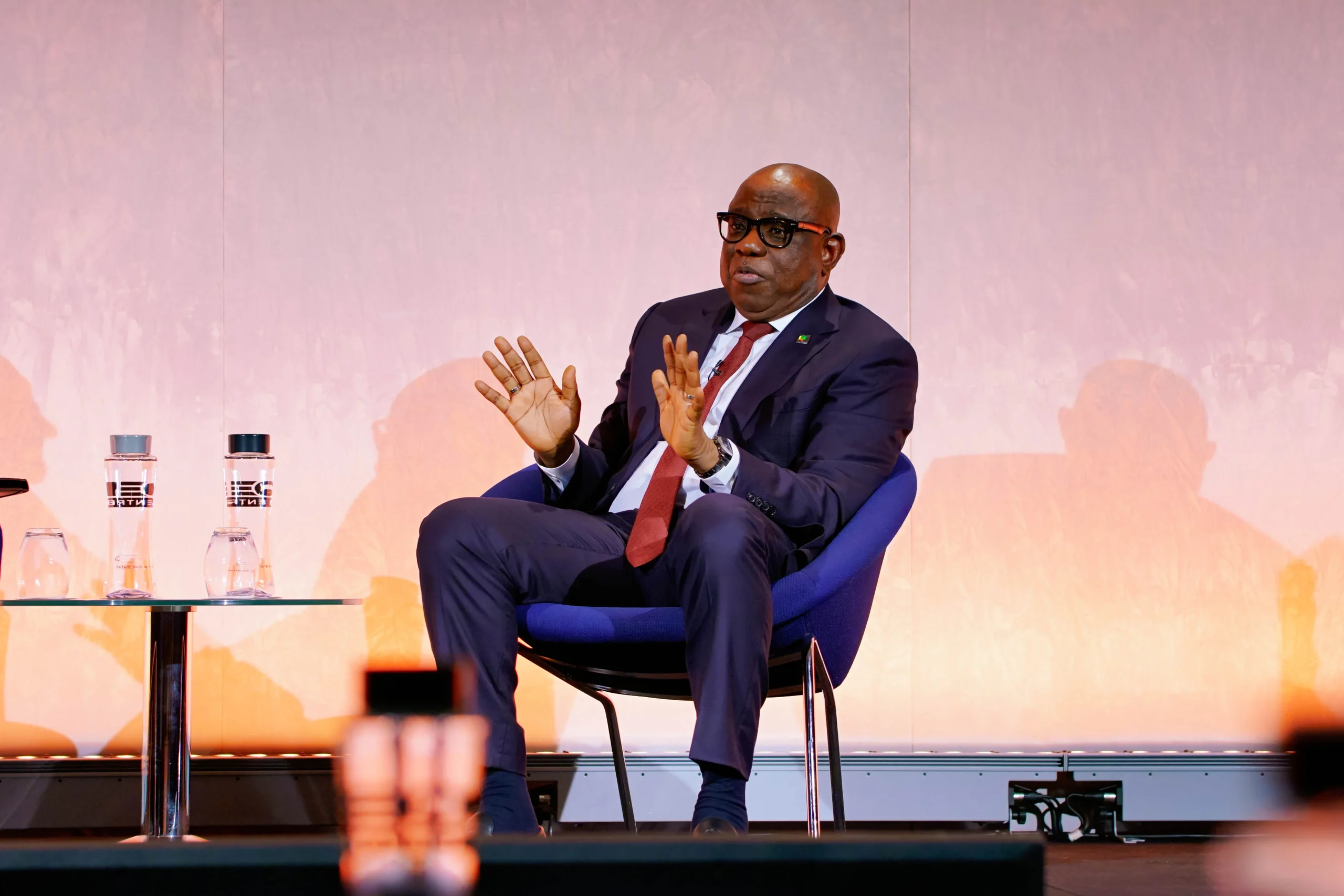
    The Group Chief Executive Officer of NNPC Limited, Engr. Bashir Bayo Ojulari, has identified shared infrastructure, policy alignment, coordinated investment frameworks, and cross-border collaboration among African National Oil Companies (NOCs) as critical pillars for securing Africa’s energy future.

    Ojulari made the remarks during a fireside chat at the International Energy Week 2026 in London, according to a press statement issued on Wednesday by Mr. Andy Odeh, Chief Corporate Communications Officer of NNPC Limited.

    The session featured discussions with Mr. Andy Brown, Deputy Chair of Ørsted and President of the Energy Institute, focusing on Africa’s pathway to energy security and sustainable growth.

    Bayo Ojulari, GCEO, NNPC Ltd (r) and Mr. Andy Brown, Deputy Chair of Ørsted and President of the Energy Institute

    Expanding Regional Infrastructure

    Ojulari stressed the imperative of expanding cross-border energy infrastructure across Africa, noting that NNPC Limited’s ongoing regional gas initiatives demonstrate how shared assets can unlock scale, efficiency, and resilience.

    He highlighted flagship projects such as the Nigeria–Morocco Gas Pipeline and the expansion of the West African Gas Pipeline as vital to strengthening regional integration and advancing cross-border energy trade.

    According to the statement, Ojulari described these initiatives as strategic levers for deepening economic integration and boosting industrialisation across the continent.

    Harmonising Policies to Attract Investment

    The NNPC GCEO also called for aligned pricing frameworks, harmonised transit protocols, local content standards, and joint technical regulations across African markets.

    Drawing lessons from Nigeria’s Petroleum Industry Act, he said regulatory clarity and consistency are essential to reducing investment friction, safeguarding cross-border infrastructure, and ensuring equitable access to shared energy assets.

    The statement noted that such reforms are crucial to creating a predictable investment climate capable of attracting long-term capital into Africa’s energy sector.

    Collective Capital Mobilisation

    Ojulari further advocated structured joint investment platforms among African NOCs, stressing that acting collectively would enhance the continent’s ability to mobilise and deploy capital efficiently.

    “Africa can attract and deploy capital more effectively when acting collectively rather than individually,” he was quoted as saying in the statement.

    Balancing Growth with Climate Commitments

    On NNPC Limited’s ambition to grow oil production, scale gas output, and attract investment, Ojulari emphasised the need for a pragmatic, Africa-centric strategy that positions energy as both a driver of economic development and a contributor to global climate goals.

    “Our pathway is clear: grow production responsibly, scale gas as the backbone of Africa’s industrialisation, strengthen environmental accountability, and align with global decarbonisation objectives—while ensuring that Africans are not left behind in the energy transition,” he stated.

    International Energy Week is a leading global platform that brings together policymakers, industry executives, investors, regulators, and technology innovators to shape dialogue on energy security, transition pathways, capital formation, and sustainability.

    Fireside at the International Energy Week, London

    The statement reaffirmed NNPC Limited’s commitment to regional cooperation, integrated gas market development, and sustained diplomacy among African NOCs to secure the continent’s energy future.

  • President Bola Tinubu Arrives in Abu Dhabi for 2026 Sustainability Week

    President Bola Tinubu Arrives in Abu Dhabi for 2026 Sustainability Week

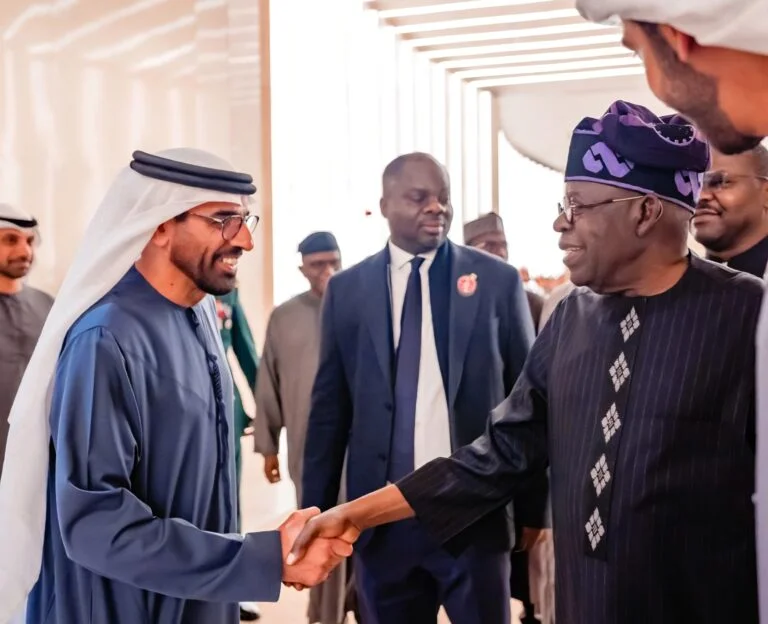
    President Bola Tinubu arrived in Abu Dhabi, UAE, on Sunday night for the 2026 Abu Dhabi Sustainability Week (ADSW), which begins Monday.

    His aircraft landed at the Presidential Wing of Zayed International Airport at 11:30 p.m. local time, according to Presidential Spokesperson Bayo Onanuga.

    Tinubu was welcomed at the airport by Sheikh Shakhboot Nahyan Al Nahyan, UAE Minister of State for Foreign Affairs, and UAE Ambassador to Nigeria Salem Saeed Al-Shamsi, alongside Nigeria’s Minister of Foreign Affairs, Ambassador Yusuf Maitama Tuggar, and other members of the Nigerian diplomatic mission.

    At his hotel, several Nigerian officials received the president, including Minister of Budget and Planning Atiku Bagudu, Minister of Industry, Trade and Investment Dr Jumoke Oduwole, and Director-General of the National Intelligence Agency Amb. Mohammed Mohammed.

    President Tinubu arrived from Europe, where he held consultations with Rwandan President Paul Kagame and French President Emmanuel Macron.

    The 2026 ADSW, themed “The Nexus of Next, All Systems Go,” focuses on sustainable development, climate action, energy transition, and inclusive growth.

    Tinubu’s visit highlights Nigeria’s commitment to global sustainability discussions and aims to strengthen diplomatic and economic relations with the UAE.

  • Energy Transition: NSIA Unveils $500m Renewable Investment Platform

    The Nigeria Sovereign Investment Authority (NSIA) has launched a $500m Renewables Investment Platform for Limitless Energy (RIPLE).

    This initiative is dedicated to the development, investment, and operation of renewable energy projects across the entire value chain.

    NSIA is an independent investment institution, set up by an Act of parliament to manage funds in excess of budgeted hydrocarbon revenues. While RIPLE is another milestone initiative by NSIA in the climate sustainability asset class, having previously launched Carbon Vista with Vitol and the Construction Finance Warehouse Facility.

    With RIPLE, NSIA is positioned to expand energy access, enhance energy efficiency and ensure energy security.

    The launch of RIPLE is accompanied by the execution of a strategic partnership agreement that seeks to further redefine Nigeria’s energy landscape with the International Finance Corporation (IFC).

    The pilot for this initiative is located within the Tokarawa Industrial Hub in Kano State and it involves setting up a generation and distribution system to meet 70MW of unsuppressed energy demands of industrial activities, commercial enterprises, and residential customers in an areacovering about 9,000 connections.

    Commenting on the partnership, the Managing Director/CEO of NSIA Mr. Aminu Umar-Sadiq, said, “The collaboration between NSIA and the IFCis a clear demonstration of NSIA’s dedication to sustainable energy transition in Nigeria. As the custodian of economic resources for current and future generations of Nigerians, tackling climate risks is integral to NSIA’s objectives. We recognize the many opportunities it offers for innovation, growth, and economic transformation.

    “We are excited to partner with the International Finance Corporation to advance the transition to energy efficient solutions in Nigeria, an institution that shares our commitment to sustainable development,our focus is to empower the customers with a resilient and environmentally friendly energy solution that will optimize productivity and reduce carbon footprint ” said Program Manager, RIPLE, Mr. Yusuf Umar,

    Further speaking Regional Manager Africa, IFC Dan Croft, said, “Reliable electricity is crucial for improving quality of life, productivity, and economic growth in Nigeria. IFC is pleased to collaborate with our longstanding partner, NSIA, to develop and implement the first phase of this innovative energy solution which will reduce greenhouse gas emissions and reliance on fossil fuel. The energy solution will also deliver reliable power supply for commercial, residential as well as industrial use.”

  • Global Energy Supply: IEA Forecasts 73% Drop In Fossil Fuels’ Share

    The International Energy Agency (IEA) has projected that fossil fuels’ share in global energy supply would drop to 73% by 2030 and carbon dioxide emissions peaking by 2025.

    This is despite the fact that global oil demand would peak this decade at about 102 million barrels per day (mbd) for two more decades.

    The agency, in its latest ‘World Energy Outlook (WOE) 2023’ report stated that the drop in fossil fuel share in the global energy market had remained at around 80% for decades.

    According to the IEA’s Stated Policies Scenario (STEPS) data, from 2030, oil consumption will begin a slow decline by decreasing by more than four million barrels per day to 97.4mbd in 2050, the IEA said. 

    The report further predicted that in 2030, clean technologies would play a “greater role than today” as electric cars on the road worldwide will increase by 10 times, and renewables’ share of the global electricity mix will be near 50%, up by 30% while heat pumps and other electric heating systems will outsell fossil fuel boilers globally, and investment into new offshore wind projects will be three times more than new coal and gas-fired power plants.

    Commenting on the report’s findings, Global Net-Zero Transformation Advisory Operations Manager, EcoAct, Lindsay Ventress, said: “The World Energy Outlook 2023 underscores the increasingly narrow path toward preserving the goal of 1.5°C warming, yet provides hope that this remains attainable if we promptly embark on transformative climate actions.

    “The report’s call for an annual twofold increase in energy efficiency improvements underscores its critical role in a sustainable future, but also the current failure of legislators to get to grips with this vital requirement. In light of this, businesses cannot afford to merely wait for government commitments; they must become catalysts for progress,” she added.

    Even so, the IEA maintained that demand for fossil fuels was set to remain “far too high” to limit the global rise in temperatures to 1.5°C, as per the Paris Agreement.

    The agency further warned that despite the impressive growth in clean energy, if the policies are not changed, global emissions would remain high to push the temperature limit by around 2.4°C this century.

    The STEPS also estimates a peak in energy-related carbon dioxide emissions in the mid-2020s.

    Speaking on the report’s findings, the IEA Executive Director, Fatih Birol, explained: “Taking into account the ongoing strains and volatility in traditional energy markets today, claims that oil and gas represent safe or secure choices for the world’s energy and climate future look weaker than ever.”

    According to the report, the tense situation in the Middle East “is a reminder of hazards in oil markets a year after Russia cut gas supplies to Europe”. In the STEPS, the share of seaborne crude oil trade from the Middle East to Asia rises from around 40 per cent to 50 per cent by 2050.

    The WOE highlights the fears in the natural gas markets due to instability and price hikes after Russia cut supplies to Europe while also foreseeing a surge in new liquefied natural gas (LNG) projects from 2025, with the prospect of adding more than 250 billion cubic metres per year new capacity by 2030, representing 45% of the current global LNG supply.

    While some of the immediate pressures of the global energy crisis have eased due to the current geopolitical situation and the global economic developments, the IEA drew attention to the “unsettled” global energy market, noting that “this underscores, once again, the frailties of the fossil fuel age and the benefits for energy security as well as for emissions of shifting to a more sustainable energy system.”

    It stated that developing economies had been experiencing the largest increase in demand for energy services as the extreme volatility in energy markets have pushed for an “affordable, reliable, and resilient supply”.

  • Low carbon hydrogen to define energy transition – GlobalData

    GlobalData, a leading data and analytics company, has said that low-carbon hydrogen is gaining traction as a critical component to achieving energy transition and long-term decarbonization goals.

    Experts say the hydrogen market has progressed rapidly in recent years due to its growing application in industries such as transport, industrial, energy, aerospace, defense, and construction sectors.

    According to GlobalData, the global demand for pure hydrogen stood at nearly 74MMT per year in 2021, of which low carbon hydrogen accounted for a minuscule share of 0.89%.

    Low-carbon hydrogen, including green hydrogen, has generated tremendous interest as a sustainable option to achieve long-term climate goals or net-zero targets.

    Power Analyst at GlobalData Srinwanti Kar, noted that “Various countries such as the US, Canada, Germany, Spain, France, Australia, and India have framed hydrogen roadmaps, strategies, mandates, and targets to develop a hydrogen economy in general and low carbon in particular. These plans are focused mainly on scaling up hydrogen production capacity, reducing costs, and bolstering supply chain infrastructure.”

    The company in its latest report “Low-Carbon Hydrogen Market Report, Update 2023 – Global Market Outlook, Trends, and Key Country Analysis,” observes that during 2021-2022, the low-carbon hydrogen sector took the first big strides as a number of projects were announced as part of the strategy towards energy transition.

    Kar continues: “Significant policy support and governments’ commitment to decarbonization is spurring investments in the hydrogen space. The momentum that has been built along the entire value chain is accelerating cost reduction in hydrogen production, retail, and end-applications.”

    In November 2022, at COP27, the World Bank Group announced the formation of the Hydrogen for Development Partnership (H4D), a new global project to increase the deployment of low carbon hydrogen in developing countries.

    “North America leads the market in terms of low carbon hydrogen active production capacity, followed by the Middle East and Africa, Europe, and Asia Pacific. As of February 2023, the global low carbon hydrogen production capacity was 1,698ktpa (Kilo Tonnes Per Annum), which is anticipated to reach 1,11,326ktpa in terms of high case scenario and 66,321ktpa in terms of low case scenario by 2030. Suitable planning at the funding level, constructive regulatory framework, and proper infrastructure may facilitate and accelerate the pace of projects,” Kar added.

    As of February 2023, a total of 152mtpa (Metric Tonnes Per Annum) of the low carbon hydrogen capacity is in the pipeline, of which 1.9mtpa is in construction, 136.7mtpa in feasibility, and 6.4mtpa in front end engineering design (FEED) stage.