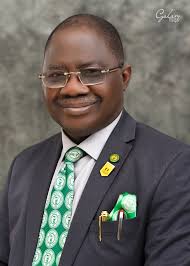
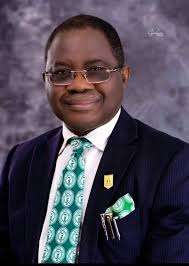
Tag: FEDERAL UNIVERSITY OF HEALTH SCIENCES OTUKPO

  • FUHSO and the Cost of Governing Without Foresight

    FUHSO and the Cost of Governing Without Foresight

    The difficulties confronting the Federal University of Health Sciences, Otukpo (FUHSO) reflect the challenges that arise when institutional ambition outpaces careful planning. Established to contribute meaningfully to Nigeria’s health workforce development, the university is now struggling to deliver one of the most basic requirements of medical education, clinical training. The fact that several cohorts of medical students are unable to progress because a teaching hospital is not yet operational points to gaps in planning, funding execution, and oversight that deserve urgent and thoughtful attention. Addressing this situation will require coordinated action by the relevant ministries and regulatory bodies to prioritise the completion of core clinical infrastructure, strengthen budget implementation, and ensure that future institutional decisions are guided by long-term sustainability rather than short-term expediency.

    What makes the situation particularly concerning is that it was neither sudden nor unforeseeable. Medical education is among the most capital-intensive forms of tertiary training, and the absence of a functional teaching hospital inevitably undermines any programme designed to produce doctors. Yet admissions proceeded, cohorts advanced through pre-clinical studies, and the warning signs were allowed to accumulate. The resulting bottleneck now confronting students underscores the consequences of launching critical institutions without fully aligning timelines, infrastructure, and financing, a pattern that has too often characterised public sector projects in Nigeria.

    Insiders familiar with the situation say the problem began long before the first students were stranded. The old Otukpo General Hospital, redesignated as FUHSO’s teaching hospital, has seen little more than cosmetic attention. Although funds were captured in the federal budget for its upgrade, an official disclosed that roughly ₦1 billion earmarked for the project could not be meaningfully accessed. The explanation points to Nigeria’s chronic budget implementation failures, allocations announced with fanfare but trapped in bureaucratic bottlenecks, released too late or not at all.

    But the funding story, troubling as it is, does not fully explain the depth of FUHSO’s crisis.

    Records and interviews suggest that early leadership decisions compounded the institution’s vulnerability. Instead of pursuing low-cost, temporary arrangements using existing government facilities, abandoned schools, idle public buildings, or shared spaces common in the early life of many public universities, the university’s pioneer management opted to operate from rented hotels and privately owned structures. These choices consumed scarce take-off funds without building any lasting academic or clinical capacity.

    Education analysts describe this as a classic case of misplaced priorities. While administrative comfort was secured, the essentials of a medical university, laboratories, teaching wards, clinical partnerships, were deferred. Allegations of opaque leasing arrangements and potential conflicts of interest have only deepened concerns, particularly in the absence of publicly available breakdowns of how early funds were spent.

    The contrast with other federally funded health institutions is stark. In the same national budgets where FUHSO struggled to secure just over a billion naira for capital development, established teaching hospitals such as those in Kano, Awka, and Lagos received tens of billions of naira each. These hospitals serve as training grounds for medical students across the country, yet FUHSO, a university designed to anchor health education, was left trying to build from scratch with a fraction of the resources.

    Even among federal universities, the disparity is glaring. While long-established institutions routinely receive allocations approaching ₦50 billion annually, newer specialised universities like FUHSO have been confined to single-digit billions, regardless of the capital-intensive nature of medical education. This raises uncomfortable questions about national priorities and whether the decision to establish such institutions was matched by the willingness to fund them properly.

    The human cost of these failures is now unavoidable. Students face indefinite delays, uncertainty about accreditation, and the emotional and financial strain of a medical education placed on pause. For a country already battling an exodus of healthcare workers, the irony is painful: an institution meant to strengthen the health system is instead producing stalled graduates.

    Regulatory bodies have not escaped scrutiny. The National Universities Commission and relevant medical training authorities approved programmes and admissions without ensuring that minimum clinical infrastructure was in place. Their silence as the crisis deepens suggests a regulatory culture more reactive than preventive.

    What is happening at FUHSO is not an isolated mishap. It reflects a broader national pattern in which institutions are created for political symbolism, budgets are announced without execution plans, and accountability is diffused across ministries, councils, and agencies until responsibility belongs to no one.

    As students remain trapped in academic limbo and public funds continue to trickle into administrative overheads rather than concrete outcomes, the question grows louder: who will answer for the gap between promise and reality at FUHSO? Until this question is confronted honestly, Otukpo will remain a cautionary tale, not of what Nigeria lacks, but of what it repeatedly fails to do with what it has.

    Beyond the immediate impact on affected students, the situation at FUHSO carries broader implications for Nigeria’s health system and national development. At a time when the country faces persistent shortages of medical professionals and the steady migration of trained doctors abroad, allowing a specialised health sciences university to drift without its core clinical capacity is a cost Nigeria can ill afford. Resolving this challenge promptly and transparently would not only restore confidence among students and staff, but also signal a renewed commitment to disciplined planning and accountability in public institutions, principles that remain essential to achieving sustainable progress.

  • Sacked Ag. VC sues FUHSO, Education Minister over unlawful removal

    Sacked Ag. VC sues FUHSO, Education Minister over unlawful removal

    The Acting Vice Chancellor of the Federal University of Health Sciences, Otukpo (FUHSO), Professor Ediga Bede Agbo, has asked the National Industrial Court Markurdi, to declare his removal unlawful.

    In the right suit, Professor Agbo insisted that the plan by the defendants to replace him jeopardizes his reputation and disrupts university governance.

    Specifically, he wants an order of the Court nullifying all decisions taken as well as all acts done, at the said invalid meeting of the Senate of the Federal University of Health Sciences, Otukpo held on the 29th day of November, 2024.

    He, therefore, pledged to pay damages to the tune of N2,5 million, if the injunction is deemed unnecessary at the end of the trial.

    Also mentioned as the defendants in the matter are the Honourable Minister of Education, the university’s Senate, and its Governing Council.

    Professor Agbo, who was appointed on October 17, 2024, claims that his removal is without justification challenging an attempt to appoint Professor Stephen Obekpa Abah, a non-staff member, as the Acting Vice Chancellor.

    He wants interlocutory orders of the court for recognition of appointments through a directive for the university to maintain his position as Acting Vice Chancellor, with all accompanying rights and privileges.

    He also wants an order of injunction preventing the defendants from appointing Professor Abah or any other individual as the Acting Vice Chancellor pending the hearing and determination of the suit.

    In an affidavit in support of his claims, deposed by him, the defendant maintained that his appointment aligns with statutory provisions as the most senior professor at FUHSO.

    He challenges the validity of Professor Abah’s earlier appointment as Deputy Vice Chancellor, citing a lack of Senate approval.

    He further alleges that Professor Abah, still affiliated with Ambrose Alli University and without a formal transfer to FUHSO, does not meet eligibility requirements.

    In conclusion, he submitted that the university’s actions threaten to destabilize academic and administrative operations, undermining due process.

    In the originating summon, the plaintiff wants the court to determine:

    Whether or not having regard to relevant sections of the Federal University of Health Sciences, Otukpo (Establishment) Act, 2022, the Registrar of the Federal University of Health Sciences, Otukpo can hold any valid Meeting of the Senate of the University without issuing a Notice of such a Meeting to the Claimant, who is the Acting Vice Chancellor and most Senior Professor at the University and therefore a Statutory Member of the Senate of the Federal University of Health Sciences, Otukpo, Benue State.

    Whether or not the outcome of any meeting of the Senate of the Federal University of Health Sciences, Otukpo, convened without giving the Claimant Notice of such a meeting, is not invalid and therefore, null and void.

    Upon the determination of the above questions, the Plaintiff wants the court to declare that the Claimant, being the Acting Vice-Chancellor and most senior professor at the Federal University of Health Sciences, Otukpo is a statutory member of the Senate of the Federal University of Health Sciences, Otukpo and entitled to receive Notices of all Meetings of the Senate of the Federal University of Health Sciences, Otukpo, Benue State.

    He also wants the court to declare that the Meeting of the Senate of the Federal University of Health Sciences, Otukpo held on the 29th day of November, 2024 is invalid and all decisions taken and all acts done, at the said invalid meeting are therefore null and void.

  • FUHSO Governing Council Opposes Perm Sec on Re-instatement of VC, Appointment of Acting Vice-Chancellor

    FUHSO Governing Council Opposes Perm Sec on Re-instatement of VC, Appointment of Acting Vice-Chancellor

    The Management of the Federal University of Health Sciences, Otukpo (FUHSO), has issued a statement condemning the purported appointment of Prof. Stephen Obekpa Abah as Acting Vice-Chancellor.

    The Governing Council also opposed the action of the Permanent Secretary, Federal Ministry of Education, Dr. Nasir S. Gwarzo, whereby he ordered the re-instatement of the suspended erstwhile Vice Chancellor, Prof Innocent Ujah.

    According to the statement, the appointment of Prof. Abah, circulated on social media on November 5, 2024, stems from an unauthorized and illegal meeting orchestrated by the suspended Vice-Chancellor, Prof. Innocent A. O. Ujah.

    The university clarified that the notice for the meeting was issued using the letterhead of the suspended Vice-Chancellor, bypassing the established protocols, specifically the role of the Registrar, who is responsible for issuing notices for Senate meetings.

     The Registrar, who is the official Secretary of the Senate under the Federal University of Health Sciences, Otukpo (Establishment) Act of 2022, was neither aware of, nor present at the meeting, which underscores its illegality.

    The statement also clarified that Prof. Ujah’s actions, including his attempt to forcefully enter the G.R.A, Otukpo Campus with armed personnel, were thwarted by coordinated security measures. 

    Despite being denied access to the campus, Prof. Ujah, it was reported, accompanied by armed individuals, managed to convene a small gathering at the Federal University of Health Sciences Teaching Hospital Otukpo, where the fraudulent meeting took place.

    This group later issued the false statement about the appointment Prof. Stephen Abah, alleged to be answering to a criminal case at the Economic and Financial Crimes Commission (EFCC).

    The Governing Council affirmed that Prof. Innocent A.O. Ujah remains suspended from his position and as such, has no legal authority to summon Senate meetings.

    The Council further emphasized that Prof. Ediga Bede Agbo is the legally appointed Acting Vice-Chancellor and that his position remains intact.

    The Council condemned the actions of Prof. Ujah and his associates as a violation of university governance, which has caused unnecessary distress within the university community.

    They urged all staff, students, and members of the community to disregard any claims made by Prof. Abah and to continue their academic and administrative duties as usual.

    It would be recalled that following the suspension of Prof. Ujah, the Permanent Secretary, Federal Ministry of Education, Dr. Nasir Gwarzo wrote a letter to counter the action.

    The Governing Council however, issued a rebuttal, insisting that Prof Ujah stands suspended and can not therefore preside over a senate meeting, talk less appoint his own successor.

    It is also contended that according to Section 2 (1)-(3) of the Universities Miscellaneous Act 2003:

    “(1) The Governing Council of a university shall be the supreme governing authority of the university and shall be responsible for the general direction and superintendence of the university.” As such, the Council contends that a letter by the Permanent Secretary, Education can not invalidate the decision of the Governing Council.

    “The directive from the Permanent Secretary in the Federal Ministry of Education amounts to undue interference in the activities of the Council and an attempt to usurp the powers of the Council and emasculate it,” it was stated.

    “The permanent secretary has suggested that the former Vice-Chancellor should be reinstated to restore peace on the campus. It suggests that he knows of a threat to peace, which is not manifest since the campus has not only been peaceful but jubilant since the former Vice-Chancellor was suspended. The Permanent Secretary may need to be held accountable for any breach of peace,” it was contended in another statement.

    “The permanent secretary has failed to carry out a situation analysis of the university, so he is completely unaware of the loud jubilation that greeted the suspension of the former vice-chancellor,” it was concluded.

  • Federal University of Health Sciences Otukpo Shutdown

    Federal University of Health Sciences Otukpo Shutdown

    Protesting workers have shutdown the nation’s premier Federal University of Health Sciences Otukpo (FUHSO), Benue State.

    As of press time, neither students nor workers are allowed into the main campus of the university by the protesters who are mainly security personnel.

    A member of staff who spoke to Nigerian Anchor on condition of anonymity explained that the protest is over non-payment of their salaries.

    Explaining further, the staff said the university is currently on autopilot as neither the Vice Chancellor, Professor Innocent Ujah nor any of his deputies is on campus to address the protesting workers.

    Further details to follow shortly…

  • Appointment of DVC: FUHSO Senate in rowdy session

    Appointment of DVC: FUHSO Senate in rowdy session


    Uneasy calm settles over Federal University of Health Sciences, Otukpo (FUHSO) as the frantic effort of the outgoing Vice Chancellor, Professor Innocent Ujah to appoint a Deputy Vice Chancellor pitches him against other management staff of the university.

    Nigerian Anchor investigations reveal that on October 3, 2024, the VC summoned the Senate to elect Professor Oladapo Shittu as Deputy VC (Administration).

    The position became vacant on September 30, following the expiration of the tenure of Professor Ediga Agbo in that office.

    It was however revealed that Professor Shittu’s leave of absence from Ahmadu Bello University (ABU) also expired on September, 30 2024 and had bidden farewell to return as a staff of ABU.

    Other Professors in the University cited relevant sections of the establishment Act of the University to fault the manner in which the VC went about the exercise.

    According to a Professor who spoke to Nigerian Anchor, but requested not to have the name mentioned, “The Council is supposed to call for the process before the Vice-Chancellor can go ahead with it because until the Council receives the report and confirms the nominee, he cannot parade himself as Deputy Vice-Chancellor.”

    Our source stated that, “according to the law, the Vice-Chancellor is supposed to present two candidates for the senate to elect one.”

    The Vice Chancellor was also accused of ambushing the Senate by the procedure employed in tabling the subject at the meeting.

    It was alleged that for a matter as weighty as appointment of the Deputy Vice (Administration) it was never listed on the agenda of the meeting.

    It was also alleged that the VC neither informed the Pro-Chancellor nor informed the Governing Council of the University.

    In fact, it was stated that the VC capitalised on the alleged incompetence of the Registrar to wangle his way through the senate approval.

    “The incompetence of the Registrar was glaring by the fact that being the custodian of the law and being in attendance, he should have drawn the attention of the Vice-Chancellor to the illegality of his action, but he failed to do so,” it was alleged.

    It was a fractious senate session where Professors opposed to the CV and those in support had virulent verbal exchanges with the VC being bombarded with several posers like:

    “For a Vice-Chancellor who is due to vacate his position in a matter of four weeks, did he consider it proper to appoint a new Deputy Vice-Chancellor for an incoming Acting Vice-Chancellor?

    Did the Vice-Chancellor carry the Governing Council (at least the Pro-Chancellor) along and seek their consent before proceeding with the action?”

    Over all, it was alleged that the Vice Chancellor called the bluff of the lecturers, insisting that as the CEO of the University, he does not need to consult the Council on every matter.

  • Vice Chancellor Puts 5-Year-old University of Health Sciences on a faulty start

    Vice Chancellor Puts 5-Year-old University of Health Sciences on a faulty start

    Barring any last-ditch efforts by the supervisory authorities, the five-year-old Federal University of Health Sciences, Otukpo (FUHSO), Benue State may soon implode.


    Staff, Management and service providers accuse the Vice Chancellor, Prof Innocent Ujah of unpaid salaries, contract scam, violation of due process in procurement process and poor condition of service.


    The Nigerian Anchor investigations reveal a cesspool of financial malfeasance arising from the processes of contract award, implementation and payment as well as misappropriation of monies meant for payment of staff salaries and allowances.


    Insiders who spoke to us narrated instances where critical infrastructural projects were awarded to inexperienced contractors, while some of the projects fully paid for were still at various stages of completion.


    As the tenure of the pioneer Vice Chancellor, Prof Innocent Ujah wears out therefore, staff and service providers are in palpable fear and overwhelmed with a sense of trepidation wondering if they would ever be paid.


    The Federal University Health of Services Otukpo was  first established on 20th May, 2015  by former President Goodluck Jonathan. It could however, not commence operations because President Muhammadu Buhari suspended its establishment. This was later restored on June 6, 2019.


    Prof Ujah and other Principal Officers and Council members of the University were appointed on 12th May, 2020.


    Threat of Legal Action

    Already, a real estate firm, ZIGGCHUBS Resources Nigeria Ltd, acting through its lawyer, has threatened to sue the university in a law court over a N14million debt owed by the University for the rental of a hostel accommodation for female students.


    In a letter dated July 3rd, 2024 and addressed to the Dean of Student Affairs of the University, Barr E. A. Ogalekwu issued a seven-day Pre-Action Notice on the institution.


    In the letter, it was alleged that the Management of the University reneged on their commitment to pay N14million, being the balance of an agreed rental sum of N22million on a property it hired as hostel for its female students. This debt had lingered for over a year and the property owner threatened to recover the property.


    Nigerian Anchor checks at the law firm reveal that as of September 2, 2024, the University was yet to redeem the pledge, despite the fact that money realized from the sale of bed spaces to the students could have offset the indebtedness.


    It was also disclosed that the university replied to their letter pleading for two weeks extension of time, which had elapsed.


    Poor Condition of Service and Work Environment

    A source close to the management of the university, who spoke to us on condition of anonymity alleged that some projects at various stages of completion had been fully paid for while alleging also, that the Departments of Microbiology and physics is one single building project being passed off as two different projects.


    Another reliable source also alleged that the administration’s claim of completing abandoned projects at the sum of N200million was a hoax, wondering, “What is the evidence of abandoned projects for a four-year-old university?”


    A very senior member of the management who felt disappointed by the overall performance of the outgoing VC lamented that by his conduct, Prof. Ujah denied the university the opportunity of a good start “as a world class citadel of learning that was aspiration of the founding fathers.”


    The staff member cited the example of a sister Federal University of Health Sciences, Ila-Orangun that was established barely two years ago, boasting of an outstanding array of completed critical infrastructural facilities while FUHSO does not have any.


    PLEASE SEE: Federal University of Health Sciences, Ila-Orangun. Schedule of Completed                         and ongoing projects.


    “We have not commissioned any project. The University is on autopilot as we have absentee VC who looks in occasionally on Thursdays and departs by Fridays.


    While absent all financial decisions must await his return.” He complained.


    At a recent town hall meeting with staff members to douse tension and forestall likely breakdown of law and order, the Governing Council of the University was inundated with a long list of complaints bothering on poor welfare and a lack of foresight on the part of the University Administration.


    The workers complained that almost five years after its establishment, the university does not have a defined condition and scheme of service thereby leading to a haphazard recruitment and placement of personnel.

    Stakeholders at a FUHSO event


    Items 2, and 3 on the long list of welfare issues for which the staff members demanded attention were, “2. Payment of backlog of salary for staff captured in 2022 (some are owed arears of more than 12 calendar months); 3. Capturing of staff members that are yet to be captured, some have spent up to two (2) years without drawing salary and they are breadwinners.”


    Additionally, item 4, which contained serials (a-l) emphasized the “Absence of conditions and scheme of service.” and “No appraisal of staff has been done but staff are due for promotion and steps increment this year.”


    In the face all these challenges, another staff told us, the VC paid himself a hefty sum of N11million as DTA, while newly recruited staff being 28 days allowance, amongst others.


    When contacted for his own side of the story, Prof Ujah, rebuffed Nigerian Anchor, querying why it was just now that the paper was showing interest in the running of the university. “I am used to the media writing stuff about me” he said.


    As of press time, he was yet to reply to the questions we sent to him, hoping he would oblige us with a response.