Tag: Femi Otedola

  • $225.8m Debt: court orders arrest of crude oil cargo linked to Obaigbena

    $225.8m Debt: court orders arrest of crude oil cargo linked to Obaigbena

    A Federal High Court in Port Harcourt has ordered the detention of crude oil cargo on the FPSO vessel Tamara Tokoni, owned by General Hydrocarbons Limited, a company linked to Nduka Obaigbena, chairman of THISDAY and ARISE Media Group. 

    The legal case involves a debt recovery dispute between General Hydrocarbons and First Bank, led by businessman Femi Otedola.  

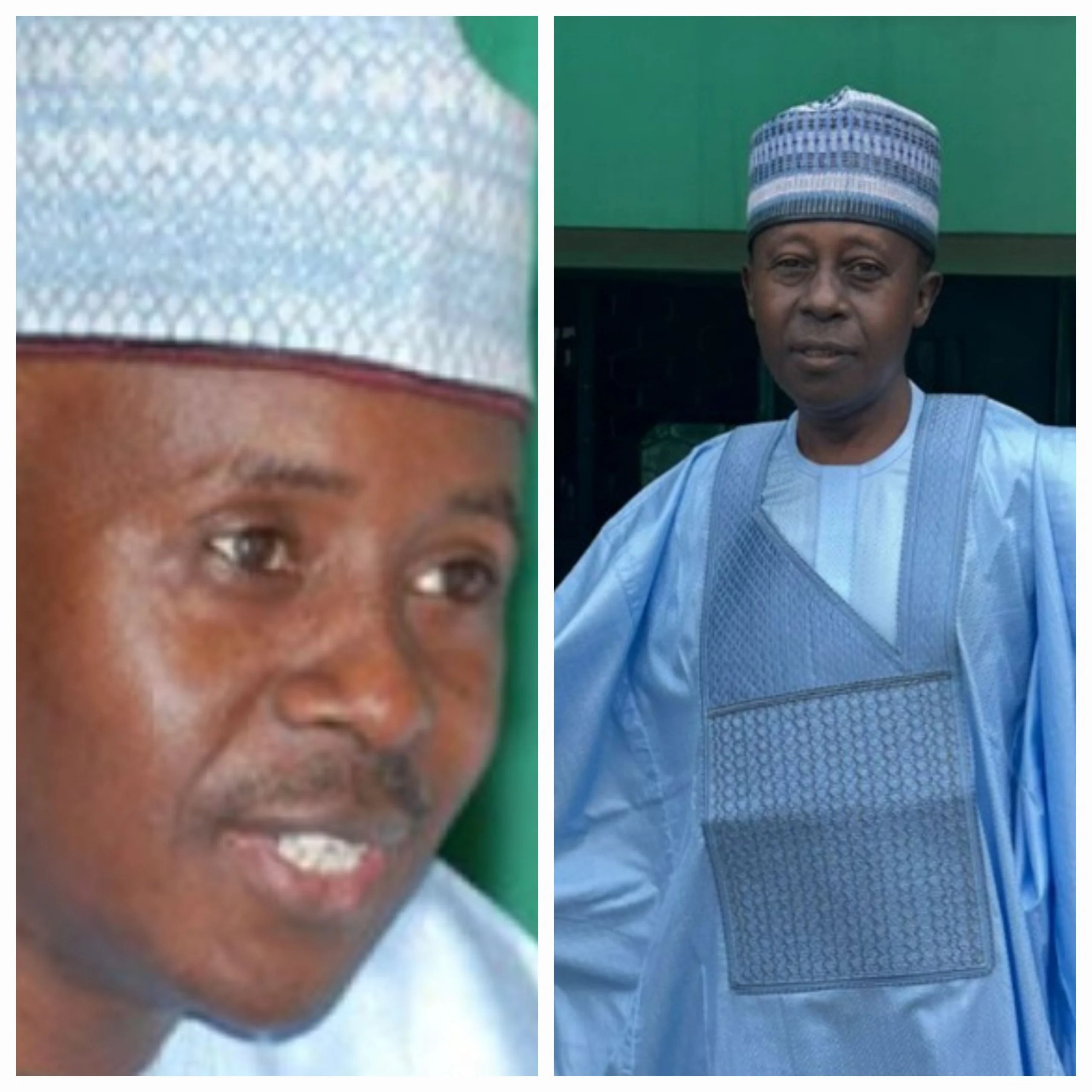
    (L-R): Obaigbena, Otedola

    The court, presided over by Justice E.A. Obile, issued the ruling on January 9, directing the Nigerian Navy and other agencies, including the Nigerian Upstream Petroleum Regulatory Commission (NUPRC) and Nigerian Ports Authority (NPA), to ensure the detention of the vessel and its cargo.

     The order will remain in effect until General Hydrocarbons provides a guarantee of $19.7 million, along with interest and legal costs, from a first-class Nigerian bank.  

    First Bank alleged that General Hydrocarbons owes $225.8 million due to missed repayment deadlines on credit facilities extended to the company. 

    The financial institution also claimed that Obaigbena and his family members, who hold key positions in the company, used the loans to amass significant debt without fulfilling repayment obligations.  

    In a prior development, the Federal High Court in Lagos froze the accounts and assets of Obaigbena, his company, and family members involved in General Hydrocarbons. The bank justified this move as necessary to recover outstanding debts.  

    General Hydrocarbons, through its legal representatives, has criticized the court orders as an abuse of the judicial process.

     The company alleged that First Bank violated an earlier court ruling permitting it to access funding for oil and mining lease operations.

     According to the company, the bank failed to disburse funds on time, disrupting oil exploration activities under their loan agreement.  

    The dispute has raised concerns about the management of financial agreements in the oil and gas sector. 

    The case has been adjourned to February 9, 2025, for further proceedings, leaving the fate of the detained crude oil cargo uncertain.  

  • After 5-year jail term: Ex-Rep Member, Farouk Lawan walks out of prison

    After 5-year jail term: Ex-Rep Member, Farouk Lawan walks out of prison

    Looking forlorn and old, former member of the House of Representatives, Farouk Lawan, walks out of the Kuje prison, Abuja, after completing his five-year jail term.

    The Supreme Court had in January affirmed the five-year jail term handed to Lawan by the Court of Appeal.

    Lawan was convicted and sentenced to prison in 2021 for accepting a $500,000 bribe from businessman, Femi Otedola, Chairman of Zenon Petroleum and Gas Ltd.

    In a unanimous judgment, a five-member panel affirmed the 2022 judgment of the Court of Appeal, which upheld Lawan’s sentencing to five years in respect of only count three on the three-count charge on which he was tried at the High Court of the Federal Capital Territory (FCT).

    In the lead judgment prepared by Justice John Okoro but read by Justice Tijjani Abubakar, the apex court found that Lawan’s appeal was without merit and dismissed it.

    A video shared online on Tuesday showed Lawan’s release from Kuje prison, looking tired and old.

  • Dangote, Otedola Get FG Appointment 

    Dangote, Otedola Get FG Appointment 

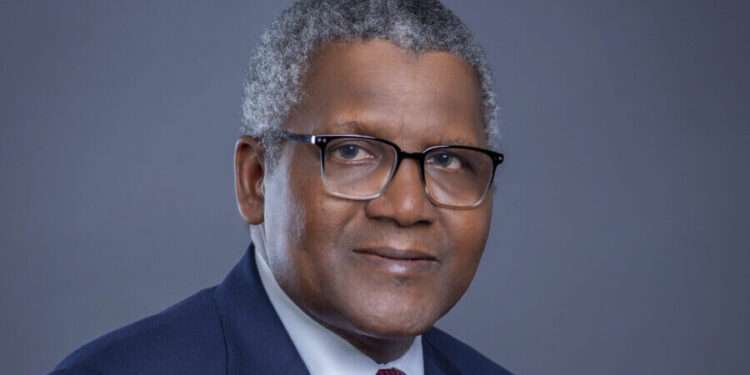
    In furtherance of the effort to reduce the scourge of malaria in Nigeria, the federal government at the weekend, appointed Africa’s richest person, Aliko Dangote, astute businessman Femi Otedola, and renowned banker Tony Elumelu to lead the effort.
    Speaking at the inauguration of the team in Abuja, the minister of state for health and social welfare, Dr Tunji Alausa, stated that the country currently contributes over a quarter of global malaria cases and about a third of the over 600,000 malaria deaths worldwide, mostly affecting children and pregnant women.
    Describing the situation as sad, the minister noted that the ailment contributes about 25 per cent to 30 per cent of childhood mortality and about 60 per cent of hospital attendance.
    According to him, malaria is also a major cause of absenteeism in schools, markets, and workplaces, as well as a significant out-of-pocket expense for most households in the country.
    Dangote is the chairman of the Dangote Group, Otedola is chairman of FBN Holdings Plc, Geregu Power Plc, and several other business concerns, while Elumelu is the chairman of UBA Group, founder of Heirs Holdings, and also chairs Trancorp Group.
    At the inaugural meeting of the Nigeria End Malaria Council (NEMC), which also includes John Cardinal Onaiyekan, the minister stated that the industry heavyweights would collaborate with the Nigerian Governors’ Forum (NGF), National Assembly joint Health Committees and women’s organisations to drive the fresh efforts.
    The minister noted that it was common knowledge that Nigeria, which currently has a population of over 200 million, has its entire population at risk of malaria, a situation that puts a huge challenge on the government.
    He lamented that the implementation of the various interventions, such as the provision of antimalarial medicines, protective interventions such as chemo-preventive treatments, and treated nets and insecticides for indoor and outdoor spraying, had remained inadequate to meet the targeted population.
    “While malaria cases and deaths are shrinking in other countries, Nigeria has continuously recorded a higher number of cases. The bulk of the support for the interventions is donor-driven, hence inadequate and not sustainable.
    “Aware of the fact that no country ever eliminated malaria through donor support, the African Heads of State launched the African Leaders Malaria Alliance (ALMA) during the African Union Summit of 2009 and the Malaria Scorecard was developed in 2011 to monitor the country’s performance and also to be used as an advocacy tool for heads of government,” the minister added.
    He recalled that the council was established in 2017 and was inaugurated by former President Muhammadu Buhari on August 16, 2022, stressing that the inaugural meeting was long overdue.
    According to him, the End Malaria Council was set up to advocate for malaria to remain high on the national and state agendas through strong political commitment from leaders at all levels and mobilise financial and in-kind resources from new sources, including the private sector, to help close resource gaps in the national malaria strategic plan.
    “By reason of your positions in Nigeria, your passion towards health issues, especially malaria, and the interest groups you represent, your membership to this council is inevitable for the benefit of the larger society, and especially children and pregnant women who are the most affected and would remain forever grateful,” he added.
    As part of the event, the minister handed over the leadership of the council to Dangote, who has served as Nigeria’s Malaria Ambassador as well as a member of the Global End Malaria Council.
  • Privatization: FG gives Transcorp Power discharge certificate

    Transcorp Power Limited has received the Discharge Certificate from the Federal Government in Abuja.

    Nigerian Anchor reports that Transcorp Power Limited, a leading power generation company, located in Ughelli Delta State, is the first power generation company to fulfil all privatisation obligations.

    Transcorp Power Limited, with an installed capacity of 972 megawatts, was presented with a post-privatisation discharge certificate by the Federal Government, following fulfilment of all privatisation conditions.

    This development means that Transcorp Power will no longer be subjected to post-privatisation monitoring, and it is the first privatised power generation company to achieve this milestone since the power sector privatisation commenced in 2013.

    One of the key targets set for Transcorp is a minimum available capacity of 670 megawatts.

    The Discharge Certificate was presented at the meeting of the National Council of Privatisation (NCP) by the Vice President, Professor Yemi Osinbajo, to Mr. Tony Elumelu, Group Chairman, Transnational Corporation Plc (Transcorp), owner of Transcorp Power.

    Osinbaho, who also doubles as the Chairman of NCP, commented on the ceremony.

    “Post privatisation monitoring is an important aspect of the Federal Government’s privatisation programme.

    “Transcorp Power has been able to ensure compliance and meet the expectations of post privatisation deliverables.

    “I commend Tony Elumelu and his Transcorp team for this feat. I urge Transcorp Group to continue in that path and even do better. This being the first, should not be the last post privatisation discharge event,” he said.

    Elumelu thanked the Federal Government for their trust and confidence in Transcorp.

    “In addition to fulfilling the post privatisation performance criteria, Transcorp has driven a strong indigenous agenda – our plants are managed and fully operated by Nigerians, creating jobs and reducing unemployment in the country.

    “Safety is very important to us as well, since we began operations in 2013, we have recorded zero incidents till date.

    Speaking at the Event, the Director General of the Bureau of Public Enterprises, Alex Okoh, congratulated the Board and Management of Transcorp for the milestones achieved in turning around the enterprise.

    He noted that Transcorp had met and exceeded the performance targets and all other covenanted obligations agreed during the signing of the privatisation agreement in 2013.

    “Transcorp Power increased the generation capacity of the plant by 227 per cent from the operational status as at handover in 2013.

    “Capital expenditure totalling N58.612 billion was covenanted for phase1, phase 2 as ‘additional investment’ but the actual investment made by Transcorp was the sum of N83.85bn, leading up to a score of 143 per cent,” he said.

    Transnational Corporation Plc acquired Ughelli Power Plc (now Transcorp Power Limited) from the Federal Government of Nigeria on November 1, 2013 when the power sector was privatised. At the time of acquisition, the plant had an available capacity of 160 megawatts. Transcorp invested and increased the available capacity to 680.83 megawatts (being a 227 per cent increase) within four years of takeover, surpassing the five-year target of 670 megawatts set by the Bureau for Public Enterprises (BPE).