Tag: fiscal management

  • Abia Budgets N1.016 Trillion, Focus Education, Health, Roads in 2026

    Abia Budgets N1.016 Trillion, Focus Education, Health, Roads in 2026


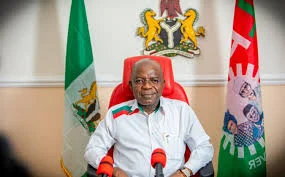
    Umuahia, Abia State – Governor Alex Otti on Tuesday presented a N1.016 trillion Appropriation Bill for the 2026 fiscal year to the Abia State House of Assembly, describing it as the “Budget of Acceleration and New Possibilities.”

    The proposed budget represents a 13 per cent increase over the 2025 appropriation of N750.28 billion and is aimed at fast-tracking infrastructure expansion, enhancing social services, and deepening ongoing reforms across the state.

    Of the total outlay, N811.8 billion, or 80 per cent, is earmarked for capital projects, while recurrent expenditure accounts for N204.4 billion, representing 20 per cent of the budget.

    Compared with 2025, the capital vote increased by 32 per cent, and recurrent expenditure rose by 33 per cent to support daily operations and new personnel.

    Governor Otti highlighted allocations for key sectors, with education receiving N203.2 billion, including N150.4 billion for salaries of at least 15,000 teachers and new school infrastructure.

    Plans include constructing 17 model primary and secondary schools, three technical colleges, staff quarters, and over 100 ICT laboratories. Tertiary institutions will receive N52.8 billion for staff salaries and new facilities.

    The health sector is set to receive N149.7 billion, representing 15 per cent of the budget, for the acquisition of new equipment at Abia State University Teaching Hospital, Aba, 23 other facilities, and the renovation of seven general hospitals.

    Road construction and rehabilitation will take N169.3 billion, or 16.7 per cent of the budget, with priority given to the Umuahia-Ikot Ekpene, Ahiaeke-Okwuta-Bende, and Umuahia-Umueze-Agwu roads.

    The transport sector is allocated N11.1 billion, including N6 billion to fund 80 additional electric buses, complete transport terminals, and build bus shelters.

    Other allocations include over N229 billion for agriculture, entrepreneurship, youth development, sports, ICT, women’s empowerment, housing, environment, and urban renewal.

    Governor Otti projected the state’s internally generated revenue (IGR) to reach N223.4 billion in 2026, up from a target of about N100 billion in 2025.

    Recurrent expenses will be fully funded from IGR. Federal allocations are projected at N83.2 billion from FAAC, N67.1 billion from VAT, N26.5 billion from grants, and N168 billion from other federal sources, bringing total revenue to N607.2 billion.

    The governor indicated a budget deficit of N409 billion, or 40 per cent of the budget, which will be financed through concessionary loans strictly for capital projects. He stressed that loans would not be used to fund recurrent expenditure.

    Governor Otti urged the House to consider and pass the budget, emphasizing its importance in sustaining the state’s development trajectory.

    Responding, Speaker Emmanuel Emeruwa noted that the state had inherited a deep fiscal hole in 2023 but praised the administration for restoring stability.

    He said the 2026 budget reflects growing responsibilities and expanding development needs and commended the governor for prudent fiscal management.

    Emeruwa assured the governor that the House would thoroughly review the estimates and support initiatives that benefit the state.

  • BugetIT: Gombe earns high ranking in 2023 Fiscal Transparency Report

    BugetIT: Gombe earns high ranking in 2023 Fiscal Transparency Report
    Gombe State Governor Yahaya Inuwa

    Gombe State’s commitment to fiscal transparency and accountability has earned it a significant distinction in the 2023 Fiscal Transparency Index published by BudgetIT, a reputable fiscal policy tracking organization in Nigeria.

    The state has been ranked an impressive 6th out of 36 states, with a commendable score of 74/100.

    This achievement reflects Gombe State’s dedication to transparent budgeting, procurement practices, and online fiscal reporting.

    The report underscores Gombe State’s accomplishments in various key areas, including budget transparency, procurement transparency, the integrity of the state’s website, and fiscal transparency online. Particularly noteworthy is the state’s Medium Term Expenditure Framework (MTEF), which has been recognized as comprehensive and well-structured. The report acknowledges that Gombe State’s approved budget met several stringent criteria, while its e-procurement portal stood out for its accessibility and navigability.

    Governor Muhammadu Inuwa Yahaya’s administration has consistently demonstrated its commitment to fiscal transparency and accountability, earning Gombe State esteemed recognition both on a national and international level. Notably, the state recently secured the World Bank’s States Fiscal Transparency, Accountability, and Sustainability (SFTAS) award in multiple categories, a testament to the administration’s impactful efforts in prudent public resource management.

    Furthermore, Gombe State achieved a remarkable 7th position in Nigeria and clinched the top spot in the North East sub-region in the Transparency and Integrity Index by the Centre for Fiscal Transparency and Integrity Watch (CETIW). This recognitions affirmed the state’s position as a role model in good governance, financial prudence, and fiscal integrity.

    An associate professor and multi-disciplinary researcher, who also serves as the Director-General of Research and Documentation at the Government House, Dr. Mu’azu Shehu explained that based on his close monitoring of national and international open government and development ratings, Gombe State has performed credibly well in fiscal responsibility, transparency, and accountability. He noted that Governor Inuwa Yahaya’s leadership has been pivotal in fostering a culture of good governance and transparency, positioning Gombe State as one of the most transparent and well-governed in the nation.

    The remarkable strides taken by Gombe State underscores Governor Inuwa Yahaya’s unwavering commitment to international best practices, as he continues to drive comprehensive reform to enhance the state’s public finance management structure.