Tag: governance

  • Nigeria’s Youth Confab Is Being Replaced, Not Rescheduled

    Nigeria’s Youth Confab Is Being Replaced, Not Rescheduled

    As the 2026 federal budget advanced through the National Assembly, complete with the familiar reassurances that priority sectors had been fully captured, one of the government’s most consequential decisions revealed itself not through what was announced but through what was quietly thinned out. In the budget defence delivered by the Minister of Youth Development, Ayodele Olawande, the National Youth Conference, once framed as a generational intervention rather than a routine programme, appeared only as an idea suspended in abstraction, absent the timelines, funding clarity, and institutional urgency that signal political intent.

    In its place stood a confident architecture of skills-based interventions, from digital training pipelines to innovation challenges and vocational grants, all of which align neatly with a governing instinct that prefers administrable solutions to contested dialogue, and measurable outputs to unpredictable engagement. Within this framework, youth are increasingly addressed as economic units expected to adapt continuously, rather than as political actors whose collective grievances demand confrontation rather than containment.

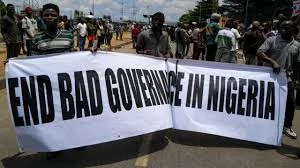
    This recalibration matters because Nigeria has walked this road before. When President Bola Ahmed Tinubu announced the Youth Confab in 2024, it came as a response to the #EndBadGovernance protests against a backdrop of deepening insecurity, excruciating cost of living crisis, and policy reforms that many young Nigerians experienced as exclusionary rather than corrective. The promise of a national youth dialogue carried weight precisely because it echoed an older recognition in Nigerian politics: that when grievances accumulate faster than institutions can absorb them, dialogue becomes a stabilising necessity rather than a symbolic gesture.

    That lesson was imperfectly learned during previous national dialogue efforts. Under President Olusegun Obasanjo, the 2005 National Political Reform Conference was convened amid mounting tensions over federalism, resource control, and representation. Despite its breadth, the conference collapsed under political calculation, leaving core questions unresolved, many of which later resurfaced with greater intensity in electoral disputes and regional agitation. Nearly a decade later, President Goodluck Jonathan’s 2014 National Conference produced extensive recommendations, yet its timing, too close to a charged election cycle, ensured that its outcomes were shelved rather than institutionalised.

    In both cases, the pattern was unmistakable: dialogue deferred or diluted did not neutralise dissent; it merely displaced it.

    It is against this historical backdrop that the slow hollowing-out of the Youth Confab becomes more than a scheduling issue. As timelines slipped, substantive engagement gave way to procedural gestures, including delegate registration portals that created the appearance of movement while postponing the harder work of convening disagreement. Participation statistics were offered where political listening was expected, reinforcing a familiar Nigerian cycle in which process substitutes for resolve.

    The consequences of continued deferral sharpen further as the electoral calendar advances. With the Independent National Electoral Commission already laying groundwork for the 2027 general elections, and civil society organisations such as Yiaga Africa warning that consultative platforms risk contamination once campaign logic takes hold, the space for a credible, non-partisan youth dialogue is narrowing by the month. History suggests that when national conversations are postponed until politics intrudes, they cease to be conversations at all.

    Meanwhile, the government’s reliance on skills acquisition as a response to youth discontent sits uneasily beside the persistence of insecurity. Despite vast allocations to defence in the 2026 budget, violence continues to shape daily life in parts of the country, including Zamfara, Niger, Kwara, Benue, Plateau, Kaduna and Katsina states where repeated attacks underscore the gap between expenditure and safety. In such contexts, digital empowerment narratives risk sounding less like opportunity and more like displacement, asking young people to adapt individually to conditions the state has failed to collectively resolve.

    The deeper danger, as history repeatedly demonstrates, lies not in protest itself but in what follows prolonged institutional deafness. When dialogue is consistently postponed, grievances migrate from conference halls to courtrooms, from courtrooms to streets, and from streets into long-term disengagement or radicalisation. Nigeria’s past national dialogues faltered not because conversation was unnecessary, but because it was treated as expendable once political risk increased.

    Seen through this lens, the Youth Confab’s current ambiguity is not a neutral pause but a familiar warning sign. By privileging adaptability over accountability, and management over engagement, the state risks repeating an old mistake under new branding. Young Nigerians have already demonstrated an extraordinary capacity to adjust to economic and social instability. What remains untested is whether a government that repeatedly avoids listening can indefinitely rely on that adaptability without consequence.

    History suggests otherwise.

    In that sense, the Youth Confab is no longer simply a postponed programme awaiting political convenience. It has become a measure of whether the Nigerian state has truly absorbed the lessons of its own past, or whether it is once again deferring a conversation until it returns under far less forgiving conditions.

    Time will tell.

  • BOBA Calls for Revival of Discipline, Integrity in Leadership at Murtala Muhammed Book Launch

    BOBA Calls for Revival of Discipline, Integrity in Leadership at Murtala Muhammed Book Launch

    The Barewa Old Boys Association (BOBA) has renewed calls for the revival of Nigeria’s founding values of discipline, integrity, and courage in leadership, drawing inspiration from the enduring legacy of former Head of State, Murtala Muhammed.

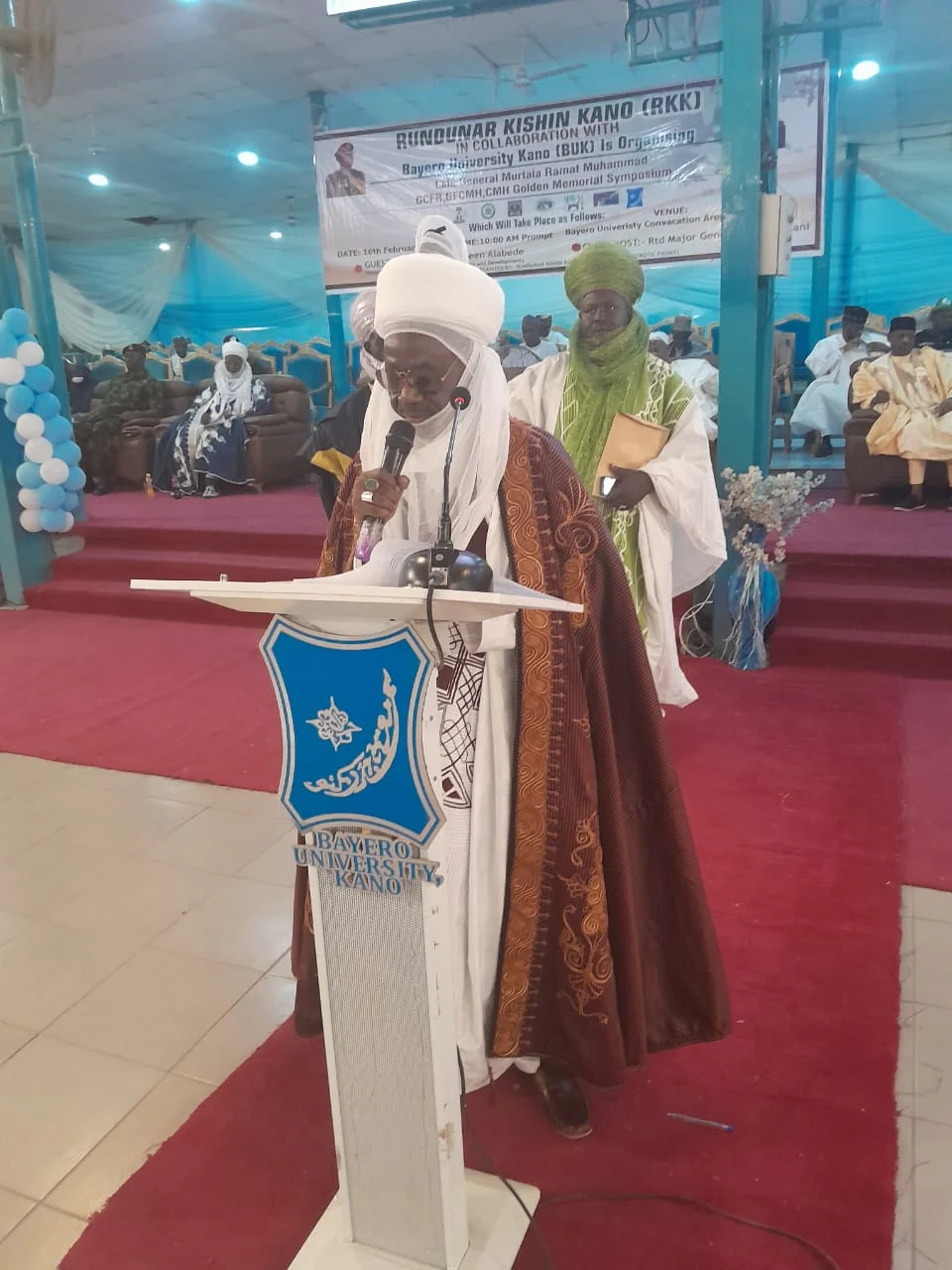
    The call was made at the launch of the book Murtala Muhammed: Unveiling the Ancestral Roots of a Nigerian General, where the President of BOBA was represented by Sarkin Shanun Kano, HRH Shehu Mohammad, FCA, FCCA, who described the occasion as “both an institutional privilege and a national obligation to celebrate a life of patriotic service.”

    Speaking on behalf of the Association, the BOBA President noted that, fifty years after his death, Murtala Muhammed’s name still resonates with urgency, courage, and deep patriotism.

    “Fifty years after his passing, Murtala’s name still carries the electricity of urgency, courage, and patriotism. Before he commanded troops, he commanded respect among his peers. Before he led the nation, he learned to lead himself,” he said.

    The Association traced the foundation of the late General’s leadership to his formative years at Barewa College, where he was admitted in 1952.

    The college’s strict discipline and leadership-oriented culture were described as crucial in shaping his character, instilling values of responsibility, courage, and excellence that later defined his national service.

    According to the BOBA President, three enduring lessons stand out from Murtala Muhammed’s life: that leadership begins early, discipline is the architecture of greatness, and courage is a moral decision before it becomes a public act.

    He reminded Nigerians that Murtala Muhammed’s famous declarations: “Nigeria will not tolerate indiscipline” and “Africa has come of age,” were reflections of convictions formed long before he assumed national power.

    “The story of Murtala Muhammed is not only a military story; it is an educational story. It proves that institutions matter and that the character we build in youth determines the destiny we reach in adulthood,” he added.

    In the press release authored by Stephen Ogboli, BOBA reaffirmed its commitment to strengthening schools and mentoring young Nigerians in values-based leadership, describing such efforts as “the truest memorial to the Murtala Muhammed legacy.”

    The Association further urged public officials and institutions to restore discipline, integrity, and urgency in national service, noting that Murtala Muhammed’s brief tenure in office remains a benchmark for courageous, people-centred governance.

    The solemn event attracted scholars, government officials, military representatives, and members of the Barewa community, and concluded with prayers for the late leader, asking Allah to grant General Murtala Ramat Muhammed eternal rest in Jannatul Firdaus.

  • Tinubu’s Silent Domination: A Threat to Nigeria’s Democracy

    Tinubu’s Silent Domination: A Threat to Nigeria’s Democracy

    By

    Editor

    President Tinubu does not need to threaten a “do-or-die” election. By capturing institutions, absorbing opposition structures, and weakening electoral safeguards, he is shaping the outcome long before voting begins. When referees are loyal and rules are rewritten, elections become ritual, not choice.

    The events of last Wednesday at the Nigerian Senate left a bitter and lingering taste in the mouths of many Nigerians. For a public already exhausted by broken promises and eroded trust, the handling of the 2026 Electoral Act Amendment Bill felt less like a disappointment and more like a confirmation of long-held fears. For weeks, citizens waited with restrained hope, believing, perhaps naively, that the Senate might finally take a step toward restoring confidence in governance and the electoral process. Instead, what unfolded appeared to be the final straw, a moment that exposed, in stark terms, where power truly lies and whose interests are being served.

    When Olusegun Obasanjo infamously described the 2003 election as a “do-or-die affair,” he revealed his mindset with startling clarity. It was the language of conquest, not consent; of domination, not democracy. The backlash was immediate, but the damage was irreversible. That election has since become a grim reference point, a reminder of what happens when incumbents abandon restraint and treat democratic competition as a personal survival exercise. Yet for all his brazenness, Obasanjo made one critical error: he spoke too plainly. He announced his intentions. He warned the public. And in politics, forewarning invites resistance.

    President Bola Tinubu has learned that lesson well. He has not threatened Nigerians with “do or die.” He has adopted a far more effective strategy: silent domination. There is no bluster, no dramatic declarations, no rhetorical excess. Instead, there is method, cold, patient, and systematic. Tinubu is not engaging in speculation or theatrics; he is locking down the very mechanisms that decide electoral outcomes. This is not opposition paranoia or conspiracy theory. It is observable, sequential, and intentional. Tinubu is not preparing to contest the 2027 election; he is preparing to control it.

    The foundation of this control is institutional obedience. Elections in Nigeria are no longer stolen primarily by ballot-box snatching; they are shaped long before voting begins, inside institutions that determine how votes are counted, challenged, secured, and enforced. Tinubu has therefore ensured that the most critical offices—the judiciary, electoral management bodies, the police, intelligence services, and military command, are headed by individuals whose loyalty is dependable and whose independence is, at best, compromised. This has nothing to do with merit or federal character. It has everything to do with predictability. When disputes arise, when injunctions are sought, when security decisions must tilt one way or another, the president does not want doubt. He wants alignment. In such a system, instructions need not be given. The expectations are already understood.

    Yet institutions alone do not guarantee victory; geography still matters. That is why the ruling party has pursued a ruthless campaign of political absorption across the country. Governors are defecting not out of conviction, but out of calculation. Nigerian politics is unforgiving to dissent and generous to surrender. Federal power is wielded as a weapon, through control of funds, security pressure, and administrative chokeholds. Faced with these realities, many governors have chosen capitulation over confrontation. The result is a weakened opposition and a ruling party that now controls the very state machinery responsible for administering elections. In Nigeria, whoever controls the states controls logistics, security coordination, and the practical implementation of electoral rules. This is not competitive democracy; it is political enclosure.

    Then came the most decisive move: rewriting the rules themselves. Nigerians had placed what little faith remained in technology as a shield against fraud. Electronic transmission of results was imperfect, but it disrupted decades of rigging culture by limiting human discretion at collation centres, the traditional graveyard of the popular will. That disruption made it dangerous. And so it had to be neutralized. The Senate’s decision to weaken electronic transmission and preserve manual handling of results was not the product of confusion or incompetence. It was deliberate. Lawmakers understood precisely what they were doing. They chose the system that allows figures to “change,” results to “adjust,” and outcomes to “emerge.” They acted openly, confidently, and without fear, because they know the system shields them from accountability.

    Calling the Senate a rubber stamp is no longer rhetorical excess; it is an accurate description. In that moment, the chamber made clear that it represents power, not voters. It did not fail Nigerians by accident, it betrayed them by choice. By dismantling electronic safeguards, it restored the most dangerous phase of Nigeria’s electoral process: the opaque journey between polling units and final collation, where votes lose meaning and manipulation thrives.

    Government defenders will insist, as always, that everything done was legal. They are correct, and that is precisely the danger. Authoritarianism in the modern age does not announce itself with tanks and decrees. It advances quietly, through laws, appointments, and procedural camouflage. It smiles, quotes the constitution, and pretends neutrality while suffocating competition. Tinubu’s approach may be legal, but it is fundamentally illegitimate. It drains democracy of substance while preserving its outward form.

    The real danger is not that Tinubu may win re-election. Incumbents often do. The danger is that Nigeria is sliding toward a system where elections exist without real choice, opposition exists without real power, and voters exist without real consequence. When outcomes are engineered in advance, participation becomes ritual. Citizens vote, but nothing changes. Tinubu does not need to rig ballots if he controls the referees. He does not need to intimidate voters if he controls collation. He does not need to threaten rivals if he absorbs or neutralizes them. This is domination without spectacle, power without noise, and manipulation without fingerprints, cleaner than Obasanjo’s blunt-force tactics, and far more corrosive.

    History is unforgiving to such arrangements. Before they collapse, they extract a heavy toll: public cynicism, voter apathy, institutional decay, and the slow suffocation of accountability. Nigeria has seen this story before, and it never ends well. The warning signs are glaring. The tragedy is not that they are subtle, but that those in power are pretending they do not exist.

  • ADC Signals Ideas-First Politics With 50-Member Policy Committee

    ADC Signals Ideas-First Politics With 50-Member Policy Committee

    The African Democratic Congress (ADC) has constituted a 50-member Wise Men and Women Policy and Manifesto Committee to provide strategic direction and shape the party’s ideological and policy framework ahead of future political engagements.

    The committee is chaired by former National Chairman of the APC, John Odigie-Oyegun, bringing decades of political leadership experience to the role. Serving as Deputy Chairman is renowned political economist and public intellectual Pat Utomi, while seasoned political organiser Salihu Lukman will act as Secretary, overseeing coordination and documentation.

    Other prominent members of the committee include former Senator Gershon Bassey, former Deputy Governor of Kogi State Simon Achuba, former Chief of Defence Staff Sadique Abubakar(rtd.), and respected diplomat Abioye Mohammed.

    The committee also features leading academics and policy experts, including Chidi Odinkalu, Remi Sonaiya, Anthony Kila, Sam Amadi, Jude Njoku, and Ibrahim Garba, underscoring the party’s emphasis on intellectual depth and evidence-based governance.

    Civil society representation is strong, with the inclusion of Oseloka Obaze, Otive Igbuzor, Nkoyo Toyo, Yemi Adamolekun, and Usman Bugaje.

    Gender inclusion is reinforced through the participation of figures such as Funke Awolowo, Hafsat Moji Bello, Jumoke Olawoyin, and Salametu Izuagie.

    Also listed is David Olofu, an emerging political figure in Benue State and aspirant for the Benue South Senatorial seat in the 2027 general election.

    According to the party, the committee reflects the ADC’s commitment to inclusivity, national spread, and cross-sector expertise, drawing members from politics, academia, security, civil society, and professional practice.

    The formal inauguration of the committee is scheduled for Monday, February 2, 2026, at the ADC National Secretariat in Abuja, where members are expected to commence deliberations on the party’s manifesto and long-term policy vision.

  • Altered After Parliament: Nigeria’s Tax Laws and the Crisis of Executive Power

    Altered After Parliament: Nigeria’s Tax Laws and the Crisis of Executive Power

    By

    Dahiru Ali

    Nigeria’s recent tax reform laws, widely seen as a landmark step toward modernizing the country’s revenue system, have become the focus of growing scrutiny following allegations that the laws were altered after parliamentary approval. The House of Representatives Minority caucus has accused relevant actors of introducing unauthorized changes, raising questions not only about procedural integrity but also about the broader balance of power between the executive and legislative branches in Nigeria.

    The controversy came into the public eye in mid-December 2025 when Abdussamad Dasuki, a member of the House, claimed that key provisions of the newly enacted tax laws had been altered in the versions gazetted for public release. The allegations immediately sparked public debate, with some Nigerians calling for a suspension of implementation pending clarification. The concern, critics argue, is that changes made outside the legislative process could have significant legal, economic, and political consequences.

    A day before Dasuki’s public allegations, the leadership of both chambers of the National Assembly had instructed Kamoru Ogunlana, clerk of the Assembly, to coordinate with executive agencies to re-gazette the laws. Some analysts interpreted this directive as a tacit acknowledgment that the original gazetted versions contained errors or deviations from the versions approved by lawmakers.

    The laws in question include the Nigeria Tax Act, 2025, the Nigeria Tax Administration Act, 2025, the Joint Revenue Board of Nigeria (Establishment) Act, 2025, and the Nigeria Revenue Service (Establishment) Act, 2025. Each of these laws represents a key component of the government’s broader fiscal reform agenda, aimed at streamlining tax administration, broadening the tax base, and improving revenue mobilization.

    Yet preliminary findings from a seven-member committee appointed by Minority Leader Kingsley Chinda suggest that substantive alterations may have been introduced in some of the laws after passage. The committee, chaired by Afam Ogene, includes representatives from all six geopolitical zones: Aliyu Garu (Bauchi), Stanley Adedeji (Oyo), Ibe Osonwa (Abia), Marie Ebikake (Bayelsa), Shehu Fagge (Kano), and Gaza Jonathan (Nasarawa). Their mandate is to investigate discrepancies between the National Assembly-certified copies of the laws and the gazetted versions.

    Key Alleged Discrepancies

    According to Ogene, the Nigeria Tax Administration Act, 2025, shows the greatest variation among the four laws. The committee identified multiple areas of concern:

    • Tax compliance thresholds: Section 29(1) of the House-certified version set the tax compliance reporting threshold at ₦50 million for individuals and ₦100 million for companies. In the gazetted version, the threshold for individuals was reportedly reduced to ₦25 million, with company thresholds altered as well. Critics argue that such a change could significantly expand the number of taxpayers subject to reporting requirements.
    • Appeal conditions: Sections 41(8) and 41(9) were allegedly added in the gazetted copy, requiring taxpayers to deposit 20 percent of disputed tax amounts before appealing to the High Court. These provisions were reportedly not part of the version passed by the National Assembly.
    • Expanded enforcement powers: The gazetted law allegedly empowers tax authorities to arrest suspected offenders and sell seized assets without a court order, a provision absent from the original legislative version.
    • Altered definition of federal taxes: Section 3(1)(b) of the House-certified version defined federal taxes to include income tax, petroleum income tax, stamp duties, and value-added tax (VAT). The gazetted copy reportedly removed petroleum income tax and VAT from federal administration, potentially impacting revenue streams and intergovernmental fiscal relations.
    • Dollar-denominated petroleum tax computation: Section 39(3) of the gazetted version mandates that petroleum tax calculations be conducted in US dollars rather than in the currency of the transaction, diverging from the version passed by parliament.
    • Oversight provisions weakened: The National Revenue Service (Establishment) Act, 2025, allegedly had clauses removed that allowed lawmakers to summon officials, demand reports, and ensure accountability. Sections 30(1)(d) and 30(3), which provided for quarterly and annual reports to parliament, were reportedly deleted, raising concerns about the weakening of legislative oversight.

    Implications for Governance and the Rule of Law

    Experts argue that if these discrepancies are confirmed, they could have far-reaching consequences for governance in Nigeria. “The National Assembly is constitutionally empowered to make laws, and any unilateral alterations outside the legislative process undermine both the rule of law and democratic accountability,” said a constitutional law scholar who spoke on condition of anonymity.

    The controversy highlights the perennial tension in Nigeria’s governance system between the executive and legislative branches. While the executive is charged with implementation, the legislature retains the mandate to make and oversee laws. Any interference with this process, intentional or accidental, threatens the checks and balances that underpin democratic governance.

    The controversy has also reignited debate over the role of the presidency in legislative affairs. Analysts suggest that any unilateral alterations to passed laws, whether directly authorized or passively tolerated, signal a worrying disregard for democratic norms and the checks and balances that are meant to safeguard the country’s governance. Such actions, critics argue, risk eroding public confidence not only in the presidency but in the broader institutional framework that underpins Nigeria’s democracy.

    The issue also underscores broader concerns about transparency and procedural rigor in the publication of laws. Legal experts note that discrepancies between parliamentary-certified copies and gazetted versions could lead to confusion among taxpayers, enforcement agencies, and courts, creating uncertainty that may hinder the effective application of the tax reforms.

    Historical Context

    Nigeria has experienced similar controversies in the past, where differences between legislative texts and official publications have sparked public debate and legal challenges. Historically, such incidents have often fueled debates about executive overreach, the reliability of government documentation, and the integrity of legislative processes. Observers note that while these controversies sometimes resolve through clarifications or re-gazetting, the reputational impact on institutions can be long-lasting.

    The current allegations gain additional weight in the context of Nigeria’s ambitious economic reform agenda. Tax reforms are central to the government’s strategy to reduce dependence on oil revenue, expand the tax base, and modernize public finance management. Any procedural irregularities in the laws themselves risk undermining public confidence and investor trust, which are essential for successful implementation.

    Next Steps

    The House Minority committee has requested an extension of time to complete its review. Ogene emphasized that the committee’s work is aimed at ensuring accountability and safeguarding the constitutional role of the legislature. “Given the anomalies, illegalities, and potential procedural lapses, a thorough examination is warranted before the laws are fully implemented,” he said.

    Meanwhile, lawmakers, taxpayers, and policy analysts are closely watching the situation. Questions remain about who authorized the alleged changes, how they were made, and whether corrective action—including possible re-gazetting—will be sufficient to restore confidence in the legislative process.

    The controversy also serves as a reminder of the importance of transparency, meticulous record-keeping, and public oversight in the lawmaking process. As Nigeria continues to pursue economic and fiscal reforms, the integrity of legislative procedures will remain a critical factor in ensuring that reforms are both effective and legitimate.

    Broader Lessons

    At its core, this issue is not just about tax thresholds or procedural discrepancies; it is a reflection of the broader governance challenges that Nigeria faces. The balance of power between the executive and legislature, the clarity of legal texts, and the robustness of oversight mechanisms are all tested when allegations of post-passage alterations emerge.

    As the investigation unfolds, it provides an opportunity for Nigerian institutions to reinforce accountability, clarify procedural standards, and ensure that reforms—especially those with wide-reaching economic and social impact—are implemented with both transparency and legitimacy. For citizens, policymakers, and investors, the outcome of this scrutiny will offer insights into the resilience of Nigeria’s democratic and institutional processes.

    For now, the country watches as the investigation continues, aware that the resolution of this controversy will have implications not only for the implementation of the tax reforms but also for the credibility of Nigeria’s legislative and governance institutions.

  • Rivers Assembly Begins Impeachment Process Against Gov Fubara

    Rivers Assembly Begins Impeachment Process Against Gov Fubara

    Contrary to public expectations of renewed presidential intervention, the Rivers State House of Assembly has voted overwhelmingly to commence an investigation into allegations leveled against Governor Siminalayi Fubara.

    Twenty-five of the state assembly’s 32 lawmakers voted in favor of initiating the impeachment process. The decision came after efforts to resolve the political impasse through behind-the-scenes negotiations proved futile.

    Lawmakers announced the decision on Friday at the temporary Assembly complex, addressing the press on why the impeachment process had reached what they described as a point of no return. During the briefing, a member read a written statement outlining the Assembly’s position.

    The House said the decision followed the presentation of formal allegations against the governor and the subsequent resolution to proceed with an investigation.

    Some lawmakers who had previously distanced themselves from the impeachment threat have now reversed their positions. Hon. Emelia Amadi, speaking at the Assembly premises, said she had decided to close ranks with her colleagues, citing what she described as Governor Fubara’s continued unconstitutional actions.

    Other members reiterated their resolve to continue with the process, emphasizing that their actions were guided by constitutional responsibility and the need to uphold the rule of law.


    The impeachment of a state governor in Nigeria is governed by Section 188 of the 1999 Constitution (as amended).

    Under the Constitution, impeachment may be initiated on grounds of gross misconduct, defined as grave violations of the Constitution or serious misconduct in the performance of official duties.

    The process begins with a notice of allegation signed by at least one-third of the members of the State House of Assembly and served on the governor. Within 14 days, the Assembly must decide whether to investigate the allegations. Such a decision must be supported by not less than two-thirds of all members.

    If approved, the Speaker requests the Chief Judge of the State to constitute a seven-member investigative panel of persons of unquestionable integrity. The panel is required to investigate the allegations and allow the governor to respond.

    The panel must submit its report within three months. If the allegations are not proven, the matter ends. If they are proven, the House may proceed to adopt the report.

    A governor is removed from office only if the panel’s report is adopted by a resolution supported by not less than two-thirds of the Assembly members, after which the removal takes immediate effect.

    While the Constitution limits court interference in impeachment proceedings, the process must strictly comply with constitutional provisions to be valid.

  • Nigeria’s War Within: Why Force Alone Can’t Defeat Insecurity

    Nigeria’s War Within: Why Force Alone Can’t Defeat Insecurity

    November 2025

    As Nigeria prepares to inaugurate a new Minister of Defence, General Christopher Musa, recently pulled from his position as Chief of Defence Staff, the appointment highlights a familiar pattern: leadership reshuffles and reconfigurations of the security architecture that have so far failed to address the nation’s deepening insecurity.

    Despite record defence budgets and years of military operations, Nigeria’s war against insurgency, terrorism, and violent crime remains far from won. Behind the official rhetoric of “decisive action” and “renewed hope,” the figures tell a sobering story: the country is spending more on security than ever before, yet becoming less safe.

    An Internally Displaced Persons’ (IDPs) camp in Benue State

    Between May 2023 and April 2024, at least 614,937 Nigerians were reported killed in violence linked to insecurity, according to data from the National Bureau of Statistics and independent research groups. Amnesty International estimates that more than 10,000 people were killed in the northern states alone during that period. Villages have been razed, farmers displaced, and highways turned into hunting grounds for kidnappers.

    For 2025, the Federal Government earmarked ₦6.57 trillion for defence and security, nearly equivalent to the combined budgets of education, health, and agriculture. Yet insecurity persists. From Boko Haram’s remnants in the northeast to bandits in the northwest and separatist militias in the southeast, violence has become a permanent feature of daily life.

    Nigeria’s insecurity cannot be solved by military might alone. “Nigeria’s security crisis is systemic, not merely operational,” a recent Counter-Insurgency and Anti-Terrorism Plan notes. “You can suppress conflict with soldiers, but you cannot kill an idea, or desperation, with bullets.” The country’s challenges go beyond insurgents and bandits; they are rooted in economic inequality, governance failures, and social exclusion, problems that no army, no matter how well-funded, can solve.

    The Price of Peace Without Justice

    Decades of economic inequality, corruption, and exclusion lie at the heart of the crisis. Wealth and resources are concentrated in the hands of a few, leaving large portions of the population marginalized. Communities excluded from decision-making or denied access to the country’s resources often turn to violence as a form of protest.

    Other forces exacerbate the problem: mass illiteracy, youth unemployment, religious manipulation, and climate-induced displacement. Across northern Nigeria, desertification has swallowed farmland, forcing herders southward and triggering deadly clashes with farmers. In the mineral-rich central states, illegal mining networks, sometimes backed by foreign interests, have transformed into armed militias.

    The insecurity is not merely a question of security operations; it reflects a broader governance failure, where political neglect, corruption, and impunity have created fertile ground for violence to thrive. Without addressing these structural issues, any attempt to suppress insurgency with force alone will remain temporary.

    Spending More, Achieving Less

    Nigeria’s defence spending has ballooned over the past four years: ₦966 billion in 2021, ₦1.2 trillion in 2022, ₦1.38 trillion in 2023, and now ₦6.57 trillion in 2025. Yet insecurity has worsened. World Bank data shows that the country’s military expenditure has risen faster than that of many African peers, without a corresponding reduction in violence.

    Bigger budgets have meant more equipment, more contracts, and more commissions, but not necessarily more safety. Observers note that the country continues to fight the same war with the same tactics, expecting different results. High-profile military campaigns have occasionally neutralized specific threats, but the absence of complementary development and governance reforms has allowed insecurity to regenerate.

    A New Strategy for a Broken Nation

    Recognizing that force alone cannot deliver security, the counter-insurgency plan advocates a multi-dimensional approach that blends immediate security measures with long-term social, economic, and governance reforms. It is founded on the principle that lasting peace requires both containment of violence and addressing the root causes of unrest.

    A central feature of the plan is the proposed Geopolitical Security and Development Summit. This high-level forum would bring together the Presidency, service chiefs, and state governors to coordinate priorities, share intelligence, and integrate human capital development into security planning. By aligning national and sub-national efforts, the summit aims to create a cooperative framework in which security operations respond to local realities rather than operating in isolation.

    Education, rural empowerment, and healthcare are reimagined as tools of national defence rather than afterthoughts. By addressing poverty, unemployment, and social exclusion, the plan seeks to reduce the vulnerabilities that violent actors exploit. Economic opportunities, skill development, and access to services strengthen communities, making them less susceptible to recruitment by insurgents, bandits, or criminal networks.

    Complementing this is a Stakeholders’ Summit involving religious leaders, traditional rulers, youth organizations, and civic groups. The forum is intended to promote interfaith dialogue, encourage conflict resolution at the community level, and empower citizens to take part in building peace. By fostering trust between communities and the state, the summit aims to prevent minor disputes from escalating into large-scale violence.

    The plan emphasizes a shift in mindset: security is not just the absence of attacks but the presence of justice, opportunity, and inclusion. “Peace cannot be sustained through force alone,” it stresses. “It must be built on trust, understanding, and shared values.” Military interventions may suppress violence temporarily, but without addressing structural weaknesses, the gains remain fragile.

    Reforming the Fault Lines

    Several structural reforms are prioritized in the plan. Modernizing animal husbandry is one key step, including regulated ranching and strict enforcement of anti-open-grazing laws, paired with economic support for pastoralists to prevent marginalization.

    Illegal mining, now a major source of funding for armed networks, is another critical target. The plan calls for a nationwide crackdown, formalizing artisanal mining into regulated cooperatives while reclaiming illegal mining corridors with security support.

    Central to all reforms is restoring the rule of law. Impunity has become a pervasive issue in Nigeria, where political influence often shields offenders. The failure to prosecute crime erodes public trust and perpetuates violence. “A nation that does not punish crime inevitably rewards impunity,” the plan notes, emphasizing accountability as a cornerstone of sustainable security.

    From Force to Fairness

    At its core, the strategy envisions a paradigm shift in how Nigeria approaches security. True national security is not measured solely by military victories or the neutralization of threats; it is reflected in the ability of citizens to live without fear, access opportunity, and trust their government.

    Political instability compounds insecurity. A culture of “do-or-die” elections fuels tension, undermines institutions, and perpetuates violence. Ensuring credible, peaceful elections is essential for creating a foundation on which sustainable security can be built.

    The fight against terror and insurgency, the plan argues, will not be won solely in forests or creeks but in classrooms, farms, and courtrooms, where education, justice, and economic opportunity can finally triumph over despair.

    “The time has come for Nigeria to prove that it can not only defend its territory but also heal its society,” the plan concludes.

    Dahiru Ali: Journalist, academic, writes on governance, national security, and development policy. He is passionate about evidence-based reform and inclusive approaches to peacebuilding in Nigeria.

  • Man Stripped Of Traditional Title For Supporting Nationwide Protests

    Man Stripped Of Traditional Title For Supporting Nationwide Protests

    The District Head of Bosso in Minna Emirate Council in Niger State, Alhaji Mu’azu Adamu Laka Bosso, has relieved one Abdulahi Isah, aka Biodun, of the title: Wakilin Matasan Bosso.
    According to Daily Trust, the traditional title holder was reportedly dismissed for supporting the planned nationwide protests.
    In a letter titled: “Letter of dismissal”, Mu’azu, who did not give the reason for the sack, said: “I hereby write to inform you that you have been dismissed from your title as Youth Leader of Bosso (Wakilin Matasan Bosso) with immediate effect from 28/07/2024. You should no longer call yourself as Youth Leader of Bosso.”
    However, speaking in an interview Tsalle Daya, a Hausa programme on Prestige, the district head said that Biodun was stripped of his title for declaring support for the forthcoming nationwide protest over hardship.
    The district head was cited as saying his domain would not condone any act that would lead to breakdown of law and order.
  • Ndigbo in the Crosshairs of ‘Days of Rage’ (2)

    By Ugo Onuoha

    THE ‘Ides of March’ are now set for August. And that month is two days hence. Typical of Nigerians the ides of March have been re-branded and rechristened and restructured. Our own, if they actually happen, will not be for one momentous occasion. They are programmed to last for days, all of 10 consecutive days, from August 1. What a time to be alive.

    Nigeria, with its history of bloodletting and the highhandedness of its security agents, is on edge. The regime of this president, Alhaji Bola Ahmed Tinubu, is worried. Look beyond the tough guy posturing. Strategy meetings of its henchmen and security goons have become almost a daily affair recently. The truth is that no administration covets any demonstration or protest, not even the so-called peaceful variety. In every such situation, the line between peace and violence is thin, indeed blurred. And it is worse in Nigeria.

    In the case of the widely advertised ‘Days of Rage’ planned to begin in two days, the elements that could spark violence, destructions and deaths are embedded in the demands of the organisers and the inevitable highhanded and deadly reaction of a regime that has been struggling with legitimacy from the get go. The precarious position and hypersensitivity of the regime is not made any better by its struggles in many areas.

    As we know the two most important duties of any government are securing lives and property of citizens, and ministering to the welfare of the people. It will be a stretch even for the choristers of this regime to remotely claim that the administration is meeting the minimal expectations of people in the two cardinal areas of governance. It does not appear that the regime has made a dent in securing the country. Insecurity is actually becoming endemic. Its scorecard on the economic front is woeful. Worse still is that the prognosis is not looking good.

    Last week, the central bank of Nigeria raised its benchmark interest rate for the umpteenth time. Many more Nigerians are projected to slip below the poverty line. That should be concerning for a country that is officially designated as the poverty capital of the world. The monetary czars appear fixated with using only monetary tools to cure the ills of an economy that is afflicted in many sectors. There are no indications that there’s a consciousness to align monetary and fiscal policies.

    The confusion and desperation in the government circle is palpable. The evidence was writ large last Wednesday night when the national secretary of the ruling All Progressives Congress political party, Senator Ajibola Bashiru appeared for a programme on national television. He strained to deny the evidence of economic devastation before our very eyes even to the extent of disclaiming the inflation data published by their own government agency – the National Bureau of Statistics (NBS).

    It’s the in-your-face lies and denials of APC apparatchiks such as their national secretary that infuriate many Nigerians and that make the imminent ‘Days of Rage’ almost unavoidable. But danger looms. A regime marked by serial bungling is a danger to everyone. It is worse when that regime is populated by opportunists and pseudo democrats. And headed by a man incapable of hiding his dictatorial tendencies. ‘Days of Rage’ could be bloody and may end up achieving little or no results worth the potential losses. The inevitable is that when the cloud lifts, the Igbo people and the Igbo nation will bear the brunt. That has been the story of Ndigbo in Nigeria since the 1940s, and even earlier.

    Igbo -hating is a pastime for some Nigerians. In fact, sometimes the hating comes from inside of the Igbo themselves. For instance, long before the furious debates on the impending protests hugged the national media headlines, Joe Igbokwe, from Nnewi in the heart of Igbo land had affixed Ndigbo in the bull’s-eye of the protests. Two weeks ago, Igbokwe wrote a gratuitous letter to the Igbo in Lagos, warning that the authorities in the state will deal decisively with them if they participate in the August protests.

    “I am the leader of Ndigbo in APC Lagos… I know what I went through and what I experienced during the #Endsars protest in October 2020 which opened a can of worms that shook the long existing cordial relationship and understanding between (the) Igbo and the owners Lagos”.

    The summary of Igbokwe’s warning are that the Igbo were culpable in the #Endsars protests of 2020 and the destruction of public property in Lagos; that there are indications that Ndigbo are in the thick of the planned August protests; that relations between the ‘owners of Lagos’ and the Igbo are irretrievably bad; that the owners of Lagos had learned valuable lessons from the events of 2020 and will finish off the Igbo in Lagos if they dared to join the protests; and, that the Igbo who are unwilling to lay down and be trampled upon and rolled over had better leave Lagos.

    Joe Igbokwe may not be a fool, but he at times says patently foolish things.

    The leadership of the conveners and protagonists of the ‘Days of Rage’ are well advertised. It’s scanty on Igbo. How Igbokwe, therefore, conjures and dumped Ndigbo in the heart of the agitation can only be befuddling. The other day I happened on the same Joe Igbokwe arguing at the top of his voice in Igbo language that the Igbo do not like the APC. That encounter with his kith and kin appeared to have happened on twitter (now X) space and then exported to WhatsApp. His opponents, who were mostly female, were equally insistent that they would not approve of APC for as long as the party approximated maladministration beginning with the regime of Muhammadu Buhari, Nigeria’s affliction. By his stance in the encounter, Igbokwe may have said that the Igbo political elite in APC, including himself, are charlatans who are not representing the yearnings and aspirations of Ndigbo. Could this be true?

    We have heard isolated but strident voices in the weeks leading up to the ‘Days of Rage’, many of them suggesting, without any shred of evidence, that the Igbo are orchestrating the August protests. There was a video about one unidentified Islamic teacher in the north who asked northern youths not to participate in the protests because Ndigbo were the people stoking the fire, and that they were using other means to attain Biafra by fueling the disintegration of Nigeria. He said that any protest is ‘haram’. Other sheikhs promptly shot him down.

    One fellow, Very Revd. Edward Obumneme Joseph who identified himself as president of the PFN youth wing offered different reasons why the protests should be shunned. He said that the protests were being promoted by sponsors of terrorism and the Igbo were the ultimate target of the fallouts.

    By last weekend all the security agencies have busied themselves with running political commentaries on the protests, the organisers, sources of their funding, the modus operandi, why the protests should be aborted, how deadly force will be used, and the resolve of the regime to protect life and property of Nigerians.

    The most comical of the running political commentaries came from the federal secret police otherwise called the Directorate of State Services (DSS). By last Thursday the Agency said it had identified the promoters of the protests, ignoring the fact that the names of the promoters had been in the public domain for weeks. It claimed it had identified the sponsors but provided neither evidence nor clues. It said it had unmasked how third parties were plotting to hijack the protests for regime change. It said that the protests were political and not economic. And that the claim about hardship was a ruse.

    It may not be entirely correct to say that the Nigerian secret police are the dumbest in the world, but they may be close to the bottom of the scale. Except in dictatorships the secret police in other jurisdictions are not known to be loquacious. They are usually taciturn. That code of not talking much was on display last week when the US director of the secret service, Kimberly Cheatle, appeared before lawmakers investigating the attempted assassination of former President Donald Trump. It did not matter that it cost her job.

    If the DSS had iron-cast evidence that the protests were political with sinister motives, the expectation is that it will move fast, arrest the insurrectionists and let them have their day in court. Of course, the DSS was lying. It had no evidence that could stand up in court about its claims. Is this not the same DSS that was scheming to arrest the former governor of the central bank, Godwin Emefiele, last year on allegations of sponsoring terrorists? The same Emefiele has been in detention and restricted movement since June 10, 2023, yet the secret police have failed to charge him with terrorism.

    Even before the protests commence enough grounds have been prepared to make Ndigbo the fall guys. Whether they participate in the protests or not will count for nothing. For more than 70 years they’ve borne the burden of striving to be Nigerians by losing their lives, limbs and livelihoods.

    The truth is that the Igbo really do not have any stake or interest in the looming ‘Days of Rage’. The majority of them did not believe that Bola Ahmed Tinubu would make a good president for a country that was, and still is, in dire straits. And they rejected him at the ballot box in 2023. They also did not believe in 2015 that Nigeria’s affliction, Buhari would be a good president. They were vindicated after eight years of disaster.

    The Igbo are masters in diverse fields but their expertise in commerce is unequalled. Commerce thrives in a conducive environment, not in uncertainty, chaos and war. Protests, no matter their ultimate outcome, enthrone chaos and so bad for business. It is bad for Ndigbo. It is especially so for people who have been deliberately excluded from Nigeria’s governing structure at the centre since 2015. They are punished for voting their conscience.

    The danger for the Igbo during the ‘Days of Rage’ is that the government will, as usual, bus thugs to infiltrate and disrupt the protesters and cause violence. The situation will degenerate to arson and destruction. The regime will then order its security agencies including the army to move in, to shoot and to kill the unarmed marchers. In America the Conservatives say that when the looting starts, the shooting starts. But here at home it’s usually when the shooting starts, the looting starts. And the Igbo will be left to count their losses. Whether they participate or not, Ndigbo will lose from the ‘Days of Rage’. That’s the default button of Nigeria’s crisis for decades. No reason to believe it will be different this time.

  • Tinubu’s Reforms Will Bring Prosperity To Nigeria -AGF

    The Attorney General of the Federation and Minister of Justice, Prince Lateef Fagbemi (SAN), has said ongoing reforms of President Bola Ahmed Tinubu will bring economic prosperity and stability to Nigeria.

    He urged Nigerians to be patient with the president and support the reforms being introduced across the board.

    Fagbemi spoke during a prayer organised in his honour by his family in his Ijagbo country-home in Oyun Local Government of Kwara State on Friday.

    The event was attended by the state governor, Abdurrazaq Abdurrahman; monarchs, friends and well wishers.

    A statement signed by the S A Communication & Publicity to AGF& Minister of Justice, Kamarudeen Ogundele, stated that the minister assured Nigerians of the president’s determination to take the country out of the woods.

    He said, “The president is not looking for self aggravadisement. He’s seeking a better future for the country.

    ” Immediately after his swearing in, he has been all out to seek investors’ buy-in. As a result, positive responses have been trailing his discussions with foreign investors. The only thing we need is to exercise some patience. Even if you plant a tree, it won’t grow into fruition until after a while.

    “Nigerians need to be patient; things will improve greatly in the coming days. The sacrifices of today will translate to a greater future for the country. I know with prayers and support of Nigerians, the country will emerge stronger.”

    The AGF commended the governor for his giant strides in the state.