Tag: Idoma leaders

  • Benue at 50: Ochetoha K’Idoma Salutes Progress, Raises Alarm Over Political Exclusion

    Benue at 50: Ochetoha K’Idoma Salutes Progress, Raises Alarm Over Political Exclusion

    As Benue State marks 50 years since its creation, the apex socio-cultural organisation of the Idoma people worldwide, Ochetoha K’Idoma, joins the Golden Jubilee celebrations with warm congratulations—but also with a firm call for reflection on what it describes as a deep and persistent imbalance in the state’s political life.

    Speaking for the organisation, its President-General, Yakubu Aboki Ochefu, says the anniversary is both symbolic and instructive. While acknowledging the progress recorded over five decades, he argues that the state’s political history reveals a pattern of exclusion that continues to sideline Benue South Senatorial District from the highest levels of power.

    Ochefu recalls that Benue State comes into existence on February 3, 1976, under the military administration of the late Murtala Muhammed, following earlier political arrangements that place Idoma land within the former Northern Region and later Benue-Plateau State. Long before these administrative constructs, he says, the Idoma people occupy the fertile Benue Valley for centuries, sustaining a distinct identity while maintaining a reputation for resilience, hospitality, and peaceful coexistence.

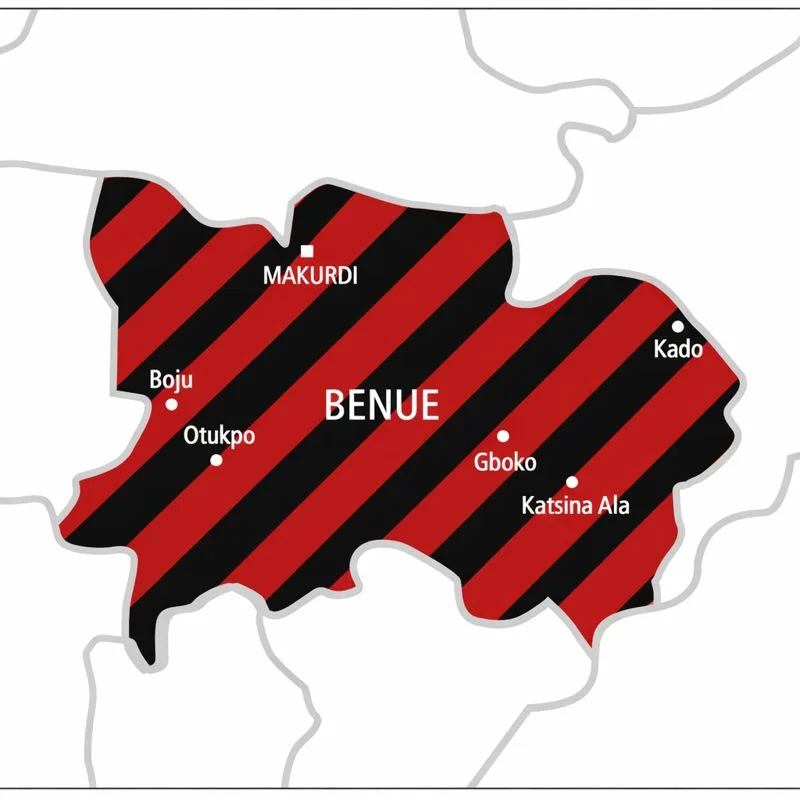
    Map of Benue State @50

    He says the Idoma experience within Nigeria is defined by consistent national service. Despite being a numerical minority, Idoma sons and daughters, according to him, have left enduring footprints across governance, the civil service, the military, academia, culture, sports, and faith. From the early post-independence years to the present, their influence cuts across generations. Ochefu cites Dr. Edwin Ogbu, who becomes the first indigene of Benue State to serve as a Federal Permanent Secretary in 1966, and Abu Obe, who later rises to Head of the Civil Service of the Federation, as early markers of that contribution.

    In legislative politics, he notes that Idoma land produces two Presidents of the Senate—Ameh Ebute and David Mark. Mark’s eight-year tenure, spanning four consecutive terms, remains the longest in Nigeria’s democratic history and, Ochefu says, firmly places the Idoma nation at the centre of national leadership. He also points to the national roles played by Audu Ogbeh, former Minister of Agriculture and ex-national chairman of the Peoples Democratic Party, as well as Senator Abba Moro and the late Professor Jerry Agada, all of whom serve at ministerial level.

    Beyond politics, Ochefu says the Idoma presence remains deeply woven into Nigeria’s security architecture. From participation in the Second World War and the Nigerian Civil War to leadership at the highest levels of the armed forces, Idoma officers continue to play defining roles. He references the late Ebije Ikwe, who serves as Chief of Air Staff between 1967 and 1975, as well as several Idoma military governors who administer states across the federation.

    In education and culture, Ochefu says the Idoma people produce Benue State’s first university graduate as far back as 1954 and go on to contribute professors, vice-chancellors, and national policy thinkers whose work shapes Nigeria’s intellectual and professional landscape. He also highlights the global reach of Idoma creativity, pointing to the late Bongos Ikwue, whose genre-blending sound defines an era, and Afrobeats icon 2Baba, whose music projects Nigerian identity to international audiences.

    Yet, Ochefu says, this long record of contribution stands in stark contrast to the political reality within Benue State itself. In 50 years, he notes, Benue South has never produced a governor or a speaker of the State House of Assembly, has produced only one Chief Judge, and has never produced a Vice-Chancellor of Benue State University. He describes the pattern as structural rather than accidental, warning that prolonged exclusion erodes trust, weakens cohesion, and contradicts the ideals of unity on which the state is built.

    On development, Ochefu acknowledges the presence of key federal institutions in Idoma land, including the Federal University of Health Sciences in Otukpo, but says sustained industrial investment remains largely absent since the administration of former Governor Aper Aku. He argues that without deliberate investment in infrastructure, agriculture, solid minerals, and youth-driven enterprise, the economic potential of Benue South will remain unrealised.

    He also commends Elaigwu Odogbo Obagaji John, the Och’Idoma V and Paramount Ruler of the Idoma Nation, for providing steady leadership and promoting peace and unity across Idoma land amid growing social and security challenges.

    Looking ahead, Ochefu says the next phase of Benue State’s history must be defined by inclusion, balance, and fairness. The aspiration for an Idoma governor, he stresses, should not be framed as a request for concession but recognised as a legitimate democratic expectation in a state that claims unity as a foundational value.

    Only through equity, mutual respect, and intentional inclusion, he concludes, can Benue State fully harness its diversity and build a future that delivers shared prosperity for all its people.

  • Olofu Engages Benue South Stakeholders in Lagos Over Senate Agenda

    Olofu Engages Benue South Stakeholders in Lagos Over Senate Agenda

    Breaking from conventional campaign outreach, Dr. David Olofu at the weekend used a Lagos engagement to deepen consultations for his Senate race, convening diaspora stakeholders alongside leaders from the home front in the Benue South Senatorial District.

    The meeting brought together representatives from the district’s nine local government areas, including community leaders, professionals, retired public officers, party stakeholders, and members of the Benue South diaspora, to examine development priorities and the future of representation.

    Addressing the gathering, Olofu said his decision to seek elective office followed extensive consultations and growing dissatisfaction with the state of representation in the district. He described Lagos as a strategic venue, noting its position as Nigeria’s commercial nerve centre and home to a significant population of Benue South indigenes.

    According to him, consultations with traditional rulers, professionals, and grassroots leaders informed a legislative agenda anchored on four pillars, People, Power, Prosperity, and Progress, aimed at converting the district’s agricultural, human, and economic potential into sustainable development.

    He stressed that effective representation must translate into equitable policies, balanced development, and fair resource allocation across all communities.

    Olofu also announced plans to establish the Benue South Peoples Assembly (BSPA) and the Benue South Peoples Council (BSPC), which he said would institutionalise inclusive, bottom-up policymaking and sustained citizen participation.

    He outlined twelve priority areas for legislative intervention, including agriculture and food security, education, health, entrepreneurship and youth empowerment, ICT and innovation, infrastructure and road networks, local government reforms, security and peacebuilding, law and justice, industry and energy partnerships, diaspora engagement, and women and sports development.

    The event featured goodwill messages from several leaders. Chief Abu Abdul opened the session with prayers, while Rt. Hon. John Ngbede, who led the delegation, said the engagement was notable for its inclusiveness, with representatives from various Idoma dialect groups and communities present.

    Former Secretary to the State Government, Prof. David Salihu, and governorship aspirant Dr. Peter Adejo commended the consultative approach and stressed the need for leadership grounded in broad stakeholder input.

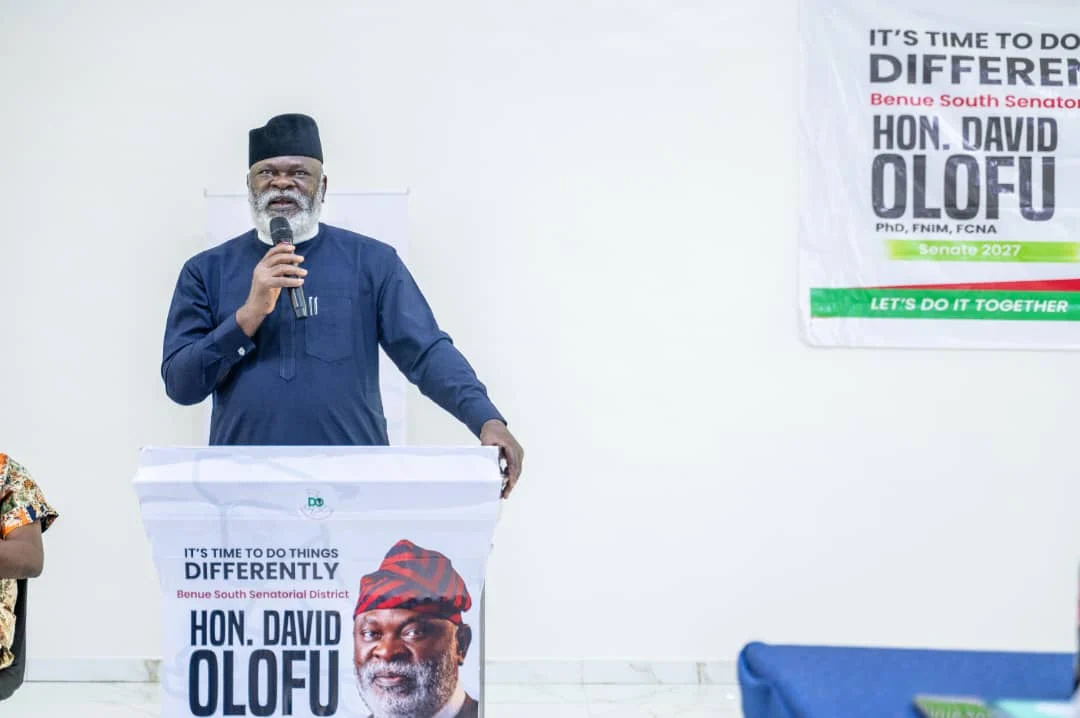
    Dr. Olofu Addressing the Stakeholders at Ikeja, Lagos

    Other speakers included Chief Patrick Ogbu; former Okpokwu Local Government Chairman Barr. Jacob Ogwuche; former Oju Local Government Chairman Hon. Edwin Okpe; retired Assistant Comptroller-General of Customs Odaudu Salihu; retired Assistant Inspector-General of Police Tony Olofu; Dr. Michael Adah, Chairman of Opiatoha K’Idoma Lagos; retired Rear Admiral Andy Onoja Odeh; Dr. Mike Adah, General Secretary of Opiatoha Club Lagos; and Godwin Onyeke, President of Okpotuche Club Lagos.

    An elder statesman and party stalwart, Alhaji Usman Lungu, urged loyalists to mobilise effectively for the aspirant’s success, pledging to work across party lines toward that objective.

    Also speaking, Chief Luke Akubo, the Och’Idoma in Lagos, offered prayers and blessings for Olofu, praising his philanthropy, governance experience, and commitment to the emancipation of the Idoma nation.

    Popular activist Chris Adaba Aba, also known as Mad Lion, described the engagement as a call for Idoma unity, while a prominent woman leader and community organiser, Madam Cynthia Egwa, said the consultations were unprecedented, citing years of neglect of the senatorial district.

    Some speakers likened the consultations to a “know-your-customer” governance model, arguing that understanding community needs should precede policy formulation.

    The Lagos engagement concluded with prayers and goodwill messages and forms part of Olofu’s wider consultation tour across Benue State as he seeks the Senate seat on the platform of the African Democratic Congress.