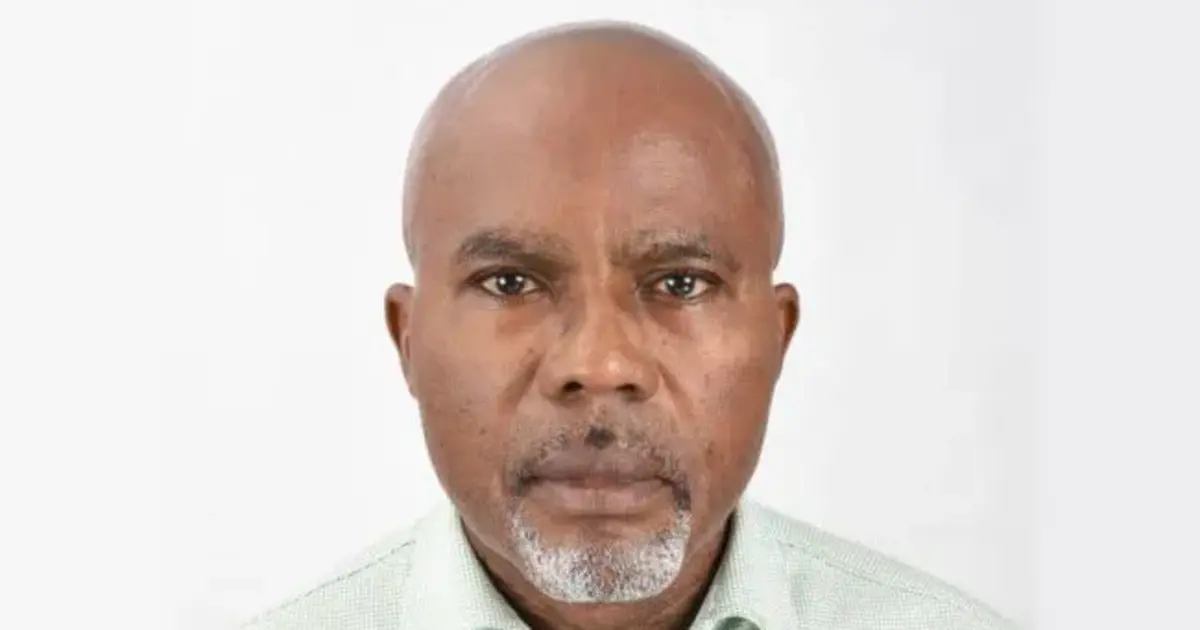
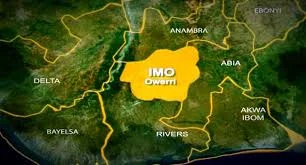
A Non-Governmental Organisation (NGO), the Ikemefuna Jewish Organisation, has presented a N500,000 award to Insp. Uche Chidiebere, a Police traffic warden in Owerri, for his dedication and professionalism in traffic management.
Presenting the cash gift on Friday, leader of the NGO, Ikemefuna Mbelu also handed a plaque to Chidiebere, commending his integrity, hard work, and exceptional service to the public while urging other officers to emulate him.
Media report indicates that Chidiebere is stationed at the Warehouse Junction in Owerri.
“His professionalism and kindness have earned him the respect and admiration of the public, making him a true hero on the highway.
“Through his tireless efforts, Insp. Chidiebere has made a significant impact on the daily lives of Owerri residents and commuters alike.
“His dedication to public service is an inspiration to his colleagues and a shining example of the positive difference one individual can make,” Mbelu said.
In his remark, the state Commissioner of Police, Mr Aboki Danjuma, commended Chidiebere’s exemplary conduct, describing it as a “reflection of the ideals of the Nigeria Police Force”.
Danjuma emphasised that personnel must always uphold the core values of hard work, discipline, and public service.
The Police boss reaffirmed the command’s commitment to professionalism, rewarding excellence, and building strong community partnerships for safety.
“Officers are encouraged to emulate Insp. Chidiebere’s dedication, while we urge the public to continue supporting security agencies for a safer Imo state,” Danjuma said.
The state Sector Commander of the Federal Road Safety Corps (FRSC), Mr Udensi Oji, also applauded the officer’s effort.
Oji advocated for greater recognition of frontline traffic managers, highlighting their crucial role in ensuring public safety on a daily basis.
Responding, the elated and joy-filled Chidiebere expressed his gratitude to Danjuma and the Ikemefuna Jewish Organisation for finding him worthy of recognition.
He pledged to remain committed to serving the public diligently and upholding the values of the Nigeria Police Force.
AFTER my parents fled Lagos for Mgbidi in the then Eastern region (later East Central State and now Imo State) at the onset of the Biafra – Nigeria civil war in 1967, they registered their children at Central School (primary) in our village. We had been dislocated from St. Jude’s Primary School in the Ebute Metta area of Lagos. Central School was comparable to St. Jude’s in infrastructure, teaching staff, and the quality of instructions. This should not come as a surprise because both schools were run by the Missionaries. They were also located in the bowls of expansive premises. However, Central School had a slight edge because it had a very big green and lush field which served as a football pitch, and for track and field sports events. The only drawback was that the field was located across a major road (now an expressway), the Onitsha – Owerri freeway. On that other side of the road also was the headmaster’s official residence which overlooked the field, and slightly to the left was the ‘i’ shaped teachers’ quarters. If we took time to write about some basic features of what was basically a rural school in the 1960s, it is only because we will have cause to return to it in the course of our engagement today. And it is also because of the recent policy flip flops and our nation’s apparent unseriousness over education since the ill-advised seizure of public primary and secondary schools by the military when soldiers assumed political power in the 1960s.
Tunji Alausa replaced Prof. Tahir Mamman as education minister in the last underwhelming reshuffle of the Cabinet of Nigeria’s president, Alhaji Bola Ahmed Tinubu. The president had said at the time of the Cabinet changes that he dropped some ministers because Nigerians assessed them poorly. But it could be a matter of coincidence that the changes happened at about the same time that the sacked minister was entangled with the controversial subject of the minimum age for the admission of our young adults or children into tertiary institutions. He was reported to have said that any child who was younger than 18 years would be ineligible for admission into the university. Some Nigerians and parents were alarmed and incensed especially because of the suddenness and alleged lack of consultations before the pronouncement. It was reckoned that many kids who were already in the terminal classes in secondary schools may be compelled to idle away for two to three years at home with the attendant risks before they become eligible to sit for the joint admissions and matriculation board examination for admission. The fight was loud, strident and very public. The spat may not be solely responsible for the ouster of the minister, but it may not be entirely unconnected with his sacking.
That minister’s removal has, however, not cured Tinubu’s regime’s proclivity to put its own foot in its own mouth. His has been a case of one week, one controversy. Some of the president’s men and women speak from both sides of their mouths, and often long before they think through any issue. The other day, it was one presidential aide who wrote in a blog post that the federal government was at the cusp of increasing tariffs on electricity yet again. Nigerians screamed. Producers and manufacturers kicked and baulked at the proposed hike, saying that energy already accounts for a substantial percentage of their operational costs and household expenses. The government backed down, at least for now. The aide later went on a long-winding explanation of how the message was misunderstood, and how what was written was twisted and taken out of context. Last week was the turn of the federal ministry of education.
The minister was reported to have said that the federal government had scrapped the junior secondary school and the senior secondary school segments in Nigeria’s school system. In their place our children will subsequently be made to undertake a straight 12-year basic education before admission into the university if qualified. A national newspaper reported the ‘new policy’ thus last week Friday: The federal government has announced the scrapping of all junior secondary schools (JSS) and senior secondary schools (SSS) in the country and introduced a compulsory 12-year uninterrupted basic education model after which a Nigerian child can aspire to higher education. With this development, the Nigerian government is seeking the abolition of the 6-3-3-4 education system and replacing it with 12-4. This is even as it has sought the approval of the national council on education (NCE) to officially adopt 16 years as the minimum entry age requirement into the country’s tertiary institutions. The NCE is the apex policy-making agency in the education sector.
Alausa was said to have spoken in Abuja in the presence of the commissioners for education in Nigeria’s 36 states and the education secretary of the federal capital territory (FCT), officials of agencies and parastatals under the education ministry, as well as representatives of development partners. The minister reportedly elaborated by saying that by subsuming secondary education into basic education, students will benefit from uninterrupted learning up to the age of 16, and that the new policy would align with global best practices. He claimed that the reform would reduce dropout rates by eliminating financial and systemic barriers that currently prevent students from completing secondary education. “Extending basic education to 12 years will ensure a standardized curriculum that is uniformly implemented across the nation. This will also facilitate early exposure to vocational and entrepreneurial skills, preparing students for both higher education and employment. Many developed nations have implemented similar systems where basic education spans 12 years, ensuring that students acquire foundational knowledge before specialising at tertiary levels”. The minister rightly said that “When students receive an extended period of compulsory education, they are better equipped to join the workforce with relevant skills. This reform will also reduce child labour and other social vices resulting from premature school dropout”.
Children in dilapidated classroom
Barely 24 hours after, the education ministry poured cold water on the minister’s declaration. Its director of press claimed that the minister has not scrapped the extant education system but merely made a proposal to the NCE. “At the extraordinary national council on education meeting held on 6 February 2025 in Abuja, the honourable minister of education, Dr. Maruf Olatunji Alausa, presented a proposal for discussion – not an immediate policy change. The proposal seeks to transition to 12 years of compulsory education while retaining the current 6-3-3(4) structure. A key aspect of this proposal is to eliminate the examination barrier between JSS and SSS, allowing students to progress seamlessly without external assessment at that stage. To ensure a well – informed decision, the ministry will undertake extensive stakeholder engagements over the next eight months, consulting education policymakers, state governments, teachers, parents, and other key players. The final decision on whether to adopt this reform will be made at the National Council on Education meeting in October 2025”.
The latest proposal on education that appears afflicted by flip flops from the onset may actually be the way to go in the 21st century. But beautiful policy formulations and the tendency to copy and paste what obtained in other jurisdictions cannot be an end to themselves. It takes commitment and doing by those involved in getting desired and beneficial results from policy formulation and implementation. In 1982, 43 years ago, when the current education system was introduced the aims included making primary education (6 years) universal and accessible to all children; equip pupils and students with fundamental reading, writing, and math skills (basic literacy and numeracy); for junior secondary education (3 years) to introduce students to basic pre-vocational skills; expose students to a range of subjects including languages, mathematics, sciences, and social sciences in a broad based educational format; in the subsequent three years of senior secondary education, to allow students to specialise in specific subjects or fields; and, prepare them for post-secondary education or entry into the workforce. The tertiary education segment (4 years) of the extant system was designed for advanced learning which will provide students with in-depth knowledge and skills in their chosen fields; and, then foster a culture of research, development, innovation and entrepreneurship. “Nwanyi da ada ugbere abuo aguo ihe obu na ukpa onu’”. Literally this means that when you fail twice in an endeavour it will be imperative to stop, reflect and take stock. The 6-3-3-4 replaced the colonial education system we inherited from the British. So, unless anybody else lives in denial and scores the current system as a roaring success, the implication is that we have failed in our quest for useful education again. The sensible thing to ask ourselves at this stage is whether “aguba adighi nko, m’obu onye na-akpu isi amagh oru ya”- is the problem that of the barber or the clippers? I wager that in the case of the serial failures in our education system, the barber is to blame. This is not a prayer, but the proposed 12 years of basic education will fail unless we cure the foundational and human problems besetting our education.
And these problems are in plain sight. The general guideline by UNICEF is for developing countries to allocate between 15-20% of their annual budgets to education. How many administrations at the national and subnational levels have met this recommendation since the return of democracy (rule by civilians) to Nigeria in 1999? None, we dare say. And that should be a pointer to the store we set on education. Evidence abounds that even much of the meagre, miserable and miserly allocations to education are routinely stolen by stakeholders and superintendents in the sector. And arising from the twin evils nothing worth writing home about happens at all levels of our public school system. There are no teachers training colleges worthy of their names; there are no professional teachers in the true sense of the word; teachers in our country are the wretched of the land who grudgingly opt for the vocation when other options fail; they often engage in petty trading and hawking of wares in school premises to the neglect of their primary job partly because their remunerations are beggarly; the children of our ruling elite do not attend Nigeria’s public schools, in fact they are hardly educated in this country; to put it mildly infrastructure is poor, among other deficits. The truth is that no meaningful teaching and learning can take place in a typical Nigerian public primary and secondary school.
Now that we have just mentioned the acute deficit of infrastructure let’s return to our opening paragraph and Central School, Mgbidi. It cuts the picture of a typical public school. It’s in a state of utter disrepair. The walls of the classrooms are broken, the floors are more of craters, desks are nonexistent, and the blackboards are visual eyesores. The land assets have been invaded by all manner of persons and individuals, church and the host community. To cap the absurdity the army who erected a checkpoint right In front of the school has fully taken over and occupied the sports field opposite the school on the Onitsha – Owerri expressway. All manner of shanties have been constructed on the field which also now serves as a parking lot for military trucks. It could be said to be a necessity but what the army contingent in Mgbidi has turned part of the premises of the Central School into is symptomatic of the value this country places on education – abysmally low and unflattering. Policy change now or later will not suffice. “Ka anyi laa oha ajuju”. There’s a need for wider consultations and deeper reflection, and general buy-in by Nigerians. Otherwise…
UGO ONUOHA, veteran journalist, was the Editor-in-Chief and Managing Director of Champion Newspapers Limited
Mr Obinna Onyeocha, Imo State Commissioner for Sports says the state’s contingent is ready for the 2025 National Sports Festival.
Onyeocha said this while addressing newsmen in Owerri, on Friday.
The commissioner said that Team Imo was spurred for victory in the forthcoming festival in Ondo State and had the full support of the state government.
“We are fully prepared for the season and to further prove that, the governor recently donated three buses to heartland teams, one to the women team and two to the men team.
“We have also established Heartland Queens feeder team, the idea is to catch them young, those who have done well will be moved to the main team.
“In the last season, Heartland Queens finished top six in Bayelsa, they have had their opening game of the season with Ekiti Queens FC and we are expecting them to do better this season,” he said.
He, however, said that he realised that expectations were high on the Heartland FC, and appreciated the efforts of the team’s Technical Adviser, Emmanuel Amuneke.
According to him, Amuneke is stepping up the game for the ‘Naze millionaires’, expressing hope that more victory will come and Imo football enthusiasts will not be disappointed.
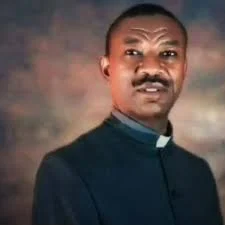
Joseph Enyinaya, a Catholic Priest in Imo State, South East Nigeria, has been arrested for shooting and killing a boy in his church.
The Priest of St Columbus Catholic Church, Amaimo, Ikeduru Local Government of the state, was alleged to have shot the victim for setting off fireworks in the church on December 31, during service.
Spokesperson of the Imo State Police Command, Henry Okoye told journalists that the suspect was arrested upon tip off, following which investigation commenced.
St Columbus Catholic Church, Amaimo
“The priest has been arrested, and the body of the boy has been deposited at a mortuary in Atta Ikeduru,” was reported as saying.
The police spokesperson assured all concerned that a thorough investigation will be conducted to ascertain the correct situation of the incident.
In furtherance of what the critical public now calls “Judiocracy” the Supreme Court of Nigeria pronounced three major judgements today, Friday, August 23, 2024 all, affirming the electoral victory of state Governors.
The beneficiaries of these judgements were Bayelsa, Kogi and Imo state governors.
In the case of Governor Hope Uzodimma of the All Progressive Congress APC, just as the other two cases, the Supreme Court affirmed his election.
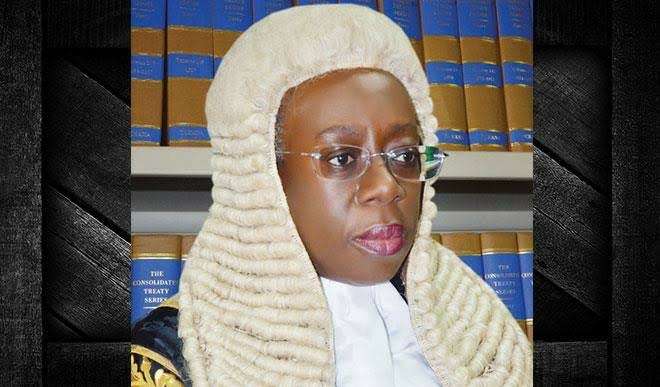
The court had in a judgement declared by Justice Mohammed Baba Idris, dismissed the two separate appeals brought to it by the Labour Party LP and the People’s Democratic Party PDP against the declaration of Hope Uzodinma.
The supreme court held that the appeals of the LP governorship candidate, Athan Achonu and that of PDP Samuel Anyawu were was lacking in merit.
According to the judgement, the LP and PDP gubernatorial candidates were said to have failed to establish allegations of over voting and other malpractices against the November 11,2023 poll.
There was pandemonium in Owerri, the Imo State capital yesterday as sporadic shooting was heard across Owerri, the state capital.
While some wondered if the gunshots were a result of an attempted jailbreak, a security Eons Intelligence in post shared on X attributed the shooting to unknown gunmen.
It wrote: “At 1130 am today 31st July, 2024, Owerri Prison under attack by Unknown gunmen as prison armed Squad in gun duel.
“Reinforcement from military and other security formation ongoing.”
It further tweeted, “Report of sporadic shooting across Owerri Municipal by UGM. Suspected Hoodlums also attacked the UBA bank at Wetheral Road.
“Avoid the area until normalcy is restored.”
While some witnesses attributed the gunshots to unknown gunmen, sources from Imo State capital, who witnessed the incident told SaharaReporters that the shooting could not be from unknown gunmen.
According to one of Sahara Reporters sources, the shooting is simultaneously going on at the Okigwe road, World Bank, Control, in front of Government House, Onitsha road, Amaku-Ohia – Akwaku road, and Aba road and Wetheral Road.
The source said: “We believe that the Governor Hope Uzodimma and his administration were behind the shooting to scare and send fear to the people who might be planning to come out tomorrow to participate in the nationwide ‘Day of Rage’ protests against hunger and misgovernance in Nigeria, and in the state.”
“You must have seen the video of Owerri, the State capital, it has been completely deserted. In those videos do you see security agencies moving around to contain it. That shows you that the shooting was government plan to scare would be protesters from coming tomorrow. That’s is the main agenda.
“Police, military and other security agencies are resided in the capital, with increased checkpoints in every streets in Owerri, from where did the so called gunmen came in from.”
Foremost journalist, Songster, actor and administrator, Ms Onyeka Onwenu has reportedly died. She passed, Tuesday evening at the Reddington Hospital, Lekki, Lagos.
It was reported that Ms. Onwenu slumped after playing at the birthday party of Mrs. Stella Okoli, the Chief Executive (CEO) of Emzor Pharmaceuticals.
Nigerian Anchor gathered from numerous sources that “Onyeka Onwenu just performed at the birthday of Mrs. Stella Okoli today (Tuesday, July 30, 2024), and after performing, she slumped.
“She was taken to Reddington Hospital and she couldn’t make it,” the unnamed eyewitness told the newspaper.
Born 31st January 1952, the late journalist turned singer, politician,rights activist, actor and administrator, and dubbed “The Elegant Stallion” by the Nigerian press, was at a time the chairperson of the Imo State Council for Arts and Culture.
In 2013, she was appointed the Executive Director/Chief Executive Officer of the National Centre for Women Development.
She will be remembered for her numerous songs, among them, “Wait for me” which she sang with Juju meastro, King Sunny Ade.
There has not been official confirmation from her family as at the time of filing this report.
Athan Achonu, the Labour Party’s gubernatorial candidate in Imo State, has urged the Independent National Electoral Commission (INEC) to cancel votes from polling units affected by violence.
Speaking after casting his vote in Umunumo hamlet, Ehime Mbano Local Government Area, Achonu emphasized the need for transparency in conducting elections, stating that canceling affected units is the only viable solution.
Expressing concern over reported violence, he decried the assault on party agents and characterized the situation as a departure from democratic norms, vowing to resist such disruptions for the sake of upholding true democracy and ensuring good governance.
“There is no other alternative than to cancel it so that every person will come there and watch it conducted.
“They beat up so many of our agents. We are sad, we are going to upload some of their pictures. This is crazy, this is what our democracy has come to.
“But we are resisting. Can’t you see the people here? They will not allow it. I hope it is the same thing going on everywhere so that we can have proper democracy and bring in good governance,” he stated.
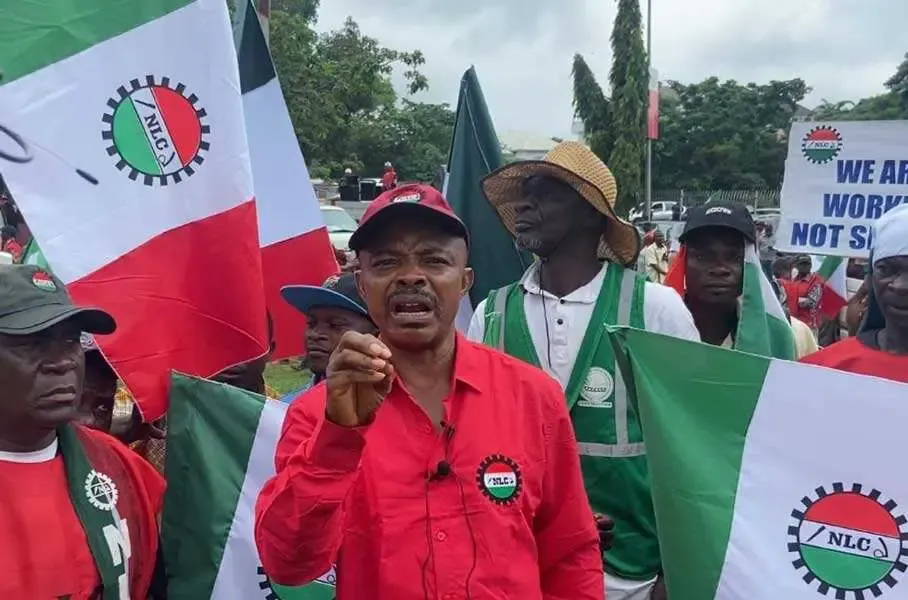
The Nigeria Labour Congress (NLC) has said it would begin protest in Imo State from November 1 over alleged violation and abuse of rights and privileges of workers by the State government.
Mr Joe Ajaero, NLC President said this at a news conference on Sunday in Abuja.
Ajaero said that “NLC was deeply concerned about the persistent and egregious violations of the rights and privileges of workers in Imo State by the State Government.”
“Despite our repeated efforts to engage in constructive dialogue and reach amicable agreements, the Imo State Government has become a habitual and serial breaker of these agreements, continuing to trample on the rights of workers in the state.
“As a result, we are left with no choice but to embark on mass protests and industrial actions beginning on the 1st day of November, 2023.
“This is to demonstrate our outrage and stop the continuing violation of the rights and privileges of workers in the state,” he said.
The NLC president said the protest was imperative as the government of the state had refused to implement previous agreements.
According to him, the government has repeatedly reneged on agreements, most notably the accord reached on January 9th, 2021, between the Government and Organised Labour.
“On outstanding salary arrears, shockingly, some workers have been subjected to a staggering 20 months of unpaid salaries under the unfounded label of ‘ghost workers’.
“Unjust declaration of workers as ghost workers,. Approximately 11,000 hardworking individuals have been unjustly branded as ghost workers, their salaries diverted even while they diligently carried out their duties,”he said.
On vandalisation of NLC State Secretariat, he noted that the wanton destruction of the NLC State Secretariat was a blatant attacked on the rights of workers and a violation of the sanctity of their representative body.
The NLC president said others were implementation of discriminatory pay introduction of discriminatory pay, unsettled gratuity arrears, non-compliance with National Minimum Wage, among others.
“Nigeria Labour Congress calls on all stakeholders, including civil society organizations, to stand in solidarity with the workers of Imo State in the face of these egregious violations.
“We implore the Imo State Government to honor its obligations and recommit to respecting the rights and privileges of workers.
“As long as it refuses, we will continue in this course of action until we see the desired change. We are ready for industrial peace in the state but the choice is entirely in the hands of the government of Imo state,”he said.
He also alleged that unfortunately, the government had relied on its powers to deploy the fierce and coercive forces of the state against trade unions.
Ajaero also warned the government of Imo state that the NLC would hold the Governor accountable if anything happens to any worker or trade union leader in the course of the lawful protests.
“Alll the threats we have received of violence against our persons are noted but we will not be deterred.
“On the 1 day of November, we begin this march to save workers of Imo state from the grievous harm the government has subjected them to these past years, ”he said.
Unidentified gunmen, on Tuesday, killed at least seven Joint Task Force (JTF) operatives in an ambush at Umualumaku settlement in Ehime Mbano Local Government Area of Imo.
The incident occurred at about midday, when the operatives arrived at the spot and getting set to mount a checkpoint.
The deceased operatives comprised personnel from the Nigeria Army, Police and Nigeria Security and Civil Defence Corps.
An eyewitness account said that the assailants also set the two patrol vans belonging to the task force ablaze, together with the remains of the operatives.
“I heard gunshots for some minutes but didn’t know what was actually happening.
“Another driver told us that soldiers and policemen were killed and burnt in two Hilux Vans just a few meters ahead of us,” a commuter bus operator said.
He further said on the condition of anonymity that motorists, who were plying the route, immediately began to make U-turn and diverted to other roads.
The Police Public Relations Officer (PPRO) in the state, ASP Henry Okoye, confirmed the incident but pleaded for time to get the full details of the gruesome murder.