Tag: Impeachment

  • Rivers Assembly Begins Impeachment Process Against Gov Fubara

    Rivers Assembly Begins Impeachment Process Against Gov Fubara

    Contrary to public expectations of renewed presidential intervention, the Rivers State House of Assembly has voted overwhelmingly to commence an investigation into allegations leveled against Governor Siminalayi Fubara.

    Twenty-five of the state assembly’s 32 lawmakers voted in favor of initiating the impeachment process. The decision came after efforts to resolve the political impasse through behind-the-scenes negotiations proved futile.

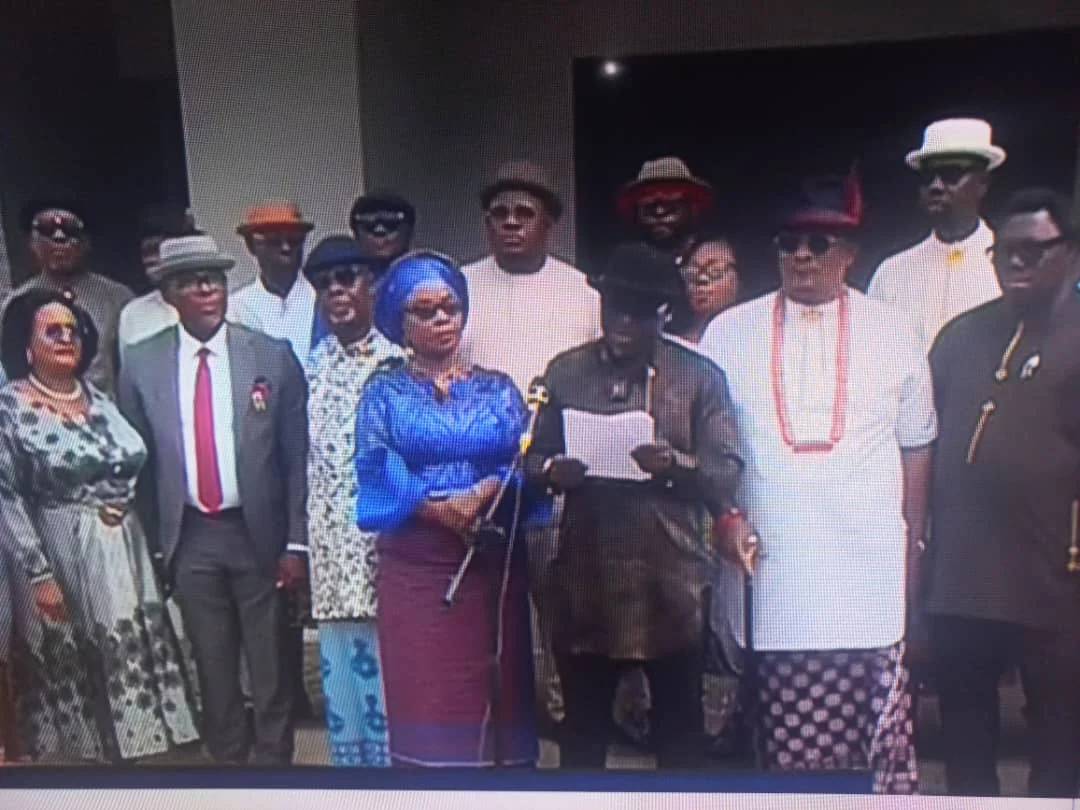
    Lawmakers announced the decision on Friday at the temporary Assembly complex, addressing the press on why the impeachment process had reached what they described as a point of no return. During the briefing, a member read a written statement outlining the Assembly’s position.

    The House said the decision followed the presentation of formal allegations against the governor and the subsequent resolution to proceed with an investigation.

    Some lawmakers who had previously distanced themselves from the impeachment threat have now reversed their positions. Hon. Emelia Amadi, speaking at the Assembly premises, said she had decided to close ranks with her colleagues, citing what she described as Governor Fubara’s continued unconstitutional actions.

    Other members reiterated their resolve to continue with the process, emphasizing that their actions were guided by constitutional responsibility and the need to uphold the rule of law.


    The impeachment of a state governor in Nigeria is governed by Section 188 of the 1999 Constitution (as amended).

    Under the Constitution, impeachment may be initiated on grounds of gross misconduct, defined as grave violations of the Constitution or serious misconduct in the performance of official duties.

    The process begins with a notice of allegation signed by at least one-third of the members of the State House of Assembly and served on the governor. Within 14 days, the Assembly must decide whether to investigate the allegations. Such a decision must be supported by not less than two-thirds of all members.

    If approved, the Speaker requests the Chief Judge of the State to constitute a seven-member investigative panel of persons of unquestionable integrity. The panel is required to investigate the allegations and allow the governor to respond.

    The panel must submit its report within three months. If the allegations are not proven, the matter ends. If they are proven, the House may proceed to adopt the report.

    A governor is removed from office only if the panel’s report is adopted by a resolution supported by not less than two-thirds of the Assembly members, after which the removal takes immediate effect.

    While the Constitution limits court interference in impeachment proceedings, the process must strictly comply with constitutional provisions to be valid.

  • PDP Reacts As Rivers Assembly Threaten To Impeach Fubara

    PDP Reacts As Rivers Assembly Threaten To Impeach Fubara

    The Rivers State chapter of the Peoples Democratic Party (PDP) has strongly criticized the Martin Amaewhule-led House of Assembly for its recent threats to impeach Governor Siminalayi Fubara.

    The assembly, perceived to be loyalists of the Minister of Federal Capital Territory (FCT), Nyesom Wike, had issued the impeachment threat against Fubara, citing his alleged refusal to implement an eight-point Peace Accord signed with Wike on the orders of President Bola Tinubu.

    Among the accusations leveled against Fubara is the alleged failure to provide funding for the Rivers Independent Electoral Commission to conduct elections for local government councils in the state.

    In response, the state Publicity Secretary of Rivers PDP, Sydney Tambari Gbara, condemned the assembly’s actions, urging them to desist from disturbing the peace of the state. Gbara also called on the assembly members to address their legitimacy concerns, particularly in light of their defection from the PDP to the All Progressives Congress (APC) and the ongoing legal challenges questioning their status.

    Gbara emphasized that the assembly’s decisions and laws hold no significance to the people of Rivers State, labeling them as an “illegal assembly” whose actions are inconsequential.

    Furthermore, Gbara dismissed claims that Governor Fubara had failed to implement the Peace Accord, stating that the governor had taken steps to promote peace in accordance with the law.

  • Impeachment Of Rivers’ Majority Leader, 4 Others Won’t Stand – Gov Fubara

    Governor of Rivers State, Siminalayi Fubara has declared the removal of the majority leader of the State House of Assembly, Hon. Edison Ehie, and four other lawmakers as “null and void.” 

    Earlier on Monday, the police fired tear gas to ward off protesters who were clamouring for the impeachment of the governor.

    The crisis in the state Assembly escalated after the House leader was ousted.

    A portion of the Assembly Complex was also gutted by fire.

    Reacting to the development, Fubara said the removal of the five lawmakers would not be recognized. 

    He further said that security operatives allowed arsonists to launch an attack on the assembly complex the previous night, resulting in extensive damage to the property. 

  • Impeachment Saga: Court adjourns Edo Dep Gov Shuaibu’s suit

    Justice Ahmed Mohammed of a Federal High Court sitting in Abuja, on Thursday adjourned till August 22, hearing in the suit filed by the Edo State Deputy Governor, Phillip Shuaibu over an alleged plan by the State governor, Godwin Obaseki to impeach him from office.

    The court insisted on the earlier order that status quo ante bellum be maintained by the Inspector General of Police (IGP), State Security Service (SSS), Obaseki, Speaker, Edo State House of Assembly and the Chief Judge of Edo state, who are listed as defendants respectfully in the suit.

    At the last adjourned date, Justice Mohammed ordered the respondents to appear before him, Thursday, to show cause why they should not be permanently restrained from impeaching the Edo State deputy governor.

    However, when the matter was called on Thursday, counsel to the plaintiff, George Ibrahim, informed the court that the first and second defendants did not file any affidavit to show cause as directed by the court.

    Responding, counsel to the second defendant (SSS) Harold I. told the court that the service only filed a counter affidavit to the originating summons of the plaintiff.

    He said, “We are contending that we ought not to have been brought before the court, that is why we found it not necessary to show cause, as we have no business in the matter. We are waiting for the substantive application.”

    The trial Judge however admonished the counsel that he should have, at least filed the process first and then mentioned his grievances in the said process for the court to take note of.

    Although, the Inspector General of Police (IGP) was not represented in court, Justice Mohammed however adjourned the matter till August 22 and urged the SSS to file its affidavit to the order to show cause, parties should maintain status -quo ante bellum and that hearing notice be served on all the parties in the matter.

    Shuaibu, in his originating summons, is praying the Court to determine whether, in view of the provisions of sections 186 and 193 of the 1999 Constitution, Governor Obaseki has the power to instigate the IGP and SSS to prevent him from accessing his office to carry out his Constitutionally guaranteed duties.

    He is also asking the court to ascertain whether the Governor has power to instigate the Speaker and the Chief Judge to commence impeachment proceedings against him with a view to remove him from office on any other ground other than allegations of misconduct as contained in section 188 of the 1999 Constitution, among others.

    The trial Judge had, on August 4, issued a temporary restraining order while ruling in a motion on notice filed by Shuaibu asking the court to stop the move to ease him out of office by his principal.