Tag: Inflation

  • Tinubu’s Tax Reset and the Rising Cost of Living: Who Really Pays in 2026?

    Tinubu’s Tax Reset and the Rising Cost of Living: Who Really Pays in 2026?

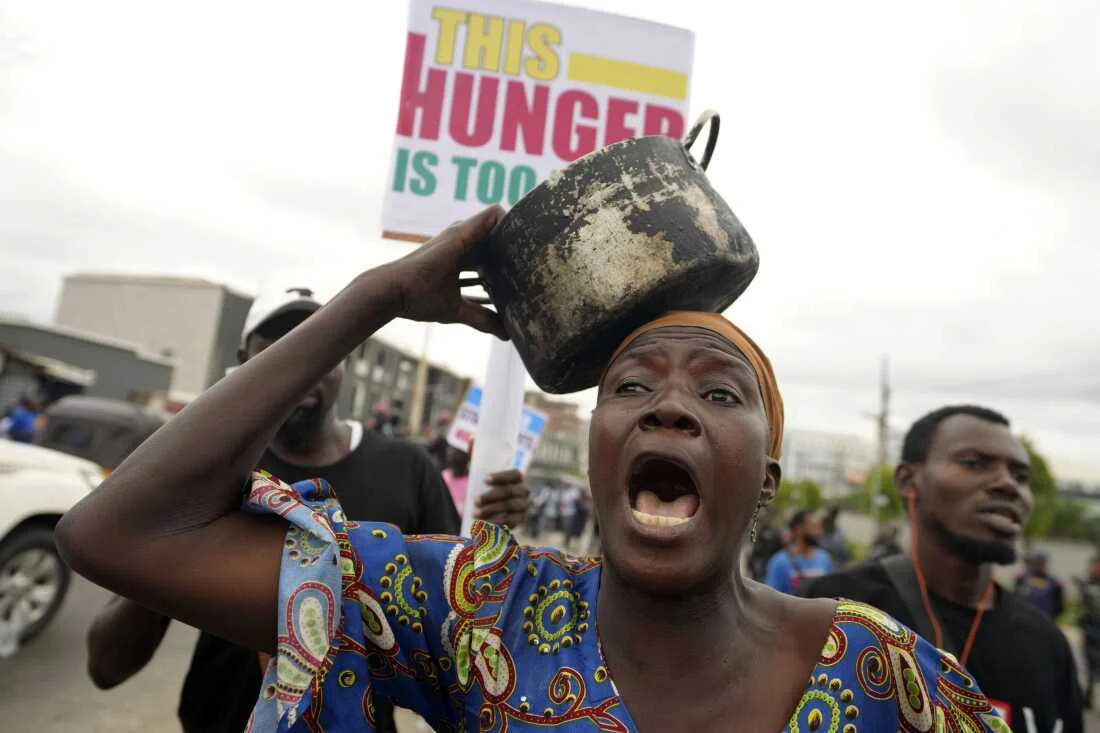
    By the start of 2026, the Nigerian economy had crossed a critical psychological threshold. For millions of households, survival, not prosperity, had become the central economic concern. Food prices climbed relentlessly, transportation costs ballooned, electricity tariffs rose, and the naira’s weakness continued to hollow out purchasing power. Wages, meanwhile, remained stubbornly stagnant. In one word: Nigeria’s cost-of-living crisis swirl.

    This is the economic terrain into which President Bola Tinubu’s administration has launched Nigeria’s most aggressive fiscal overhaul in decades. Framed as reform, sold as necessity, and defended as inevitability, the new tax regime arrives not as a technocratic adjustment but as an additional burden on a population already stretched to its limits.

    The question confronting Nigerians in 2026 is no longer whether reform is needed, but who bears the cost, and who decides how much pain is acceptable.

    Reform in the Middle of Hardship

    The removal of fuel subsidies unleashed a cascade of price increases that reverberated through every sector of the economy. Transport fares surged, food inflation accelerated, and informal businesses, already operating on thin margins, struggled to survive. Electricity tariff hikes followed, further eroding household incomes and raising production costs. Currency policy adjustments compounded the crisis, making imports more expensive and local substitutes scarcer.

    Rather than pause to stabilize living conditions, the government pressed ahead with sweeping tax reforms. For many Nigerians, the timing alone felt punitive: a state demanding more at the precise moment its citizens had less to give.

    A New Tax Regime, Old Trust Deficit

    The overhaul rests on four major laws that replace Nigeria’s chaotic tax framework with a centralized, digitally monitored system. On paper, the logic is compelling: fewer taxes, better enforcement, broader compliance. In reality, centralization without trust risks becoming coercion by another name.

    Progressive tax bands and exemptions for low-income earners are cited as evidence of fairness. Yet the lived experience tells a different story. Middle-income Nigerians comprising, civil servants, professionals, and small traders, are watching their take-home pay shrink as inflation bites and long-standing reliefs disappear. What remains is a widening gap between what the state demands and what it delivers.

    “Widening the Net” or Tightening the Noose?

    Officials insist the reforms are about widening the tax net rather than increasing the burden. But a net cast over a struggling economy does not magically become lighter because it is broader. When energy costs soar, food prices spike, and wages lag inflation, taxation, no matter how elegantly designed, feels punitive.

    The promise that higher revenue will eventually translate into better schools, hospitals, and infrastructure rings hollow in a country where decades of oil wealth failed to produce durable public value. Nigerians have heard this argument before. Each time, they were asked to be patient. Each time, patience yielded diminishing returns.

    VAT and Regional Fault Lines: Old Battles, New Weapons

    No element of Tinubu’s tax reset better exposes Nigeria’s unresolved national question than the proposed restructuring of the Value Added Tax (VAT) sharing formula. Presented by the government as a neutral, efficiency-driven move toward derivation, the reform has instead resurrected the ghosts of Nigeria’s most bitter fiscal conflicts, conflicts never resolved, only postponed. By tilting VAT allocation more decisively toward where consumption and economic activity are recorded, the reform overwhelmingly favours Lagos and a handful of commercially dominant states in the South-West. Lagos’s outsized contribution to VAT revenue is frequently cited to justify this shift. The logic is straightforward: where revenue is generated, revenue should remain.

    But Nigeria’s history warns that straightforward logic often produces dangerous outcomes. In the First Republic, a strong derivation principle allowed regions to retain up to 50 percent of revenues from cocoa, groundnuts, and palm produce. That system collapsed not because derivation was inefficient, but because widening regional disparities turned it into a political weapon. The fiscal tensions it generated contributed to the instability that ended civilian rule.

    After the civil war, military governments centralized revenue sharing not out of ideological preference, but because national survival required redistribution. Oil revenues were pooled to hold a fractured country together, not to reward efficiency. The VAT debate now retraces that path, without the trauma that once forced compromise.

    Many Northern states, heavily dependent on VAT allocations to fund basic services, see the reform not as fiscal federalism but as fiscal punishment. Their argument is blunt: productivity cannot be rewarded fairly in a country where productivity itself has been shaped by decades of uneven federal investment, insecurity, and policy bias. When ports, rail lines, industrial clusters, and financial infrastructure are concentrated in one region, derivation ceases to be neutral, it becomes structural exclusion.

    The echoes of the Niger Delta struggle are unmistakable. For decades, oil-producing communities watched wealth flow to Abuja while bearing the environmental and social costs of extraction. Today, roles appear reversed: commercially dominant states demand to keep what they generate, while poorer regions warn that redistribution, the glue of the federation, is being quietly dismantled.

    The federal government’s response, that states should simply “grow their economies,” rings hollow in regions battling insurgency, banditry, collapsing education systems, and mass poverty. Growth is not summoned by rhetoric; it is enabled by security, infrastructure, and human capital, public goods that require funding in the first place. History is unambiguous: Nigeria’s most destabilizing crises often begin as revenue disputes disguised as technical reforms. When groups feel fiscally cornered, resistance follows, political, legal, and sometimes worse. Wether anyone agrees or not, a VAT regime that sharpens inequality without robust equalization mechanisms is not reform, it is deferred instability. The question therefore becomes, wether Nigeria is prepared for another combustive civil disorder?

    The Lagos Model Goes National

    The reforms unmistakably bear the imprint of the Lagos model that is notorious for its centralized authority, digital surveillance, and uncompromising enforcement. In Lagos, this model thrived on a dense commercial base and a large formal sector. Nationally, it risks flattening Nigeria’s economic diversity into a one-size-fits-all template.

    Equally corrosive is the perception, fair or not, that fiscal power is increasingly concentrated within a narrow regional and ideological circle. In a federation where legitimacy depends on balance as much as performance, perception alone can be politically fatal.

    A Dangerous Gamble

    The tax reforms underpin President Tinubu’s ₦58 trillion 2026 Budget of Consolidation, a document that demands sacrifice now in exchange for promises later. But for Nigerians already suffocating under inflation, those promises feel remote and uncertain. This is the administration’s gamble: that Nigerians will endure sustained hardship on faith. Yet faith is precisely what the Nigerian state has depleted over decades of broken promises, opaque governance, and squandered revenues. Moreover, who shall have faith in your promises when it amounts to telling an economically distressed populace to fast while you, your family members and a few rogue elite feast?

    Tax reform without visible accountability is extraction.

    Ultimately, the success of Tinubu’s tax reset will not be decided in policy papers or revenue charts. It will be decided in markets, transport hubs, and households where people calculate daily whether survival is still possible.

    Without transparency, fairness, and immediate, visible improvements in public services, this reform risks doing more than failing. It risks hardening public cynicism, weakening compliance, and pushing an already fragile social contract toward a breaking point. As it is often asserted, Nigeria does not lack reform ideas. What it lacks is a state that convinces its citizens that reform is being done with them, not to them.

  • Food prices surge by over 180% in Nigeria

    Food prices surge by over 180% in Nigeria

    By Doris Isreal Ijeoma

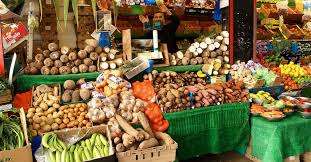
    Economic hardship has worsened for Nigerians as prices of garri, beans, yam, and tomatoes increased by at least 180 percent in June 2024, compared to the same period last year amid looming planned nationwide protests.

    The National Bureau of Statistics disclosed this in its June Selected Food report released on Wednesday.

    The report considered prices of staple foods, including garlic, beans, tomatoes, yam and potatoes.

    The data showed that food prices increased on a year-on-year basis and month-on-month basis.

    According to specific food item analysis, one kilogram of garri (white) went up by 181.66 percent on a year-on-year basis from N403.15 in June 2023 to N1,135.51 in June 2024, while there was an increase of 1.86 percent on a month-on-month basis.

    Also, the price of 1kg of beans brown (sold loose) stood at N2,292.76, indicating a rise of 252.13 percent YoY from N651.12 recorded in June 2023.

    Similarly, 1kg of yam tuber increased by 295.79 percent on a year-on-year basis from N510.77 in June 2023 to N 2,021.55 in May 2024.

    On a month-on-month basis, it increased by 52.87 percent from N 1,322.36 in May 2024 to N 2,021.55 in June 2024.

    Also, the price of tomatoes (1kg) increased Year-on-Year (YoY) by 320.67 percent to N2,302.26 in June 2024 from N547.28 in June of last year (2023).

    The report added that there was also a notable price increase of Irish potato by 288.5 percent on a year-on-year basis from N623.75 in June 2023 to N2,423.27 in June 2024.

    On a state-by-state level analysis, Lagos state recorded the highest price of 1kg tuber of yam at N3,376.54, while Adamawa recorded the lowest price at N1,100.00.

    Gombe recorded the highest average price of 1kg Garri (white) sold loose at N1,619.27, while the lowest was reported in Taraba at N900.

    This comes as June’s core and food inflation stood at 34.19 percent and 40.87 percent respectively.

    The implication is that the purchasing power of more Nigerians will continue to decline, worsening the misery index.

    The development comes as Nigerians gear up for a planned national protest scheduled for 1st August, 2024.

    Meanwhile, President Bola Ahmed Tinubu had called on the citizens to shelve the planned protests.

    According to him, the government needed time for its policies, including a new minimum wage of N70,000 to impact Nigerians positively.

    The government’s plea comes as Nigerian governors and ministers target dialogue to halt the planned protest.

  • BREAKING: Nigeria’s annual inflation rate rises to 33.95%

    BREAKING: Nigeria’s annual inflation rate rises to 33.95%

    Nigeria’s annual inflation rate climbed to 33.95 per cent in May 2024, up from 33.69 per cent recorded in April, according to the National Bureau of Statistics (NBS). This increase marks a rise of 0.26 percentage points month-on-month.

    Compared to May 2023, when the inflation rate stood at 22.41 per cent, the current figure reflects a significant year-on-year increase of 11.54 percentage points, illustrating a sharp uptick in inflationary pressures over the past year.

    On a month-on-month basis, the NBS reported that inflation for May 2024 was 2.14 per cent, slightly lower than the 2.29 per cent recorded in April 2024.

    This indicates a moderated pace of increase in the average price level compared to the previous month.

    In terms of food prices, the inflation rate accelerated to 40.66 per cent year-on-year in May 2024, marking an increase of 15.84 percentage points from May 2023, when it was 24.82 per cent.

    The sharp rise in food inflation highlights continued challenges in food affordability and accessibility across Nigeria.

  • CBN Eyes Explicit Inflation-Targeting Framework To Enhance MP Effectiveness

    The Central Bank of Nigeria (CBN) is set to adopt an explicit inflation-targeting framework to enhance the effectiveness of its monetary policy.


    The Governor, Central Bank of Nigeria (CBN), Mr. Olayemi Cardoso who disclosed this in Lagos while unveiling his policy direction at the Chartered Institute of Bankers of Nigeria (CIBN) bankers’ night, said that the details and requirements for this framework are currently being finalized alongside the fiscal authorities.


    He said the CBN will provide forward guidance, enhance transparency, and maintain effective communication with the public to anchor expectations and build trust among stakeholders.


    He said under the economic agenda of President Bola Ahmed Tinubu’s administration, the government has set an ambitious goal of achieving a Gross Domestic Product (GDP) of $1.0 trillion over the next seven years, with clearly defined priority areas and strategies. He said attaining this substantial target necessitates sustainable and inclusive economic growth at a significantly higher pace than current levels. The administration has already commenced this journey through fiscal reforms, including the removal of petrol subsidy and the unification of the foreign exchange market rate.   


    On achieving President Bola Tinubu’s Agenda, he  said Nigerian banks do not have sufficient capital in servicing a $1.0 trillion economy in the near future.


    He said the first step to be taking by the CBN will be directing banks to increase their capital while technology will continue to play a critical role in delivering financial services and enhancing financial inclusion.


    “Therefore, we must make difficult decisions regarding capital adequacy. As a first step, we will be directing banks to increase their capital,” he added.


    He stated that from his observation some licensees are operating outside the approved activities, breaching the boundaries set for them, insisting that any intentional or unintended non-compliance will be subject to sanctions, as operators have the responsibility to ensure that they are licensed for the activities they undertake.


    Speaking further he said “Concurrently, as we conduct a comprehensive review of the licensing framework for payment services, we will engage in extensive consultations to develop a new regulatory and compliance framework that is suitable for the technology-driven payment services sector.


    “Looking ahead for the industry, banks should reassess the responsible banking framework to ensure that the requirements are effectively integrated into their strategies. I am aware that some banks have made commendable progress in this regard.


    “The Central Bank of Nigeria is taking steps to enhance its in-house capacity so that it can assist other banks that still have progress to make in implementing their sustainability principles.


    The governor said the primary mandate of the CBN is to ensure price stability, in addition to other objectives such as issuing legal tender currency, safeguarding external reserves, promoting a sound financial system, and providing economic and financial advice to the government.


    He mentioned that  In line with CBN strategy to refocus on its core mandate, the CBN will discontinue direct quasi-fiscal interventionist activities and instead utilize orthodox monetary policy tools for implementing monetary policy.


    According to him “Our monetary policies will aim to achieve price stability, foster sustainable economic growth, stabilize the exchange rate of the naira, and reduce interest rates to facilitate borrowing and investments in the real sector. In order to ensure the proper functioning of domestic and foreign currency markets, clear, transparent, and harmonized rules governing market operations are essential.

    “New foreign exchange guidelines and legislation will be developed, and extensive consultations will be conducted with banks and FX market operators before implementing any new requirements”


    The CBN governor pointed out that the major challenges affecting the nation’s economy include high and rising inflation, inadequate foreign exchange supply, depreciation of the exchange rate, limited external reserves, weakened output, and high unemployment. These challenges according to him have led to increased interest rates, discouraging investments in productive activities.


    He said within the banking system, high inflation has affected asset quality and solvency ratios.


    Additionally, the persistent depreciation of the naira poses a significant risk for domestic banks with foreign exchange exposures.


    He assured Nigerians that while it is indeed a formidable challenge, it is not insurmountable, adding that with the right policy measures, we can overcome these obstacles and pave the way for progress and prosperity.


    He said the removal of petrol subsidy and the adoption of a floating exchange rate, among other government policies, are anticipated to have positive effects on the economy in the medium-term. These measures are expected to enhance investor confidence, attract capital inflows, stimulate domestic investment, and ultimately improve the level of external reserves. Additionally, they are expected to contribute to the stabilization of the domestic currency.


    He said despite the challenging global and domestic macroeconomic environment, Nigeria’s financial sector has demonstrated resilience in 2023, with key indicators of financial soundness largely meeting regulatory benchmarks.


    He mentioned that stress tests conducted on the banking industry also indicate its strength under mild-to-moderate scenarios of sustained economic and financial stress, although there is room for further strengthening and enhancing resilience to shocks.


    He said although the banking sector demonstrated soundness and resilience, there is still much work to be done in fortifying the industry for future challenges.


    He said in recent years, the continuous decline in Nigeria’s crude oil production has further weakened our already inadequate economic diversification. This has led to a decline in government revenue and foreign exchange inflows, while simultaneously witnessing a growth in public expenditures and a deterioration in macroeconomic indicators, which has constrained our policy options. Consequently, we have seen the fiscal deficit and public debt increase, placing additional strain on external reserves and contributing to exchange rate instability.

  • Petrol Price Increased To N630.63 In October -NBS

    The National Bureau of Statistics (NBS), has said that the average retail price of a litre of petrol increased from N195.29 in October 2022 to N630.63 in October 2023.

    It made the declaration in its Petrol Price Watch for October 2023 released in Abuja on Wednesday.

    It stated that the October 2023 price of N630.63 represented a 222.92 per cent increase over the price of N195.29 recorded in October 2022.

    “Comparing the average price value with the previous month of September 2023, the average retail price increased by 0.71 per cent from N626.21.

    “On state profiles analysis, Zamfara paid the highest average retail price of N659.38 per litre, followed by Gombe and Borno at N658.33 and N657.27, respectively.

    “Conversely, Lagos, Oyo, and Delta paid the lowest average retail price at N590.95, N592.19 and N599.38 respectively,’’ it stated.

    Analysis by zones showed that the North-East Zone recorded the highest average retail price in October 2023 at N644.16, while the South-West recorded the lowest price at N616.81 per litre.

    The NBS also stated in its Diesel Price Watch Report for October 2023 that the average retail price was N1004.98 per litre.

    It said that the October 2023 price of N801.09 per litre amounted to a 25.45 per cent increase over the N801.09 per litre paid in October 2022.

    “On a month-on-month basis, the price increased by 12.82 per cent from the N890.80 per litre recorded in September 2023,’’ it added.

    On state profile analysis, the report said the highest average price of diesel in October 2023 was recorded in Plateau at N1150.00 per litre, followed by Nasarawa at N1138.00 and Benue at N1091.67.

    On the other hand, the lowest price was recorded in Rivers State at N824.44 per litre followed by Borno at N827.27 and Kebbi State at N845.00 per litre.

    In addition, the analysis by zones showed that the North-Central had the highest price of N1090.69 per litre, while North- East recorded the lowest price at N947.32 per litre. 

  • Average Price Of 5kg Cooking Gas Hits 8.89% -NBS

    Average Price Of 5kg Cooking Gas Hits 8.89% -NBS

    The average retail price for refilling a 5kg Cylinder of Liquefied Petroleum Gas (Cooking Gas) increased by 8.89% on a month-on-month basis from N4,189.96 recorded in September 2023 to N4,562.51 in October 2023.

    In its Liquefied Petroleum Gas (Cooking Gas) Price Watch (October 2023), the bureau noted that on a year-on-year basis, it increased by 1.76% from N4,483.75 in October 2022.

    On state profile analysis, Kano recorded the highest average price for refilling a 5kg cylinder cooking gas with N5,181.43, followed by Adamawa with N5,142.86, and Ogun with N5,093.75.

    On the other hand, Ebonyi recorded the lowest price with N3,971.43, followed by Osun and Edo with N4,000.00 and N4,025.00 respectively.

    “In addition, analysis by zone showed that the North-West recorded the highest average retail price for refilling a 5kg cylinder cooking gas with N4,738.20, followed by the North-Central with N4,662.62, while the South-East recorded the lowest with N4,088.65.

    “Also, the average retail price for refilling a 12.5kg cylinder of cooking gas increased by 14.04% on a month-on-month basis from N9,247.40 in September 2023 to N10,545.87 in October 2023.

    “On a year-on-year basis, this rose by 4.93% from N10,050.53 in October 2022. On state profile analysis, Edo recorded the highest average retail price for the refilling of a 12.5kg cylinder of cooking gas with N12,536.88, followed by Jigawa with N12,050.00 and Delta with N11,987.50. Conversely, the lowest average price was recorded in Zamfara with N9,050.00, followed by Lagos and Oyo with N9,071.05 and N9,407.14 respectively,” the statistics bureau stated.

    Analysis by zone showed that the South-South recorded the highest average retail price for refilling a 12.5kg cylinder cooking gas with N11,480.60, followed by the North-Central with N10,683.97, while the South-East recorded the lowest price with N9,847.42.

  • Petrol Increased To N626.21 In September- NBS

    Petrol Increased To N626.21 In September- NBS

    The National Bureau of Statistics (NBS), says the average retail price of a litre of petrol increased from N191.65 in September 2022 to N626.21 in September 2023.

    It made the declaration in its Petrol Price Watch for September 2023 released in Abuja on Saturday.

    It stated that the September 2023 price of N626.21 represented a 226.75 per cent increase over the price of N191.65 recorded in September 2022.

    “Comparing the average price value with the previous month of August 2023, the average retail price increased by 0.08 per cent from N626.70.

    “On state profiles analysis, Taraba paid the highest average retail price of N665.56 per litre, followed by Borno and Benue at N657.37 and N641.29, respectively.

    “Conversely, Rivers, Delta and Jigawa paid the lowest average retail prices at N602.55, N605.88 and N617.42, respectively,’’ it stated.

    Analysis by zones showed that the North-East recorded the highest average retail price in September 2023 at N638.33, while the South-South recorded the lowest at N618.47 per litre.

    The NBS also stated in its Diesel Price Watch Report for September 2023 that the average retail price was N890.80 per litre.

    It explained further that the September 2023 price of N890.80 per litre amounted to a 12.77 per cent increase over the N789.90 per litre paid in September 2022.

    “On a month-on-month basis, the price increased by 4.27 per cent from the N854.32 per litre recorded in August 2023,’’ it added.

    On state profile analysis, the report said the highest average price of diesel in September 2023 was recorded in Kano at N967.78 per litre, followed by Anambra at N950.95 per litre and Niger at N950.55 per litre.

    On the other hand, the lowest price was recorded in Bayelsa at N840.16 per litre followed by Katsina at N840.55 per litre and Rivers at N840.82 per litre.

    In addition, the analysis by zones showed that the South-East has the highest price at N918.06 per litre, while the South-South recorded the lowest price at N863.97 per litre. 

  • Diminishing Naira Will Push Inflation To 18-Year High Of 27.67% – Rewane

    Chief executive Officer of Financial Derivatives Company Limited, Bismarck Rewane has projected that inflation is set to rise to 27.57 per cent due to a weak naira.

    This is the ninth consecutive rise in inflation rates.
    Analysts say it would represent the highest figure ever reached since September 2005.
    “Nigeria’s headline inflation is expected to increase again in September, rising to 27.57 per cent from 25.80 per cent in August.

    “Price increases were most notable in the food basket, predominantly commodities with high import content such as flour, semovita, noodles, and sugar.

    “With prices rising, fingers are pointing towards the exchange rate as the major inflation culprit. The naira crossed the psychological threshold of N1,000/$ in the parallel market, pushing up imported inflation despite the relative stability in global food prices. The Food and Agricultural Organisation of the United Nations (FAO) food price index was relatively flat at 121.5 points (pts) in September.”, said Rewane.

    Apart from the weak naira, drivers of inflation includes higher logistics costs and money supply growth (36 per cent year-on-year (y-o-y), saying the price of diesel, the major fuel used by trucks for logistics and distribution purposes, surged to a record high of N1,030/litre during the period.


    “Notably, month-on-month inflation, which is a more current measure of price movement, is expected to decline marginally to 2.78 per cent from 3.18 per cent in August, largely due to the harvest season impact. This suggests that inflation is likely to reach an inflection point and could begin to taper in the first quarter of 2024.

  • Average Price Of 5kg Cooking Gas Stood At N4,115.32 In August –NBS

    Average Price Of 5kg Cooking Gas Stood At N4,115.32 In August –NBS

    The National Bureau of Statistics (NBS), says the average price of 5kg of cooking gas increased from N4,072.87 recorded in July to N4,115.32 in August 2023.

    This is contained in the Bureau’s “Cooking Gas Price Watch’’ for August 2023 released on Monday in Abuja.

    The report said the August 2023 price represented a 1.04 per cent increase, compared to what was obtained in July 2023.

    However, the average price of 5kg of cooking gas decreased on a year-on-year basis by 7.66 per cent from N4,456 recorded in August 2022 to N4,115.32 in August 2023.

    On state profile analysis, the report showed that Kwara recorded the highest average price at N4,816.67 for 5kg cooking gas, followed by Benue at N4,766.67, and Zamfara at N4,756.25.

    It said on the other hand, Ondo recorded the lowest price at N3,299.29, followed by Ekiti and Nasarawa at N3,330.00 and N3,533.33 respectively.

    Analysis by zone showed that the North-Central recorded the highest average retail price at N4,501.26, followed by the North-West at N4,340.50

    “The South-West recorded the lowest retail price at N3,3737.12,” the NBS said.

    Also, the NBS said the average retail price for 12.5kg cooking gas increased by 0.35 per cent on a month-on-month basis, from N9,162.11 in July 2023 to N9,194.41 in August 2023.

    However, the report said the average price of 12.5kg cooking gas dropped by 7.12 per cent on a year-on-year basis, from N9,899.34 recorded in August 2022 to N9,194.41 in August 2023.

    On state profile analysis, it showed that Cross River recorded the highest average price at N10,172.83 for 12.5kg cooking gas, followed by Ogun at N9,963.64 and Nasarawa at N9,883.37.

    On the other hand, the report showed that Adamawa recorded the lowest price at N7,597.92, followed by Borno at N8,103.69 and Gombe at N8,173.44.

    Analysis by zone showed that the South-South recorded the highest average retail price at N9,569.58 for 12.5kg, followed by the South-West at N9,344.17.

    The report said the North-East recorded the lowest price at N8,631.95.

    Similarly, the average retail price per litre of Kerosene rose to N1,272.40 in August 2023 on a month-on-month basis, showing an increase of 0.92 per cent, compared to N1,260.81 recorded in July 2023.

    According to its National Kerosene Price Watch for August 2023, on a year-on-year basis, the average retail price per litre of kerosene rose by 57.18 per cent from N809.52 in August 2022.

    On state profile analysis, the report showed that Adamawa recorded the highest average price at N1,745.83 per litre of kerosene in August 2023, followed by Benue at N1,468.33 and Abuja at N1,486.89.

    “On the other hand, Jigawa recorded the lowest price at N1,000 followed by Edo at N1,104.78 and Kaduna at N1,121.79.”

    The NBS said the analysis further showed that the North-East recorded the highest average retail price per litre of kerosene at N1,370.64, followed by the South-East at N1,332.49.

    It said the North-West recorded the lowest average retail price per litre of kerosene at N1,163.25.

    The report said the average retail price per gallon of kerosene paid by consumers in August 2023 was N4,351.53, indicating a 1.06 per cent increase from N4,306.07 in July 2023.

    “On a year-on-year basis, the average price per gallon of kerosene increased by 47.63 per cent from N2,947.65 recorded in August 2022.”

    On state profile analysis, it showed that Lagos recorded the highest average price at N5,350.83 per gallon of kerosene, followed by Katsina at N4,991.85 and Borno at N4,897.47.

    On the other hand, the report said Delta recorded the lowest price at N2,945.71, followed by Rivers and Oyo at N3,287.50 and N3,711.79, respectively.

    Analysis by zone showed that the North-East recorded the highest average price per gallon of Kerosene at N4,637.71, followed by the South-East at N4,590.69.

    The report said the South-South recorded the lowest average price per gallon of Kerosene at N3,727.30.

  • MPC: Aligning fiscal, monetary policy for economic growth

    The benefits of collaboration in any human endeavour cannot be over-emphasised. Every part jointly fitted together produces the whole.
    Monetary policy affects financial conditions and the level of bank reserves.

    Whereas, fiscal policy can put money directly into or out of people’s pockets. Without fiscal policy as a tool to fight inflation, the federal government is working with one hand tied behind its back.
    The fiscal approach is anchored by the Federal Government whose role is mainly to moderate the excesses of other operators in the economy, and provide law and order and enabling operating environments.
    The Central Bank acts alone when it hopes that its policies would change the economic dynamics without any input from the fiscal side.
    Fiscal policy can slow spending directly by raising taxes or reducing government direct payments without necessarily having the intermediate step of raising the unemployment rate.
    Modest upfront fiscal contraction would reduce the cumulative amount of monetary tightening necessary, thereby improving the odds of avoiding recession.
    In this regard, analysts opine that the CBN must not operate in isolation, but collaborate with fiscal authorities to achieve sustainable economic results.

    Ineffective policies
    Most economic policies were not as effective as they ought to be during the last administration due to the lack of collaboration on the part of fiscal and monetary authorities as everyone seems to be running their ‘own thing’ as it were.
    While the Finance Ministry appears to be focused only on borrowing from all possible quarters and increasing tariffs to raise more revenue for the government, the CBN was preoccupied with shielding the Naira from unnecessary pressure through rampant importation of items that could have been produced locally, thereby depleting the foreign reserves and spiking exchange rate.
    Analysts note that one of the dilemmas of Nigeria is fiscal indiscipline that is seen in the actions of the political office holders. In the last dispensation, while the CBN was trying to grow the economy through expansionary policies targeted at increasing capital flows (or credit) to the real sector, the fiscal authorities, on the other hand, were raising taxes on many items that affect their activities, which the CBN was trying to expand.
    And that was why at every opportunity, suspended CBN Governor, Godwin Emefiele always called for an alignment between fiscal and monetary policies.
    According to Emefiele, the country’s monetary and fiscal authorities must “collaborate and work in harmony to accelerate Nigeria’s economic development even as he added that “finding a sustainable solution requires a broadened participation of colleagues from the fiscal side.”
    Speaking at the 149th meeting of the Monetary Policy Committee of the Central Bank of Nigeria (CBN), the Apex Bank’s Acting Governor, Folashodun Shonubi, said there was a need for fiscal and monetary authorities to align together to be able to address present economic challenges.
    Reading the communiqué at the end of the two-day meeting, Shonubi noted that subsidy removal, exchange rate liberalization and disbursement of palliatives, would have pass-through effects on inflation. He therefore, called “monetary and fiscal authorities to sustain collaboration towards addressing the inflationary pressure and incentivize domestic investment to reduce unemployment and boost output growth.
    The Monetary Policy Committee “…enjoined the Federal Government to continue to explore policies to improve investor confidence in the Nigerian economy and pave the way for foreign and domestic investments.
    “Members emphasized the need to attract investments, particularly, to auto manufacturing, aviation, and rail industries to boost non-oil revenues.”
    Experts have continuously argued that all these can only happen when both of them work in harmony. For instance, from time to time, the Federal Government comes up with its fiscal policies based on national economic philosophy and objectives, to aid or readjust the economy.
    CBN then makes monetary policies to ensure availability of money at the right cost, adequate volume and appropriate type to facilitate the cost effectiveness of production and trade. However, we saw monetary authority make incursions repeatedly into the economic policy territory hitherto exclusively reserved for the fiscal authority in Nigeria.
    This has then made the CBN a punching bag for every frustration in the economy in regards to monetary and fiscal balancing of macroeconomic issues.

    Breaking from the past
    In trying to break away from the past mistakes, President Bola Tinubu quickly appointed seasoned economist Wale Edun as his Special Adviser on Monetary Policy. The objective was to have the two sides coming together to align policies before they become public document.
    And true to type, Nigerians did see it in the MPC decision as the monetary policy rate hike was by 25 basis points contrary to what analysts and industry players had projected.
    In arriving at the decision, the MPC considered the outlook for the domestic economy with the policy options to either hold or hike the policy rate to offset the moderate increase in headline inflation.
    With headline inflation still on the rise due to the effect of fuel subsidy removal and the naira float which is driving the prices of goods and service upwards, the Apex Bank new that raising rates like in previous times will be counter-productive to what the monetary authorities wanted to achieve with the policy reforms that has been embarked upon by the fiscal authorities.
    Knowing that when the palliatives begin to flow, there would be much liquidity in the system, the Committee had to be proactive in line with current thinking.
    According to the CBN Governor, “Considering the option to hold, the Committee reviewed the impact of the continued rise in inflation on various macroeconomic variables, noting the potential dampening effect on output growth. Members agreed unanimously that the previous series of rate hikes had indeed greatly moderated the pace of price increases.
    “The option to continue to hike the policy rate, albeit moderately, also presented a strong alternative. This is premised on the expected liquidity injections into the economy from the recent policy developments and the likely impact on inflation.
    “The Committee remained cautious in arriving at a policy decision as Members noted the need to continue to support investment which will ultimately lead to the recovery of output growth. The balance of these arguments thus leaned in favour of a moderate rate hike, to sustain efforts at anchoring inflation expectation, narrow the negative real interest rate gap, and improve investor confidence.”

    Achieving fiscal, monetary balance

    For economist Adefolarin Olamilekan, achieving economic growth requires a mixture of monetary and fiscal balance.

    According to Adefolarin, there is no universal rule when it comes to raising or lowering the interest rate, so far there is a targeted economic goal.

    “On the other hand, events happening in developed countries, where Central banks have been raising rates as measures to reduce inflation, is a case in point.

    “Moreover, the latest rate of 18.75% according to the CBN is to also fight inflation in the country.

    “Meanwhile, if this could mean alignment with fiscal policy, we can’t but agree with such, having suffered from a peculiar challenge of distorted and disconnected policy in the past that led to fiscal imbalance, huge government debt and poor revenues,” he said.

    Going forward, the political economist said the alignment must take cognizance of trade policy to further expand the economic growth, and significantly broaden the non-oil sector and expand export orientation.

    “We can’t afford inconsistent policies from the government, especially as successive administration failed to acknowledge the imperative of multi-sectoral advantage the alignment of fiscal and monetary authority could achieved.

    “Kind enough, we are indeed may be witnessing a broader and inclusive economic action from the government.

    “With economic policy instrument that considered the boosting Nigeria’s economic system, with a focus of linking all real sector together through fiscal and monetary measure.

    This, in our understanding, is to remove the disarticulations of previous years impending on our micro and microeconomics stability,” he proffered.