Former US President Bill Clinton has said he is “grateful” for the ongoing ceasefire in the Israeli war on Gaza.
Mr. Clinton was the host of the signing of the historic Oslo Accords, which was the closest the warring parties came close to attaining a ceasefire.
The Elder Statesman was magnanimous in attributing the current breakthrough to the efforts of Mr. Donald Trump, the current US President and Qatar, the lead mediating country.
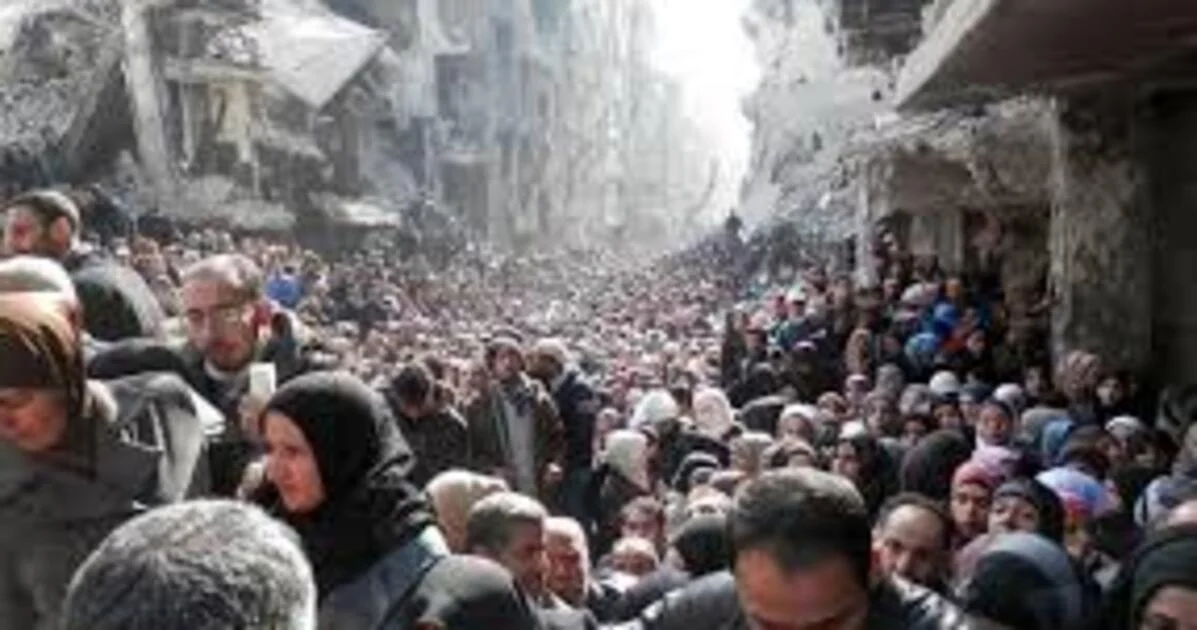
Jubilant Palestinians
Clinton said “Mr. Trump and his administration, Qatar, and other regional actors deserve great credit for keeping everyone engaged until the agreement was reached.”
Mr. Clinton issued a statement on X where he said, “Now Israel and Hamas – with the support of the United States, the region, and the world – must try to turn this fragile moment into lasting peace that provides for the dignity and security of both Palestinians and Israelis,”
Mr. Clinton urged that the warring parties- Israel and Hamas- with support of the United States, the Middle East region and the world should “try to turn this fragile moment into a lasting peace for the dignity and security of both Palestinians and Israelis.”’
Hamas and Israel have signed on to the first phase of a peace deal, paving the way for the end of the Israeli war on Gaza.
The breakthrough was announced by the US President, Mr. Donald J.Trump.
Making the announcement around twelve midnight Nigerian time on his confirmed social media handle, @realDonaldTrump, the President of the United States (POTUS) said, “I am very proud to announce that Israel and Hamas have both signed of on the first phase of our Peace Plan.”
He went further to state, “ This means that ALL of the Hostages will be released very soon, and Israel will withdraw their Troops to an agreed upon line as the first steps toward a Strong, Durable and Everlasting Peace.”
Mr. Trump who had earlier promised to visit the Egyptian venue of the peace negotiation this weekend assured that “All Parties will be treated fairly!”
“This is a GREAT day for the Arab and Muslim world, Israel,all surrounding Nations, and the United States of America.”
Further, the President expressed his gratitude to the mediating countries, namely; Qatar, Egypt and Turkey,” who he said worked with the United States “to make this Historic and Unprecedented Event happen.”
Mr. Ended the message with the biblical phrase, “blessed are the peacemaker.”
The current Israel-Hamas war, now in its third year, began on October 7, 2023.
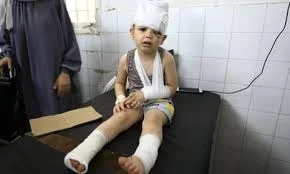
A report by Reuters states that Palestinian health authorities say Israel’s two-year-old ground and air campaign against Hamas militants in the Gaza Strip has killed more than 67,000 people, with nearly a third of the dead under the age of 18.
The head of UN Palestine refugee agency (UNRWA), Philippe Lazzarini, has reaffirmed the body’s commitment to assisting a population whose rights “continue to be violated.”
In a social media post on Friday, Commissioner-General Lazzarini stated that “people in Gaza have undergone systematic dehumanisation” since the war there began.
He stressed that “Palestinians do matter, including those in Gaza. Their rights, lives, and futures matter,” emphasising that “human rights cannot be applied selectively.”
His remarks follow U.S. President Donald Trump’s proposal this week that America should seize control of Gaza and permanently displace Palestinians—an act the UN Secretary-General called “ethnic cleansing.”
Lazzarini quoted UN chief António Guterres, who reiterated that peace depends on ending occupation and establishing an independent Palestinian state, with Gaza as an integral part.
The UNRWA chief said his agency’s teams remain committed to providing critical aid to Palestine refugees until empowered Palestinian institutions become a sustainable and viable alternative.
UNRWA continues to face major obstacles in carrying out its work.
In January, two Israeli laws took effect, banning UNRWA operations within its borders and prohibiting Israeli authorities from engaging with the agency.
UNRWA was ordered to leave its premises in East Jerusalem, and visas for international staff were not renewed.
Despite restrictions, teams are still delivering aid in the West Bank, including East Jerusalem, and in Gaza, where a ceasefire remains in place after 15 months of war.
Meanwhile, UN Humanitarian Coordinator Tom Fletcher continued his week-long visit to Israel and the Occupied Palestinian Territory.
On Friday, he visited an UNRWA-run shelter in Deir Al-Balah, Gaza, before travelling to Jerusalem through the Kerem Shalom crossing.
Fletcher met displaced families who shared their struggles over the past 16 months. Staff managing the shelter also described challenges in sustaining critical humanitarian support.
The UNRWA site is one of many schools in Gaza repurposed as shelters. Fletcher met children missing their education and stressed the urgency of reopening schools.
In Jerusalem, Fletcher met with UN aid agency heads and other humanitarian officials to discuss sustaining aid to Gaza and supporting West Bank operations.
The agreement, which calls for exchanging Palestinian inmates in Israeli prisons for hostages held in Gaza, is set to go into force on Sunday.
Following more than 460 days of fighting in which Israeli troops have killed over 46,788 Palestinians and injured 110,453, Benjamin Netanyahu’s cabinet has accepted an agreement with Hamas for a ceasefire in Gaza.
The agreement, which was approved early on Saturday morning and is anticipated to go into effect on Sunday, calls for exchanging Palestinian inmates in Israeli prisons for hostages held in Gaza. The details of a lasting end to the conflict will then be finalized.
Israel blamed Hamas for delaying important sessions of its cabinet and security cabinet, which were scheduled to vote on Thursday, because of apparent long-standing differences among ministers.
Hamas allegedly broke important terms of the deal in order to secure last-minute concessions, according to Netanyahu’s staff. Izzat al-Risheq, a senior Hamas official, however, emphasized that the organization was still dedicated to the ceasefire agreement.
Hamas said in a statement earlier on Friday that obstacles that arose in relation to the terms of the Gaza ceasefire agreement had been resolved at dawn that day.
According to Netanyahu’s office, if the Israeli cabinet approved the accord, Hamas would begin releasing prisoners “as early as Sunday.”
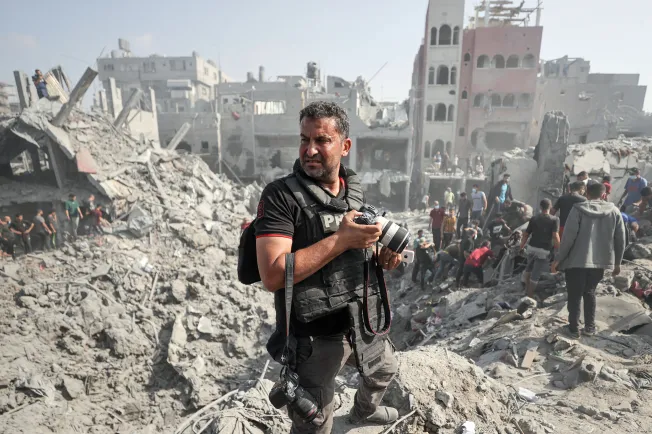
Destruction of Gaza by IDF
On Wednesday, mediators Qatar, Egypt, and the United States announced the ceasefire accord.
According to the agreement, Israeli forces will gradually withdraw from several parts of Gaza, a six-week interim ceasefire will be implemented, and humanitarian aid will increase.
The World Health Organisation (WHO) says Gaza ceasefire could boost aid deliveries to 600 trucks daily amid reports that Israel’s security cabinet has given the green light to a ceasefire deal with Hamas.
Dr Rik Peeperkorn, WHO representative in the occupied Palestinian territories (OPT), expressed the optimism in a statement on Friday.
“The target is to get between 500 and 600 trucks in per day over the coming weeks,” Peeperkorn said.
This would represent “a huge increase” from the 40 to 50 lorries reaching Gaza in recent months and be similar to the level of aid reaching Gaza before war erupted on Oct. 7, 2023.
Speaking from Jerusalem, the WHO medic described the ceasefire announcement as “a sign of hope”.
He, however, warned that the challenge is massive and daunting, because of chronic and severe shortages of food, fuel and medical supplies.
According to him, plans are in place for deliveries to begin on Sunday.
“We have ordered temporary prefabricated clinics and hospitals.
“We will integrate into the existing health facilities as part of plan to expand some needed bed capacity, address urgent health needs and health service delivery.”
Humanitarians have repeatedly warned that the crisis in Gaza for civilians has reached catastrophic levels.
More than 46,000 people have been killed, according to the authorities and more than 110,000 have been injured – often with life-changing injuries – since the conflict began in October 2023.
“Disease is spreading and the risk of famine remains high – needs that are critical to address, especially when more than 12,000 patients – a third of them children – still await evacuation for specialised care,” Peeperkorn said.
He complained that the pace of evacuations has been painfully slow.
Of 1,200 requests submitted between November and December 2024, only 29 were approved, a rate of just 2.4 per cent, according to WHO.
The WHO and other agencies have stressed the immediate need to provide food, water and medical supplies, but also fuel and spare parts for hospital generators.
Gaza’s healthcare system has been shattered, with only half of its 36 hospitals currently operational.
Critical health infrastructure continues to be targeted, according to the UN health agency, which pointed to 664 healthcare attacks since October that have caused deaths among civilians and medical workers, also damaging vital health facilities.
In spite of the dire conditions, WHO aims to implement an ambitious 60-day emergency health response plan, once a ceasefire kicks in.
This includes scaling up existing health efforts, setting up temporary medical clinics and restoring essential healthcare services.
Efforts will also focus on combating malnutrition, bolstering disease surveillance and providing medical supplies to areas that have been difficult to access until now.
Israeli war on Gaza
According to WHO, more than $10 billion is required to restore Gaza’s shattered healthcare system, and substantial international support will be essential to avoid further loss of life and prevent a complete breakdown of the region’s health infrastructure.
In addition to addressing the immediate health needs, there is also a pressing requirement for broader humanitarian aid.
Food, clean water and shelter are fundamental priorities, alongside other crucial medicines and medical equipment which remain in desperately short supply.
For the moment, international agencies continue to work under difficult and dangerous conditions, hoping that the ceasefire will offer a lifeline to those trapped in the besieged enclave.
In an address at the Arab-Islamic Summit in Riyadh, Saudi Arabia, President Bola Tinubu called for an immediate halt to the ongoing Israeli war on Gaza, stressing the prolonged suffering caused by the conflict.
Speaking to heads of state from the Organization of Islamic Cooperation (OIC) and the Arab League, Tinubu highlighted the grave humanitarian situation in Gaza, urging the world to work toward lasting peace.
Nigeria’s President reaffirmed his country’s strong support for a two-state solution, advocating for the peaceful coexistence of Israel and Palestine.
He emphasized that this solution remains the key to achieving lasting peace, with both nations deserving security and dignity.
Tinubu called on global leaders to take collective action, beyond mere condemnation, to end the violence that has devastated so many innocent lives.
The President also noted the importance of respecting international law, emphasizing that while nations have the right to self-defense, such actions must be proportionate and mindful of the rights of civilians.
He stressed that the lives of innocent people cannot be dismissed as mere collateral damage in the pursuit of political or military goals.
Reflecting on Nigeria’s unwavering stance on the two-state solution, Tinubu remarked that it is a vision of equality, mutual recognition, and self-determination for both peoples.
He called for dialogue, mutual respect, and an understanding of the historical context to resolve the conflict.
The President urged the international community to find new, innovative paths to peace, noting the profound impact of the ongoing violence and the global exposure of the conflict.
Tinubu commended King Salman and Crown Prince Mohammed bin Salman for convening the summit and reiterated Nigeria’s commitment to supporting international efforts aimed at achieving peace and stability in the Middle East.
He reminded attendees that Nigeria’s own experiences have underscored the importance of respecting diversity and avoiding identity politics in the pursuit of peace.