Tag: Katsina State

  • Katsina adopts bottom-up approach for 2026 budgeting

    Like Delta, Katsina State Government has organised a town hall meeting across the 361 wards in the state to assess community needs and gather citizens’ inputs for the 2026 budget.

    The town hall meeting was inaugurated on Thursday at Kankara Local Government Area (LGA),by the Deputy Governor, Alhaji Faruq Lawal-Jobe.

    Nigerian Anchor reports that the current administration in Delta state had adopted similar bottom-up approach to get the buy-in of citizens in the annual budget plan.

    In a speech at the event, Katsina deputy governor said the initiative, approved was  part of the state’s preparation for the formulation of the 2026 budget .

    “This event marks a significant milestone that reaffirms the government’s  commitment to inclusive governance, citizen participation, and Community-Driven Development (CDD).

    “Gov. Dikko Radda’s administration believes that the best ideas for development often comes from the people as they live with the realities we seek to transform.

    “The town hall meeting taking place in all the 361 wards in the state represents more than just a consultation, it is part  of a broader vision to deepen democratic governance, promote accountability, and ensure that our budget reflects the actual needs of our communities.

    “We are here to listen and to collaborate towards building a stronger, as well as a virile Katsina State together,” according to the deputy governor,” he said.

    Lawal-Jobe  further explained that the initiative, jointly implemented by the state’s Ministry of Budget and Economic Planning and the Community Development Programme ( CDP,), was a deliberate policy designed to bring government closer to the people and improve  service delivery to the citizens.

    According to him, the policy will give the residents the platform to voice their challenges, outline their priorities and suggest workable solutions.

    He pointed out that through the approach, they were  implementing the core principles of CDD by empowering the people to actively participate in shaping the interventions that affect their lives.

    The deputy governor added that in so doing, they were  also fulfilling their obligations under the Open Government Partnership (OGP), and reinforcing their transparency and accountability frameworks.

    In his remarks, the state’s Commissioner for Budget and Economic Planning, Alhaji Anas Malik, said the process was not just another meeting, but a strategic shift in the way they plan and budget.

    He added, “For too long, budgets were drawn  up with minimal consultation with the very people they are meant to serve.

    “But today, we’re changing that narrative. We’re here because we believe the voices of our citizens matter.

    “We believe that development must begin at the grassroots, and we believe that for any budget to be effective, it must reflect the real priorities of the people.

    “The exercise will also help us differentiate between what the local government should address, what the state government should prioritise, and what should be escalated to the Federal government or development partners.”

    “We are also working closely with Local Government Councils, CSOs, traditional institutions, and the media to ensure transparency and accountability throughout the process,” he said.

    Earlier, the Coordinator of the CDP, Dr Kamaludeen Kabir, said that the meeting across all wards of the state was as a result of Radda’s unwavering belief in participatory democracy and CDD.

    “This initiative did not just happen by chance, it is a bold policy decision by a governor who believes that development must begin with the people, and that communities must define their own priorities.

    “His Excellency deserves our collective commendation for bringing this idea to life and institutionalising it as part of the state’s budgeting process,” Kabir said.

    He told the participants that the 2026 budget would  be shaped by their priorities, challenges, and aspirations, from water to education, roads to markets, health centres to livelihood opportunities. 

  • Katsina begins GDP survey to gauge economic performance

    Katsina begins GDP survey to gauge economic performance

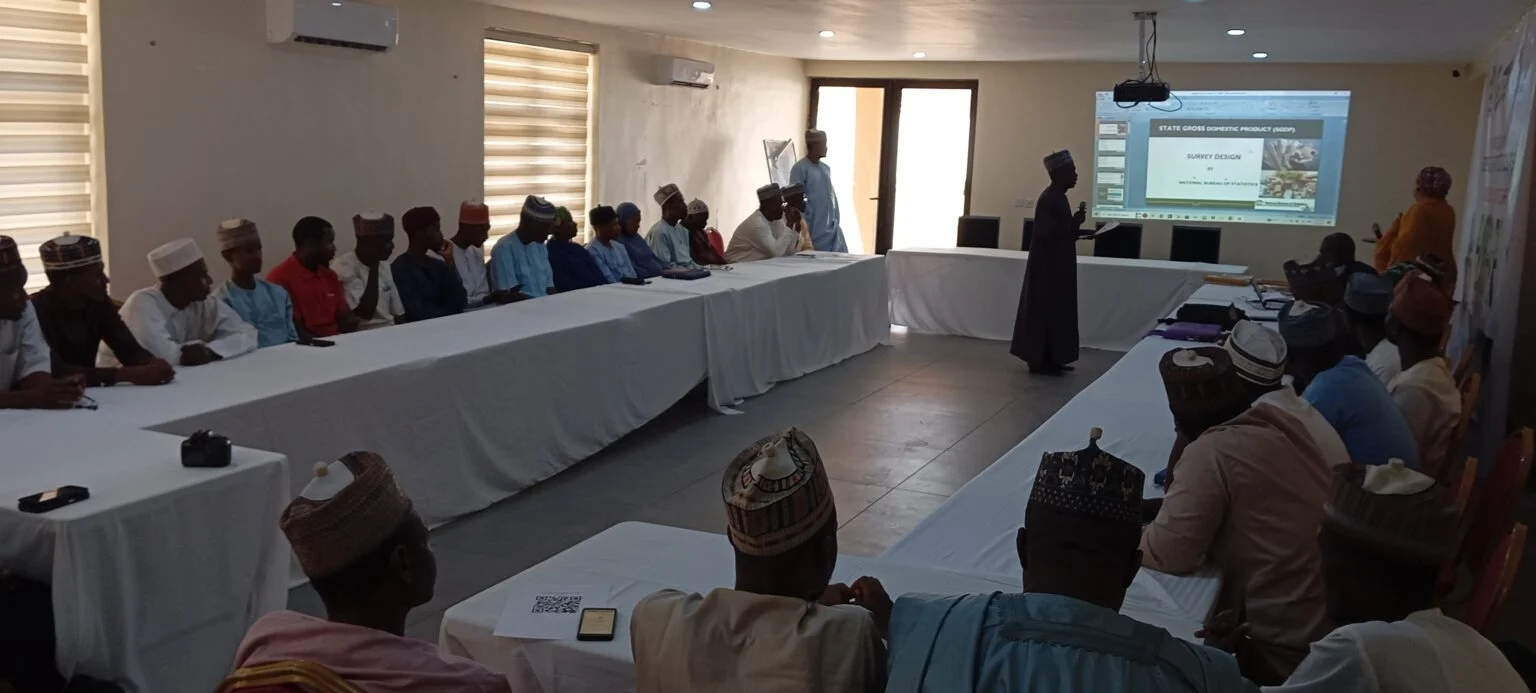
    The Katsina State Government, has flagged off the process towards the conduct of the State’s Gross Domestic Product (SGDP) survey to gauge the state economic performance.

    Gov. Dikko Radda, announced this in Katsina on Tuesday, at the opening of a 5-day training for the project enumerators, supervisors and other stakeholders.

    Represented by Alhaji Ibrahim Mu’azu-Safana, Permanent Secretary Ministry of Budget and Economic Planning, Radda said that the exercise would provide insights into the performance of the state’s economy.

    This he said include the contribution of various stakeholders, the growth rate of the state’s  GDP, and the challenges needed to be addressed.

    ”It is salient that we have a metric for measuring overall economic activities in the state. The one that is often used by National and Sub-national is the GDP.

    ”That is why we are here to flag off the implementation of the state GDP,” the governor said.

    He reiterated that the computed state GDP that would be produced at the end of the activities would be used in making informed fiscal reforms and evidence-based development plans.

    The governor noted that the Medium Term Expenditure Framework (MTEF), was based on some macroeconomic assumptions, which include the GDP and inflation.

    ”I charged the state’s Bureau of Statistics to work on the state-level inflation statistics. These two vital statistics shall be released timely to aid implementable economic planning in Katsina.

    ”We have started witnessing the fruits of our collective labour, as food insecurity is continually diminishing, and prices of produce are crashing.

    ”We will not relent until we ensure that access to affordable food is achieved by all and sundry in the state.

    ”Let me assure you without equivocation that the security improvement recorded in the state will be sustained to serve as an impetus that will drive investment,” he also said.

    Radda revealed that the wisdom behind the establishment of the Katsina State Development Enterprises (KASEDA) was to transform MSMEs, in terms of capacity building and provision of supportive capital.

    ”I hope that all the more than 500,000 registered enterprises in the state will benefit from one intervention or the other without recourse to party politics.

    ”Similarly, my administration has placed a premium on Agriculture consistent with what is often described as an agrarian state,” he added.

    Earlier, the state’s Commissioner of Budget and Economic Planning, Alhaji Malik Anas, said that the survey was a crucial step towards understanding the economic landscape of the state and identifying areas for growth and development.

    Anas, represented by Alhaji Sa’idu Danrimi, a Director in the ministry, said that as the state strive to build a more prosperous and equitable society, it was essential to have accurate and reliable data to inform a decision.

    ”It will also provide the required macro-economic assumptions for the ongoing government reforms, including MTEF, MTSS and the entire budget process,” he said.

    Anas commended the effort of the state governor and the state’s Statistician General, Prof. Saifullahi Sani-Ibrahim for working tirelessly to design and implement the survey.

    In his remarks, the state’s Statistician, Prof. Saifullahi Sani-Ibrahim, said the main exercise was expected to commence across the state on March 24, 2025.

    According to him, it has been the dream of the governor to see that all data that have been lacking in the state and will stand the test of time are generated.

  • Out-of-school children: UNICEF moves to cut number in Kano, Jigawa, Katsina

    Out-of-school children: UNICEF moves to cut number in Kano, Jigawa, Katsina

    The United Nations Children’s Fund (UNICEF), has reiterated its commitment to supporting Jigawa, Kano and Katsina States to reduce the high rate of out-of-school children and improve the education sector.

    The UNICEF Chief of Kano Field Office, Mr Rahama Mohammed-Farah, made the disclosure at a media briefing on the International Day of Education (IDE) 2025, on Friday in Kano.

    He revealed that North-West has the second highest number of out-of-schools in Nigeria.

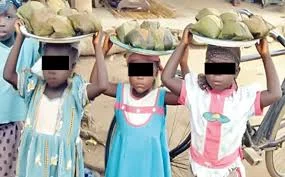
    “The situation of out-of-school population in Kano, Jigawa and Katsina States is alarming, and further exacerbated by poor learning outcomes for those children who are fortunate to be enrolled in school.

    “There are currently about 10.2 million children at the primary level who are out-of-school in Nigeria, 16 per cent of them are from Kano, Jigawa and Katsina states, according to MICS 2021.

    “Katsina State alone has 536,112 out-of-school children,” he said.

    Mohammed-Farah said UNICEF would continue to support those states in the areas of increasing enrollment drive, building the capacity of their teachers, improving infrastructure and providing instructional materials.

    Other areas of intervention, he said, were the provision of personal hygiene and sanitation facilities, safe drinking water points and creating a conducive learning environment.

    Mohammed-Farah, who said the importance of education can never be over-emphasised, described education as a fundamental human right and engine of development of every society.

    The chief of the field office, therefore, urged those states to intensify efforts in increasing appropriation, release of funds for basic education.

    He also said that UNICEF has been supporting psychosocial programmes for children affected by conflicts, violence, or other forms of trauma.

    The support, he said, helped them to cope with their experiences and foster a safe learning atmosphere.

    He added that UNICEF introduced innovative approaches such as integrating technology into education to enhance learning opportunities for thousands of students through the Nigeria Learning Passport (NLP).

    According to him, 182,170 children, teachers, and parents registered in it and they were benefiting from the programme.

    He explained that the digital learning platform had provided free access to 15,000 curricular-aligned content.

  • Nigeria Air Force Strike in Katsina Community Causes Collateral Damage

    Nigeria Air Force Strike in Katsina Community Causes Collateral Damage

    A bombing exercise in Shawu village in Ruwan Godiya district of Faskari LGA, Katsina State, has led to multiple casualties. 

    The incident, which occurred on Thursday morning, was initially believed to be an accidental strike by the Nigerian Air Force. 

    The operation was intended to target terrorists in the area but tragically struck the community.

    Local authorities have weighed in on the situation. 

    The state’s commissioner for internal security, Nasiru Mu’azu, has refuted claims of an accidental attack, stating the airstrike was deliberate and aimed at terrorists in the region. 

    He emphasized that the military conducts thorough surveillance before launching any operation to ensure the target is correct.

    The Faskari Local Government chairman, Musa Ado Faskari, called the event unfortunate, confirming the deaths of four individuals. 

    He further explained that Shawu has been known as a stronghold for bandits and other criminals, which made it a focal point for the airstrike. 

    Efforts to assess the extent of the injuries continue as local officials coordinate assistance for the wounded.

  • Fire Outbreak At Katsina Government House

    Fire Outbreak At Katsina Government House

    An early morning fire has razed the red chamber of Katsina Government House.
    The chamber is attached to the governor’s office, where the governor meets important personalities.
    Details are sketchy regarding the cause of the fire and the level of damage as at the time of this report.
    Daily Trust gathered that Governor Dikko Umaru Radda was in Funtua attending a zonal town hall meeting when the calamity struck.
    He was there to engage with the population on their needs and aspirations.
    Details later….