Tag: Lagos State House of Assembly

  • Police Crack Down on Protest Against Forced Evictions in Lagos

    Police Crack Down on Protest Against Forced Evictions in Lagos

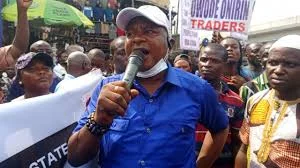
    Police officers attached to the Lagos State Police Command, including members of the Rapid Response Squad (RRS), on Wednesday fired tear gas to disperse residents protesting the demolition of homes in several parts of Lagos.

    The protesters, drawn from communities such as Makoko, Iyana-Oworo, Otumara and Owode-Onirin, said their homes were destroyed without proper notice, consultation or plans for resettlement. They described the demolitions as forced evictions that have left many families homeless and without livelihoods.

    The protest, organised by the Coalition Against Demolition, Forced Eviction, Land Grabbing and Displacement in Lagos, began peacefully at Ikeja Bridge and moved towards Alausa before stopping at the Lagos State House of Assembly, where protesters hoped lawmakers would intervene.

    Witnesses said police fired tear gas outside the Assembly complex, causing panic and injuries. Several protesters, including the protest leader popularly known as Comrade Soweto, were arrested. Blood stains were seen on the ground, while the exact number of injured or detained persons remained unclear.

    Rights advocates say both the police response and the demolitions raise serious concerns. They point to previous rulings by the Lagos State High Court, which have declared that demolishing homes without proper notice, consultation or alternative housing violates the dignity and basic rights of residents. Courts have also ordered the Lagos State Government to stop such evictions unless due process is followed.

    Protesters carried placards reading, “Lagos is not for the rich alone” and “A megacity cannot be built on the bones and blood of the poor,” highlighting fears that development projects are pushing poor communities out of the city.

    Human rights groups have called on the Lagos State Government to stop further demolitions, release those arrested during the protest, and engage affected communities to find fair and humane solutions.

    As of mid-afternoon, security operatives remained stationed around the state secretariat, while tension lingered in the area.

  • Lagos Assembly in 2025: Between Institutional Crisis and Legislative Productivity

    Lagos Assembly in 2025: Between Institutional Crisis and Legislative Productivity

    The Lagos State House of Assembly in 2025 presented a study in contrasts: a legislature shaken by a profound leadership crisis, yet paradoxically productive in lawmaking and oversight. The events of the year exposed both the fragility and resilience of legislative institutions in Nigeria’s most politically influential state.

    At the centre of the crisis was the dramatic removal of Speaker Mudashiru Obasa on Jan. 13 by 36 lawmakers, followed by the election of Deputy Speaker Mojisola Meranda. Lawmakers justified the action as a corrective step aimed at addressing alleged misconduct and abuse of power, and as an attempt to reset the leadership culture of the Assembly.

    However, the decision to remove a sitting Speaker while he was abroad created a legitimacy problem that quickly escalated into a full-blown institutional crisis. Rather than stabilising the House, the move deepened internal divisions, weakened cohesion among lawmakers, and opened the Assembly to intense political pressure from outside forces.

    The failure of party mechanisms to swiftly resolve the dispute was particularly instructive. Interventions by senior figures of the All Progressives Congress (APC), including former governors Chief Bisi Akande and Chief Olusegun Osoba, failed to restore unity. Even the Governance Advisory Council (GAC), traditionally regarded as the party’s ultimate authority in Lagos politics, proved unable to impose a settlement. That some stakeholders openly suggested that only President Bola Tinubu could resolve the crisis underscored the limits of institutional autonomy within the state’s political structure.

    The crisis reached its most dramatic point on Feb. 17, when Obasa returned to the Assembly complex with security operatives and declared himself the lawful Speaker. His brief occupation of the Speaker’s Office symbolised not just a personal power struggle, but a broader contest over authority, legality and control of the legislature. The episode further polarised lawmakers and exposed the Assembly to public embarrassment.

    Mrs Meranda’s short tenure as Speaker unfolded in an atmosphere of instability, culminating in a clash between officials of the Department of State Services (DSS) and legislative workers. The arrests that followed raised concerns about the encroachment of security agencies into legislative affairs and further highlighted the erosion of internal order within the Assembly.

    Ultimately, the resolution of the crisis on March 3 — through the intervention of President Tinubu, the resignation of Meranda and the reinstatement of Obasa — reinforced perceptions that political power, rather than legislative process, remains decisive in resolving elite conflicts. While the intervention restored surface stability, it left unresolved questions about legislative independence, internal democracy and succession norms within the House.

    Yet, beyond the political drama, the Assembly’s legislative output in 2025 tells a more complex story. Despite internal discord, lawmakers continued to function, passing several significant bills that have long-term implications for governance in Lagos State.

    The swift passage of the N3.37 trillion 2025 Appropriation Bill early in the year demonstrated institutional continuity amid crisis. The “Budget of Sustainability,” with its emphasis on infrastructure, economic diversification and social inclusion, reflected policy consistency between the legislature and executive, even as leadership battles raged within the House.

    Similarly, the passage of the Local Government Administration Bill signalled an effort to modernise governance at the grassroots by harmonising existing laws and aligning state frameworks with national reforms. The E-GIS Bill, aimed at improving land administration and transparency, addressed long-standing structural weaknesses in land management — a critical issue in a rapidly urbanising state like Lagos.

    The Assembly also showed responsiveness to social pressures through bills such as the Tenancy and Recovery of Premises Bill. By seeking to regulate rent practices, curb illegal evictions and reduce agency fees, the House positioned itself as an arbiter in the increasingly contentious landlord–tenant relationship. If effectively implemented, the bill could significantly alter housing dynamics in the state.

    In the health sector, the bill establishing the Lagos State University of Medicine and Health Sciences reflected a strategic attempt to address chronic manpower shortages, while other proposed laws on correctional services, cancer treatment and policing pointed to a broader agenda of institutional reform.

    Oversight activities further demonstrated that legislative functions did not completely grind to a halt. Committees continued to scrutinise ministries, departments and agencies, reviewed executive appointments and monitored policy implementation, reinforcing the Assembly’s constitutional role despite internal divisions.

    Stakeholder assessments of the Assembly’s performance reflect this dual reality. Civil society actors and former lawmakers acknowledged the damaging effect of the leadership crisis but also credited the House with passing impactful legislation and sustaining debate and oversight. Public reactions, particularly from residents and community leaders, suggest that constituency-level interventions and empowerment programmes helped buffer the reputational damage caused by the crisis.

    In sum, the Lagos State House of Assembly in 2025 illustrated the tension between politics and institution-building in Nigeria’s democratic practice. The leadership crisis exposed vulnerabilities in legislative governance and party control, while the volume and substance of legislative work highlighted the Assembly’s underlying capacity to function.

    Whether the House builds on its legislative gains or remains vulnerable to future power struggles will depend on lessons drawn from the crisis — particularly the need for clearer internal processes, stronger institutional autonomy and mechanisms for resolving leadership disputes without external intervention. The trajectory of 2026 will test whether the Assembly can move from crisis management to genuine institutional consolidation.