Tag: leadership crisis

  • NAHCON in Turmoil as Usman Resigns, Stakeholders Demand Total Overhaul

    NAHCON in Turmoil as Usman Resigns, Stakeholders Demand Total Overhaul

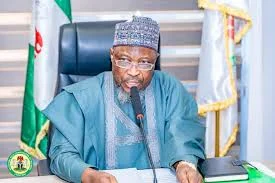
    Nigeria’s Hajj industry is once again under intense scrutiny following the resignation of Prof. Abdullahi Usman as Chairman and Chief Executive Officer of the National Hajj Commission of Nigeria (NAHCON), with stakeholders calling for a comprehensive overhaul of the commission.

    Usman’s resignation, which takes effect Monday, was announced on Wednesday in Abuja. He cited personal reasons for stepping down after about 14 months in office.

    However, industry experts argue that his exit reflects deeper structural and political tensions that have continued to destabilize the commission.

    Recurring Leadership Changes Raise Concern

    Within the last two years, NAHCON has witnessed three leadership changes, a trend stakeholders describe as troubling for the stability of Hajj operations.

    Alhaji Zikrullah Hassan served as NAHCON Chairman from December 2019 to October 2023 following his appointment by former President Muhammadu Buhari.

    During his tenure, the commission navigated the challenges of COVID-19 restrictions, introduced the Hajj Savings Scheme, and established the Hajj Institute of Nigeria.

    Hassan was replaced by Alhaji Jalal Ahmad Arabi, appointed by President Bola Tinubu on Oct. 17, 2023, for a four-year term. Arabi was later removed amid an investigation into alleged misappropriation of funds released for the 2024 Hajj exercise.

    Following those allegations, Tinubu appointed Usman in October 2024. His tenure, however, was marked by internal disputes and allegations concerning financial management during the 2025 Hajj, generating public scrutiny and tension within the commission.

    “Campaign of Calumny” — Experts React

    Abubakar Jiddah Usman, a Hajj industry expert, said the frequent leadership changes highlight entrenched discord within and outside the sector.

    “Yes, Prof. Abdullahi Usman has resigned. Whether voluntary or forced is immaterial,” he said.

    “What remains indisputable is that anyone overseeing the Hajj industry in Nigeria faces a campaign of calumny from within and outside the sector. Within two years, NAHCON has changed leadership three times. Shall we continue this way?”

    He dismissed claims that Usman lacked administrative competence, arguing that fluency in Arabic or clerical background had never been a defining criterion for success in managing Hajj operations.

    “To argue that modern Hajj operations require less Arabic fluency is baseless. Were previous chairmen deficient in administrative skills?” he queried.

    He added that past chairmen also faced allegations ranging from abuse of office to political interference, suggesting systemic issues rather than individual shortcomings.

    Call for Sole Administrator

    Another expert, Abdullahi Mohammad, advocated for a radical administrative intervention.

    According to him, NAHCON requires a “no-nonsense” reform strategy, potentially through the appointment of a sole administrator with full authority to restructure the commission.

    “The administrator must insulate the Hajj process from material interests and political interference. Only a radical administrative reset can restore diligence, transparency and service to pilgrims,” he said.

    Concerns Over 2026 Hajj Operations

    Muhammed Ibrahim, Coordinator of Independent Hajj Reporters, described Usman’s exit as unfortunate but not unexpected, noting that most pre-Hajj activities, including registration and airline contracts, had already been completed.

    “Given the discord, it may be best to allow the chairman step down to avoid conflicts affecting pilgrims,” he said.

    He recommended that an experienced insider oversee ongoing operations to ensure continuity until after the Hajj, when a substantive appointment can be made.

    Operators Lament Slot Allocation Issues

    Alhaji Abdullateef Yusuf, President of the Association for Hajj and Umrah Operators of Nigeria, pointed to challenges surrounding the allocation of additional Hajj slots.

    “Many members paid millions for hotels and tickets in Saudi Arabia, amounting to billions of naira. Slots promised were later withdrawn, and there is still no clarity. Our operators are in serious limbo,” he said.

    He urged the government to appoint a calm, reputable and experienced individual with integrity, warning against politically motivated appointments.

    Tinubu Nominates New Chairman

    In response to the resignation, President Tinubu has nominated Ambassador Ismail Yusuf as the new Chairman and Chief Executive Officer of NAHCON.

    The nomination, subject to confirmation by the Nigerian Senate under Section 3(2) of the NAHCON Act 2006, was conveyed in a statement by presidential spokesman Bayo Onanuga.

    The President confirmed that he had written to Senate President Godswill Akpabio seeking expeditious confirmation of the nominee.

    Ambassador Yusuf is a career diplomat who served as Nigeria’s Ambassador to Türkiye from 2021 to 2024.

    As stakeholders await Senate action, many insist that beyond leadership changes, what NAHCON urgently needs is structural reform to restore credibility, transparency and stability to Nigeria’s Hajj operations.

  • Another NAHCON Chairman Down as Old Fault Lines Resurface

    Another NAHCON Chairman Down as Old Fault Lines Resurface


    The reported resignation of Abdullahi Saleh Usman as Chairman of the National Hajj Commission of Nigeria (NAHCON) has once again exposed a troubling reality: nearly two decades after its creation, Nigeria’s Hajj regulatory body remains trapped in a cycle of leadership crises, boardroom warfare, and political interference.

    Documents, stakeholder accounts, and past official actions suggest that Usman’s exit is not an aberration—but the latest casualty of a system that has repeatedly failed to reform itself.

    January 2026 Warning That Broke the Camel’s Back

    The immediate trigger for Usman’s departure was a January letter sent by the NAHCON Board to Bola Ahmed Tinubu, in which board members passed a vote of no confidence in the chairman.

    According to sources familiar with the letter, the board accused Usman of:

    • Centralising decision-making
    • Undermining statutory board functions
    • Delaying key procurement and logistics processes
    • Presiding over a breakdown of trust between management and commissioners

    Most damningly, the board warned that the commission was “ill-prepared” for the 2026 Hajj cycle and risked “systemic failure” if leadership issues were not urgently addressed.

    Within days, reports of Usman’s resignation surfaced.

    A Familiar Pattern: Chairmen Who Rarely Finish Strong

    Since NAHCON was established in 2006, few of its chairmen have exited office without controversy.

    2016–2019: Abdullahi Mukhtar Muhammad

    The tenure of Abdullahi Mukhtar Muhammad remains one of the most turbulent in the commission’s history.

    In 2019, the Federal Government suspended him amid allegations of financial mismanagement and administrative breaches. Although Mukhtar denied wrongdoing and no criminal conviction followed, his suspension came after prolonged conflict with board members and internal audit queries that prompted presidential intervention.

    The episode paralysed preparations for that year’s Hajj and deepened mistrust between NAHCON and state pilgrim welfare boards.

    Earlier Years: Bello Sadiq and Boardroom Infighting

    Under Bello Sadiq, NAHCON also struggled with allegations of opaque contract awards and disputes over airline selection for pilgrim airlifts.

    Multiple states openly accused the commission of poor coordination and late communication, while internal disagreements between political appointees and career officials spilled into the public domain.

    Though no formal indictment followed, his tenure reinforced a growing perception of NAHCON as an institution perpetually at war with itself.

    Structural Flaws No Chairman Has Escaped

    Interviews with former officials and Hajj industry stakeholders point to structural weaknesses that transcend individual personalities:

    • Blurred authority lines between the chairman, board, and secretariat
    • Politicised appointments that prioritise patronage over expertise
    • Weak internal controls, particularly around procurement and vendor selection
    • Last-minute decision-making in an environment that requires years of advance planning

    Each new chairman inherits these flaws—and often attempts to consolidate power to manage them—triggering resistance from boards, staff, or political sponsors.

    Why the Stakes Are Now Higher Than Ever

    Unlike a decade ago, Saudi Arabia now enforces stricter timelines, digital pilgrim profiling, and early contractual commitments. Any internal paralysis at NAHCON has immediate international consequences.

    Stakeholders warn that repeated leadership implosions could eventually:

    • Jeopardise Nigeria’s Hajj quota
    • Increase costs for pilgrims
    • Damage Nigeria’s credibility with Saudi authorities

    A senior state pilgrims’ board official, who spoke on condition of anonymity, described the situation bluntly:

    “We change chairmen, but we never change the system that destroys them.”

    Usman’s Exit: End of a Tenure, Not the Crisis

    While the Presidency has yet to formally confirm Usman’s resignation or announce a successor, analysts argue that replacing him without comprehensive reform risks repeating history.

    Calls are now growing for:

    • Clear statutory separation of powers within NAHCON
    • Stronger external oversight and audits
    • Transparent procurement frameworks
    • Appointments based on sector competence, not politics

    Until those issues are addressed, critics warn that NAHCON’s revolving door will keep spinning—no matter who occupies the chairman’s seat.