The Independent National Electoral Commission (INEC) has released the official election notice for the upcoming Area Council elections in the Federal Capital Territory (FCT), Abuja.
The polls are scheduled for Saturday, February 21, 2026.
According to the notice published on Wednesday, voting will begin at 8:30 a.m. across all polling units in the six area councils of the FCT.
INEC confirmed that the Bimodal Voter Accreditation System (BVAS) will be used for voter identification and authentication.
The commission stated that only registered voters with valid Permanent Voter Cards (PVCs) would be allowed to participate in the election.
Anyone without a PVC will not be permitted to vote.
The election is expected to follow standard electoral guidelines, ensuring transparency and credibility in the process.
The teachers are set to resume work today, October 8, 2024.
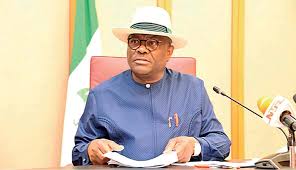
Primary school teachers in the Federal Capital Territory (FCT) have called off their three-week strike following the intervention of FCT Minister Nyesom Wike.
The Nigerian Union of Teachers (NUT) in the FCT announced the suspension after an emergency meeting of its State Wing Executive Council (SWEC) in Abuja.
The teachers had initially gone on strike on September 18 over unresolved issues related to welfare, including the payment of allowances, minimum wage arrears, and salary adjustments.
This recent action was part of ongoing efforts by the union to secure better conditions, following previous strikes in October 2023 and January 2024.
The union acknowledged that Wike’s intervention included the release of 40 percent of the 25-month 2019 minimum wage arrears.
They also appreciated his commitment to settling the remaining 60 percent by directing the FCT Treasury to use a portion of the Internally Generated Revenue (IGR) from the area councils.
The union emphasized that they will continue pushing for the fulfillment of outstanding entitlements, such as peculiar allowances and salary reviews, to prevent future strikes.
Still savouring current surge in economic growth, the Federal Government is targeting about 40,000 jobs to be created from the Abuja Industrial Park with projected impact of catalysing further growth in Nigeria’s economy.
The Minister of the Federal Capital Territory, Mr Nyesom Wike, said on Wednesday that the park being developed by Zeberced Group, will create 40,000 jobs and improve Nigeria’s economy when fully operational.
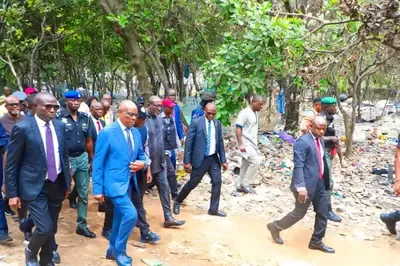
Wike stated this when he visited the site located at Idu Industrial Zone, Abuja, on Wednesday.
The minister, excited by the level of development at the ark, promised to brief President Bola Tinubu on what he had seen.
Quality and Size of the Project
Describing the project as mind-boggling, Wike expressed optimism that it would grow the nation’s economy and create employment for the teeming youths in FCT.
“As far as I’m concerned, I’ve never seen this in the entire country. This is the first time I am seeing this,” he said.
He added that the project, which had been approved to operate as a Free Zone, would attract lots of businesses due to the availability of a stable power supply.
The minister commended the company for its commitment to completing the project and for its decision to expand the access road to the park.
He assured all of the continued support of the FCT Administration to ensure that the road project was completed.
MFCT to Complement with Upgrade of Roads
He expressed optimism that the road project, when completed, would accelerate the development of the Idu District.
“From what the Managing Director of the company, Mr Adil Kurt said, the park is going to create not less than 40,000 direct employments and that is huge.
“There is no government that will not support this kind of investment.
“Having gone around, we can attest to the fact that this is really what we need to grow our economy. You can imagine how the whole of Idu will be developed.
“This is what every government craves for, and we must give them the necessary support,” he said.
Commendable Performance
Wike further commended the Zeberced Group for maintaining a high standard in the delivery of the project.
He particularly commended the company for branding all items being produced at the park, including polypropylene pipes, and sandwich insulation roofing sheets among others, as made in Nigeria.
“For us, it is quality, and we thank God that we have some companies that are committed to making sure that they produce in Nigeria,” Wike said.
The minister assured residents of adequate security and called for further investments in local production.
Earlier, Kurt said that the park, which sits on 250 hectares of land, was being developed as a free zone, and currently features 208 workshops.
He equally said that the park was designed to support small and medium-scale industries, among others.
“The production of precast concrete, plastic and polypropylene pipes, as well as sandwich insulation roofing sheets among others, were already ongoing at the park.
“The project will significantly contribute to the growth and development of the nation’s economy,” he added
Barring an urgent intervention by ‘Mr. Project’, Chief Nyesom Wike, the Honorable Minister of the Federal Capital Territory (FCT), the Jabi Lake Recreation Park may soon be taken over by hoodlums and street beggars who throng the arena daily in search of sustenance.
The real danger however, is the definite possibility of dangerous criminals infiltrating the arena some day and effecting traumatizing acts like an abduction.
The Jabi Lake, an aquatic splendour of some sort, is one of the iconic landmarks of Abuja, the Federal Capital city of Nigeria, Africa’s most important country.
Jabi Lake, Abuja: Aerial View
Constructed in 1981, as an earthen dam, Jabi Lake is a body of water that was initially created as the first major source of water supply to the people of Abuja. The lake is over 1,300 hectares in total surface area. The reservoir may have initially supplied water to about 100,000 people..
Even though man-made and limited in size, the lake has morphed into a natural aquatic ecosystem, with the potential of standing Abuja in the same stead as one of the beautiful cities in a hinterland decorated with a body of water like Cairo on the bank of the Nile River or the six great lake cities of the United States.
In a bid to enhance its status as a recreation and tourist centre of good reckoning, the Jabi Lake area was reconstructed and re-kitted to become a beautiful recreation park in 2007. The new centre was inaugurated by then President Olusegun Obasanjo. As a reflection of the administration’s high hopes for the park, christened as the Jabi Lake Resort, it invited the American actor and global entertainment icon, Wesley Snipes to grace the occasion.
Unfortunately, all that is history now. Jabi Lake Resort has become a shadow of its old self. The lake has been taken over be seaweed (water hyacinth) while wild bushes have grown around the precincts of the body of water, both completely defiling its scenic beauty.
Overgrown with Seaweed
Most infrastructural facilities provided have been totally vandalized. Armoured cables buried several feet in the ground to connect security lighting poles have been uprooted and carted away. Public conveniences have been taken over by hoodlums and the destitute who have converted them to their abodes.
Uprooted Armoured Cable (left)
Street beggars, urchins and hawkers abound, littering the complex with human and material wastes. At the Jabi Lake recreation Park today, fitness enthusiasts who throng the arena daily to walk out, have to wangle through columns of beggars and their wards, mostly out-of-school children who pack into the arena to eke out a living.
Mango and other ornamental trees planted for flora and climatic control are routinely violated and felled.
Hawkers and other petty service providers have erected shacks and other makeshift shelters in the complex thereby giving it a complete slum-look.
Destitute/Beggars
Residents of the FCT, revelers, fitness enthusiasts and potential investors who spoke to Nigerian Anchor wonder why such a great recreation facility could be left to waste.
Efforts to get the opinion of officials of the Federal Capital Territory Authority (FCTA) on the issue proved futile.
Experts on tourism suggest the Ministry of the FCT should take steps to extricate property from whatever ownership encumbrances, revamp the facility and put it to some kind of commercial use.
Better still, a Private, Public Partnership could be evolved to ensure that the complex, which was constructed at a great cost to taxpayers is not lost to hoodlums.