Tag: National Assembly

  • NASS Seeks Take-Off Grants for Otukpo, Other New Teaching Hospitals

    NASS Seeks Take-Off Grants for Otukpo, Other New Teaching Hospitals

    The Joint Committee on Health of Nigeria’s National Assembly has appealed to the Joint Committee on Appropriations to make financial provisions for take-off grants to support newly established federal hospitals across the country.

    Chairman of the committee, Ipalibo Banigo, made the appeal on Wednesday while presenting the harmonised report of the joint Senate and House Committees on Health on the 2026 budget proposals of ministries, departments and agencies (MDAs).

    Banigo said the proposed take-off grants were critical to ensuring the effective and efficient operation of the new health facilities, noting that they would provide essential start-up funding to address immediate operational needs.

    The newly established hospitals include the Federal University Teaching Hospital, Lafia and the Federal University Teaching Hospital, Akure.

    Others are the Federal University of Health Sciences Teaching Hospital, Otukpo and the Federal University of Health Sciences Teaching Hospital, Ila-Orangun.

    Banigo stated that the Federal Government is targeting an investment of six per cent of the total national budget allocation to the health sector, net of liabilities, as part of efforts to strengthen healthcare systems nationwide.

    “The aim is to revitalise our hospitals with medication and better resources, and to care for all Nigerians by procuring essential drugs for distribution to the public, ensuring quality healthcare facilities nationwide,” she said.

    She disclosed that the 2026 budget proposal for the Federal Ministry of Health and Social Welfare includes N1.17 trillion for personnel costs, N57.03 billion for overheads, and N924.25 billion for capital expenditure, bringing the total allocation to N2.14 trillion.

    The committee, she added, observed during its review of the 2025 budget performance and the 2026 budget defence that many hospitals were yet to receive 100 per cent of their 2024 appropriations.

    “Although all of the 2024 appropriation had been uploaded, about 60 per cent of payments are still outstanding, and in some cases as much as 30 per cent of the appropriations remain unpaid,” Banigo said.

    Responding, the Deputy Chairman of the Joint Committee on Appropriations, Mohammed Monguno, assured lawmakers that the committee would look into the funding concerns raised by the health committee.

  • Timing Dispute Sparks Protest as Akpoti-Uduaghan Misses NCDC Budget Session

    Timing Dispute Sparks Protest as Akpoti-Uduaghan Misses NCDC Budget Session

    A dispute over scheduling on Monday sparked fresh controversy in the Senate as Natasha Akpoti-Uduaghan protested what she described as her exclusion from a budget defence session of the North-Central Development Commission (NCDC).

    The budget defence, held at the National Assembly of Nigeria, was scheduled to begin at 10:00 a.m. and concluded shortly after 11:00 a.m. According to sources familiar with the proceedings, the Kogi Central lawmaker arrived at the venue around noon, only to discover that deliberations had already ended.

    Senators Akpoti-Uduaghan, Titus Zam and aids during the rowdy session.

    Akpoti-Uduaghan reportedly expressed dissatisfaction with the timing of the session, arguing that it effectively prevented her from taking part. Sources said her protest was not aimed at the substance of the proposed ₦140 billion 2026 NCDC budget, but rather at what she perceived as being shut out of the process entirely.

    Earlier, the chairman of the Senate Committee on NCDC, Titus Zam, told journalists that committee members had examined the commission’s estimates and found them aligned with the development priorities of the North-Central region. He said the panel advised the commission to place strong emphasis on agriculture and security during implementation.

    Monday’s incident comes just days after Akpoti-Uduaghan staged a walkout during a separate oversight session of the Senate Committee on Steel Development. During that meeting, she clashed with committee chairman Patrick Ndubueze after he moved to conclude questioning of the Minister of Steel Development, Shuaibu Audu, despite her request to continue speaking.

    The senator insisted she still had critical issues to raise and accused the committee leadership of curtailing her participation before walking out of the session.

    Taken together, the two episodes have intensified scrutiny of procedural practices within Senate committees, particularly around meeting schedules, members’ participation, and the management of speaking opportunities during budgetary and oversight engagements.

  • NASS Puts INEC on the Spot Over ₦873.78bn 2027 Election Budget

    NASS Puts INEC on the Spot Over ₦873.78bn 2027 Election Budget

    Nigeria’s next general election may be one year away, but the battle over its price tag has already begun.

    The Independent National Electoral Commission (INEC) has projected a staggering ₦873.778 billion to conduct the 2027 general elections — a figure that immediately triggered pointed questions and heightened scrutiny at the National Assembly.

    INEC Chairman, Prof. Joash Amupitan, presented the projection while defending the Commission’s ₦171 billion 2026 budget proposal before the Joint Committee on Electoral Matters. He was emphatic: the ₦873.78 billion earmarked for 2027 is separate from the 2026 allocation, which is meant to fund routine activities such as off-cycle governorship elections, by-elections, voter registration updates, logistics, and administrative operations.

    But lawmakers made it clear that separating the figures does not soften the impact of the headline number.

    Nearly ₦1 Trillion — and Counting?

    Amupitan further disclosed that the ₦873.78 billion projection does not include a fresh request from the National Youth Service Corps (NYSC), which is seeking an upward review of allowances for corps members deployed as ad-hoc election staff.

    That revelation raises a critical possibility: the final cost of the 2027 elections could climb even higher.

    With inflationary pressures, rising logistics costs, security challenges, and technological upgrades expected ahead of the polls, legislators signaled that Nigerians deserve clarity on every naira proposed.

    Lawmakers Draw the Line

    Chairman of the Senate Committee on INEC, Simon Lalong, assured the Commission of legislative cooperation but stressed that support would not translate into a blank cheque.

    He indicated that the National Assembly would rigorously examine the assumptions behind the projection, demanding detailed breakdowns and measurable benchmarks to justify the enormous public expenditure.

    Similarly, Chairman of the House Committee on Electoral Matters, Bayo Balogun, pledged backing for credible elections but delivered a pointed warning: INEC must avoid overpromising and underdelivering.

    Balogun cautioned that operational failures, procurement irregularities, or unrealistic commitments would not be excused under the weight of a near-trillion-naira budget.

    Transparency or Trouble

    Members of the joint committee reiterated that the credibility of the 2027 elections will depend not only on logistics and technology but also on fiscal discipline. With public trust in institutions often tested during election cycles, lawmakers emphasized that transparent budgeting, early planning, and strict oversight are non-negotiable.

    The message from the National Assembly was unmistakable: INEC will get the support it needs, but every kobo must be accounted for.

    As preparations for 2027 quietly gather pace, one thing is clear: the politics of funding the election may prove just as intense as the election itself.

  • Peter Obi, Activists Protest at National Assembly Over Electoral Act Reform Bill

    Peter Obi, Activists Protest at National Assembly Over Electoral Act Reform Bill

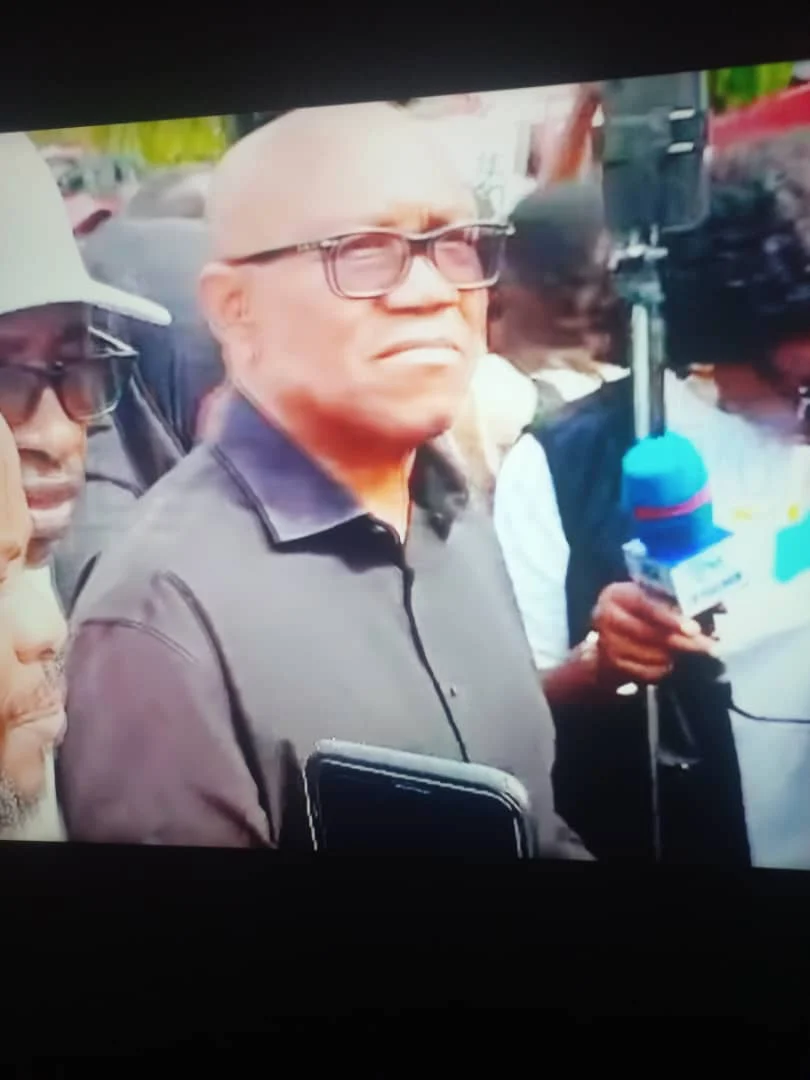
    Presidential aspirant Peter Obi on Tuesday joined pro-democracy activists in a protest at the National Assembly, calling for a review of the Electoral Act Reform Bill currently under consideration by lawmakers.

    The protesters, made up of civil society groups and political supporters, gathered at the National Assembly complex in Abuja, expressing concerns that some provisions of the proposed legislation could weaken electoral transparency and accountability.

    Speaking during the protest, Obi urged lawmakers to ensure that any amendments to the Electoral Act strengthen the credibility of elections and protect the independence of the electoral process. He said the bill, in its current form, requires broader consultation with stakeholders.

    The demonstrators also called for greater public input, warning that poorly crafted reforms could erode confidence in future elections.

    Security operatives were deployed around the National Assembly, but the protest remained peaceful, with no reported incidents.

    As of the time of reporting, the National Assembly had not issued an official response to the demands raised by the protesters. Deliberations on the Electoral Act Reform Bill are ongoing.

  • Altered After Parliament: Nigeria’s Tax Laws and the Crisis of Executive Power

    Altered After Parliament: Nigeria’s Tax Laws and the Crisis of Executive Power

    By

    Dahiru Ali

    Nigeria’s recent tax reform laws, widely seen as a landmark step toward modernizing the country’s revenue system, have become the focus of growing scrutiny following allegations that the laws were altered after parliamentary approval. The House of Representatives Minority caucus has accused relevant actors of introducing unauthorized changes, raising questions not only about procedural integrity but also about the broader balance of power between the executive and legislative branches in Nigeria.

    The controversy came into the public eye in mid-December 2025 when Abdussamad Dasuki, a member of the House, claimed that key provisions of the newly enacted tax laws had been altered in the versions gazetted for public release. The allegations immediately sparked public debate, with some Nigerians calling for a suspension of implementation pending clarification. The concern, critics argue, is that changes made outside the legislative process could have significant legal, economic, and political consequences.

    A day before Dasuki’s public allegations, the leadership of both chambers of the National Assembly had instructed Kamoru Ogunlana, clerk of the Assembly, to coordinate with executive agencies to re-gazette the laws. Some analysts interpreted this directive as a tacit acknowledgment that the original gazetted versions contained errors or deviations from the versions approved by lawmakers.

    The laws in question include the Nigeria Tax Act, 2025, the Nigeria Tax Administration Act, 2025, the Joint Revenue Board of Nigeria (Establishment) Act, 2025, and the Nigeria Revenue Service (Establishment) Act, 2025. Each of these laws represents a key component of the government’s broader fiscal reform agenda, aimed at streamlining tax administration, broadening the tax base, and improving revenue mobilization.

    Yet preliminary findings from a seven-member committee appointed by Minority Leader Kingsley Chinda suggest that substantive alterations may have been introduced in some of the laws after passage. The committee, chaired by Afam Ogene, includes representatives from all six geopolitical zones: Aliyu Garu (Bauchi), Stanley Adedeji (Oyo), Ibe Osonwa (Abia), Marie Ebikake (Bayelsa), Shehu Fagge (Kano), and Gaza Jonathan (Nasarawa). Their mandate is to investigate discrepancies between the National Assembly-certified copies of the laws and the gazetted versions.

    Key Alleged Discrepancies

    According to Ogene, the Nigeria Tax Administration Act, 2025, shows the greatest variation among the four laws. The committee identified multiple areas of concern:

    • Tax compliance thresholds: Section 29(1) of the House-certified version set the tax compliance reporting threshold at ₦50 million for individuals and ₦100 million for companies. In the gazetted version, the threshold for individuals was reportedly reduced to ₦25 million, with company thresholds altered as well. Critics argue that such a change could significantly expand the number of taxpayers subject to reporting requirements.
    • Appeal conditions: Sections 41(8) and 41(9) were allegedly added in the gazetted copy, requiring taxpayers to deposit 20 percent of disputed tax amounts before appealing to the High Court. These provisions were reportedly not part of the version passed by the National Assembly.
    • Expanded enforcement powers: The gazetted law allegedly empowers tax authorities to arrest suspected offenders and sell seized assets without a court order, a provision absent from the original legislative version.
    • Altered definition of federal taxes: Section 3(1)(b) of the House-certified version defined federal taxes to include income tax, petroleum income tax, stamp duties, and value-added tax (VAT). The gazetted copy reportedly removed petroleum income tax and VAT from federal administration, potentially impacting revenue streams and intergovernmental fiscal relations.
    • Dollar-denominated petroleum tax computation: Section 39(3) of the gazetted version mandates that petroleum tax calculations be conducted in US dollars rather than in the currency of the transaction, diverging from the version passed by parliament.
    • Oversight provisions weakened: The National Revenue Service (Establishment) Act, 2025, allegedly had clauses removed that allowed lawmakers to summon officials, demand reports, and ensure accountability. Sections 30(1)(d) and 30(3), which provided for quarterly and annual reports to parliament, were reportedly deleted, raising concerns about the weakening of legislative oversight.

    Implications for Governance and the Rule of Law

    Experts argue that if these discrepancies are confirmed, they could have far-reaching consequences for governance in Nigeria. “The National Assembly is constitutionally empowered to make laws, and any unilateral alterations outside the legislative process undermine both the rule of law and democratic accountability,” said a constitutional law scholar who spoke on condition of anonymity.

    The controversy highlights the perennial tension in Nigeria’s governance system between the executive and legislative branches. While the executive is charged with implementation, the legislature retains the mandate to make and oversee laws. Any interference with this process, intentional or accidental, threatens the checks and balances that underpin democratic governance.

    The controversy has also reignited debate over the role of the presidency in legislative affairs. Analysts suggest that any unilateral alterations to passed laws, whether directly authorized or passively tolerated, signal a worrying disregard for democratic norms and the checks and balances that are meant to safeguard the country’s governance. Such actions, critics argue, risk eroding public confidence not only in the presidency but in the broader institutional framework that underpins Nigeria’s democracy.

    The issue also underscores broader concerns about transparency and procedural rigor in the publication of laws. Legal experts note that discrepancies between parliamentary-certified copies and gazetted versions could lead to confusion among taxpayers, enforcement agencies, and courts, creating uncertainty that may hinder the effective application of the tax reforms.

    Historical Context

    Nigeria has experienced similar controversies in the past, where differences between legislative texts and official publications have sparked public debate and legal challenges. Historically, such incidents have often fueled debates about executive overreach, the reliability of government documentation, and the integrity of legislative processes. Observers note that while these controversies sometimes resolve through clarifications or re-gazetting, the reputational impact on institutions can be long-lasting.

    The current allegations gain additional weight in the context of Nigeria’s ambitious economic reform agenda. Tax reforms are central to the government’s strategy to reduce dependence on oil revenue, expand the tax base, and modernize public finance management. Any procedural irregularities in the laws themselves risk undermining public confidence and investor trust, which are essential for successful implementation.

    Next Steps

    The House Minority committee has requested an extension of time to complete its review. Ogene emphasized that the committee’s work is aimed at ensuring accountability and safeguarding the constitutional role of the legislature. “Given the anomalies, illegalities, and potential procedural lapses, a thorough examination is warranted before the laws are fully implemented,” he said.

    Meanwhile, lawmakers, taxpayers, and policy analysts are closely watching the situation. Questions remain about who authorized the alleged changes, how they were made, and whether corrective action—including possible re-gazetting—will be sufficient to restore confidence in the legislative process.

    The controversy also serves as a reminder of the importance of transparency, meticulous record-keeping, and public oversight in the lawmaking process. As Nigeria continues to pursue economic and fiscal reforms, the integrity of legislative procedures will remain a critical factor in ensuring that reforms are both effective and legitimate.

    Broader Lessons

    At its core, this issue is not just about tax thresholds or procedural discrepancies; it is a reflection of the broader governance challenges that Nigeria faces. The balance of power between the executive and legislature, the clarity of legal texts, and the robustness of oversight mechanisms are all tested when allegations of post-passage alterations emerge.

    As the investigation unfolds, it provides an opportunity for Nigerian institutions to reinforce accountability, clarify procedural standards, and ensure that reforms—especially those with wide-reaching economic and social impact—are implemented with both transparency and legitimacy. For citizens, policymakers, and investors, the outcome of this scrutiny will offer insights into the resilience of Nigeria’s democratic and institutional processes.

    For now, the country watches as the investigation continues, aware that the resolution of this controversy will have implications not only for the implementation of the tax reforms but also for the credibility of Nigeria’s legislative and governance institutions.

  • Reps Minority Alleges Illegal Tampering with Nigeria’s Tax Laws

    Reps Minority Alleges Illegal Tampering with Nigeria’s Tax Laws

    Lawmakers say gazetted versions differ from Acts passed by parliament, accuse executive of undermining legislative authority

    The minority caucus of the House of Representatives has alleged that Nigeria’s newly enacted tax reform laws were illegally altered after passage, triggering a fresh controversy over the integrity of the country’s legislative process and the separation of powers.

    The allegation was contained in a statement issued on Friday by Afam Ogene, chairman of a seven-member committee set up by the caucus to investigate discrepancies between the laws passed by the National Assembly and the versions later published in the official gazette.

    According to Ogene, the committee’s preliminary findings reveal that multiple versions of the tax laws are currently in circulation, with significant differences between the Certified True Copies (CTCs) released by the House of Representatives and the gazetted copies made available to the public.

    Background to the controversy

    The issue first came to public attention on December 17, when Abdussamad Dasuki, a member of the House, alleged that key provisions of the tax laws had been altered after they were passed by parliament. The claim sparked widespread public outrage, with some Nigerians calling for the suspension of the implementation of the laws pending clarification.

    A day earlier, on December 16, the leadership of the Senate and the House of Representatives had directed Kamoru Ogunlana, clerk of the National Assembly, to work with relevant executive agencies to re-gazette the tax laws, a move critics interpreted as an implicit admission that the original gazetted versions were flawed.

    The laws in question are:

    • the Nigeria Tax Act, 2025
    • the Nigeria Tax Administration Act (NTAA), 2025
    • the Joint Revenue Board of Nigeria (Establishment) Act, 2025
    • the Nigeria Revenue Service (Establishment) Act, 2025

    On January 3, the House of Representatives released the gazetted copies of the laws for public scrutiny.

    ‘Clear indication of procedural anomalies’

    Ogene said the directive by the leadership of both chambers to “take steps to align” the Acts passed by parliament with the versions printed by the Federal Government Printing Press was a clear indication that serious procedural anomalies had occurred.

    “This action illegally encroached on the core mandate of the National Assembly,” he said.

    He disclosed that Kingsley Chinda, the minority leader of the House, constituted the investigative committee on January 2 to thoroughly examine what he described as a “legislative scandal.”

    Members of the committee were drawn from the six geopolitical zones and include Aliyu Garu (Bauchi), Stanley Adedeji (Oyo), Ibe Osonwa (Abia), Marie Ebikake (Bayelsa), Shehu Fagge (Kano), and Gaza Jonathan (Nasarawa).

    Multiple discrepancies uncovered

    Ogene said the committee’s review showed that the Nigeria Tax Administration Act, 2025, was the most affected, with three different versions of the document discovered.

    Among the major discrepancies highlighted:

    Lowered tax compliance thresholds
    Under section 29(1), the version certified by the National Assembly fixed the tax compliance reporting threshold at ₦50 million for individuals and ₦100 million for companies. However, the gazetted version reportedly reduced the threshold for individuals to ₦25 million and altered the figure for companies.

    “This is a clear case of the executive undermining legislative powers by illegally altering an already passed law to drag more taxpayers into the net,” Ogene said.

    New appeal conditions inserted
    In section 41, the gazetted copy allegedly introduced new subsections 41(8) and 41(9), compelling taxpayers to deposit 20 percent of the disputed tax amount before appealing decisions of the Tax Appeal Tribunal to the High Court. Ogene said these provisions were never passed by the National Assembly.

    Expanded enforcement powers
    The committee also alleged that section 64 of the gazetted law illegally expanded the powers of tax authorities to include arresting suspected tax offenders through law enforcement agencies and selling seized assets without a court order.

    Altered definition of federal taxes
    Ogene said section 3(1)(b) of the House-certified version defined federal taxes to include income tax, petroleum income tax, stamp duties, and VAT. The gazetted copy, however, reportedly removed petroleum income tax and VAT from the list of taxes administered by the federal government.

    Dollar-denominated petroleum tax computation
    Another contentious change was found in section 39(3), where the gazetted version mandated that tax computations for petroleum operations be carried out in US dollars, contrary to the version passed by parliament, which provided for calculations in the currency of the transaction.

    Oversight provisions removed

    The committee further alleged that the National Revenue Service (Establishment) Act, 2025, was altered to weaken legislative oversight.

    According to Ogene, sections 30(1)(d) and 30(3) of the version passed by the National Assembly empowered lawmakers to summon officials, demand reports, and enforce accountability. These provisions, including requirements for quarterly and annual reports to parliament, were allegedly deleted in the gazetted version.

    He described the deletions as a blatant disregard for the National Assembly and the constitutional doctrine of checks and balances.

    Call for deeper investigation

    “Given the anomalies, illegalities, and impunity observed, which clearly undermine the National Assembly’s constitutional powers and democracy, the committee finds the current evidence sufficient to warrant a deeper investigation,” Ogene said.

    He added that the committee has formally requested an extension of time to conduct a more thorough examination and ensure accountability for what it described as an affront against the legislature.

    As the controversy deepens, the allegations raise serious questions about who altered the laws, how the changes were made, and whether the implementation of the tax reforms can proceed without further legal and political fallout.

  • Forgeries, taxations and the reign of Rehoboam

    Forgeries, taxations and the reign of Rehoboam

    By UGO ONUOHA

    “A profligate regime should not expect Nigerians to willingly submit to a new tax regime that looks like an exercise in extortion. The administration gets its priorities wrong. At a time that virtually all federal highways have collapsed and become deathtraps, this government prioritises the construction of a N15 trillion coastal highway from Lagos to Calabar.”

    A little over three months into the presidency of Alhaji Bola Ahmed Tinubu, on September 5, 2023, I wrote an opinion piece titled “100 days of Rehoboam” in this space and elsewhere. Rehoboam was a king of the divided kingdom of ancient Israel. He was the son of King Solomon and the grandson of King David, both of whom were also past rulers of a united Israel. Rehoboam caused Israel to be divided through policies that inflicted pains on his people. He was reckless. He was proud. He was unfeeling. He took counsel from his scatter head fellow young men. He told the Israelites that the privations they suffered under his father should be regarded as a child’s play. And that while his predecessors chastised them with a whip, he would chastise them with a scorpion. And he verily proceeded to do so. Rehoboam and Tinubu share similarities and dissimilarities. Rehoboam was a monarch. Tinubu is not a king in spite of his pretending to be one. Rehoboam was born into royalty. Tinubu was not. Indeed Tinubu’s birth and early years are still subjects of conjectures and controversies. Rehoboam was a young man when he ascended the throne of his fathers, and so could be excused on account of youthful exuberance. Tinubu was an old man when he was installed as president of Nigeria though his true age is only known to himself and himself alone. There’s no verifiable evidence of when he was born and where. Unlike Rehoboam, Tinubu takes no counsel from anyone. He said this much himself when, without consultations and without a Cabinet, he unilaterally removed the so-called petrol subsidy.

    On September 5, 2023, I wrote this about Tinubu and Rehoboam. “[Tinubu at 100 days in office] has been like that proverbial bird that perched on a tree branch – the tree branch has remained unsettled and the bird can’t stop dancing to unheard sounds. Since his inauguration [as president] on May 29 [2023], exacerbated hopelessness has been the lot of Nigerians and Tinubu himself can only pretend to have had peace of mind. If he has had the presence and prescience of mind, he would not have been enmeshed in serial fumbling from one policy somersault to another from the removal of the so-called petrol subsidy, [devaluation of the Naira], student loan and [the] proposed payment of N8,000 per month for six months to a specified number of poor Nigerian families, and planning to lead the Economic Community of West African States [ECOWAS] to war on Niger Republic [when the military in that country seized political power]”… In Igbo Tinubu is a classical case of ‘akwu rere ere n’ikwo puru epu’ which transliteration in English language will roughly read: rotten palm fruits being pounded inside a decayed mortar. The finished product is better left to the imagination…”

    When Rehoboam became the king, the older advisers in the palace pleaded with him “to heed the cry of the people and lighten the heavy load of labour and taxes that Solomon had laid on them, but the younger elements who had grown up with the new king counselled otherwise. He took the counsel of his mates. The consequences of the actions of the new and rash King Rehoboam are well documented in the chronicles of the kings of Israel in the Holy Bible book of 1Kings. In Tinubu’s rash and irrational decisions [on] the first day and [subsequent] weeks of his reign, he appears to have borrowed a leaf from the wicked and unthinking  King Rehoboam”. One of the undoings of Rehoboam was that he insensitively raised taxes on his people and so lost more than half of his kingdom. The northern part of Israel split away, taking its own path separate from the southern kingdom of Judah. But Nigeria is not a monarchy and bears no resemblance to the old kingdom of Israel. Does that mean that Nigeria splitting is unthinkable?

    With the new tax laws set to come into effect in a matter of days, Tinubu who rules like a monarch may yet be treading the path of King Rehoboam. Rehoboam raised taxes on his people at a time they were already complaining of privations and pains, Tinubu is poised to also raise taxes on Nigerians at a time the people are groaning under the weight of a multiplicity of harsh economic policies of the regime. And he appears not to be bothered. He is irritated by wise counsel that he steps on the brakes and allows Nigerians to breathe. Instead, he empowers the relevant agency of government to execute a secret contract with a so-called tax consultant in France which may lead to handing over Nigeria’s tax data to a foreign company. Tax data is a national security issue that should not be traded as a favour to a friend. Tinubu and the president of France, Emmanuel Macron, are known to be buddies. The frequent ‘working visits’ of our president since he assumed office a little over two years ago had been to Paris, France, unlike his predecessor, Muhammadu Buhari, who made London his tourism and medical destination, and the former archbishop of Canterbury his bosom friend. And a go-to man.

    A profligate regime should not expect Nigerians to willingly submit to a new tax regime that looks like an exercise in extortion. The administration gets its priorities wrong. At a time that virtually all federal highways have collapsed and become deathtraps, this government prioritises the construction of a N15 trillion coastal highway from Lagos to Calabar. To add insult to injury, the contract for the road was not subjected to an open and transparent bidding, no public tendering, no definite and finite route, and no environmental impact assessment report. To cap it up, the highway contract was awarded to a known long time friend and business associate of Tinubu. The president’s son, Seyi, is alleged to be a significant shareholder in some of the companies in the Chargouri Group which owns Hitech construction company which was awarded the opaque Lagos – Calabar highway contract. This is a classic and glaring case of abuse of office. The argument by the regime that much of the money for the execution of the road contract would be borrowed does not make the smell of the contract less pungent and offensive. Even the money to be borrowed will still have to be paid by Nigerians. By you. Or by me. Or by our children and grandchildren.

    As the government preps to extract more taxes from us, it is telling us that we should be the people to fund their ostentatious, obscene and provocative lifestyles including, committing billions of Naira to build or to refurbish mansions for the president and vice president, buy hundreds of foreign manufactured sport utility vehicles [SUVs] for ministers, a coterie of advisers, lawmakers, local government chairmen, and even for the wife of the president whose well appointed office of the first lady is not known to any law in the land. Members of the boards of MDAs [ministries, departments, and agencies] are usually not left out of the largesse. Ours is probably the only country in the world where government computers, vehicles, websites, and the like, are replaced every year. The debauchery includes procuring a fleet of armour – plaited presidential limousines every four years with the advent of a new president and a presidential jet in tow. Of course, the issue of looting the public treasury has been normalised. It’s so brazen that public servants routinely send their children to schools abroad where the fees are charged in millions of the United States dollars. If you want to be reminded of how decadent the system is, do not look further than the annual budget provisions for the feeding of our president and his family. It runs into multiple billions of Naira. We give the president a rent-free accommodation, we afford him and his family pro bono top rate round-the-clock security, gift him a fleet of high-end luxury vehicles, fuelled and maintained at our expense, top it up with a presidential jet, and then turn around to pay him millions of Naira every month as salary. Not even the United States of America, the biggest economy in the world, does that.

    In spite of the foregoing proclivity of this regime to extort citizens, it still cannot be satisfied and appeased. It is a leopard that cannot change its spot. The information last week was that the administration had allegedly fiddled and rigged the tax reform laws passed by the national assembly [NASS]. Last week Rep. Abdulsamad Dasuki  [PDP, Sokoto] raised the alarm, alleging discrepancies between the tax laws passed by NASS and the versions subsequently gazetted and made available to the public. He said the rigging of the laws should be concerning because some provisions were deleted and strange and terrifying provisions illegally inserted. Hon. Dasuki had said during plenary on the floor of the House that his legislative privilege had been breached by the fact that the content of the tax laws as gazetted by the executive arm of government did not reflect what lawmakers debated, voted on, and passed on the floor of the House. “I was here, I gave my vote and it was counted, and I am seeing something completely different”. He said that he obtained copies of the gazetted laws from the ministry of information and found them to be inconsistent with what was approved by both the House and the Senate. Dasuki said that there had been ”a serious breach”, and warned that allowing laws different from those duly passed by the national assembly to be presented to Nigerians would undermine the integrity of the legislature and violate the Constitution.

    “Mr. Speaker, I will be pleading that all the documents should be brought before the Committee of the Whole [House]. Thank you. The whole members should see what is in the gazetted copy and see what they passed on the floor so that we can make the relevant amendment. Mr. Speaker, this is a breach of the Constitution”. Consequent upon the alarm, the House raised a committee of seven persons to probe the allegations. However, Nigerians are not fooled. The current administration across board, from the executive to the legislature and the Judiciary, is populated by people who are adept at rigging and forgery. The NASS and the executive, working separately or in collusion, routinely rigged our national budgets. The 2025 fiscal document is the latest of fiddling with budgets. It was reported and never denied that about 6,000 illegal projects were inserted into the budget with accompanying billions of Naira allocations. We complained and grumbled and then moved on as usual. In effect, the NASS is the least morally competent to cry foul on the issue of rigging and forgery of documents. The same can be said of the judiciary where court judgements, especially of political hues, are routinely awarded to the highest bidder or to the most powerful and connected. So our system thrives on rigging or “mago mago” or “wuru wuru” to use the local lingo.

    But whether rigged or not the implementation of the new tax laws should be suspended, if it cannot be scrapped. It’s inhuman and inhumane to tax poverty. The majority of Nigerians are dirt poor. The other day, a top federal government official said that about 80 million citizens do not know where their next meal would come from. And a little over two years ago, the national bureau of statistics [NBS] determined after its study that over 130 million Nigerians were dimensionally poor. Certainly, the figure should be higher today given what Nigerians have been subjected to since May 29, 2023. And by the way, there has been no concrete evidence that any country has engendered or engineered economic recovery by taxing the poor. Instead putting more money in the pockets of citizens could help to reflate the economy as long as it is done in a manner that will not trigger inflation.

    UGO ONUOHA, a Veteran Journalist, was the Managing Director/Editor-in-Chief, Champion Newspapers Limited

  • Senate Raises Alarm Over Insecurity, Probes Kebbi Troop Pullout

    Senate Raises Alarm Over Insecurity, Probes Kebbi Troop Pullout

    By Caroline Ameh | Abuja

    The Nigerian Senate on Tuesday expressed deep concern over the worsening insecurity in parts of Kwara, Kebbi, and Niger States, resolving to probe the alleged withdrawal of military personnel from a Kebbi school hours before a major abduction.

    The resolution followed the adoption of a motion of urgent national importance sponsored by Deputy Majority Leader, Senator Lola Ashiru, who described the escalating attacks on schools, worship centres, and rural communities as a national emergency requiring immediate federal action.

    Senators Decry Widening Attacks

    Lawmakers lamented the November 18 attack on Christ Apostolic Church (CAC), Eruku, in Ekiti Local Government Area of Kwara State, where gunmen killed two worshippers and abducted 38 others, all later rescued in coordinated security operations.

    They noted that the attack led to the temporary closure of schools in five local government areas across Kwara, as well as parts of Niger and Kebbi States, affecting 47 Federal Unity Colleges nationwide.

    The Senate also condemned the growing pattern of school kidnappings, including recent abductions in Niger and Kebbi States, warning that educational and religious institutions had become increasingly vulnerable to banditry and terrorism.

    Controversy Over Troop Withdrawal

    Lawmakers were particularly alarmed by credible reports that military personnel were withdrawn from Government Girls’ Secondary School, Maga, Kebbi State, just hours before the abduction of 24 female students.
    They demanded a transparent investigation into the decision and those responsible.

    Contributing to the debate, Senator Enyinnaya Abaribe (Abia South) urged his colleagues to confront insecurity “head-on and without reference to the past.”


    He insisted that the Senate must uncover who authorised the withdrawal of troops from the school before the attack.

    Abaribe’s position was strongly supported by Senate President Godswill Akpabio, Senator Seriake Dickson, and other lawmakers, who called for urgent and coordinated security action.

    Intelligence Points to Internal Sabotage

    The motion also cited intelligence reports indicating that internal collaborators continue to aid criminal networks with logistics, information, and escape routes.


    Senators warned that terrorists were exploiting forest corridors such as the Kwara–Kogi axis, Kebbi–Zamfara stretch, and Niger’s Shiroro–Rafi–Munya belt to carry out attacks and evade arrest.

    They further raised concern over the deplorable state of the Idofian–Omu-Aran–Eruku–Egbe–Kabba highway, which they said provides bandits with ambush points, easy escape routes, and concealment within thick forests.

    Tinubu Commended for Swift Response

    Earlier, Senate Majority Leader Opeyemi Bamidele cautioned against rising public speculation over the release of kidnap victims, urging a review of the performance of Senate security committees.
    He reaffirmed that the Tinubu administration does not and will not support ransom payments to abductors.

    The Senate commended President Bola Ahmed Tinubu for what it described as his “swift and personal intervention,” including cancelling planned foreign trips to coordinate national security efforts.


    It also lauded security agencies for the rescue of 38 abductees in Kwara and 51 students in Niger State.

    Key Resolutions

    The Senate resolved to:

    • Urge communities in Kwara, Kebbi, Niger, and across the country to remain vigilant and expose collaborators aiding criminal groups.
    • Commend President Tinubu and security agencies for swift interventions while calling for sustained rescue operations until all abductees are freed.
    • Mandate the immediate reconstruction of the Idofian–Omu-Aran–Eruku–Egbe–Kabba highway to curb ambushes and improve mobility for security forces.
    • Direct the Army, Police, DSS, and Defence Intelligence Bureau to intensify intelligence-driven operations, forest combing, and cross-state collaboration.
    • Establish a Joint Task Force (JTF) along the Kwara–Kogi corridor with forward operating bases in Eruku, Babanla, Oke-Ero, and Isanlu.
    • Instruct the Ministry of Humanitarian Affairs and NEMA to provide relief materials to affected families where schools remain closed.
    • Launch a 14-day Senate investigation into the surge in insecurity, including the alleged role of internal collaborators.
    • Strengthen local vigilante networks and review Nigeria’s firearms laws in line with global best practices.
    • Conduct a separate probe into the troop withdrawal from the Kebbi school before the abduction.
    • Pursue diplomatic engagement with the U.S. and allied nations to improve intelligence sharing and counter-terrorism support.
    • Observe a two-minute silence in honour of all victims of recent attacks.

  • Tinubu to Unveil N47 Trillion 2025 Budget Next Week

    Tinubu to Unveil N47 Trillion 2025 Budget Next Week

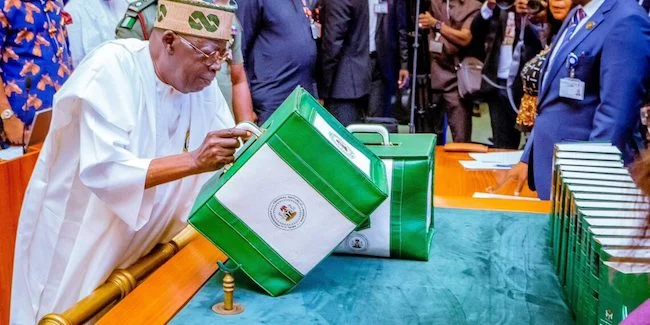
    In further of yearly ritual, President Bola Tinubu is set to present the 2025 budget to the National Assembly on December 17, 2024.

     This announcement was made by Senate President Godswill Akpabio during a plenary session on Thursday.

    The 2025 budget, totaling N47.9 trillion, is expected to be the largest in Nigeria’s history. 

    The presentation will take place at the House of Representatives Chamber. 

    Lawmakers recently reviewed and submitted the government’s medium-term expenditure framework (MTEF), which underpins the budget figures. 

    Key assumptions in the plan include a $75 oil price per barrel, a daily oil production target of 2.06 million barrels, and an exchange rate of N1,400 to $1.

     The document also projects a GDP growth rate of 6.4%. The Senate Committee on Finance is tasked with reviewing the MTEF/FSP and providing a report within one week.

    Budget making in Nigeria of recent has been characterized by a lot of subterfuge and shenanigan employed by politicians to steal public fund.

    Experts observe that, through what the legislators referred as budget padding, vague project items are infused into the budget to enable both legislators and the executive to commit the heist of public fund.

  • Protesters Storm Villa, NASS Over Reinstatement Of Sanusi As Kano Emir

    Protesters Storm Villa, NASS Over Reinstatement Of Sanusi As Kano Emir

    Protesters marched to the Presidential Villa and the National Assembly in Abuja on Friday, demanding President Bola Tinubu’s intervention in the Kano Emirate conflict.

    The protesters, marching peacefully, carried banners highlighting their concerns about the escalating situation in Kano.

    They called on President Tinubu to use his authority to resolve the crisis and ensure the restoration of peace and stability in the State.

    The State Assembly passed a bill titled, ‘The Kano State Emirates Councils (Repeal) Bill, 2024’, which dissolved the establishment of the additional emirates.

    This made way for the reinstatement of Muhammadu Sanusi II on Thursday by Governor Yusuf, four years after he was dethroned by a former governor of the state, Abdullahi Ganduje.

    The protesters, under the banner of the Concerned Patriots of Nigeria, accused Governor Yusuf of escalating his abuse of office by dissolving the traditional council.

    The coordinator, Abdullahi Muhammed Saleh said, “A lot had been going wrong in the state but the Concerned Patriots of Nigeria had thought it best to allow Kano state to sort out its thorny issues. However, Thursday’s brash actions of Governor Abba Kabir Yusuf of Kano State, who sacked five emirs to reappoint Alhaji Muhammadu Sanusi as the 14th Emir of Kano has awoken us to the urgency of raising the alarm about the destructive excesses of the state governor.

    “Since being sworn into office, Governor Abba Yusuf has a string of loutish acts that run like a hardened criminal’s rap sheet. All in the name of rubbishing his predecessor, he started with a demolition spree that has served to impoverish the people whose lives he took an oath to improve. Thus he proved himself to be anti-people.

    “The Governor then attempted to destroy the structures of political parties in the state. The impish fanaticism with which he pursued this illicit mission saw him intruding into the structure of other political parties, including hiring some charlatans who purportedly suspended the national chairman of the All Progressive Congress (APC), Dr Abdullahi Ganduje, who is interestingly his predecessor. Thus he proved himself to be anti-democratic.

    “This latest stunt of sacking five emirs to install his acolyte was achieved by manipulating the Kano State House of Assembly, which he had successfully turned into a rubber stamp for endorsing his illegal acts. He has eroded the autonomy guaranteed by the separation of powers as enshrined in the Constitution of the Federal Republic of Nigeria (as amended).

    “It is inconceivable that any right-thinking person will descend low to the point of manipulating the traditional institution for political gimmicks. The humiliation meted out to the five emirs was most unbecoming and we have cause to believe that Abba Yusuf has set the stage for using the traditional institution as ancient and as esteemed as that of Kano for a political seesaw will continue since his successor will revert to the five emirates. The Kano governor has thus proven himself to be the anti-traditional institution leader.”

    The protesters criticized Governor Yusuf’s actions as unreasonable and detrimental to a civilized society, urging him to stop undermining Kano’s peace.

    They condemned the NNPP-dominated Kano State House of Assembly for being a rubber stamp for the governor’s actions, warning that their desperation could destabilize the city and the country.

    They appealed to President Tinubu to urgently intervene in the Kano Emirate crisis to prevent further deterioration and ensure peace is restored.