Tag: NBS
-

Price of 5kg cooking gas jumped from N5,974 in July to N6,430 in August— NBS
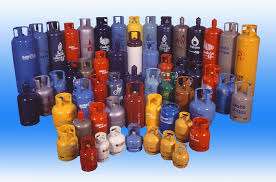
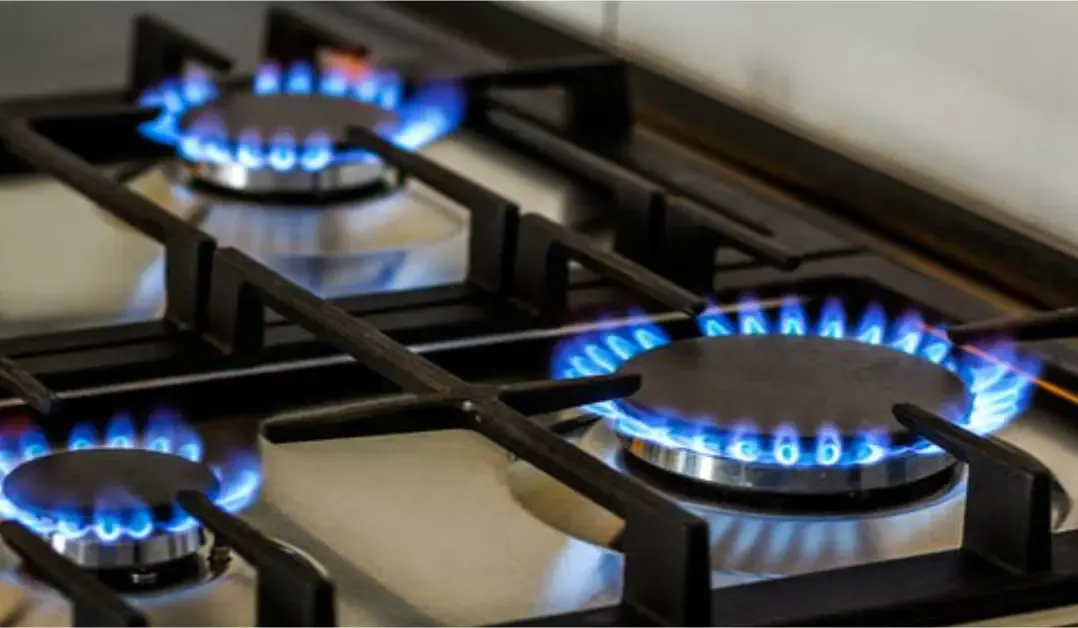
The National Bureau of Statistics (NBS) says the average price of 5kg of cooking gas increased from N5,974.55 recorded in July 2024 to N6,430.02 in August 2024.This is contained in the bureau’s “Cooking Gas Price Watch’’ for August 2024 released on Sunday in Abuja.The report said the August price represented a 7.62 per cent increase, compared to what was obtained in July.The NBS said the average price of 5kg of cooking gas increased on a year-on-year basis by 56.25 per cent from N4,115.32 in August 2023 to N6,430.02 in August 2024.On state profile analysis, the report showed that Benue recorded the highest average price at N7,000 for 5kg cooking gas, followed by Rivers at N6,954.55, and Borno at N6,914.29.It said on the other hand, Taraba recorded the lowest price at N5,600.67, followed by Abuja and Kogi at N5,825.00 and N5,857.56, respectively.Analysis by zone showed that the South-East recorded the highest average retail price at N6,585.18 for 5kg cooking gas, followed by the South-South at N6,451.34.“The North-Central recorded the lowest average retail price at N6,344.29,” the NBS said.Also, the NBS said the average retail price for refilling a 12.5kg cooking gas increased by 9.05 per cent on a month-on-month basis from N14,261.57 in July 2024 to N15,552.56 in August 2024.The report said the average retail price for 12.5kg cooking gas rose by 69.15 per cent on a year-on-year basis from N9,194.41 recorded in August 2023 to N15,552.56 in August 2024.State profile analysis showed that Rivers recorded the highest average retail price of N17,086.36 for 12.5kg cooking gas, followed by Cross River with N17,050.00 and Abia with N17,012.52.On the other hand, the report showed that the lowest average price for 12.5kg of cooking gas was recorded in Bauchi at N13,425.00, followed by Nassarawa and Adamawa at N13,640.94 and N13,725.00 respectively.Analysis by zone showed that the South-South recorded the highest average retail price of N16,524.00 for 12.5kg cooking gas, followed by the South-East at N16,495.78The report said the North-Central recorded the lowest price at N14,767.41.Similarly, the NBS said the average retail price per litre of kerosene increased to N1,847.59 in August 2024 on a month-on-month basis, showing an increase of 4.39 per cent, compared to the N1,769.86 recorded in July 2024.According to its National Kerosene Price Watch for August 2024 on a year-on-year basis, the average retail price per litre of kerosene rose by 45.21 per cent from N1,272.40 in August 2023.On state profile analysis, the report showed that Zamfara recorded the highest average price at N2,566.67 per litre of kerosene in August, followed by Kano with N2,444.44 and Ogun with N2,388.89.“On the other hand, the lowest price was recorded in Taraba at N1,181.18, followed by Adamawa at N1,185.74 and Borno at N1,296.95.”The NBS said the analysis further showed that the North-West recorded the highest average retail price per litre of Kerosene at N2,118.29, followed by the South-South at N2,075.45,It said the North-East recorded the lowest average retail price per litre of kerosene at N1,454.38.The report said the average retail price per gallon of Kerosene paid by consumers in August 2024 was N6,441.94, indicating an 11.80 per cent increase from N5,762.10 recorded in July 2024.“On a year-on-year basis, the average price per gallon of kerosene increased by 48.04 per cent from N4,351.53 recorded in August 2023.On state profile analysis, it showed that Katsina recorded the highest averageretail price at N8,200 per gallon of kerosene, followed by Kebbi at N8,075.00 and Kaduna at N8,038.46.The report said Nasarawa recorded the lowest price at N5,092.46, followed by Niger and Plateau at N5,104.17 and N5,445.83, respectively.Analysis by zone showed that the North-West recorded the highest average price per gallon of Kerosene at N7,787.64, followed by the South-West at N6,593.22.“North-Central recorded the lowest average price per gallon of Kerosene at N5,463.69,” the NBS said. -
Abuja industrial park: FG targets 40,000 jobs
Still savouring current surge in economic growth, the Federal Government is targeting about 40,000 jobs to be created from the Abuja Industrial Park with projected impact of catalysing further growth in Nigeria’s economy.The Minister of the Federal Capital Territory, Mr Nyesom Wike, said on Wednesday that the park being developed by Zeberced Group, will create 40,000 jobs and improve Nigeria’s economy when fully operational.Wike stated this when he visited the site located at Idu Industrial Zone, Abuja, on Wednesday.The minister, excited by the level of development at the ark, promised to brief President Bola Tinubu on what he had seen.Quality and Size of the ProjectDescribing the project as mind-boggling, Wike expressed optimism that it would grow the nation’s economy and create employment for the teeming youths in FCT.“As far as I’m concerned, I’ve never seen this in the entire country. This is the first time I am seeing this,” he said.He added that the project, which had been approved to operate as a Free Zone, would attract lots of businesses due to the availability of a stable power supply.The minister commended the company for its commitment to completing the project and for its decision to expand the access road to the park.He assured all of the continued support of the FCT Administration to ensure that the road project was completed.MFCT to Complement with Upgrade of RoadsHe expressed optimism that the road project, when completed, would accelerate the development of the Idu District.“From what the Managing Director of the company, Mr Adil Kurt said, the park is going to create not less than 40,000 direct employments and that is huge.“There is no government that will not support this kind of investment.“Having gone around, we can attest to the fact that this is really what we need to grow our economy. You can imagine how the whole of Idu will be developed.“This is what every government craves for, and we must give them the necessary support,” he said.Commendable PerformanceWike further commended the Zeberced Group for maintaining a high standard in the delivery of the project.He particularly commended the company for branding all items being produced at the park, including polypropylene pipes, and sandwich insulation roofing sheets among others, as made in Nigeria.“For us, it is quality, and we thank God that we have some companies that are committed to making sure that they produce in Nigeria,” Wike said.The minister assured residents of adequate security and called for further investments in local production.Earlier, Kurt said that the park, which sits on 250 hectares of land, was being developed as a free zone, and currently features 208 workshops.He equally said that the park was designed to support small and medium-scale industries, among others.“The production of precast concrete, plastic and polypropylene pipes, as well as sandwich insulation roofing sheets among others, were already ongoing at the park.“The project will significantly contribute to the growth and development of the nation’s economy,” he added -

Damning Report Reveals Nigerians Paid N721 Billion in Bribes in 2023
A new report from the National Bureau of Statistics, in collaboration with the United Nations Office on Drugs and Crime, has revealed that Nigerians paid a staggering N721 billion ($1.26 billion) in cash bribes to public officials in 2023.
The report, titled “Corruption in Nigeria: Patterns and Trends,” highlights the widespread nature of bribery in the country. On average, each cash bribe amounted to N8,284, up from N5,754 in 2019.
Judges topped the list of bribe recipients, with an average bribe of N31,000. Customs and Immigration officials followed with N17,800, while members of the armed forces received N16,600 per bribe. Land registry officials and police officers received N11,700 and N10,400, respectively.
The findings also showed that 46% of public officials admitted to offering bribes to secure their employment. This figure is 1.5 times higher than that reported in 2019. Additionally, six out of ten successful candidates in the public sector confessed to using nepotism or bribery to enhance their recruitment chances.
The police were identified as the most prevalent in requesting bribes, with 9% of individuals who interacted with police officials reporting such demands. Nurses and doctors followed at 4%, teachers and lecturers at 3%, and public utility officials at 6%. Contact with Federal Road Safety Corps officials and vehicle inspection officers also resulted in bribe requests at rates of 4% and 2%, respectively.
The report also noted that individuals with higher education levels were more likely to pay bribes than those with no formal education.
-
Nigeria’s Q3 GDP Grows 2.54% – NBS
In the third quarter of 2023, Nigeria’s Gross Domestic Product (GDP) grew by 2.54 per cent (year-on-year) in real terms. This growth rate is higher than the 2.25 per cent recorded in the third quarter of 2022 and higher than the second quarter 2023 growth of 2.51 per cent.
In its Gross Domestic Report Q3 2023, released on Friday, the statistics bureau noted that Q3 performance was driven mainly by the Services sector, which recorded a growth of 3.99 per cent and contributed 52.70 per cent to the aggregate GDP.
The agriculture sector grew by 1.30 per cent, from the growth of 1.34 per cent recorded in the third quarter of 2022.
The growth of the industry sector was 0.46%, an improvement from -8.00% recorded in the third quarter of 2022.
In terms of share of the GDP, agriculture, and the industry sectors contributed less to the aggregate GDP in the third quarter of 2023 compared to the third quarter of 2022.
In the quarter under review, aggregate GDP stood at N60,658,600.37 million in nominal terms. This performance is higher when compared to the third quarter of 2022 which recorded aggregate GDP of N52,255,809.62 million, indicating a year-on-year nominal growth of 16.08%.
The NBS noted that in real terms the oil sector growth was –0.85 per cent (year-on-year) in Q3 2023, indicating an increase of 21.83 percentage points relative to the rate recorded in the corresponding quarter of 2022 (-22.67%). Growth also increased by 12.58 percentage points when compared to Q2 2023 which was –13.43 per cent.
On a quarter-on-quarter basis, the oil sector recorded a growth rate of 12.47 per cent in Q3 2023.
Nigeria recorded an average daily oil production of 1.45 million barrels per day (mbpd), higher than the daily average production of 1.20mbpd recorded in the same quarter of 2022 by 0.25mbpd and higher than the second quarter of 2023 production volume of 1.22 mbpd by 0.23mbpd.
According to the NBS, “the sector contributed 5.48 per cent to the total real GDP in Q3 2023, down from the figure recorded in the corresponding period of 2022 and up from the preceding quarter, where it contributed 5.66 per cent and 5.34 per cent respectively.”
The non-oil sector grew by 2.75 per cent in real terms during the period under review. This rate was lower by 1.52 percentage points compared to the rate recorded in the same quarter of 2022 and 0.84 percentage points lower than the second quarter of 2023.
“The sector was driven in the third quarter of 2023 mainly by Information and Communication (Telecommunication); Financial and Insurance (Financial Institutions); Agriculture (Crop production); Trade; Construction; and Real Estate, accounting for positive GDP growth.
In real terms, the non-oil sector contributed 94.52% to the nation’s GDP in the third quarter of 2023, higher than the share recorded in the third quarter of 2022 which was 94.34% and lower than the second quarter of 2023 recorded as 94.66%,” the report stated.
-

Petrol Increased To N626.21 In September- NBS
The National Bureau of Statistics (NBS), says the average retail price of a litre of petrol increased from N191.65 in September 2022 to N626.21 in September 2023.
It made the declaration in its Petrol Price Watch for September 2023 released in Abuja on Saturday.
It stated that the September 2023 price of N626.21 represented a 226.75 per cent increase over the price of N191.65 recorded in September 2022.
“Comparing the average price value with the previous month of August 2023, the average retail price increased by 0.08 per cent from N626.70.
“On state profiles analysis, Taraba paid the highest average retail price of N665.56 per litre, followed by Borno and Benue at N657.37 and N641.29, respectively.
“Conversely, Rivers, Delta and Jigawa paid the lowest average retail prices at N602.55, N605.88 and N617.42, respectively,’’ it stated.
Analysis by zones showed that the North-East recorded the highest average retail price in September 2023 at N638.33, while the South-South recorded the lowest at N618.47 per litre.
The NBS also stated in its Diesel Price Watch Report for September 2023 that the average retail price was N890.80 per litre.
It explained further that the September 2023 price of N890.80 per litre amounted to a 12.77 per cent increase over the N789.90 per litre paid in September 2022.
“On a month-on-month basis, the price increased by 4.27 per cent from the N854.32 per litre recorded in August 2023,’’ it added.
On state profile analysis, the report said the highest average price of diesel in September 2023 was recorded in Kano at N967.78 per litre, followed by Anambra at N950.95 per litre and Niger at N950.55 per litre.
On the other hand, the lowest price was recorded in Bayelsa at N840.16 per litre followed by Katsina at N840.55 per litre and Rivers at N840.82 per litre.
In addition, the analysis by zones showed that the South-East has the highest price at N918.06 per litre, while the South-South recorded the lowest price at N863.97 per litre.
-
Inflation Rate Climbs To 26.72% In September -NBS
In September 2023, the headline inflation rate increased to 26.72% relative to the August 2023 headline inflation rate which was 25.80%, the National Bureau of Statistics has said.
In it’s CPI and Inflation Report for September, released Monday in Abuja, the bureau said the rates showed a showed an increase of 0.92% points when compared to the August 2023 headline inflation rate.
On a year-on-year basis, the headline inflation rate was 5.94% points higher compared to the rate recorded in September 2022, which was 20.77%.
This shows that the headline inflation rate (year-on-year basis) increased in September 2023 when compared to the same month in the preceding year (i.e., September 2022).
Furthermore, on a month-on-month basis, the headline inflation rate in September 2023 was 2.10%, which was 1.08% lower than the rate recorded in August 2023 (3.18%).
This means that in September 2023, the rate of increase in the average price level was less than the rate of increase in the average price level in August 2023.
-

Average Price Of 5kg Cooking Gas Stood At N4,115.32 In August –NBS
The National Bureau of Statistics (NBS), says the average price of 5kg of cooking gas increased from N4,072.87 recorded in July to N4,115.32 in August 2023.
This is contained in the Bureau’s “Cooking Gas Price Watch’’ for August 2023 released on Monday in Abuja.
The report said the August 2023 price represented a 1.04 per cent increase, compared to what was obtained in July 2023.
However, the average price of 5kg of cooking gas decreased on a year-on-year basis by 7.66 per cent from N4,456 recorded in August 2022 to N4,115.32 in August 2023.
On state profile analysis, the report showed that Kwara recorded the highest average price at N4,816.67 for 5kg cooking gas, followed by Benue at N4,766.67, and Zamfara at N4,756.25.
It said on the other hand, Ondo recorded the lowest price at N3,299.29, followed by Ekiti and Nasarawa at N3,330.00 and N3,533.33 respectively.
Analysis by zone showed that the North-Central recorded the highest average retail price at N4,501.26, followed by the North-West at N4,340.50
“The South-West recorded the lowest retail price at N3,3737.12,” the NBS said.
Also, the NBS said the average retail price for 12.5kg cooking gas increased by 0.35 per cent on a month-on-month basis, from N9,162.11 in July 2023 to N9,194.41 in August 2023.
However, the report said the average price of 12.5kg cooking gas dropped by 7.12 per cent on a year-on-year basis, from N9,899.34 recorded in August 2022 to N9,194.41 in August 2023.
On state profile analysis, it showed that Cross River recorded the highest average price at N10,172.83 for 12.5kg cooking gas, followed by Ogun at N9,963.64 and Nasarawa at N9,883.37.
On the other hand, the report showed that Adamawa recorded the lowest price at N7,597.92, followed by Borno at N8,103.69 and Gombe at N8,173.44.
Analysis by zone showed that the South-South recorded the highest average retail price at N9,569.58 for 12.5kg, followed by the South-West at N9,344.17.
The report said the North-East recorded the lowest price at N8,631.95.
Similarly, the average retail price per litre of Kerosene rose to N1,272.40 in August 2023 on a month-on-month basis, showing an increase of 0.92 per cent, compared to N1,260.81 recorded in July 2023.
According to its National Kerosene Price Watch for August 2023, on a year-on-year basis, the average retail price per litre of kerosene rose by 57.18 per cent from N809.52 in August 2022.
On state profile analysis, the report showed that Adamawa recorded the highest average price at N1,745.83 per litre of kerosene in August 2023, followed by Benue at N1,468.33 and Abuja at N1,486.89.
“On the other hand, Jigawa recorded the lowest price at N1,000 followed by Edo at N1,104.78 and Kaduna at N1,121.79.”
The NBS said the analysis further showed that the North-East recorded the highest average retail price per litre of kerosene at N1,370.64, followed by the South-East at N1,332.49.
It said the North-West recorded the lowest average retail price per litre of kerosene at N1,163.25.
The report said the average retail price per gallon of kerosene paid by consumers in August 2023 was N4,351.53, indicating a 1.06 per cent increase from N4,306.07 in July 2023.
“On a year-on-year basis, the average price per gallon of kerosene increased by 47.63 per cent from N2,947.65 recorded in August 2022.”
On state profile analysis, it showed that Lagos recorded the highest average price at N5,350.83 per gallon of kerosene, followed by Katsina at N4,991.85 and Borno at N4,897.47.
On the other hand, the report said Delta recorded the lowest price at N2,945.71, followed by Rivers and Oyo at N3,287.50 and N3,711.79, respectively.
Analysis by zone showed that the North-East recorded the highest average price per gallon of Kerosene at N4,637.71, followed by the South-East at N4,590.69.
The report said the South-South recorded the lowest average price per gallon of Kerosene at N3,727.30.
-
Rail transport revenue surges to N1.1bn in Q2 2023 –NBS
The National Bureau of Statistics (NBS) has said that its revenue for the second quarter of 2023 increased to N1.1 billion from the sum of N768 million collected from rail passengers in the first quarter of this year.
In its Transportation Data (Q2 2023)’ report published on its website Friday, the statistics bureau the figure represents a 69.7 per cent increase over the Q1 figure.
On a year-on-year basis, the amount represents a 83 per cent increase over the sum of N598.74 million generated in the corresponding quarter of 2022.
The NBS disclosed that in the quarter under review, a total of N188.03 million was generated from the transportation of goods and cargo by rail, amounting to an increase of 105.04 per cent when compared to the N91.70 million revenue in Q2 2022.
Furthermore, the Bureau disclosed that miscellaneous income from rail transport in Q2 2023 amounted to N18.74 million, reflecting a decline of 62.31% from the N49.73 million reported in Q2 2022.
On the number of passengers that travelled by rail during the quarter, the statistics agency reported a significant increase with a total of 474,117 passengers, which also indicated 12.25% increase compared to the 422,393 passengers reported in the same quarter of 2022.
However, the report showed that the volume of goods transported by rail in Q2 this year reduced to 56,029 tons, from the 59,996 tons recorded in the first quarter of 2023 but that when compared to the corresponding quarter of 2022, the volume of cargo increased from 31,197 tons.
-
DisCos raked in N247.33bn revenue in Q1 2023 -NBS
Data from the National Bureau of Statistics (NBS) has revealed that there was a slight increase in the number of total number of customers in the second quarter of 2023 with the number moving to 11.47 million from 11.27 million in the first quarter of 2023, indicting a 1.84 per cent increase.
In its Nigeria Electricity Report Q2 2023: Energy Billed, Revenue Generated and Customers By DISCOS, the bureau stated that on a year-on-year basis, customer numbers in Q2 2023 rose by 6.17% from 10.81 million reported in Q2 2022.
Similarly, metered customers stood at 5.47 million in Q2 2023, indicating a growth of 3.10% from 5.31 million recorded in the preceding quarter.
“On a year-on-year basis, this grew by 10.40% from the figure reported in Q2 2022 which was 4.96 million. In addition, estimated customers during the quarter were 6.00 million, higher by 0.72% from 5.96 million in Q1 2023.
“On a year-on-year basis, estimated customers increased by 2.58% in Q2 2023 from 5.85 million in Q2 2022,” it said.
The coordinating agency for all statistics in Nigeria added that revenue collected by the DISCOs in Q2 was N263.08 billion from N247.33 billion in Q1 2023.
“On a year-on-year basis, revenue generated in the reference period rose by 39.63% from N188.41 billion recorded in Q2 2022.
“Electricity supply was 5,909.83 (Gwh) in Q2 2023 from 5,851.87 (Gwh) in the previous quarter. However, on a year-on-year basis, electricity supply increased by 13.06% compared to 5,226.97 (Gwh) reported in Q2 2022,” it said.
-
Nigeria’s unemployment rate drops 4.1% -NBS
Nigeria’s unemployment rate dropped to 4.1 percent in the first quarter of 2023 from 5.3 percent in the fourth of 2022.
Mr Adeniran Adeyemi, the Statistician-General of the Federation and Chief Executive Officer of the National Bureau of Statistics (NBS), said this during the inauguration of the New Nigeria Labour Force Survey (NLFS) in Abuja.
Adeniran said that the drop in NLFS from 33.3 percent in the Fourth quarter 2020 to its present rate was based on change in methodology adopted and not government performance.
The new NLFS unveils a set of labour force indicators designed to provide unparalleled insights into the dynamics of the workforce in Nigeria.
The NLFS was conducted by the NBS in collaboration with the World Bank (WB) and the International Labour Organisation (ILO) in response to the labour market dynamics
Adeniran said “let me at this point clearly state that this methodology review has nothing to do with whitewashing the image of any government or political party.
“This process is routine for any responsible statistical office, and we have no reason to continue to ignore the adoption of new methods, when the evidence clearly indicates the need for it.
“As a national statistical office, our responsibility is to provide government and all users with accurate data for evidence-based decision making, adhering to the highest possible standards, and our commitment in this regard is unwavering.”
According to Adeniran, the new method which indicates that not less than 73 per cent of Nigerians are engaged in one form of work, recognises all forms of engagements from which individuals earn income.
He said using the new ILO definition, the survey showed that the unemployment rate for the fourth quarter of 2022 stood at 5.3 per cent and 4.1 per cent for the first quarter of 2023.
“This figure aligns perfectly with neighbouring countries around Nigeria. Ghana (3.9per cent), Niger (0.5 per cent), Chad (1.4per cent), Cameroon (4.0per cent), Togo (4.1per cent), Benin Republic (1.7per cent) amongst others.
“In responding to the shifting global landscape and the ever-changing data ecosystem, it is imperative for us to continuously adapt the way in which we collect and analyse data.
“This is to ensure that we are producing data that reflects reality and the experiences of Nigerians.
“These changes also include a revision to the design and methodology applied in the conduct of the actual survey.
“Which is the survey that produces commonly known headline Unemployment and Underemployment rates, as well as other labour market indicators that guide policymakers, researchers, and other users,” he said.
According to him, the results indicate a scarcity of Wage-employment, as the share of those employed in Wage-employment during the reference quarters was 13.4 per cent in Q4 2022 and 11.8 per cent in Q1 2023.
Adeniran said that the working age population which was defined previously as persons aged 15-64, is now defined as persons aged 15 and above.
He said this was a very important change particularly in the Nigerian context as it recognises the labour contributions of persons above the age of 64 which was not done previously.
The NBS boss said the unemployed appeared to be the most controversial amongst the changes announced under the review.
According to him, the new standard defines the unemployed as persons within the Labour force, who within the reference period did not work for pay or profit for a minimum of 1 hour.
“In the real sense, nobody works 1 hour a week and then sits down and does nothing else when there are opportunities for more hours of work.
“The statistics show that only 7.1 per cent of those working, work between 1 – 19 hours per week. So, 1 hour is just a benchmark and nothing more than that,” he said.
The survey revealed that about three quarters of Nigerians in the working age population, 73.6 per cent in Q4 2022 and 76.7 per cent in Q1 2023 were engaged in some form of work for pay or profit in the quarters under review.
Earlier, the World Bank’s Country Director, Shubham Chaudhuri pledged the continued support of the bank to ensure a robust, regular national LFS data for the country.
Chaudhuri said a reliable data provided the government with knowledge about the nation’s welfare and ensured the right intervention and programs needed to address it’s challenges.
The Minister of Budget and Economic Planning, Abubakar Bagudu, said data was key to national planning and development.
According to Bagudu, President Bola Tinubu believes in reliable data for planning and will support anything that will lead to production of appropriate data.
“To create jobs for youths, we need this kind of data, a lot needs to be done to address the high rate of unemployment in the country. The President is desirous of reducing unemployment.
“Nigeria is one of the countries with absorptive capacity, so what we need is to provide better environment and more incentives,” he said.
While commending efforts of NBS and its partners in revising the methodology, Bagudu said the ministry would from 2024 use of the revised data more practically.
Meanwhile, the Acting CBN Governor, Mohammed Tumala said labour statistics was one of the most important inputs to economic policy and business decisions.
Tumula said labour was the most important of the factors of production and determined both the quantity and quality of utility of other factors.
While commending efforts of the NBS, he stressed the need for synergy with communication experts to ensure proper linkage and dissemination of data to the public.
Similarly, Prof. Mike Obadan, Non-Executive Director and member MPC, CBN also reiterated the need for NBS to ensure robust strategy for communicating its survey findings to the public in simple language.
Abuja-Kaduna Road project to be completed by Q1 2024, says Umahi
The Minister of Works, Mr David Umahi,has again given the assurance that the reconstruction work on the Abuja-Kaduna-Kano highway will be completed by the first quarter of 2024.
Umahi made this known while inspecting the project on Thursday to assess the progress made so far by Julius Berger Nigeria Plc, the contractor handling the project.
The minister however frowned at the slow pace of work on the project, which was awarded in 2017.
Umahi noted that insecurity and poor funding were the major challenges affecting the timely completion of the road.
“Work on the 375.9 km dual-carriage Abuja-Kaduna-Zaria-Kano Road is in three phases, with phase three (Zaria-Kano) at 100 per cent completion.
“The phase two (Kaduna- Zaria) was at 60 percent completion and Phase one (Abuja-Kaduna) was only at 20 percent completion level,” he said.
He assured that the President Bola Tinubu was committed to ensuring that all impeding factors are sorted out to ensure that the contractor delivers the project in 2024.
“I am here on the directive of Mr President, who has directed that I must be on site to see most of this ongoing project before I can put figures together.
“Mr president has asked me to assure Kaduna people and everyone that this road is very important to him as part of his renewed hope agenda for Nigerians.
“He is committed to finishing the road, in 2024, and not 2025 as stated in the contract earlier, and we will match his word with action.
“We are satisfied with the quality of work, but we are not satisfied with the pace of work, so we have to find out what are the problems.
“This road is very important, if it is security we will tackle it and provide security in each section where they are working and we also want to deploy solar lights on the roads,” the minister said.
The minister expressed satisfaction with the quality of work on the road but urged the contractor to increase the pace of work.
He directed the contractor to ensure that more men and equipment are moved to other sections of the road to ensure that work goes on simultaneously.
He also called on the contractor to introduce concrete in parts of the road in order to deliver a more durable and lasting road to Nigerians.
The minister, therefore, appealed to Nigerians to be patient with the government in its commitment to deliver a durable road that would stand the test of time.