Tag: Nigeria insecurity

  • Nigeria, US Renew Security Partnership as Violence and Displacement Soar

    Nigeria, US Renew Security Partnership as Violence and Displacement Soar

    — But Results Remain Elusive

    Nigeria’s Defence Headquarters (DHQ) says a recent visit by the Commander of the United States Africa Command (AFRICOM), Dagvin Anderson, has reaffirmed security cooperation between Abuja and Washington. But with violence continuing to claim lives, displace communities, and deepen humanitarian strain, analysts and rights groups say both governments owe the public clearer evidence of what the partnership has actually achieved.

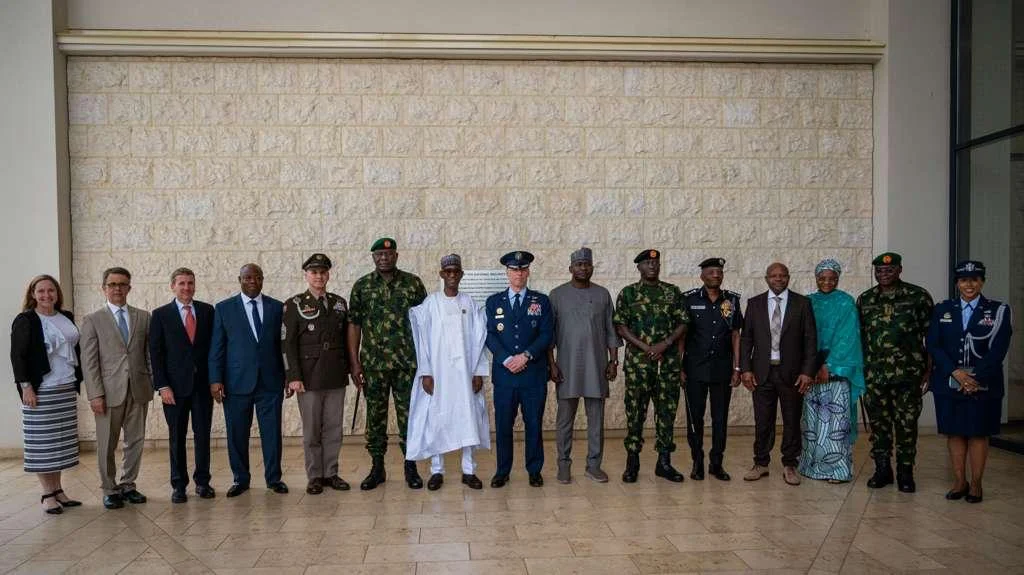
    In a statement attributed to the DHQ’s Director of Defence Information, Samaila Uba, officials said the visit was meant to “deepen collaboration” against terrorist groups threatening Nigeria and the wider region. Gen. Anderson met with Bola Tinubu, the National Security Adviser, Nuhu Ribadu, the Minister of Defence, Christopher Musa, and the Chief of Defence Staff, Olufemi Oluyede, and visited a joint US–Nigeria intelligence fusion cell.

    But concrete outcomes remain vague. Officials did not detail new commitments, metrics for success, or timelines for measuring progress — a pattern critics say has characterised past security dialogues.

    Violence Continues Despite Longstanding Cooperation

    Despite years of military training, intelligence sharing, and international support (including US-approved arms deals), Nigeria’s insecurity shows little sign of abating:

    • Deadly attacks have surged. In early February 2026, at least 162–200 people were killed in coordinated extremist assaults on the villages of Woro and Nuku in Kwara State — among the deadliest attacks in recent months.
    • Statewide and national figures point to a broader crisis. Amnesty International reported that between May 2023 and May 2025, armed attacks across multiple states killed at least 10,217 people and forced the displacement of hundreds of towns and villages.
    • Longer-term conflict toll. Insurgent violence in northern Nigeria — particularly linked to Boko Haram and splinter groups — has been associated with the deaths of tens of thousands of civilians and the displacement of over 2 million people since the conflict began.

    These figures reflect not just battlefield deaths but the chronic security failures that have driven families from their homes, disrupted local economies, and crippled access to basic services.

    Intelligence and Cooperation — Impact or Optics?

    The DHQ highlighted the role of a joint US–Nigeria intelligence fusion cell in enhancing surveillance and operational response. Yet, there are persistent reports of militants reaching remote communities, executing mass killings, and kidnapping civilians with impunity, suggesting that improved information flow has not always translated into timely or effective protection for vulnerable populations.

    Moreover, public statements from both governments rarely clarify how shared intelligence leads to changes in on-the-ground outcomes — such as preventing massacres like the one in Kwara or reducing daily attacks in the northeast and northwest.

    Opaque Budgets and Unclear Outcomes

    Budget details on US assistance — including equipment transfers, training, and advisory support — are often disclosed in generic terms without comprehensive reporting on results relative to expenditure. For example, in 2025, the United States approved a potential $346 million weapons sale to Nigeria aimed at strengthening military capacity, but there is limited publicly available data on how such resources have measurably reduced violence or improved civilian safety.

    Without transparent benchmarks or regular independent assessments, experts warn that security cooperation risks becoming a diplomatic talking point rather than a force for measurable change.

    Looking Ahead: What Nigerians Want to See

    Analysts and civil society groups increasingly call for:

    • Clear public metrics tracking trends in violence, arrests, and successful interventions attributable to joint efforts.
    • Independent evaluation of intelligence-sharing mechanisms and their operational impact.
    • Human security indicators, such as reductions in displacement and civilian casualties, rather than purely military success markers.

    For many Nigerians living amid recurring attacks and displacement, the question is no longer whether Nigeria has partners, but whether those partnerships can be held accountable to the people they are supposed to protect.

  • U.S. Strike on ISIS in Sokoto Sparks Questions Over Motive and Target Selection

    U.S. Strike on ISIS in Sokoto Sparks Questions Over Motive and Target Selection

    Abuja — As security analysts question the true motive behind recent U.S. military action in Nigeria, U.S. President Donald Trump has said American forces carried out strikes against Islamic State (ISIS) targets in the country’s northwest, citing attacks on Christians amid worsening insecurity.

    In a post on his Truth Social platform late Thursday, Trump said the operation targeted ISIS fighters he accused of “viciously killing, primarily, innocent Christians.”

    “The United States launched a powerful and deadly strike against ISIS Terrorist Scum in Northwest Nigeria,” Trump wrote. He added a Christmas message that included a warning that further attacks would result in additional U.S. military action.

    Motive Under Scrutiny

    The stated rationale for the strike has drawn skepticism from Nigerian security experts and residents, particularly in Sokoto State, where the targets were reportedly located.

    Retired Nigerian Air Force officer and security analyst, Group Captain Sadeeq Shehu (rtd), is among those questioning the true motive of the operation. He called for urgent clarification from relevant authorities, especially regarding the reported selection of Jabo, a community in Sokoto State.

    He urged authorities to provide:

    • A transparent explanation—within security limits—of the intelligence basis for the strike
    • Clear assurances on civilian harm mitigation
    • Verification and accountability mechanisms to assess potential collateral damage

    “People in Sokoto are not dismissing security threats,” Shehu said. “They are asking for logic, evidence, and accountability.”

    Across the state, a recurring question continues to surface:
    Why Jabo? Why Sokoto, of all places in a country grappling with terrorism in multiple regions? Was this a symbolic strike on what some consider the historical ‘seat of the Caliphate’?

    Pentagon Releases Video

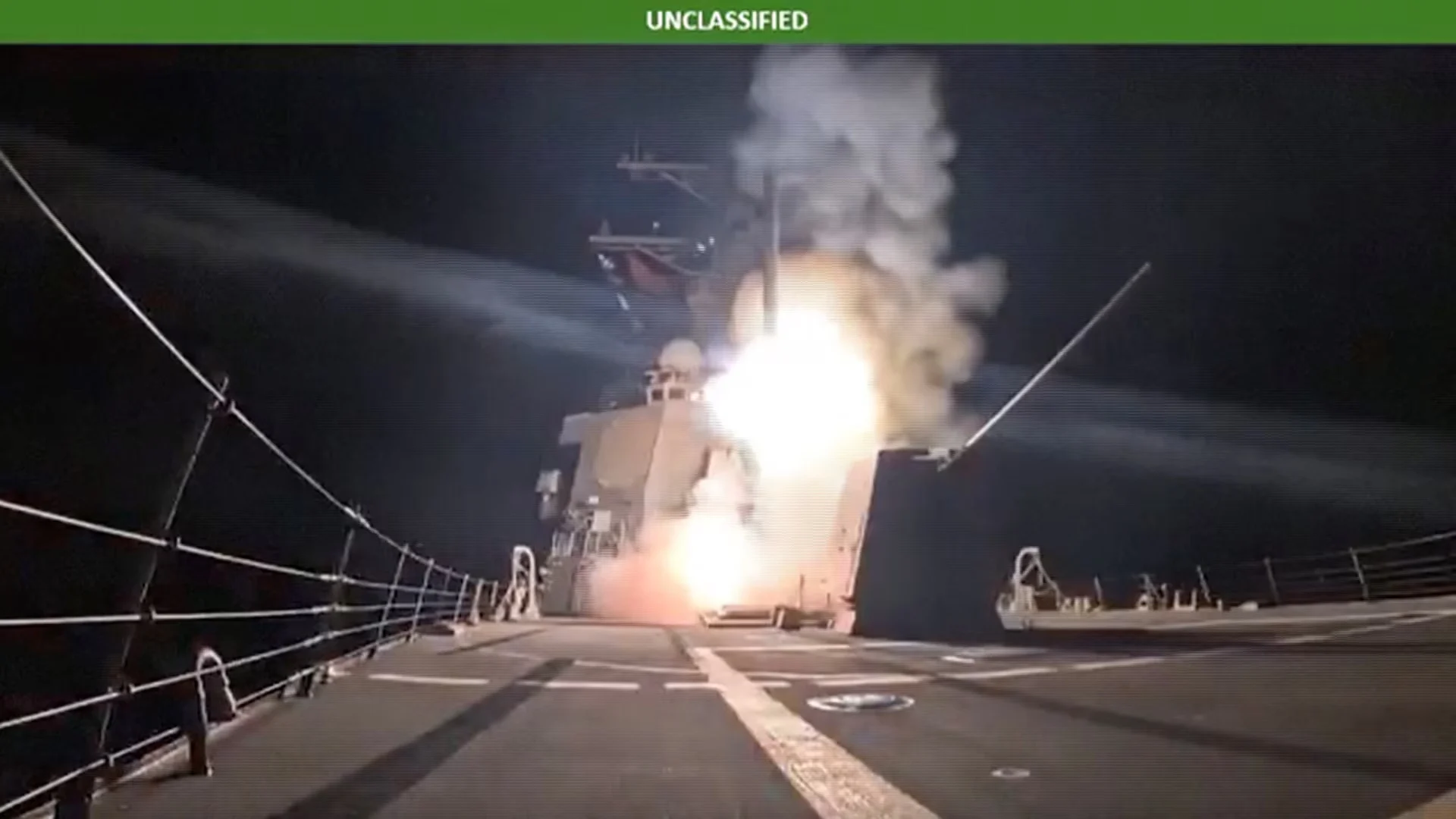
    The Pentagon later released video footage appearing to show a missile being launched from a U.S. warship. Officials did not immediately disclose details on casualties or the extent of damage caused by the strike.

    According to the United States Africa Command (AFRICOM), the targets were located in Sokoto State. U.S. Defence Secretary Pete Hegseth said he was “grateful for Nigerian government support and cooperation” following the operation.

    Rising Violence in Nigeria

    The strike comes amid growing security challenges in Africa’s most populous country, particularly in the north and northeast, where Islamist militant groups remain active.

    Boko Haram, which originated in Nigeria, along with Islamic State–affiliated factions, has intensified attacks in recent weeks. Mass abductions from churches and schools have heightened fear and unrest among local populations.

    Earlier this month, Trump warned that Washington could intervene if attacks on Christians continued, urging the Nigerian government to prevent further bloodshed or risk reduced U.S. aid.

    Despite those warnings, violence has persisted. On Thursday, a suicide bombing in northeastern Nigeria killed at least five people and injured 35 others, according to a police spokesperson.

    Limited Details on Casualties

    U.S. officials have not released figures on the number of militants killed in the strike, and Nigerian authorities have yet to issue a comprehensive public response.

    As questions linger over intelligence, targeting, and civilian impact, the situation remains fluid, with Nigeria continuing to battle multiple insurgent groups across several regions.

  • Benue South Protests Exclusion from U.S. Fact-Finding Mission

    Benue South Protests Exclusion from U.S. Fact-Finding Mission

    “We Are Victims of Both Terror and State Marginalisation”

    The Ochetoha K’Idoma, the apex socio-cultural organisation of Benue South Senatorial District (Zone C), has formally protested the exclusion of Idoma and Igede communities from the itinerary of the visiting United States Fact-Finding Mission led by Congressman Riley Moore.

    In a petition submitted to the U.S. Embassy in Nigeria, the group described the omission as a deliberate act that reinforces what it called a “dangerous and misleading narrative” portraying Benue State’s security crisis as affecting only Tiv-speaking areas.

    “This exclusion is not an oversight; it is a systemic erasure of the suffering of our people,” the organisation stated.

    The Invisible War

    According to the petition, Benue South has endured sustained violent attacks for more than a decade. A 12-year timeline (2013–2024) attached to the letter documents repeated massacres across Agatu, Apa, Otukpo, and Obi Local Government Areas.

    The group cited the 2016 Agatu Massacre, where more than 500 people were reportedly killed, and the April 2023 Umogidi attack in Otukpo LGA, during which 52 victims were buried in mass graves.

    “Our land flows with blood,” the statement said. “Yet because our people absorb displaced families into private homes rather than formal IDP camps, the world assumes we are safe. We are not.”

    Demands to the U.S. Delegation

    The Ochetoha K’Idoma called on the U.S. Fact-Finding Mission to:

    • Grant an immediate audience to leaders of Benue South
    • Correct the distorted narrative that confines insecurity in Benue to a single ethnic group
    • Channel humanitarian relief and reconstruction assistance to the Apa–Agatu corridor

    In a statement signed by Dr. Echeofu Agada, Public Relations Officer of the organisation, the group warned that excluding Benue South undermines the credibility of any investigative mission.

    “You cannot claim to establish facts while ignoring half the victims,” the statement read.
    “The silence of Benue South is not peace; it is the silence of the graveyard.”